Did Rochambeau visit Butts Hill? In a letter dated August 2, 1780 from Newport, Lafayette wrote to American General William Heath about how to prepare for Rochambeau’s visit.
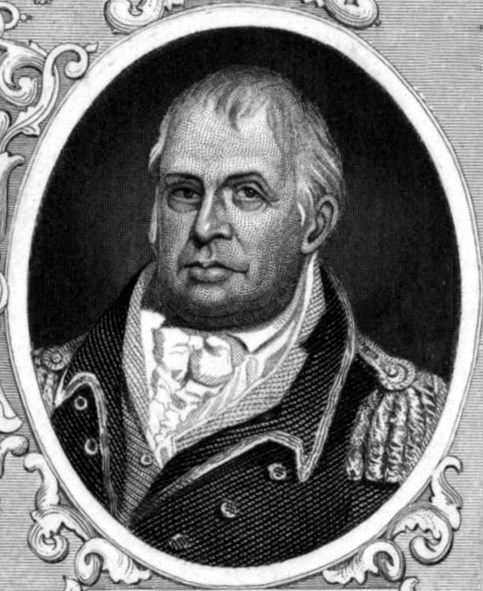
“On my coming into the town, I found that Count de Rochambeau was going to Butts Hill, and you easily guess that I did not like the plan. Our works are so disordered, and his dependence upon them so great, our tools, Boats &c. are in such a situation that I wanted some time to put it in a Better train.”
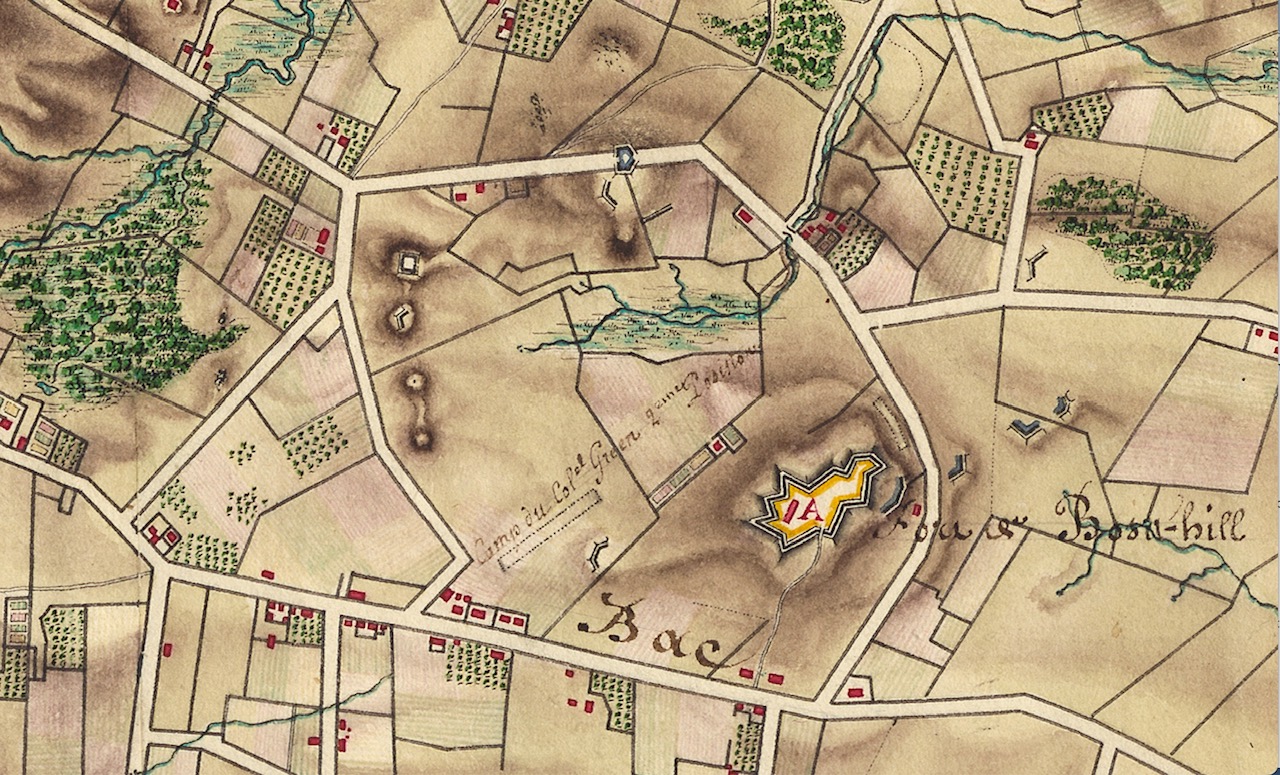
At this time the French are based on Aquidneck Island. There is an expectation that the British will again try to attack and occupy the island. Butts Hill is seen as a natural location to fortify as a prime spot to communicate with the mainland at Tiverton and Bristol. The French engineers and masons are working to turn fortifications left by the British and Americans into an actual fort. American militia soldiers under General Heath and the Rhode Island First Regiment (the Black Regiment) are aiding in the physical effort to complete the fortifications. The situation at what they call “Camp Butts Hill” is difficult. After three years of British occupation, basic resources like wood for fuel, water and food are lacking.
Lafayette goes on in the letter to encourage Heath and his men.
“From what you told me, my dear friend, I don’t doubt but that the thousand men with thousand tools will be tomorrow morning at work, and think they ought to Begin very early.”
Lafayette suggested ways Heath could prepare for Rochambeau’s visit. The boats should be gathered and men should be working to repair them. Fascines (bundles of sticks for fort construction) and cannons should be ready and guarded.
“As to the picquets I think we might have one of the Nigros upon the Road…” Picquets are “a soldier, or small unit of soldiers, placed on a defensive line forward of a friendly position to provide timely warning and screening against an enemy advance.” The “Nigros” Lafayette refers to would be from the Black Regiment (Rhode Island First Regiment) commanded by Col. Christopher Greene. Their camp is pictured next to Butts Hill in the Berthier maps of 1780. Greene’s men were Continentals and had been well trained. The militia, on the other hand, were volunteers that served three to six months and then went back to their homes.
“I believe we ought not to go through the militia Camp, but meet you at the fort with some of their officers to introduce to the count.” The barebones conditions at “Camp Butts Hill” were not something Lafayette wanted Rochambeau to see.
“Don’t you think, my dear Sir, that we ought to put every thing in a good train as to the tools, workmen &c. against the time the Count will come
The code word for the day would be “Boston.” Lafayette gives us a glimpse of their procedures. “When people are coming from without you know the Centry must say “Who is there,” and upon answering ‘friend’ the centry says ‘advance one’ and the Corporal comes immediately to Reconnoitre.’ Will send Mr Washington, and upon the Corporal’s telling advance, I think we ought to learn our men how to present properly their arms to Count de Rochambeau.”
A footnote explains that “Mr. Washington” is George Augustin Washington, Lafayette’s aide de camp.
The next day Lafayette writes again to Heath. “Count de Rochambeau will be with you between four and five this evening.” (Newport, August 3, 1780 – Lafayette to Heath.). I will look for more letters or orderly reports that will confirm that Rochambeau did visit the fort and what that visit might have been like.
Resources:
Idzerda, Stanley, Editor. Lafayette in the Age of the American Revolution. Selected Letters and Papers 1776-1790. Volume 3.
 portsmouthhistorynotes
Leave a comment