Founded on the Compact.
The original settlers of Portsmouth were dissenters with Anne Hutchinson fleeing from Boston’s church rule. Portsmouth’s town seal proclaims “Founded on the Compact 1638.” Through the Compact twenty three men and their families agreed to form a secular government. Will and Edward Hutchinson (Anne’s son) traveled to Providence to Roger Williams who arranged a meeting with Narragansett Sachems Miantonomo and Canonicus. On March 24th they gave the sachems “a gratuity” of forty fathoms of white wampum beads, ten coats, and twenty hoes. The Narragansett removed themselves from the island, but selling land was not a concept in their culture. To the English settlers, this was a sale.
Pocasset Settlement
When they journeyed to Aquidneck Island, the Island was a wilderness and shelter was a big concern. They crawled into caves around the banks of the cove (Town Pond) where they landed. They followed the native’s example by bending birches into house frames, using mud for walls and weaving twigs to make a thatched roof. When the group of founders began their settlement, they called it “Pocasset.” It is an Algonquian word that refers to the width of the river, but it is also the name of the Pocasset Wampanoag Tribe of the Pokanoket Nation whose land included Tiverton and much of Southeastern Massachusetts..
Re-named Portsmouth
On May 12, 1639 the settlement’s name was changed to Portsmouth. The settlement of Pocasset/Portsmouth included the area around the Montaup Country Club, Town Pond, Founder’s Brook and south to Portsmouth Park. At this time the founders located their houses on small lots around water sources like springs and brooks. They were frightened by the sound of the wolves roaming around the camp. This was a major threat because livestock was unprotected. They brought with them horses, cows, sheep and hogs. While Anne Hutchinson and the others walked from Boston the animals were brought by ship around Cape Cod. With the aid of Roger Williams, members of the Narragansett tribe came and laid traps to kill the wolves. The settlers decided to make a Common Fence. Five rails with no more than three inches between each rail was judged sufficient to keep out predators. The first fence was built around the common pasture for the whole town and we know that today as Common Fence Point.
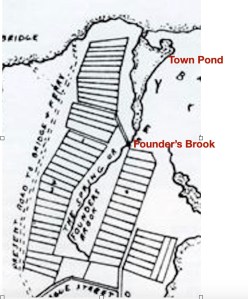
They were given land on the provision that they must built homes within a year. Town Pond was in the middle of activity. There were two springs that provided water – one was to the right of Town Pond near the Common Fence that held their animals. The other was by Founder’s Brook and that provided a central gathering spot and washing area. Baulston’s Tavern was located at the southern tip of the Pond. The Training Ground was across the way by the brook.
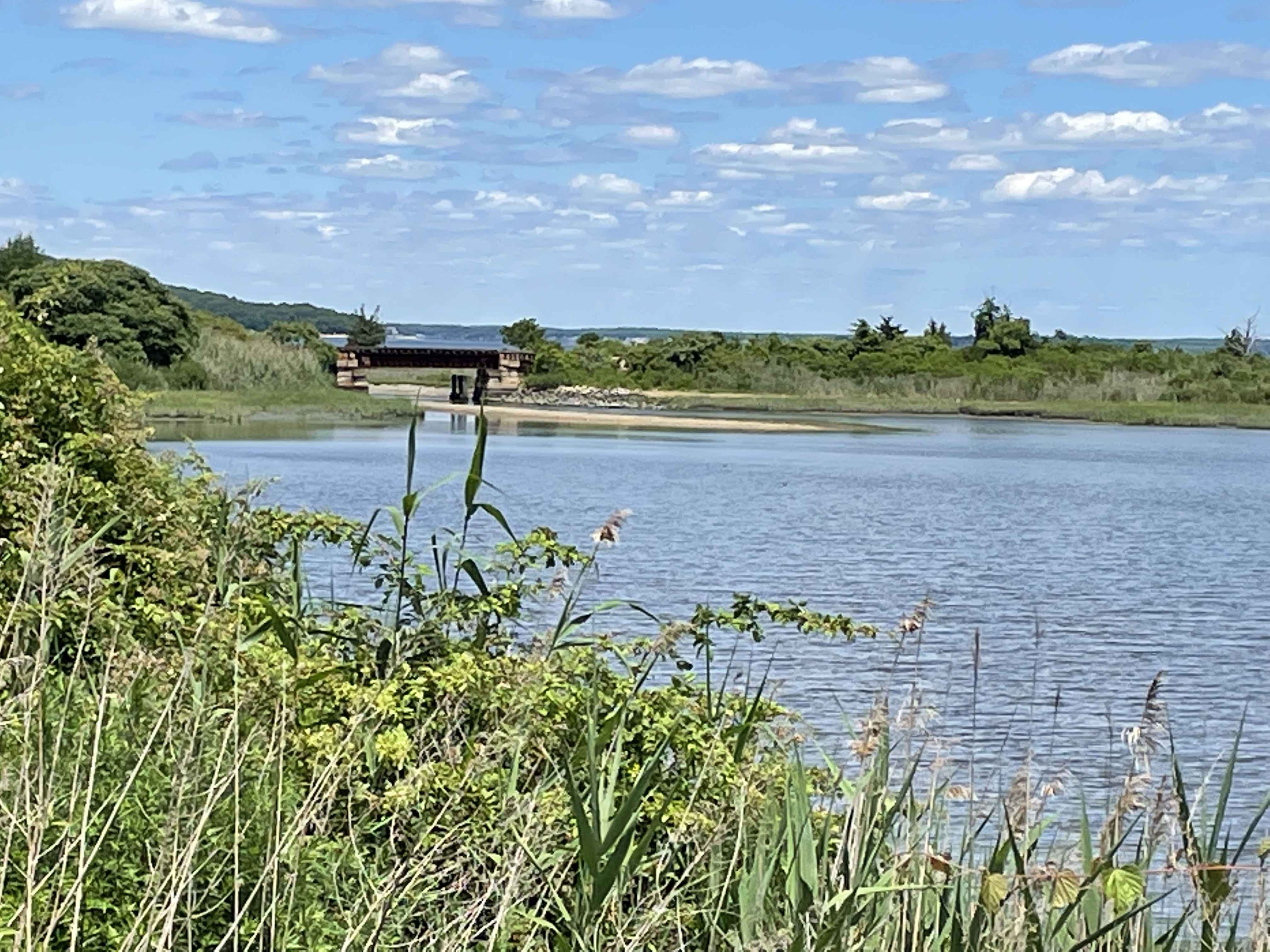
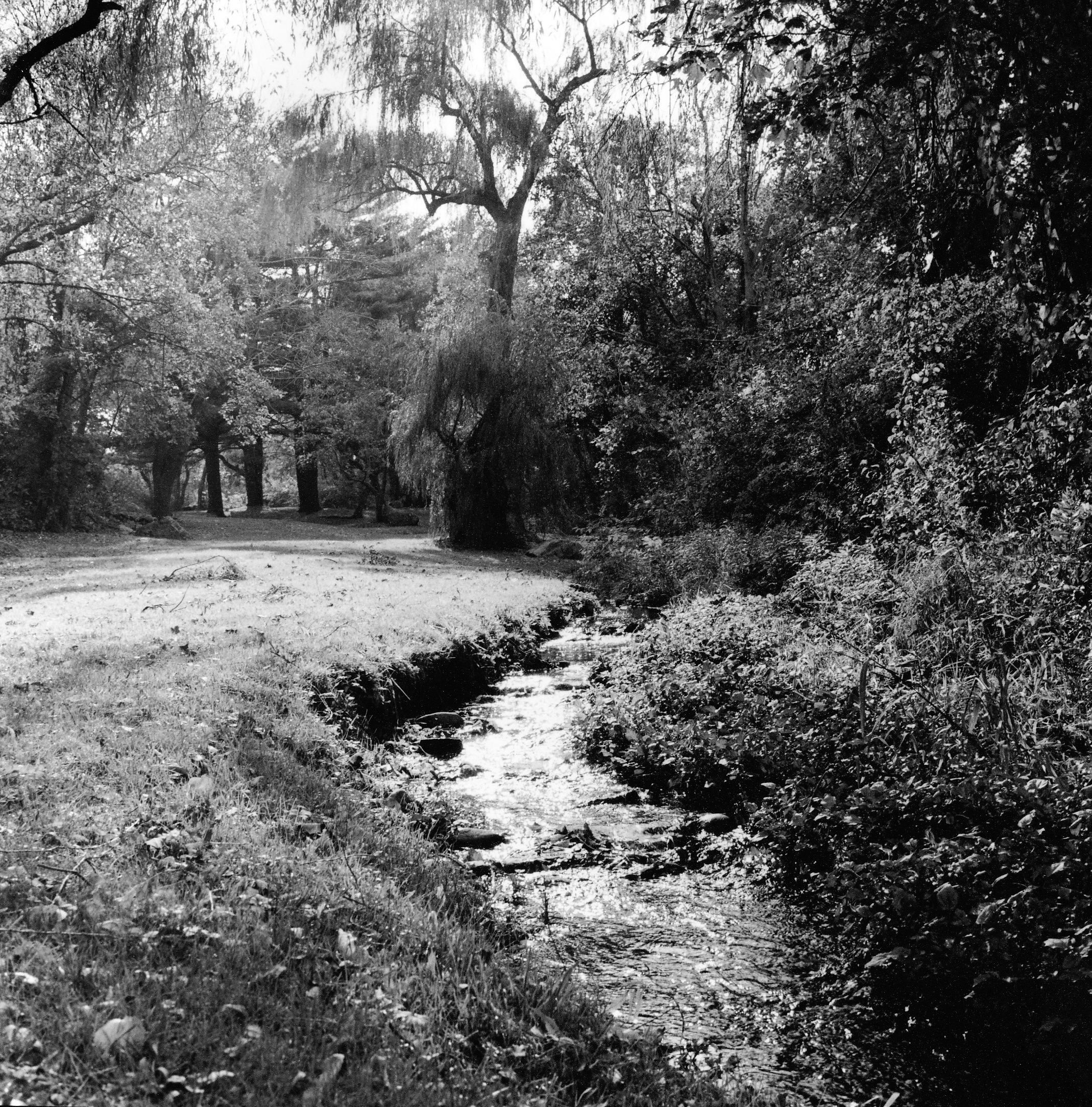
It wasn’t long before most of these settlers sold their house lots and moved out to their farm land grants. Town Pond and Founder’s Brook are worthwhile visiting today. The murmur of the brook and the bronze copy of the Compact at Founder’s Brook reminds us of the primitive life of the early settlers and their intention to band together as a political body. Town Pond can be viewed from a half mile hiking trail. The Pond has been restored to a tidal estuary, and you can imagine the scene as the founding families first stepped on Portsmouth ground.
Recommended reading: John Barry’s book on Roger Williams and the Creation of the American Soul.
Roger Williams played a great roll in the founding of Portsmouth.
 portsmouthhistorynotes
Nov 08, 2024 @ 13:04:51
Very interesting article, Gloria