Home

A Schoolhouse Mystery

Leave a comment

Did Portsmouth have a schoolhouse before the Southermost School? That was the question I had when I was transcribing a document that called for Portsmouth Freemen to “meet together at the town school house that is at the south end of said town..” I have been working on materials to celebrate the 300 anniversary of the Southermost School which we all assume was built in 1725. The problem for me was that the document was signed in 1723. We have been dating the schoolhouse from the bill for construction as the completion date and that bill was listed as March of 1724-25. Determining dates in colonial times can be tricky because the Julian Calendar year they used began in late March.
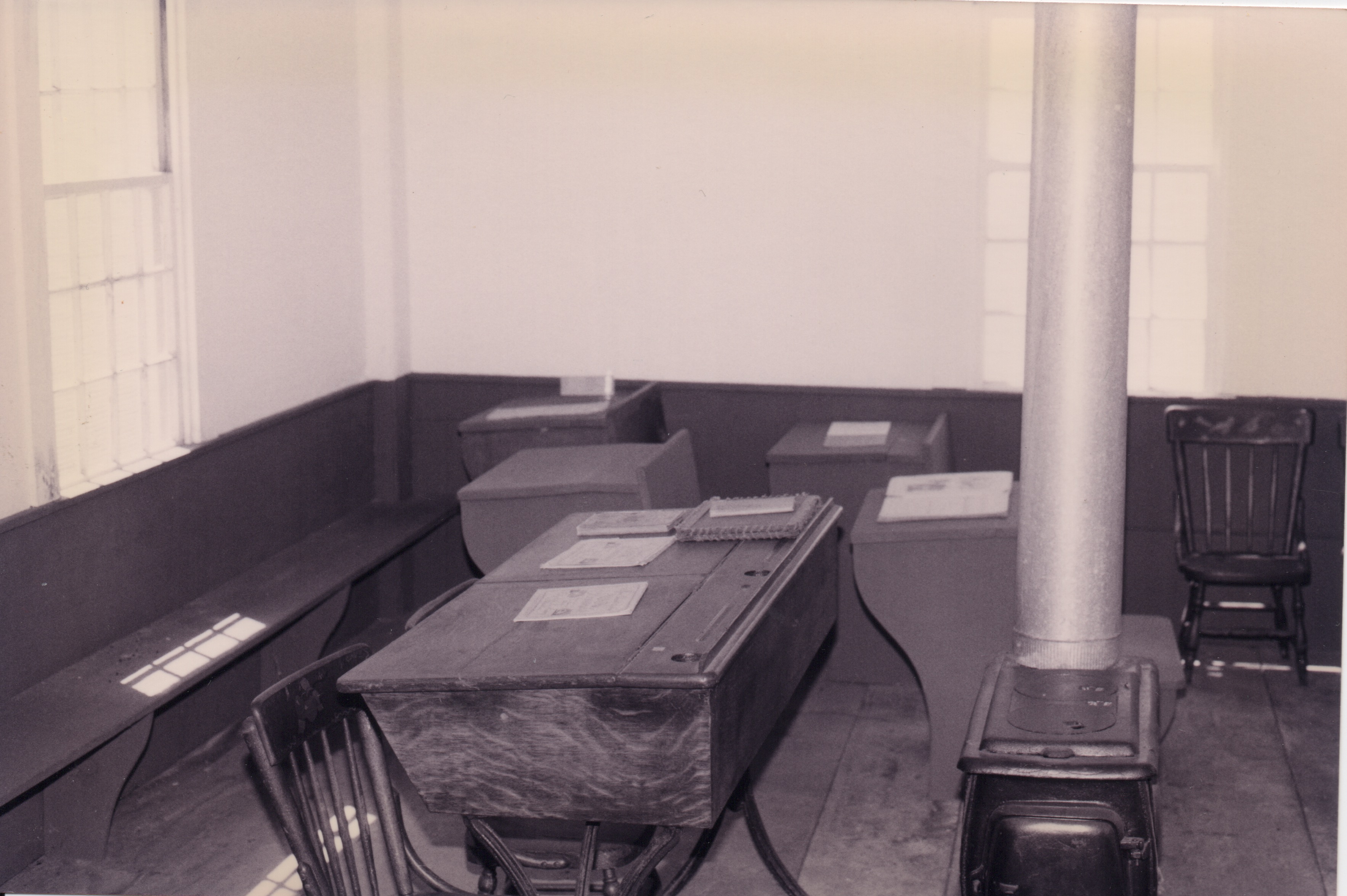
The Portsmouth Historical Society was saving documents for me that might be related to the school. This document was

“to give timely notice and warning to all the freemen of the above said town to meet together at the town school house that is at the south end of said town of twenty day of this instant, being according to the governor’s warrant and to meet at eight of the clock of said day then and there to make the choose of such and so many well qualified members Deputies to seat in general assembly according to the governor’s warrant to to meet at the colony house at Newport the 26 day of this instant ..”

Portsmouth freemen were to meet at the school house to choose Deputies to attend the General Assembly that would meet at the Colony House in Newport.

I wondered if the date had been copied wrong. Many of the documents in the Historical Society collection are duplicate copies, so I wondered if the date could be wrong. I checked the General Assembly dates and there was a meeting on November 26, 1723.

Was the school house mentioned our Southermost School, or was there an earlier schoolhouse? I went to an article written by Portsmouth historian Edward West – “Early Schoolhouses and Schoolmasters of Portsmouth, Rhode Island.” In his research I found my answer. West records minutes of a town meeting 31, August, 1716 that “we having considered how excellent and ornamental learning is to mankind, and the great necessity there is in building a Publick School-house on the South Side….which if erected will no doubt prove a great benefit to thos who look at the good and wellfare of their posterity.” Twenty pounds of town money was allocated and contributions to the cause would be welcome. William Sanford offered a triangular plot of land (3/4 of an acre).

By 1720 it seems that little had been done. A group of ‘Subscribers” – maybe parents who wanted an education for their children. This group was awarded the school house lot and the twenty pounds for construction. The land would belong to this group of subscribers. In 1723 town records show that “The school already erected, be finished by the town. The subscribers would relinquish their title to the land. The town would be looking for a schoolmaster.

At this point the school had not been finished. Captain George Lawton, Adam Lawton and William Sanford would finish the school house and dig a well for he use of the school. A year later in 1725 the town agreed to pay Adam Lawton 23 pounds, twelve shillings and seven pence. Finances did not get straightened out until 1725 when the money for the “subscribers” got straightened out.

It may have taken nine years (from 1716 approval) to the completion, but somewhere along the way the “subscribers” succeeded in building (but not completing) the Southermost School that we celebrate today. As one of the few town buildings, it clear that it served as a meetinghouse in 1723/24.
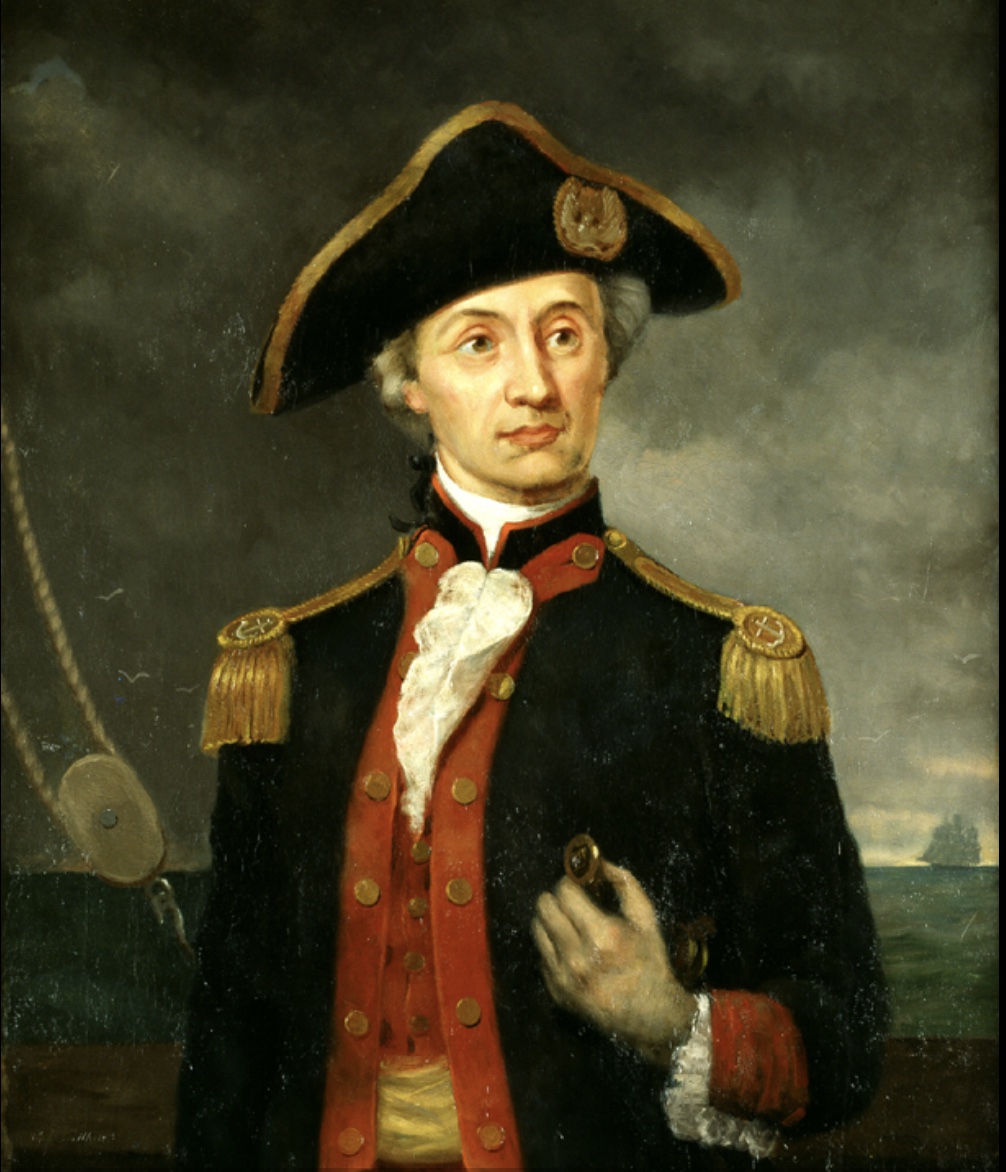
John Paul Jones Describes the Action during the Battle of Block Island

Leave a comment

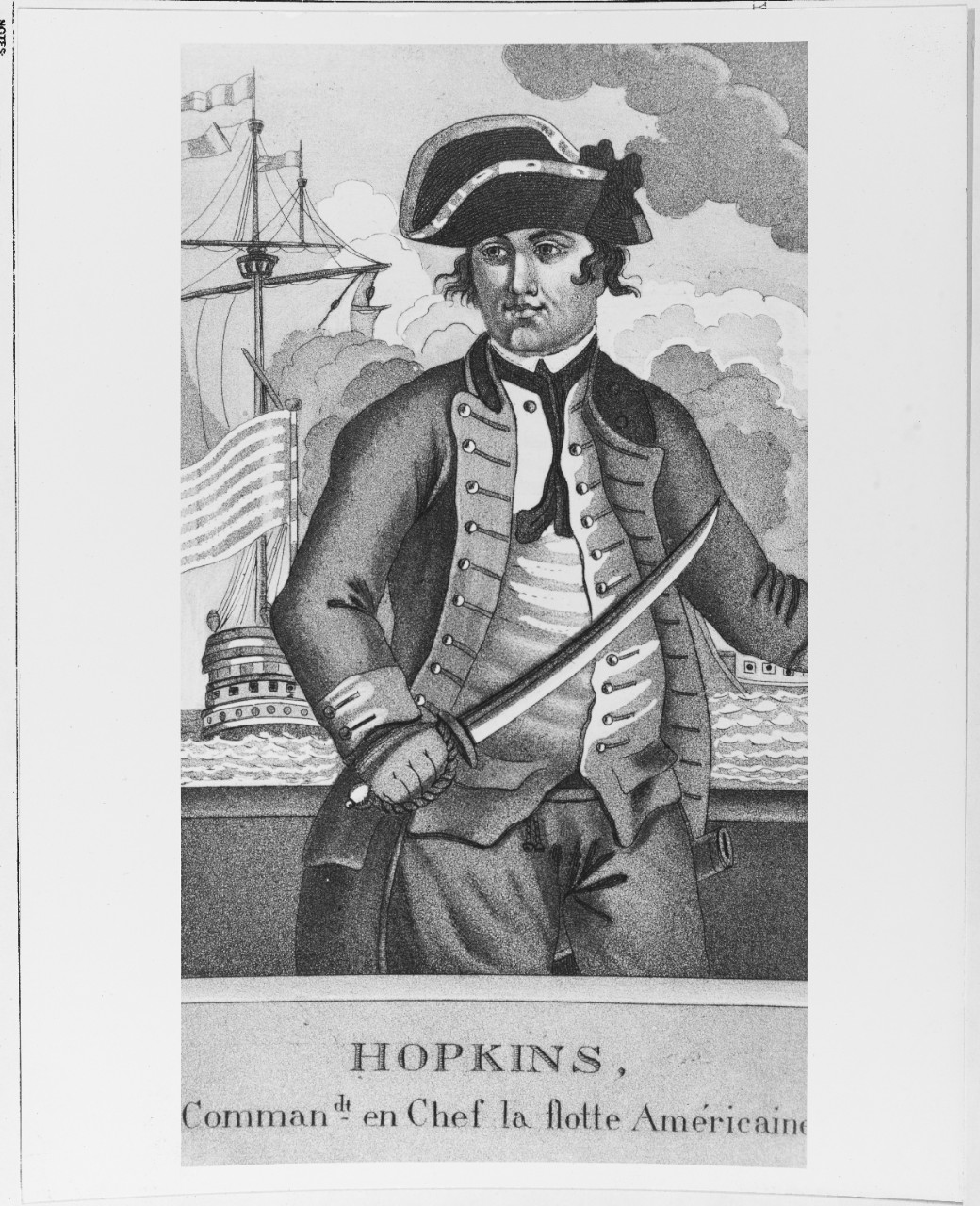
April 6, 1776 was the date of the Battle of Block Island, Rhode Island. This was an early battle (before the Declaration of Independence) for Esek Hopkins, commander in chief of the new Continental navy. It was considered a victory for the British because the British ship Glasgow was able to get away from the Americans. Hopkin’s fleet was returning from a successful raid on the town of New Providence on Nassau island in the Bahamas. The Americans seized eighty-eight desparately needed cannon, fifteen mortars, thousands of roundshot (types of cannon balls), other artillery implements and some gunpowder. The American ships spotted and gave chase to the HMS Glasgow, commanded by Captain Tryingham Howe. The Glasgow fired and hit the American flagship USS Alfred and disabled it. On April 7, 1776 American ships began dropping anchors off New London, Connecticut. Commodore Hopkins and the other commanders were criticized for their actions in the battle and even for their decisions to go to the Bahamas. This mission was controversial and marked the beginning of Hopkin’s downfall. The debate was over the nature of the orders Congress had given Hopkins before the raid.

John Paul Jones’s narrative of the action in the Alfred’s log-book gives details:

“At 2 A.M. cleared ship for action. At half past two the Cabot, being between us and the enemy, began to engage and soon after we did the same. At the third glass (a time reference) the enemy bore away and by crowding sail at length got a considerable way ahead, made signals for the rest of the English fleet at Rhode Island to come to her assistance, and steered directly for the harbor. The Commodore then thought it imprudent to risk our prizes, &c. by pursuing farther; therefore, to prevent our being decoyed into their hands, at half past six made the signal to leave off chase and haul by the wind to join our prizes. The Cabot was disabled at the second broadside, the captain being dangerously wounded, the master and several men killed. The enemy’s whole fire was then directed at us and an unlucky shot having carried away our wheel-block and ropes, the ship broached to and gave the enemy an opportunity of raking us with several broadsides before we were again in condition to steer the ship and return the fire. In the action we received several shot under water, which made the ship very leaky; we had besides the mainmast shot through and the upper works and rigging very considerably damaged.”

Block Islanders Endured Military Law during Revolutionary Times

Leave a comment

When I speak to student groups I stress the hardships of Aquidneck Islanders during the British Occupation 1776-1779. Until I began to research Block Island in the Revolutionary era, I didn’t realize that they were suffering as well. The Rhode Island Assembly believed that leaving resources on Block Island might tempt the enemy to attack the island. Historian Reverend Livermore comments:
“The policy adopted was much like that of befriending a banker by taking away his money to save him from being robbed.”

Aquidneck Islanders had their livestock taken to feed the British army.

Block Islanders would find their livestock taken by the Rhode Island Colony. An act Passed by the General Assembly in August of 1775 directed that the the island livestock “be brought off as soon as possible, and landed upon the continent.” According to Block Island Historian Rev. Livermore: “Such stock as was suitable was to be sent immediately to the army. Such as was not fit for market was to be sold at public or private sale..” Almost 2,000 sheep and lambs were taken but there was no record how many cows and oxen. Captain John Sands, Joshua Sands, and William Littlefield were authorized to determine how much livestock was needed to feed the islanders. This same committee collected firearms and delivered them to the Rhode Island Committee of Safety. Then the went door to door and suggested that since the livestock was gone, Block Island men should volunteer for the American Army.

Aquidneck Islanders had no freedom of movement during the Occupation. They couldn’t get on or off the island or they would be suspected of spying.

The Colony of Rhode Island decided that Block Island residents were “in the power of the enemy” and therefore they could not leave the island.

“Whereas the inhabitants of New Shoreham, from their peculiar situation, are entirely in the power of the enemy, and very pernicious consequences may attend the intercourse of the said inhabitants with the continent, by means of the intelligence and supplies which the enemy may procure thereby:
” It is therefore voted and resolved, that the said inhabitants be, and they are hereby prohibited from coming from said Island into any other part of this State, upon pain of being considered as enemies to the State, and of being imprisoned in the jail in the county where they may be found, there to remain until they shall be discharged by the General Assembly…”

By the end of 1776 a committee (Sands, Sands and Littlefield) was given permission to gather needed supplies and bring them back to Block Island. In 1777 Block Islanders who were on the mainland were able to go back to the island.

Block Islanders were left under suspicion and without help from the mainland.

August of 1779: General Assembly

“Whereas, many evil minded persons, not regarding the ties of their allegiance to the United States in general, and this state in particular; but influenced by the sordid principles of avarice, continue illicitly to correspond with and supply the inhabitants of New Shoreham, in the county of Newport, with provisions, and other articles, to the great detriment and distress of the virtuous inhabitants of this state.”

“And whereas, the said town of New Shoreham hath been for a long time, and still is, within the power and jurisdiction of the enemies of the United States, whereby they obtain, in consequence of the evil practices aforesaid, supplies for themselves, and intelligence from time to time of the situation of our troops, posts, and shores; by which means they are enabled to make frequent incursions, and thereby commit devastations upon, and rob the innocent inhabitants of their property, and deprive them of their subsistence; wherefore, “Be it enacted, &etc.”

What this act did was to prohibit all trade with the islanders except by special permit. The offender’s property would be confiscated and he might have to do service in a continental battalion, or war vessel until the end of the war. Corporal punishment was the alternative if the offender was a female or unfit to be a soldier. There are records that some Block Islanders were treated as prisoners of war but their fates are unknown. By the end of 1779 the acts prohibiting Block Islanders from going to or from the mainland were abolished, but there were still restrictions on transport of goods. Even Governor Greene had to comply with these rules.

In July of 1780 messengers from the colony came to take whatever horses, cattle, grain, fish or cheese they deemed the Block Islanders could spare.

The Block Island historian Rev. Livermore wrote:

“Thus the Islanders, besides the depredations from the British, denied traffic on the main, unrepresented in the General Assembly of Rhode Island, unprotected by the colony from the enemy, was burdened with a heavy tax. This was taxation without representation; nay more, it was the imposition of a heavy burden upon those cut off from the common privileges on the main and abandoned to the cruel mercies of the enemy. But even this their faith and patriotism could endure while patiently waiting for the dawn of freedom.” (Livermore, pg. 102)

Livermore, S. T. A history of Block Island from its discovery, in , to the present time, 1876. Hartford, Conn., The Case, Lockwood & Brainard co, 1877. Pdf. https://www.loc.gov/item/rc01002999/.

Rhode Island., Bartlett, J. Russell. (185665). Records of the colony of Rhode Island and Providence plantations, in New England: Printed by order of the General assembly. Providence: A. C. Greene and brothers, state printers [etc.].

Finley, A, and Young & Delleker. Rhode Island
. [Philadelphia, 1829] Map. https://www.loc.gov/item/76692364/.