Did Portsmouth have a schoolhouse before the Southermost School? That was the question I had when I was transcribing a document that called for Portsmouth Freemen to “meet together at the town school house that is at the south end of said town..” I have been working on materials to celebrate the 300 anniversary of the Southermost School which we all assume was built in 1725. The problem for me was that the document was signed in 1723. We have been dating the schoolhouse from the bill for construction as the completion date and that bill was listed as March of 1724-25. Determining dates in colonial times can be tricky because the Julian Calendar year they used began in late March.
The Portsmouth Historical Society was saving documents for me that might be related to the school. This document was
“to give timely notice and warning to all the freemen of the above said town to meet together at the town school house that is at the south end of said town of twenty day of this instant, being according to the governor’s warrant and to meet at eight of the clock of said day then and there to make the choose of such and so many well qualified members Deputies to seat in general assembly according to the governor’s warrant to to meet at the colony house at Newport the 26 day of this instant ..”
Portsmouth freemen were to meet at the school house to choose Deputies to attend the General Assembly that would meet at the Colony House in Newport.
I wondered if the date had been copied wrong. Many of the documents in the Historical Society collection are duplicate copies, so I wondered if the date could be wrong. I checked the General Assembly dates and there was a meeting on November 26, 1723.
Was the school house mentioned our Southermost School, or was there an earlier schoolhouse? I went to an article written by Portsmouth historian Edward West – “Early Schoolhouses and Schoolmasters of Portsmouth, Rhode Island.” In his research I found my answer. West records minutes of a town meeting 31, August, 1716 that “we having considered how excellent and ornamental learning is to mankind, and the great necessity there is in building a Publick School-house on the South Side….which if erected will no doubt prove a great benefit to thos who look at the good and wellfare of their posterity.” Twenty pounds of town money was allocated and contributions to the cause would be welcome. William Sanford offered a triangular plot of land (3/4 of an acre).
By 1720 it seems that little had been done. A group of ‘Subscribers” – maybe parents who wanted an education for their children. This group was awarded the school house lot and the twenty pounds for construction. The land would belong to this group of subscribers. In 1723 town records show that “The school already erected, be finished by the town. The subscribers would relinquish their title to the land. The town would be looking for a schoolmaster.
At this point the school had not been finished. Captain George Lawton, Adam Lawton and William Sanford would finish the school house and dig a well for he use of the school. A year later in 1725 the town agreed to pay Adam Lawton 23 pounds, twelve shillings and seven pence. Finances did not get straightened out until 1725 when the money for the “subscribers” got straightened out.
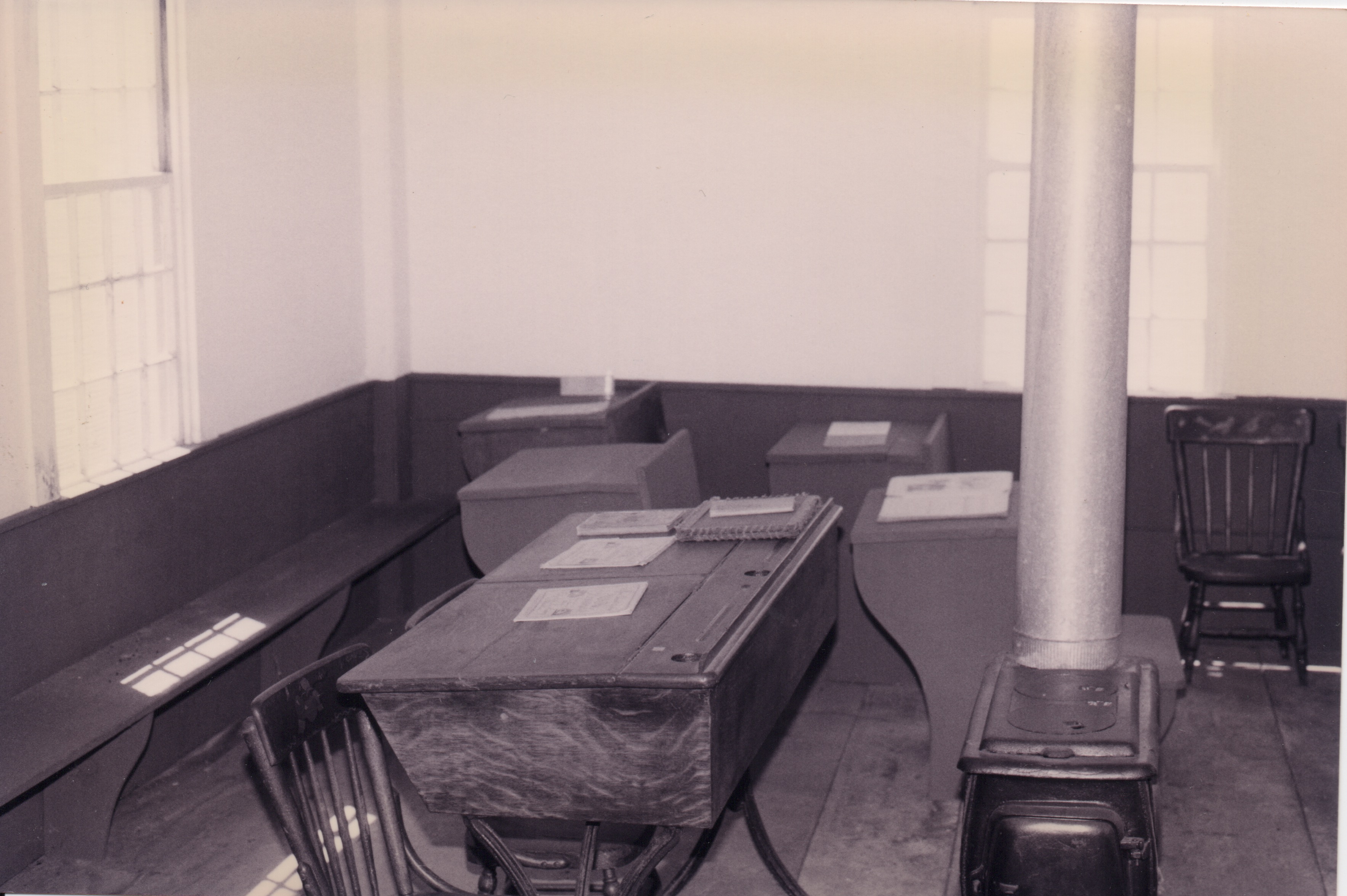
It may have taken nine years (from 1716 approval) to the completion, but somewhere along the way the “subscribers” succeeded in building (but not completing) the Southermost School that we celebrate today. As one of the few town buildings, it clear that it served as a meetinghouse in 1723/24.
 portsmouthhistorynotes
Leave a comment