1742-1826
Edward Wigglesworth was born and raided up in Newburyport, Massachusetts. He graduated from Harvard and worked for merchants in Newburyport. That gave him experience as a ship’s captain in the Caribbean. In 1776 he was commissioned a Colonel and he took command of the 6th Massachusetts Continental Battalion. His battalion was ordered to Fort Ticonderoga as the Americans were quickly building a fleet to counter the British on Lake Champlain. As an experienced mariner, General Gates appointed Wigglesworth as third in command of the American fleet. Wigglesworth joined the fleet and took part in the Battle of Valcour Island in October of 1776. With the destruction of the American fleet, Wigglesworth escaped back to Fort Ticonderoga and took command of his battalion again. When his battalion disbanded, he was took command of the 13th Massachusetts Regiment. He was at Valley Forge and took part in many battles.
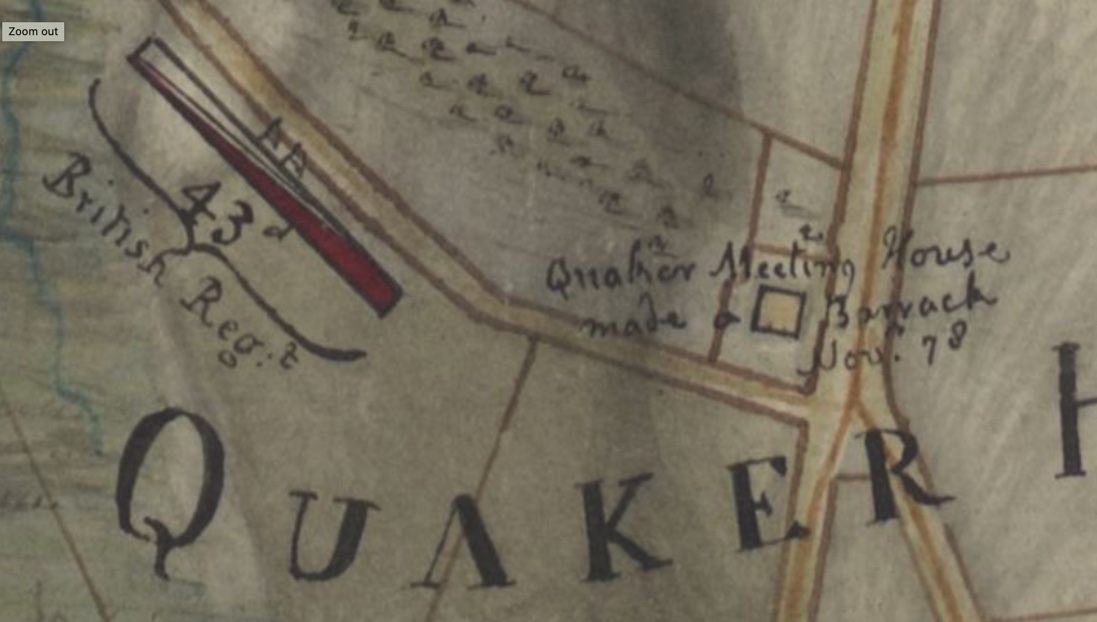
During the Battle of Rhode Island, Wigglesworth was positioned at Quaker Hill. American units (Wiggleworth’s Regiment, Livingston’s advanced guard and Wade’s pickets) were waiting at the junction of Middle Road, East Road and Hedley Street near where the Quaker Meeting House was located. Wigglesworth mistook the uniform of the Hessians troops advancing for American soldiers. Sullivan sent John Trumbull up Quaker Hill to set Wigglesworth straight. American General Sullivan saw his troops retreating, so he sent in Shepard’s Regiment of Massachusetts Continentals. General Sullivan’s “Life Guards” were sent in as well. For a while the Americans had an advantage.
A private from Jackson’s attachment described the action:
“We began to attack. The action began to be warm when we were reinforced by Col. Shepard’s Regiment under the command of Lieutenant Colonel Sprout. The action then commenced hot. We plied them so briskly that they began to give way. Our troops seeing this, gave three cheers and advanced. The enemy then gave way and left one piece of cannon but poorly supported. A party of our men then advanced, drove the artillerymen and took possession of the cannon. The enemy then rallied and being reinforced, advanced and gave our men so heavy a fire that they obliged them to quit their prize, the cannon.” (From: Diary of a soldier in the RI Expedition (Massachusetts Historical Society. Quoted in McBurney.)
Like many other officers he exhausted his financial reserves and resigned from the army in 1779. He returned to Newburyport and ultimately was appointed tax collector for the port. He held this post for many years prior to his death on December 8, 1826.
Resources
Finding Wigglesworth’s Lost Diary. All things liberty 2018.
Christian McBurney’s book on the Rhode Island Campaign.
Edwin Stone’s Our French Allies.
 portsmouthhistorynotes
Leave a comment