Some of our Portsmouth stories come from research into items in the Portsmouth Historical Society collection. In researching our Civil War Sword, we rediscovered another item in the collection. We have the blueprints of the last Mussel Shoal Lighthouse. Musselbed Shoals is a dangerous spot for navigation through the channel from Narragansett Bay to Mount Hope Bay. It is even noted on colonial era maps. In 1871 a beacon was placed there followed by a new light in 1873. This structure was damaged by ice floes. A new structure with built with more protection, but ice floes in 1919 -1920 damaged this one as well. The light was abandoned in 1938 and the lighthouse was severely damaged by the Hurricane of 1938. Later the building was torn down and an automatic light was installed that remains today.
Musselbed Shoal Lighthouse operated until 1938 when it was replaced by an automatic lightPlans for the Musselbed Shoal Light
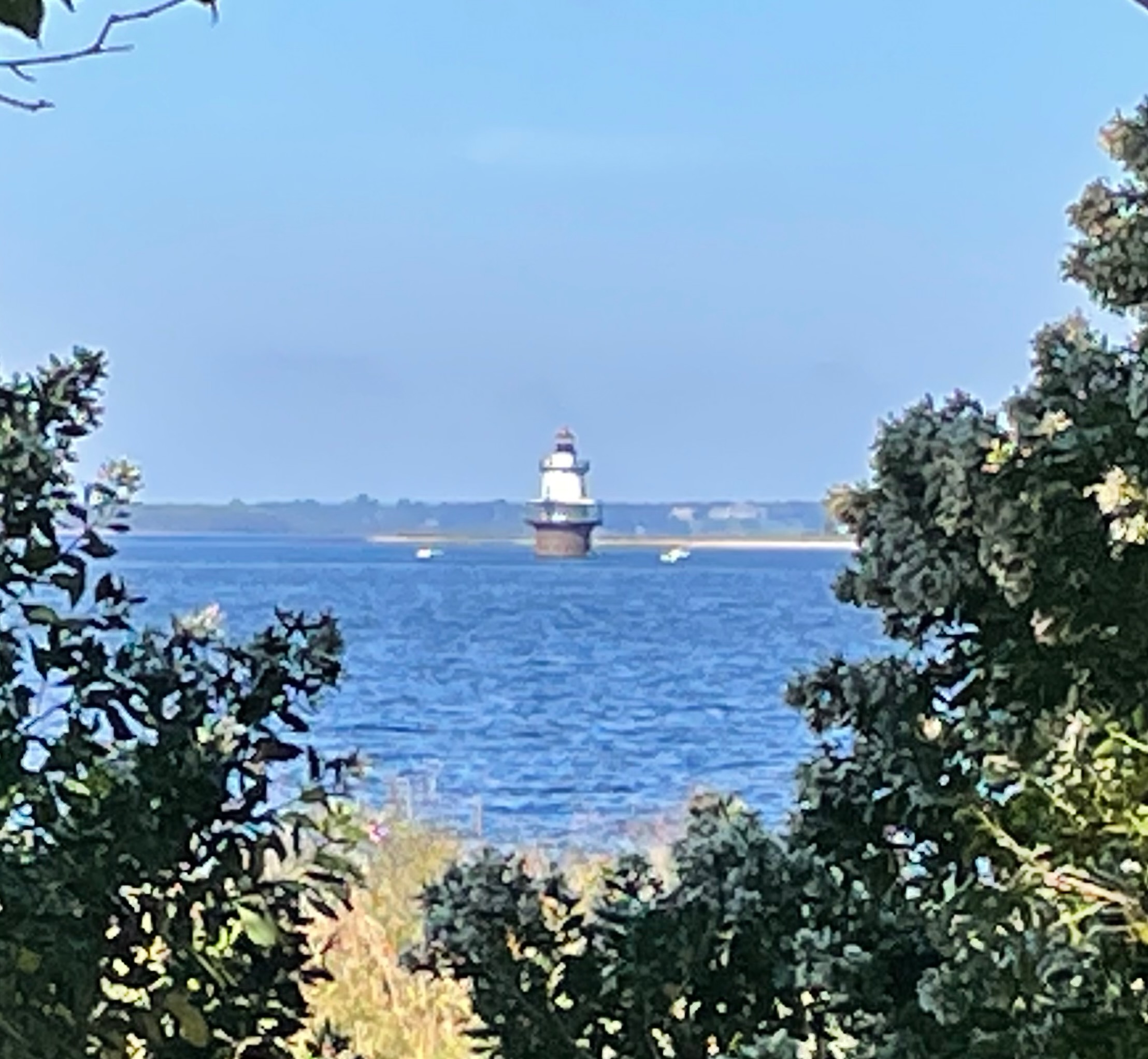
Hog Island Light
Treacherous shoals are marked by this 1901 lighthouse near Hog Island. There was a small light boat on the spot that the Old Colony Steamship Company used to aid their vessels. A larger boat, the Eel Grass Shoal Lightship, LV 12, was used beginning in 1886. The lighthouse is part of the category of “sparkplug” lighthouses, whose superstructure rests on concrete. This was the last light station established in the state. It was automated in 1964. In 1988 it was added to the National Register of Historic Places In 2006 the lighthouse was auctioned off and bought by a private buyer.
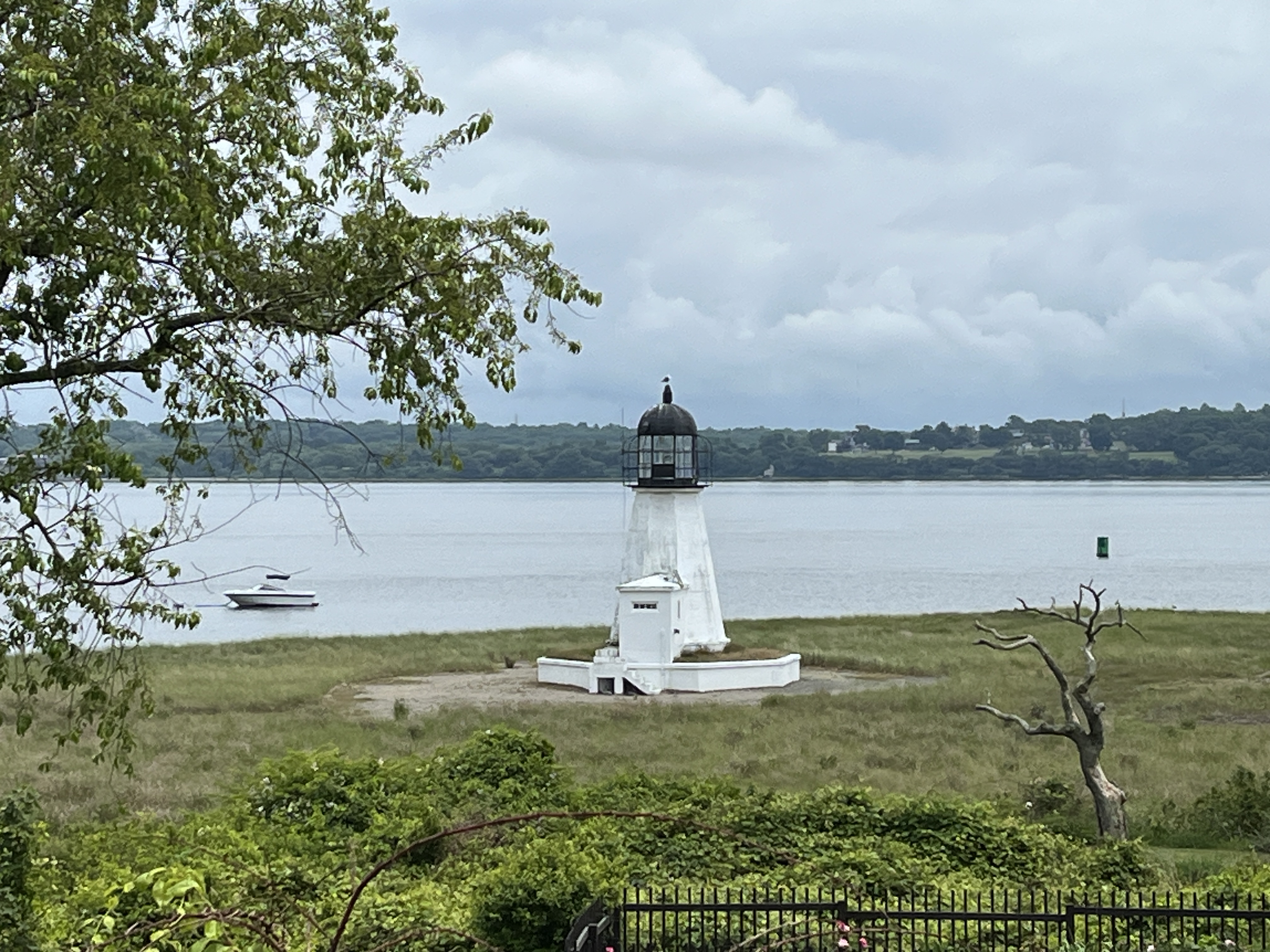
Sandy Point Light – Prudence Island
The Prudence Island Lighthouse is also known as the Sandy Point Lighthouse. It is the oldest lighthouse in the state and was originally built in 1823 by Goat Island. The Newport Harbor Light is on the spot now. In 1851 it was moved to Prudence Island. It is one of the few lighthouses with a “bird cage” structure for the lantern. The keeper’s house was swept away in the 1938 Hurricane and five people were washed out to sea and drowned.
Orderly books help us to put together the pieces of what happened during the Battle of Rhode Island. Orderly books were kept by each Revolutionary War regiment. They documented troop movements, military orders, troop pay, conflicts, and the day to day happenings of that regiment. They tell us about who was in charge and what the plans were and sometimes offer details of concerns and punishments. Recently I came across an orderly book online at the Henry Ford Museum from a Connecticut Militia that fought in the Rhode Island Campaign. This orderly book belongs to Colonel Samuel Chapman’s Connecticut Militia Regiment. Transcribing these books is an art in itself, but Historian John Robertson was kind enough to give me his transcription.
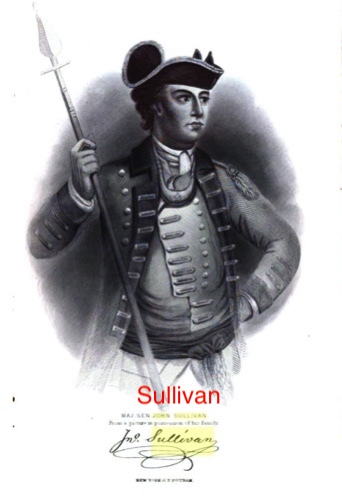
After Orders [MG Sullivan]
The G (General) takes this opportunity to Return his most Cordial Thanks to the Brave Officers & Volunteers & soldiers who have with so much Alacrity repaird to this place to give their Assistance in Extirpating the British Tyrants from the Country. the Zeal and sprit which they have des???d are to him the most pleasing presages of Victory and he is happy to find himself now at the head of an army far superior in numbers to them of the Enemy.
Actuated by a Sacred regard to Liberties of their Country and fired with Just Resentment Against Barbarians who have deluged their Country with Inocent Blood and Spread Desolation on great part of the Country where they have been suffered to march the prospect before us is exceeding promising the Several Corps have Every thing to Animate them and press them on to Victory: The Bravery of the Continental Officers and Soldiers and the idea they must have of the Dependance placed upon their Valour both by the Army and Country must stimulate them to support the Character they have so Justly acquired
The Independant Corps and Volunteers have so Chearfully come to assist in this Enterprize have every Inducement to Exert themselves to support the Reputation they have acquired by flying so freely to the Relief of their Distressed Country The State Troops which the G. has Long since had the Honor to Command he has the strongest reason to believe they will not suffer themselves to be Outshines in acts of Bravery by any Troops in the Army the Militia composed of the Respectable Freemen & Citizens of America who Fought the year must now feel every Inducement to spur them on to Conquest and Glory.
The character of the Several Corps which compose the Army the Expectation of the Country the safety of our Land and in short every thing which animates men to fight and conquer calls aloud upon us to act a part worthy of Freemen and becoming the Character of Americans. The Gnll. on his part assures the Brave army that he will with the utmost chearfulness share with them Every Danger and fatigue and is ready to Venture his Life in every Instance where the good of his Country callsfor it to them and to his Country he stands reday ph??? or to sacrifice his Life if Necessary and from the Brave Officers and men which he has the honor to Command he Expects to find the same sentiments in so just a Cause we must Conquer we must Win the laurels which await us and return in Triumph to the Arms of our grateful Country.
The commanding Officers of Corps will forbid their men in the most positive manner plundering the Inhabitants disobedience of this order will be punished with the utmost severity.
M:G for the day to morrow Green B:G: Cornel F:O: Colo. Bigelow LtColo. Peabody Mr. Philips BM Johnson

The Glen area was a strategic area for both the British and American forces during Campaign on Rhode Island 1778. State Senator and historian Erich A. O’D. Taylor wrote about Fogland ferry fortifications in his article on the Rhode Island Campaign. Octobert 22, 1777, there were rumors of an impending American landing near the Fogland ferry. American General Spencer did not try that, but English General Pigott strengthened the works at Butts Hill, Fogland Ferry and Lawton’s Valley.
Taylor wrote: “The commander at Fogland Ferry had no small task before him to safeguard the nearby farms. It is interesting to learn therefore that this important position was usually assigned to Hessian regiments and was so well defended and its duties so well executed that the inhabitants complimented the commanders when they were relieve and returned to town. Among those who returned thanks to Captain Baron de Malsburg of the regiment Ansbach-Bayreuth on his leaving this post are to be found – Mr. Bowler, Restcome Sanford, Elisha Coggeshall, George Martin, Jonathan Davenport, John Lawton, Giles Slocum, George Taber, Giles Lawton and John Sanford…The farmers thoroughly understood the Hessian soldiers who came of a range of agriculturalists like themselves. During the quiet summers of 77 and 79 when no “assault was intended on the city,” many of these Hessians hired themselves out to farmers, working for the small wage of (about 51 cents ) a day.’
Fogland Battery – From Univ. of Michagan Collection
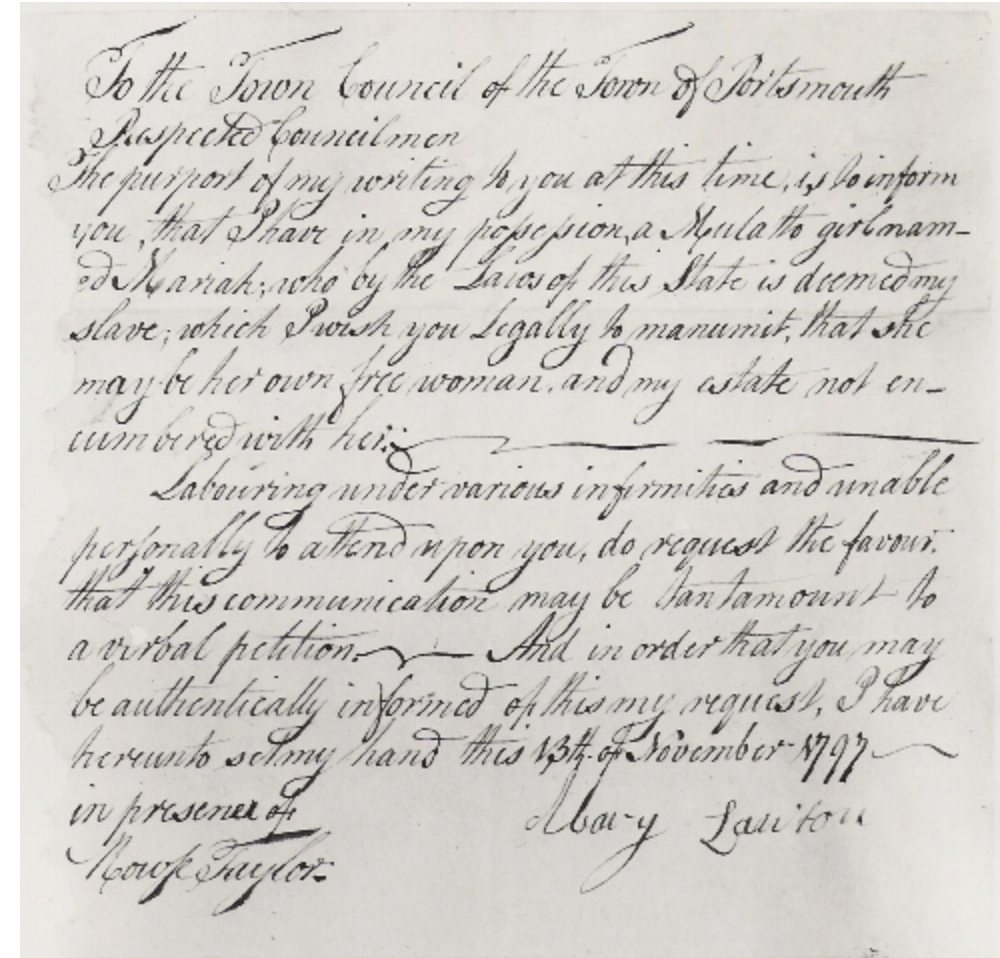
The purport of my writing to you at this time, is, to inform you, that I have in my possession, a Mulatto girl named Mariah, who by the Laws of this State is deemed my slave, which I wish you legally to manumit, that she may be her own free woman, and my estate not en-cumbered with her. Labouring under various infirmities and unable personally to attend upon you, do request the favor, that this communication may be tantamount to a verbal petition. And in order that you may be authentically informed of this my request, I have hereunto set my hand this 13th of November 1797 in presence of Joseph Taylor
Mary Lawton
Why was Mary Lawton releasing the mulatto slave at this time? Mary was a Quaker and during the Revolutionary aftermath Quakers began to petition the Rhode Island government to abolish slavery. The General Assembly of Rhode Island passed the Gradual Emancipation Act of 1784 that stipulated that children born to slaves would not remain slaves. Masters could free “manumit” healthy slaves between the ages of 21 and 40 without having the responsibility of supporting them.
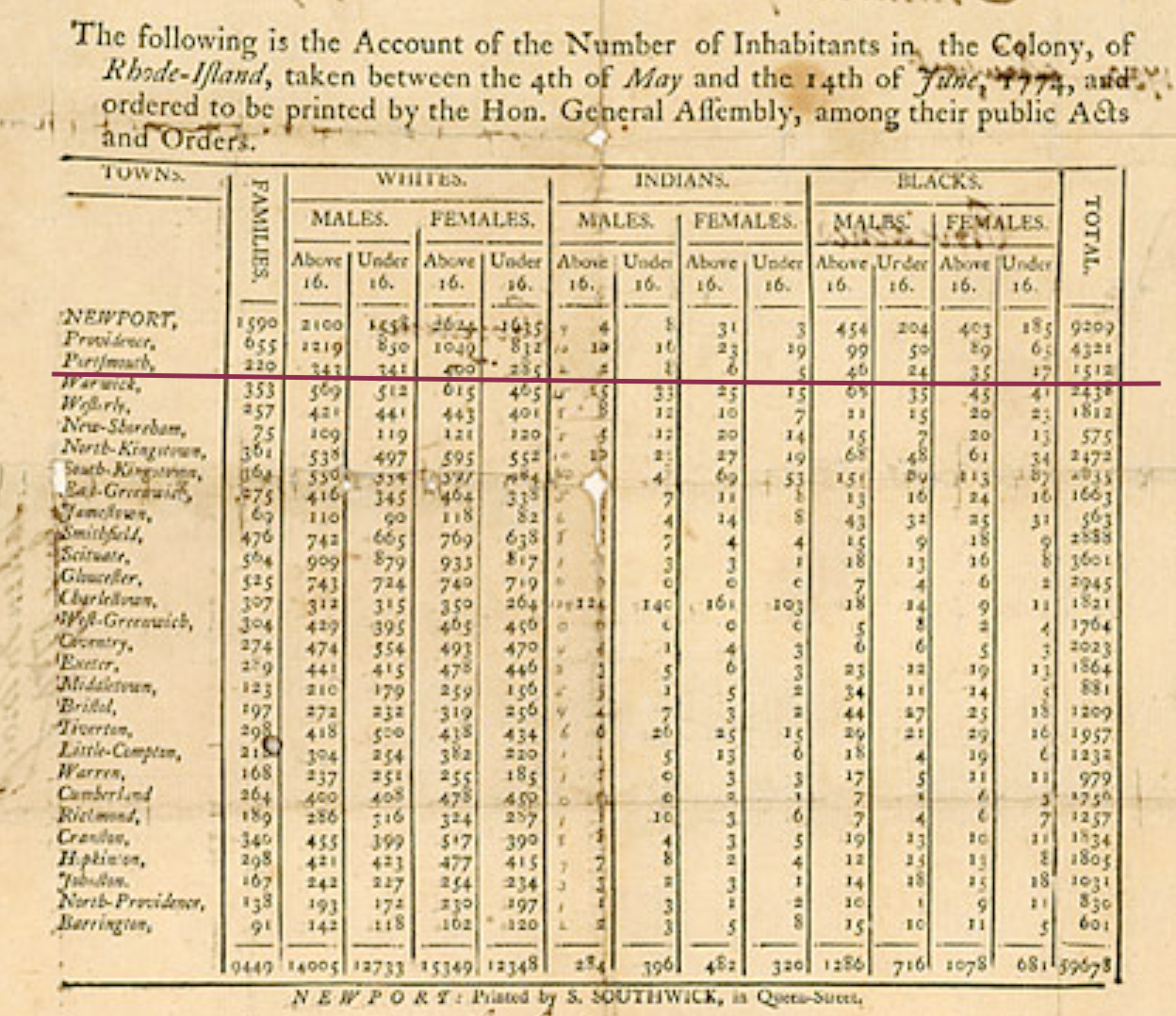
Total slaves in Portsmouth from 1774 Inhabitants. “Indians” – 16. “Blacks” – 118.
The one and two room schools and the eight districts worked while Portsmouth was more agricultural. As farms turned into housing developments and the Navy had more housing at Melville, Portsmouth schools were crowded. The school committee had to find ways to create more classrooms and the answer was to open new schools. The ten room Anthony School for upper grades opened in February of 1938, but classrooms were needed for the primary students.
Hathaway School
Howard W. Hathaway School opened in November of 1955. Hathaway was a noted orchard owner in the area and he held a number of local government positions including on the school committee for 12 years. At the school dedication local officials spoke of education of youth as the soundest investment for a “Portsmouth of tomorrow.” Hathaway was built on 5 acres of land bought from the Farias family for $15,000 and federal funds helped with the building costs. Principal Mary Shea was the principal of the eight room school.
Neel School and Melville
In 1953 Portsmouth students and Navy Housing students in the Melville area began to use a converted barracks building on the Navy Base as a school. It was named the Charles H. Neel School after a Naval Station Public Works officer. It was a 4 room school with 40 (other accounts say 51) students in grades one to three.
In 1965 Portsmouth schools were still overcrowded. Neel School had its problems and more classrooms were needed. To take care of the students in the Navy Housing, Melville School was planned. Melville School was named after the Melville area of Portsmouth on the West Side of Aquidneck Island. Melville was the center of Naval activities in the area including the training base for the PT Boats used during World War II. It was named after George Wallace Melville (January 10, 1841 – March 17, 1912) who was a United States Navy officer, engineer and Arctic explorer.
The new school would provide 18 teaching stations and serve 500. It was designed as a one story building with different wings for primary and intermediate students. There were doors between classrooms to accommodate the team teaching style that would be at the heart of the school. There was an emphasis on flexibility so that students could be taught according to their ability level. A glass enclosed area would facilitate small group instruction. The library would house 3,000 books appropriate for children. An auditorium with stage would be used by physical education. Two rooms would be outfitted with supporting equipment for social education students.
Hope School
With the development of the Redwood Farms neighborhood, more classrooms were needed. The Mother of Hope Novitiate has was consecrated in 1962, but by 1968 it was shutting down. The town rented part of the building for the Hope School around 1970. There were four classrooms covering first to fourth grade. Robert Crudup was the principal and teachers were Mary Barabe, Sally Kilmer, Janet Deuel, Nancy Phillips and Pamela White. Hope School ended as Elmhurst School was purchased and opened in 1972.
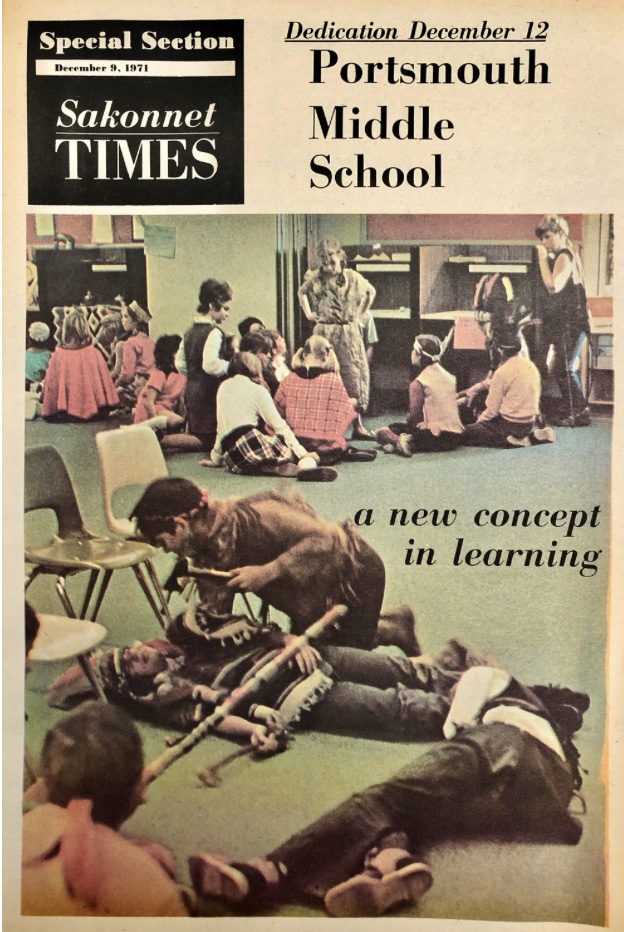
Sakonnet Times Article on School Opening.
Portsmouth Middle School
Portsmouth was building elementary schools, but there was a need for a middle school. Fort Butts School had started out taking grades from Anthony School, but gradually it was expanded into Portsmouth High School. A new middle school opened in Portsmouth Fall of 1971. It had a new design. The library had a sunken reading area that some joked was meant to be a swimming pool. Instead of separate classrooms, learning centers had moveable walls that could be divided into four separate classrooms. Trends in education come and go and at this time learning centers, stations and adjustable classroom structures were the newest trend. It was meant to give teachers and students great flexibility. As the Portsmouth Middle School was constructed to fit this model, school systems came to view how it was working.


 portsmouthhistorynotes