Home

Revolutionary Rhode Island: Rochambeau Statue Newport Harbor

Leave a comment

King’s Park on Newport Harbor is the present location of a statute to General Rochambeau. The statue remains a symbol of the assistance that France rendered to the American colonies during the War for Independence. The statue’s original location in 1934 was Vanderbilt Circle (Equality Park). The statute is the third replica of the Rochambeau Statue. The first statue was created by sculptor Fernand Hamar and was erected in 1900 at Vendome, France – the home town of Rochambeau. (It has been replaced in 1974 with a 4th replica because the Germans melted down the original statue when they occupied the area in World War II. This statue was a gift of the American members of the Society of Cincinnati.) Paris and Washington D.C. also have replicas of the same statue.

Description: Rochambeau is dressed in the uniform of a Marshal of France. He wears the traditional French tricorn hat and cockade (a knot of ribbons) and the medal of the Order of the Saint Esprit on his overcoat. He stands atop in a pose where he holds a battle map of Yorktown in his left hand. Rochambeau’s sword rests at his left hip. The cannons behind him may refer to captured British cannons that the U.S. Congress gave to Rochambeau at the end of the Revolutionary War. A spring of laurel lies at Rochambeau’s feet.

One of the reasons the Newport statue was moved to Newport Harbor in 1940 was that it was the general opinion at the time that the French landed nearby. One of the French maps shows a landing area a few tenths of a mile away. Other maps show other possible landing areas, so the question of exact location is still up for debate.

the Plan de la ville, port, et rade de Newport, avec une partie de Rhode-Island occupée par l’armée française aux ordres de Mr. Le comte de Rochambeau, et de l’escadre française commandée par Mr. le Chr. Destouches [probably done in 1781] (Washington, D.C.: Library of Congress Geography and Map Division, Rochambeau collection, 39, at http://hdl.loc.gov/loc.gmd/g3774n.ar101800)

Near the statue is a cairn or monument of rocks. In 1928, Dr. Roderick Terry of the Newport Historical Society had the cairn designed and built. The cairn’s location is the spot where the Admiral de Ternay Society dedicated a stone in honor of the admiral who commanded the French fleet into Newport Harbor. Restoration work was financed by the Alliance Francaise of Newport in 2019. The stone blocks making up the pyramid shape at the site were crumbling and the entire pyramid was dismantled and rebuilt block by block. The bronze statue of General Rochambeau had also suffered the effects of time and weather and needed restoration.

Revolutionary Rhode Island: Green End Fort

Leave a comment

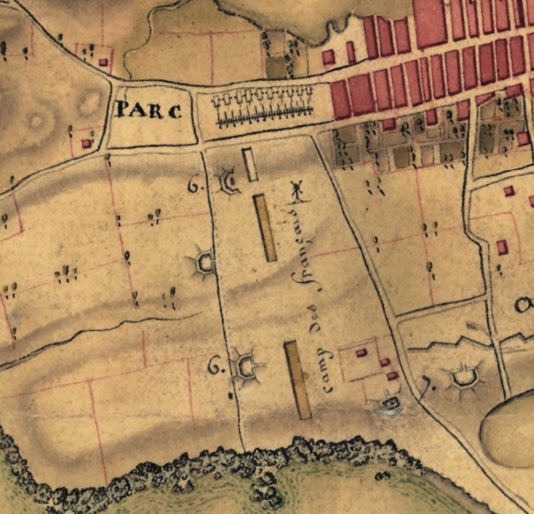
A stone marker at Green End Fort at the eastern end of Vernon Street in Middletown, RI, reads: “Green End Fort, built 1777 by the English for the Defense of Newport.” This was the popular opinion when the land was put into trust of the Newport Historical Society in 1923. Engineer Kenneth Walsh began to doubt the English origins as he read the diary of British officer Frederick Mackenzie. As he used historical maps as reference points, it became clear that the “Green End Fort” was a French fort, the Saintonge Fort. The British had destroyed their fortifications as they left Aquidneck Island in October of 1779. When Rochambeau arrived in 1780 the French worked on restoration of British fortifications and the creation of new defensive positions. American militiamen under Lafayette aided the French engineers and masons in this work. Six brand new French forts were added in the Bliss Hill area – “new constructions built by the French.” The French maps show an earthenware “Redoute St. Orige” or “Redoute St. Orige” at the location of what we call Green End Fort. The battery served as a way to defend Newport and Middletown against a possible return of the British. The earthenworks was located on a critical spot: on a ridge overlooking the Green End Valley, Easton’s Pond and with views of the Atlantic Ocean and the Sakonnet River. The battery served the French Army until June of 1781 when they departed to prepare for the long march to Yorktown. American militia soldiers took over responsibility for the Aquidneck Island fortifications.

In 1894 three men, William Sherman, Harold Brown and Nicholas Brown purchased the site to preserve it. In 1923 the land was transferred to the Newport Historical Society. The Society of the Sons of the Revolution in the State of Rhode Island and the Newport Historical Society continues to maintain the site today.

# 6 is Green End Fort: Plan de la position de l’armée françoise autour de Newport et du mouillage de l’escadre dans la rade de cette ville.

Revolutionary Rhode Island: The Conanicut Battery

1 Comment

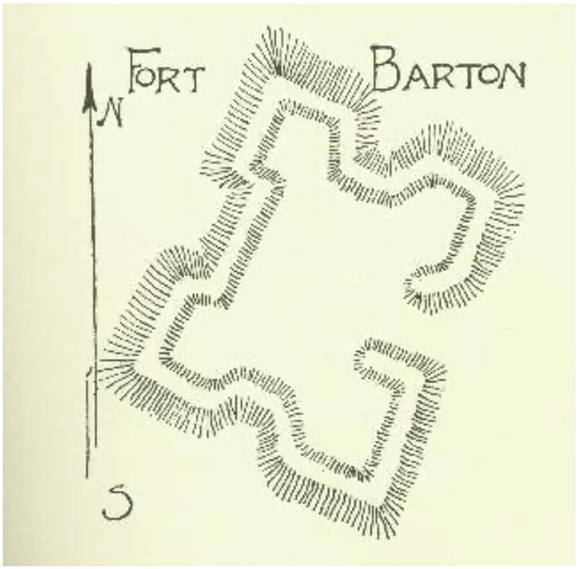
The Conanicut Battery is Revolutionary Rhode Island that we can see and experience. It helps us to understand some of the evolution of Butts Hill Fort. The Rhode Island General Assembly ordered the building of this battery in 1776. A battery was built at Butts Hill by the American militia either in 1776 or before that in 1775 as part of Rhode Island’s preparations for war. The battery was built by hand using shovels and picks. The earth dug from a ditch was used to build up the parapet and its steep walls, the glacis which would have protected soldiers in the battery from attack by infantry. The parapet on the west side would protect against cannon fire from ships in the Bay.

What is a military battery? In the case of Conanicut Battery, it is a parapet or fortification equipped with artillery. So what is a parapet? It is a protective wall or earth defense along the top of a trench or other place of concealment for troops. This definition helps us to understand Conanicut Battery and even Butts Hill Fort.

The original Conanicut Battery was probably a simple, crescent shaped earthwork to protect six to eight cannon and those that operated them. In December of 1776 the British occupied the battery and they held the position until October of 1779. In his diary entry for December 7, 1776, British soldier Frederick Mackenzie writes: “…at 12 made the Light House on the S. point of Connonicut Island at the entrance of Rhode Island harbour….and about 1 o’clock that ship (The Experiment with Capt. Wallace) took the lead, and stood up the Western Channel between Connonicut, and the Main(land)… About 2 miles from the Light House, Rebels had a Battery or Redoubt with 4 Embrazures towards the Channel, But it appeared to be abandoned.”

What you see at the battery today is a shape the British formed. Ditches surround the earthen barricades on all sides and there is a ditch around all sides. When French forces came in July of 1780, they manned the battery until 1781.

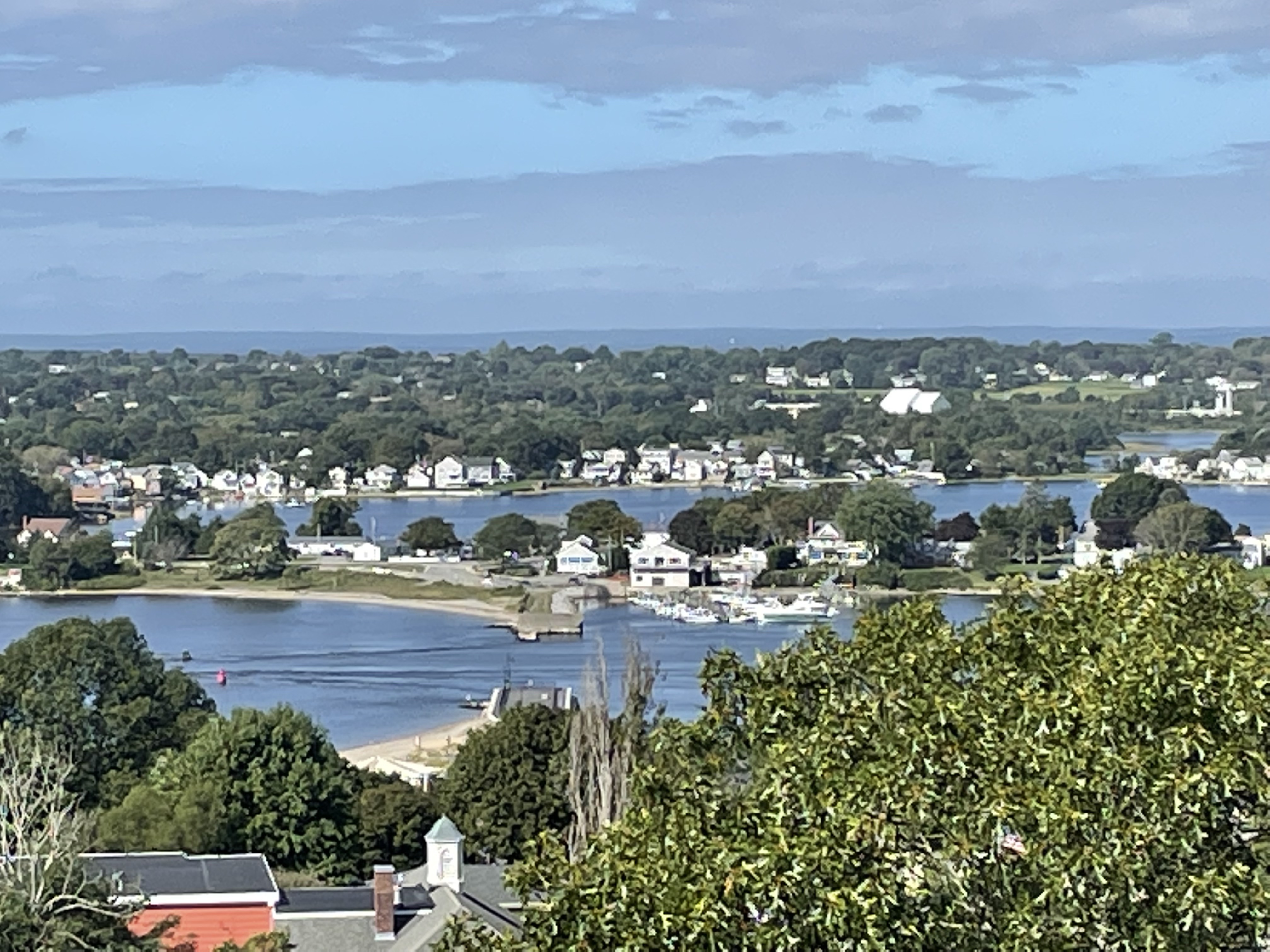
Conanicut Battery can be found in Jamestown (Conanicut Island) at the end of Battery Lane which is off of Beavertail Road.

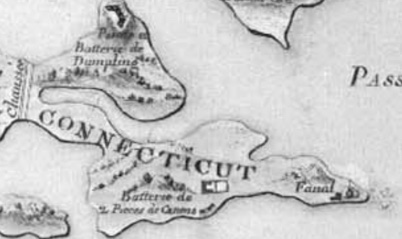
Plan de Rhode-Island Newport en ast la Capitale, 1778. Rhode Island Historical Society Collections RHiX34292

This French map mislabels Conanicut as Connecticut, but it does seem to show the location of the battery.

Walking the Battlefield: An Event at Heritage Park

Leave a comment

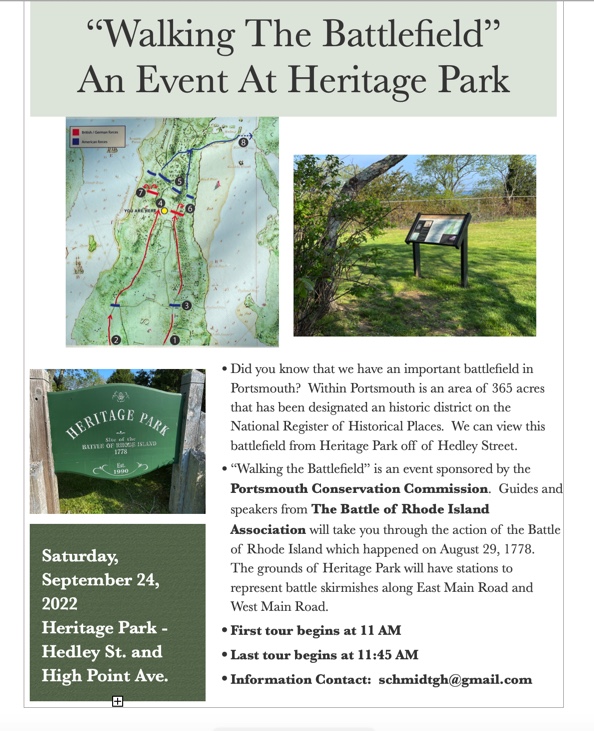
On Saturday September 24th ,2022, the Battle of Rhode Island Association is proud to partner with the Portsmouth Conservation Commission as we present “Walking the Battlefield.” The event will be held at Heritage Park, located at Hedley St and Highpoint Ave. Visitors will be guided through the action of The Battle of Rhode Island that took place August 29th, 1778.

Called Turkey Hill in 1778 and occupied by both Patriot and British forces, the Park will be laid out with stations representing key skirmishes of the Battle, the largest action in Rhode Island during the War for Independence. Guides and Speakers will take visitors through the events of the day to provide a clear understanding of a complex series of individual fights.
The event is free to the public. First tour starts at 11 am, 2nd tour at 11:45. For more information visit: https://portsmouthhistorynotes.com/

Since 1956 the Portsmouth Conservation Commission has worked to protect and preserve the town’s natural resources as well as protecting the natural aesthetic areas within the town. The BUTTS HILL FORT RESTORATION COMMITTEE is a committee of the BATTLE OF RHODE ISLAND ASSOCIATION. The mission of the Committee is to restore and maintain the Revolutionary War fort in order to provide a safe and accessible educational and recreational site that raises public interest in this National Historic Landmark and its role in the Battle of Rhode Island. The Association is a registered 501(c)(3) non-profit committed to raising awareness of Rhode Island’s role in the War for Independence. Donations may be made payable to “BoRIA” at PO Box 626, Portsmouth, RI 02871.a

The French Leave

Leave a comment

The French arrived in Newport in July of 1780. Most of the forces wintered in Newport except the Lauzun Legion which camped in Connecticut. Rochambeau was very skillful in handling his troops and the Americans began to appreciate their presence. Where the British had demolished defenses, the French engineers worked on rebuilding them. Major General William Heath’s diary for September of 1780 notes that “The batteries were strengthened, a very strong one erected on Rose-Island, and redoubts on Coaster’s-Island: the strong works on Butt’s-Hill (were) pushed..” A few days later he would remark: “The French army continued very busy in fortifying Rhode-Island: some of their works were exceedingly strong, and mounted with heavy metal.” We know from orderly books (daily records) that the American militiamen were aiding the French masons as they enlarged and fortified Butts Hill Fort.

On March 6, 1781, three months before the French army departed from Newport, General Washington visited Count de Rochambeau to consult with him concerning the operation of the troops under his command. Washington was hoping to encourage Rochambeau to send out his fleet to attack New York City. In an address to the people of Newport, Washington expressed gratitude for the help of the French:


“The conduct of the French Army and fleet, of which the inhabitants testify so grateful and affectionate a sense, at the same time that it evinces the wisdom of the commanders and the discipline of the troops, is a new proof of the magnanimity of the nations. It is a further demonstration of that general zeal and concern for the happiness of America which brought them to our assistance; a happy presage of future harmony…appeasing evidence that an intercourse between the two nations will more and more cement the union by the solid and lasting times of mutual affection.” (Quote taken from New Materials for the History of the American Revolution by J. Durant. Henry Holt, New York, 1889.)

Washington left Newport and journeyed overland to Providence. On his departure he was saluted by the French with thirteen guns and again the troops were drawn up in line in his honor. Count de Rochambeau escorted Washington for some distance out of town, and Count Dumas with several other officers of the French army accompanied him to Providence. We know that General George Washington travelled by Butts Hill Fort on the old West Main Road on his way to the Bristol Ferry because the West Road was the customary route from Newport to the ferry. Washington’s aide, Tench Tilghman, recorded the fee for the Bristol Ferry on the expense book.

In May of 1781 Washington and Rochambeau met again, this time in Weathersfield, Connecticut. This meeting confirmed the joining of the forces and the march South.

The French left Newport in stages:

  • Regiment Bourbonnois under the vicomte de Rochambeau, left on June 18.
  • Regiment Royal Deux-Ponts under the baron de Vioménil, left on June 19.
  • Regiment Soissonnois under the comte de Vioménil, left on June 20.
  • Regiment Saintonge under the comte de Custine, left on June 21.

Brigadier General de Choisy was left behind in Newport with some French troops. He sailed with Barras’ fleet to the Chesapeake area in August. In the summer of 1781, General Rochambeau’s French Army joined forces with General Washington’s Continental Army, With the French Navy in support, the allied armies moved hundreds of miles toward victory in Yorktown Virginia in September of 1781.

Resources:

https://www.nps.gov/waro/learn/historyculture/washington-rochambeau-revolutionary-route.htm

By Robert Selig, PhD. for the Washington-Rochambeau Revolutionary Route Resource Study & Environmental Assessment, 2006.
https://digitalcommons.providence.edu/cgi/viewcontent.cgi?article=1018&context=ri_history. Visit of George Washington to Newport in 1781 – French E. Chadwick. 1913
Loughrey, Mary Ellen. France and Rhode Island, 1686-1800. New York, King’s Crown Press, 1944.

The French Arrive: 1780

Leave a comment

July 11, 1780 a squadron of French warships approached Newport. Their journey was started on February 2, 1780, when King Louis XVI approved a plan, code-named the expédition particulière (special exhibition). On May 2, a fleet with crews totaling about 7,000 sailors, commanded by Admiral de Ternay set sail from France for Rhode Island. This was not the first French fleet that had arrived at Newport waters as part of a French and American alliance. The fleet commanded by General d’Estaing in 1778 was part of a Rhode Island Campaign to free Rhode Island (Aquidneck Island) from the grip of British occupation. That fleet quickly retreated following damage from a storm and the campaign ended with the retreat of the Americans at the Battle of Rhode Island. This 1780 arrival would prove to be a key moment in the French and American alliance. This landing was the beginning of cooperation between the forces that would ultimately lead to victory at Yorktown.

When the French arrived they found a Newport that was diminished by three years of British occupation. The people couldn’t feed themselves or gather enough wood to keep warm. Livestock had been taken, anything wood had been burned, farm fencing had been destroyed and almost all the trees had been chopped down. After years of occupation Newporters were not enthusiastic about having to support another army.

The French had their own concerns. One-third of the French troops were weakened during the long voyage by scurvy. Forty-seven men died during the first seven weeks on Rhode Island. General Washington sent Dr. James Craick, the assistant director of hospital for the Continental Army, to set up hospitals. With a good diet of fruit and vegetables, the men recovered.

At first the French troops were camped throughout Newport. A camp ran east from Easton’s Beach to the west by Thames Street. Lauzon’s Legion camped at Castle Hill. When the winter came it was important to find housing for the troops. General Rochambeau was in charge and he began to repair the houses that the British had left in ruins.

Plan de Rhodes-Island, et position de l’armée françoise a Newport. [1780] Map. Retrieved from the Library of Congress, www.loc.gov/item/gm71002156/.

Rochambeau was skillful in managing his troops. Conduct and discipline were important. Where the British had taken from the inhabitants, the French were careful to bring supplies in from France and they paid for what they needed. Newport merchants began to resume trade. Townspeople were able to work again. The French Commissary department employed sailors, drivers, cooks, butchers, carpenters, wheelwrights and countless other tradesmen.

The French brought engineers and soon after they landed they began to repair the defenses that the British had destroyed before they left. These fortifications were remodeled and guns were mounted. In a letter to a friend, Militiaman Dr. John Goddard commented: “…there are about 7500 Men on the Island at the Several ports, 5000 of which are French, at Newport, 2000 Three Months Men (militia), at this place and 500 Continentals, under Col. Greene of this state….Notwithstanding the Superiority of the English Fleet the French appear to feel very secure. Their Fleet consisting of seven sail of the Line & three Frigates are drawn up in line of Battle from Tomany Hill across the Chanel to Conanicut. The Town of Newport is surrounded with Forts which are well filled with Cannon, on the whole I believe there is no Reason to fear an Attack from the Enemy this season.”

With the arrival of the French in 1780, Rhode Islanders felt more secure.

Resources:

The letter was included in: Recent Acquisitions in Americana – William Reese Company – https://www.williamreesecompany.com

France and Rhode Island, 1636-1800. Mary Ellen Loughrey, New York King’s Crown Press 1944.

https://w3r-us.org/french-encampment-newport-11-july-1-november-1780/. French Encampment in Newport (11July-1 November 1780 National Washington-Rochambeau Revolutionary Route Association, Inc.

https://allthingsliberty.com/2020/01/why-newport-rhode-island-scorned-the-french/. Why Newport, Rhode Island, scorned the French by Norman Desmarais. Journal of the American Revolution January 2, 2020

German Families at Home on Butts Hill

Leave a comment

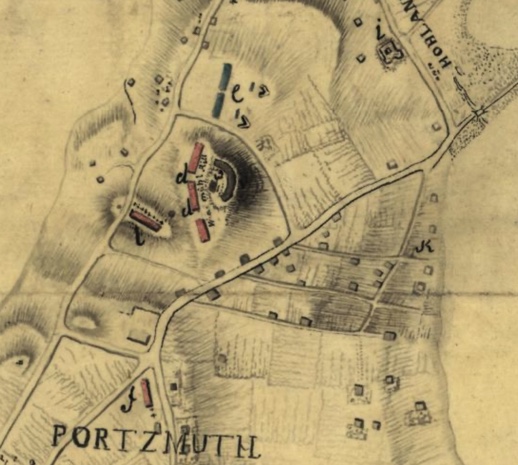
I knew that families came with the British and German soldiers who occupied Aquidneck Island. What I didn’t realize was that there would be families living at the Butts Hill fortifications. Walter Schroder’s book “The Hessian Occupation of Newport and Rhode Island 1776-1779” provides an interesting glimpse of this family life. Most of the German troops were Protestants and they brought their chaplains with the army. Schroder cites records of the Rev. G.C. Coster who was chaplain of two Hessian regiments. Coster lists several births, baptisms and infant deaths recorded at the Windmill Hill encampment (Butts Hill). That is proof that the families of the soldiers came and stayed with them even on their field assignments to North Portsmouth.

Schiffer, J. C. Plan von Rhode Island, und deren dem comando des Herrn General Majors Presgott inf dies-malig befundlichen campements. [1777] Map. Retrieved from the Library of Congress, www.loc.gov/item/75690704/.

Schroder, Walter. The Hessian Occupation of Newport and Rhode Island 1776-1779. Westminster, Maryland, Heritage Books, 2005.

Coster, G.C. Hessian Soldiers in the American Revolution: Records of their marriages and baptisms of their children in American, performed by the Rev. G.C. Coster, 1776-1783, Chaplain of two Hessian Regiments. Edited and translated by Marie Dicktore. Cincinnati: C.J. Krehbiel Co. 1959.

Aftermath of the Battle of Rhode Island

Leave a comment

French Map 1778 (Library of Congress) Shows the Retreat Route via Howland’s Ferry area.

A diary entry by Israel Angell gives us a glimpse of the aftermath of the Battle of Rhode Island:

August 30th. “A Cloudy morning and the wind very high it rained a Considerable in the night the Enemy Remained on their Ground this morning two English friggats Came up yesterday to prevent our retreat but could do but little they Still Remained here. I was Relieved this morning and got Some provisions and being much worn out for the want of sleep went to a hous and took a good knap there was a Cannonade kept up to day and Some small arms from the Sentries at night we Recd orders to Retreat off the Island which we did without the loss of anything, this Retreat was in Consequence of an Express from Genl Washington informing Gen Sullivan that the Brittish Ships of war and transports had sailed from New York Some days before.”

The diary entry tells us 

  • That the troops were worn out.  
  • They had had little to eat and had not slept.  
  • The enemy remained in its position overnight and two English frigates stayed in position.
  • On the day after the battle a cannonade was kept up and there was occasional gunfire at sentry positions.
  • The Americans received orders to retreat because the British ships were on the way.

August 30th was also a day to tend to the dead and wounded.

  • Sullivan listed the American casualties as 30 killed, 138 wounded, and 44 missing.
  • Pigot reported that British forces sustained 38 killed, 210 wounded, and 12 missing.   
  • American General Sullivan ordered a hundred men to bury the American dead.  
  • The wounded were transported to mainland hospitals in Providence, Bristol and elsewhere.  

A diary entry by Israel Angell:

August 31st, 1778.  “Our retreat off the Island was completed by three o’clock this morning it is Supos’d that the Enemy attempted a Retreat last Evening but after finding that we Had Retreated they Returned to their ground as it was late in the morning before they took possession of the forts we left …………..After we had Crost at howlands ferry we Encampt about a mile from Sd. ferry where we tarried this day at Night……”

On the night of August 30/31, American forces departed Aquidneck Island and moved to new positions at Tiverton and Bristol.

Resources:

Diary of Colonel Israel Angell: Commanding the Second Rhode Island Continental Regiment During the American Revolution, 1778-1781.

Christian McBurney’s book on the Rhode Island Campaign.  

Paul Dearden’s book The Rhode Island Campaign of 1778.  

Day of Battle: British Naval Operations

Leave a comment

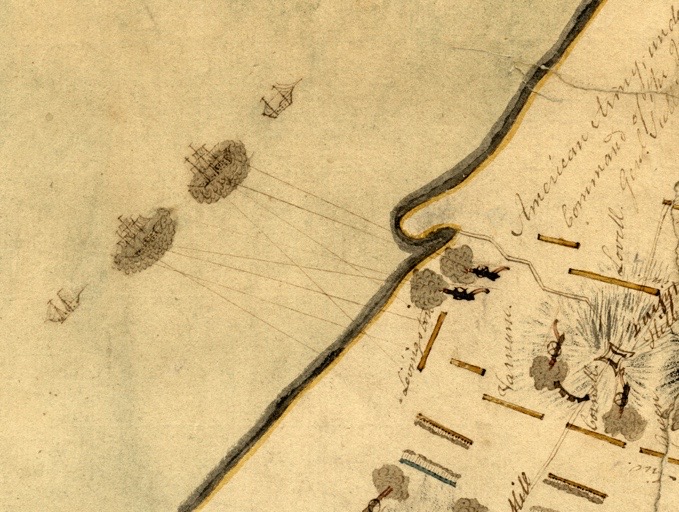
There was a significant naval component to the Battle of Rhode Island. Maps from the time period may show three or four British vessels firing on the west side of Portsmouth, but scholars such as Dr. D.K. Abbass believe there were five vessels. The ships were under the command of Captain Alexander Graeme.

Sphynx: 20-gun frigate (Graeme’s ship)
Vigilant: 20-gun armed ship
Spitfire: 10-gun row galley. This was a former Rhode Island row galley (used oars)
A loyalist brig
Another unidentified vessel

The main goal of this little British fleet was to destroy the American battery at Bristol Ferry (on the Bristol side) and block the Americans from retreating to Bristol.

The captain’s log of the Vigilant recorded that at 7:30 a.m. he “received orders to Weigh & try to cut off the Retreat of the Rebels at Bristol Ferry.”

While “working up” toward the ferry, (this would be Bristol Ferry) at 10 a.m. he “Observed the British and Hessian Troops engaged with the Rebels who had posted themselves on Quaker and Windmill hills,”

At 11:30 a.m.the ship “Stood close in & fired Several Shot to facilitate the operations of the Hessians who were by this time driveing the Rebels out of the Wood.”

Observing the Americans “turning a Work up” at Portsmouth Point (maybe Arnold’s Point), he “Stood close in and fired Several Guns with Round & Grape among those people which only disturbed them for the time.”

At 1 p.m. “Stood up as far towards Bristol Ferry as the Pilot would take Charge of the Ship the Rebels kept a Constant fire … from a Battery above the Ferry most of which Shot fell close on board and the rest passed over between the Mast Hd and kept fireing.”

The shallowness of the water in the area around Bristol Ferry may have been the factor that made the vessels turn around and pass by Portsmouth’s Narragansett Bay shores again.

“Shot at the Rebels posted on Wind Mill and Quaker hills.”

At 2 p.m. the ship again “Stood Close in” to support the Hessians, “but … the Rebels began a Cannonade from three 24 pounders the three first Shot hulled the Ship and the others fell all round her, received orders … to move.”

Thereafter the ship was “employed Standing off and on frequently exchangeing Shot with the Enemy. … “

At 6 p.m. the Cannonade on shore began to abate D[itt]o received orders … to Anchor on the Flank of the British Army during the Night with the Reprisal Brig and the Sphynx with the other two Armed Vessels stood over and Anchored under the No. end of Prudence Island”

There is another account from the diary of British officer Frederick Mackenzie, who was very critical of the Vigilant’s failure to continue its bombardment.

“As soon as the Troops marched out in pursuit of the Rebels, The Sphynx, and Vigilant, with the Spitfire Galley and the Privateer Brig, got under way with the wind at N.E. and worked up the passage between Rhode-Island and Prudence, in order to annoy the Enemy’s right if there should be an opportunity. The Vigilant got up in time to have some shots at the right of the Rebels when drawn up in front of the Artillery Redoubt, but they turning some 18 prs [18-pounder cannons] against her from thence and from Arnold’s point, she dropt lower down, and anchored with the other vessels opposite Slocum’s. We were of opinion that had the Vigilant continued in the position she had gained, and persisted in cannonading the Enemy’s right with her 24 prs she would have galled them exceedingly, and possibly have enabled us to turn that flank. ‘Tis certain there was no necessity for her moving back so soon as she did.”

British ships firing on American positions – Map 1778 Rhode Island Archives

Resources:

Abbass, D.K. The Forgotten Ships of the Battle of Rhode Island: Some Unpublished Documents. Rhode Island History Magazine, Winter/Spring 2009.

Diary of Frederick Mackenzie: Giving a Daily Narrative of His Military Service as an Officer of the Regiment of Royal Welch Fusiliers during the Years 1775- 1781 in Massachusetts, Rhode Island, and New York (Cambridge: Harvard University Press, 1930), 383.

Log entries from Founders Online. https://founders.archives.gov/documents/Washington/03-16-02-0462.

Battle of Rhode Island Timeline

Leave a comment

Action in the Battle of Rhode Island took place along East and West Roads. Sometimes there were two or more actions going on at approximately the same time. This brief timeline is an approximation.

For clarification the British and Hessian leaders are noted with a (B) and the American leaders are noted with an (A).

August 29, 1778

Dawn:
*Captain Mackenzie (B) saw empty American works. He travels to Pigot’s (B) headquarters to inform him of withdrawal. Pigot decides to hamper the retreat.

6:30 AM:
*General Prescott (B) moved out with the 38th and 54th Regiments to occupy fortifications at Honeyman’s Hill in Middletown.
*Brigadier General Smith (B) marched toward Quaker Hill by East Road with 22nd and 33rd Regiments with the flank companies of the 38th and 54th.
*On West Road Captain von Malsburg (B) and Captain Noltenius (B) with Hessian Chasseurs advanced toward Laurens (A). Behind them came Major General von Lossberg (B) leading two Anspach battalions.

7 AM:
*Von Malsburg (B) spotted Laurens (A) and Talbot (A) with their Light Corps behind stone walls to the south of Redwood House. Americans were driven back up West Road.
*Livingston’s men (A) attacked Smith’s men (B) from behind stone walls on East Road.
Commander Pigot ordered von Huyne’s Regiment (B) and Fanning’s Regiment (B) to support von Lossberg (B) on West Road.
*Pigot (B) orders Prescott (B) to send 54th Regiment and Brown’s Regiment to reinforce Smith (B) on East Road.

8 AM:
*Von Lossberg (B) sent troops toward Lauren’s positions on three sides.
*Coore’s and Campbell’s troops (B) ran into group fo Wade’s (A) pickets by the intersection of East Road and Union Street.
*British moved down Middle Road and East Road toward Quaker Hill.

8:30 AM:
*Von Lossberg (B) came to aid of Hessian Chasseurs.
*Laurens (A) and his Light Corps was forced to retreat across Lawton’s Valley to the works on a small height in front of Turkey Hill.
*Lauren retreats to Turkey Hill. Laurens was told to retire to main army as soon as possible.
Hessian (B) attackers arrived on top of Turkey Hill.

9 AM:
*Wigglesworth’s Regiment (A), Livingston’s Advanced Guard (A) and Wade’s pickets (A) waited for British at intersection of East Road, Middle Road and Hedley Street.
*Quaker Hill was the scene of intense fighting.
*Americans retreated toward Butts Hill and Glover’s (A) lines.

9:30 AM:
*From top of Quaker Hill, Smith (B) could see strength of Glover’s position.
*Smith was under orders not to begin a general engagement, so he decided against a frontal assault. *Smith withdrew forces to top of Quaker Hill.

*10 AM:
*Von Lossberg’s (B) troops arrived at Turkey Hill.
*Americans had positions on Durfee’s Hill and Butts Hill.
*Samuel Ward (A) and the 1st Rhode Island Regiment (Black Regiment (A)) held an Artillery Redoubt. *His men repulsed von der Malsberg’s (B) men.

11:30 AM:
*Von Lossberg (B) ordered von der Malsburg’s men (B) to try to attack Ward’s (A) First Rhode Island Regiment position again.
*British ships Sphynx, Spitfire, and Vigilant shelled the American positions from the West shore, but they did little damage.
*The Americans held their position.

1PM:
*British ships planned to attack American positions.
*General Greene’s (A) men dragged cannon down to beach and forced the British ships to retreat.

2 PM:
*Pigot B) reached Quaker Hill to observe the action.
*Pigot ordered Landgrave (B) and Ditfurth Regiment (B) to march to von Lossberg’s (B) troops.

4PM:
*General Glover (A) saw movement in British lines and ordered Tyler’s Connecticut militia (A) and Titcomb’s (A) Brigade of Massachusetts militia to positions behind stone walls (maybe Freeborn Street), but the British did not engage.

7PM:
*Landgrave (B) and Ditfurth (B) Regiments arrived at von Lossberg’s lines.

7PM (August 29) to 3AM (August 30) :
*There was sporadic artillery fire and light skirmishing. Musket and cannon shots were heard for seven hours.
*The Battle of Rhode Island was basically over.
*The Americans and British forces retired to their lines.

Dr. Abbass’ map

Resources:
The timeline was culled from McBurney’s Rhode Island Campaign and Dearden’s The Rhode Island Campaign of 1778. Map from Dr. Abbass’ proposal to restore Butts Hill Fort.

Older Entries Newer Entries