Home

From Slaves to Portsmouth Citizens

6 Comments

Fannie Scott’s obituary (Newport Mercury-1/16/1926) provides some intriguing information. “She came to this town over 60 years ago from the South, when the late Joseph Macomber went there and returned with 16 slaves.”  It raised a number of question in my mind.  Who was Joseph Macomber and why did he bring 16 “slaves” up to Portsmouth?  Who were the others that came with Fannie Scott.  She lived a long life in Portsmouth.  What was the experience of these people in our Portsmouth community?

Who was Joseph Macomber and why would he bring former slaves to Portsmouth?  Like many in Portsmouth, Joseph was a farmer.  He was born in 1822 in Vermont and his parents are listed in the census as French Canadian.  He taught in Portsmouth public schools to pay his way through the Friends School on the Hudson in New York and then taught in Portsmouth two more years after completing his education.  He became a farmer working at first for Bateman Monroe.  Macomber became a fruit grower and one of the largest strawberry farmers in Newport County.  He was also a very dedicated member of the Society of Friends.  This connection with the Friends may provide one reason for the trip to the South.  After the Civil War many Quaker groups reached out to help the freed slaves.  Was this Macomber’s goal in bringing 16 former slaves to Portsmouth?  I haven’t found the answer, but the records of the Portsmouth Friend’s Church or Macomber family stories may help us understand his action.  Many of the people he brought with him were also very dedicated to the Friends Church in Portsmouth.

1870 – Macomber Household

Who were the sixteen that came with Macomber?  From the 1870 census we have some clues.  In a previous blog I told the story of the Ayler family.  Among those living on Macomber property were Morgan and Matilda Ayler and their children Robert, Edward and Alice.  Daniel Ayler was another son, but he doesn’t appear on the census.   Fannie Scott and her husband Robert Scott are there as well.  Fannie is listed as Martha Brent – but there were some difficulties with other names on that census.  Fannie is the sister of Matilda Ayler and in the 1880 census she is listed as being in the Ayler household.  Other Virginia born residents at Macomber’s farm are Frank and Mary Curtis.  We know from the obituary of William H. Parker (known as Billy) (Newport Mercury, 5/8/1936)  that he came at the same time as Morgan Ayler.  That accounts for 11 of the 16 listed as the number Macomber brought to Portsmouth.  Who were the others?  I can’t answer that without more information.  I am not even clear what date they came to Portsmouth.

How did these families fare in our community?  Many remained on Aquidneck Island for a long while.  The Ayler’s became successful farmers. See a previous blog for more on this family.

Frank and Mary Curtis settled in Newport.  After working for others, Frank had his own livery service at the corner of Powell Avenue and Kay Street.  “He was known as a thoroughly honest and reliable man, who was kept busy most of the time.  He never hesitated to answer a call at any hour of the day or night, regardless of the weather.” (his obituary – Newport Mercury 1/30/1915).

Billy Parker was a fixture in the Portsmouth community.  His obituary notes that “In the time of the Civil War he ran away from his home in the South and took care of an officer’s quarters.”  Records of the Freedman’s agency show him employed in barracks in Washington, D.C.   He also seems to have received a pension for his service.   John Pierce’s book Historical Tracts of the Town of Portsmouth has a short article on Billy.  It gives Billy a rather colorful background that I cannot confirm.  In Billy’s article it claims he worked in a restaurant opposite the Ford Theater and saw Abraham Lincoln carried out after he was shot.  He said his grandmother worked at the home of General Lee.  A newspaper article (Mercury  11/9/1934) has Billy as part of a parade by the “Portsmouth Protective League.”  The parade of 100 cars was led by William H. Vanderbilt and an orchestra in a truck.  The parade stopped at the home of Portsmouth’s oldest resident – Mrs. Emma Hicks.  At this stop Miss Cornelia Hicks was dressed as Martha Washington, Mrs. Lucy Anthony was dressed as George Washington and Billy Parker was in costume as Washington’s aide.  Billy lived in the Cozy Corners area of Portsmouth and spent the end of life with Alice Ayler Morris.

Robert and Fannie Scott were dedicated members of the Friends Church.  From newspaper articles it seemed that Robert continued to work for Joseph Macomber.  He died suddenly in 1914 and he was buried in the Friends Churchyard.  His widow Fannie at first went to live with Alice Ayler and then became a resident of the Home for the Aged Colored People in Providence.  This home was championed by Christina Bannister and was supported with funds from local black churches.   Local artist Sarah Eddy regularly hosted an outing at her Bristol Ferry home for the residents of The Home for the Aged Colored People.  Fannie died at this home and although her funeral services were conducted there, local Friends minister Elizabeth Trout conducted the services and Fannie was buried in the Friends churchyard next to her husband.

Whatever Joseph Macomber’s motivation was in bringing former slaves to Portsmouth, they became a real part of the Portsmouth community.  Most stayed close to the Quaker faith – a faith that they shared with Mr. Macomber and his family.
Servitude in Portsmouth: Slavery

1 Comment

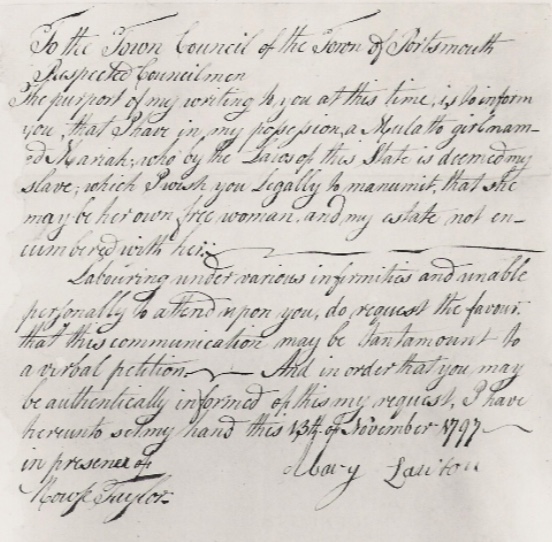
“The purpose of my writing to you at this time is to inform you, that slave in my possession, a Mulatto girl named Mariah, who by the laws of this state is deemed my slave; which I wish to you legally to manumit, that she may be her own free woman, and my estate not encumbered with her.” (Mary Lawton to the Portsmouth Town Council in 1797). *

Mary Lawton document

I came across this document while looking for a particular vintage image of Portsmouth.  In researching many topics in early Portsmouth history, I have encountered a variety of references to slaves.  I have not made a study of this topic, but I would like to share some of the examples I have found.  Portsmouth is not associated with the slave trade like Bristol and Newport, but many local families will find their ancestors held Native American or black slaves.

With the coming of the settlers, the native populations found themselves unable to live in their normal style.  Their hunting grounds and summer camp areas were “sold” to the Europeans.  Towns like Portsmouth restricted them and they found it impossible to live on their own.  After King Philip’s War,  many Native Americans found themselves sold into slavery.  It was not unusual for them be in servitude to colonial farmers in Portsmouth.

Researching the land history of the “Glen” was the beginning of my interest in Portsmouth history.  My father was helping with the research and he brought me a copy of the death inventory of Thomas Cooke.  The Cooke family originally settled the Glen lands from East Main Road to the Sakonnet River.  The original  of this document dated 1677 is included in the Portsmouth Scrap Book, page 72. ** Included close to the bottom of the inventory is “one Indian Boy.”

In researching the Cundall/Slocum graveyard by the Glen Barns, I came across this article:  Rhode Island June 27th (1712). “An Indian servant man belonging to Mr. Giles Slocum of Portsmouth carry’d out to sea in a canoo(canoe) two of his masters sons, one of ten the other of nine years old, whom he kill’d and drown’d, and being examin’d before the Authority confesed that he knocked the eldest child in the head with the padle, and seeing the younger crying, he designedly oversett the canoo, and swam ashore himself, who is now in Irons in close/clofe? prison till he is try’d for his murder.” *** The slave, identified as Job, was found guilty and executed on Miantonomi Hill in Newport.

A son ( or maybe grandson) of the Giles Slocum mentioned above is shown to have had black slaves.  The records of the Town of Portsmouth show: Apr. 1st, 1745, “Giles Slocum gave manumission to a negro slave ‘Jack’ and a negro woman ‘Heleno’ they paying him therefor one hundred and fifty pounds in current bills of publick credit of the colony”.

The Slocum family were Quakers, yet they held both Native American and Black slaves.  We may think of the Quakers as being strong abolitionists and they did become so.  However in the early days Quakers were active in the slave trade and held slaves themselves.  Samuel Elam, who dressed in simple Quaker garb despite his rich lifestyle, is such an example.    His Portsmouth estate was named “Vaucluse” and it was situated off of Wapping Road.  This was no rustic rural retreat.  Elam had enlarged the house to resemble a temple and he developed elaborate gardens on the grounds.  One French visitor described Elam as “the only farmer in the island who does not personally labour upon his own ground.” ****  He would be in need of workers for his estate.

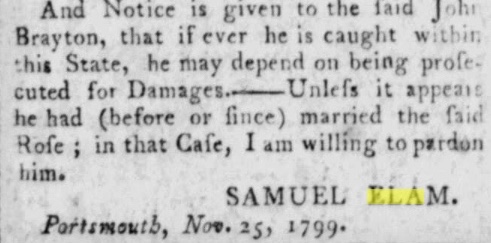
Ad in the Mercury 1799

In 1799 Elam posted a notice in the Newport Mercury for a runaway-slave.  He does want the slave (named John Brayton) back, but he does show some mercy.  Rose Phillips, “a lusty middle aged Woman” escaped with John. Rose had been freed on condition that she work for three years and she hadn’t completed that service.  Elam shows some mercy, however.  If John is caught he would prosecute him unless he had married Rose!!

Elam and other Portsmouth Quakers were finding a conflict between their faith and their slaveholding traditions.  In earlier days Quakers could justify their slaveholding by saying they treated them well and educated them.  Especially after the American Revolution, Quaker leaders were preaching that ownership of slaves contradicted their fundamental idea of equality of all human beings.  In 1774 Quakers were told to give up their slaves or leave the Society of Friends.  Portsmouth Quakers began to free their slaves.

Among Portsmouth citizens who freed their slaves for religious reasons were William Anthony (1 slave 1775), Thomas Brownell (1 slave 1775), James Coggeshall (3 slaves 1775), Cornell Walter (2 slaves, 1775). Weston Hicks (1 slave 1775), Isaac Lawton (1 slave 1775), James Sisson (3 slaves, 1775).

The Portsmouth 1790 Federal Census lists 19 slaves in Portsmouth.  Their owners were Thomas Potter, Mary Lawton, John Thurston, Job Durfee, Matthew Cooke, Matthew Curney (who had 3 slaves), Peter Wales, Sarah Almy (who had 2 slaves), Jeremiah Hazard (who had 6 slaves) and James Allen (who had two slaves.)

The 1800 census showed the number of slaves was down to 12.  Preservd Shearman, Andrew Corie, Jr, Benjamin Chase, Job Almy, Gideon Durfee, Isaac Anthony, Samuel Elam and John Cottorell (who had 2 slaves).

By 1821 there are no slaves listed on the census for Portsmouth.

Guests on Genealogy shows are often dismayed that there were slave holders in their families.  Those with long Portsmouth roots should not be surprised that there are slaveholders among their ancestors.  As a community we need to understand the legacy of slavery in the history of our town.

References:

*A facsimile the Lawton document is included in the Pierce Collection available online at the Portsmouth Free Public Library website.

**The transcription of the Cooke inventory was published in Thomas Cook of Rhode Island. Published by author Jane Fiske, Boxford Mass: 1987.

***Source: Boston News Letter, June 27. 1712.

****So Fine a Prospect:  Historic New England Gardens.

Servitude in Portsmouth: Indentured Servants

3 Comments

Many of those researching the founding Portsmouth families will find that among their ancestors is an indentured servant who labored hard to gain their freedom. Other families may find that their ancestors were the masters of such servants.   What was an “indentured servant”?  Why would someone agree to be a servant or on the other hand be forced to be such a servant?  What kinds of indentured service were there?  I haven’t made a study of this kind of servitude,  but I have encountered some examples of indentured service as I have researched other topics of Portsmouth history.

What was an “indentured servant”? An indenture is a legal document which binds a worker to a master for a fixed period of time.  It is a legal contract and there are responsibilities for both the master and the servant.  Our document collection includes legal procedures that occur because either the master or the servant has failed in his duties.

In the collection of the Portsmouth Historical Society there are documents that show different kinds of arrangements for the services.  Some are simple exchanges  – labor for room and board.  Others involve “apprenticeship” where the master exchanges labor for training in a trade or skill.

Robin’s indenture

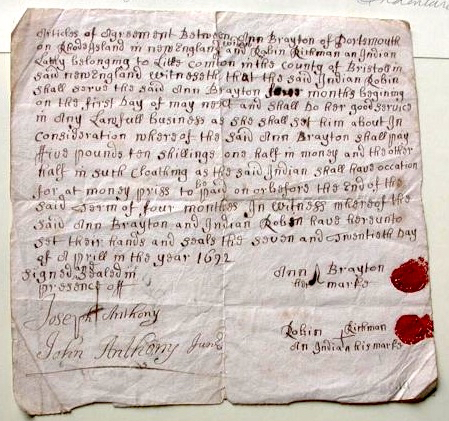
The following document is an agreement of indentured servitude. In the document, an Indian man named Robin Richman agrees to a term of four months as an indentured servant to Ann Brayton, an Englishwoman:

Articles of agreement Between Ann Brayton of Portsmouth on Rhode Island in New England and Robin Richman an Indian lately belonging to Little Comton [sic] in the county of Bristol in said New England witness that the said Indian Robin shall serve the said Ann Brayton four months beginning on the first day of may next and shall do her good services in any Lawfull business as she shall set him about in consideration whereof the said Ann Brayton shall pay five pound ten shillings on half in money and the other half in such cloathing [sic] as the said Indian shall have occation [sic] for at money price to be paid on or before the End of the said term of four months in witness in hereof the said Ann Brayton and Indian Robin have hereunto set their hands and seals the seven and twentieth day of Aprill [sic] the year 1692
[Signed by]
Joseph Anthony,  John Anthony
Ann Brayton Her mark
Robin Richman An Indian his mark****

Robin will work for Ann Brayton and does her bidding.  Ann will pay Robin for his services and provide clothing.   As Europeans settled Portsmouth, the Narragansett tribe lost its hunting and planting ground.  Native Americans could no longer live their traditional life and they were not prepared to fit into the settlers’ way of life.  Attaching themselves to serving a white family, working in the fields, or working in construction was a way to survive.

Other Portsmouth Historical Society documents illustrate apprenticeship, also called “indenture” in this case.  There are obligations for both the apprentice and master. An apprentice will be learning skills from a master.  Note that this child “Philip” is a “Parish Child”  This means that he is an orphan in the care of the town or coming from a poorhouse.  Note that it is the “Town Council” that is putting this child into indenture.  Pay attention to the responsibilities of the apprentice and those of the master.  The master will take care of the apprentice “in sickness and in health” and teach him how to read, write and cypher.  This contract is very typical of the wording in most of the apprentice type indentures.

Whereas the Town Council of the Town of Portsmouth in the County of Newport in the Colony of Rhode Island. At a meeting of said Town Council held the 14th Day of May, Anno Domini 1750. Ordered that a Parish Child named Philip Gusteen, the son of Pathena Gusteen be bound out an Apprentice by the clerk of said Town Council unto John Cory of North Kingstown in Kings County in the Colony aforesaid for the term or time fifteen years from the day of the date of said meeting.
Now this indenture, made the fourteenth day of May in the twenty third year of his Majesty’s Reign George the Second, King of Great Britain, Anno Domini 1750. Witnesseth that I, William Sanford, Clerk of the said Town Council of Portsmouth aforesaid, pursuant to the order of the said Town Council, have put, and by these present, do put and bind the above named Philip Gusteen, an Apprentice, unto the above named John Cory and in case of death of the said John Cory within the said Term then to serve Joseph Cory, son to the said John Cory, the remaining part of his apprenticeship. During all which time the said apprentice, his master faithfully shall serve his secrets keep, his lawful commands, being lawfully obeyed, he shall do no damage to his said master, nor flee, it be done by others without giving notice thereof to his said master, he shall not wrest, lend nor purloin the goods of his said master, nor absent himself from the service of his said master either by night or by day without his leave or consent, he shall not contract matrimony within the said term, nor haunt Ale-houses, Taverns, or Playhouses, nor play at any unlawful game or games whereby his said master be damaged, either with the lots of his own goods or the goods of others but in all things behave himself as a true, faithful and honest apprentice ought to do during said term. In consideration whereof the said master John Cory for himself and his son Joseph Cory both covenant and agree to find, provide and allow unto his said apprentice good and sufficient meat, drink, and apparel, lodging and washing fit and suitable for his said apprentice, both in sickness and in health and also teach his said apprentice or cause him to be taught to read, write and cypher within the said term and at the end and expiration thereof to discharge his said apprentice with one good new suit of apparel throughout besides his usual apparel and for the true performance of the Covenant and agreements above expressed the parties to these present above named bind themselves to each to the other. In witness whereof they have hereunto interchangeably set their hands the day and year above written with seals affixed.
[Signed by:]
Gideon Freeborn, Esq. Joseph Anthony
John Cory *****

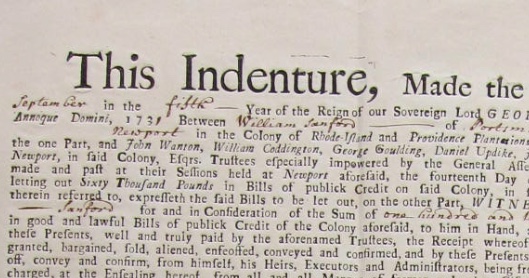
The indenture of Joseph Cundall illustrates another reason people entered into servitude.     In 1706 Joseph Cundall had left his native England to become an indentured servant in America.  Becoming an indentured servant was a way for a young person to learn a trade and get an education in exchange for working for seven years or more. Cundall seems to have learned his trade well and was in a good position to buy land as an adult.  Joseph Cundall’s family would ultimately hold most of the Glen land and they were pillars of the community and master millers.

Indenture Form

For the white apprentices, this period of service gave them an opportunity to pay their fare to America, gain profitable skills and then take their place in society.  For the Native Americans and Blacks, indentures were not always voluntary.  It was sometimes treated as a punishment by the courts.  If they violated a law and could not pay restitution, they might be bound over as an indentured servant.  It is hard for us to imagine choosing to bind yourself into service or forced into service because of race or poverty.  It was however, a feature of life in Portsmouth for over a hundred years.

References:

**** PHS document 111.04 INDENTURE Portsmouth, RI 4/27/1692 Indenture Agreement April 27, 1692 between Ann Brayton of Portsmouth and Robin Richman, Indian, of Little Compton.

*****PHS # 1700.017: Indenture of Philip Gusteen, son of Pathena, to John Cory of North Kingston dated 5/14/1750

From Slaves to Portsmouth Farmers: The Aylers

4 Comments

As I have been researching Portsmouth farm heritage, I found that our farmers have come from a variety of experiences.  They were settler farmers who were originally tradesmen and merchants in England. “Gentleman farmers” with big estates came from business backgrounds in New York and cities.  Our Yankee farmers were the descendants of the settlers and they were pillars of the community.  Portuguese farmers came across the Atlantic to Portsmouth to continue their farming trade.  I came across another farm family, the Ayler family, whose road to Portsmouth was quite different.

Edward Ayler’s obituary (published in the Newport Mercury in June of 1935) provides some clues to understanding their lives.

“Edward Ayler, one of the oldest and best known citizens of Portsmouth, died last Friday at his home on Freeborn Street.”

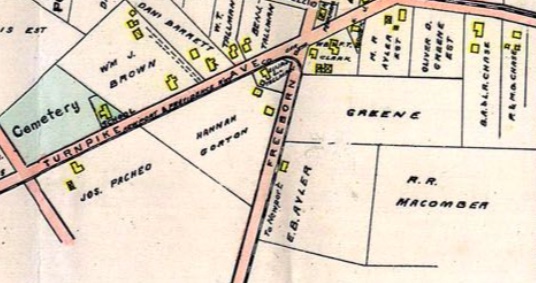
Ayler Property on 1907 map

This first line tells us where Edward (and his father before him) lived – in the area of Portsmouth known as Cozy Corner. Edward was well known.

“He was the son of the late Morgan and Matilda Ayler, former slaves, who came from the South to Portsmouth after the Civil War.”

The last line of Edward’s obituary tells us that he lived a long life as a Portsmouth farmer.  “He was more than 80 years old and had been engaged in farming practically all his life.”

How did the Aylers settle in Portsmouth?  The obituary of Matilda Ayler’s sister gives us another clue.  The Newport Mercury 1926 article about the death of Mrs. Robert Scott said “She came to this town over 60 years ago from the South, when the late Joseph Macomber went there and returned with 16 slaves.”   I am still working on researching the others who came here with the Aylers and I will write more about these Portsmouth community members in a later article.

Morgan Robert Ayler was born in Virginia in 1825.  I will focus on his life in Portsmouth, but genealogical resources show him residing in Ohio and West Virginia on his way back to his native Virginia.  The  records of the U.S., Freedman’s Bank show his residence as Washington, D.C. in 1870.   Also in 1870, Morgan, his wife Matilda and three of his children are listed as residing on the farm of Joseph Macomber off East Main Road in Portsmouth.  Morgan is listed by his middle name of “Robert” and son Edward is listed as “Edmund,” but their ages correspond to the birth dates of Morgan and Edward.  The men are listed as being farm laborers.

An interesting Daily News article in 1879 tells us that Mr. Morgan Ayler is in charge of  Friend Macomber’s farm.  It seems that Morgan Ayler found thirty six small bottles of liquor – all in a row – in one of the fields.  Since Macomber was a “well known temperance man,” it was suggested that the bottles were left behind by “thirsty Providence folk” who came for the “great celebration” of the Battle of Rhode Island the year before.

By the 1880 U.S. census both Morgan and Edward are listed as farmers with land of their own.  Both men won awards for their produce at the local Agricultural Fair.   At age seventy-seven, farmer Morgan’s tomatoes were given awards in 1902.   In 1914 and 1918 Edward was winning awards for his potatoes, parsley, beans and lima beans.   The Aylers must have been well known as farmers because an 1890 newspaper ad uses a testimonial from Edward Ayler and his brother Robert – “In trial with other Fertilizers, E. Frank Coes’s Red Brand Excelsior Guano gave the best results.”

The Ayler family was very involved in Portsmouth activities.  Edward Ayler’s wife (Louise Jackson Ayler)  was active in the Woman’s Christian Temperance Union.  She often hosted meetings at her home.  She was active in the Friends Missionary Society.  The early generations of the Aylers were strong Quakers, but there seems to be a split among the third generation.  Edward’s sons Raymond and Emerson and daughter Alice Ayler Morris were known for their singing in the Friends Church before World War I.  During the war, however,  Raymond H. Ayler was commissioned as Second Lieutenant after having been drafted “with the colored boys” (Mercury, 9/13/18) while brother Osceola received a deferment because of his Quaker faith.  In the 1920s Raymond would be on the executive board of the American Legion along with William Vanderbilt and Bradford Norman.  L

Later generations of the Aylers would move on from Portsmouth.  Despite their difficult beginnings they became a vital part of the Portsmouth community.  The Ayler family is part of Portsmouth’s farm heritage.

Portuguese Farmers Come to Portsmouth

1 Comment

Note Portuguese names on their 1907 map

Portsmouth has a strong heritage of farmers of Portuguese descent.  When did they begin to come to Portsmouth?  How did they come to own their own farms?  What were their farms like? How were they accepted in the community?  Fortunately, back in 1910 twenty Portsmouth farmers of Portuguese heritage were interviewed by a federal government agency for a report on immigrants in various American industries.  The information in this report gives us valuable insight into the roots of the Portuguese farming community here in Portsmouth.  

When did the Portuguese come to Portsmouth?  According to the report, the Portuguese began to come in numbers to the United States as early as the 1830s.  They shipped out from the Azores as sailors on whaling vessels bound for the port of New Bedford.  There were communities of Portuguese in New Bedford and later Fall River.  In the 1880s Portuguese began to come to Portsmouth as farm workers.   They lived in Fall River and worked in Portsmouth.  Within the Portuguese community, Portsmouth became known as a place where men could find agricultural work.  By 1890 the Portuguese began to come directly to Portsmouth.  Of the twenty farmers interviewed for the report, 14 had been farmers or sons of farmers in their native islands.  They were used to working in agriculture and they wanted to continue in that tradition.  They came from the islands of Sao Miguel, Sao Jorge and Fayal in the Azores.  

How did they come to own their own farms?  In 1909 there were 59 Portuguese farmers on the Portsmouth tax rolls.  Thirty-one of them were tenants and twenty-eight were owners of their own farms.   These owners were able to find a path from farmer worker to tenant farmer and then buy their own land.  When they came as farm workers they were not afraid of hard work and long hours.  They saved their money in order to rent land.  Land in Portsmouth was expensive.  Portsmouth agricultural land was considered some of the best farm land in the state.  As tenants they paid for their house and $8 to $10 an acre to farm the land.  They saved money to buy a horse and wagon, a few pigs and a few implements.  Their wives routinely worked the land with their husbands.  The writer made a comment that the women did not neglect their homemaking even though they helped their husbands.   Many of the men worked for neighbors in order to augment their income.   Most tenants (and owners, too) had to take out loans and could not pay their debts until the crops were sold.  Not every farmer succeeded, but most were able to make a good living.  In order to become an owner, they had to take on a mortgage.

What were their farms like?  Most farms were small.  The largest of the Portuguese farms was 95 acres and the smallest was one acre.  More than half the farms were under 15 acres.  Potato was the money crop.  Most farmers had half their ground planted with potatoes.  Their potato crop was marketed through Bristol Ferry to Providence.

Nearly every farm had a few acres in corn, but their corn was used to feed animals.  Five of the twenty farms grew hay.  Some of their farms had dairy herds and poultry products were sold by most of the farms.  They were somewhat self sufficient in providing their own meat, milk, eggs and vegetables.  The writer reports that “on the whole, the farms are well kept and appear like the surrounding farms.”  

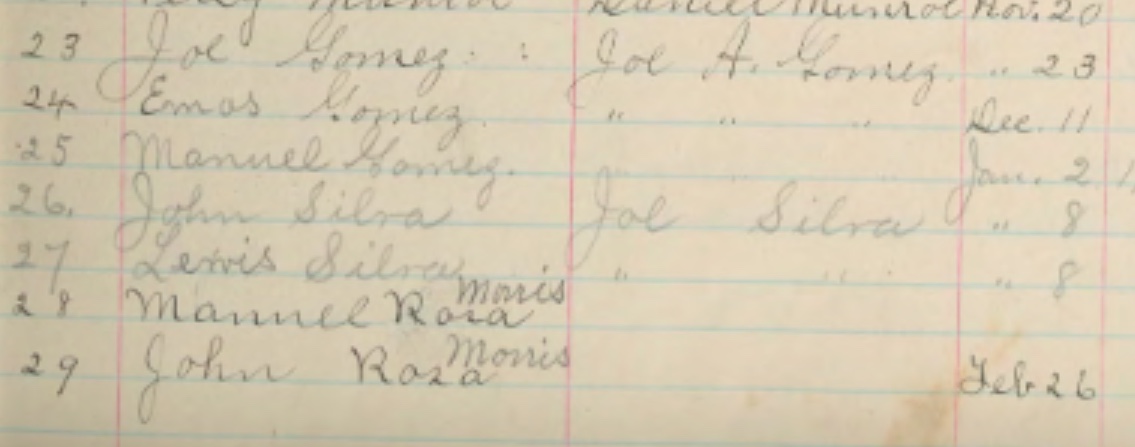
Portuguese names on 1907 Newtown School roll

How were the Portuguese farmers accepted in the community?  The report writer claims that “there is really no race prejudice and the Portuguese are not looked down on.” (page 454)  He writes that “Americans regard them as indispensable.”  (page 458)  Their credit is good and the fields “improve under Portuguese tillage.”  One of the few negative comments is that the Portuguese are not as interested in becoming naturalized citizens as other immigrant groups.  

Clearly the Portuguese farmers as a whole were able to take the path from farm worker to tenant farmer to proud farm owner.  Their hard work and willingness to put in long hours paid off.  They became an integral part of the Portsmouth community.

If you want to read the report for yourself it is online at Google Books.  It is titled “Immigrants in Industries:  Part 24: Recent Immigrants in Agriculture.”  Go to  Chapter VI – Portsmouth, RI:  Portuguese Potato Planters.


Portsmouth Farmer: Leonard Brown

Leave a comment

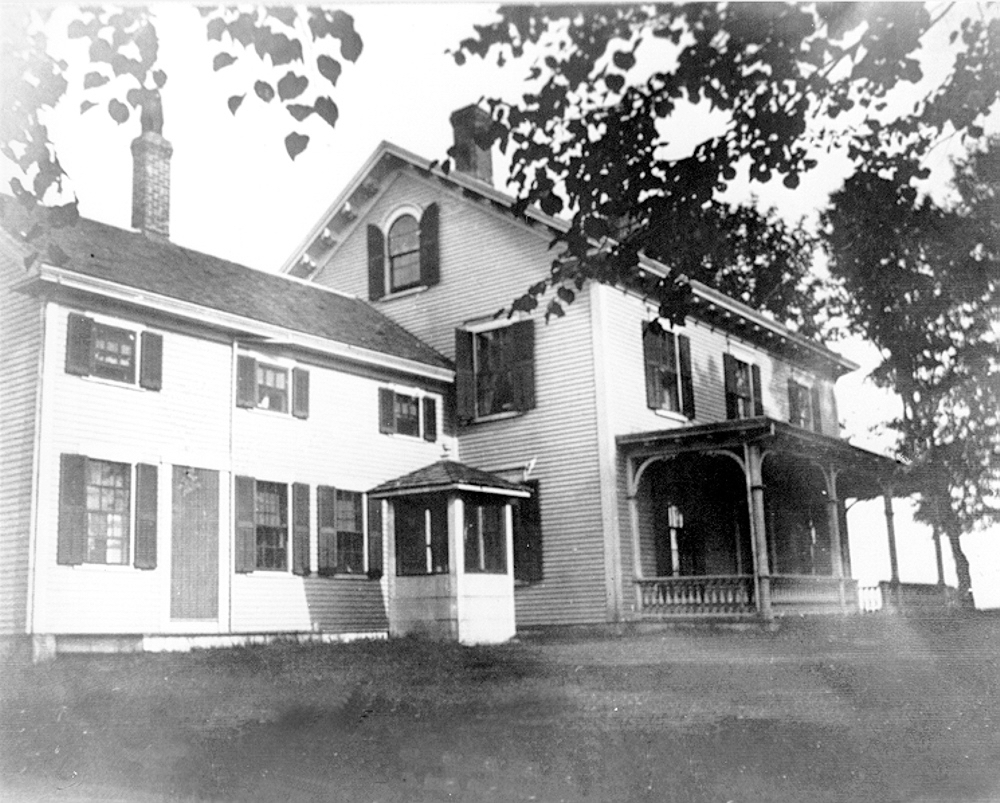
If you are familiar with the Glen, you may know that the newly restored Leonard Brown House sits at the end of a drive lined by majestic linden trees.  Who was Leonard Brown and what does he represent in Portsmouth history, especially its agricultural history?

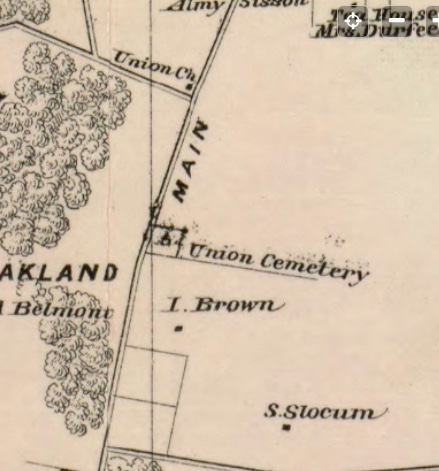
Leonard Brown was born in Middletown in 1815.  A newspaper clipping shows that he is an orphan in 1835. By 1838 Brown marries his wife Sarah. She was the daughter of Revolutionary War militia leader Cook Wilcox.  Leonard Brown came by his farm land through his wife’s inheritance from her widowed mother. What would become the Brown farm had been part of Wilcox’s land and that land was originally part of settler John Cooke’s original land grant.  Brown’s descendants believe that the property would not officially become Leonard Brown’s until 1870 after the death of Sarah Wilcox Brown’s mother – “Polly” Wilcox. The Wilcox home is found close to East Main Road in the Walling map of 1850. By 1870 the Dripps map shows Leonard Brown holding the property in 1870 and that his house was placed much further into the land where it is today.

Leonard Brown House in 1920

There is no doubt that Leonard Brown was farming the property even when his mother-in-law officially owned the land. Dating the Brown House has been difficult.  The diary of George Manchester shows that Brown was on the land in 1851 because a barn was built for him by Albert Coggeshall.  1852 clippings of the winners of the Aquidneck Agricultural award show him as the winner of “best lot of native cows.” Award postings for 1875 give us an idea of what animals he raised. He won Agricultural Fair ribbons for best Durham cow, Beef cows, lambs, working oxen, Aldernsey heifers, Southdown Backs sheep, and best pen of sheep.

By the 1880s Brown was considered one of the best farmers in Portsmouth.  He raised poultry and pigs and brought them to market in New Bedford.  Along with farming, Brown served as a wheelwright and a blacksmith. Leonard Brown represents the Yankee farmers, the descendants of the original English settlers.  Brown and the farmers like him were the backbone of Portsmouth.  They served in political offices, farmed and were the skilled craftsmen of the town.

 When Leonard Brown died in 1896, the Brown farm was sold to H.A.C. Taylor and became part of the Glen Farm.

A Year (1858) on Portsmouth Farms

Leave a comment

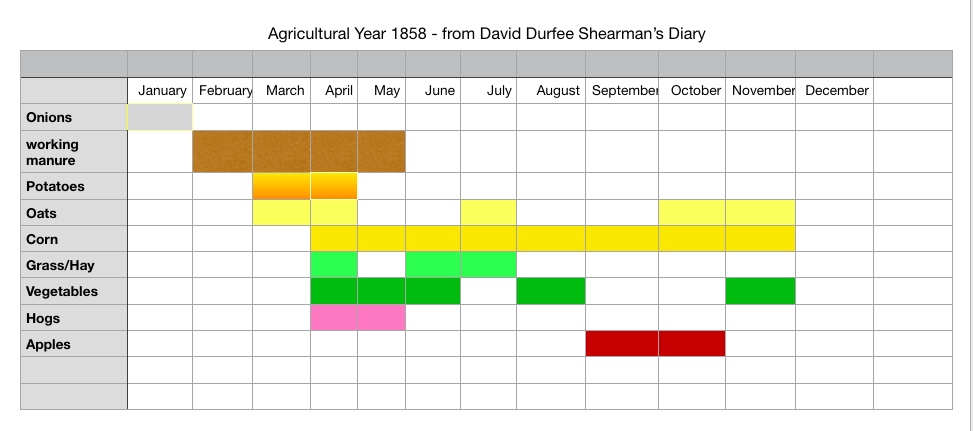
David Durfee Shearman did not have a farm of his own, but he helped on his father’s farm (Benjamin C. Sherman) and did odd-jobs for a number of farmers in Portsmouth.  His 1858 diary gives an idea of what the farmer’s year was like.

Onions:

Portsmouth farmers did not rest over the winter.  Shearman worked on making farm tools, but he noted on January 28th that farmer Dennis Hall was taking advantage of the mild January to plow his onion patch.

Manure/Fertilizer:

The better part of February, March, April and May were spent carting and spreading manure.  Most of the manure came from his father’s stable. February 6th he comments: “Went to father’s about 10 o’clock and helped cart manure until night.  Carted 11 loads. Father has got a great lot of manure this year.  He has got 9 pigs and a sow fattening and a part of oxen and steer for beef besides 12 head of cattle and 5 horses.”  May was a good time to spread fish on the plowed ground.

Potatoes:

March and April seemed to be busy months for the potato crop.  Durfee comments on March 27 that some potatoes were being planted in Newtown.    The Shearmans themselves were plowing to plant potatoes April 4th.  On April 22nd Shearman wrote:  “Been planting in my garden today; planted half a bushel of potatoes with two or three peas betwixt each two pieces of potatoes.”  

Oats:  

March 29:  “Uncle John brought us a two horse team and a two ox team to help Father.  We finished plowing and sowed all of the oats – 43 bushels – on about 7 acres and harrowed them in the ground in most excellent order to work upon being dryer than any spring I remember for many years, and so early, too.”  By October 12th, Shearman comments of threshing oats:  “Went over to Father’s to eat breakfast and began to thresh before sunrise.  Finished threshing at three o’clock having thrashed 394 bushels.  The stacks were in first rate condition at the top and bottom and shelled out oats beyond our expectations.”

Corn:

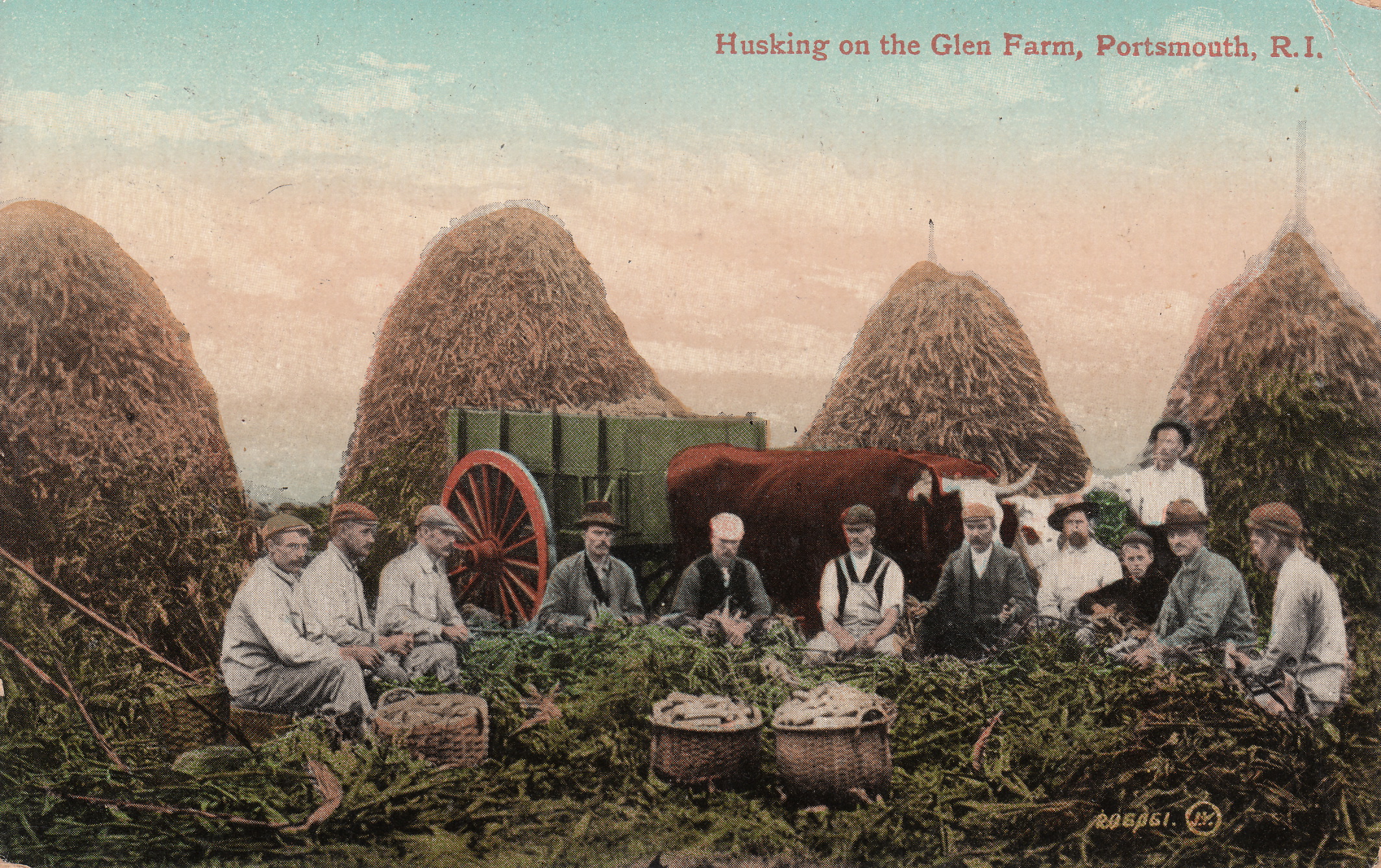
Corn husking on Glen Farm

Corn occupied the farmers for many months of work.  In April they began to prepare the fields by removing the stubble and rocks from last year.  Planting began in May.  May 15th:  “Planted corn all day.  We manure it in the hill where it is wet.”  Corn was hoed in June and July.  By August they were picking the corn.  August 14th:  “I arose at 4 o’clock and went to Newport with Robert carrying sweet corn, getting 12 or 14 cents a dozen…”  They continued husking through to November.  November 11th:  “Benj. C. Jr. finished husking last evening – being about 3 bushels.  I helped get the corn into the cribs forenoon.  The side bins are full and fifty bushels of ears in the middle part estimated to be 350 bushes of corn, a large crop for the land planted.”  

Grass/Hay:

Grass and hay were planted in April and harvest began in June and through July.  Hay was raked in August.   April 2nd:  “Father and William went to Newport and got the grass seed forenoon, sowed it afternoon.”  June 30th:  Mowed south part of the 2nd meadow below the house very good grass in quality and quantity;  Mostly barley grass.  Stacked hay in the corner meadow.”  Sherman has a delightful entry about an Uncle Ned (a good mower)  who used to mow dressed in a pink striped calico dress!!  

Apples:

Shearman is busy building stonewalls and other things during September, so we don’t hear as much about agricultural work.  In October Shearman reported picking Sweeting, Greenings, Roxbury Russets, and Leathercoat Russets.  October 22nd:  “We picked Roxbury Russetts today.  They are large and handsome.  The trees were loaded with them.  Picked 57 bushels, which is as many as they have had in any one year, since Uncle has owned the farm which is about 18 years.”

Hogs:

Hogs seemed to be a common livestock for Portsmouth farmers and New Bedford seemed to be the place to sell the pork.  April 21st:  “Helped Uncle John kill 7 fall pigs.  They averaged 175 lbs a piece.  Dressed them all at one scalding. “

Vegetables:

Shearman has his own garden and plants.  May 19th: “Been hoeing and planting my garden all day.  Planting sweet and pop corn, squashes, cucumbers and melons….  Potatoes just coming up, the peas about two inches high.”  Other vegetables mentioned in the diary include cabbages, carrots and turnips.  


If you want to read Shearman’s Diary for yourself, it is online at the Portsmouth History Center Archive.  http://www.portsmouthhistorycenterarchive.org/items/show/475


Moving the Sherman Windmill: From David Durfee Shearman’s Diary

Leave a comment

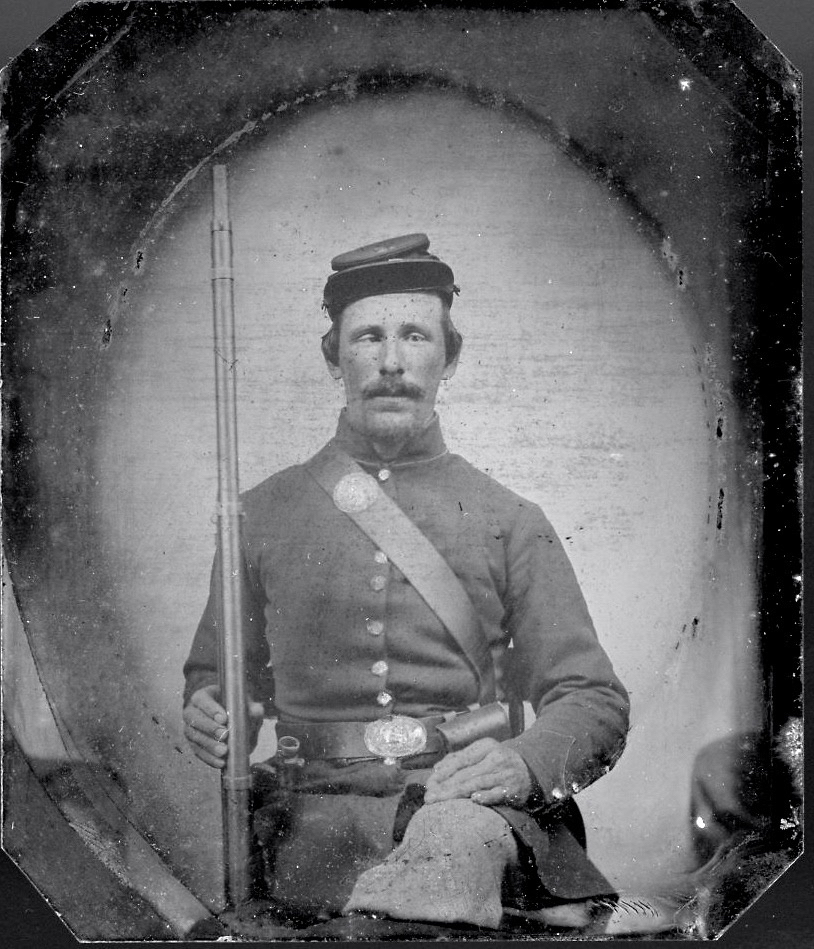
David Durfee Sherman in Civil War Uniform

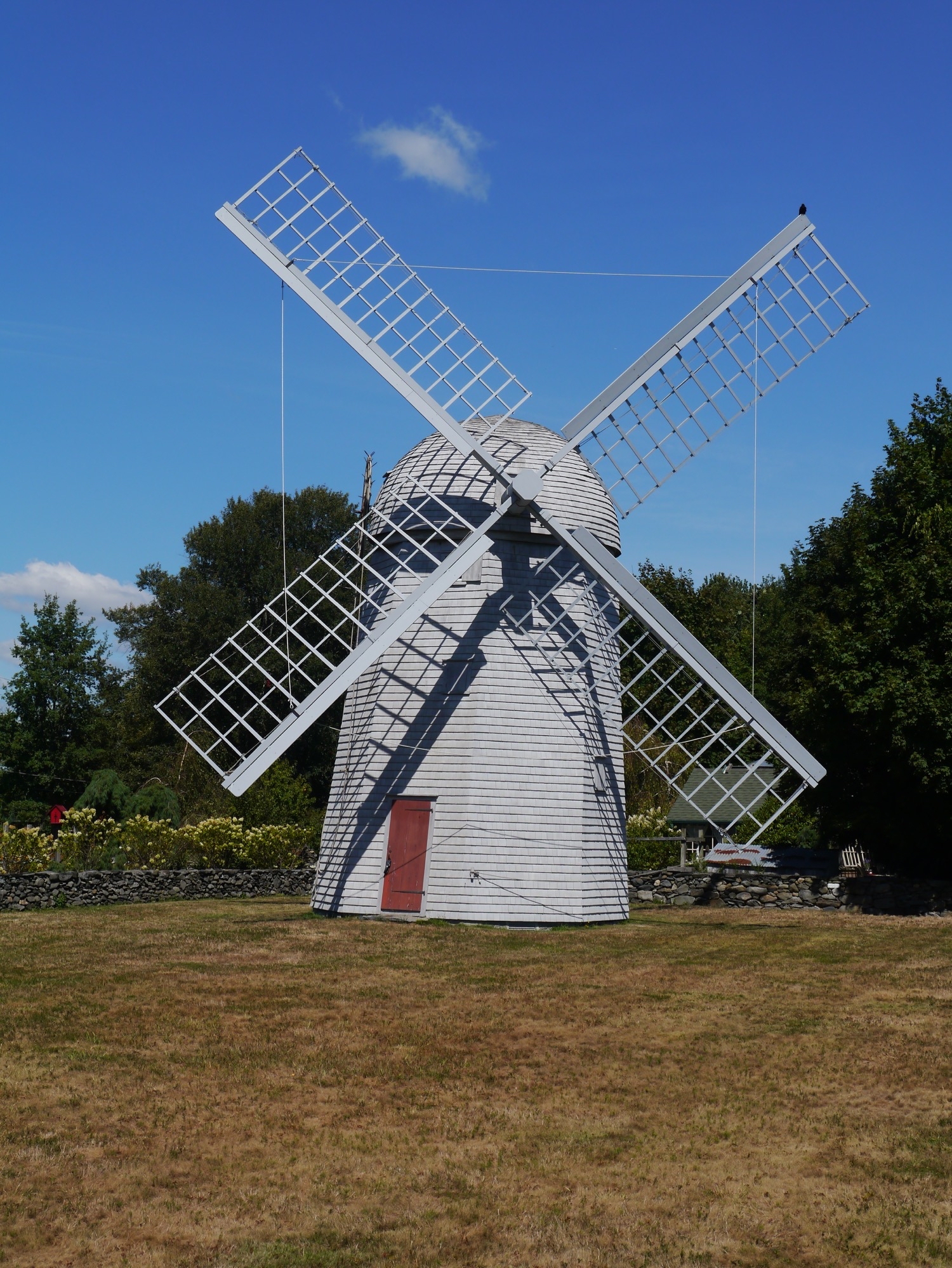
Among the prize possessions of the Portsmouth Historical Society are the diaries of David Durfee Shearman.  Shearman (or Sherman) was a jack of all trades and he recorded everyday life in Portsmouth.  We only have the records of a few years, but the 1858 volume provides a wonderful description of how the “Sherman Mill” was moved from Fall River to a spot on Quaker Hill in Portsmouth.  The mill had a history of moving from place to place.  It was constructed in Warren around 1812 and then moved to Fall River.  Shermans moved it to Quaker Hill and then to LeHigh Hill.  It was finally moved to Prescott Farm by the Newport Restoration Foundation (NRF).  NRF says that Robert Sherman moved the mill to Portsmouth, but Sherman’s diary names his Uncle John Sherman as the owner who moved it.

From Sherman’s 1858 diary:

May 5: ..Uncle John has bought a windmill in Fall River and I and Jonathan Sherman has contracted to take it down and move it here on his land west of the main road – and put it up again.  It was moved from Warren to where it now stands.

May 15: Helped Jonathan Sherman unload the top of the Mill about 9 o’clock.  He brought it in 6 parts, sawed through from top to the plates. At one load with 4 horses.

May 31: Built wall for Father, he went to Fall River with John and Jonathan Sherman to help take down the Mill. They got three sides down and brought them home…

June 1: Built wall for Father. Uncle John’s hired man has been there two days helping us. Uncle having Father’s Oxen to get after the Mill…Jonathan did not get home until 3 o’clock in the morning with the loads of mill.

June 8: Helped knock the shingles off the sides of the Mill AM.  They are going to take them all off and nail the boards on firm then lay the same shingles again.

June 11..went up where the men was at work with the Mill. helped them some about raising the poles to make a derrick to put the mill up with. They are near 50 feet long. The bottom of the Mill is laid and some of the sides ready to put up. Four men at work on her.

June 14..Jonathan raised two sides of the mill today.

June 17. Went up to the mill awhile and helped some. They have got up all the sides but one.

June 25. I worked for Jonathan on the Mill – shingling some and putting together the driving wheel on the main shaft.

June 26: I worked for Jonathan today, putting on the top of the Mill. Got it all on. Uncle is going to have it new shingled.

July 14…I went up to Uncle’s Mill afternoon – put up the arms. I helped some. They have got the machinery all put up and will finish it in a short time.

July 22.. Jonathan Sherman finished Uncle’s Mill today.  He had $500 for moving and putting it up in running order.

August 13: I sawed some wood that Uncle exchanged with me for white oak, to make pins for his Mill. ….

August 15: Worked on Uncle John’s Mill sails patching and sewing up the rents.

August 17: … Finished mending the sails. Jonathan Sherman came out from Newport and Mr. Borden came in the stage from Fall-River to get the mill in running order to grind corn.  Mr. Borden was the owner of the Mill when Uncle bought her.  We went up and took up the Big stone (Runner) found that we should have to have the bed-stone to make the wheels gearing to each other.

The runner stone of Boyd’s Mill

Note:  The “bed-stone” was set into a bed of concrete to keep it from moving.  The “runner” is the top rotating stone.  Both stones have a pattern of grooves that direct the grain to the outside edge.  The stones don’t touch each other and the grain is cut in a scissor like motion over and over again as they go from the center to the edge.   

August 18: Cut away the floor and moved the bed stone just on the Runner. Rigged the sails the afternoon and started her up for the first time in 4 years.  A damp, strong south -west wind – she went off start with sails reafed; ground about 5 bushels of southern corn for feed – some was mixed with oats. Levi Cory bought two grists.  The first that was bought.

Picks and tools for sharpening the grooves

August 19: We took up the Millstone and picked it with the small picks, shaving 25 or 30 of them together, making the surface of the stone much finer than the old way of picking with a single pick and not taking a quarter of the time to do it.  We started up and ground a little at night, but wind light from northwest.

Note:  Stone dressers would come at least once a year to “re-face” the stones to keep the grooves sharp.  Picks were used to sharpen the grooves.

August 20: Had to move the small bed-stone about an inch. wedged around it again: Worked a good while to make the break clear the driving wheel, and doing other small jobs.  Started up the Mill and ground 6 bushels flat corn, making fine meal for John Eldred of Newport: got 6 cents a bushel for grinding it; wind south west, whole sail breeze.

August 21: Isaac Grinnell came and set up the curb around the small stone (it is made of staves and hooked), and done one thing or another about the Mill.  A fine clear day, wind west, light.

Sherman Mill today at Prescott Farm

August 23: Worked on the Mill – wedging the arms of the driving wheel to keep it firm and strong. Asa Tibbets was there and assisted us.  Jonathan left many things undone which was needed to be done. Started up and ground 13 bushels of corn for feed, one bushel of round corn for Father, and one bushel of eyes in less than two hours, wind blowing strong from west nor west..

Portsmouth Farm Heritage: Judge Childs Farm – 1840

Leave a comment

What was farming like in Portsmouth before the Civil War?  Back in 1840 a Portsmouth farmer named Judge Joseph Childs responded to some questions about his farm.  This report was published in the New England Farmer and Horticultural Register, Vol. 19 for 1840.  This questionnaire gives us a unique glimpse into farm methods, crops planted and profitability of a small Portsmouth farm.  Charles Jackson (in his Report on the Geological and Agricultural Survey of the State of Rhode Island – 1840) also uses Childs’ report in making observations on the agriculture of Aquidneck Island.

Judge Child (Childs – I have seen it spelled both ways) must have been notable since Rev. Edward Peterson includes him in his 1853 History of Rhode Island (page 287).   Peterson thinks of him as a representative Portsmouth farmer.

“Farms generally are small, having been cut up and divided time to time. This, however is preferable, as a few acres, well cultivated, will yield far more than a larger quantity, partially cultivated….As illustration of this truth, it may be found in the proceeds of the model farm of the late Judge Child of Portsmouth, which contains about forty acres of land.  It was stated to the author, that he had realized $1000 per annum, independent of his living.”

Since Childs is listed as “Judge Childs” it is clear that he held public office and like most farmers in Portsmouth, he probably had other occupations beyond farming.

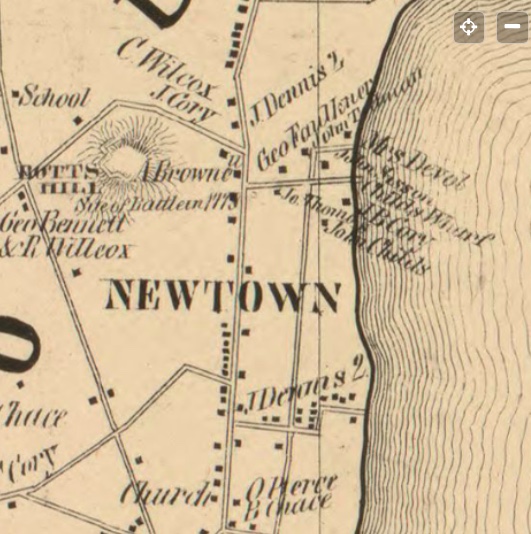
Possible location of Childs’ farm.

Jackson’s report tells us that “the farm of Judge Childs is situated in Portsmouth, on the eastern side of the island, near the sea shore.  Looking at an 1850’s map of the island there is land owned by John Childs in the Newtown area near Child’s Wharf that would probably fit that description.   Jackson visited the farm itself and collected soil samples. John Childs is listed as the executor of Joseph Child’s will, so he may have inherited the land or some of the land.

Childs reported that his farm was about 46 acres.  Twenty-one of the acres was plowed land, 6 acres were in pasture, over 16 acres were hay and two and a half acres were orchard.  Most of his land (over nine acres) was in growing Indian corn.  Four acres were devoted to potatoes, and another two and half to rye.  Child also grew peas, onions, turnips, wurzel (beetroot), apples, pumpkins, cabbages, and grapes.  Childs lists onions as his most profitable crop.  He sold them as far as New York.  Potatoes were the next most profitable.

He had livestock as well and produced 2000 lbs of beef, 2000 lbs of pork and 300 lbs of butter.  His stock included two horses, two oxen, 5 cows, 12 hogs and 40 chickens.

The judge was seventy-one years of age and he and his wife worked what they could on the farm.  The census lists four people on the land working agriculture.  He hired labor for about $500 a year.

Childs reported that he used 350 large ox-loads of manure per year.  That manure was made of fish, sand, sea weed, green weeds and remains from hog-pens and barn yard manure.  He experiments with composting with spent ashes and lime.

When asked “what agricultural experiments have you made?” Childs replied that “I change my seeds often, and practice a careful rotation of crops with every thing except onions.”

Rev. Edward Peterson’s history comments in his section on Childs that “Farming is a most honorable employment, and the most independent which can possibly be followed.”  Joseph Childs and his farming success are clearly examples of this “honorable” employment.

Portsmouth Farm Heritage: Greenvale and Gentleman Farms

Leave a comment

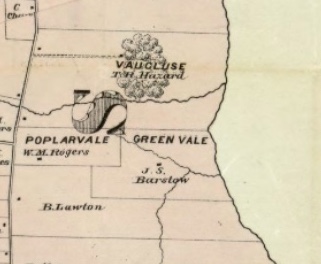
Greenvale on 1870s map

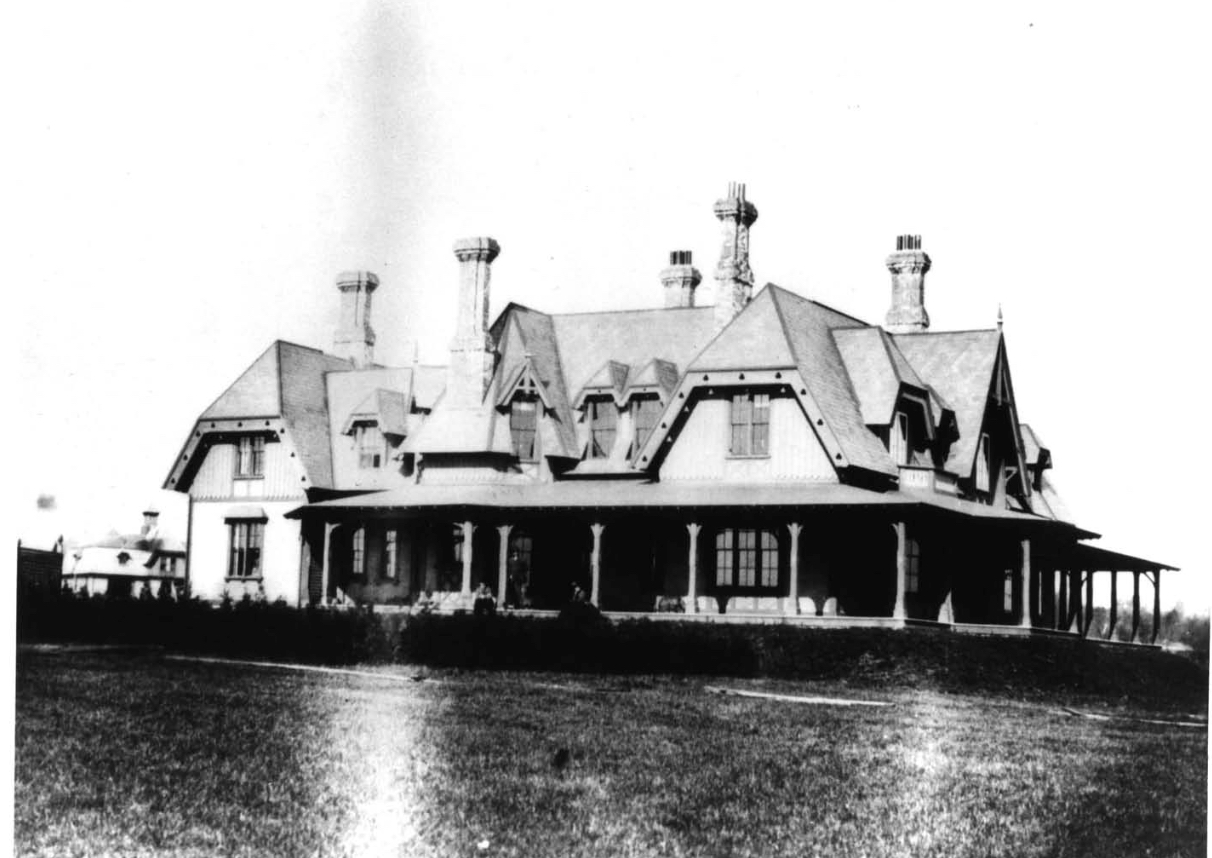
“Gentleman’s Farms” have long been a part of Portsmouth farm history. Greenvale Farm has been in the same family since the 1860s.  John S. Barstow, a China-trade merchant from Boston, created a “gentleman’s farm” on fifty-three acres of land on the shore of the Sakonnet River.  Greenvale was Barstow’s country retreat and he constructed a large main house and stable designed by Boston architect John Sturgis.  Barstow followed a pattern for a gentleman’s farm from the agricultural literature of the day (Country Life by Robert Morris Copeland – published 1859).  This volume is among the “Greenvale Library” collection that was given to Redwood Library by an heir to Barstow.

In his introduction, Copeland wrote: “I shall confine myself to the wants of men with small fortunes, as our country must always be principally inhabited by this class.”  Copeland sees these as men who have retired from active business so they need to have an occupation so to avoid the “evil of mental inactivity.”

Copeland goes on to describe a pattern for such a farm.  He sees the ideal farm as 60 acres of which 20 are farm. three acres are kitchen garden, 11 acres are for orchards of pears, peaches, cherries, plums, quinces, apricots, nectarines, apples and nuts.  Six acres are occupied by barns, stables, greenhouses, a grape house, hotbeds and nurseries as well as a dwelling house.  Land is set aside for a flower garden as well.  The rest is lawn, woods, ponds and roads.

The author organizes the book around an agricultural calendar that somehow starts with September when planning begins for the next growing year.

Vintage image of the Barstow house at Greenvale

Gentleman Farms existed in Portsmouth during colonial days when Newport merchants (Metcalf Bowler, Aaron Lopes, etc.) had their country estate.  After Barstow’s day the tradition continued with the Taylor’s Glen Farm and Sandy Point and Oakland Farm with the Vanderbilts. You can visit Greenvale today.  It is located off Wapping Road and descendants of Barstow operate it as a vineyard.

Older Entries Newer Entries