Home

Portsmouth Women: Sarah Eddy’s Portraits of Portsmouth Families

Leave a comment

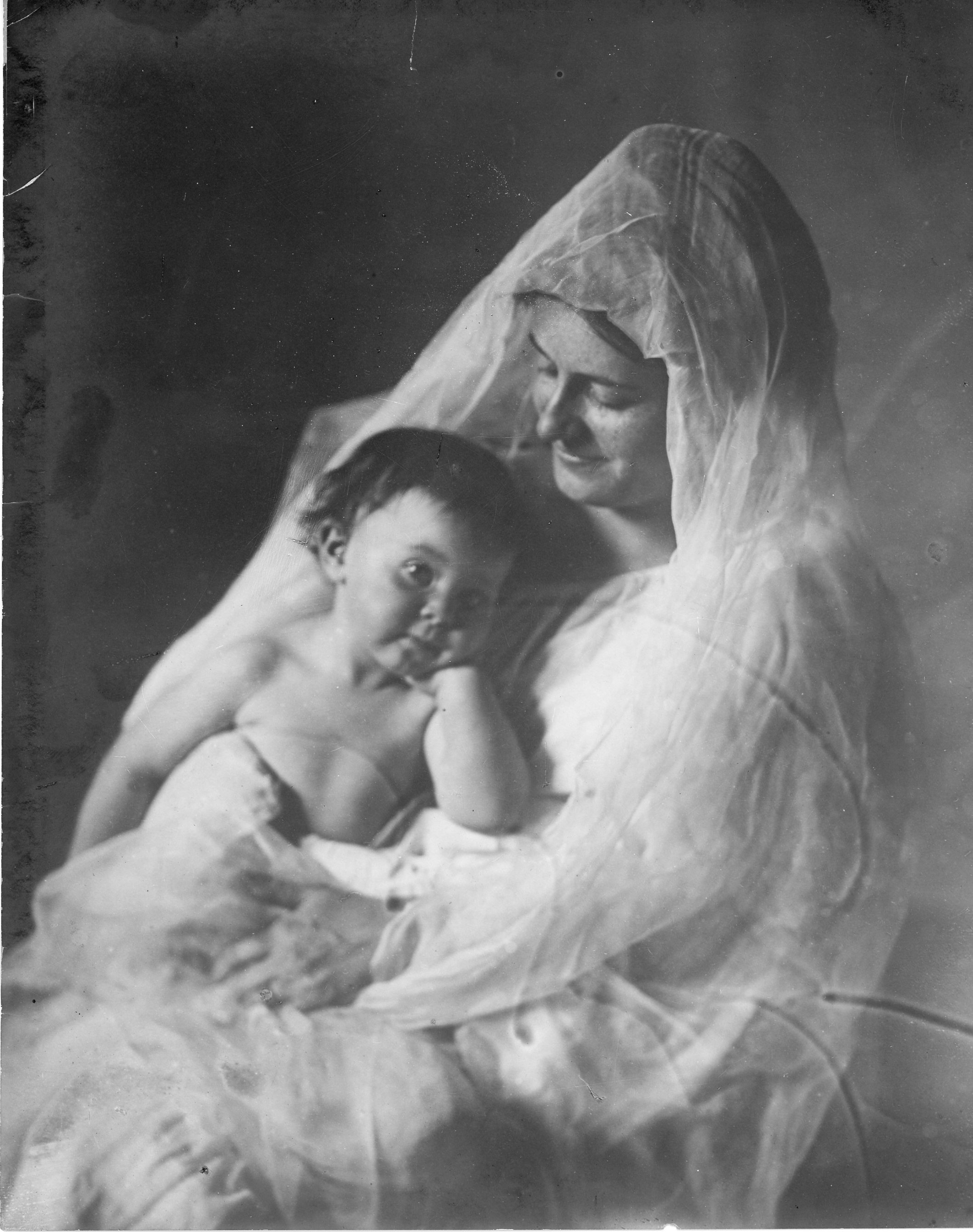
Majorie Wilkey’s mother and grandmother

Professionally trained, Sarah Eddy was an artist well into her 90’s. Painter, sculptor, master photographer. She was listed as a “painter of pictures” in the Providence census. As a pioneering woman photographer, Sarah exhibited in Paris and London as well as major exhibits in the US. Her images are in the collection of the Library of Congress. Her art was part of every cause worked for – as prizes, for fundraising, as a way of bringing beauty into the world. She was a master arts educator. She brought artists to Bristol Ferry, and encouraged amateurs. Sarah and her students went out painting with smocks and berets.

Sarah paid for the construction of an addition to the Portsmouth Free Public Library which would be a place to exhibit art in Portsmouth. The public library has a lovely landscape with sheep in the Reference Room that is attributed to Sarah and they have some of her sculptures in the Children’s Room.  It is fitting that the Portsmouth Free Public Library is a gallery space for special exhibits today.

Sarah never took any payment for her photos or paintings. She delighted in photographing and painting her neighbors in Bristol Ferry. What is in your attic? Could you have some of her artwork? After her death in 1945 there was a yard sale at her home.  Some items have surfaced at antique stores and in private collections. We know that Sarah gave artwork to church guilds and that a church in Tiverton has one of her bronze sculptures.  Marjorie Wilkey has shared some precious family portraits with us.  Her mother and grandmother were photographed and a sketch of them seems to be a “mother and child” image that was common in her work.  The Wilkey family allowed me to scan a glass plate that includes members of their family.  Mothers and children were her favorite subjects.  Let us know if you have some of Sarah’s artwork as part of your family treasures.
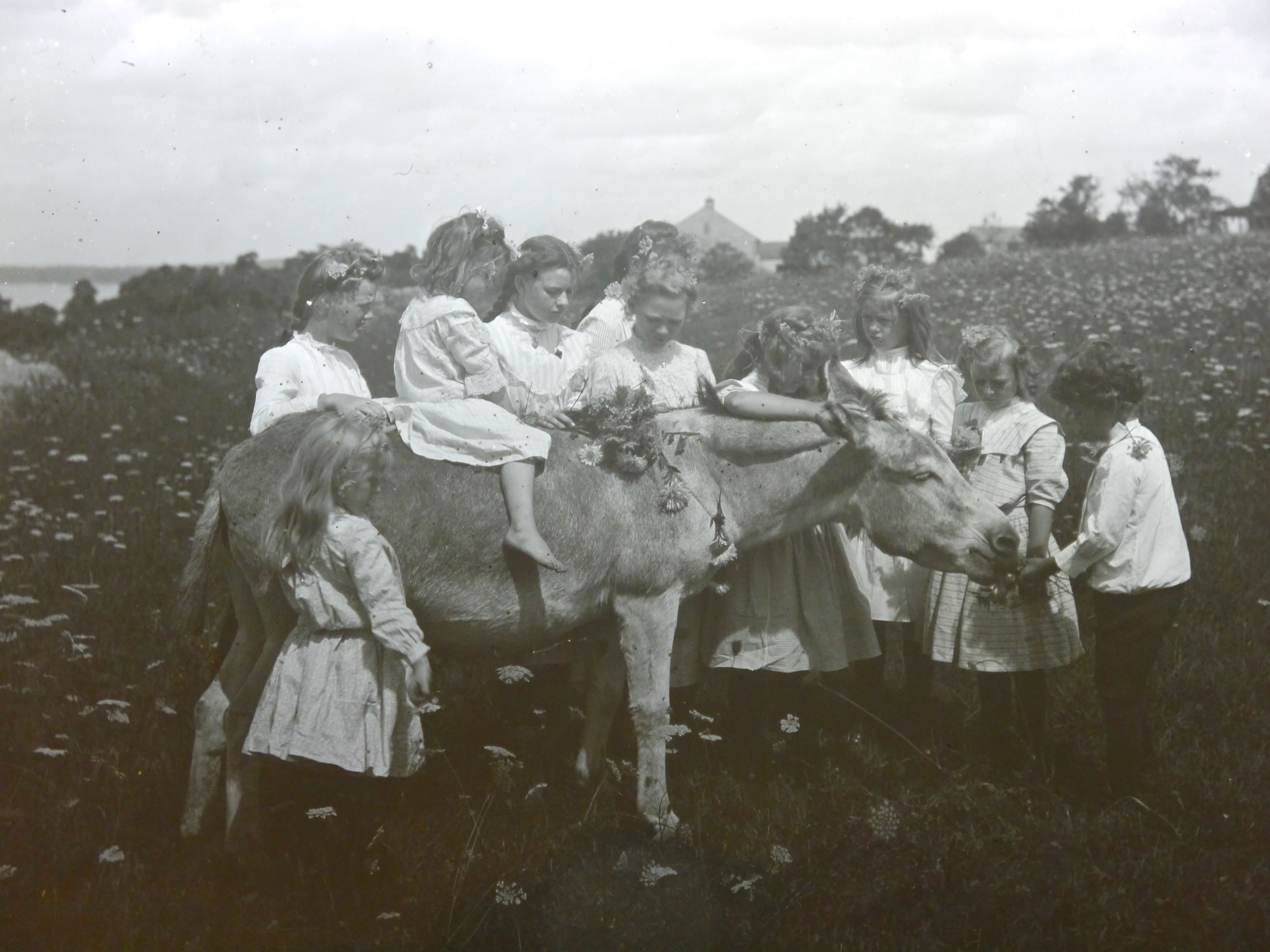
Sarah Eddy photograph of Portsmouth children.
Portsmouth Women: Sarah Eddy, Susan B. Anthony and Women’s Suffrage

Leave a comment

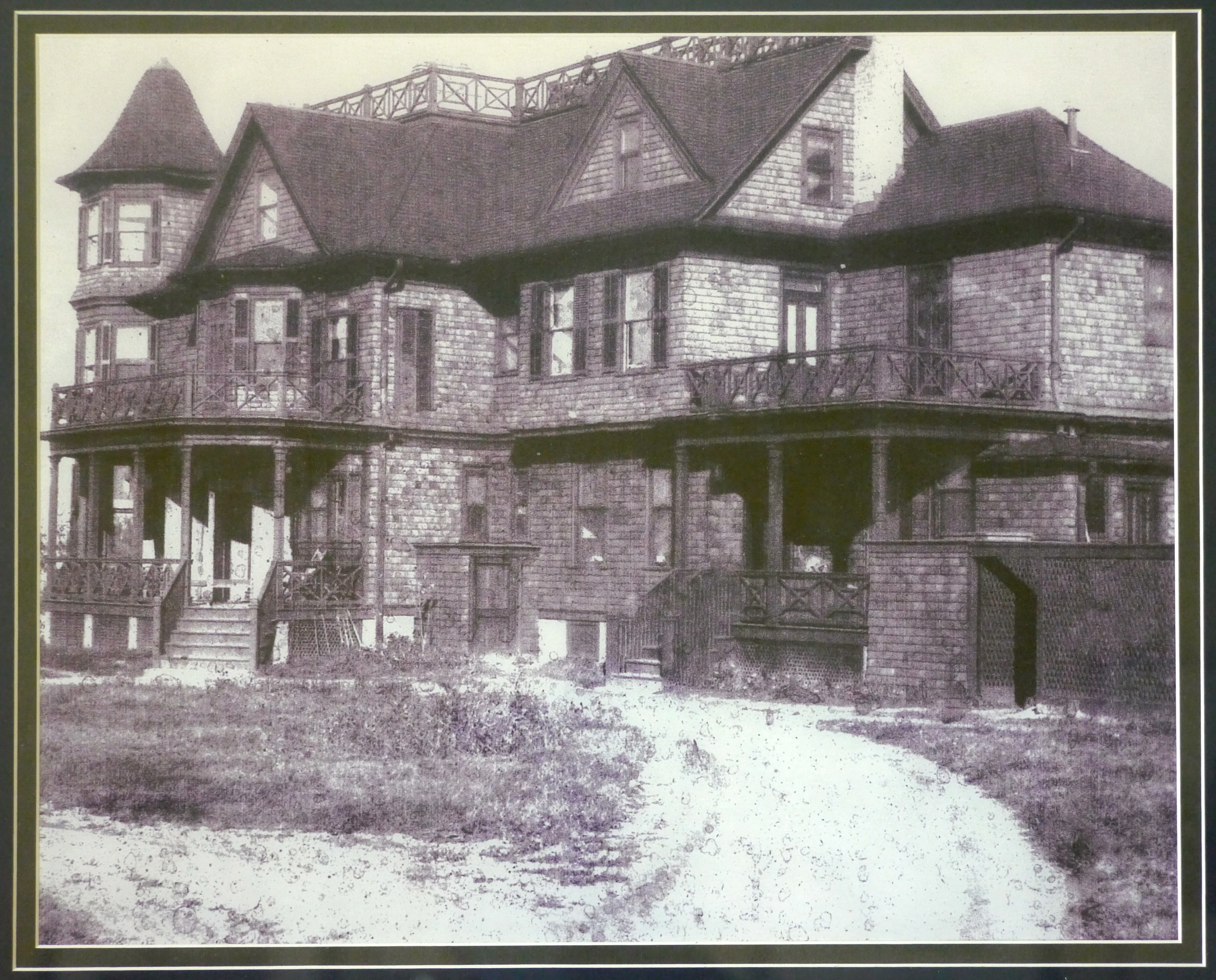
Vintage photo of Sarah Eddy Home.

Susan B. Anthony has secured her place in history as an important figure in gaining the vote for women.  Her full length portrait hangs in the Smithsonian National Museum of American History in Washington, D.C. We have forgotten, however, the artist and friend of Susan B. Anthony who painted that grand full-length oil painting. The artist, Sarah James Eddy, was a long time resident of Portsmouth and Susan actually came to stay with her in Portsmouth for three weeks as she “sat” for the portrait.

Why did Susan take the time to come to little Portsmouth for a long portrait sitting? You have to learn a little about the artist to understand why Miss Anthony would indulge the artist. Sarah James Eddy was an accomplished artist. She was a skilled painter, photographer and sculptor. Sarah was also a close friend to some of the most notable leaders in the great causes of the day – abolition and women’s suffrage. Sarah had experience in painting important portraits. In the 1880s she persuaded Abolitionist Frederick Douglass to come to Rhode Island (she was living in Providence at the time) to sit for a full-length portrait. Now hanging at the Frederick Douglass National Park near Washington, this painting might be the only painting where Douglass actually “sat” for the artist.

Sarah’s family supported the anti-slavery cause and Douglass became a friend of Sarah. The friendship and family connections Sarah had with these great figures provided her with an opportunity other artists would not have had.  Although Susan B. Anthony had long promised a visit, the opportunity didn’t arrive until the fall of 1902. Susan visited family members in Massachusetts as she made her way to Sarah’s large home in the part of Portsmouth known as Bristol Ferry. The letters Susan wrote show how she relished her time at Bristol Ferry. She stayed over three weeks and the artist and subject would spend their mornings on the portraits and would enjoy the afternoon traveling around Aquidneck Island.

Miss Anthony wrote: “We have delightful drives over the old stone bridge that connects us with the mainland to Tiverton and along the shore of the Sconset (Sakonnet) River, which is really an arm of the ocean and here we can see the whole length of the island with Newport in its beauty on the coast. It is ten miles away and we went by train one day, took the famous ocean drive and passed the palaces of the nabobs.”

Susan enjoyed just being at Sarah’s home. She wrote of waking up from afternoon naps to “the slanting rays of the sun” shining on Narragansett Bay. She must have slept in a turret room because she wrote that “from all five windows of my big room is the most glorious view imaginable.”

Bristol Ferry was the “hotbed” of the Rhode Island Women’s Suffrage movements, so Susan was among friends and supporters in Portsmouth. She would take a carriage ride down West Main Road to Oak Glen, the home of Julia Ward Howe. She found Julia “charming” and “had an interesting time.”

Sarah Eddy was a woman of many causes and she entertained so many at her home. While Susan was there one of the guests had just come from a Woman’s Christian Temperance Union Convention and another was from the Anti-Vivisection Society. Sarah was a strict vegetarian and one of her neighbors teased that Susan should come for a meal at their house because a “slice of good roast beef” would do her good. Susan declined the offer, but the neighbor sent over some of the roast beef “for Miss Eddy’s cannibal friends.”

Portsmouth Women: Sarah J. Eddy and the Social Studio

1 Comment

Sarah James Eddy was a force in the Portsmouth community for over forty years, but her work was forgotten until recently.  Last fall, Sarah was recognized during the 21st annual Historical Induction Convocation at the Historic Bristol Statehouse and Courthouse, but many Portsmouth citizens are unaware of her accomplishments in the arts and in social causes.

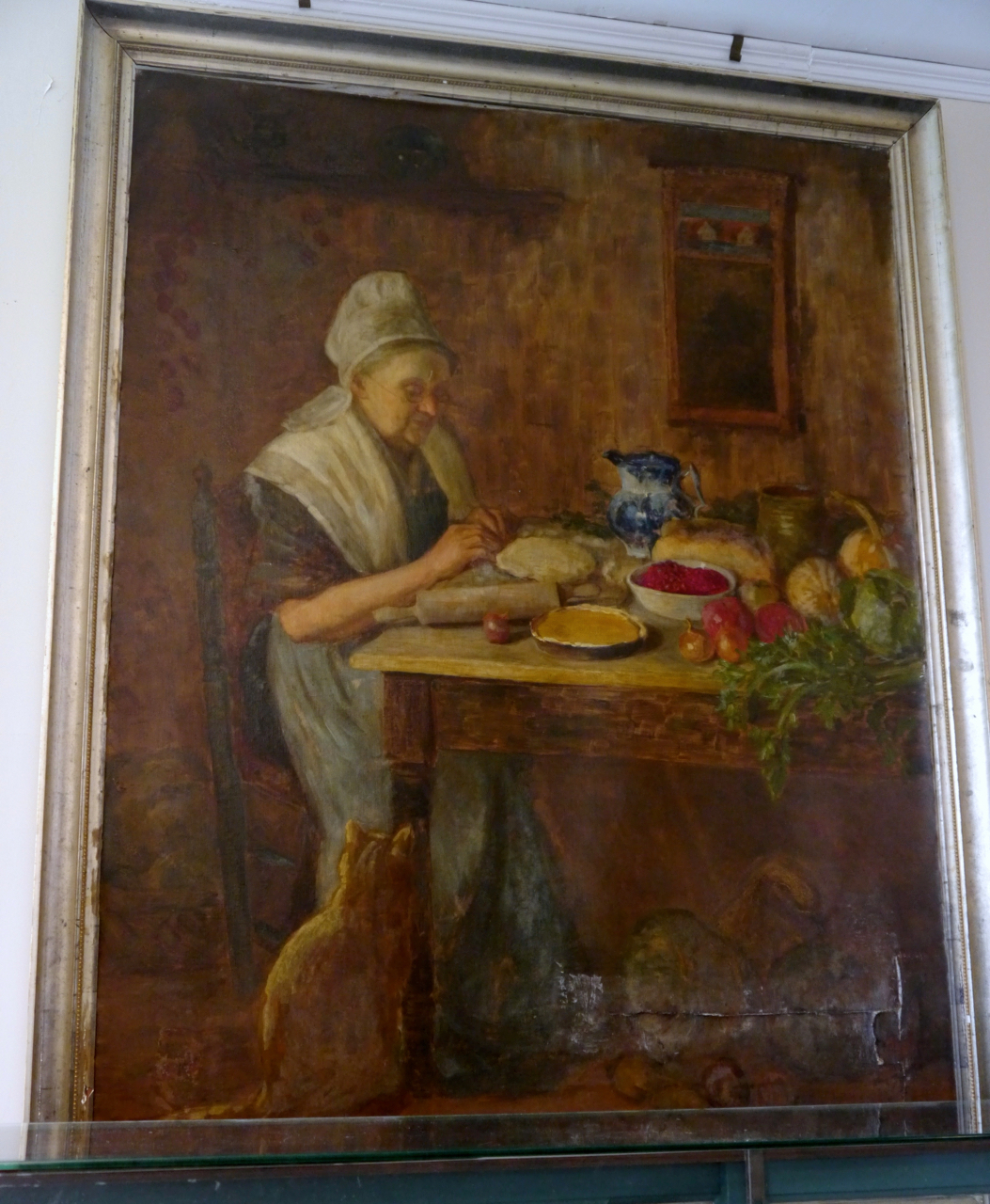
I first became aware of Sarah when Marge Webster and I were working on an exhibit for the Portsmouth Historical Society. We stopped at the portrait of the woman that hung in the back of the historical society museum. We had very little information about it. We knew this was a painting from the Social Studio and that the artist, Sarah Eddy, was part of an artist colony at Bristol Ferry. Through newspaper databases we learned that the portrait was of Mrs. Burke, the mother of Emeline Eldredge who was a good friend of Sarah Eddy.  Mrs. Burke was portrayed preparing a Thanksgiving meal or at least the vegetables for that meal.  Sarah Eddy was a vegetarian and newspaper accounts tell of her meatless Thanksgiving feasts.

Mrs. Burke by Sarah J. Eddy

We began with very little information, but the harder we looked the more we found that evidence of Sarah’s work in our community was all around -” Hidden in Plain Sight”.

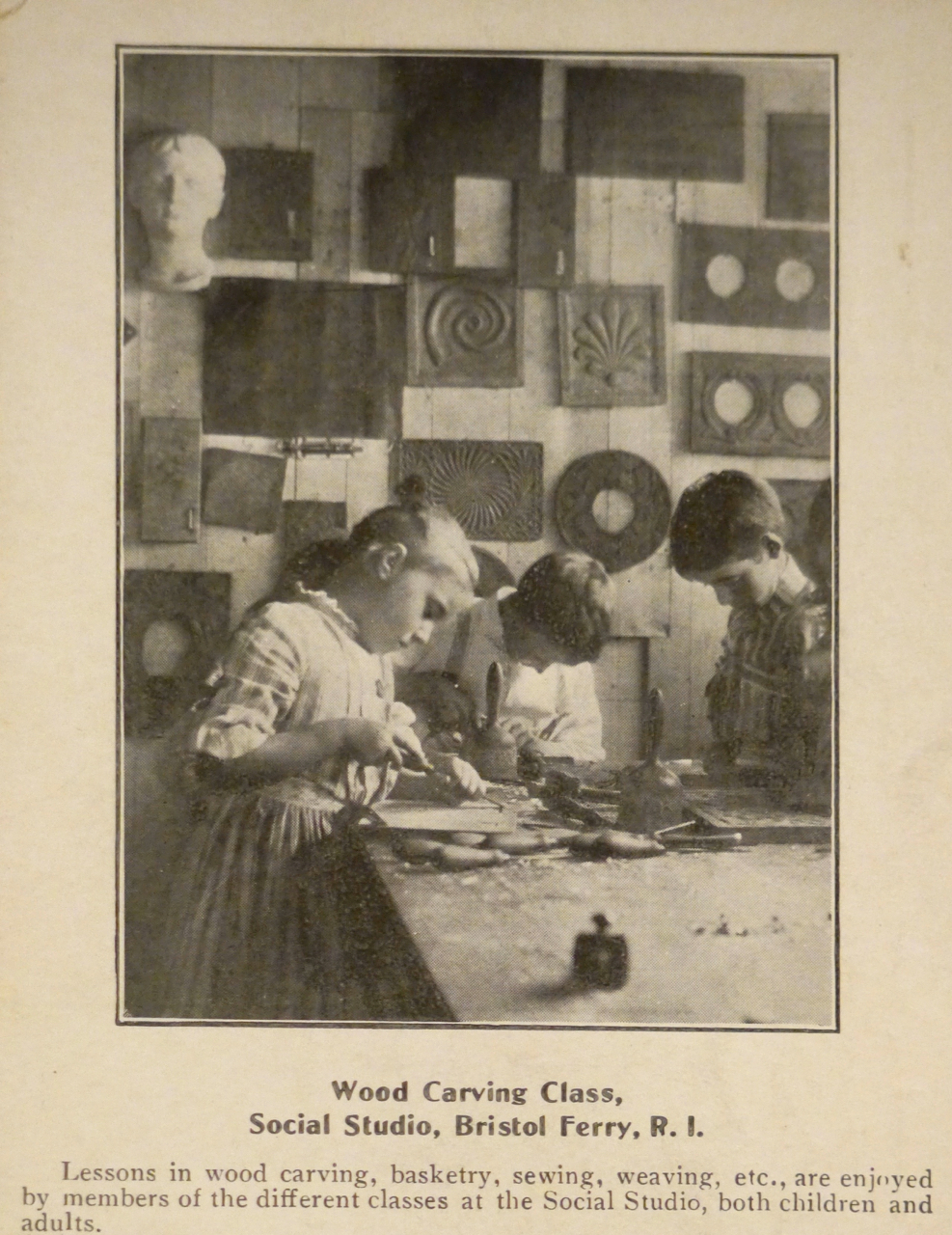
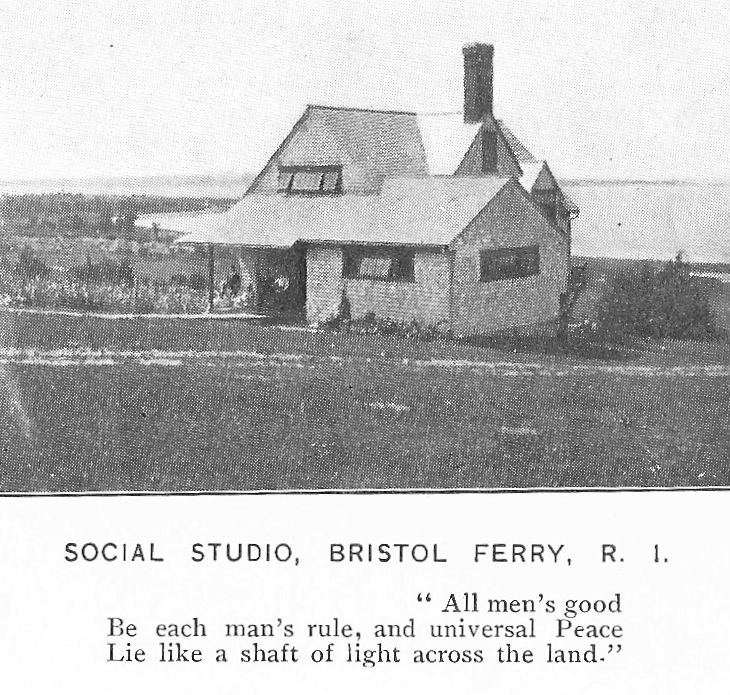
I found postcards of the Social Studio on Ebay and I began to collect them. Since Sarah was a noted photographer and founder of the Social Studio, I assume the photos are Sarah’s work.    They helped me to understand that the Social Studio was a marvelous art center for Portsmouth.  This was a project financed by Sarah Eddy and directed by her friend Emeline Eldredge.   Located across the street from the Eddy Home on Bristol Ferry Road, the basic building still exists as a private home.

This is a 1905 description of the Social Studio: “A large room used for assemblies, one end of which is occupied by a small stage, is furnished simply and artistically. Potted plants, a pianola, a huge open fireplace, oil paintings on the walls and a good library – all lend great charm to the big room, which is a delightful retreat for the young people who flock there from adjoining farms. Lectures, readings, musicals and social gatherings are frequently held. Classes were given in pyrography, drawing, water color painting and raffia.”

The Social Studio was meant to keep young people away from gossiping, loafing and “Immature lovemaking.”  The Social Studio was also a place were young people could earn money through their arts and crafts.

The Studio became a cultural center for Portsmouth’s adults.  Christmas celebrations, charity fund raisers, lectures and musical performances were all centered in the Social Studio.  From newspaper articles we know that activities went on at the Social Studio for at least 30 years or more.

This is the first of three blogs on Sarah James Eddy.  Other blogs will focus on her social causes and her artistic work.

Children working on crafts at the Social Studio

Social Studio postcard – GSchmidt collection


Portsmouth Women: Mrs. Wilkey – the Real Story of the Portsmouth Insignia

Leave a comment

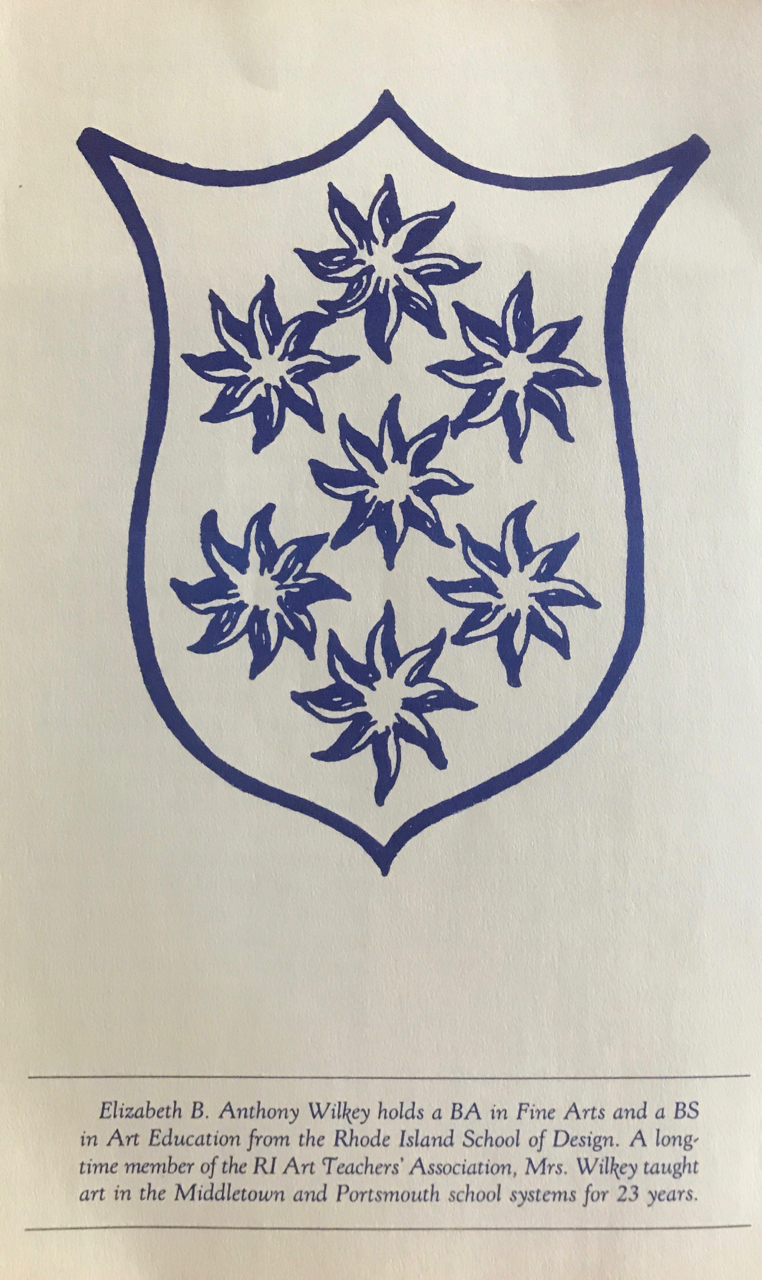
Ancient Shield of Town of Portsmouth

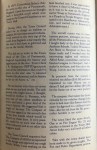
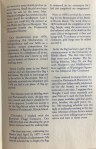
Elizabeth Wilkey wrote a pamphlet on how she came to design the Portsmouth insignia. Denise Wilkey sent me images from the pamphlet. I am including these images on this blog so you can read them for yourself. I will summarize some of the new information I noticed as I read the pamphlet. Having Elizabeth’s description in her own words is a valuable document.

When the Portsmouth Historical Society was founded in 1938, Evelyn Chase asked Henry Wilkey to construct a large sign for the Society and Elizabeth (a RISD grad) was asked to letter and paint the Seal of Portsmouth on both sides of the sign.  Miss Chase loaned Elizabeth an old leather bound book to refer to in painting the seal.  The seal – a circle with seven irregularly spaced stars with eight wavy rays – was on the left hand side of the reference page.  “On the opposite page was a shield containing the same seven stars in vertical balance – three stars down the center – two on either side.” Elizabeth said that metal replicas of the shield were placed at all the entrances to the town as part of the 300th celebration.

In 1961 the Town Council asked Mrs Wilkey to design an emblem that could be an insignia on town vehicles.  Elizabeth began to gather information for the project.  In 1957 a town councilman brought back a scroll from the city of Portsmouth in England.  Elizabeth noticed that the star on the scroll was the same as the stars on our seal.  She wrote the city of Portsmouth in England and they sent her information on the star and a colored transfer.  No one in our town knew why our seal and shield had seven stars.  Albert Sherman was asked and he thought it might be because the compact was signed on the 7th day of March (which was the first month in those days.)

The Town Council requested that the “Compact of 1638″be incorporated into the design.

In 1976 the town wanted a flag for Portsmouth.  Elizabeth worked on the design even though she lost her husband and was going through many adjustments.  “It remained on my conscience that I had not completed my assignment.”  She worked with the Ebenezer Flag Company and there were difficulties in getting colors just right.  She used the design of the shield that had the seven stars in balanced order.


To our shame the town and the Portsmouth Historical Society did not pay Elizabeth for her time, work, or materials.  She comments that she was willing to give of herself and her time.

Portsmouth Women: Elizabeth Wilkey and the Portsmouth Insignia

1 Comment

Recently someone asked me about the Portsmouth Town Insignia and the significance of the wavy stars. As I was researching the answer, I was reminded that Elizabeth Wilkey, a long time art teacher in Portsmouth, designed the seal we use today.  This blog will cover both Elizabeth Wilkey and what we know about the Portsmouth seal.

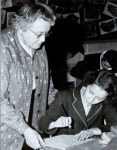
Elizabeth Wilkey was born in Portsmouth in 1903.  She was the daughter of Eliza and William Anthony and the wife of Henry Wilkey.  Trained as an artist, Elizabeth was a long time art teacher and arts supervisor for the Portsmouth School System.  In a speech to the Coggeshall School PTA in 1958, Elizabeth talked about her work.  She conducted thirty-five art classes each week. The older students had two classes a week while the young students had one art class a week.  She enjoyed teaching the students to use a variety of materials, even some they brought from home – like wrapping paper and milk cartons.  Ahead of her time, Mrs. Wilkey co-ordinated the art program with the other school subjects.  Her name constantly appeared in newspaper articles as she was busy designing posters, decorating for events,  illustrating brochures and exhibiting student work.

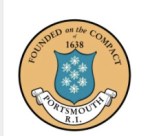
In 1962 a Daily News article describes a new 14-inch town insignia which would be displayed on all town vehicles.  The article commented that it was designed by Mrs. Henry Wilkey, Portsmouth Schools art supervisor.  It was described as consisting of a “blue shield with six unique eight pointed gold stars which are also carried on the town seal.  ‘Founded on the Compact of 1638 – Portsmouth R.I.’ encircles the shield on a gold field.”

What is the significance of the eight pointed stars? A November 5, 1960 Daily News article gives us an idea of the story behind the stars.  According to Graham Carey (who had been a partner in the John Stevens stonecutting shop and a heraldry expert) it probably relates to the seal of the City of Portsmouth in England. In the ancient Sumerian civilization, the eight-rayed sun or star above a crescent was common on seals.  Before Richard the Lionhearted set out for the Crusades in 1189 he added a star with six wavy points above a crescent to Britain’s seal.  It is thought that it represented the Star of Bethlehem over the Moslem crescent.  When Richard came back in 1194, he gave a charter to the new seaport of Portsmouth and assigned as a seal a star with eight wavy points above an upturned crescent.  Carey thought the early settlers adopted a seal in memory of Portsmouth, England, but dropped the Islamic crescent and multiplied the star by seven. Seven is a special number in the Bible and signifies completion and perfection.   The earliest Portsmouth seal had six stars around a central star.

So is that the explanation for Portsmouth’s seal?  I am not sure we will ever know for sure.


Portsmouth Women: Phebe Hathaway and the Rhode Island Women’s Christian Temperance Union.

Leave a comment

Portsmouth women were active in promoting temperance. There were men in the movement, but much of the work was done by women who had witnessed the evils of alcoholism in their own family. Among the Portsmouth women in leadership roles were Phebe A. Hathaway who worked on the state level and Eunice Greene who organized in our community. ( Eunice’s work locally will be the topic of another blog.)

Phebe A. Hathaway was born on April 14, 1822 in New York. Miss Hathaway spent some time in Portsmouth. The 1870 census lists her as a governess (teacher next to it) residing in Portsmouth in the household of Joseph Macomber. Macomber was President of the Portsmouth Teacher’s Association. From census listings we know she was still in Portsmouth in 1875. The Rhode Island Chapter of the Women’s Christian Temperance Union (WCTU) was founded on January 20,1875. The meeting was held at the Providence Central Baptist Church. Records of the meeting show that there were discussions about whether the word “Christian” in their title might turn some people away. The women voted to keep the word in their title. This may have been the beginning of the WCTU in Rhode Island, but many of the women involved were already involved in temperance efforts. Phebe Hathaway was voted in as one of the two vice presidents. When the group held their annual meeting a few months later, the President of the group resigned and Phebe was elected to that office. Phebe served as President of the state organization for the next two years.

At first members of the WCTU were American born women aged twenty and over. By the end of the century the organization reached out to include foreign born women who believed in the cause. The women took a pledge to abstain from all liquor, wine, beer and hard ciders. They also tried to actively discourage others from either selling or drinking alcohol. They even confronted bar owners and liquor sellers. Alcohol was considered to be at the root of a number of social ills. The Rhode Island WCTU held rallies and distributed temperance pamphlets throughout the state.

In 1874 Rhode Island did pass a state prohibition law against manufacturing or selling liquor except for medicinal purposes. This law only lasted a year and many think it was withdrawn because the state missed the tax revenue alcohol generated. The temperance movement gained popularity in the state and by 1880 the state had fifteen local chapters. At one time the WTCU of Rhode Island had 120 “unions” or branches. There were district conventions and an annual state convention. With the ratification of the 18th Amendment which prohibited liquor nationally in 1919, the reason for the organization no longer existed. Miss Hathaway died in 1886, so she did not see the temperance effort succeed.

Portsmouth Women: Julia Ward Howe, Mother’s Day and other Causes

1 Comment

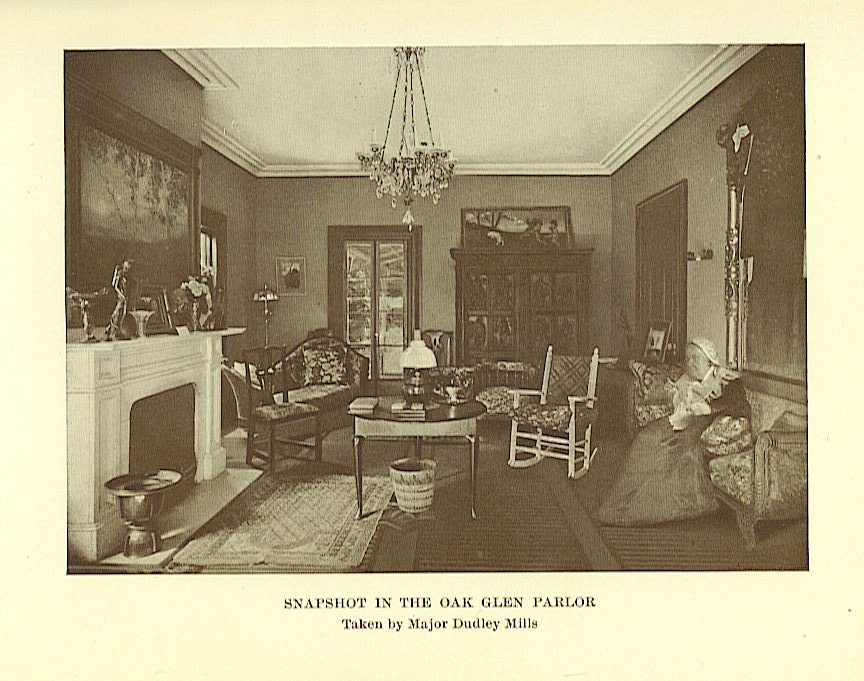
Julia in her Oak Glen Parlor

Did you know that Julia Ward Howe was the first to propose a Mother’s Day? She envisioned it as a Day of Peace in protest to war?

“Arise, then, women of this day! Arise all women who have hearts, whether our baptism be that of water or of tears!… We women of one country will be too tender of those of another country to allow our sons to be trained to injure theirs. From the bosom of the devastated earth a voice goes up with our own. It says “Disarm, Disarm! The sword of murder is not the balance of justice.” ~Julia Ward Howe, 1870
From her Mother’s Day Proclamation for Peace
She wrote in Reminiscences in 1914:  “I had desired to institute a festival which should be observed as Mother’s Day, and which should be devoted to the advocates of peace doctrines. I chose for this the second day of June thus being a time when flowers are abundant and when the weather usually allows of open air meetings. I had some success in carrying out the plan. In Boston I held the Mother’s Day meeting for quite a number of years. The day was also twice in Constantinople and often a place nearer home. In Philadelphia we are informed it is still observed as established by Mrs. Howe in June.”

Women’s Suffrage Movement:

Julia was an important organizer for the women’s interests.  In the interest of gaining the vote for women, she helped found the New England Suffrage Association in 1868 and the statewide Massachusetts Women Suffrage Association.  She was in favor of the 15th Amendment which was to grant the vote to black men but not all women.  This was a break with Susan B. Anthony and Elizabeth Cady Stanton.  She sided with Lucy Stone in founding the American Woman Suffrage Association.  She edited the Woman’s Journal for 20 years.  In 1889 the groups were back together again to support votes for women.  When Susan B Anthony came to stay with Sarah Eddy, she visited Julia at her home in Portsmouth.

Clubs to Promote the Interests of Women:

Julia organized clubs of various sorts wherever she went.  In 1873 she helped create an organization (Association for the Advancement of Women ) to improve education for women and help them enter into professional jobs.  Julia was especially fond of Women’s Clubs.

These are just some of her causes.   She didn’t just support these efforts, she dug in and worked hard for the success of the causes dear to her heart.


Portsmouth Women: Julia Ward Howe and the “Battle Hymn of the Republic”

Leave a comment

Oak Glen – Julia Ward Howe home

How the Battle Hymn of the Republic was Written – Julia’s Own Words
It was during the second year of the war and I had gone to Washington with my husband and pastor, the Rev. James Freemann Clarke. I had wished many times that I could do something for my country but the way seemed closed. My husband was too old and ill to go; my son was only a boy. The children were young so I could not leave my home for long myself. While we were in Washington there was a great review of troops across the river. We drove to out to see it. While it was in progress there was a dash made against some of the troops by the enemy. It was repulsed, but the review was abandoned, and the troops came thronging back to Washington and we with them. The progress of our carriage was slow, for the roads were crowded with soldiers. To encourage the men we began singing various songs and hymns and they would join the the chorus. After we had sung “John Brown’s Body” Dr. Clarke turned and asked me why I did not write some new words for that music. I replied that I had tried several times, but never could seem to write any good enough. The next morning just about 4 o’clock I woke suddenly. As I lay there in bed the words of the hymn began to form themselves in my mind. I got up and by the faint light of the early morning scrawled them on a piece of paper and then went back to bed and sound asleep again. That is the way the hymn was written. (Saturday Evening Post- as quoted in the Newport Mercury May 30, 1914)

Julia’s words were published in the Atlantic Monthly in February of 1862. Set to music (from John Brown’s Body) it became a rallying cry for the Union. Although it is more of a Christian hymn, the song was used by the anti-slavery and suffrage movements as well.

Portsmouth Women: Julia Ward Howe, Activist and Author

Leave a comment

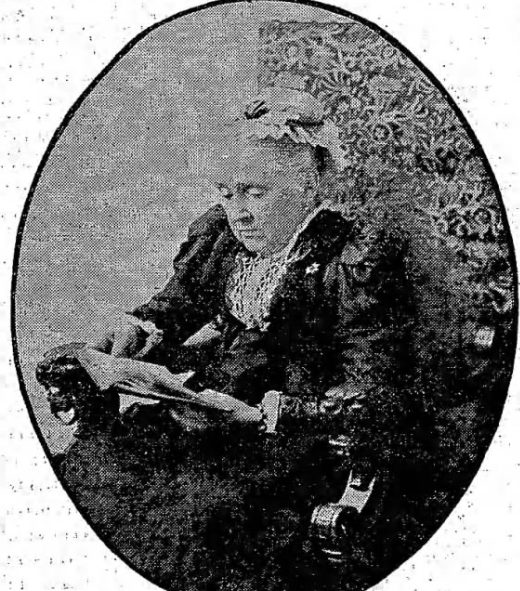
Julia Ward Howe

Julia Ward Howe was a Portsmouth woman of note.  Julia and her family came to Portsmouth every summer from the time of the Civil War to 1910 when she died at her Oak Glen home on Union Street. Both of Julia’s homes in Portsmouth were in the Lawton Valley area.  Julia was intimately involved in Portsmouth life.  She even used to preach at the Christian Union Church (now the home of the Portsmouth Historical Society). The historical society is blessed to have some items from her home at Oak Glen.  Included among them is her writing desk.

Julia had deep family roots in Rhode Island.  On her father’s side she was descended from Roger Williams and colonial Rhode Island Governors.  Julia was born in New York City on May 27, 1819.  Her father, Samuel Ward, was a banker and her mother was Julia Cutler.  Julia Ward Howe was only five years old when her mother died, but Julia seemed to follow in her mother’s footsteps as an author.  She began writing very early and even contributed to the New York Magazine when she was just seventeen.  Through her career Julia wrote poems, plays, travel sketches, essays, stories, book and play reviews.  She is best remembered for writing the poem which was set to music as “The Battle Hymn of the Republic”  (More on that topic in the next blog).

She persisted in writing even when her husband, Samuel Gridley Howe, discouraged her efforts.  She even had works secretly published so her husband would not know about them.   Julia and Samuel Howe married in 1843. The Howe family lived in Boston where Samuel was a founder of the Perkins School for the Blind.   Julia would have an understanding of the need for women to have more control over their own lives.

On her 89th birthday, Julia Ward Howe made some hopeful comments to her well wishers. “When I remember the cold welcome given to all the great reforms, temperance, anti-slavery, woman suffrage, the higher education of women, etc. – and when I see how largely they have been accepted into the practical program, I feel that life is miraculous. The world is now wide awake to things which 60 years ago saints and philosophers dreamed of but never expected to see.”

Julia was active in all the reforms she mentioned.  She was a voice that commanded attention.  When she died in 1910, her obituary in the Newport Daily News summarized all the aspects of her life. “She was a beauty, social queen, preacher, poet, anchor, a lover of music and all the fine arts and a friend of the oppressed in all nations, a platform speaker of great popularity, the maker of home the gentlest, most ideal and holy to be conceived, a loyal, helping and loving wife, and yet one of the most pronounced of woman suffrage; the friend and intimate of the rich and powerful of earth yet with a heart full of sympathy for the lowly, ignorant and downtrodden, and with pen and voice ready for their defense and uplift.”

In coming blogs we will cover Julia and her Causes (including how she started Mother’s Day) and Julia’s own description of how she wrote the Battle Hymn of the Republic.

Portsmouth Women: Ruth “Jolly” Earle – Citizen of the Year

Leave a comment

Ruth Earle in poolRuth Earle’s years of service to Portsmouth’s children was honored in 1973 when she was named “Citizen of the Year.”  She was born in Portsmouth in 1913 to Jethro Peckham and Sarah Anthony Peckham.  Newspaper articles from the Newport Daily News provide dozens of examples of her work in the community.

At the time Ruth was honored in 1973, Ruth had spent  33 years devoted to the Girl Scouts. Since 1934 Ruth served as Troop leader and trainer.  She even went to Venezuela as a trainer.

Many of us in Portsmouth remember Ruth as a fixture at Sandy Point Beach during the summer.  As of 1973 she had spent 25 years with the water safety program.  Ruth taught countless numbers of Portsmouth children how to swim.  She continued teaching swimming and water safety at the Boys Club Teaches in Newport and she taught an adapted swim program at the Howard Johnson Pool for those who needed the extra attention.

Some called her “Mrs. Red Cross” for her dedication to first aid and motor corp of Red Cross.  She went into schools to teach children to appreciate and care for their pets.

Ruth served the adult community in Portsmouth as well.  Her father Jethro Peckham had been town moderator for 19 years and Ruth succeeded him in 1968.  She served two years and was the first woman to hold that town position.   She was active in the Portsmouth Conservation Commission, the Grange, the Portsmouth Historical Society, the National Travelers Club, the Elmhurst Advisory Committee and the American Field Service.  She even served as the Portsmouth Correspondent for the Newport Daily News.

Ruth Earl died in 1999, but she will be remembered for her service to Portsmouth and to our children.

Older Entries Newer Entries