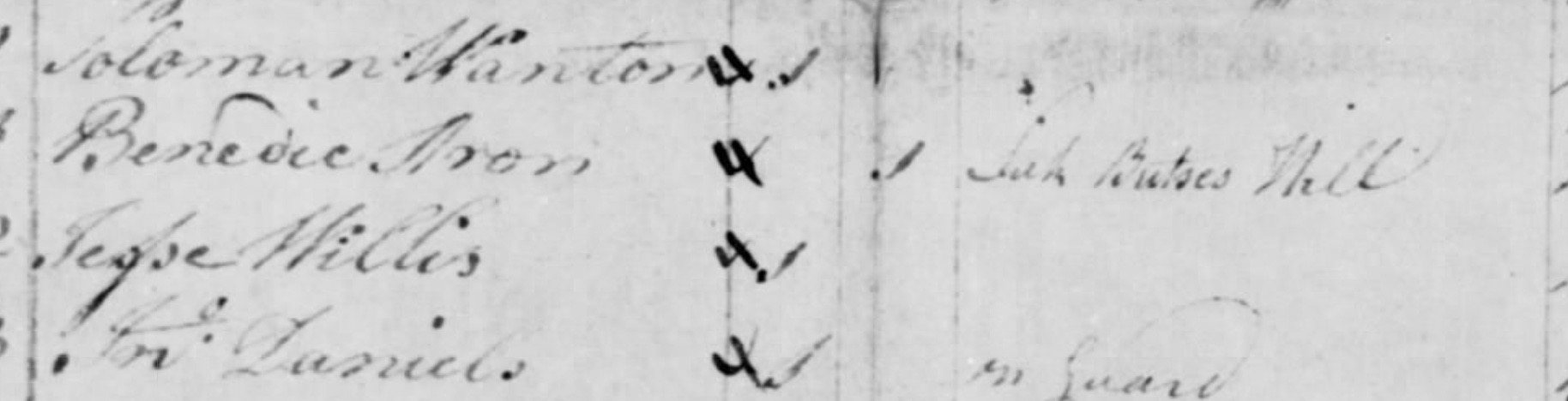
I have been trying to document the Black Regiment at Butts Hill, and Rhode Island historian Christian McBurney sent me a record of two soldiers who were listed as “sick, Butts Hill” in an August 22, 1778 muster roll. That led me to look into the role the fort played as a field hospital during the Siege of Newport and Battle of Rhode Island. I had come across a reference to this medical use in a orderly book for John Jacob’s Regiment of Massachusetts Militia. In this blog I will piece together what I have found so far on the Fort as a field hospital and what these field hospitals would have been like during Revolutionary War times.
A hospital was needed long before the Battle of Rhode Island and provisions had been made for it. The Hospital Department was created by Congress in 1775. There is a letter from Washington that made these provisions for Sullivan’s troops for the Rhode Island campaign.
From George Washington to Thomas Tillotson, 26 July 1778
To Thomas Tillotson
[White Plains, 26 July 1778]Sir,
You are to proceed, immediately, with two assistants to Doctor Isaac Foster Director in the Eastern department, and take his instructions for the procuring of hospital furniture, medicines instruments, and such things as may be thought necessary in the formation of a military & flying hospital for the use and benefit of the troops under the command of Major General Sullivan, at Providence, Rhode Island, in case or provided a proper hospital arrangement has not already taken place in that quarter either by the orders of Major General Sullivan or Doctor Foster. But should there be as yet no establishment of this kind you will repair to and continue with Major General Sulliva[n] in the faithful exercise of the several functions of your profession till dismissed by General Sullivan, the commander in that quarter, or the commander in chief of the army of the United States. Given at Head Quarters this 26th day of July 1778.
G. W——n
There were three main types of hospitals to care for Revolutionary troops:
1. The general hospital housed in buildings and run by the Continental military.
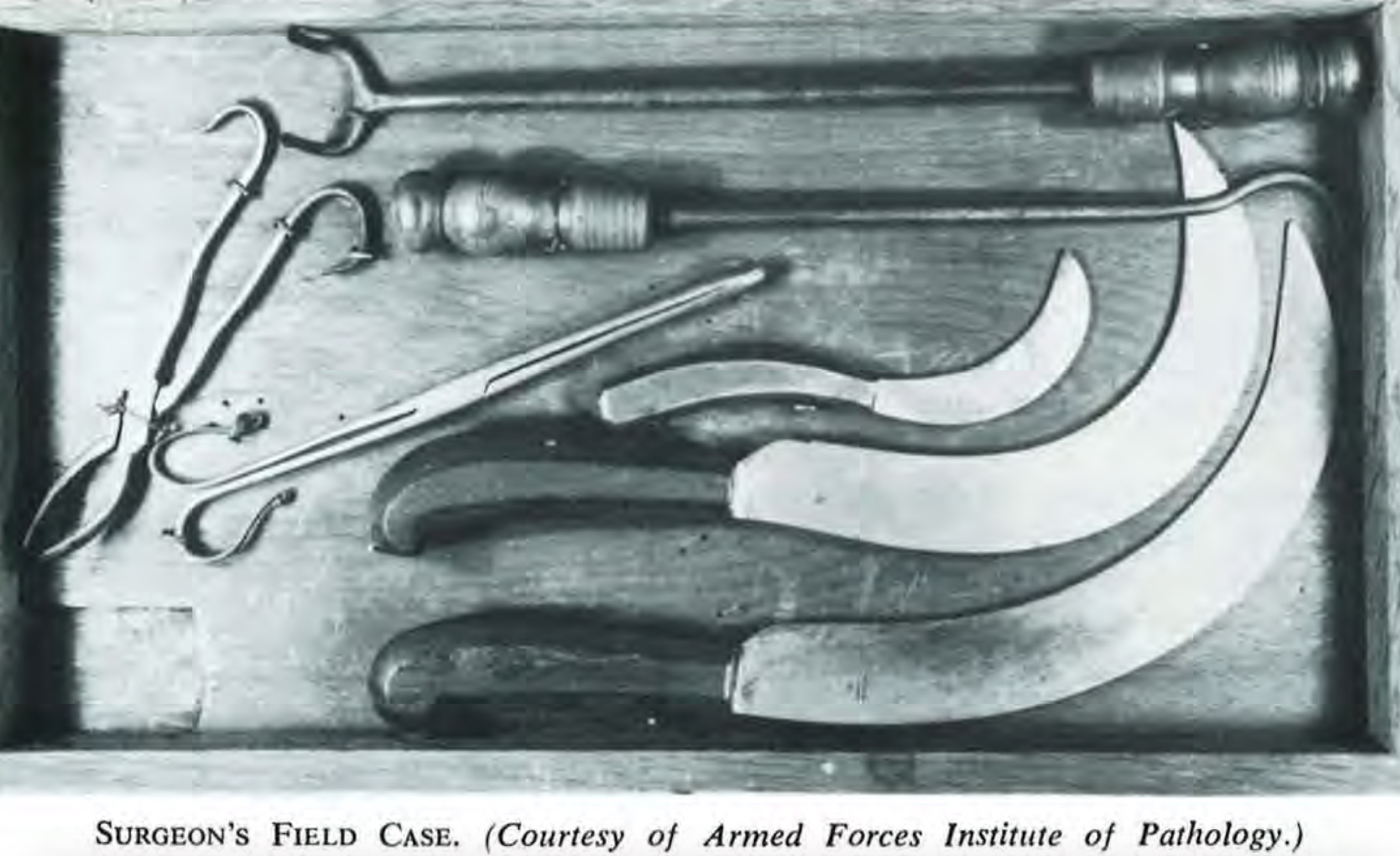
2. The mobile “flying hospital” also manned by Continental personnel in a hut or tent (with a few emergency beds and a surgeons table. These were like the later M.A.S.H. units.
3. The regimental hospital run by the regimental surgeon for larger numbers of soldiers. From the Orderly records it seems that the General Hospital was in Providence and Butts Hill would have been a “flying hospital.” Regimental surgeons and surgeon mates may have been closer to the battle doing triage and directing the wounded to Butts Hill.
Even before the Battle of Rhode Island there was a need for care of the “invalids.” The troops suffered through a major storm and there was little protection from the elements. During the Siege of Newport there were exchanges of fire and troops were wounded.
Orders of August 12 included “A Return of all the Invalids and persons unfit for marching to be made at Headquarters Immediately that they may be properly Officered and left to man the Fort on the North End of the Island.” The “walking wounded” and sick were guarding the Butts Hill Fort area. The orders included asking the Regimental Surgeons to return their sick daily to the director general of the hospital. They also were to make an accounting of bandages and medicines “that they might be supplied.”
On August 14th the orders included a statement that “a permit from the director General of the hospital will be a sufficient warrant for any Surgeon or sick person to pass to the main(land).” August 24th the orders read that Corporal Tilson is to grant papers to the mainland “as he thinks proper he will give only to the sick and those that attend them and the surgeon.”
August 30, 1778 was a day of caring for the wounded and burying the dead. The orderly report expresses General Sullivan’s expectation the wounded and those who have care of them will not want for comfort. ”A party of 100 men from the front line are to collect and bury the dead of this Army who fell in action.” The orders from Tiverton on August 31st are ” All the sick and wounded of the Army are to be removed to Providence as soon as it may be done without endangering them.”
There were more than 100 wounded in the Battle of Rhode Island. Others would have been injured in the storm and siege warfare. Accidents and illnesses would arise among the soldiers. There was a barracks at the Fort that might have served as a hospital caring for the wounded to stabilize them and send them on to more care in Providence. Regimental surgeons and their mates would have been providing the most immediate care, but the Battle of Rhode Island was an orderly retreat and all efforts would have been made to get the wounded to care at Butts Hill.
Links to information about Revolutionary War Hospitals:
purposehttp://npshistory.com/publications/morr/medicine-surgery.pdf
Tredyffrin Easton Historical Society History Quarterly Digital archiveshttps://www.tehistory.org/hqda/html/v41/v41n1p025.html
 portsmouthhistorynotes