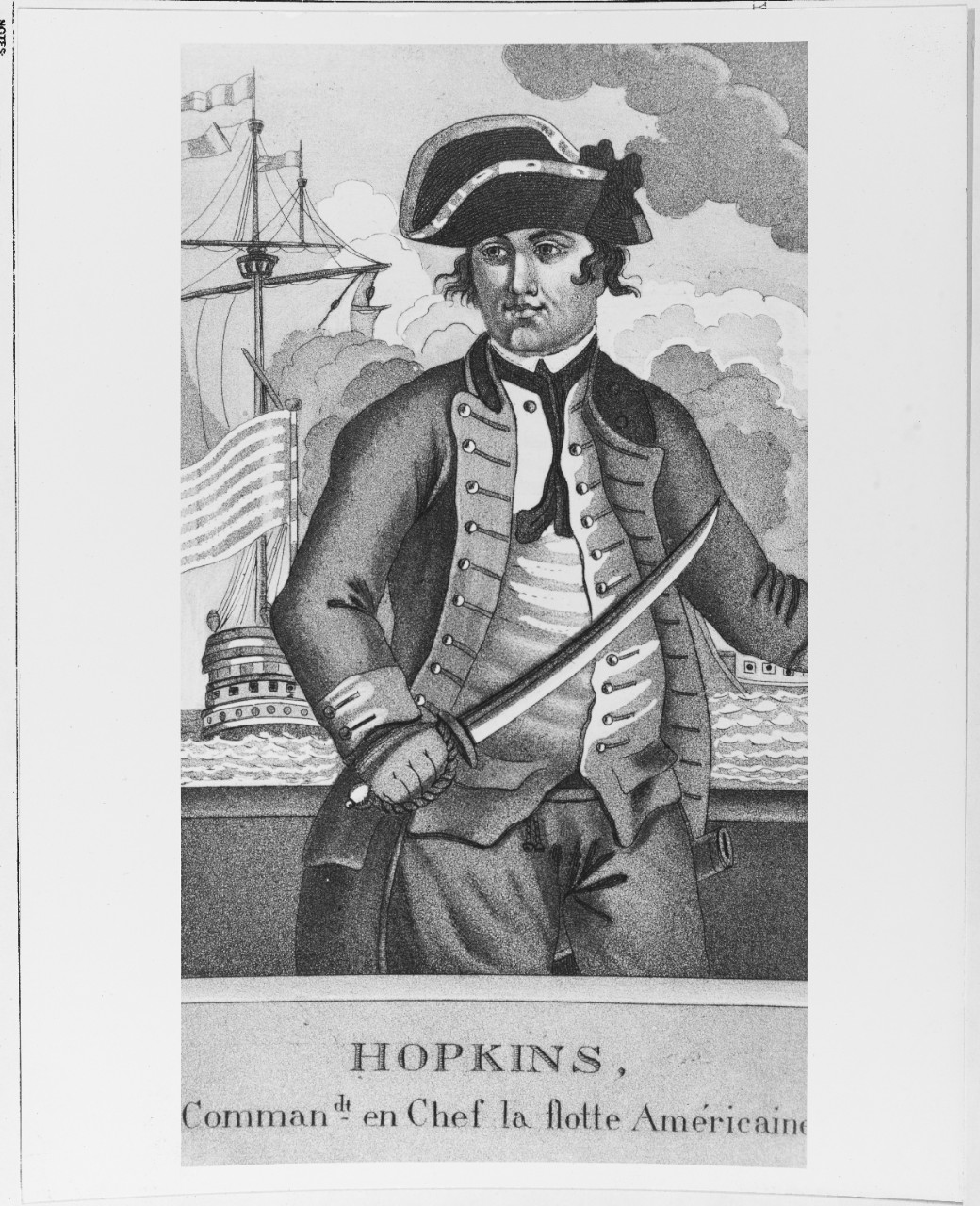
April 6, 1776 was the date of the Battle of Block Island, Rhode Island. This was an early battle (before the Declaration of Independence) for Esek Hopkins, commander in chief of the new Continental navy. It was considered a victory for the British because the British ship Glasgow was able to get away from the Americans. Hopkin’s fleet was returning from a successful raid on the town of New Providence on Nassau island in the Bahamas. The Americans seized eighty-eight desparately needed cannon, fifteen mortars, thousands of roundshot (types of cannon balls), other artillery implements and some gunpowder. The American ships spotted and gave chase to the HMS Glasgow, commanded by Captain Tryingham Howe. The Glasgow fired and hit the American flagship USS Alfred and disabled it. On April 7, 1776 American ships began dropping anchors off New London, Connecticut. Commodore Hopkins and the other commanders were criticized for their actions in the battle and even for their decisions to go to the Bahamas. This mission was controversial and marked the beginning of Hopkin’s downfall. The debate was over the nature of the orders Congress had given Hopkins before the raid.
John Paul Jones’s narrative of the action in the Alfred’s log-book gives details:
“At 2 A.M. cleared ship for action. At half past two the Cabot, being between us and the enemy, began to engage and soon after we did the same. At the third glass (a time reference) the enemy bore away and by crowding sail at length got a considerable way ahead, made signals for the rest of the English fleet at Rhode Island to come to her assistance, and steered directly for the harbor. The Commodore then thought it imprudent to risk our prizes, &c. by pursuing farther; therefore, to prevent our being decoyed into their hands, at half past six made the signal to leave off chase and haul by the wind to join our prizes. The Cabot was disabled at the second broadside, the captain being dangerously wounded, the master and several men killed. The enemy’s whole fire was then directed at us and an unlucky shot having carried away our wheel-block and ropes, the ship broached to and gave the enemy an opportunity of raking us with several broadsides before we were again in condition to steer the ship and return the fire. In the action we received several shot under water, which made the ship very leaky; we had besides the mainmast shot through and the upper works and rigging very considerably damaged.”
 portsmouthhistorynotes