I am working on a tour of sites in Portsmouth that saw action in the Battle of Rhode Island. The top of Quaker Hill is one such site. Some historians even use the term “Battle of Quaker Hill” because of the heavy action at this place. British soldiers converged on this crossroads from East Main, Middle Road and Hedly Street. Americans were holding their line at that position.
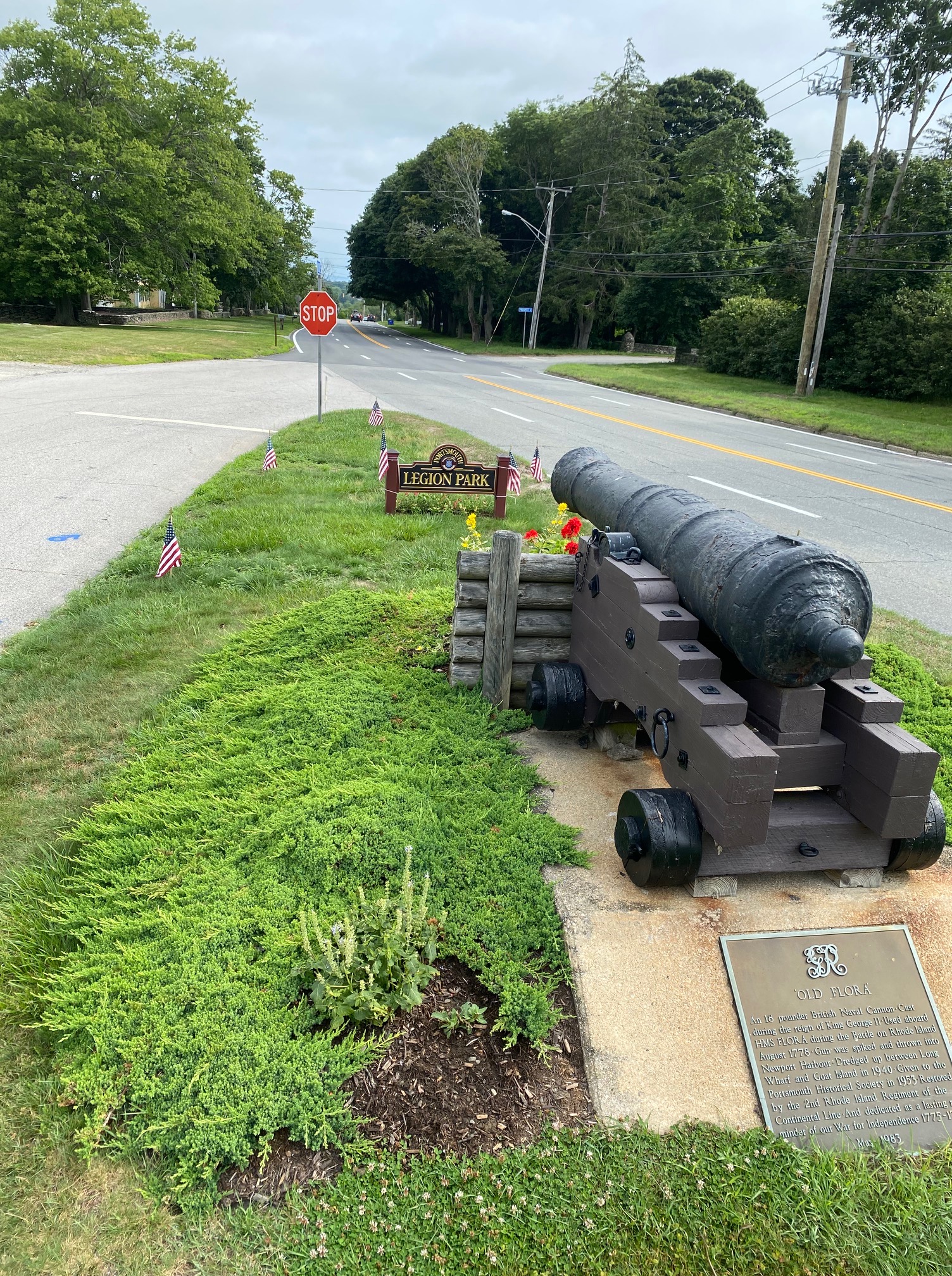
What Revolutionary Era sites can you still see today? The Friends Meeting House is an important landmark that was used by the British and Hessians as a hospital, barracks, and ammunition storehouse. The stonewalls are there to remind us of the American style of warfare in which the Patriots hid behind the walls in what we would call guerilla warfare aimed at harassing and delaying the British. In Legion Park across from the meetinghouse there is a cannon from the British ship Flora.
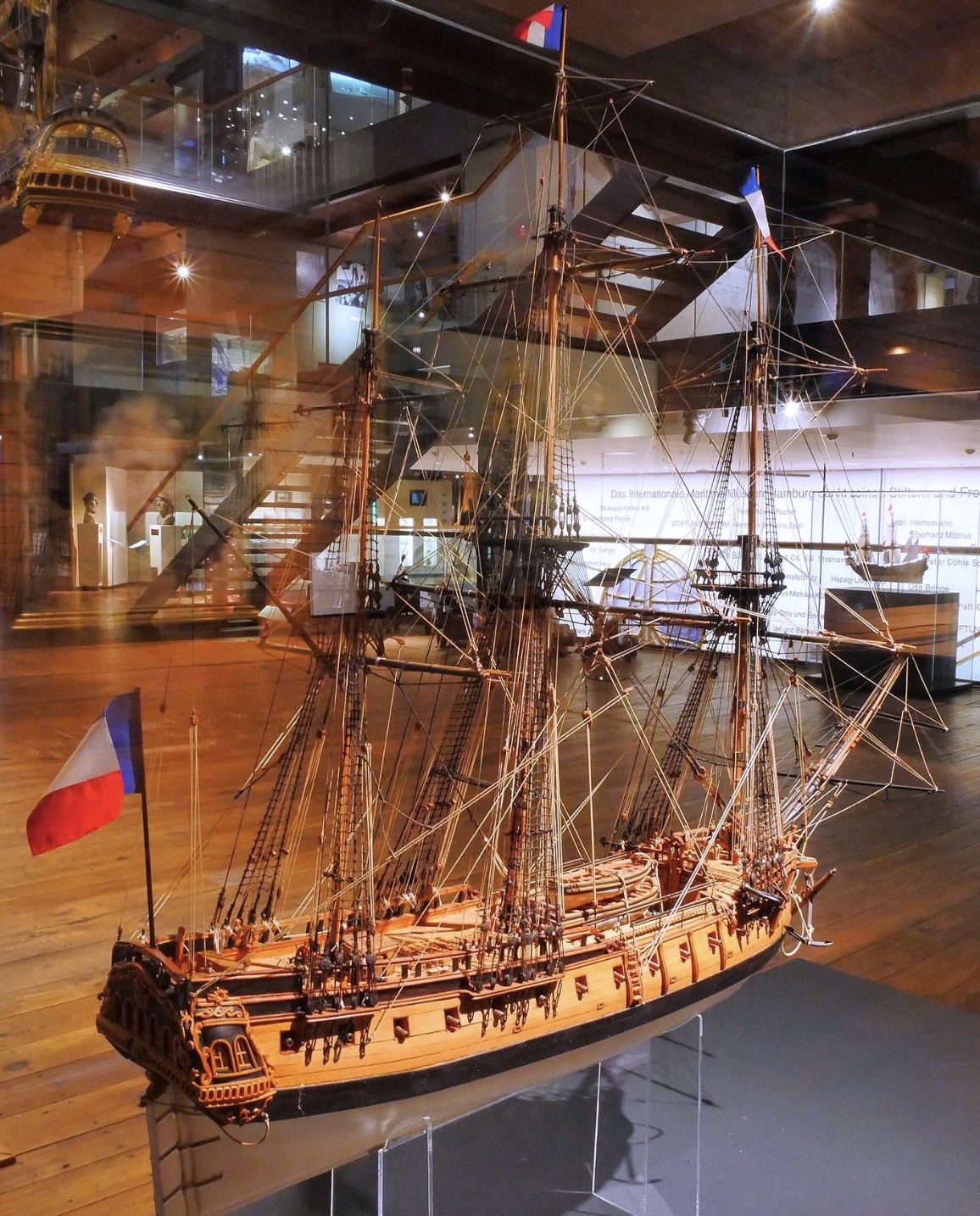
What is the story of the Flora? In researching why we have a ship’s cannon at Quaker Hill, I encountered the tale of a ship of many names and nationalities. According to an article by noted marine archaeologist D.K. Abbass, the Flora was a 698 ton, 32-gun Royal Navy frigate. Its original name was LaVestale and it was built by the French Navy in 1757. Once a ship was captured in those days, it was common practice for the vessel to be used in the navy of its captor. In 1761 the ship was captured by the British and was renamed the Flora. By 1776 the Flora was being used as a troop transport.
When the French fleet arrived in Newport in July of 1778, the British did not want the French to capture their ships. The British scuttled seven of their vessels and 13 of their transports were scuttled in the outer harbor. In Washington’s Wolfpack, the Navy before there was a Navy, author Edgar Maclay wrote that the Flora was heaved over on its side and beached for cleaning. It lay between Goat Island and Long Wharf in Newport until April of 1779 when she was raised again. The British used eight 12 pounders from the Flora on the newly outfitted HMS Pigot. The story of how American Silas Talbot outwitted the British on the Pigot is yet another story to tell. The British sank (and burned) the Flora again when they left Rhode Island in December of 1779. She was passed back and forth. 1784 – named “Reconaissance” (French), 1787 back to “Flora” (French), “Citoyenne Francaise” (a French pirate). By 1798 she was captured by HMS Phaeton and sent to the scrap heap.
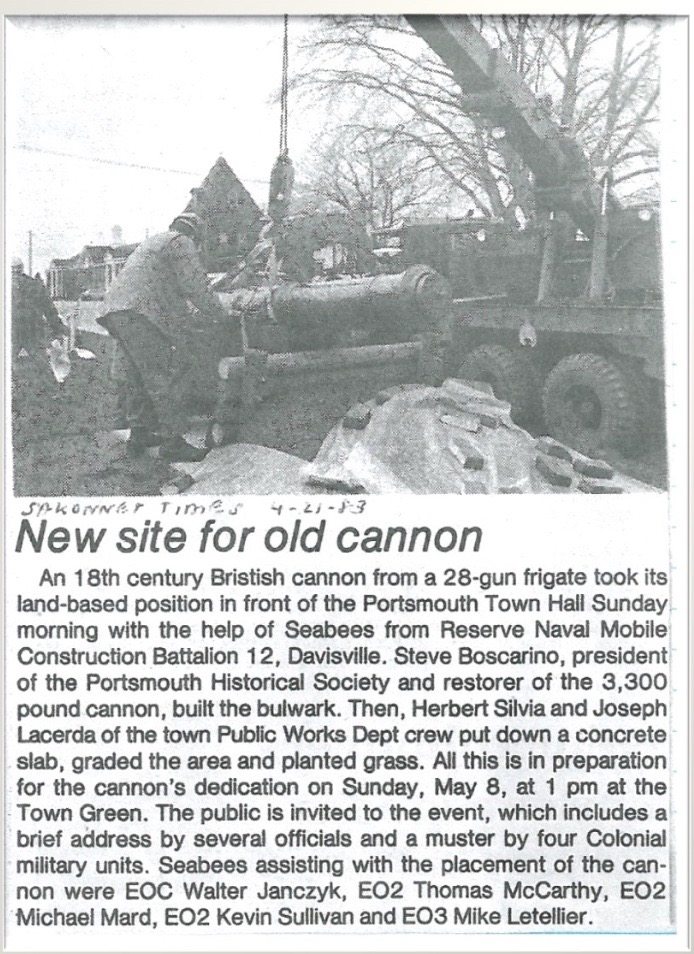
Flora was not down at the bottom of the harbor, but at least one of her cannons was. In 1940 workmen repairing Long Wharf came across the cannon and the cannon is now displayed at Legion Park in Portsmouth.
A note about privateers: they are privately owned armed vessels, commissioned by a state to attack enemy ships, usually merchant ships. The privateers and their crews usually got the ship and a large percentage of the cargo they captured. Without a real Navy, Americans relied upon these privateers in maritime warfare.
 portsmouthhistorynotes