Home

Portsmouth Neighborhoods

Leave a comment

What’s the story of Portsmouth’s various neighborhoods? Over the winter I will be gradually exploring our communities. What history happened here? Who are people of note who lived here? What can you see of the past and what recreations can you enjoy today?

Portsmouth has never had a central “downtown” area like most communities. The original settlers tried to create a traditional town with residences clustered together and farm lots further away, but that is not what the settlers wanted.

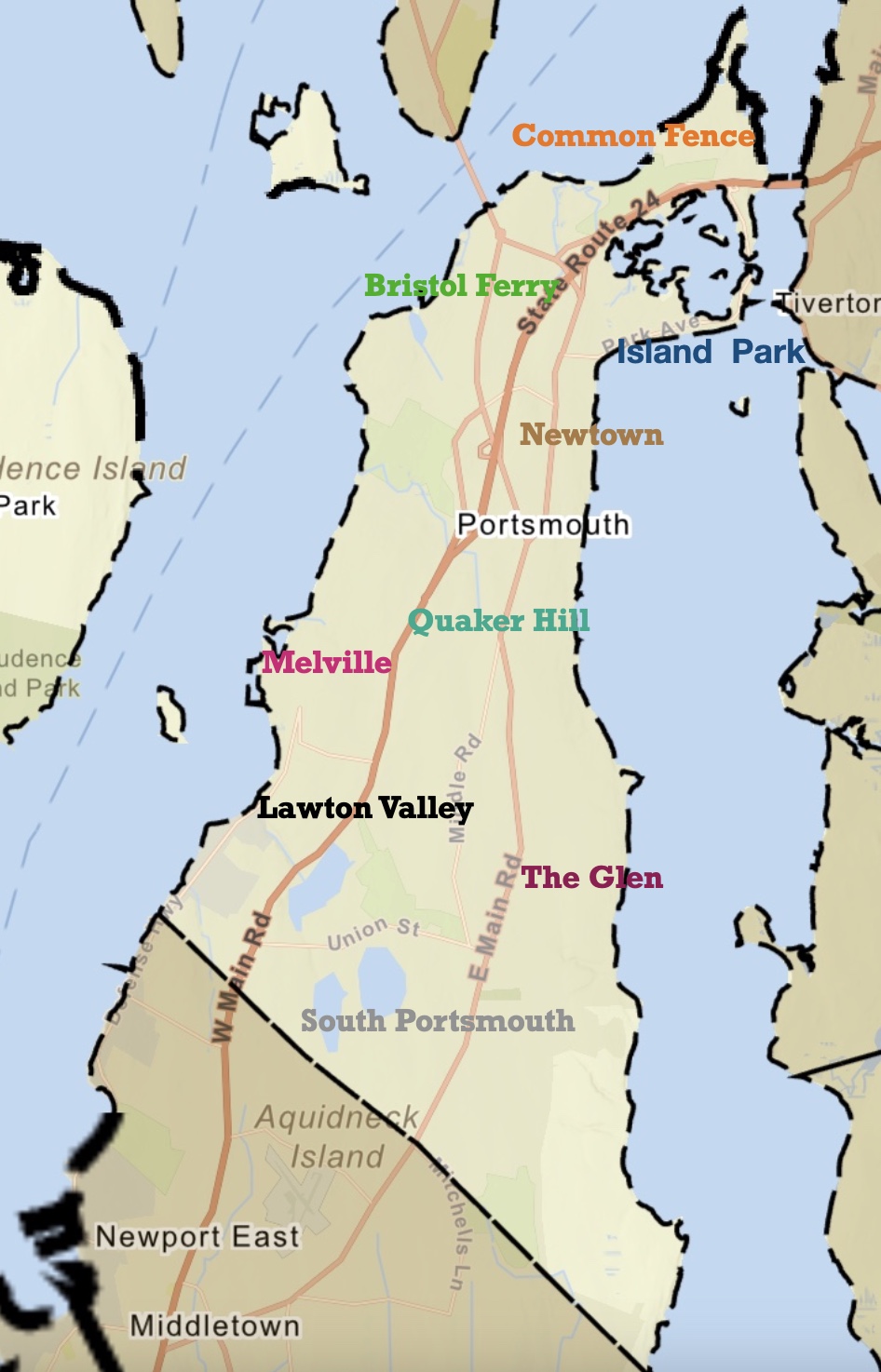
Original settlements centered around Common Fence and Town Pond. They opted to live spread out on their farmlands. So Portsmouth developed neighborhoods instead of a central town.

Some of those neighborhoods centered around the ferry landings – Bristol Ferry Road and Glen Street heading to the Fogland Ferry.

The Glen area of Portsmouth featured the grand Taylor family Glen Farm.

South Portsmouth featured large “Gentlemen’s Farms.”

Quaker Hill and Middle Road took on importance as a central spot with Town Hall and the Quaker Meeting House.

The Melville area took on importance when the military claimed most of the Westside of town.

Lawton’s Valley – Wading River was the home of Julia Ward Howe and the site of the mysterious death of Rebecca Cornell.

Newtown was a planned central downtown, but it never seemed to reach its promise. The location along East Main Road, however, made it somewhat a commercial and social area with churches, the library and businesses.

Island Park was created as a summer resort and Park Avenue – on the way to the Stone Bridge and Ferry, was as close to a “downtown” as Portsmouth ever would experience.
Discover Your Portsmouth: Melville Park

1 Comment

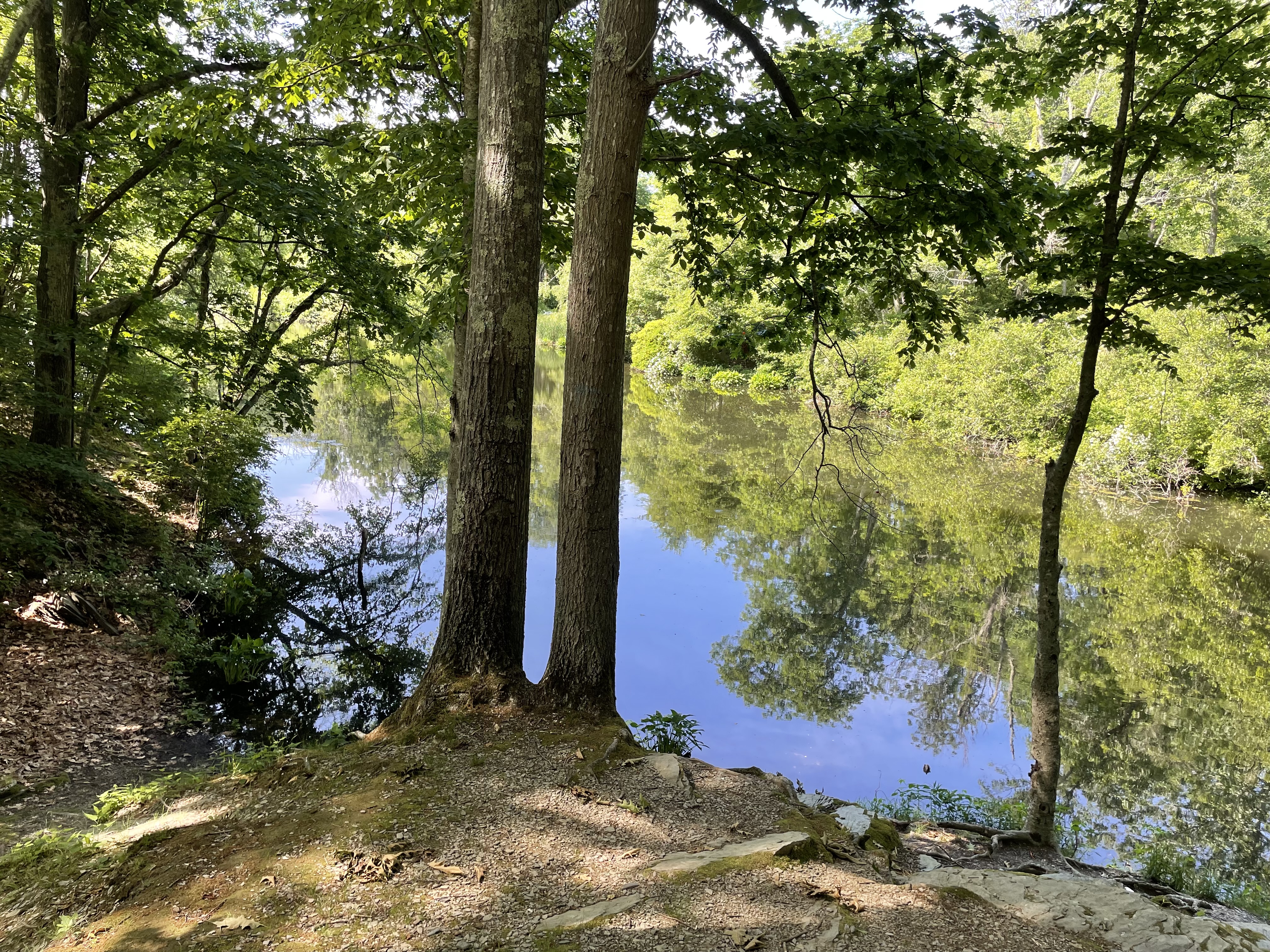
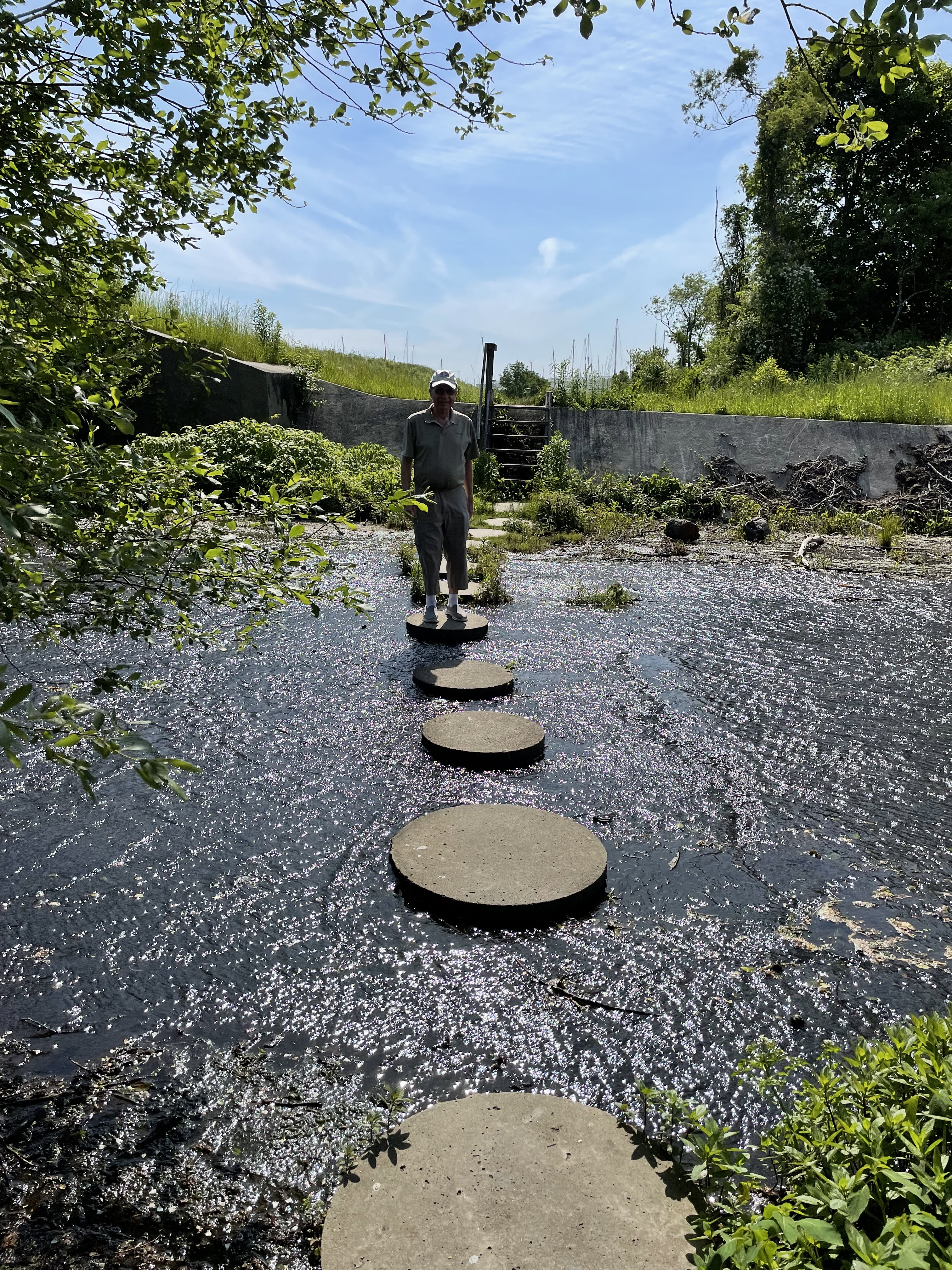
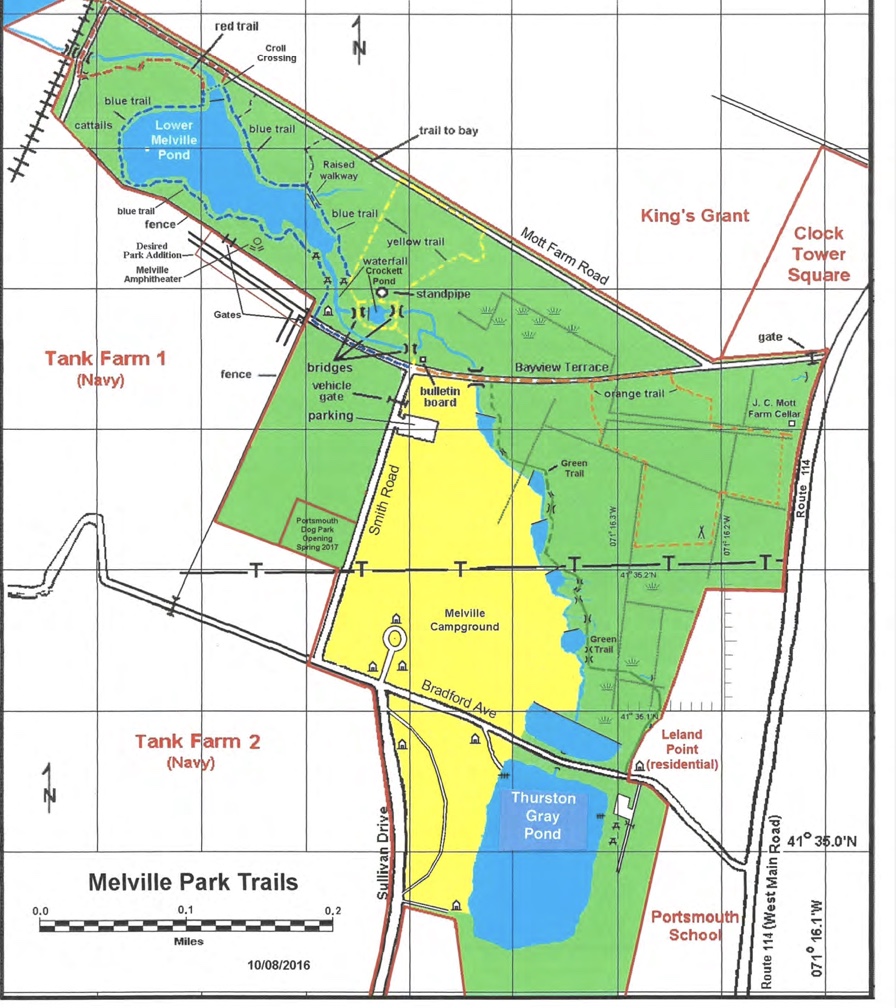
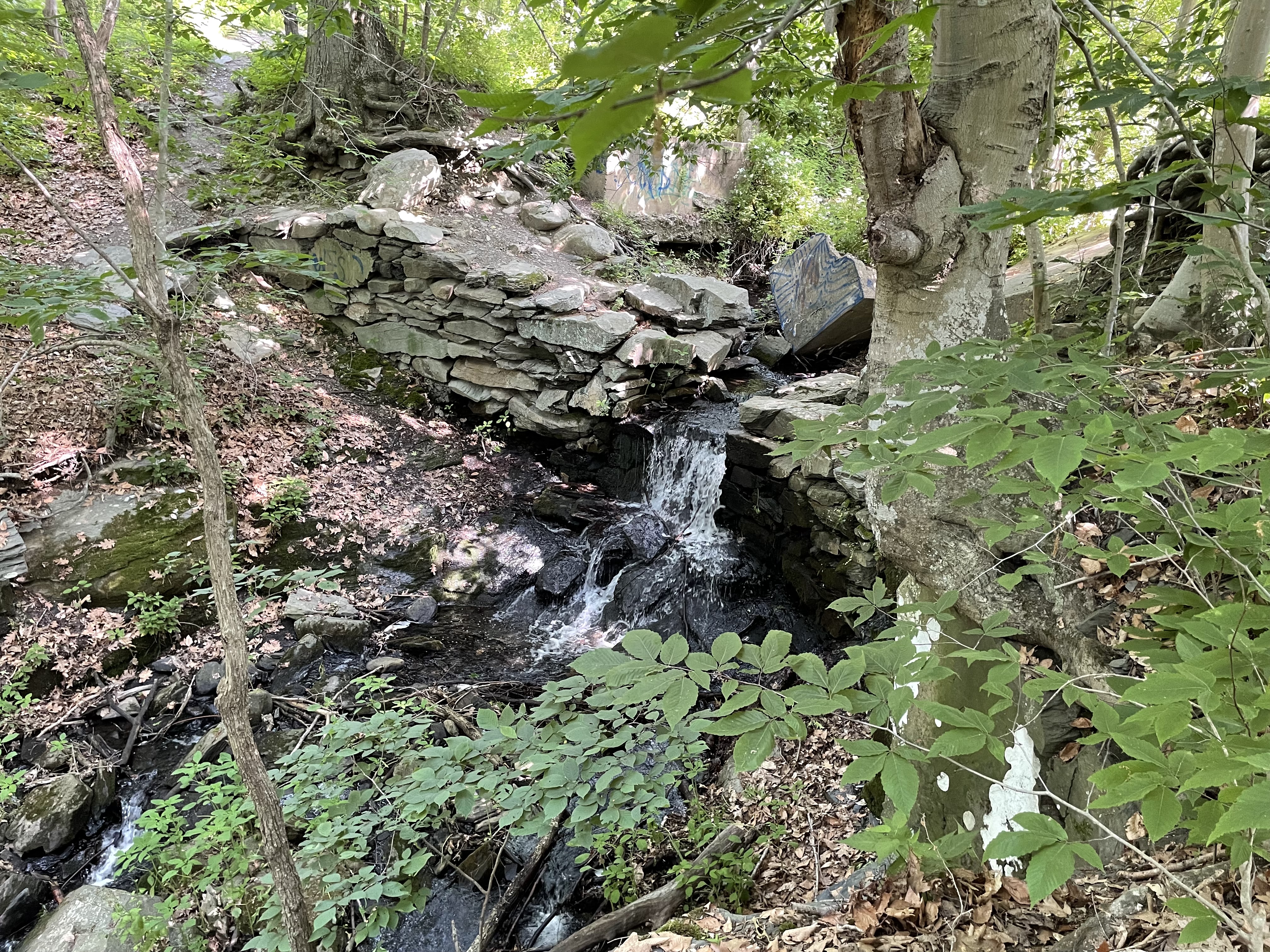
It has been a while since I hiked in the Melville Park Recreation Area, but I intend to go back. My favorite parts of the trail were viewing the waterfall and hopping across concrete circles across a water way. The trails are considered “Easy” but I would carry a walking stick to keep me steady. There are three miles of trails – designated as Blue, Green, Orange, Yellow and Red. The Blue Trail was first created by Boy Scouts and goes around Lower Melville Pond and takes you closest to the Narragansett Bay. It includes picnic tables.

What to do: Hiking, birding, wildflower viewing. Dogs are welcome on leashes.

How to get there: 181 Bradford Avenue in Portsmouth. West Main Road to Bradford – go past the Camp Grounds and Dog Park to a small parking lot for the Trailhead.

Melville Park chair Stephen Luce provides some background:

“Melville Park certainly does have much unique and interesting history. Part, but not all of it, was included in the 100 acre grant to Adam Mott Sr. in 1640. He called his estate ‘Matapurcetti’ in his will of 1661. That name has recently been granted by the Town Council for the brook that runs through the Park.. Also, the cellar hole by one of the trails is not the original Adam Mott home that was dismantled in the 1970’s. That extant cellar hole is from a house built post 1670 by one of the Jacob Motts. Additionally, the U.S. government already owned much of what is today Melville Park prior to WWII. For example, they owned the land where the tall water tower/standpipe stands. That water tower was built by the government to provide water to the steam ships that came to the Bradford Coaling Station. The brook also provided the water for Lovell Hospital during the Civil War. The federal government transferred ownership to Portsmouth in 1978.”

Before World War II the area was cleared agricultural land, but it was taken by the US Government for military purposes.

According to Melville Park Vice President Ed Rizy: “A waterway transiting the area, long used by farmers, was expanded by the Works Progress Administration (WPA) into a nine-pond system, two large reservoirs and seven intervening ponds, including one previously built by locals. The seven smaller ponds are believed to be silt traps removing detritus that could significantly reduce the lowest pond. The government’s estimates of pond capacities in 1942 were about 125,000 gallons for the upper and lower ponds, with the intervening ponds varying from 15,000 to 22,000 gallons each. The pond dams used to contain WPA medallions, all of which have been removed.”

In the 1970s, the Navy transferred ownership to the Town of Portsmouth. Melville Park was created for passive recreation.

Resources: