“Do you know if the school taught girls alongside boys, and if so, when that co-ed started? Also, any indication of any Black or Indigenous ever being taught there?” I received these questions from a Portsmouth Historical Society board member and I have been searching through new and old resources to try and answer that question
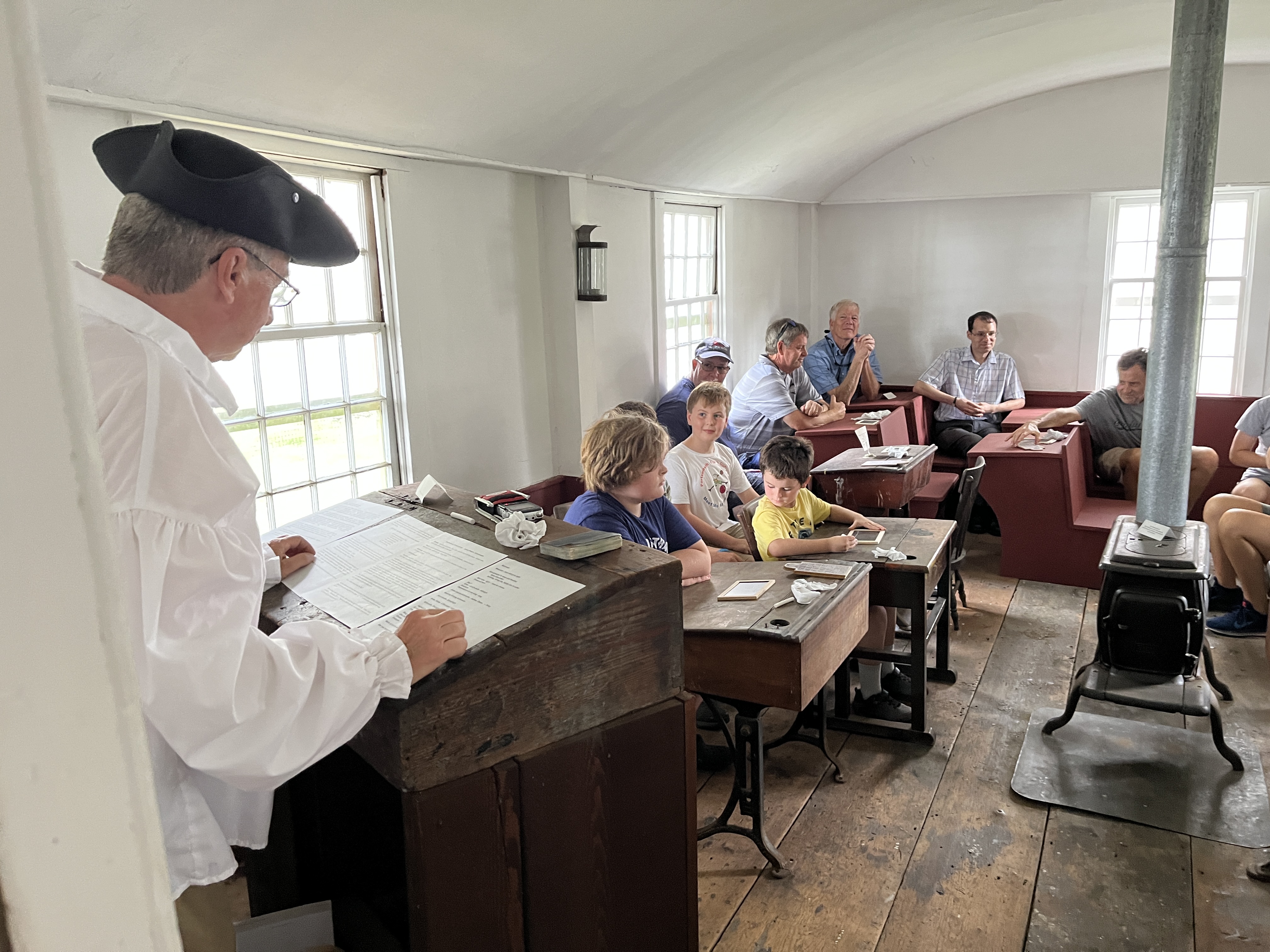
When my husband portrays James Preston to a school group, the “students” are a mixture of boys and girls. There are few sources on the students at Southermost, but state orders and details drawn from newpaper articles on the school may help us draw some tentative conclusions.
Public or Private?
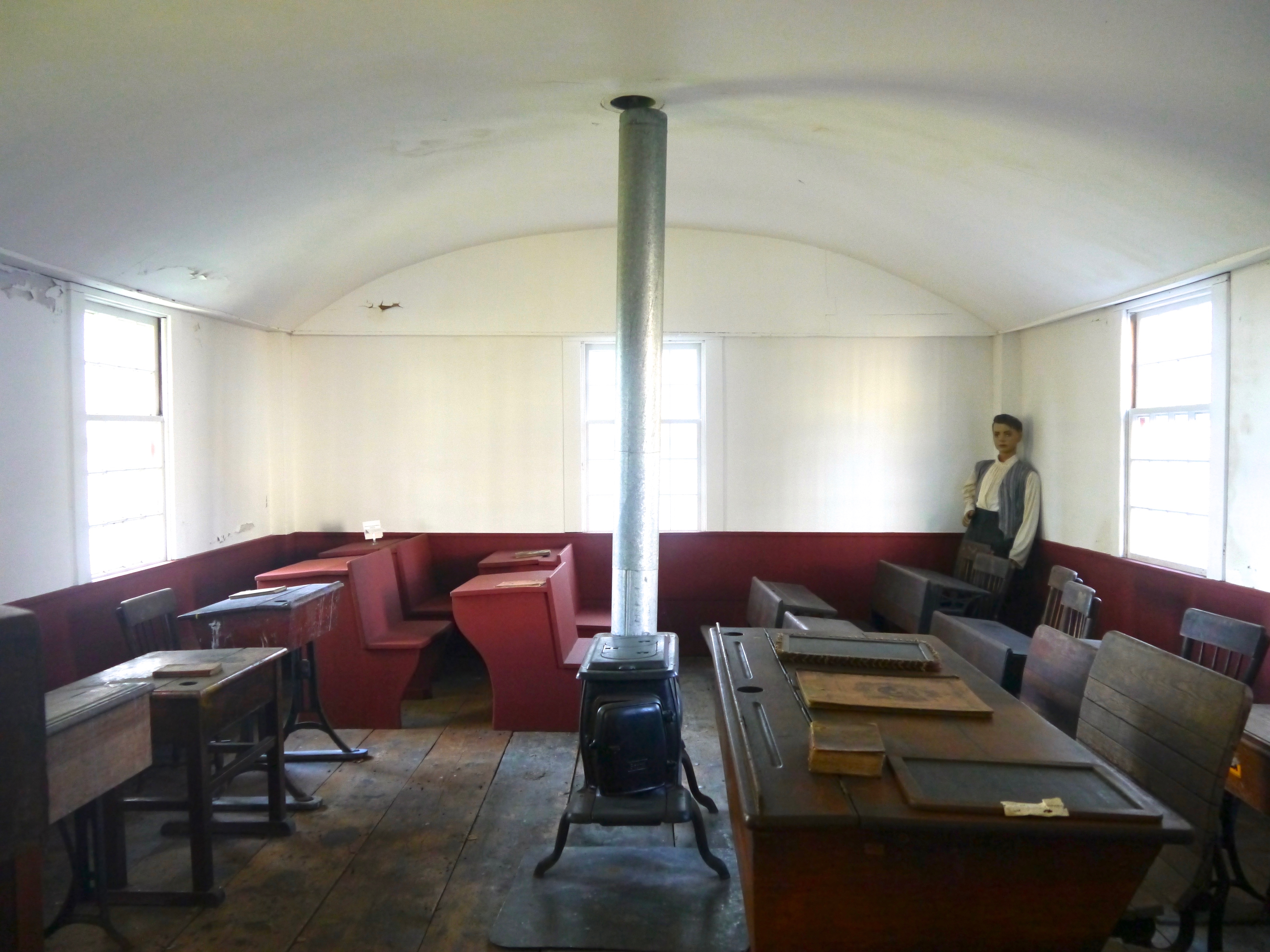
Newport and Providence had schools that were established in earlier days then Southermost. These were private and religiously based schools. Portsmouth founders had a core belief in religious freedom and they had suffered under the hand of ministers. They may not have been interested in having their children’s education formed by religious leaders. Private schools and religious based schools were available on the island in Newport. Portsmouth residents advocated for a school that was open to all students (boys). The schoolmaster was not a religious leader. The first schoolmaster’s background seemed to be as a mariner judgeing from his books.
Boys and Girls?
Chances are that before 1800 education was for boys only.
State guidelines for education in public schools in 1800 show that at that point the general view was white students only.
“for the instruction of all the white inhabitants of said town, between the ages of six and twenty years, in reading, writing and common arithmetic, who may stand in need of such instruction, and apply therefor.” (1)
A chart in the History of Education book lists Portsmouth as having 4 schoolhouses in 1828. School was held in the winter, but one or two of the schoolhouses stayed open over the summer as well.
In 1832 there were 8 schools and 360 students. There were two male teachers. By 1844 there were 6 male teachers and 4 female teachers. That detail leads me to wonder of there were female students at that time.
By 1876 the laws were clear on girls attending.
Gexeral Provisioxs Relating to Public Schools.
Section 1. No person shall be excluded from any public school in the district to which such person belongs, if the town is divided into districts, or if not so divided, from the nearest public school, on account of race or color, or for being over fifteen years of age… (A history of public education)
In newspaper articles from the time of the Hall family donation of the school, Herb Hall comments that there was grafiti left in the school from before it was moved to the Almy farm. Names included Sarah Coggeshall and Mary Spooner. If the school was moved around 1863, it would be evidence of girls attending the school before that. Herb said the family found a list of punishments at the school. That rules list refers to boys and girls.
List of Rules and Punishment posted at Southernmost School.
• Boys and girls playing together – 1 lash
• Fighting at School – 5 lashes
• Quarreling at school – 3 lashes
• Climbing for every foot over 3ft up a tree – 1 lash
• Telling tales out of school – 8 lashes
• Giving each other ill names – 3 lashes
• Misbehaving to girls – 10 lashes
• Leaving school without leave of the teacher – 4 lashes
• Wearing long fingernails – 2 lashes
• Boys going to the girls’ play place – 3 lashes
• Girls going to the boys’ play place – 2 lashes
• For every word you miss on your heart lessons without a good excuse – 1 lash
• For not saying yes or no sir or yes or no marm – 2 lashes
• Telling lies – 7 lashes
• Swearing at school – 9 lashes.
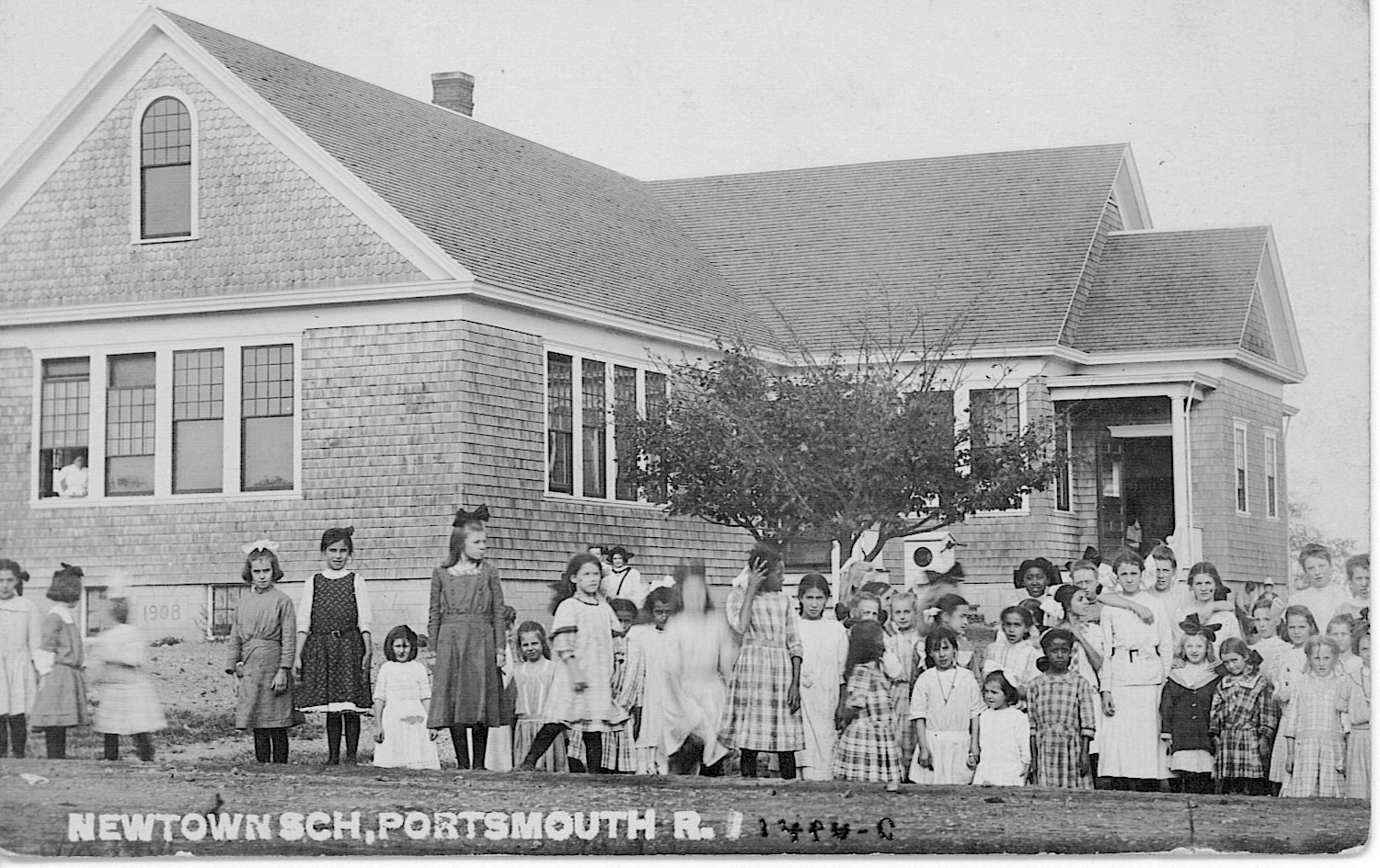
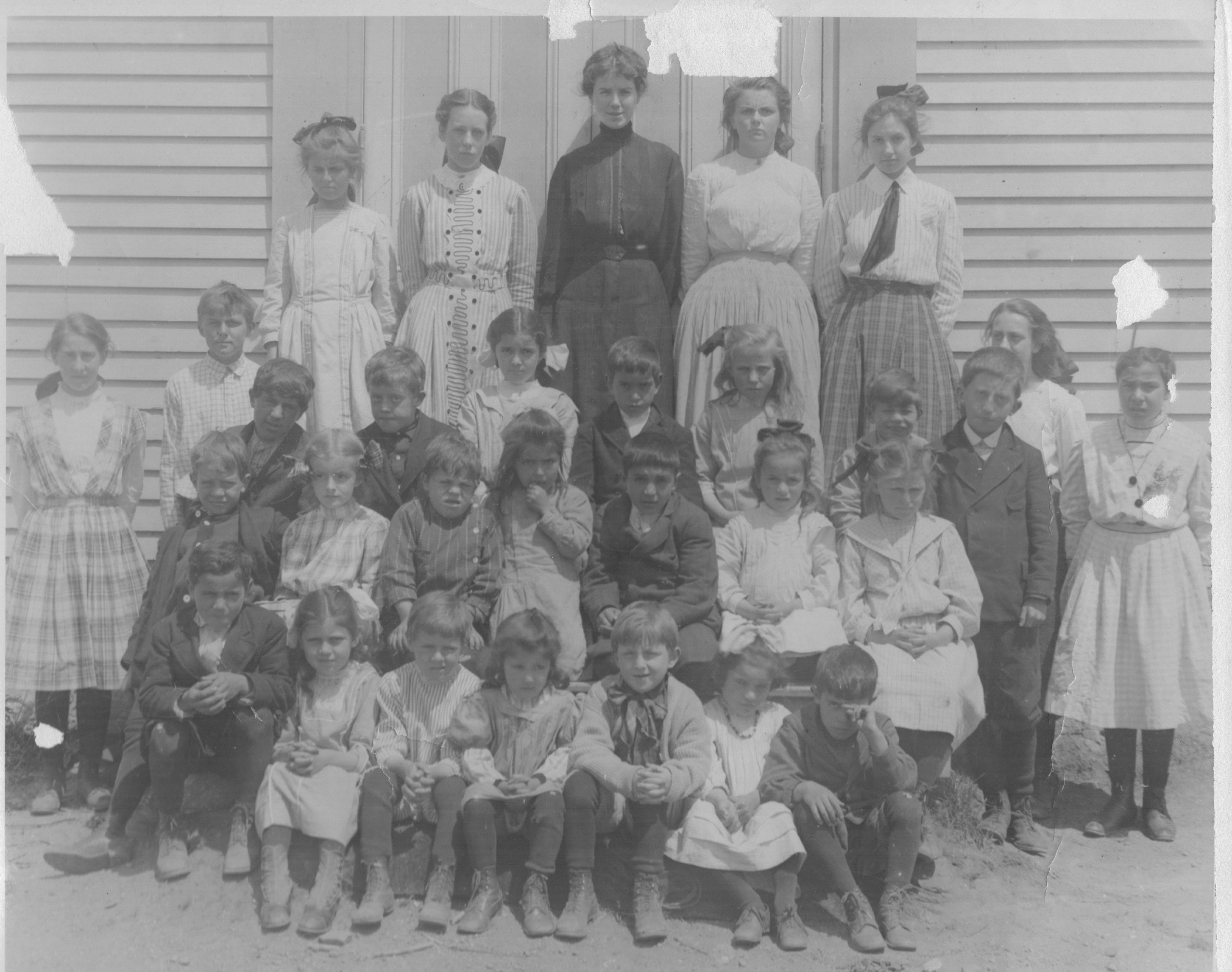
I haven’t found information on when “all races” could attend public school in Portsmouth. We gather through school photos at the turn of the 20th century that those classes were well integrated. Indigenous attendance is something I cannot determine.
Extra Notes from historian Edward West.
The donor of the land, William Sanford, commended on his reason for the donation: “…for and in consideration of the venerable estreem I have for the Town of my Nativity and also to my very much esteemed friends and neighbors, but more especially for the better encouragement of bringing up and educating children in litteral learning. “
Sources:
- Stockwell, Thomas B., Ed, Thomas Wentworth Higginson, Edwin Martin Stone, and Rhode Island. Board Of Education. A history of public education in Rhode Island, fromto 1876
. Providence, Providence press company, printers to the city and state, 1876. - Portsmouth Historical Society has images from one-room schools.
- Newspaper articles. Daily News August 29, 1968 –
- Edward West, Early Schoolhouses and Schoolmasters of Portsmouth, Rhode Island.

 portsmouthhistorynotes