Home

Capture of General Prescott – July 1777 – Barton’s Raid cheers the Patriots

2 Comments

In July 1777, while Aquidneck Island was under the control of thousands of British soldiers, American Major William Barton (who was in Tiverton) received word through a runaway slave that the British Commander in Chief, General Prescott was staying at Mr. Overing’s house on West Main Road close to the Portsmouth/Middletown border. When Prescott was at his headquarters in Newport he was well protected. Visiting friends in the countryside, Prescott was less well defended. Barton planned to get Prescott so he could be exchanged for American Major General Charles Lee who had been captured in New Jersey.

Barton asked for volunteers for a dangerous and secret plan. Out of the many who stepped forward he picked out the best rowers and four who had lived on Aquidneck Island and could serve as guides. Barton had five whaleboats and each boat had eight soldiers and one officer. The river crossing between Tiverton and Portsmouth was closely watched, so Barton and his men rowed to Bristol and then all the way over to Warwick to begin their secret mission. The mission was so secret that even the volunteers did not know where they were going until after their journey had begun.
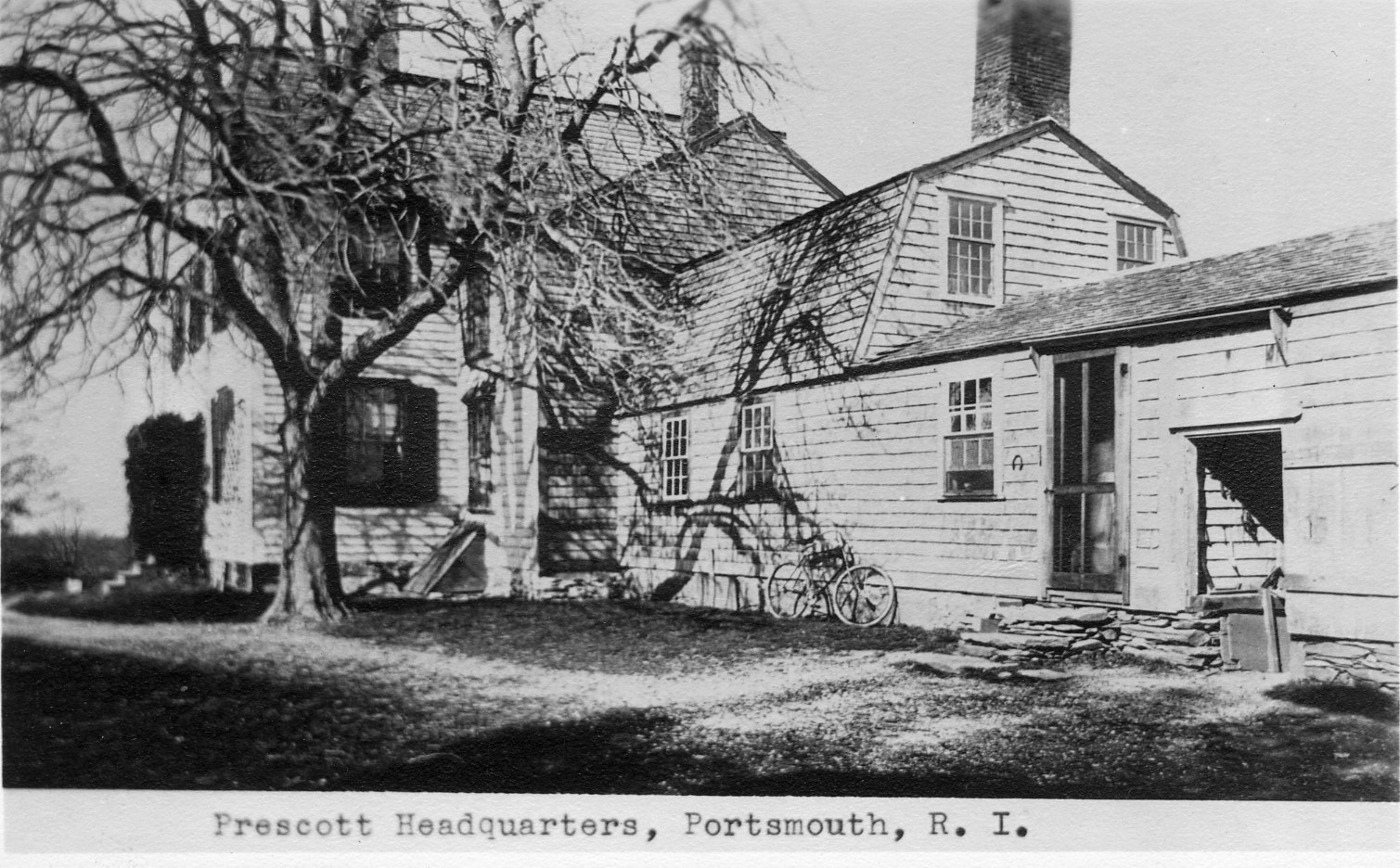
The night of July 10th was perfect – it was very dark and the weather was good. Barton and his volunteers left Warwick Neck, rowed across the Bay with oars that were covered in wool to keep them quiet. They had to row around British ships that were stationed on the west side of the island. The Americans landed on the west shore of Portsmouth and followed a gully up to the Overing Farm on the Portmouth/Middletown border. Barton divided his troops and they approached the house quietly. There was only one sentry on guard at the guardhouse. Hearing noise, the guard asked: “Who comes there.” Barton responded: “Friends.” The guard asked for a countersign and Barton said he did not have one but asked the guard “Have you seen any deserters tonight.” With that the guard allowed Barton to pass and the American grabbed his musket.

They found Prescott in his nightclothes. Barton asked if he was Prescott and he responded. “I am”. Barton said: “You are my prisoner.” and Prescott said “I acknowledge it, sir. The men worked quickly and within seven minutes took Prescott, the sentry and Prescott’s aide-de camp with them. No shot was fired.

They again had to row through British ships on their way back. This capture gave the colonial troops some needed encouragement. There was a prisoner swap in which General Prescott was exchanged for American General Charles Lee, but Prescott made it back to Aquidneck Island.
British Invasion of Newport – December 8, 1776

Leave a comment

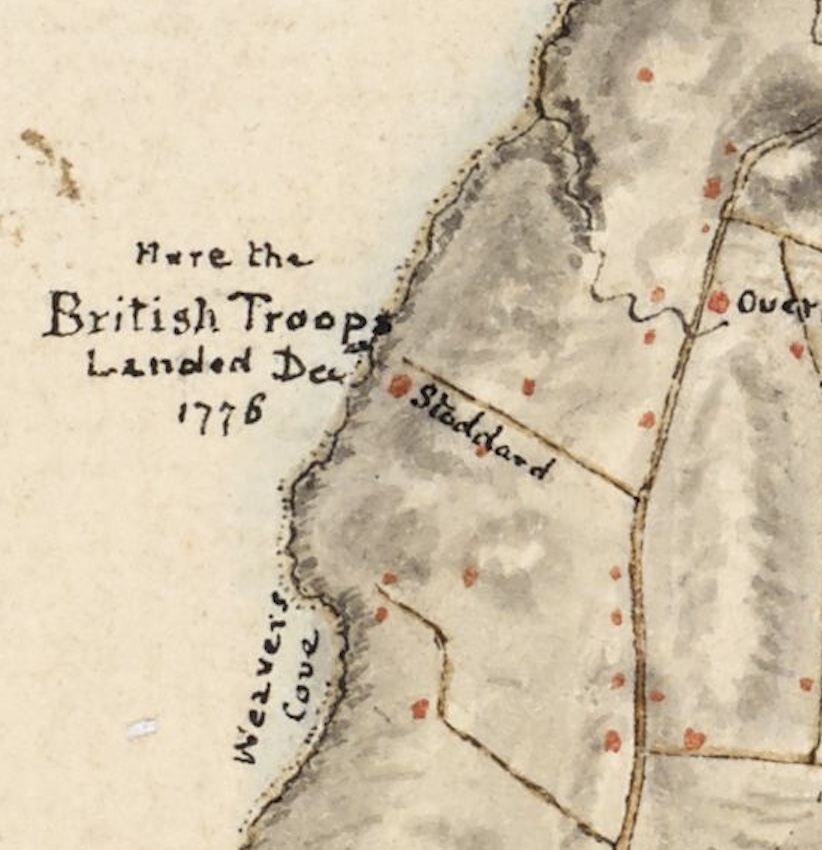
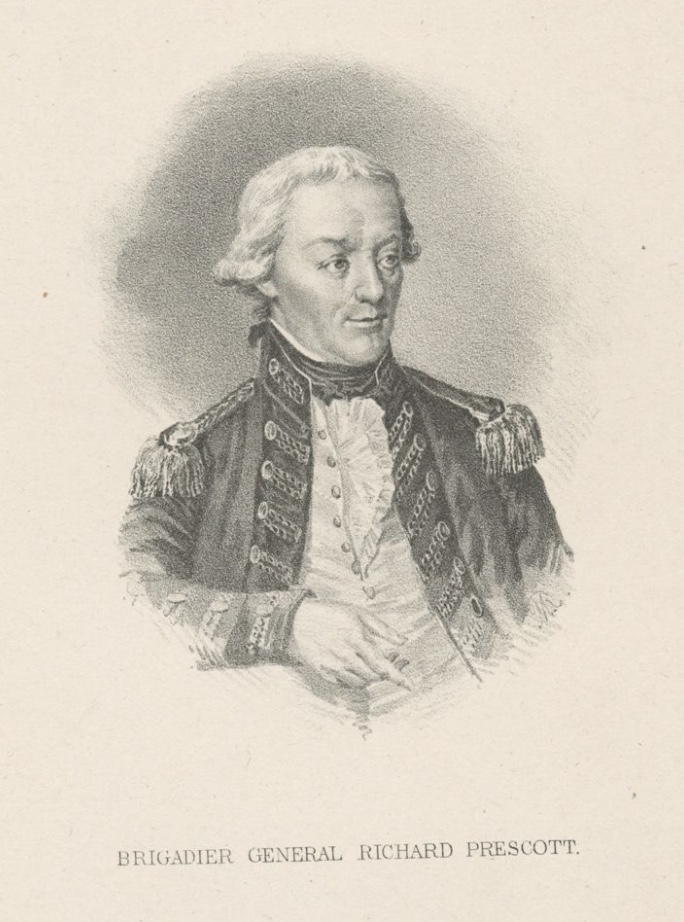
On December 8th, 1776 British General Prescott landed his troops on Aquidneck Island. They landed on the Western shore near the border of Middletown and Portsmouth at Weaver’s Cove. This was the beginning of the Occupation of Rhode Island (Aquidneck Island). The American militiamen were unable to mount a defense and they escaped by using the ferries to Bristol and Tiverton.

The British had ample reason to invade and occupy Aquidneck Island (called Rhode Island at that time). Newport had a fine harbor from which the British fleet could raid up and down the coast. It would enable them to blockade ships carrying supplies from abroad that were needed by the Americans.

This Occupation made the war experience different for those on Aquidneck Island harsher than those on the mainland. The Occupation lasted almost three years, ending in the fall of 1779.

The Story Behind the Rhode Island Campaign: Occupation

Leave a comment

On December 8th, 1776 British General Prescott landed his troops on Aquidneck Island. They landed on the Western shore near the border of Middletown and Portsmouth at Weaver’s Cove. This was the beginning of the Occupation of Rhode Island (Aquidneck Island). The American militiamen were unable to mount a defense and they escaped by using the ferries to Bristol and Tiverton.

The British had ample reason to invade and occupy Aquidneck Island (called Rhode Island at that time). Newport had a fine harbor from which the British fleet could raid up and down the coast. It would enable them to blockade ships carrying supplies from abroad that were needed by the Americans.

The British Occupation of Rhode Island would last until October of 1779. Life for the residents deteriorated throughout that time. There were different experiences for those who lived in Newport and those who lived in the farmlands of Middletown and Portsmouth. Newport had more British sympathizers and life for them was good at first. The “well to do” Newporters and British enjoyed concerts, dances, card parties, and Christmas concerts after the British first arrived in 1776. In 1777 daily routines continued. The occupiers took over houses, shops, wharves, and farms. The British and Hessians (German) came with wives and children and all needed food, supplies, housing and heat. The residents competed with the British for scarce items. The British took hay and confiscated cattle and livestock. Residents could hunt birds, catch fish and collect shellfish. The British collected boats and guns. The longer the Occupation lasted, the harder it was on those in the maritime trades such as coopers, sailors, rope makers, etc. Wharves were pulled up for fire wood. Merchants had no supplies coming in so they had little to sell.

Local citizens couldn’t count on growing food for their families. Gardens were raided, fruit was plucked from trees and potatoes were dug up by British soldiers. There was no freedom of movement. Women could travel a little more freely at first, but later they needed passes to leave town. The border of Newport and the rest of the island was gated and locked There was no free press or local government. Births, deaths, marriages were not recorded and Newport lost its property records when the British shipped them to New York and they were ruined by water.

Destruction was even more disastrous when the French fleet was arriving in August of 1778. In creating defensive works. the British demolished homes, chopped down orchards and trees for abatis (a defensive obstacle formed by felled trees with sharpened branches facing the enemy.). Conditions worsened after the Battle of Rhode Island and through to October of 1779 when the British left the island.

The Rhode Island Campaign was a plan by the Americans and their new allies the French to rid the island of the occupying forces.