1731-1804
Background – His military life began in 1746 as an ensign. He had a long line of service with the 22nd Regiment of Foot. In 1775 he was promoted to Lieutenant Colonel. He retired on October 11th, 1778 but later served as Captain of the Plymouth Invalid Company. His service extended to a total of almost 48 years.
In Rhode Island Lt. Col. John Campbell served as commanding officer of the 22nd Regiment and saw action during the British Occupation and the Battle of Rhode Island. He and his regiment raided towns around Rhode Island.
The Rebels would need to reach Rhode Island (Aquidneck) by boat and the British planned to attack shipyards, lumber mills and military stores. On May 25, 1778, British soldier Mackenzie records that the 22nd Regiment, Companies of the 54th, Notenius’s Company of Hessian Chasseurs, ..etc. (500 men in total) moved to Arnold’s Point in Portsmouth. They embarked in flatboats and landed at the mouth of the Warren River. Campbell’s men were divided into two columns. In the town of Warren itself they burned down the Baptist meeting house and other buildings, ransacked homes and property. The other group of Campbell’s men headed to the Kickemuit River. By the Kickemuit Bridge they found and burned 125 boats, large batteaux capable of carrying 40 soldiers. They found a sloop loaded with military stores, a store house, and a corn mill and they burned them. They also burned houses, a bridge and gun carriages. They spiked cannons and set fire to new Privateer Sloop as well as magazines of gun powder.
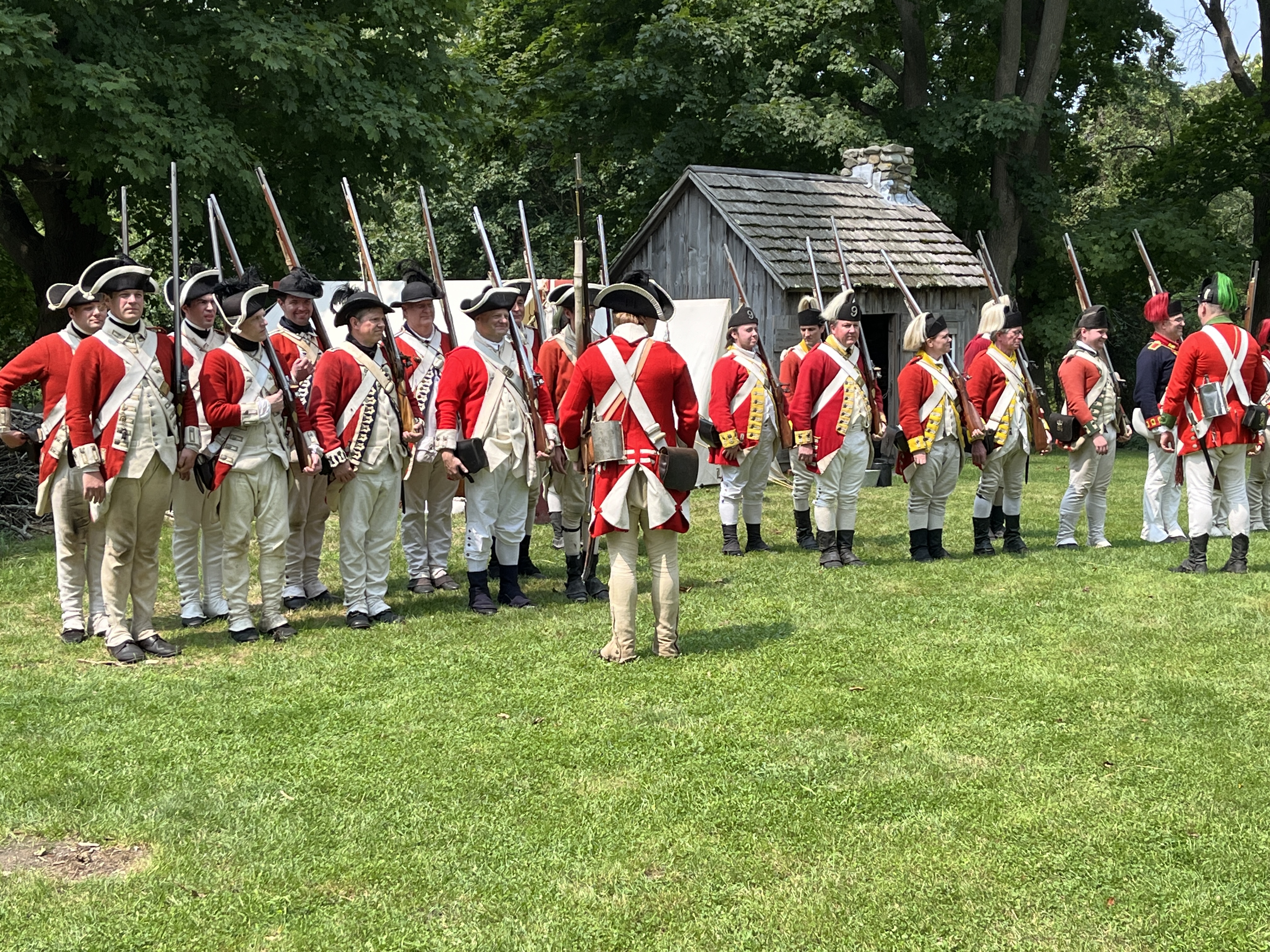
Campbells troops returned by way of Bristol. About 300 Rebels were assembled behind walls, trees and houses. They burned houses, a church, ammunition magazines and twenty of the principal houses. The British boats came round from Papasquash Point to the Bristol Ferry. The British ships Flora and Pigot covered the British troops as they crossed over from Bristol Ferry.
During the Battle of Rhode Island, Campbell was in charge of the 22nd Regiment as they proceeded down East Road.
Eyewitness Account
“The twenty-second, Forty-third, and flank companies of the Thirty-eighth and Fifty-fourth regiments, marched under Brigadier-General Smith, by the east road, to intercept the retreating enemy. A stand was made by the Americans, and some sharp fighting occurred, in which the twenty-second, under Lieut.-Colonel Campbell, highly distinguished themselves. The Americans were driven from Quakers’ Hill, when they fell back to their works at the north end of the island, from which they afterwards withdrew. Major-General Pigot stated in his public despatch,—”To these particulars I am, in justice, obliged to add Brigadier-General Smith’s report, who, amidst the general tribute due to the good conduct of every individual under his command, has particularly distinguished Lieut.-Colonel Campbell and the twenty-second regiment, on whom, by their position, the greatest weight of the action fell.” The regiment had eleven rank and file killed; Lieutenant Cleghorn, Ensigns Bareland, Proctor, and Adam, two serjeants, and forty-eight rank and file wounded; one man missing”. (source: Historical Record of the 22nd or Cheshire Regiment of Foot. This is a quote from Major General Pigot letter to Sir Henry Clinton dated Newport, Rhode Island, August 31, 1778)
Resources: Good biographical material can be found in John Hattendorf’s book: The Battle of Rhode Island in 1778: The official British View as Reported in the London Gazette.
 portsmouthhistorynotes