Home

Revolutionary Rhode Island Women: Christian Stelle Banister in Occupied Newport

Leave a comment

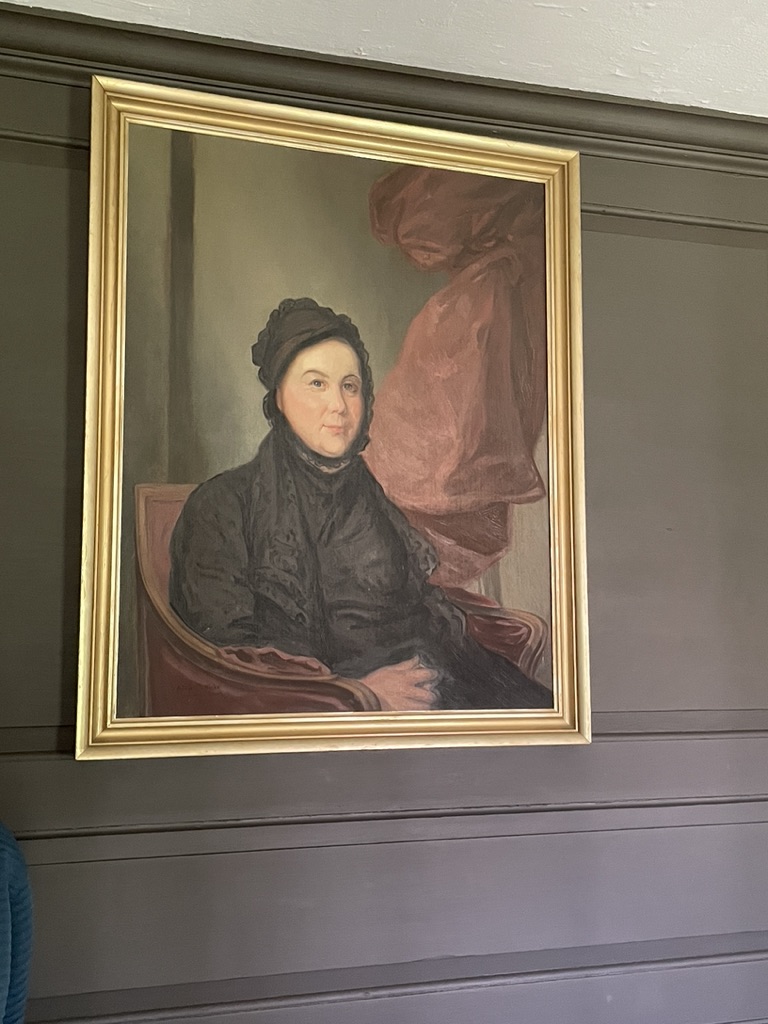
The name Banister (Bannister) still exists on a popular wharf in Newport. John and his wife Christian were wealthy landowners in Newport before the coming of the Revolutionary War. Many of the land rich class in Newport became Loyalists. John’s brother Thomas even joined a Loyalist militia. John is not included on lists of Loyalists, but he and his wife were in a peculiar position once the British occupied Newport in 1776. John would ultimately sail for England to ask for reparations from the British for the damage done to his properties, but that left Christian and her young son to face life in Occupied Newport on their own. Marian Mathison Desrosiers book, The Banisters of Rhode Island During the American Revolution, provides details of Occupation life for Christian and others in Newport.

Newport was a Loyalist leaning town, so at first British occupation was not severe. Christian would have been able to go through her normal routines of shopping and visiting. Many of the merchants and tradespeople were able to continue their work. But there were hardships. Even during the first week of occupation Aquidneck Island families found their livestock confiscated to feed British troops. Island families could catch fish and hunt birds. Normal colonial trade was cut off, so Newport residents found themselves without items like wine and liquors.

As time went by there were further restrictions. Christian was distressed that she could not make some of her normal visits to family. By June of 1777 the British enclosed the Newport area with gates and citizens were required to get passes to even visit friends in Middletown or Portsmouth. The citizens lost their freedoms and their elected government. The British military was the law.

Occupation became progressively difficult and Christian and other women left alone had to deal with property loss, destruction of their orchards and trees, loss of personal freedom and lack of food and fuel. In December of 1778 British General Prescott ordered the army to cut up wood fences, old docks and boats, and even church pews to keep his soldiers warm and cook their food.

Christian’s husband remained in London for years trying to get repayment for his losses. Meanwhile, Christian hung on in Newport. In July of 1780 the French arrived. Unlike the British, the French paid for items, restored damaged homes and brought a sense of civility to Newport.

Christian’s husband returned after four years in England. She had managed to keep things going during his absence and the family benefited from her struggles. Her Loyalist brother in law Thomas lost all his property, but John and Christian did not. Eventually the Banister’s would make South Kingston their home.

Gilbert Stuart Portrait of Christian and her son John. Original at Redwood Library

Revolutionary Rhode Island Women: Ordinary Tasks Contribute to the “Glorious Cause”

Leave a comment

Benjamin Cowell collected the stories of Rhode Islanders who applied for pensions many years after the war. He published his stories in a book called “Spirit of 76” and he started his book with the stories of women who had to step up and take extra responsibilities with their husbands at war. Cowell commented: “The women also of Rhode Island, with all the sympathies peculiar to their sex, took an active part in sustaining the “great cause,” and a more noble race of women never existed.”

Here are a of few of the ways women contributed to the war effort in what we might think of as ordinary tasks.

DORCAS MATTESON
Dorcas Matteson, of Coventry was the mother of nineteen children. She was married in 1770 to David Matteson. In the pension application she made made years after the war, she listed some of the difficulties she endured for the “glorious cause.” When her husband went to fight in General Sullivan’s Rhode Island Campaign in 1778, it was hay time. She had to cradle her baby on some hay in a shady spot in the meadow while a young lad helped her load hay and put it in a barn. She was close enough to hear the “roar of the cannon” during the Battle of Rhode Island and she imagined the danger her husband was in. He returned a few days later when his militia duty had expired. He was safe and sound, but he did have a “bullet hole about him” that was made as they retreated from the Island. The bullet was stopped from injuring her husband by a cheese that Dorcas had sent and David had placed in his backpack.

ABIGAL SALISBURY

Abigail’s husband, George, was Sergeant of the guard that was stationed nearby at Rumstick Point. She used her knitting skills to knit stockings for the whole guard. She continued to knit stockings until she was a hundred years of age.

SARAH DYER

Like Dorcas Matteson, Sarah Dyer’s husband was away. Sarah and her husband lived in Glocester. Anthony Dyer was with the “Captain General’s Cavaliers” who were chartered in 1775 to fight the British. Sarah raked and loaded lay, hoed and gathered in potatoes, and harvested corn, and she said she did it “cheerfully.” She was doing all the women’s work and the men’s work on the same day.

ANNA ALDRICH

Anna, the wife of Israel Aldrich, was from Smithfield and was another of our typical Revolutionary mothers. She carried her baby into the field and cradled him in the boughs of a tree to keep him away from reptiles. During the summer of 1777 she hoed corn and potatoes, raked hay, pulled flax, milked cows, mended fences and raised pigs. Whatever her husband would have done at home, Anna did.

Benjamin Cowell ends his chapter of Revolutionary Women by saying that “all the ladies, married and unmarried, were engaged, in one way or another, in sustaining the great cause of liberty. While some workedsp on farms, others were engaged in making clothes for the army, or administering to the wants of the sick and wounded.” Rhode Island women braved the hardships of the Revolution in ordinary ways. Women who went to war as soldiers or acted as spies are exciting, but Cowell was right to elevate the contributions of Rhode Island women who did the work of their husband as well as their own responsibilities. Down through the years and wars, Rhode Island women have been shouldering those responsibilities.

A Brief History of the United States by Joel Dorman Steele and Esther Baker Steele, 1885
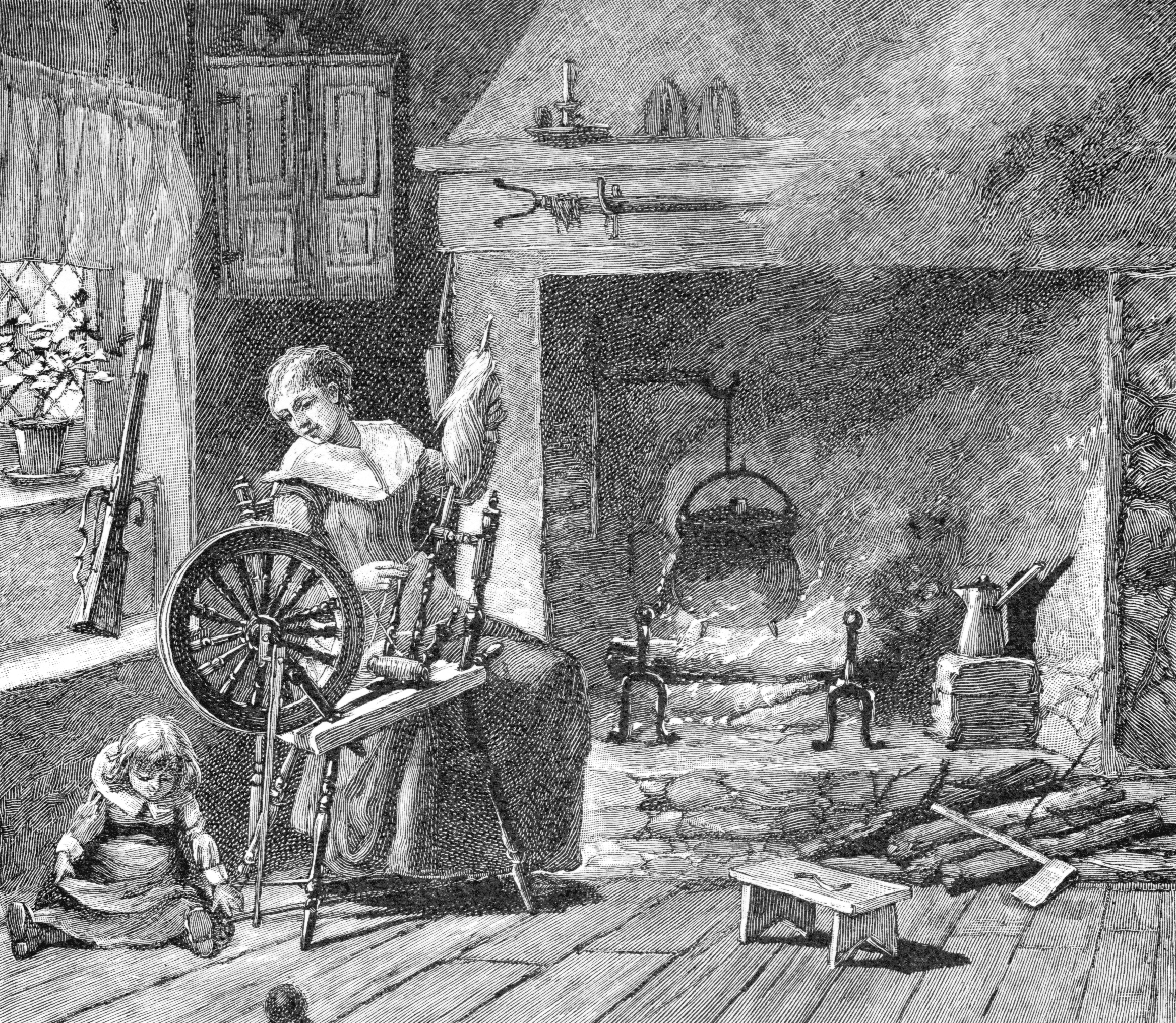
Colonial kitchen with woman spinning, an engraving

Cowell, Benjamin. Spirit of ’76 in Rhode Island, Boston 1850.


Revolutionary Rhode Island Women: Catharine Littlefield Greene “Caty”

Leave a comment

I became aware of Catharine Greene’s role in Revolutionary Rhode Island when I visited the Coventry home of General Nathanael Greene. I learned more about her as I read biographies of her husband. One of my goals this month (Women’s History Month) is to tell the stories of Rhode Island women who endured the hardships of the Revolutionary War and I will start with Catharine Littlefield Greene.

Her family called her Caty and she was born on Block Island in 1755. Her mother descended from Block Island founders and her father, John Littlefield, was a member of the Rhode Island legislature. Her Block Island childhood ended with her mother’s death when she was only 10 years old, and Caty went to live with and aunt and uncle. At that time her uncle, William Greene, was a Supreme Court justice, but he went on to being Governor of Rhode Island. Under the guidance of her aunt and uncle, Caty learned how to read and write and how to manage a household.

Nathanael Greene was a frequent visitor to Caty’s household and the pair married on July 20, 1774. The couple had little time together before the battles in the Revolutionary War began. Nathanael moved quickly from commander of the Rhode Island militia to general in the Continental Army. She opened her home in Coventry as a hospital when the Rhode Island troops were inoculated for small pox.

Caty traveled to wherever her husband was stationed (New York City, Valley Forge, Carolinas), even after the birth of their first child in 1776. There were women and children were “camp followers” who served as cooks or clothes washers. Caty had more comfortable quarters than they did, and she put her efforts into organizing events for the soldiers. She became friends with Martha Washington because they were often in camp together. She gave birth to five children during the years of the Revolution, but when she travelled she often left her children in the care of others. Being away from her children and being away from her husband were heartaches for Caty

We don’t have the letters that Caty wrote to her husband because she burned them. We do have some of his letters to her and we can get a sense of what her letters were like from how he answered her. During the Siege of Newport, Nathanael wrote:

“I am sorry to find you are getting unwell. I am afraid it is the effect of anxiety and fearful apprehension. Remember the same good Providence protects all places, and secures from harm in the most perilous situation. Would to God it was in my power to give peace to your bosom, which I fear, is like a troubled ocean….” Caty, like many other spouses of Americans in the Rhode Island Campaign, must have been fearful of the battle ahead.

Caty hoped that with the end of the war she could return to life in Rhode Island, but that did not happen.

In order to care for his troops, her husband had taken out loans, but Congress later denied his petitions to help him pay off the loans. Rhode Island properties were sold off to cover debts and the Greene moved to a plantation in Georgia. By 1786 Greene died of a sunstroke and Caty was left a young widow.

There is more to her story that I will tell in a later blog.

https://wams.nyhistory.org/settler-colonialism-and-revolution/the-american-revolution/catharine-littlefield-greene-miller/

Quote from Pg 115 Life of Nathanael Greene, by George Washington Greene,Vol.2.