The burning of the British vessel, the HMS Gaspee on June 9, 1772 was a protest to the British Navigation Acts. In the colonies the Navigation Acts were meant to force Americans to only trade with the British Empire. The Rhode Island economy was based in trade with the wider Atlantic. Just selling to the Empire was not enough for their molasses trade. That created a tension with the colonies (and Rhode Island in particular) and led to an increase in piracy and smuggling.
The acts permitted the customs inspectors to board any colonial ship. In February of 1772, William Duddingston, the commander of the HMS Gaspee, arrived in Rhode Island. He used this permission to search any vessel as he saw fit. Merchants objected to his searches and seizures of their goods. The local Sons of Liberty, looked for an opportunity to retaliate.
Their chance came in June 1772. The HMS Gaspee was alone and without a local pilot, but it chased a local boat called the Hannah . The Hannah could manage the shallower water, but the Gaspee ran aground. The Gaspee would be released by the tide early the next morning,. While the ship was in a vulnerable position, the Sons of Liberty rowed out and attacked the crew. Captain Duddingston was wounded. After all crew members were taken off the ship, the Sons of Liberty set fire to the Gaspee.
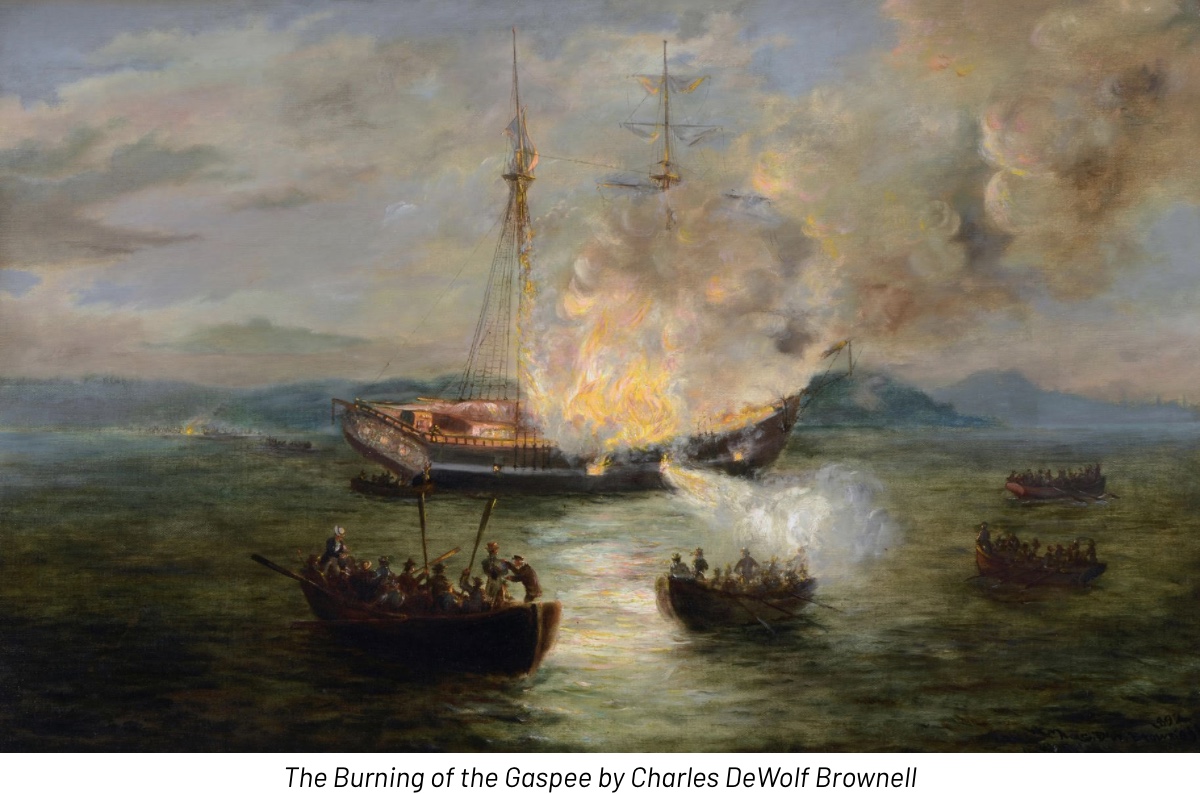
The event was too blatant to ignore and Parliament wanted prosecution of the attackers. Some famous names associated with the attackers are John Brown, Abraham Whipple and Ephraim Bowen. Although there was reward money offered, Rhode Islanders refused to cooperate with the British and no one was ever prosecuted. Duddingston, however, was courtmartialed.
This event led to the Committees of Correspondence, a network that united the colonies in their resistance to British rule.
Every year for 50 year the village of Pawtuxet (near Cranston and Warwick) celebrates this event with Gaspee Days and a Parade.
Resources.
Park, Stephen. The Burning of His Majesty’s Schooner Gaspee. Westholme, Yardley PA, 2013.
Secretary of State’s website: https://www.sos.ri.gov/divisions/civics-and-education/for-educators/themed-collections/gaspee-timeline
 portsmouthhistorynotes