Home

Pocasset, the First Neighborhood

1 Comment

Founded on the Compact.

The original settlers of Portsmouth were dissenters with Anne Hutchinson fleeing from Boston’s church rule. Portsmouth’s town seal proclaims “Founded on the Compact 1638.” Through the Compact twenty three men and their families agreed to form a secular government. Will and Edward Hutchinson (Anne’s son) traveled to Providence to Roger Williams who arranged a meeting with Narragansett Sachems Miantonomo and Canonicus. On March 24th they gave the sachems “a gratuity” of forty fathoms of white wampum beads, ten coats, and twenty hoes. The Narragansett removed themselves from the island, but selling land was not a concept in their culture. To the English settlers, this was a sale.

Pocasset Settlement

When they journeyed to Aquidneck Island, the Island was a wilderness and shelter was a big concern. They crawled into caves around the banks of the cove (Town Pond) where they landed. They followed the native’s example by bending birches into house frames, using mud for walls and weaving twigs to make a thatched roof.  When the group of founders began their settlement, they called it “Pocasset.” It is an Algonquian word that refers to the width of the river, but it is also the name of the Pocasset Wampanoag Tribe of the Pokanoket Nation whose land included Tiverton and much of Southeastern Massachusetts..

Re-named Portsmouth

On May 12, 1639 the settlement’s name was changed to Portsmouth. The settlement of Pocasset/Portsmouth included the area around the Montaup Country Club, Town Pond, Founder’s Brook and south to Portsmouth Park. At this time the founders located their houses on small lots around water sources like springs and brooks. They were frightened by the sound of the wolves roaming around the camp.  This was a major threat because livestock was unprotected. They brought with them horses, cows, sheep and hogs. While Anne Hutchinson and the others walked from Boston the animals were brought by ship around Cape Cod.  With the aid of Roger Williams, members of the Narragansett tribe came and laid traps to kill the wolves. The settlers decided to make a Common Fence.  Five rails with no more than three inches between each rail was judged sufficient to keep out predators.  The first fence was built around the common pasture for the whole town and we know that today as Common Fence Point.
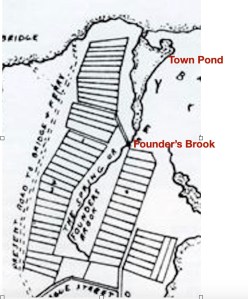
They were given land on the provision that they must built homes within a year. Town Pond was in the middle of activity. There were two springs that provided water – one was to the right of Town Pond near the Common Fence that held their animals. The other was by Founder’s Brook and that provided a central gathering spot and washing area. Baulston’s Tavern was located at the southern tip of the Pond. The Training Ground was across the way by the brook.

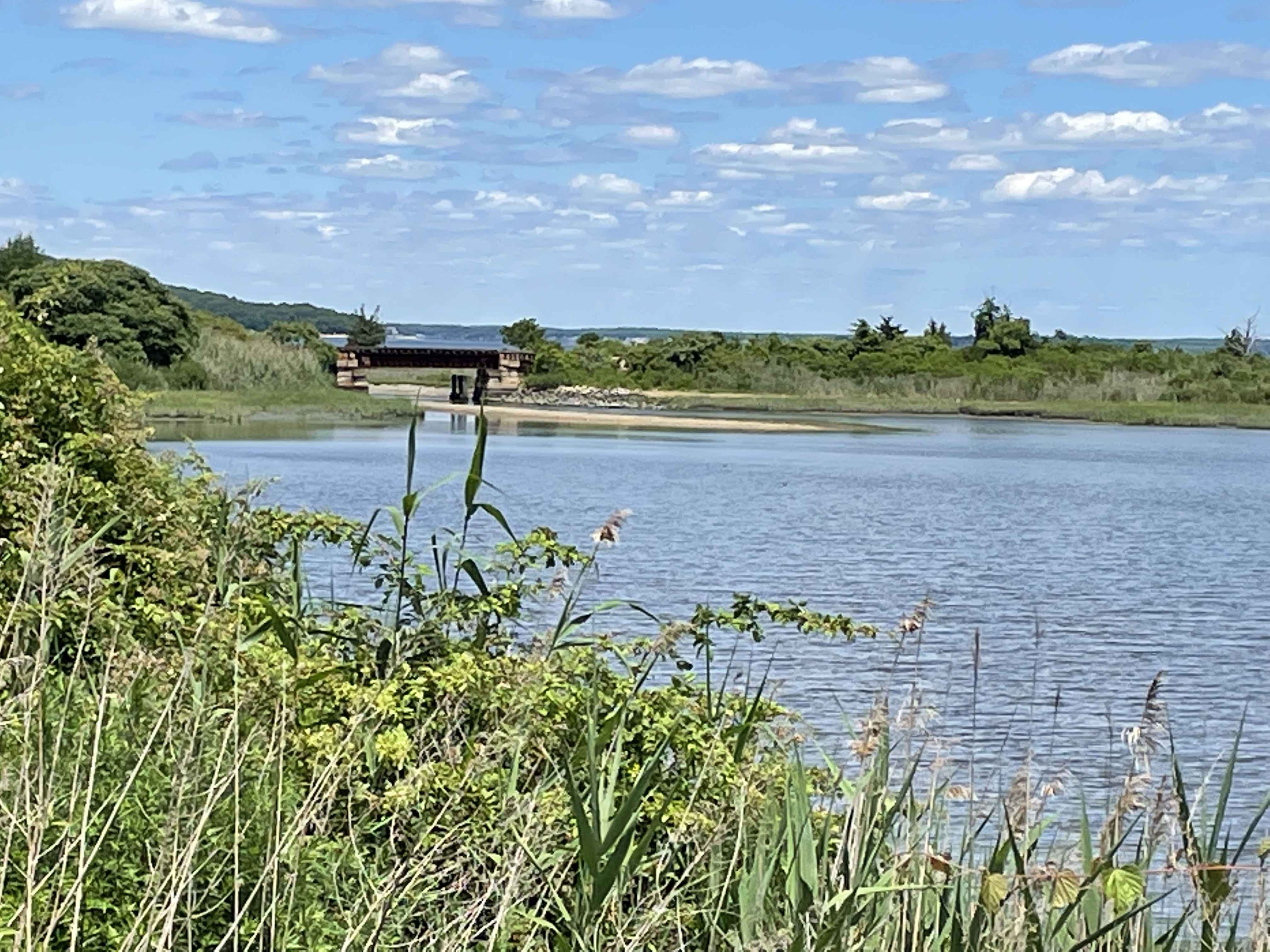
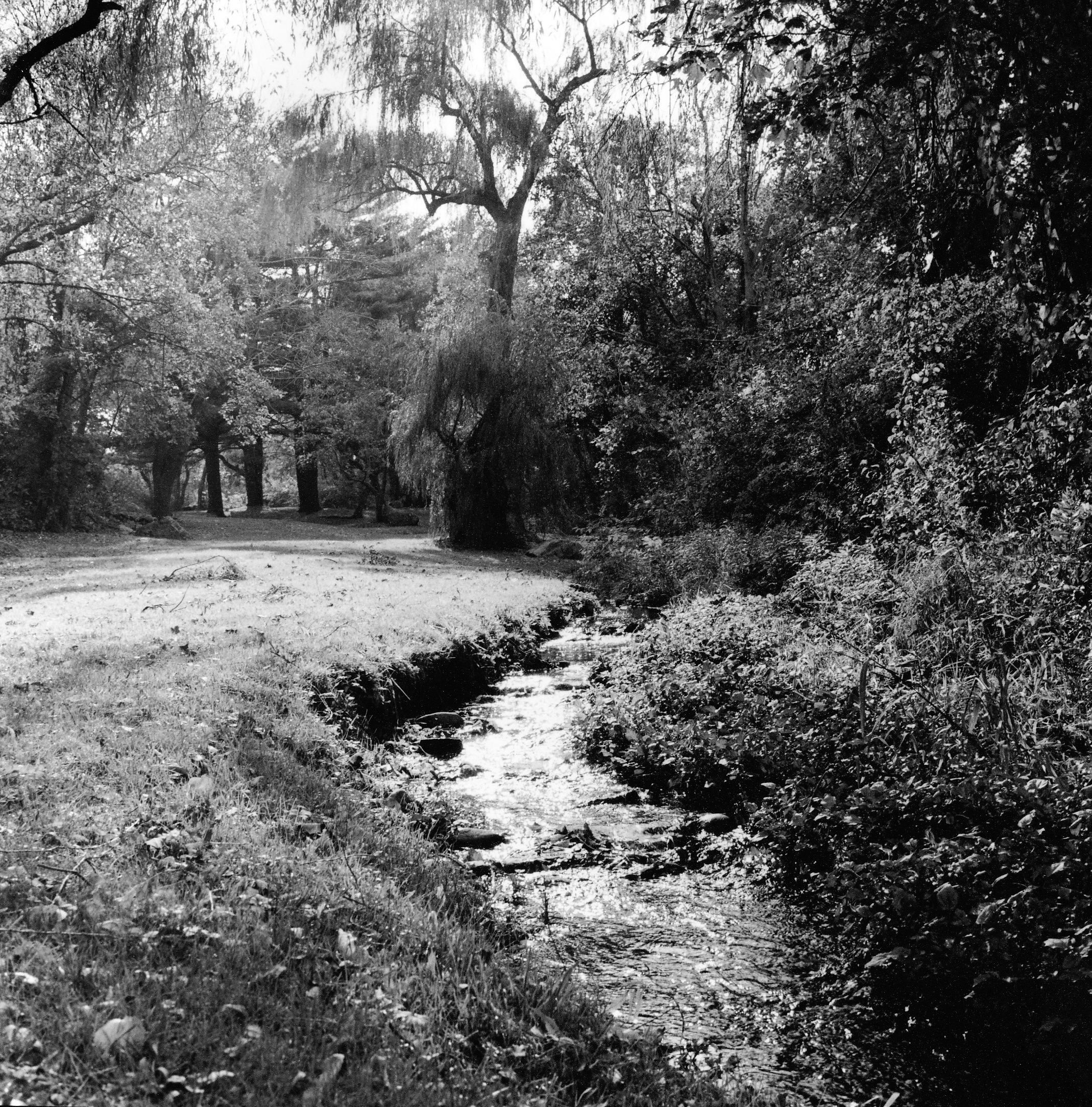
It wasn’t long before most of these settlers sold their house lots and moved out to their farm land grants. Town Pond and Founder’s Brook are worthwhile visiting today. The murmur of the brook and the bronze copy of the Compact at Founder’s Brook reminds us of the primitive life of the early settlers and their intention to band together as a political body. Town Pond can be viewed from a half mile hiking trail. The Pond has been restored to a tidal estuary, and you can imagine the scene as the founding families first stepped on Portsmouth ground.
Recommended reading: John Barry’s book on Roger Williams and the Creation of the American Soul.

Roger Williams played a great roll in the founding of Portsmouth.
Discover Your Portsmouth: Town Pond

Leave a comment

Portsmouth has a unique history and we are fortunate to have historical landscapes that remind us of our history. It is import for us to preserve and enjoy these landscapes that are town owned. I am working on a driving guide for these places, so my next few blogs will focus on them.

Town Pond.

The Town Pond area was important to the early settlers of Portsmouth. They landed near the area in 1638 when they first settled the area. The pond allowed entry to the settlement area from Narragansett Bay and it was close to a brook for drinkable water and a cove for entry to the Sakonnet River.  It was a salt (tidal pond) until 1949. At that time it was filled with dredged material and became a mudflat. With the help of Senator John Chafee, Congress authorized a “Narragansett Bay Ecosystem Restoration Study” that included restoration of the pond. The work of restoring the pond took 3 years (2005 to 2008).

Location: There is a parking lot off of Anthony Road near Boyd’s Lane.

Activities: You can walk along the pond to the shore. There are beautiful views for photography around the railroad bridge. You might imagine what the pond looked like in colonial days.

Town Pond Through the Years

Leave a comment

Have you walked by Town Pond lately? It is so quiet and nature filled it is hard to imagine that Town Pond was once a hub of the early Portsmouth settlement. Many people assume Anne Hutchinson and those traveling with her came from the Tiverton side, but they didn’t.

There is much debate about whether Portsmouth was founded by Anne Hutchinson. What cannot be debated is that Portsmouth was founded because of Anne. When Anne was banished from Boston, a group of her followers decided to come with her. The idea was to make a settlement where there was not a state religion – a settlement where people would be free to follow their individual ways of worshipping God.

About March 7, 1638, while in Boston, a group of men signed what is now known as the Portsmouth Compact. It was an agreement to join together as a “Bodie Politik.” Will and Edward Hutchinson (Anne’s son) traveled to Providence to Roger Williams who arranged a meeting with Narragansett Sachems Miantonomo and Canonicus. On March 24th they gave the sachems “a gratuity” of forty fathoms of white wampum beads, ten coats, and twenty hoes. Randall Holden represented the Hutchinson group. The men continued south on ships to a new home Aquidneck Island in Narragansett Bay. They agreed to make the first settlement on the flat northeastern end which had a natural spring saltwater cove. Their first homes resembled what the Native Americans used. They pitched tents and built huts to live in while they cleared land. The men chose two to three acre house lots between the cove and spring and began framing simple houses.

Anne walked from Boston to Portsmouth. On April 1, 1638 she began a six day walk. With her were children Edward (24), Bridget (19), Francis (17), Anne (12), Mary (10), Katherine (8), William (6), Susan (4 and a half), and Zuriel (2). Anne’s daughter Bridget carried month old son Eliphal. They walked from Wollaston to Quincy, through Braintreee, Brockton, Tauton, and Pawtucket. They slept in wigwams and makeshift shelter along the way to Providence. Providence had about a hundred settlers at the time and was a maritime center. The group with Anne traveled the last sixteen miles by ship to Aquidneck. Their landing spot was Town Pond.

West Land Grant Map

Although the intention was to make a traditional community where the house lots were together. In a short while they would abandon this idea. A segment of the group left in 1639 to found Newport. Those who stayed in Portsmouth regrouped to lots along Founder’s brook. At this time Town Pond was in the middle of activity. There were two springs that provided water – one to the right of Town Pond near the Common Fence that held their animals. The other was by Founder’s Brook and that provided a central gathering spot and washing area. Baulston’s Tavern was located at the southern tip of the Pond. The Training Ground was across the way by the brook.

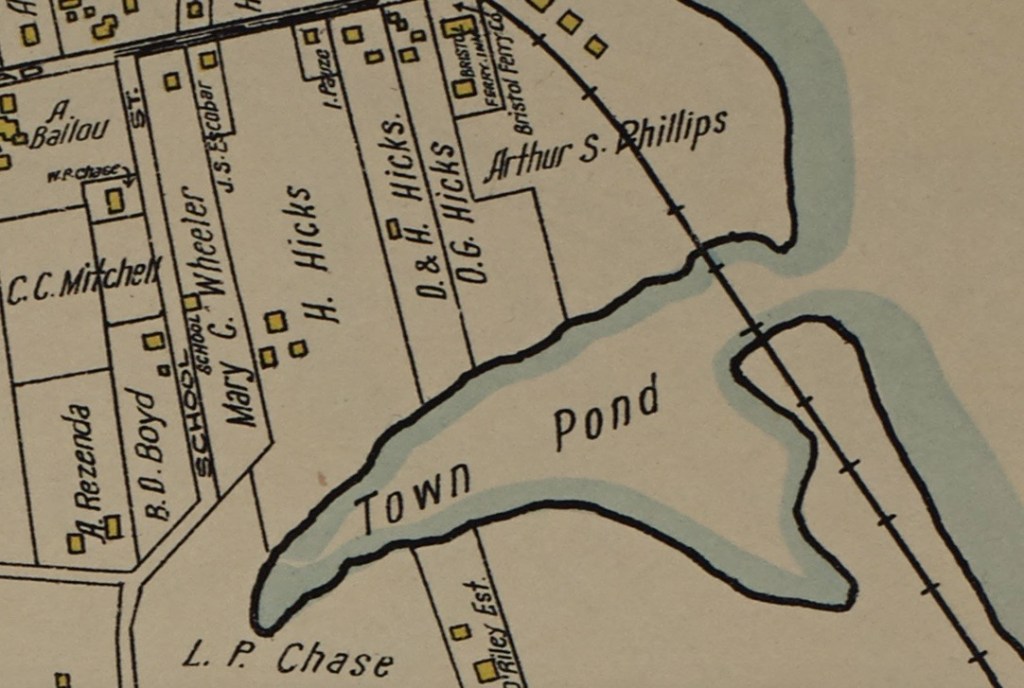
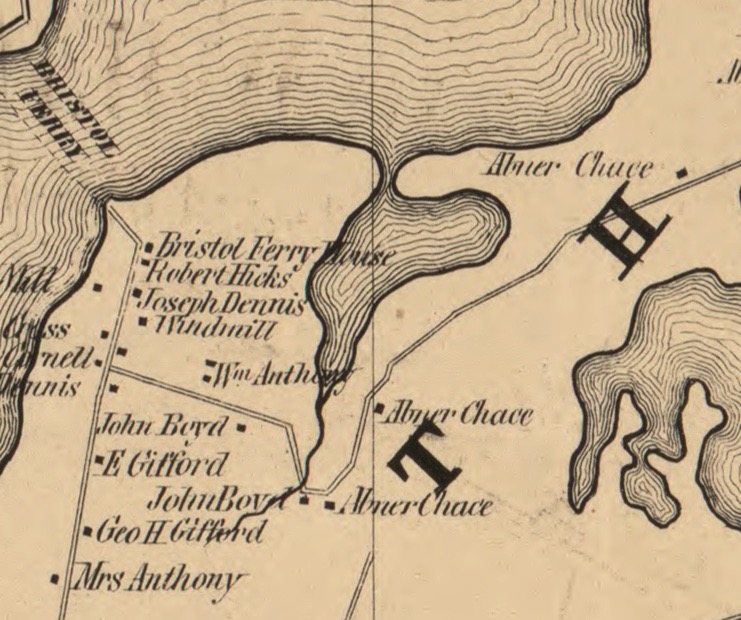
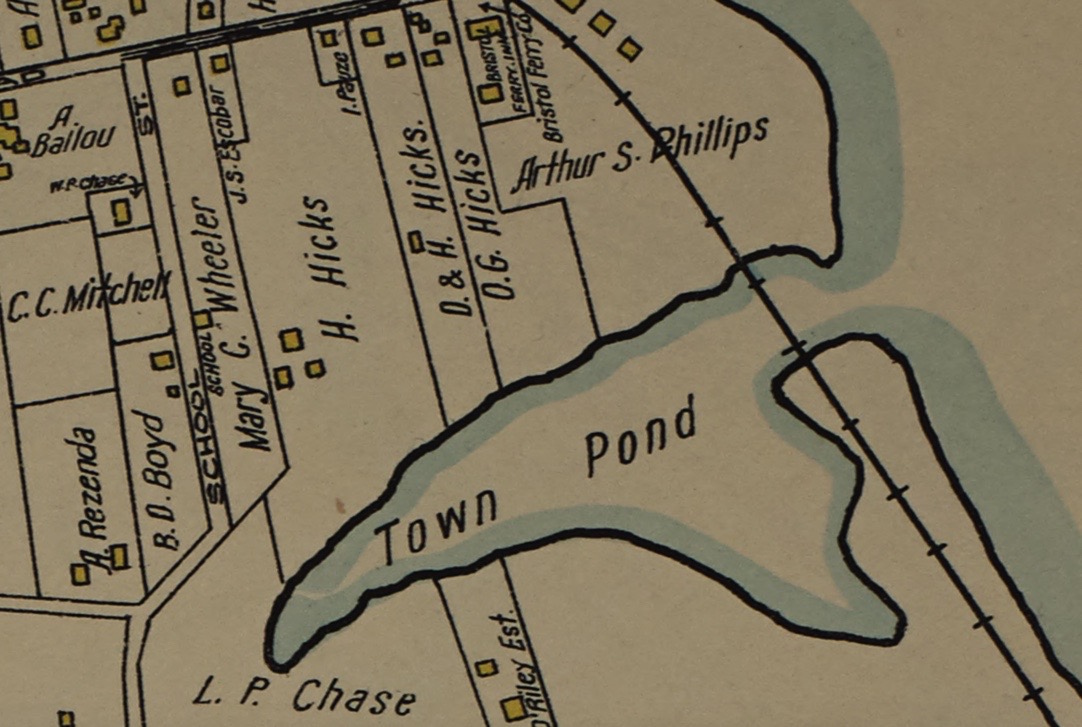
As the pond began to silt up, the town grew to the South. The leaders set up a new center for the town called “Newtown.” Newtown never gained in popularity because the residents preferred to live on their farm lots rather than together in a town. Portsmouth really has not had a town center – we have neighborhoods such as Common Fence Point, Bristol Ferry, Newtown and Island Park. The Walling Map from the 1840s shows only a few homesT near Town Pond but many more around the Bristol Ferry neighborhood. The 1870 Ward map has a railway running across the mouth of the pond and we can still see the bridge today. The 1921 Sanborn map shows houses along Bristol Ferry Road, but few near the Town Pond. Lots from Bristol Ferry property go across to the Pond.

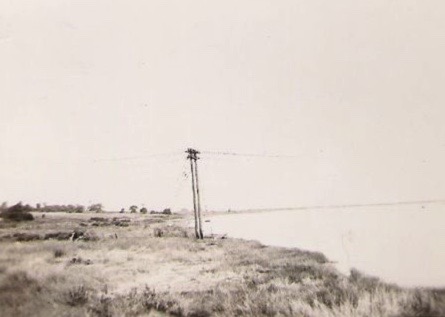
Town Pond remained a tidal (or Salt) pond until 1949 or 1950 when dredged material from the Fall River navigation improvement was deposited in the Pond. It became a mudflat and brush covered the area. By the 1990s there were efforts to restore the pond. The Narragansett Bay Estuaries Program, with the help of Senator John Chaffee got the Congress to authorize a “Narragansett Bay Ecosystem Restoration Study.” Restoration began in 2005 and was completed in 2008.

During the monitoring of the project, the Army Corp of Engineers recorded the wildlife that they saw around 2010.

“The following list of fauna was directly observed by monitoring crews and is not to be construed as a definitive list of organisms present within the project site:
Invertebrates: Mud crabs, green crabs, blue crabs, blue mussels, fiddler crabs, mud snails, moon snails, oysters (introduced);
Birds: great blue heron, black-crowned night heron, snowy egret, peregrine falcon, redwing black bird, mallard duck, herring gull, laughing gull, killdeer, cormorant, and semipalmated sandpiper;
Fish: silversides, killifish, rock eel;
Mammals: raccoons, white tail deer, red fox.”

In summary, the report states: “The main goal of the Town Pond restoration project was to restore a salt marsh ecosystem by recreating the former habitat in the project area for associated flora and fauna. Based upon the monitoring results we have documented in this report, the restoration project functions physically as an intertidal salt marsh with areas of mudflats and permanent open water. The monitoring indicates that the project met the pre-construction restoration objectives.”*

Today we can take a walk by one side of the Pond and imagine what it was like when the first settlers landed there in 1638.

Reference