Newport had its mob scenes, especially in response to British taxes. The Stamp Act of 1765 was a tax on printed paper. All printed material in the colonies had to be produced on paper carrying a revenue stamp. Its aim was to pay for the costs of the Seven Year’s War AND to help cover the costs of Britain’s troops in the colonies. Americans saw the tax was “taxation without representation.” Stephen Hopkins had written a pamphlet – The Right of Colonies Examined – to oppose the Stamp Tax. Martin Howard of Newport wrote a pamphlet defending Parliament’s right to tax the colonists. Along with Howard, Stamp Act defenders were Dr. Thomas Moffat and Augustus Johnson, the Stamp officer.
August 26. 1765 a gallows was erected in Queen Anne Square. Effigies of the three Stamp Act defenders had been created and hung in the gallows. The effigies were guarded by William Ellery (who would sign the Declaration of Independence), Samuel Vernon and Robert Crook. These may have been leaders in the Sons of Liberty. A mob collected and after sundown the effigies were burned.
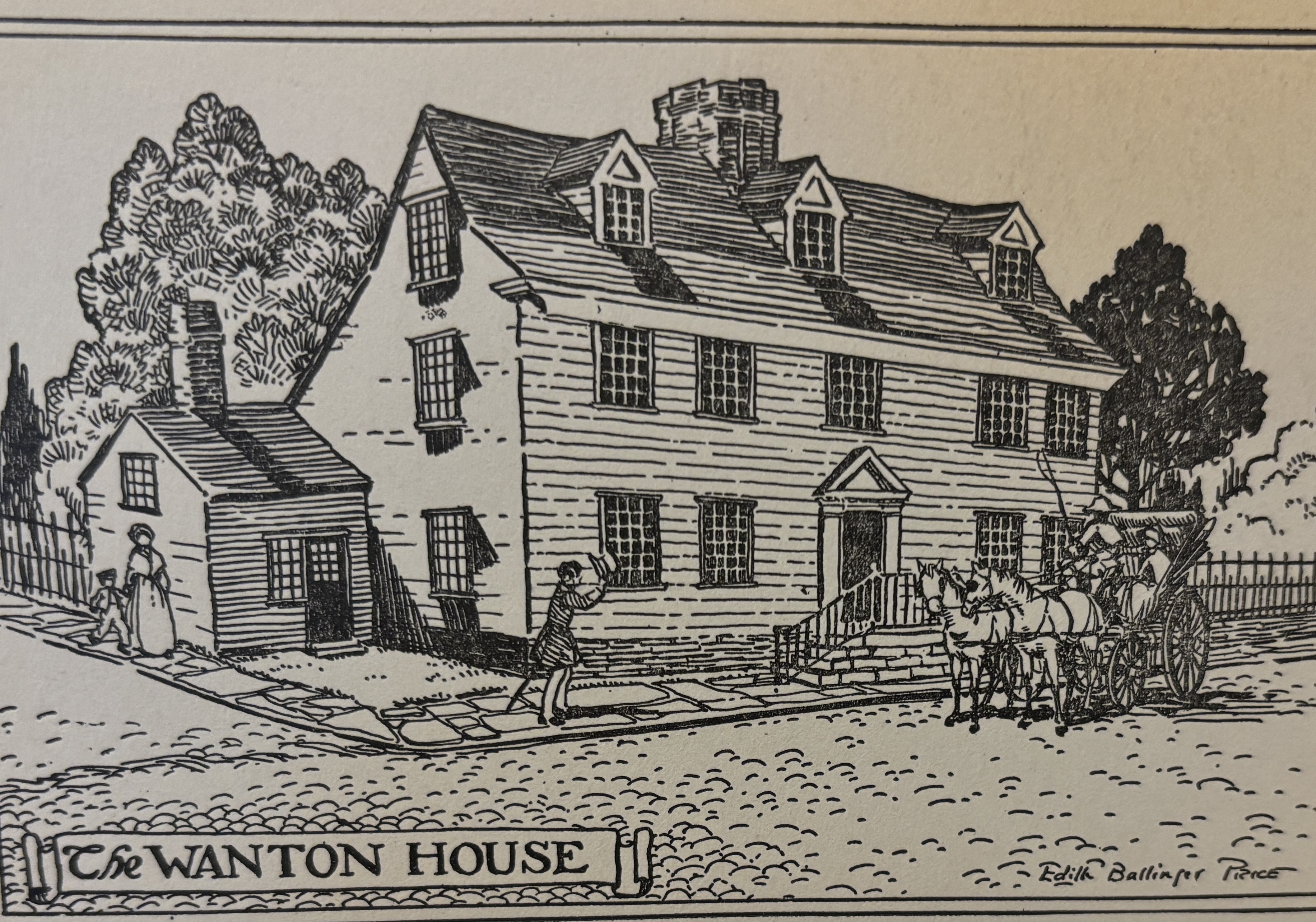
At 8 in the evening the ring leaders and a band of ruffians carrying axes and other tools, invaded Howard’s house. They demolished china, furniture, clothing and linens. They carried away his wines and liquors. They went back at 11 PM and destroyed most of the house before they headed to Dr. Moffat’s house which they also ruined. The three Stamp Act defenders had sought safety onboard the Man of War in the harbor. The crowd then surrounded the house of Stamp-Master Johnson, but since he had promised to resign his office, they didn’t carry out any destruction.
Howard and Dr. Moffat took a ship to England by the first of September.
In some circles Minister Ezra Stiles was accused of encouraging the mob. He wrote to Benjamin Frankin that while he had spoken against the Stamp Act, he always spoke against violence.
Resources:
 portsmouthhistorynotes