Home

Tracing the Last Days: Butts Hill Fort Ends Its Service

Leave a comment

What happened to Butts Hill Fort after the French left? I am re-exploring the timeline I originally wrote a couple of years ago. When I see references sited, I check them out. It is not that I don’t trust the historian, I do. However I like to see the primary source for myself. I am using a digital version of Rhode Island records. I’d like to thank Steve Luce of the Portsmouth Historical Society for giving me a way of searching the records.

“We, the subscribers, being appointed by the Honorable the General Assembly to point out the best measures for the defence of Rhode Island, do report: That it is necessary to have five platforms laid down at the fort at Easton’s Point; that there be immediately removed from Butts’s Hill, five eighteen-pound cannon, with their carriages, ammunition and apparatus, belonging to the same; and that there be a company, under the command of a captain, stationed in or near the said fort, where a constant and vigilant guard is to be kept.

Newport Artillery Fires Cannon at Butts Hill.

We do further recommend that two field pieces be kept in the fort at Brenton’s Point, with proper ammunition; and a subaltern’s guard, composed of persons that understand the use of cannon, always to be on the ground. These, being supported by the garrison of Butts’s Hill, and occasional suecors from the main land, we doubt not will be able to repel any attack that may be made on Rhode Island in the present situation of the enemy.

We also recommend that the whole militia of the state be kept in readiness to march on the shortest notice; and that a conductor of military stores be appointed, to take charge of all the military stores on Rhode Island, and at Bristol and Tiverton.

All which is submitted by your Honors’ most obedient, humble servants,

JABEZ BOWEN, THOMAS HOLDEN, JOHN COOKE, THOMAS TILLINGHAST.

JOSEPH BROWN,

Newport, August 25, 1781.”

The suggestion was accepted so Rhode Island Records state:

“And the said report being duly considered,

It is voted and resolved, that the quartermaster immediately hire a sufficient number of teams to remove five eighteen-pound cannon, with their carriages, necessary ammunition and apparatus, from Butts’s Hill, to be placed in the fort at Easton’s Point, agreeable to the report of the committee appointed to advise the best measures for the defence of Rhode Island; and that in case he cannot hire, to impress the same. “

The garrison at Butts Hill Fort and the equipment at the fort were being assigned elsewhere as the threat seemed to come more from the South toward Newport than to North Portsmouth.
A Sham Battle in Portsmouth 1780 – a Note to add to John Robertson’s presentation.

Leave a comment

Discover Your Portsmouth: Melville Park

1 Comment

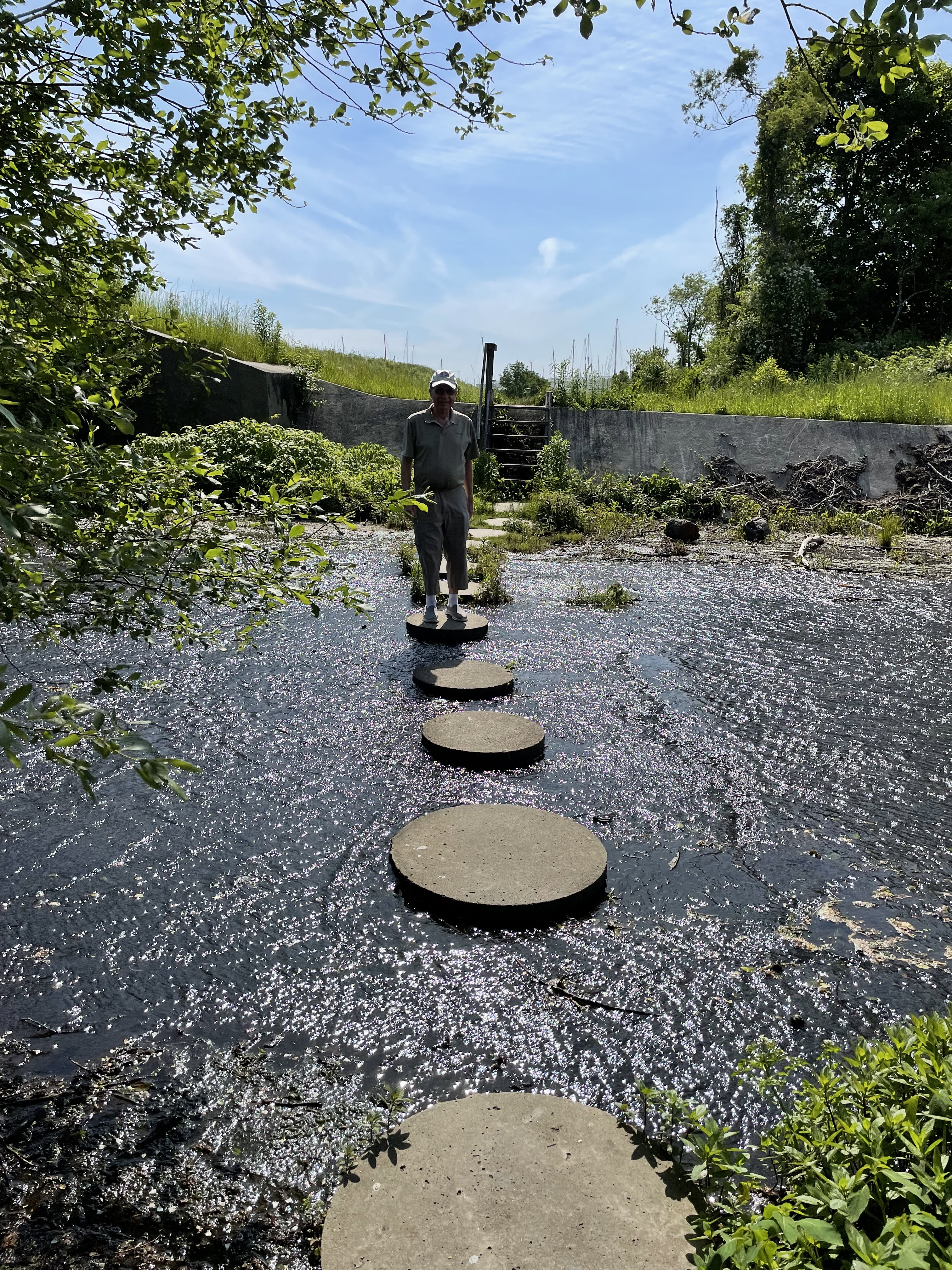
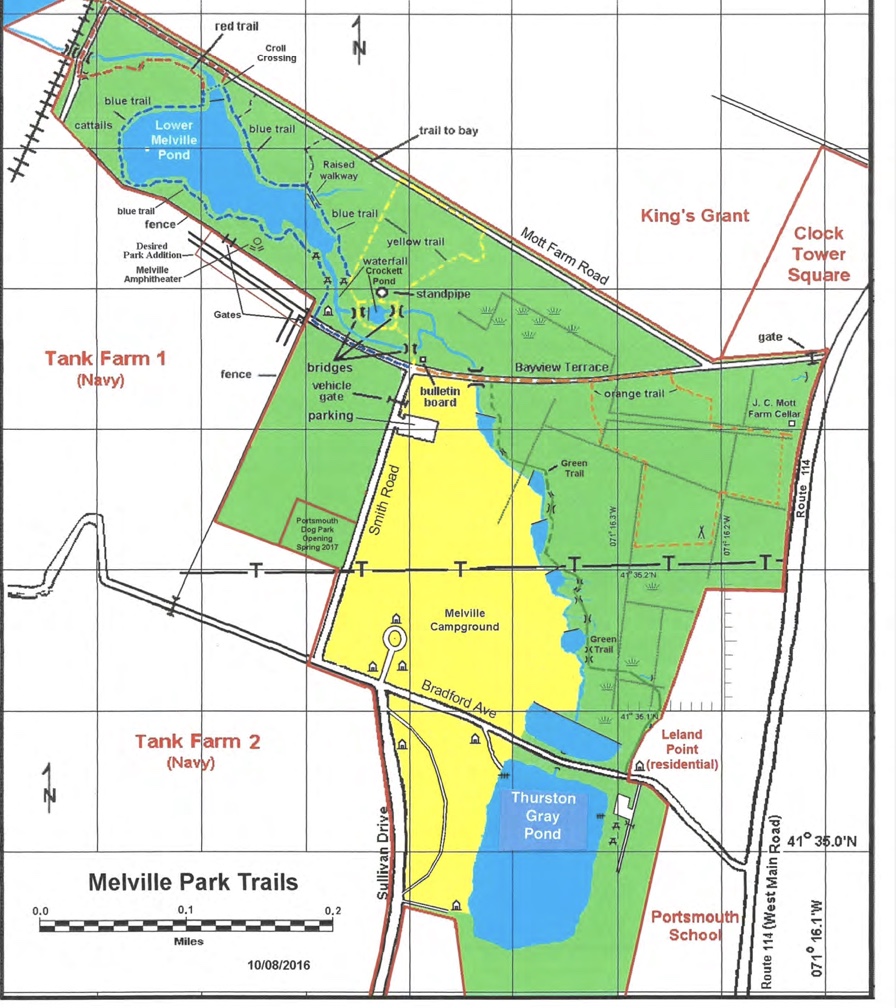
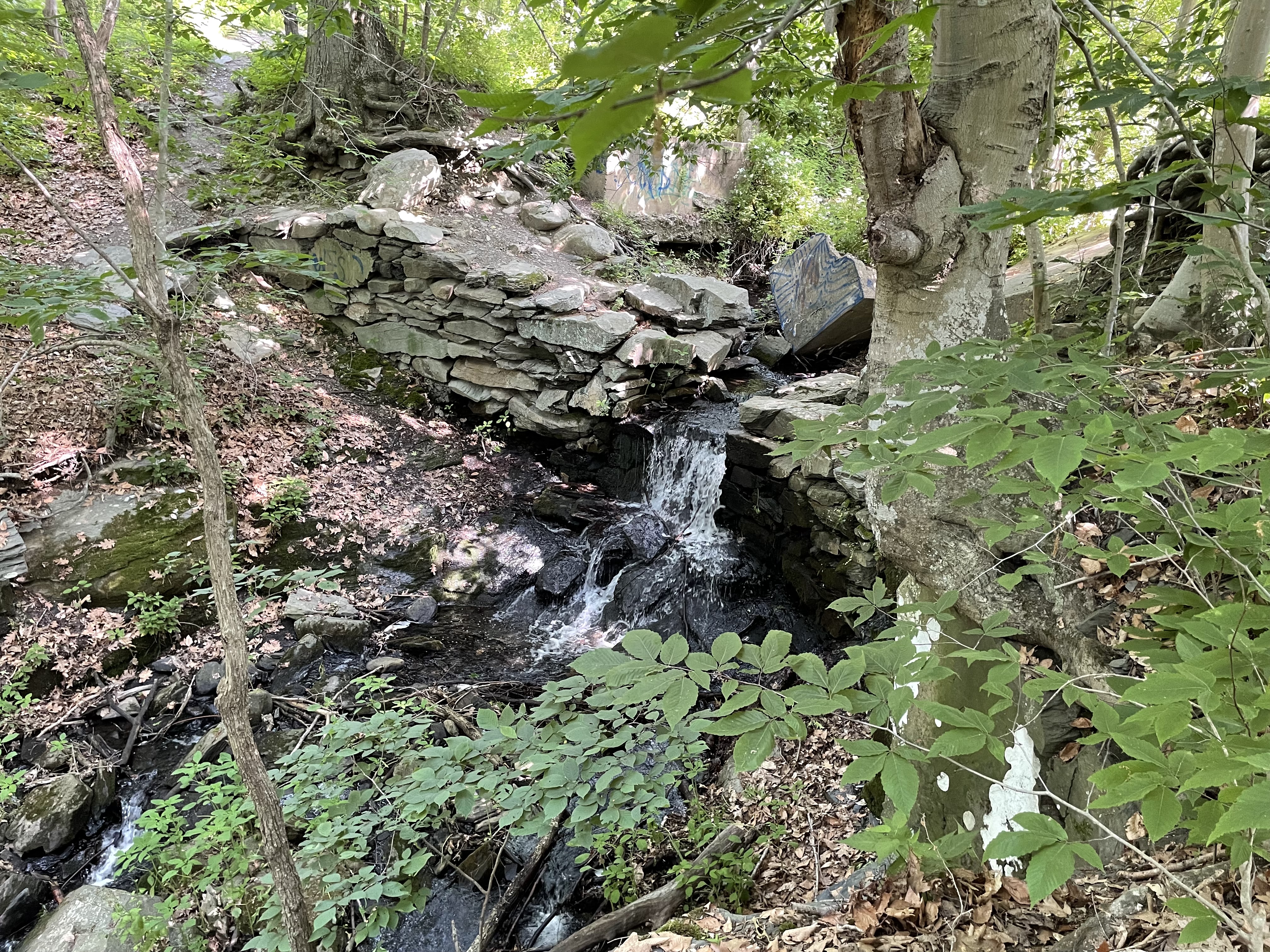
It has been a while since I hiked in the Melville Park Recreation Area, but I intend to go back. My favorite parts of the trail were viewing the waterfall and hopping across concrete circles across a water way. The trails are considered “Easy” but I would carry a walking stick to keep me steady. There are three miles of trails – designated as Blue, Green, Orange, Yellow and Red. The Blue Trail was first created by Boy Scouts and goes around Lower Melville Pond and takes you closest to the Narragansett Bay. It includes picnic tables.

What to do: Hiking, birding, wildflower viewing. Dogs are welcome on leashes.

How to get there: 181 Bradford Avenue in Portsmouth. West Main Road to Bradford – go past the Camp Grounds and Dog Park to a small parking lot for the Trailhead.

Melville Park chair Stephen Luce provides some background:

“Melville Park certainly does have much unique and interesting history. Part, but not all of it, was included in the 100 acre grant to Adam Mott Sr. in 1640. He called his estate ‘Matapurcetti’ in his will of 1661. That name has recently been granted by the Town Council for the brook that runs through the Park.. Also, the cellar hole by one of the trails is not the original Adam Mott home that was dismantled in the 1970’s. That extant cellar hole is from a house built post 1670 by one of the Jacob Motts. Additionally, the U.S. government already owned much of what is today Melville Park prior to WWII. For example, they owned the land where the tall water tower/standpipe stands. That water tower was built by the government to provide water to the steam ships that came to the Bradford Coaling Station. The brook also provided the water for Lovell Hospital during the Civil War. The federal government transferred ownership to Portsmouth in 1978.”

Before World War II the area was cleared agricultural land, but it was taken by the US Government for military purposes.

According to Melville Park Vice President Ed Rizy: “A waterway transiting the area, long used by farmers, was expanded by the Works Progress Administration (WPA) into a nine-pond system, two large reservoirs and seven intervening ponds, including one previously built by locals. The seven smaller ponds are believed to be silt traps removing detritus that could significantly reduce the lowest pond. The government’s estimates of pond capacities in 1942 were about 125,000 gallons for the upper and lower ponds, with the intervening ponds varying from 15,000 to 22,000 gallons each. The pond dams used to contain WPA medallions, all of which have been removed.”

In the 1970s, the Navy transferred ownership to the Town of Portsmouth. Melville Park was created for passive recreation.

Resources:

Howland Ferry Area- Beginning and End

Leave a comment

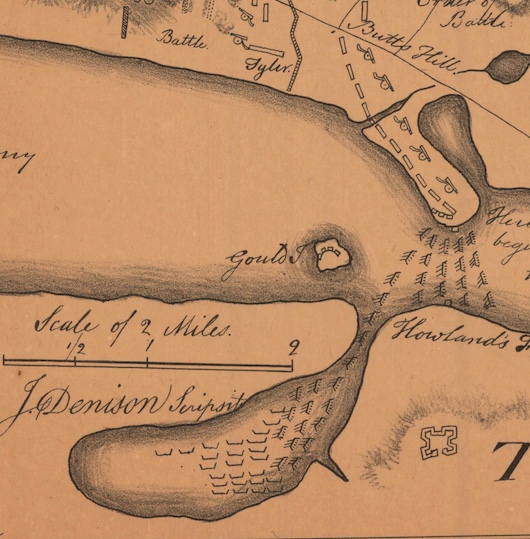
Howland Ferry was an important entry and exit point for the Rhode Island Campaign, but I haven’t spent much time researching what happened there. Today our eyes are on the relic of the Stone Bridge and it is hard to imagine the Revolutionary site.

In colonial times the main roads in Portsmouth led to the ferry landings.  What we call East Main Road was known as the Path to Howland’s Ferry. This site is one of the narrowest points on the Sakonnet River between Tiverton and Portsmouth. Use of this land as a ferry landing may date back to 1640.  The name Howland Ferry comes from the family that ran it between 1703 to the British Invasion in 1776.  Howland’s Ferry played an important part during the Battle of Rhode Island. American forces used the location to pour onto Aquidneck Island to fight the British who occupied it. When they were forced to retreat, many of the American forces used that route to make their escape.

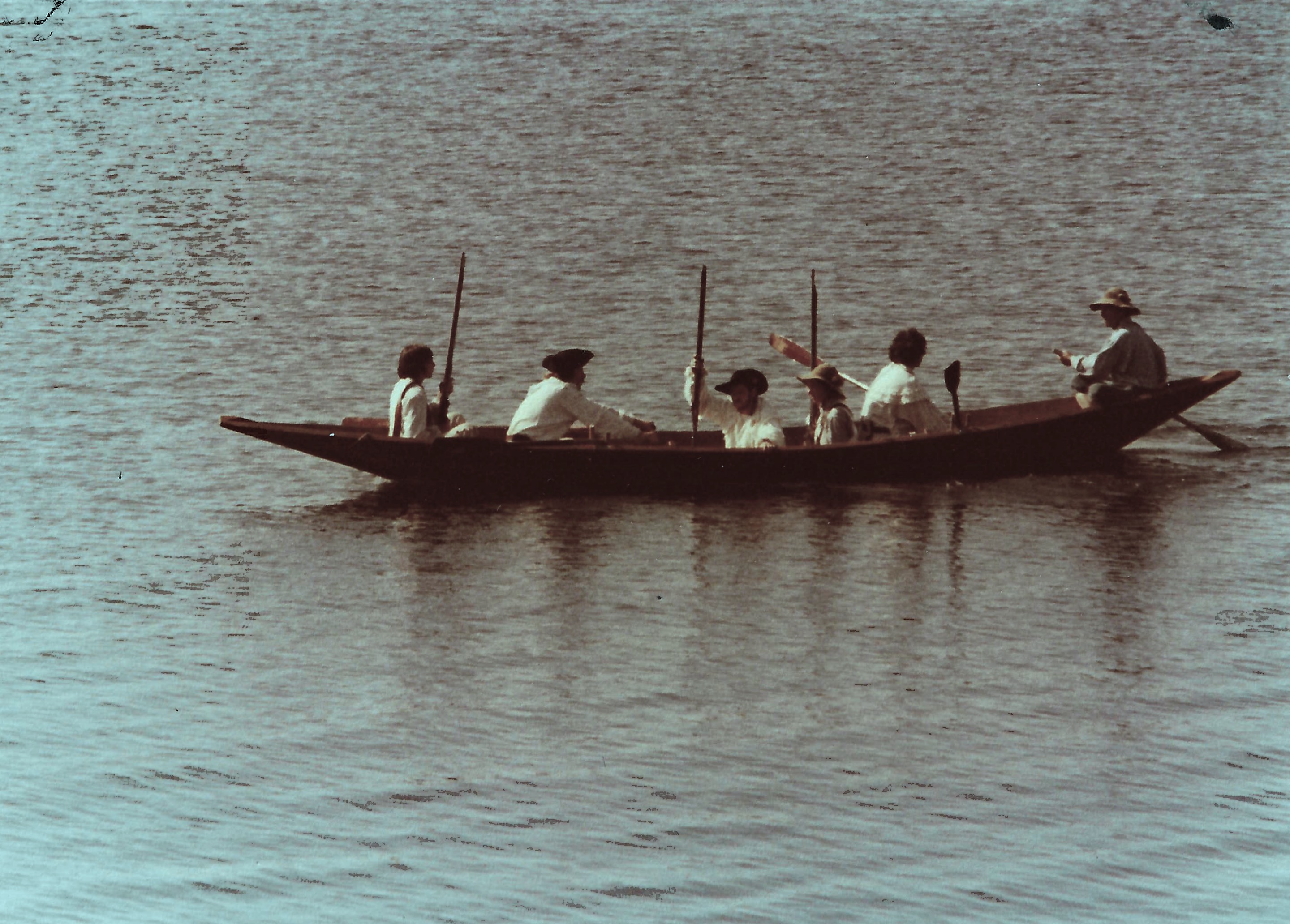
Arranging for transportation for thousands of soldiers from Tiverton to Portsmouth was a major undertaking.  The British knew an American invasion would be coming, so they had already destroyed many of the flatboat boats the Americans had constructed in the Fall River area.   The Americans had to secure the wood mills in Fall River and Tiverton to rebuild the flatboats that would be needed.  Silas Talbot oversaw the building of 85 flatboats.  Every carpenter in the army was put to work and every piece of boards and plankings in the area were used to make the transport boats. General Sullivan called out to New England mariners to come and operate the flatboats.  On August 9, 1778 Howland Ferry was teeming with boats shuttling Americans to Portsmouth. 

The path to Howland’s Ferry was the escape route when the Americans had to evacuate on August 29th and 30th because the French had left.    According to Christian McBurney, Captain Samuel Flagg of Salem and the boatmen from Salem, Marblehead and other New England towns worked day and night to ferry equipment and men off the island. William Whipple and Jeremiah Olney of the 2nd Rhode Island oversaw the embarkation. After the retreat John Laurens wrote – .”.we had a water passage of 1/4 mile to cross from the island to the main – a vast quantity of stores, heavy baggage, ammunition and cannon to transport. You will be filled with admiration at learning that the retreat was effected without the loss of a single man or even an entrenching tool”. Silas Talbot and John Laurens were among those holding off the British to give the Americans more time to retreat. At 11 PM Lafayette arrived from meeting with the French in Boston. He had taken the 70 mile journey and was disappointed that he had missed the action. Lafayette did have a role in bringing the piquets off the Island.

I have many questions about the preparation of the flatboats and Silas Talbot’s role. A biography I have of Talbot doesn’t even mention his supervision of the boat construction. In many ways this successful retreat was one of the most amazing parts of the Campaign and showed the professionalism of the budding American Army.

Discover Your Portsmouth: Town Pond

Leave a comment

Portsmouth has a unique history and we are fortunate to have historical landscapes that remind us of our history. It is import for us to preserve and enjoy these landscapes that are town owned. I am working on a driving guide for these places, so my next few blogs will focus on them.

Town Pond.

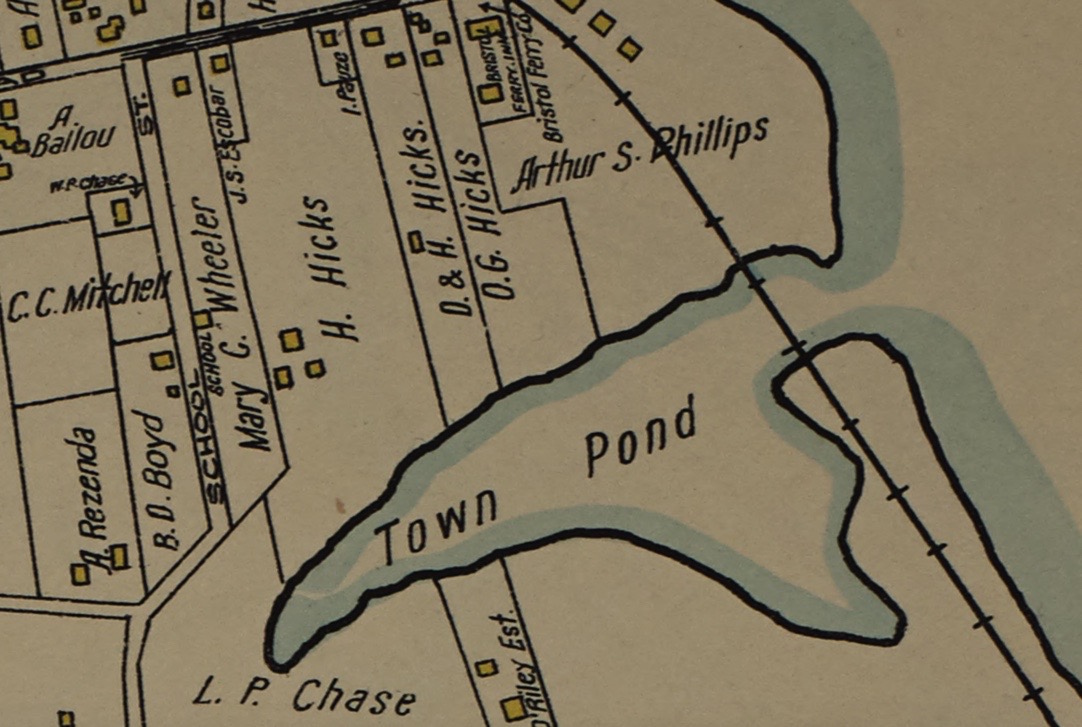
The Town Pond area was important to the early settlers of Portsmouth. They landed near the area in 1638 when they first settled the area. The pond allowed entry to the settlement area from Narragansett Bay and it was close to a brook for drinkable water and a cove for entry to the Sakonnet River.  It was a salt (tidal pond) until 1949. At that time it was filled with dredged material and became a mudflat. With the help of Senator John Chafee, Congress authorized a “Narragansett Bay Ecosystem Restoration Study” that included restoration of the pond. The work of restoring the pond took 3 years (2005 to 2008).

Location: There is a parking lot off of Anthony Road near Boyd’s Lane.

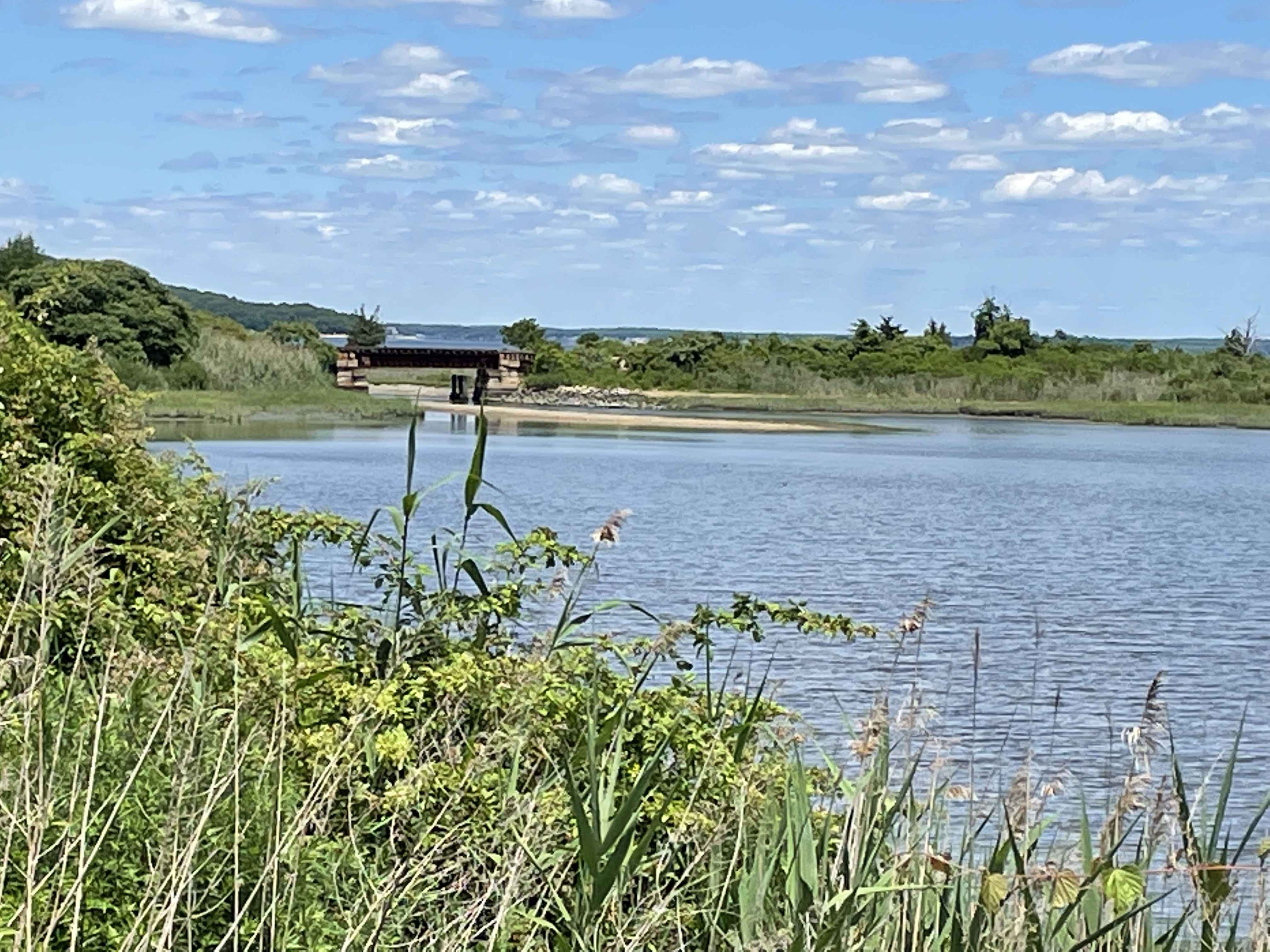
Activities: You can walk along the pond to the shore. There are beautiful views for photography around the railroad bridge. You might imagine what the pond looked like in colonial days.