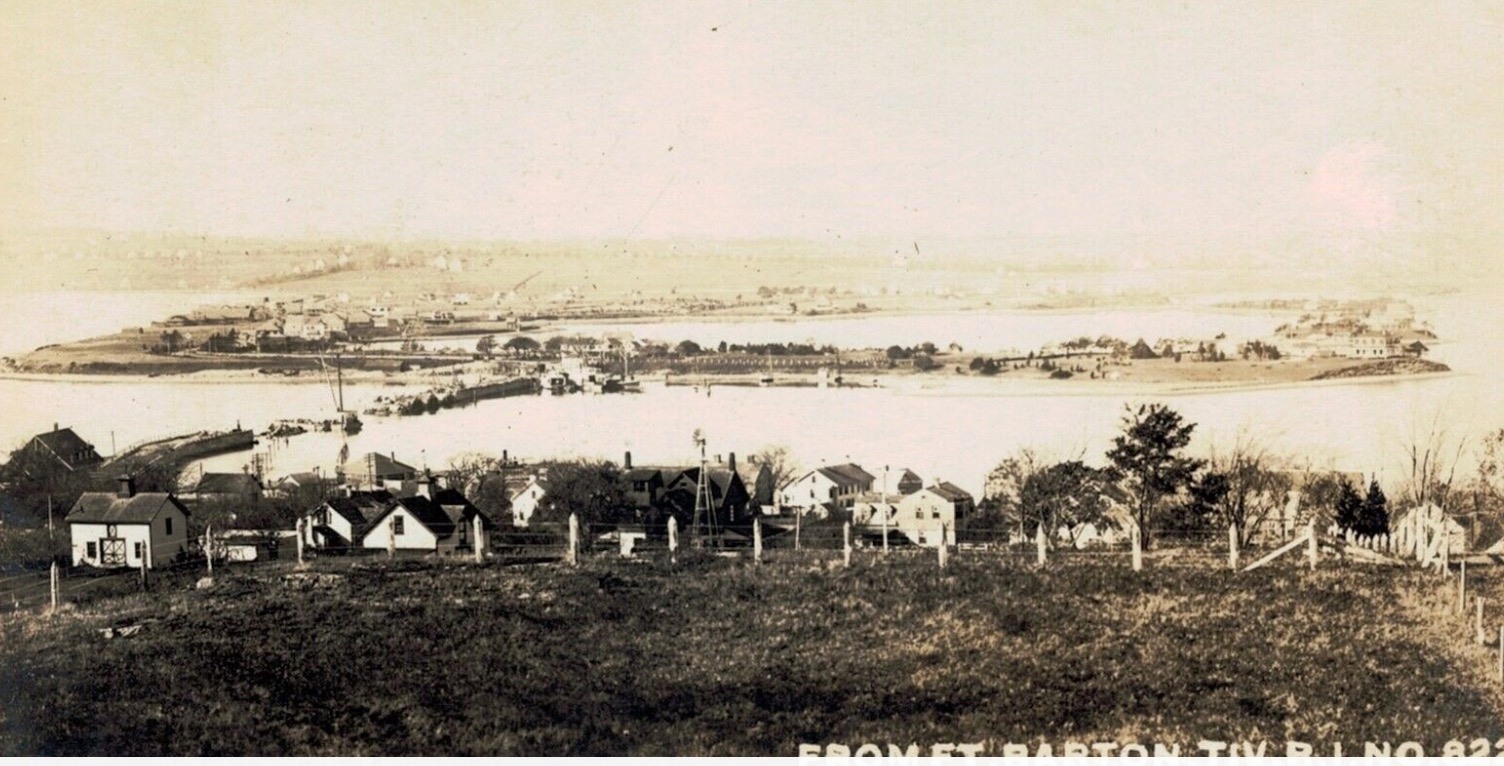
Howland Ferry was an important entry and exit point for the Rhode Island Campaign, but I haven’t spent much time researching what happened there. Today our eyes are on the relic of the Stone Bridge and it is hard to imagine the Revolutionary site.
In colonial times the main roads in Portsmouth led to the ferry landings. What we call East Main Road was known as the Path to Howland’s Ferry. This site is one of the narrowest points on the Sakonnet River between Tiverton and Portsmouth. Use of this land as a ferry landing may date back to 1640. The name Howland Ferry comes from the family that ran it between 1703 to the British Invasion in 1776. Howland’s Ferry played an important part during the Battle of Rhode Island. American forces used the location to pour onto Aquidneck Island to fight the British who occupied it. When they were forced to retreat, many of the American forces used that route to make their escape.
Arranging for transportation for thousands of soldiers from Tiverton to Portsmouth was a major undertaking. The British knew an American invasion would be coming, so they had already destroyed many of the flatboat boats the Americans had constructed in the Fall River area. The Americans had to secure the wood mills in Fall River and Tiverton to rebuild the flatboats that would be needed. Silas Talbot oversaw the building of 85 flatboats. Every carpenter in the army was put to work and every piece of boards and plankings in the area were used to make the transport boats. General Sullivan called out to New England mariners to come and operate the flatboats. On August 9, 1778 Howland Ferry was teeming with boats shuttling Americans to Portsmouth.
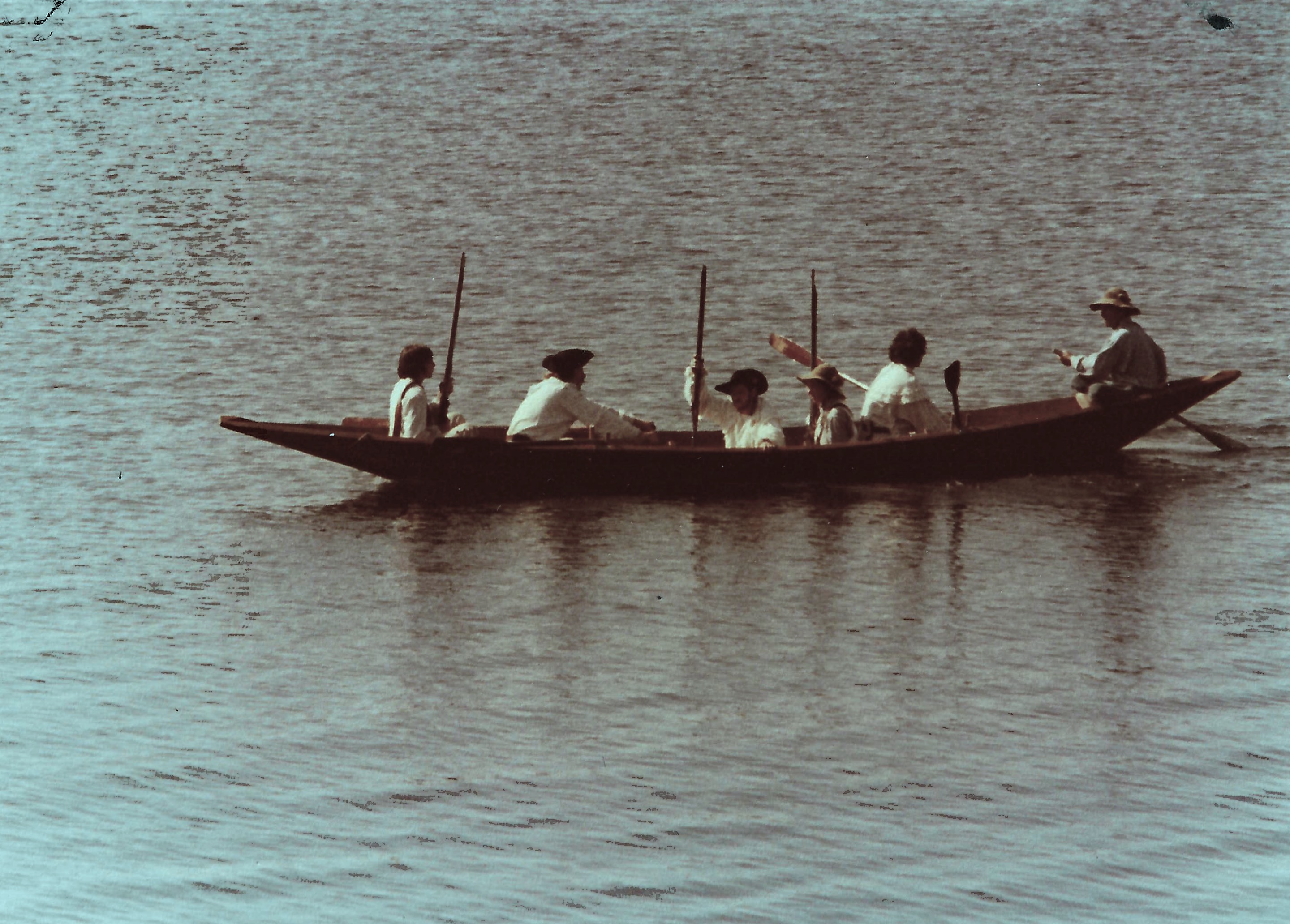

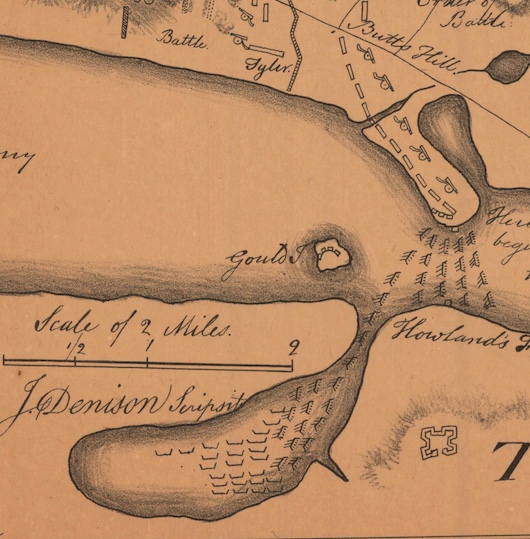
The path to Howland’s Ferry was the escape route when the Americans had to evacuate on August 29th and 30th because the French had left. According to Christian McBurney, Captain Samuel Flagg of Salem and the boatmen from Salem, Marblehead and other New England towns worked day and night to ferry equipment and men off the island. William Whipple and Jeremiah Olney of the 2nd Rhode Island oversaw the embarkation. After the retreat John Laurens wrote – .”.we had a water passage of 1/4 mile to cross from the island to the main – a vast quantity of stores, heavy baggage, ammunition and cannon to transport. You will be filled with admiration at learning that the retreat was effected without the loss of a single man or even an entrenching tool”. Silas Talbot and John Laurens were among those holding off the British to give the Americans more time to retreat. At 11 PM Lafayette arrived from meeting with the French in Boston. He had taken the 70 mile journey and was disappointed that he had missed the action. Lafayette did have a role in bringing the piquets off the Island.
I have many questions about the preparation of the flatboats and Silas Talbot’s role. A biography I have of Talbot doesn’t even mention his supervision of the boat construction. In many ways this successful retreat was one of the most amazing parts of the Campaign and showed the professionalism of the budding American Army.
 portsmouthhistorynotes
Leave a comment