Home

Portsmouth’s African American Heritage: The Ayler Family

Leave a comment

At a Portsmouth Historical Society Open House, someone asked me about Portsmouth’s African American families. There was nothing in the exhibits that spoke to that question and Marge Webster and I decided to take on that question as a research topic. The stories we found were exciting and this blog is a short summary of what we found about one of the families.

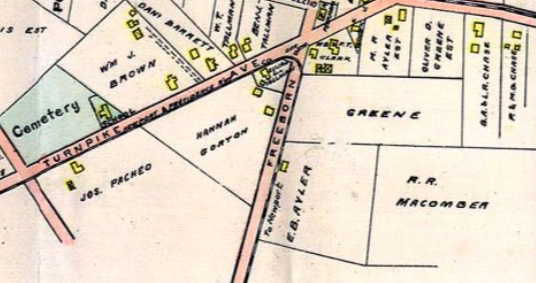
Much of Portsmouth history is farm history and the Ayler family represents the best in Portsmouth farming. In 1870, Morgan Ayler, his wife Matilda and three of his children are listed as residing on the farm of Joseph Macomber off East Main Road in Portsmouth.   Macomber went to Washington after the Civil War and brought back 16 former slaves to live in Portsmouth. We don’t know the reason he brought the 16 with him, but Macomber was a devout Quaker and aiding former slaves was an important activity for members of the Society of Friends. Morgan moved from being a farm laborer on the Macomber farm to owning his own farm. He won awards for his produce at the Newport County Fair.

Morgan’s son Edward went on to farm 80 years in Portsmouth. Edward Ayler’s obituary (published in the Newport Mercury in June of 1935) provides some clues to understanding their success in Portsmouth life. “Edward Ayler, one of the oldest and best known citizens of Portsmouth, died last Friday at his home on Freeborn Street.” Edward was one of the founders of the Portsmouth Free Public Library.

The Ayler family was very involved in Portsmouth activities.  Edward Ayler’s wife (Louise Jackson Ayler)  was active in the Woman’s Christian Temperance Union.  She often hosted meetings at her home.  She was active in the Friends Missionary Society.  The early generations of the Aylers were strong Quakers, but there seems to be a split among the third generation.  Edward’s sons Raymond and Emerson and daughter Alice Ayler Morris were known for their singing in the Friends Church before World War I.  During the war, however,  Raymond H. Ayler was commissioned as Second Lieutenant after having been drafted “with the colored boys” (Mercury, 9/13/18) while brother Osceola received a deferment because of his Quaker faith.  In the 1920s Raymond would be on the executive board of the American Legion along with William Vanderbilt and Bradford Norman.

There is little left in Portsmouth as reminders of the Ayler family. Macomber’s farm has been sold and his house torn down. Morgan Ayler’s farm at Cozy Corners has become commercial property and Edward Ayler’s home is only foundations left on Freeborn Street. The family moved on to Newport and to the Boston area. They came to Portsmouth and they made a difference.

Lost to Time: The Home of Artemas Fish, Revolutionary Soldier

Leave a comment

I have to go back to my blog on places Lafayette stayed during the Rhode Island Campaign and make a note that the 1760 farm house associated with Lafayette in Tiverton has been torn down. Through the years Portsmouth has lost many historic buildings. One of Jim Garman’s early books was on historic Portsmouth homes and he has noted when one of the houses he studied are lost to us.

Within the last few years the Artemas Fish house on Glen Road (built circa 1760) was torn down to facilitate the building of new homes. Fish received a pension at Newport, Rhode Island, for eighteen months active service in Babcock’s Regiment, Rhode Island Militia during the American Revolutionary War. Babcock’s/Lippitt’s Regiment was a regiment raised for the defense of Rhode Island during the American Revolution. The regiment was one of two formed by the state of Rhode Island between November 1775 and January 1776 to deter an attack by the British against Rhode Island.

The regiment was again authorized by the Rhode Island General Assembly on January 8, 1776 with 12 companies under the command of Colonel Henry Babcock. The regiment was originally located on Aquidneck Island and along with Richmond’s Regiment left the island at the time of the British invasion.

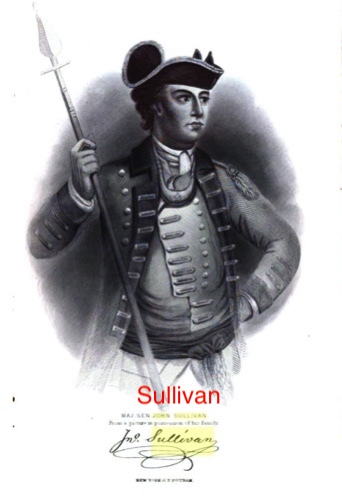
In his pension application when he was in his seventies, Fish listed his service during the Battle of Rhode Island – which he calls the Battle of Quaker Hill. Three witnesses for his pension application stated that Fish was part of Sullivan’s Life Guard. Sullivan sent this elite group into the thick of the battle at Quaker Hill.

..in the year 1778 he was employed, at least for six months, in the service in Capt. Joseph Knight’s company in the same regiment. He was much under Capt. Knight towards Sullivan’s expedition against Rhode Island – that he recollects that in the battle on Quaker Hill, besides the man who shot under him (near him?), & that on the evening of the second day after the battle, according to the best of his recollection, they retreated to Tiverton – that he also was a volunteer in Spencer’s expedition under the same Capt. Knight towards East Greenwich. Mentioned – that after the British left Rhode Island, he was often called out to guard, & in 1780 served for two months under Capt. Isaac Knight – that he was employed in actual service during the Revolutionary war for about twenty-six months. ” (Fish’s testimony in application for a pension can be found online – Fold3)

Artemas Fish had a long life. He served as Postmaster of Portsmouth 1808-1810. He died in February of 1834 in Rhode Island. His grave is in Fish Cemetery, Portsmouth, Newport County, Rhode Island, USA, Died at 90 in 1834,

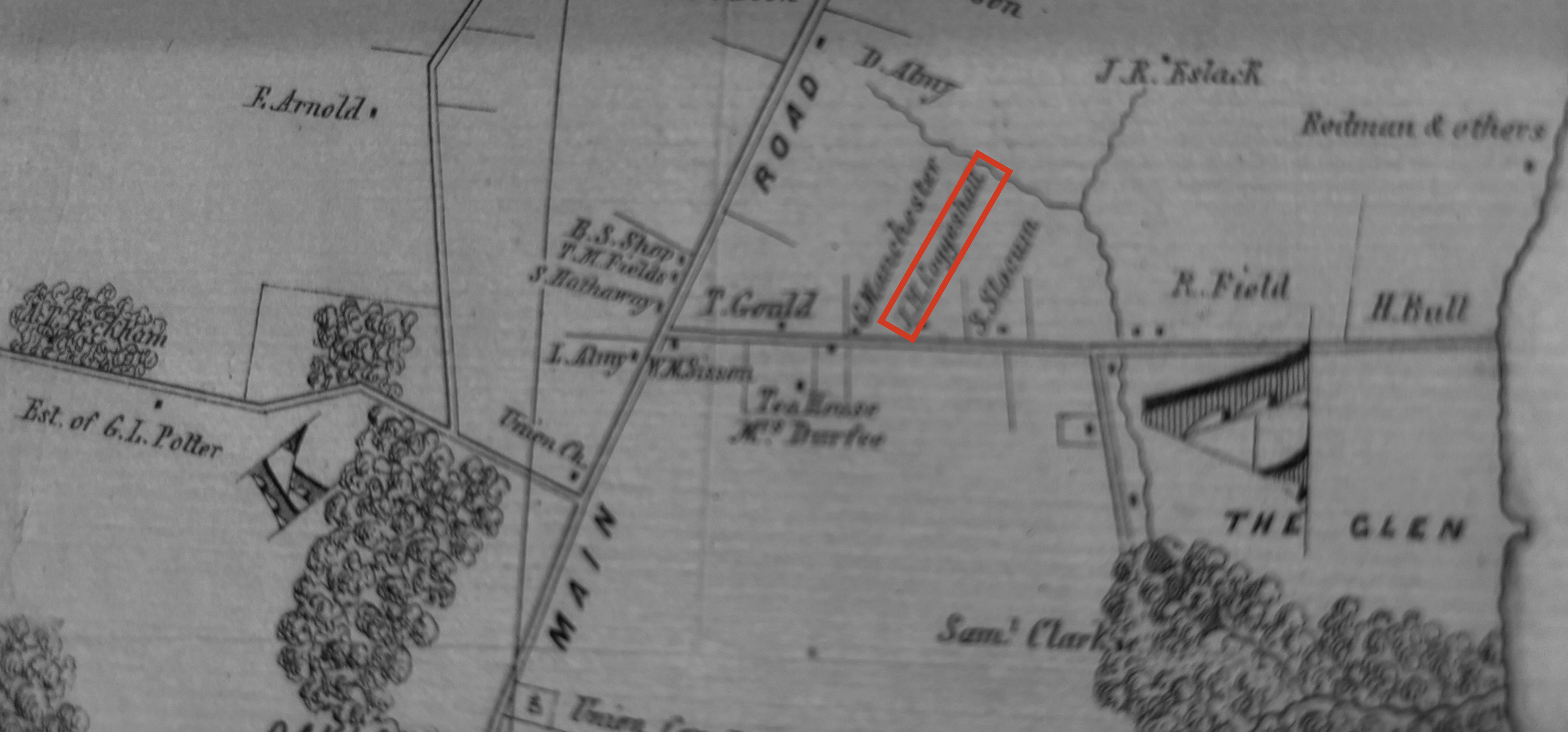
The house became the property of Dr. Peter Wales, Portsmouth’s first doctor. The house was passed down to his granddaughter, Lydia, who was married to one of Portsmouth’s best builders – John Coggeshall. Coggeshall was the builder for the Christian Union Church, now the headquarters of the Portsmouth Historical Society.