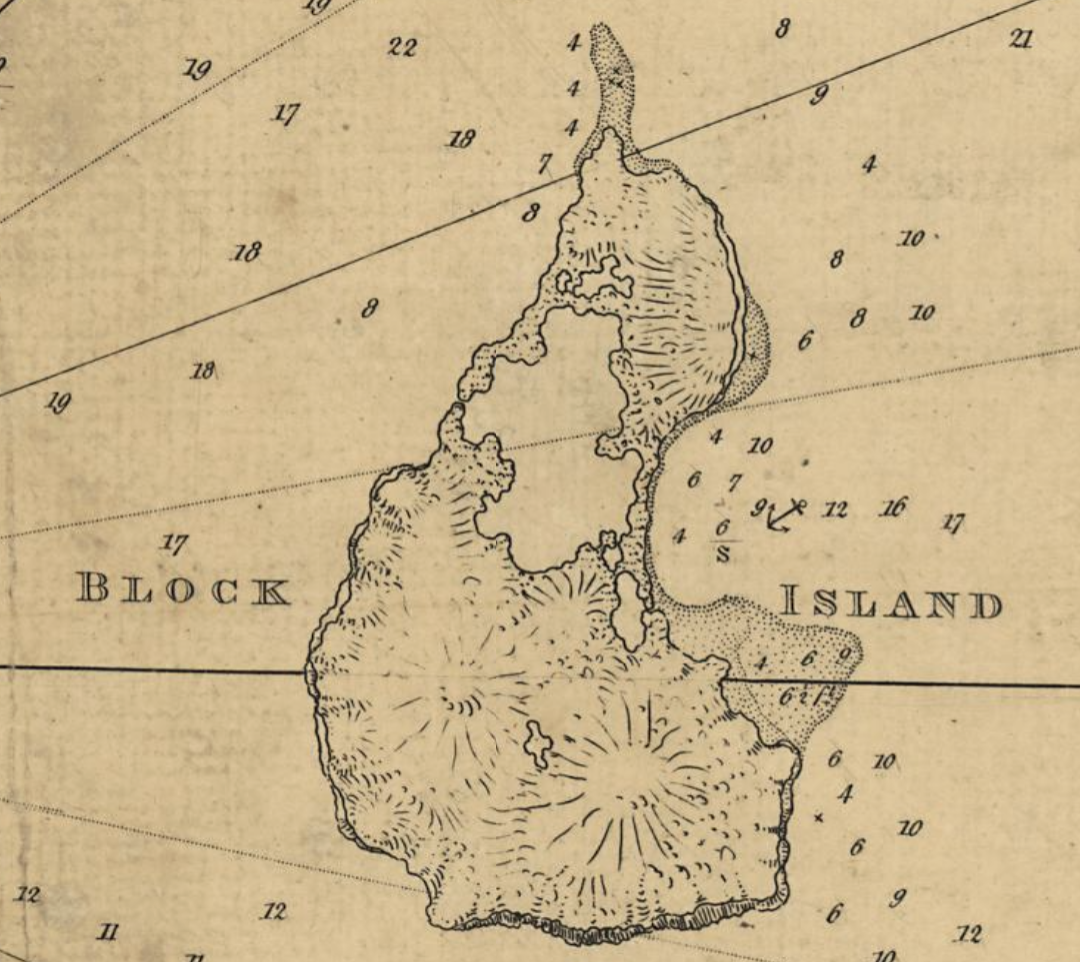
Block Island in the Revolution is on my mind as I prepare to visit a friend on Block Island. This is a collection of information on Revolutionary Block Island. My understanding is that the island remained uncommitted during the war, but Block Island people were involved in the fight for independence.
Caty Littlefield
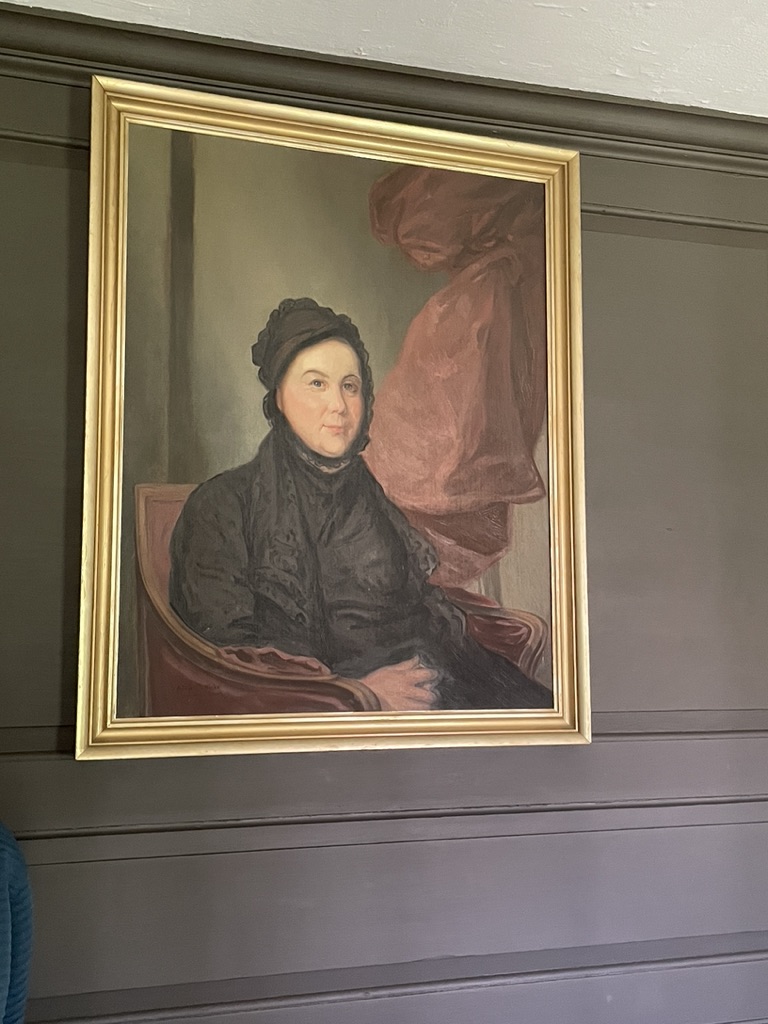
A while back I researched women in the Revolution and I learned the story of Catherine Littlefield Greene Miller. Her family called her Caty and she was born on Block Island in 1755. Her mother descended from Block Island founders and her father, John Littlefield, was a member of the Rhode Island legislature. Her Block Island childhood ended with her mother’s death when she was only 10 years old, and Caty went to live with and aunt and uncle. At that time her uncle, William Greene, was a Supreme Court justice, but he went on to being Governor of Rhode Island. Under the guidance of her aunt and uncle, Caty learned how to read and write and how to manage a household. Caty would meet and marry General Nathanael Greene and she took a prominent role in his efforts. She opened her home in Coventry as a hospital when the Rhode Island troops were inoculated for small pox. Caty followed her husband to just about every assignment including Valley Forge.
William Littlefield
William Littlefield was Caty’s younger brother. We learn a little bit about his service in a letter he wrote to Washington to secure a federal position.
“I served my Country upwards of five years in the Continental line of the Army part of which time was in General Greenes family.”
The notes below the transcript of the letter inform us that he didn’t get the job, but he had been active in the war.
William Littlefield (1753–1822), a native of Block Island, R.I., was the younger brother of Catharine Greene, widow of Maj. Gen. Nathanael Greene. Littlefield had served with Varnum’s Rhode Island brigade during the early years of the Revolution and in 1779 had become an aide to his brother-in-law. He resigned on 20 June 1780 and returned to Block Island where he fell under suspicion of trading with the enemy although he was later exonerated (Bartlett, R.I. Records, 10:45). In 1785 and 1792 he represented Block Island in the Rhode Island legislature. Littlefield received no post in the civil service and later in the 1790s apparently moved to Tennessee. https://founders.archives.gov/documents/Washington/05-04-02-0052
Before the war started he is listed as being an ensign in Block Island’s militia.
Captain Samuel Dunn
Another Block Island figure was involved in the Gaspee attack. The Gaspee Committeed issued this statement:
“We conclude that it was Captain Samuel Dunn, 1710-c1790 of New Shoreham (Block Island), RI that took part in the attack on the HMS Gaspee, and later went on to service in the Revolutionary War. The Gaspee Days Committee therefore recognizes Captain Dunn as a true American patriot.”
I am confused about which Samuel Dunn was part of the Gaspee action. This Samuel has a son Samuel Dunn, Jr. who was born in 1743. The elder Samuel Dunn would have been over sixty when the Gaspee incident occured.
The next blog will be on the “Battle of Block Island” that featured Esek Hopkins.
 portsmouthhistorynotes
Leave a comment