Home

What Precipitated the Battle of Rhode Island?

Leave a comment

Tomorrow we honor those who participated in the Battle of Rhode Island with a Sunset Salute at Butts Hill Fort. Why did we have a battle? What was the spark? Over the past week I have heard an historian and a US Senator tell us that it was initiated by the British. I have been working on a role playing activity to let students and adults experience the decision making that principals in the Battle of Rhode Island had to make in the heat of the action. I like to draw from primary sources as I provide background material to the decisions that had to be made. Drawing from the diary of British soldier Frederick Mackenzie, I believe that the British were reacting to the retreat that they discovered that the Americans had already started overnight on August 28th.
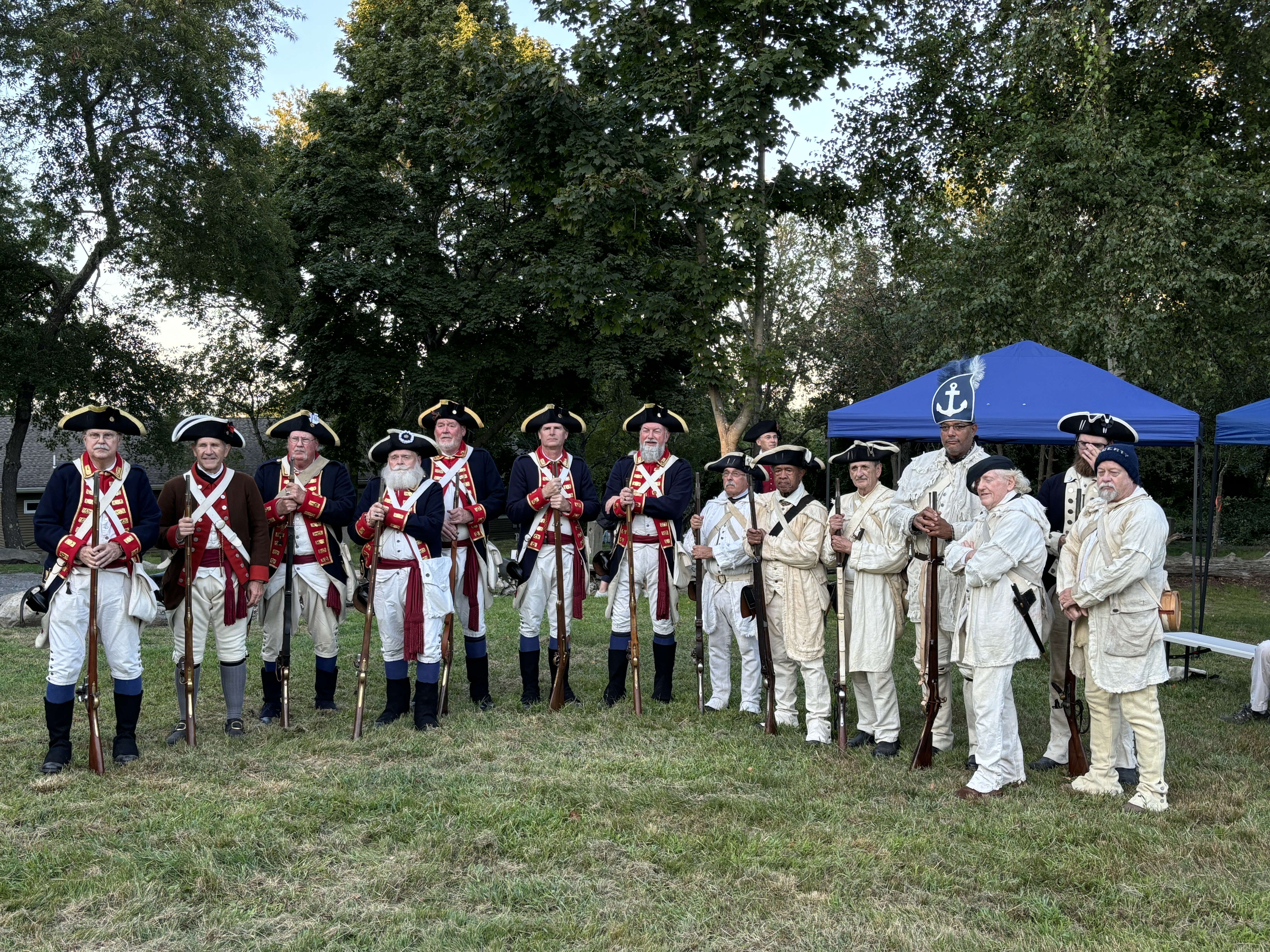
Sunset Salute 2024

“As soon as the day broke this Morning and we could see as far as the Enemys Encampment it was observed that their tents were struck; I went immediately on top of Dudleys house, and when it grew lighter, I could plainly perceive that the Rebels had struck their whole Camp, and had marched off; hardly a man was to be seen in their Batteries or Trenches. I rode as fast as possible to General Pigot’s quarters in Newport and informed him of it, and returned to the Camp with his orders for all the troops to get under arms with the utmost expedition. The General came to Irishes Redoubt by the time the Troops were assembled, and being satisfied that the Rebels had quitted their position, he gave orders for a part of the Army to march out, in three Columns, to pursue them, but to advance with caution, and not bring on an Action with a part of our force.” Mackenzie’s diary August 29, 1778

The British didn’t decide to go on the attack against the American Siege of Newport. Mackenzie notes that the British were “to advance with caution, and not bring on an Action with a part of our force.” The British found that Americans had left their positions and General Pigot decided to go after them to capture the American Army before it could retreat off Aquidneck Island. The goal of the Americans was to get their soldiers and equipment safely to Tiverton so they could fight another day. The American aim in the battle was to push the British and German (Hessian) troops back so that a successful retreat could be made. They were in an untenable position once it was clear that the French were not coming back to aide in the plans of the Rhode Island Campaign. The Americans were not trying for a full engagement either.
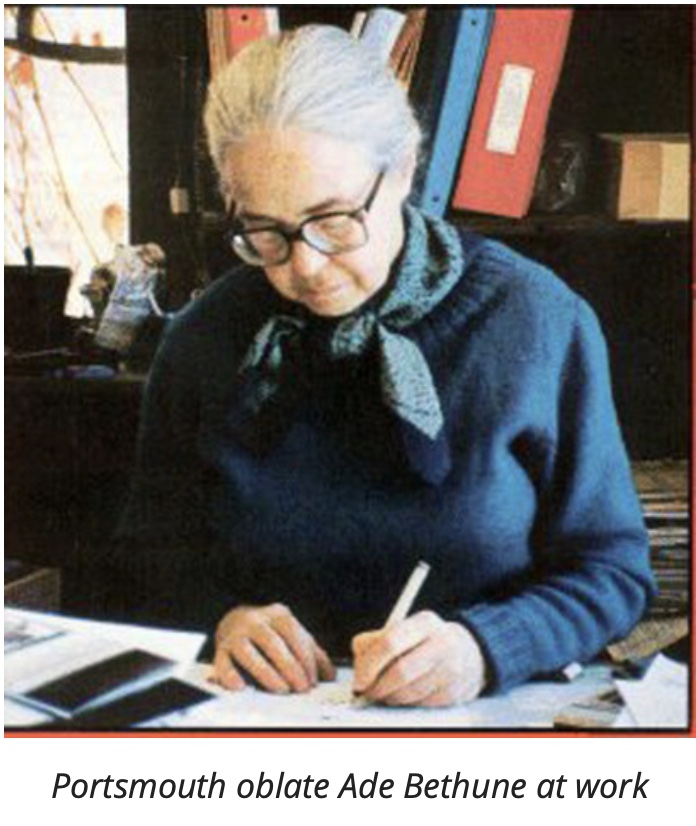
Who Was Ade Bethune?

Leave a comment

The new housing development being built by the old Anne Hutchinson school is being named after Ade Bethune. I remember Ade as a liturgical artist. She had the St. Leo’s shop out of her home on Washington Street in Newport. I went there to buy some things and what sticks out in my memory is that her coffee table was her wooden coffin! She designed jewelry and liturgical objects under the name of the Terra Sancta Guild. I still have some of those pieces.

Why would you name senior housing after Ade? Ade founded The Church Community Housing Corporation (CCHC), in 1969. The CCHC has the lease from the Town of Portsmouth to build a senior housing development.

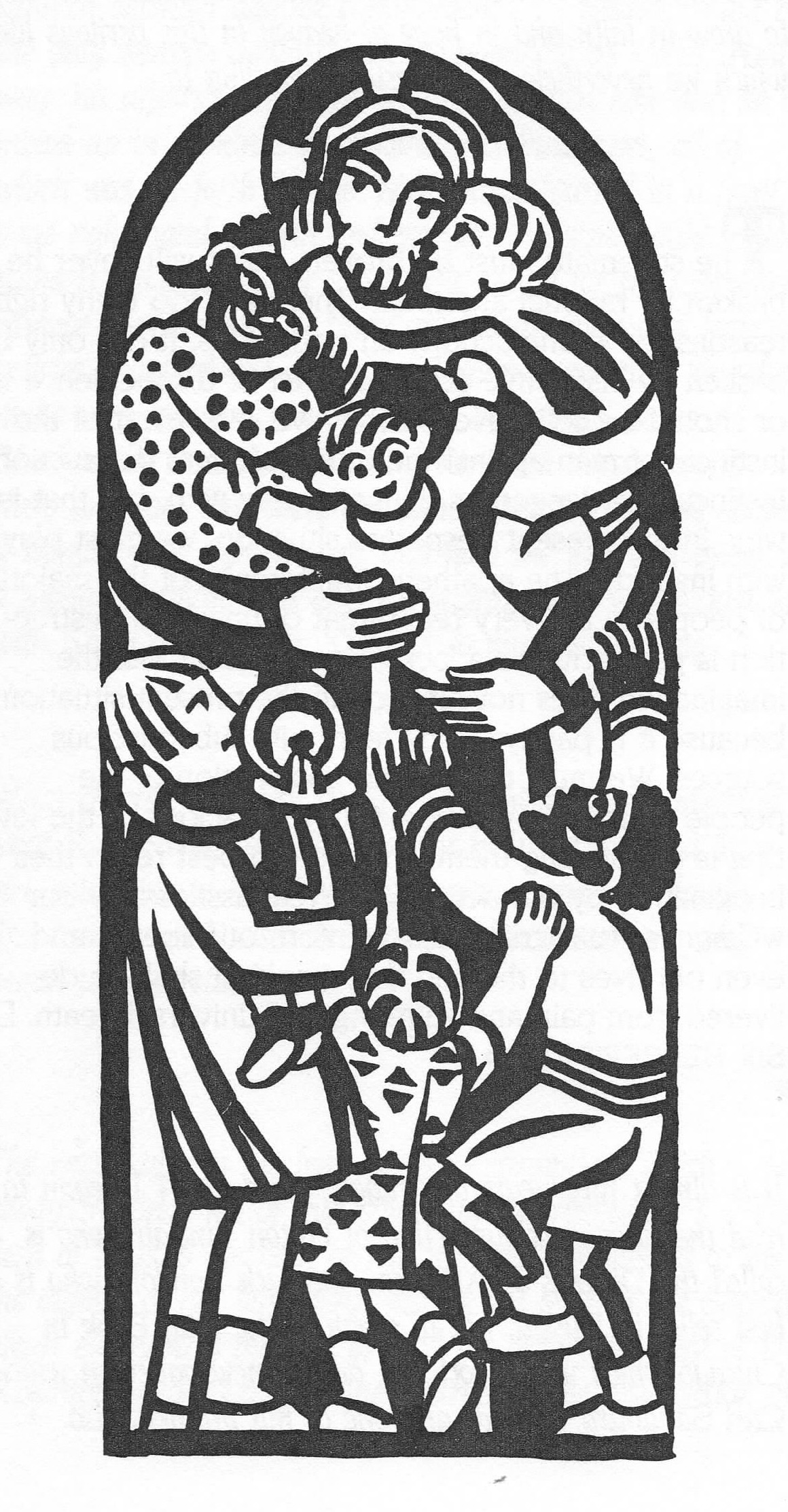
Ade (Adelaide De Bethune) was born in Brussels, Belgium, in 1914. Ade and her family emigrated to New York City in 1928. In 1933 she met Dorothy Day at a place were the poor were being fed. Ade thought the illustrations in Dorothy’s newspaper The Catholic Worker, could use some help and she volunteered to do it. In my library I own a book on Dorothy Day and Ade was the illustrator. This early experience led Ade to focus on liturgical art and architecture which were rooted in the Catholic faith. Ade Bethune wanted her artistic gifts to be of service to others.

In 1938 Bethune moved to Newport, Rhode Island. Ade thought that home ownership was important to giving people a sense of belonging to a community. Throughout the years Ade was a vocal critic of efforts to tear down existing housing in Newport. She and a group of concerned citizens created the Church Community Corporation in 1969 (later the Church Community Housing Corporation or CCHC). This organization worked through renovation and new construction to enable low-income residents to find a home. In the 1980s Ade worked to develop Harbor House on Washington Street for elder housing. She was one of the first residents in 2002, but died shortly after. She is buried at Portsmouth Abbey in the monastery’s burial grounds.

Illustration from the Dorothy Day Book

To learn more about Ade – I would recommend these sites:

Portsmouth Abbey: https://portsmouthabbeymonastery.org/ade-bethune-artist-and-oblate

St. Catherine University has her papers: https://library.stkate.edu/archives/bethunechronology

CCHC

Military Tactics During the American Revolution

Leave a comment

I’m not a military historian. I am working on a role playing activity to give students and interested adults a sense of the decisions that had to be made on both sides in the Battle of Rhode Island. So I am learning about military tactics. If I ask role players to make decisions about what they would do when faced with certain situations during the Battle of Rhode Island, I need to inform the players about what their choices might be. What follows is a gathering of military tactics and an attempt to define them in a way players might understand. I appreciate feedback from readers that have more military experience.

    Tactics
    1. Linear formations: Both British and American forces often fought in close-order formations, relying on mass volleys because musket fire was not very accurate.

    2. Open formations: Instead of close formation in line, skirmishers are more spread out and use the terrain to take cover.

    3. Scouts: Used ahead of the main forces to gather information and to protect the flanks (sides) and rear of the army.

    4. Fabian Strategy: General Washington employed this tactic, which involved avoiding major battles while harassing the enemy and gathering intelligence, according to the American Battlefield Trust.

    5. Guerilla Tactics:

    • A. Surprise Attack: Element of surprise used to gain an advantage. Soldiers used the American landscape to their advantage – using forests and hills ( especially stone walls and corn stalks in Portsmouth) to hide and then surprise the enemy.
    • B. Ambush: A type of surprise attack where the attackers conceal themselves and then launch a sudden attack inflicting damage before the enemy can defend themselves.
    • C. Hit-and-run attacks: Using short surprise attacks and withdrawing before the enemy can respond in force. This inflicts damage on the enemy without a full-scale battle.
    • D. Harassing Tactics: Firing from a distance, disrupting formations, tactics that delay the enemy.

    Resources: An excellent overview was created by American Battlefield Trust. The same tactics were used on both sides:
    https://youtu.be/OYljJSZTVZA?si=9q1c5_ECJ-ApVQY3


    .

    Commanders of the Battle: Col. Edward Wigglesworth

    Leave a comment

    1742-1826

    Edward Wigglesworth was born and raided up in Newburyport, Massachusetts. He graduated from Harvard and worked for merchants in Newburyport. That gave him experience as a ship’s captain in the Caribbean. In 1776 he was commissioned a Colonel and he took command of the 6th Massachusetts Continental Battalion. His battalion was ordered to Fort Ticonderoga as the Americans were quickly building a fleet to counter the British on Lake Champlain. As an experienced mariner, General Gates appointed Wigglesworth as third in command of the American fleet. Wigglesworth joined the fleet and took part in the Battle of Valcour Island in October of 1776. With the destruction of the American fleet, Wigglesworth escaped back to Fort Ticonderoga and took command of his battalion again. When his battalion disbanded, he was took command of the 13th Massachusetts Regiment. He was at Valley Forge and took part in many battles.

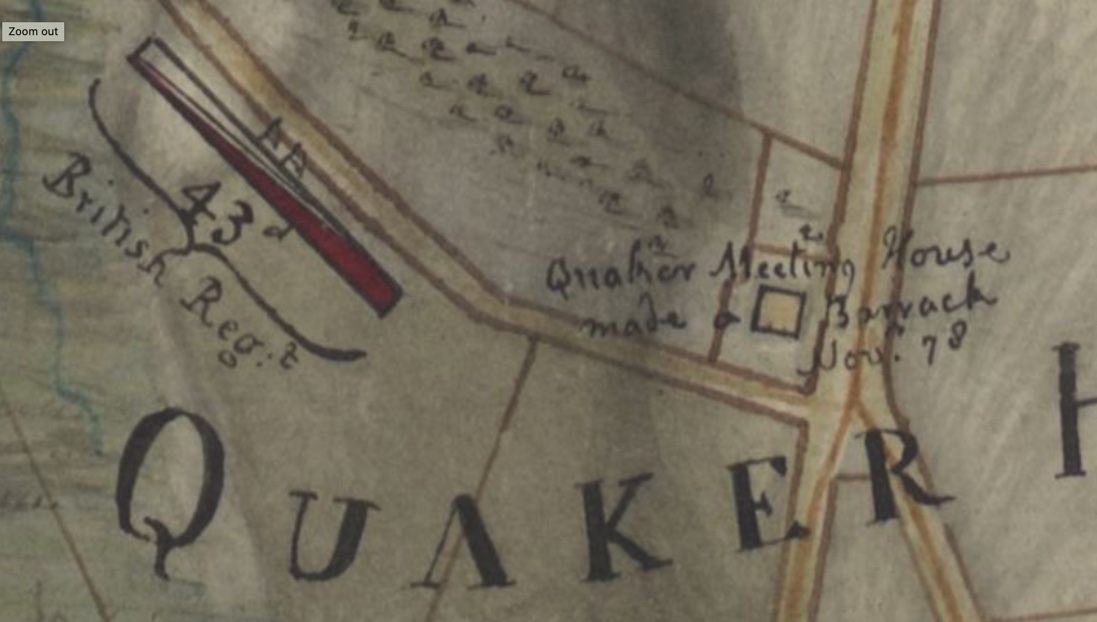
    During the Battle of Rhode Island, Wigglesworth was positioned at Quaker Hill. American units (Wiggleworth’s Regiment, Livingston’s advanced guard and Wade’s pickets) were waiting at the junction of Middle Road, East Road and Hedley Street near where the Quaker Meeting House was located. Wigglesworth mistook the uniform of the Hessians troops advancing for American soldiers. Sullivan sent John Trumbull up Quaker Hill to set Wigglesworth straight. American General Sullivan saw his troops retreating, so he sent in Shepard’s Regiment of Massachusetts Continentals. General Sullivan’s “Life Guards” were sent in as well. For a while the Americans had an advantage.

    A private from Jackson’s attachment described the action:

    Detail of Quaker Hill from Huntington Map.

    “We began to attack. The action began to be warm when we were reinforced by Col. Shepard’s Regiment under the command of Lieutenant Colonel Sprout. The action then commenced hot. We plied them so briskly that they began to give way. Our troops seeing this, gave three cheers and advanced. The enemy then gave way and left one piece of cannon but poorly supported. A party of our men then advanced, drove the artillerymen and took possession of the cannon. The enemy then rallied and being reinforced, advanced and gave our men so heavy a fire that they obliged them to quit their prize, the cannon.” (From: Diary of a soldier in the RI Expedition (Massachusetts Historical Society. Quoted in McBurney.)

    Like many other officers he exhausted his financial reserves and resigned from the army in 1779. He returned to Newburyport and ultimately was appointed tax collector for the port. He held this post for many years prior to his death on December 8, 1826.

    Resources

    Finding Wigglesworth’s Lost Diary.  All things liberty 2018.

    Christian McBurney’s book on the Rhode Island Campaign.

    Edwin Stone’s Our French Allies.

    Decision Points – Battle of Rhode Island

    Leave a comment

    Christian McBurney’s book on the Battle Rhode Island Campaign provides me with a step by step breakdown of the action, but I still need to digest it slowly. While I work on a tabletop role playing activity centered around the Battle of Rhode Island, I am trying to draw out the points in the battle where decisions had to be made. These are some of the decision points I may include in the role playing.

    August 28

    1. Once the Americans knew the French would not be returning, Sullivan’s council of war had to make a decision on whether to continue their Siege or Retreat.
    2. Once the decision was made to retreat – Sullivan had to devise a strategy for that retreat.

    August 29

    1. In making a decision to retreat, how did the geography of Portsmouth affect the strategy for the retreat?
    2. How would Sullivan decide to distribute the seasoned soldiers and raw militia?
    3. How would Sullivan decide where to place the advanced guards to hinder the enemy?
    4. The British had been on the defensive with the Siege. What decisions does Pigot make to go on the offensive?
    5. What is Pigot’s strategy?
    6. On Turkey Hill, Lauren asks Sullivan for more men. What decisions does Sullivan make?
    7. When Malsburg is out of ammunition past Turkey Hill, what decision does he make?
    8. What were Malsburg’s decisions on attacking the redoubt.
    9. What decisions did the British Navy make?
    10. Greene urged Sullivan to Fully Engage when the British got beyond Quaker Hill. What decision did Sullivan make?
    11. How did the American actions change the Navy’s decisions?
    12. What decisions did Nathanael Greene make in flanking the Hessians?
    13. What decisions did Smith make when he had orders not to make a general engagement?
    14. Later in the afternoon, when Sullivan was faced with the choice of counter attack or stay put – what decision did he make?

    Questions:

    1. How did both armies communicate?
    2. What were some of the tactics used by the Americans?
    3. What were some of the tactics used by the British?