Some of our Portsmouth stories come from research into items in the Portsmouth Historical Society collection. In researching our Civil War Sword, we rediscovered another item in the collection. We have the blueprints of the last Mussel Shoal Lighthouse. Musselbed Shoals is a dangerous spot for navigation through the channel from Narragansett Bay to Mount Hope Bay. It is even noted on colonial era maps. In 1871 a beacon was placed there followed by a new light in 1873. This structure was damaged by ice floes. A new structure with built with more protection, but ice floes in 1919 -1920 damaged this one as well. The light was abandoned in 1938 and the lighthouse was severely damaged by the Hurricane of 1938. Later the building was torn down and an automatic light was installed that remains today.
Musselbed Shoal Lighthouse operated until 1938 when it was replaced by an automatic lightPlans for the Musselbed Shoal Light
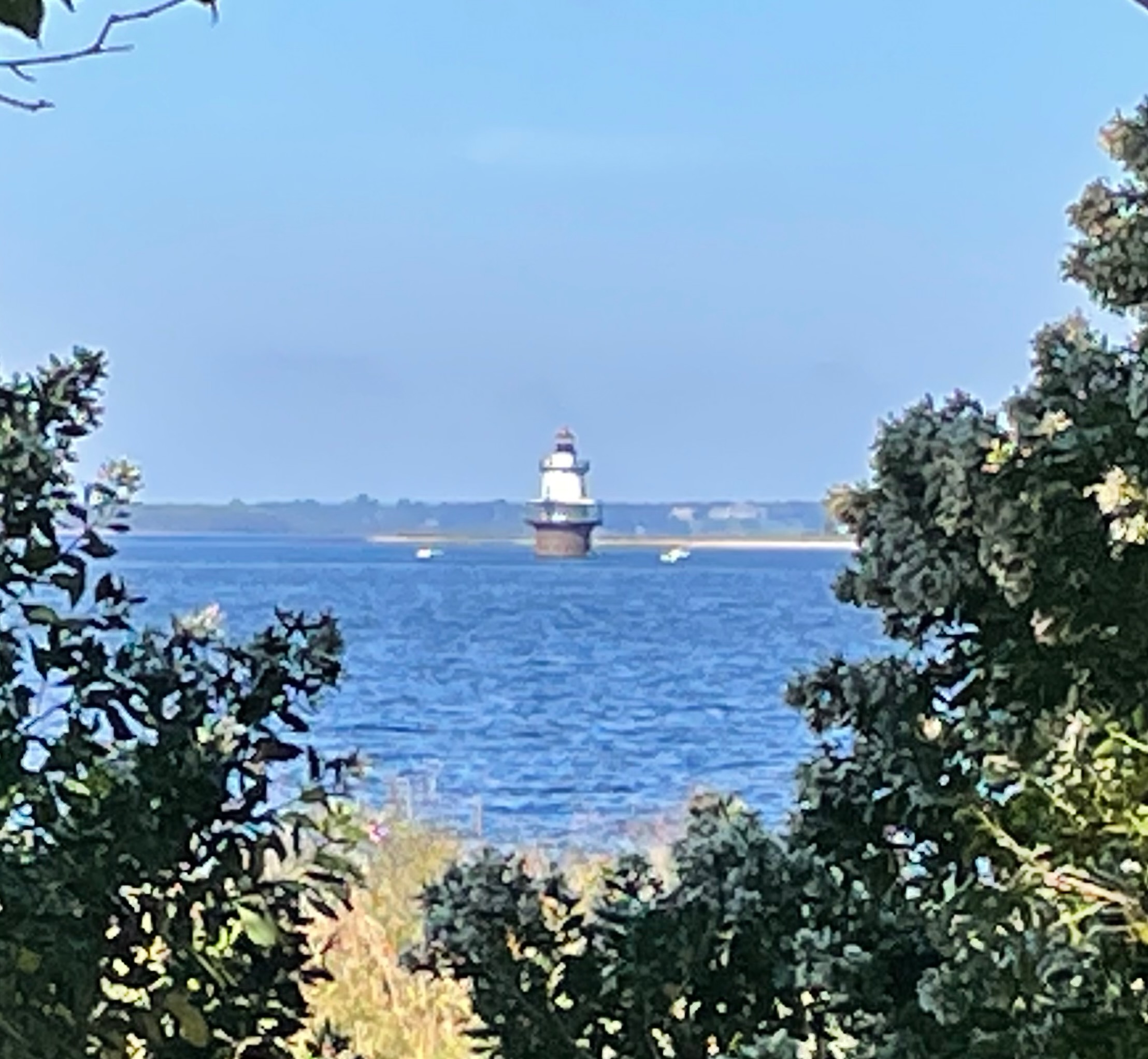
Hog Island Light
Treacherous shoals are marked by this 1901 lighthouse near Hog Island. There was a small light boat on the spot that the Old Colony Steamship Company used to aid their vessels. A larger boat, the Eel Grass Shoal Lightship, LV 12, was used beginning in 1886. The lighthouse is part of the category of “sparkplug” lighthouses, whose superstructure rests on concrete. This was the last light station established in the state. It was automated in 1964. In 1988 it was added to the National Register of Historic Places In 2006 the lighthouse was auctioned off and bought by a private buyer.
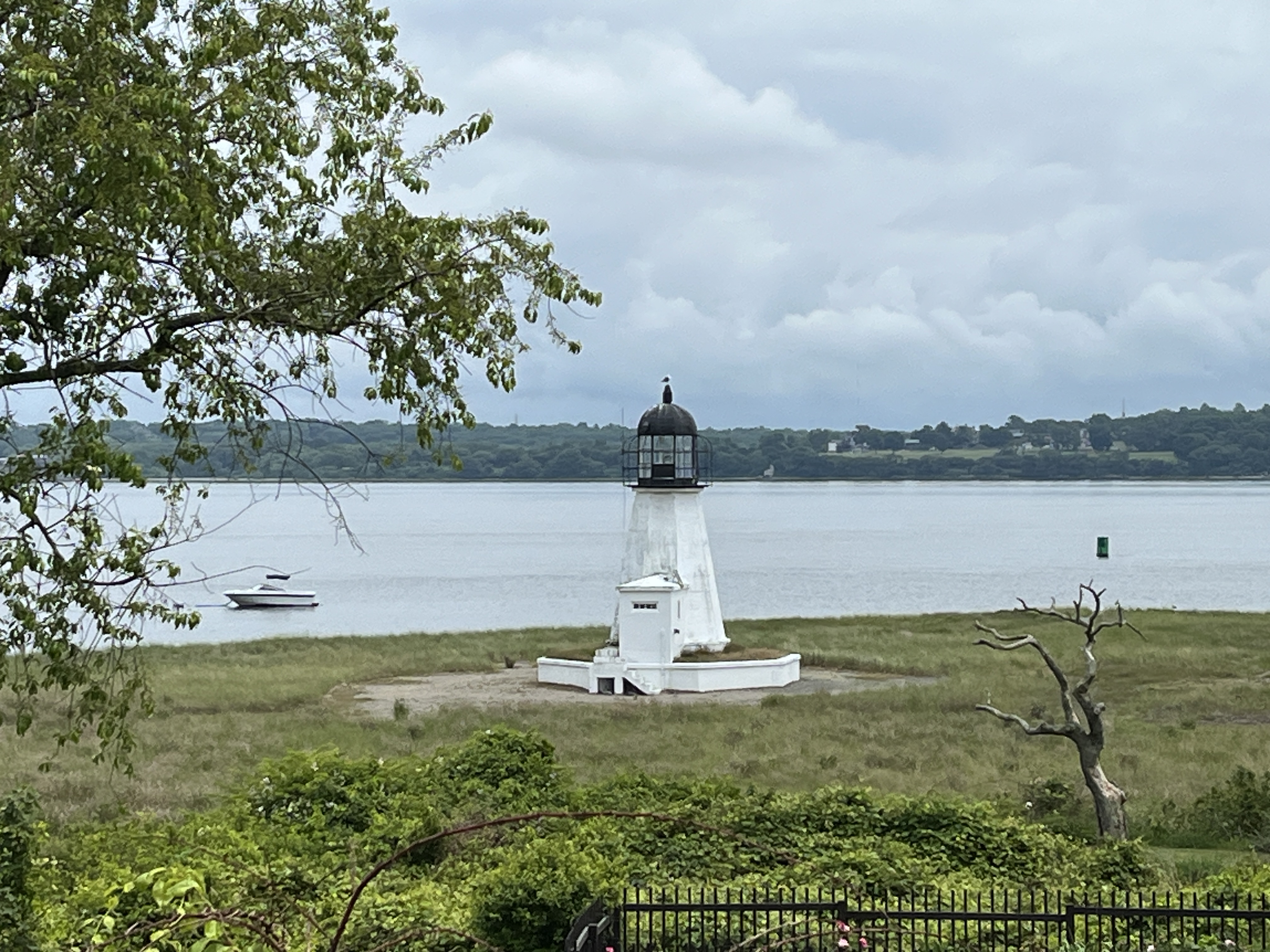
Sandy Point Light – Prudence Island
The Prudence Island Lighthouse is also known as the Sandy Point Lighthouse. It is the oldest lighthouse in the state and was originally built in 1823 by Goat Island. The Newport Harbor Light is on the spot now. In 1851 it was moved to Prudence Island. It is one of the few lighthouses with a “bird cage” structure for the lantern. The keeper’s house was swept away in the 1938 Hurricane and five people were washed out to sea and drowned.
Orderly books help us to put together the pieces of what happened during the Battle of Rhode Island. Orderly books were kept by each Revolutionary War regiment. They documented troop movements, military orders, troop pay, conflicts, and the day to day happenings of that regiment. They tell us about who was in charge and what the plans were and sometimes offer details of concerns and punishments. Recently I came across an orderly book online at the Henry Ford Museum from a Connecticut Militia that fought in the Rhode Island Campaign. This orderly book belongs to Colonel Samuel Chapman’s Connecticut Militia Regiment. Transcribing these books is an art in itself, but Historian John Robertson was kind enough to give me his transcription.
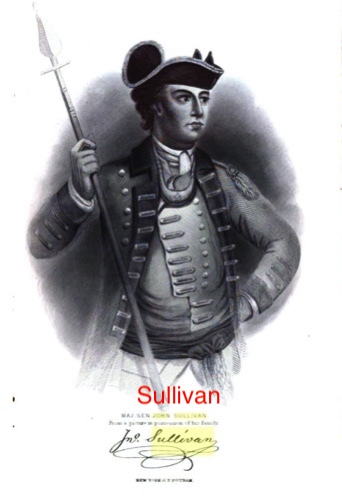
After Orders [MG Sullivan]
The G (General) takes this opportunity to Return his most Cordial Thanks to the Brave Officers & Volunteers & soldiers who have with so much Alacrity repaird to this place to give their Assistance in Extirpating the British Tyrants from the Country. the Zeal and sprit which they have des???d are to him the most pleasing presages of Victory and he is happy to find himself now at the head of an army far superior in numbers to them of the Enemy.
Actuated by a Sacred regard to Liberties of their Country and fired with Just Resentment Against Barbarians who have deluged their Country with Inocent Blood and Spread Desolation on great part of the Country where they have been suffered to march the prospect before us is exceeding promising the Several Corps have Every thing to Animate them and press them on to Victory: The Bravery of the Continental Officers and Soldiers and the idea they must have of the Dependance placed upon their Valour both by the Army and Country must stimulate them to support the Character they have so Justly acquired
The Independant Corps and Volunteers have so Chearfully come to assist in this Enterprize have every Inducement to Exert themselves to support the Reputation they have acquired by flying so freely to the Relief of their Distressed Country The State Troops which the G. has Long since had the Honor to Command he has the strongest reason to believe they will not suffer themselves to be Outshines in acts of Bravery by any Troops in the Army the Militia composed of the Respectable Freemen & Citizens of America who Fought the year must now feel every Inducement to spur them on to Conquest and Glory.
The character of the Several Corps which compose the Army the Expectation of the Country the safety of our Land and in short every thing which animates men to fight and conquer calls aloud upon us to act a part worthy of Freemen and becoming the Character of Americans. The Gnll. on his part assures the Brave army that he will with the utmost chearfulness share with them Every Danger and fatigue and is ready to Venture his Life in every Instance where the good of his Country callsfor it to them and to his Country he stands reday ph??? or to sacrifice his Life if Necessary and from the Brave Officers and men which he has the honor to Command he Expects to find the same sentiments in so just a Cause we must Conquer we must Win the laurels which await us and return in Triumph to the Arms of our grateful Country.
The commanding Officers of Corps will forbid their men in the most positive manner plundering the Inhabitants disobedience of this order will be punished with the utmost severity.
M:G for the day to morrow Green B:G: Cornel F:O: Colo. Bigelow LtColo. Peabody Mr. Philips BM Johnson

The Glen area was a strategic area for both the British and American forces during Campaign on Rhode Island 1778. State Senator and historian Erich A. O’D. Taylor wrote about Fogland ferry fortifications in his article on the Rhode Island Campaign. Octobert 22, 1777, there were rumors of an impending American landing near the Fogland ferry. American General Spencer did not try that, but English General Pigott strengthened the works at Butts Hill, Fogland Ferry and Lawton’s Valley.
Taylor wrote: “The commander at Fogland Ferry had no small task before him to safeguard the nearby farms. It is interesting to learn therefore that this important position was usually assigned to Hessian regiments and was so well defended and its duties so well executed that the inhabitants complimented the commanders when they were relieve and returned to town. Among those who returned thanks to Captain Baron de Malsburg of the regiment Ansbach-Bayreuth on his leaving this post are to be found – Mr. Bowler, Restcome Sanford, Elisha Coggeshall, George Martin, Jonathan Davenport, John Lawton, Giles Slocum, George Taber, Giles Lawton and John Sanford…The farmers thoroughly understood the Hessian soldiers who came of a range of agriculturalists like themselves. During the quiet summers of 77 and 79 when no “assault was intended on the city,” many of these Hessians hired themselves out to farmers, working for the small wage of (about 51 cents ) a day.’
Fogland Battery – From Univ. of Michagan Collection
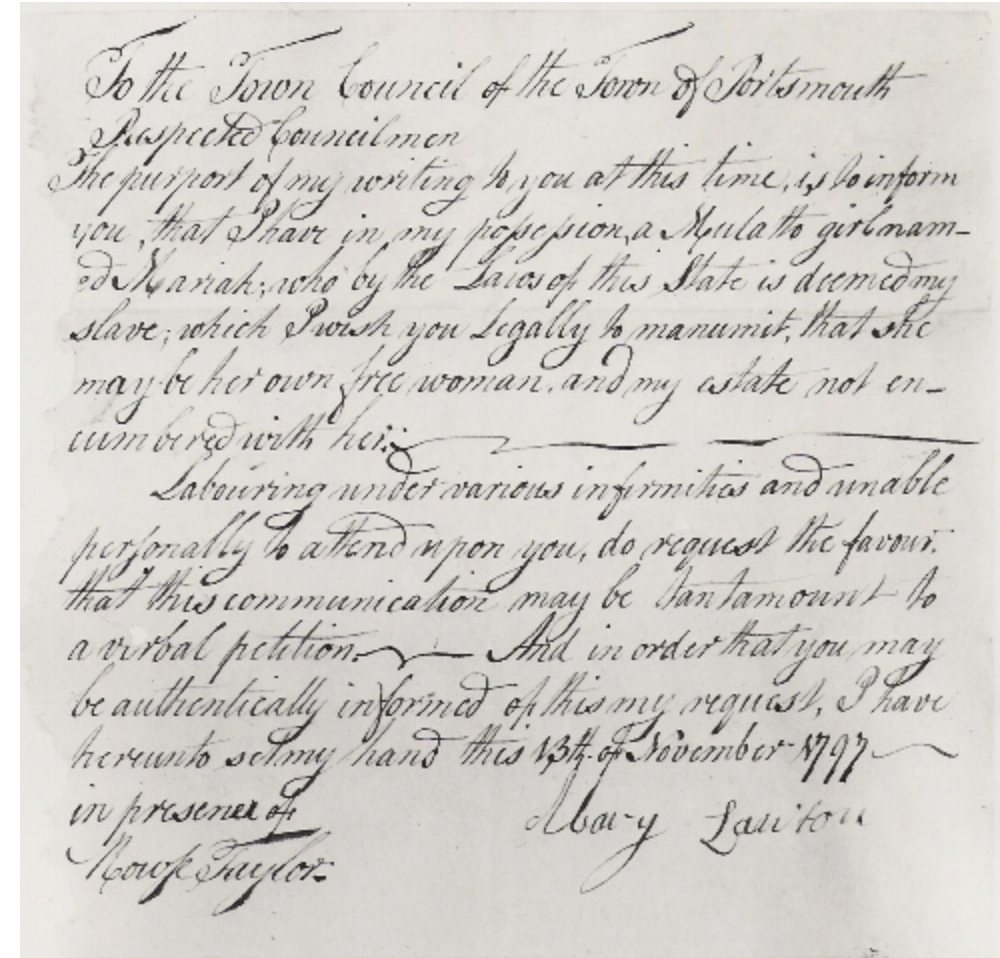
The purport of my writing to you at this time, is, to inform you, that I have in my possession, a Mulatto girl named Mariah, who by the Laws of this State is deemed my slave, which I wish you legally to manumit, that she may be her own free woman, and my estate not en-cumbered with her. Labouring under various infirmities and unable personally to attend upon you, do request the favor, that this communication may be tantamount to a verbal petition. And in order that you may be authentically informed of this my request, I have hereunto set my hand this 13th of November 1797 in presence of Joseph Taylor
Mary Lawton
Why was Mary Lawton releasing the mulatto slave at this time? Mary was a Quaker and during the Revolutionary aftermath Quakers began to petition the Rhode Island government to abolish slavery. The General Assembly of Rhode Island passed the Gradual Emancipation Act of 1784 that stipulated that children born to slaves would not remain slaves. Masters could free “manumit” healthy slaves between the ages of 21 and 40 without having the responsibility of supporting them.
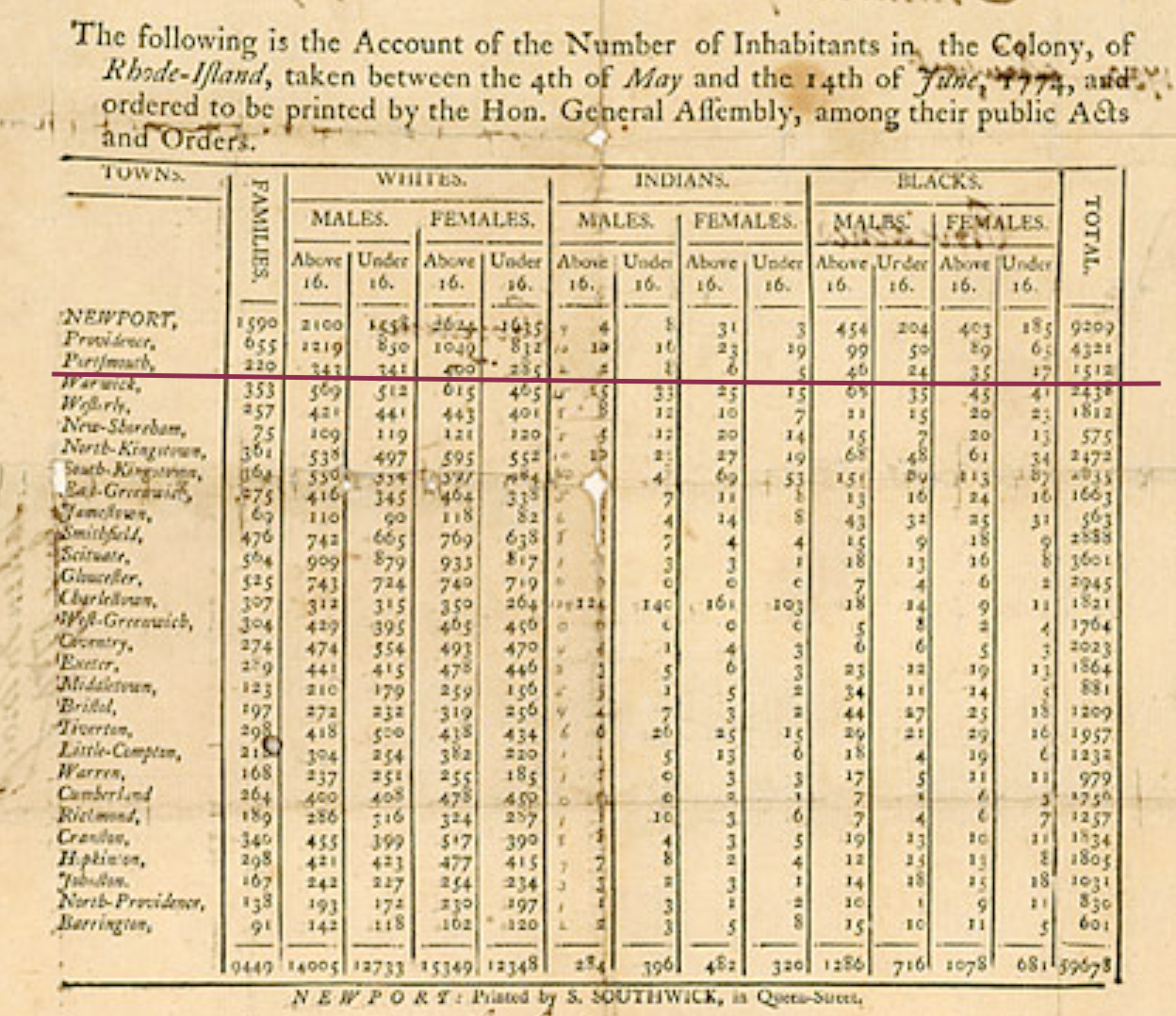
Total slaves in Portsmouth from 1774 Inhabitants. “Indians” – 16. “Blacks” – 118.
The one and two room schools and the eight districts worked while Portsmouth was more agricultural. As farms turned into housing developments and the Navy had more housing at Melville, Portsmouth schools were crowded. The school committee had to find ways to create more classrooms and the answer was to open new schools. The ten room Anthony School for upper grades opened in February of 1938, but classrooms were needed for the primary students.
Hathaway School
Howard W. Hathaway School opened in November of 1955. Hathaway was a noted orchard owner in the area and he held a number of local government positions including on the school committee for 12 years. At the school dedication local officials spoke of education of youth as the soundest investment for a “Portsmouth of tomorrow.” Hathaway was built on 5 acres of land bought from the Farias family for $15,000 and federal funds helped with the building costs. Principal Mary Shea was the principal of the eight room school.
Neel School and Melville
In 1953 Portsmouth students and Navy Housing students in the Melville area began to use a converted barracks building on the Navy Base as a school. It was named the Charles H. Neel School after a Naval Station Public Works officer. It was a 4 room school with 40 (other accounts say 51) students in grades one to three.
In 1965 Portsmouth schools were still overcrowded. Neel School had its problems and more classrooms were needed. To take care of the students in the Navy Housing, Melville School was planned. Melville School was named after the Melville area of Portsmouth on the West Side of Aquidneck Island. Melville was the center of Naval activities in the area including the training base for the PT Boats used during World War II. It was named after George Wallace Melville (January 10, 1841 – March 17, 1912) who was a United States Navy officer, engineer and Arctic explorer.
The new school would provide 18 teaching stations and serve 500. It was designed as a one story building with different wings for primary and intermediate students. There were doors between classrooms to accommodate the team teaching style that would be at the heart of the school. There was an emphasis on flexibility so that students could be taught according to their ability level. A glass enclosed area would facilitate small group instruction. The library would house 3,000 books appropriate for children. An auditorium with stage would be used by physical education. Two rooms would be outfitted with supporting equipment for social education students.
Hope School
With the development of the Redwood Farms neighborhood, more classrooms were needed. The Mother of Hope Novitiate has was consecrated in 1962, but by 1968 it was shutting down. The town rented part of the building for the Hope School around 1970. There were four classrooms covering first to fourth grade. Robert Crudup was the principal and teachers were Mary Barabe, Sally Kilmer, Janet Deuel, Nancy Phillips and Pamela White. Hope School ended as Elmhurst School was purchased and opened in 1972.
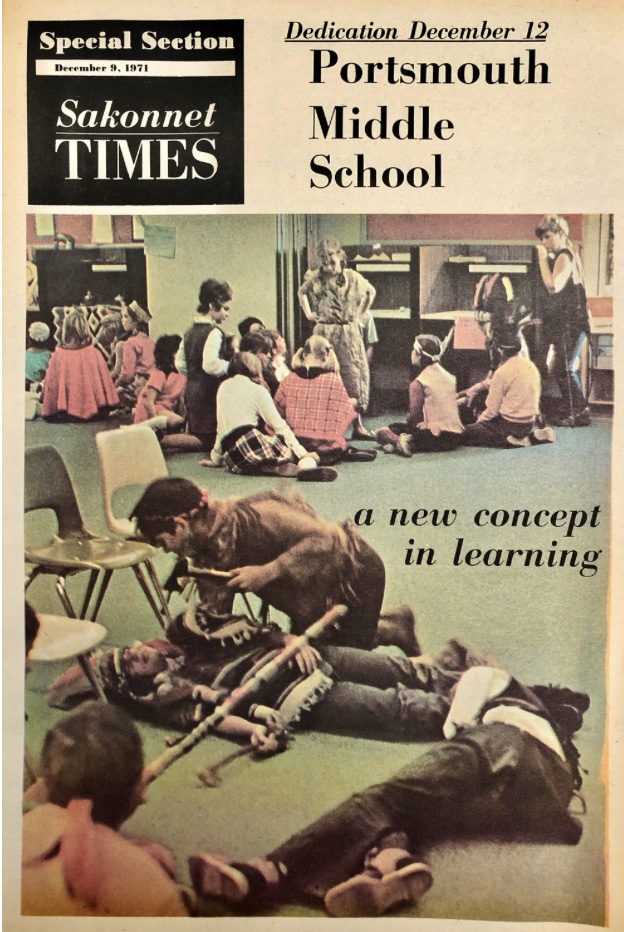
Sakonnet Times Article on School Opening.
Portsmouth Middle School
Portsmouth was building elementary schools, but there was a need for a middle school. Fort Butts School had started out taking grades from Anthony School, but gradually it was expanded into Portsmouth High School. A new middle school opened in Portsmouth Fall of 1971. It had a new design. The library had a sunken reading area that some joked was meant to be a swimming pool. Instead of separate classrooms, learning centers had moveable walls that could be divided into four separate classrooms. Trends in education come and go and at this time learning centers, stations and adjustable classroom structures were the newest trend. It was meant to give teachers and students great flexibility. As the Portsmouth Middle School was constructed to fit this model, school systems came to view how it was working.
October 25, 1779: British garrison evacuated Newport:
By 1779 strategic changes led the British to abandon Rhode Island of their own accord. Weary of trying to subdue the New England colonies, the British re-directed their efforts to the southern states where the population was thought to be overwhelmingly Loyalist. In addition, with France now firmly in the war on the side of the Americans, the British needed more ships and more soldiers in the West Indies to protect their interests in the Sugar Islands from the French. The money brought to the Crown from the islands far exceeded that from their North American colonies.
July 10, 1780: French Army under Rochambeau arrives in Newport:
The French arrived in Newport in July of 1780. Most of the forces wintered in Newport except the Lauzun Legion which camped in Connecticut. Rochambeau was very skillful in handling his troops, and the Americans began to appreciate their presence. Where the British had demolished defenses, the French engineers worked on rebuilding them.
August 16th – November 28, 1780: American troops help French at Butts Hill
French map with Butts Hill Fort
There were American troops assigned to Butts Hill to support the work of the French troops in enlarging the fortifications there. They were stationed at “Camp Butts Hill” from August 16th to November 28, 1780. Major General William Heath’s diary for September of 1780 notes that “The batteries were strengthened, a very strong one erected on Rose-Island, and redoubts on Coaster’s-Island: the strong works on Butt’s-Hill (were) pushed.” A few days later he would remark: “The French army continued very busy in fortifying Rhode-Island: some of their works were exceedingly strong and mounted with heavy metal.” We know from orderly books (daily records) that the American militiamen were aiding the French masons as they enlarged and fortified Butts Hill Fort.
January 1, 1781: The First and Second Rhode Island Regiments were consolidated into the “Rhode Island Regiment”.
March 6, 1781: Washington Visits Rochambeau
General Washington visited Count de Rochambeau to consult with him concerning the operation of the troops under his command. Washington was hoping to encourage Rochambeau to send out his fleet to attack New York City. In an address to the people of Newport, Washington expressed gratitude for the help of the French.
May 14, 1781: Col. Christopher Greene killed in a battle near Fishkill,
Col. Christopher Greene had charge of the Black Regiment. After the Battle of Rhode Island, Greene’s troops stayed around Rhode Island. They camped around Butts Hill and participated in the construction of Butts Hill Fort. Heading towards the action in the South, Greene and his soldiers camped near Peekskill, New York. They were guarding the Continental lines. On the morning of May, 14th a New York Loyalist unit attacked Greene’s men. They put up a fight, but Greene was killed in hand-to-hand fighting.
June 10, 1781: French Army starts its trail to Yorktown.
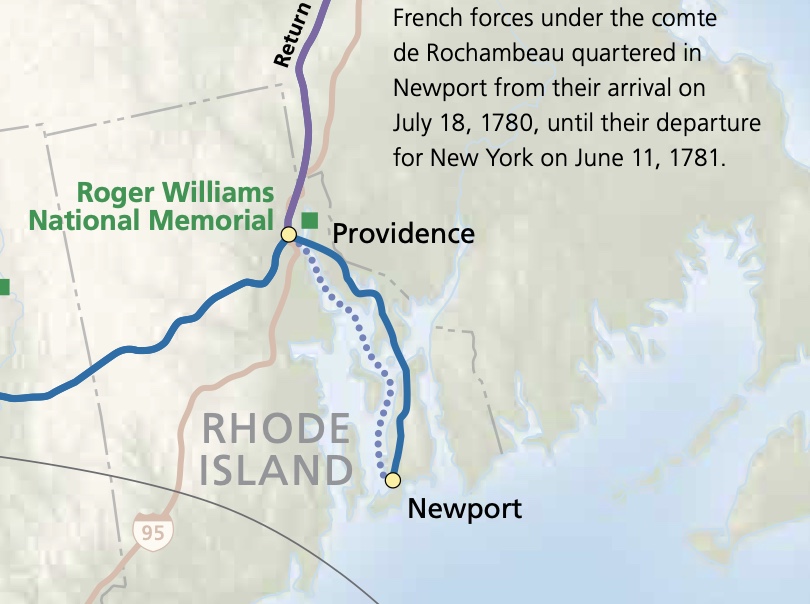
As the road to Yorktown began, Rochambeau and his general staff left Newport on June 10, 1781. He arrived at Providence the following day. Brigadier General de Choisy was left behind in Newport with some French troops. In August he sailed with Barras’ fleet to the Chesapeake area. On the morning of June 11, 1781, the first Brigade of French troops began to load onto the small vessels in the harbor of Newport. All the troops had left by the 12th and camped on the west side of Providence between Westminster and Friendship streets. The French Army performed a grand review in Providence on June 16, then set out for Coventry in four divisions. One division departed each day from June 18 to 21. Rochambeau left Providence with the first division (the Bourbonnais Regiment) and arrived at Waterman Tavern in Coventry in the evening of June 18.
Stephen Olney
14 October 14, 1781: Stephen Olney of Providence leads the final charge in the Battle of Yorktown.
Olney led the Rhode Island soldiers (including those who had been in the Black Regiment. They served under Lafayette at Yorktown. Olney led them over the top of Redoubt 10 where they were attacked by British soldiers with bayonets. The redoubt was quickly taken, but Olney was badly injured.
September 3, 1783: Final peace treaty signed in Paris
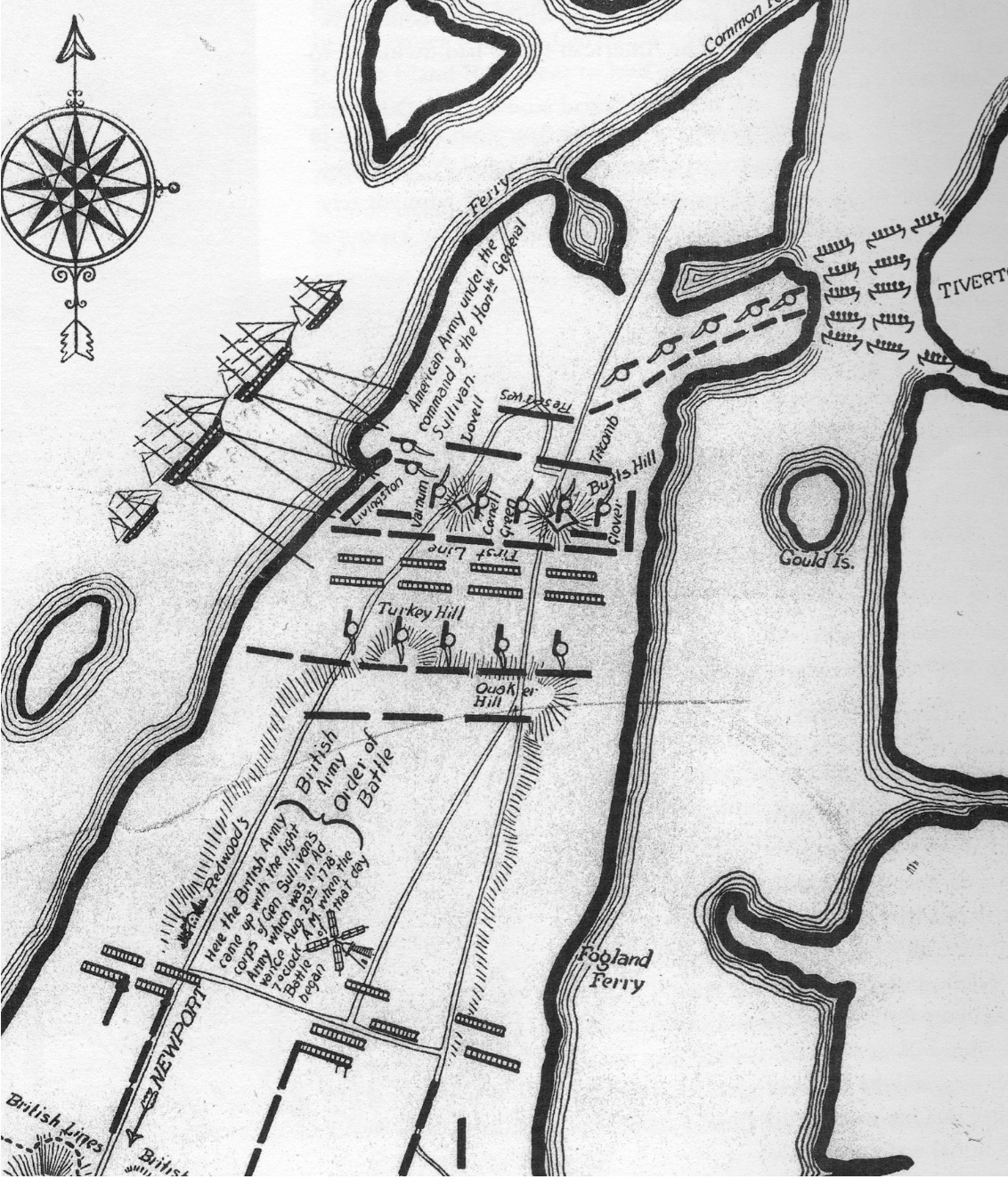
Overnight August 28 – 29, Sullivan began his preparations to defend the route to the Howland ferry towards safety in Tiverton. He positioned forces in a line from Turkey Hill by West Road and Quaker Hill on East Road. Holding this area so all his troops and baggage could get off the island was his aim. His best men, divided between militia and Continentals, were positioned to delay the British troops. John Glover commanded the troops on the left wing on the eastern side of the island. Command of the right wing was given to Nathanael Greene. Men were positioned in various positions up East and West Roads. Action in the Battle of Rhode Island took place along those two main road and Middle Road. Sometimes there were two or more actions going on at approximately the same time. This brief timeline is an approximation.
For clarification the British and Hessian leaders are noted with a (B) and the American leaders are noted with an (A).
August 29, 1778
Dawn: *Captain Mackenzie (B) saw empty American works. He traveled to Pigot’s (B) headquarters to inform him of withdrawal. Pigot decided to hamper the retreat.
6:30 AM: *General Prescott (B) moved out with the 38th and 54th Regiments to occupy fortifications at Honeyman’s Hill in Middletown. *Brigadier General Smith (B) marched toward Quaker Hill by East Road with 22nd and 33rd Regiments with the flank companies of the 38th and 54th. *On West Road Captain von Malsburg (B) and Captain Noltenius (B) with Hessian Chasseurs advanced toward Laurens (A). Behind them came Major General von Lossberg (B) leading two Anspach battalions.
7 AM: *Von Malsburg (B) spotted Laurens (A) and Talbot (A) with their Light Corps behind stone walls to the south of Redwood House. Americans were driven back up West Road. *Livingston’s men (A) attacked Smith’s men (B) from behind stone walls on East Road. Commander Pigot ordered von Huyne’s Regiment (B) and Fanning’s Regiment (B) to support von Lossberg (B) on West Road. *Pigot (B) orders Prescott (B) to send 54th Regiment and Brown’s Regiment to reinforce Smith (B) on East Road.
Commonwealth Insurance Map
8 AM: *Von Lossberg (B) sent troops toward Lauren’s positions on three sides. *Coore’s and Campbell’s troops (B) ran into a group of Wade’s (A) pickets by the intersection of East Road and Union Street. *British moved down Middle Road and East Road toward Quaker Hill.
8:30 AM: *Von Lossberg (B) came to the aid of Hessian Chasseurs. *Laurens (A) and his Light Corps was forced to retreat across Lawton’s Valley to the works on a small height in front of Turkey Hill. *Lauren retreated to Turkey Hill. Laurens was told to retire to the main army as soon as possible. Hessian (B) attackers arrived on top of Turkey Hill.
9 AM: *Wigglesworth’s Regiment (A), Livingston’s Advanced Guard (A) and Wade’s pickets (A) waited for British at the intersection of East Road, Middle Road and Hedley Street. *Quaker Hill was the scene of intense fighting. *Americans retreated toward Butts Hill and Glover’s (A) lines.
9:30 AM: *From top of Quaker Hill, Smith (B) could see strength of Glover’s position. *Smith was under orders not to begin a general engagement, so he decided against a frontal assault. *Smith withdrew forces to the top of Quaker Hill.
*10 AM: *Von Lossberg’s (B) troops arrived at Turkey Hill. *Americans had positions on Durfee’s Hill and Butts Hill. *Samuel Ward (A) and the 1st Rhode Island Regiment (Black Regiment (A)) held an Artillery Redoubt. *His men repulsed von der Malsberg’s (B) men.
11:30 AM: *Von Lossberg (B) ordered von der Malsburg’s men (B) to try to attack Ward’s (A) First Rhode Island Regiment position again. *British ships Sphynx, Spitfire, and Vigilant shelled the American positions from the West shore, but they did little damage. *The Americans held their position.
1PM: *British ships planned to attack American positions. *General Greene’s (A) men dragged cannon down to the beach and forced the British ships to retreat.
2 PM: *Pigot (B) reached Quaker Hill to observe the action. *Pigot ordered Landgrave (B) and Ditfurth Regiment (B) to march to von Lossberg’s (B) troops.
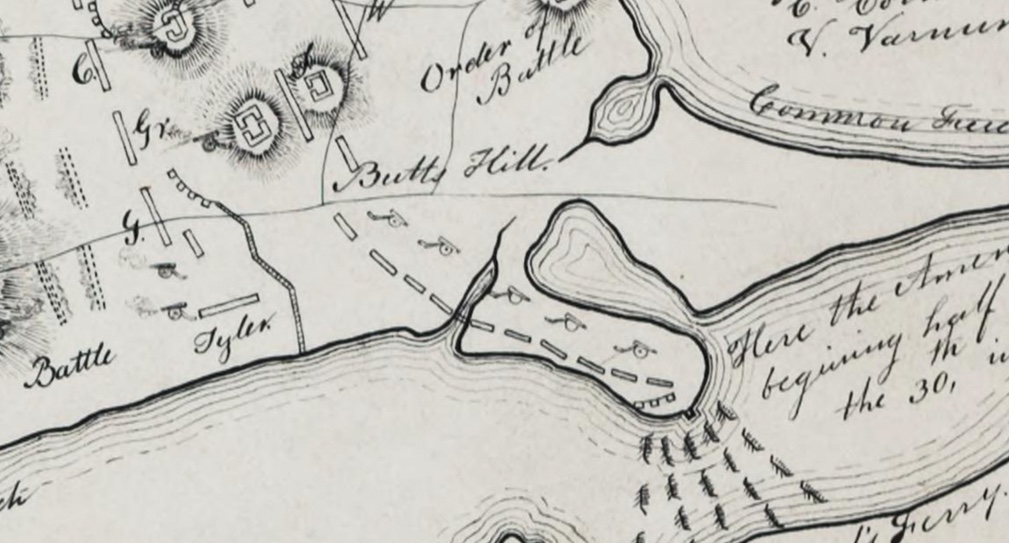
4PM: *General Glover (A) saw movement in British lines and ordered Tyler’s Connecticut militia (A) and Titcomb’s (A) Brigade of Massachusetts militia to positions behind stone walls (maybe Freeborn Street), but the British did not engage.
7PM: *Landgrave (B) and Ditfurth (B) Regiments arrived at von Lossberg’s lines.
7PM (August 29) to 3AM (August 30) : *There was sporadic artillery fire and light skirmishing. Musket and cannon shots were heard for seven hours. *The Battle of Rhode Island was basically over. *The Americans and British forces retired to their lines.
Aftermath of Battle
August 30
Sullivan assigns men to bury the dead. The wounded are ferried to hospitals on the mainland. American troops use the day to rest and recover. Sullivan receives word that d’Estaing is not coming back. He also receives a letter from Washington warning that Howe’s British fleet is on the way. The fleet is observed off Block Island. Sullivan moved quickly to complete a retreat off Aquidneck Island, but he staged Butts Hill to look like they were fortifying for a fight.
6PM:
*After all the baggage had been removed, Sullivan issued the order for all his men to depart the island.
11 PM:
*Lafayette returns from Boston. He assumes supervision of the retreat of the last of the pickets. He orders the building of fires to suggest the army was hunkering down.
*By midnight: Most of the troops are off the island.
August 31st: By 3 AM all the troops are on Tiverton side.
The Occupation of Aquidneck Island dragged on for almost two years when a plan was devised to work with French allies in pushing the British out of the island. On May 4, 1778 Congress ratified a treaty of alliance with France. The Rhode Island Campaign was devised as a wedge action. The Americans, under the leadership of John Sullivan, would cross from Tiverton to Portsmouth and drive south to set up a siege of Newport. Meanwhile the French, led by d’Estaing, would arrive by sea and attack the British from the sea.
July 11, 1778, Continental Congress authorized Washington to request the northeastern states to raise militia for a joint operation with the French.
July 20, 1778, d’Estaing announced he would sail for Newport and not the alternate target of New York.
July 22, 1778, Washington’s delayed letter informs Sullivan that the French fleet is headed to Newport, and he directs Sullivan to increase the size of his militia forces from 5000 to 7500. Varnum’s and Glover’s brigades along with an additional attachment under Henry Jackson would head towards Providence.
July 27, 1778, Washington dispatches two Continental Army divisions under General Nathanael Greene and General Lafayette to Rhode Island. Although Greene was the Army Quartermaster, he was anxious to have a command, especially in his home state.
July 29, 1778, French ships arrive at Narragansett Bay. Washington had arranged for pilots to guide the French ships in the Bay. Two or three ships were stationed in the shallow Sakonnet River to the East of Aquidneck Island. Other ships positioned anchored near the entrance to the Sakonnet Channel. Most of the French ships had anchored about three miles south of Conanicut Island (Jamestown).
Four British frigates anchored at various points of the west side of Aquidneck Island where they would remove their cannons, ammunition and supplies. On the Sakonnet side the Spitfire and Alarm and the sloop Kingfisher were unloading at Fogland Ferry. In Newport harbor the Flora and Falcon did the same.
July 30, 1778, trapped by the French navy, British ships the Kingfisher, Alarm and Spitfire were ordered to be torched. Ammunition that had remained on the vessels caused explosions.
August 1, 1778, General Sullivan and Admiral d’Estaing meet, agree on simultaneous attacks on the Island on August 8. British Commander Pigot was expecting a siege and he ordered all sheep and cattle in Portsmouth and Middletown (except one per family) to be driven behind British lines in Newport. Carts, wagons, and tools like picks and axes were all collected and brought to Newport. The soldiers’ families and regimental baggage were brought to Newport. Wells in Portsmouth and Middletown were filled in so there would be no drinking water for the enemy.
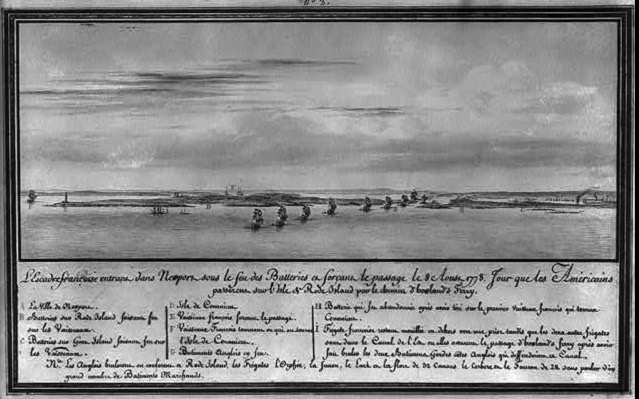
August 3, 1778, British forces felled trees to block the roads running from Portsmouth and Middletown into Newport. To prevent the French from landing their troops, five or six transports were sunk by Goat Island. One of them (the Lord Sandwich) had been James Cook’s ship Endeavour.
August 5, 1778, more British ships (Orpheus, Lark, Cerberus, Juno and Pigot) were purposely sunk in the harbor to hinder the French and to avoid their capture.
August 6, 1778, Due to late arriving militia, Sullivan informs d’Estaing of postponement of the attack. British cannons fire on French ships.
August 7-8, 1778, d’Estaing enters Narragansett Bay, causing the British to withdraw from north end of the Island into prepared positions along the Newport-Middletown border.
French ships in a row
August 9, 1778, Realizing the British had withdrawn south, Sullivan moves his forces onto the Island. Two to three thousand French forces land on Conanicut Island. D’Estaing is furious that the Americans have reached Aquidneck Island early. D’Estaing is alerted to the imminent arrival of Howe’s fleet which was coming from New York. He decides to go out and fight Howe’s fleet and then go to the aid of the Americans. There was shelling between the French fleet facing Newport and the shore batteries controlled by the British.
August 10, 1778, French head out to sea. Both French and British fleets maneuver for advantage, but before they can engage, both fleets are scattered and damaged by a hurricane. Both leave for port and repairs. American commander John Sullivan prepared to shorten the distance between the American lines and the British line. He was going to lay a siege because by then he had 11,000 men.
August 11 – 12, 1778, General Sullivan prepares to work toward British positions, but the hurricane causes him to delay. The weather during the night of the 12th was especially fierce and the Americans had little shelter from the pelting rain and wind. The camp was a swamp.
For the British and French fleets out on the water, the weather turned to serious wind gusts. Heavy rain, gale force winds and thick fog hampered both fleets. The winds began to topple the masts. By 4 am on the 12th the French flagship Languedoc had lost its bowsprint, all of its masts and its rudder. It was simply floating without being able to steer.
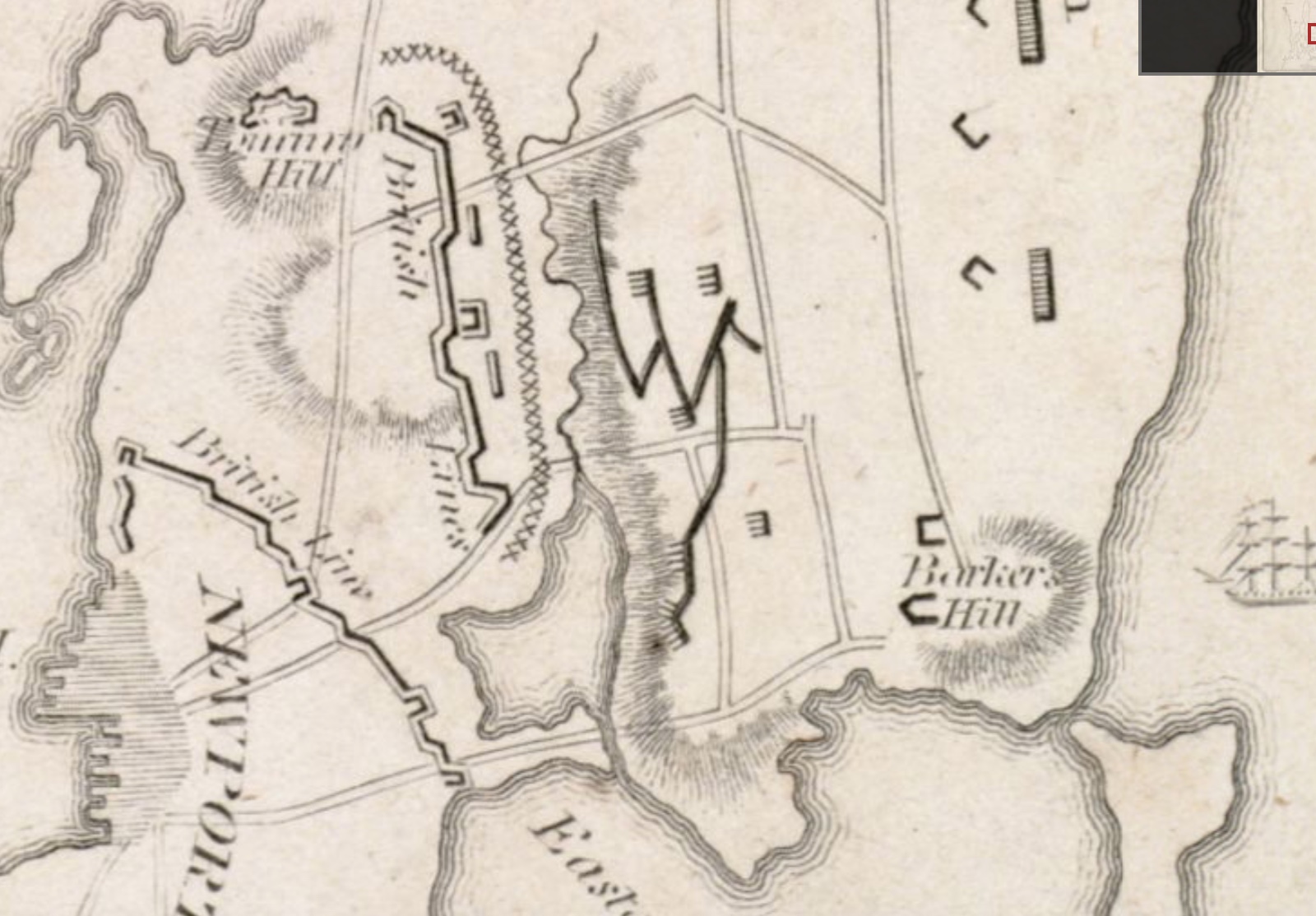
August 15, 1778, Americans open the Siege of Newport. The Americans needed to construct defensive works, so Sullivan marched them south with banners flying. By 5 PM they halted and pitched camp by Honeyman Hill in Middletown. This was a high point where the Americans could view the British lines. However the 20 day enlistments of many militia units were up and they left. Sullivan was waiting for new units to arrive. Col. Paul Revere commanded the Boston artillery train and John Hancock was major general of the 3000 member Massachusetts militia.
British lines on the left – American lines on the right.
August 16, 1778, Americans were preparing a four cannon battery on the western slope of Honeyman Hill. The British opened fire as the fog lifted, so the Americans worked on the trenches and battery in the dark or fog.
August 20, 1778, d’Estaing’s battered ships return to Narragansett Bay. D’Estaing informs Sullivan he must immediately leave for Boston for repairs. His order from the King of France was to protect his fleet.
August 21, 1778, Sullivan sends Nathanael Greene, Lafayette and Col John Langdon to board the Languedoc – d’Estaing’s ship and talk with d’Estaing. D’Estang still decides to have the fleet sail for Boston.
August 24, 1778, Sullivan receives word that a British naval force is on its way to Newport. Sullivan and his officers prepare for a quick withdrawal. At a council of war there is unanimous agreement to move the troops to the Portsmouth end of the island to wait for the French return. Sullivan advocated for a gradual and orderly retreat.
August 25, 1778. All unnecessary baggage was removed off the island. Work on the trenches stopped. Volunteers began to leave in large numbers. Revere and his artillery and Hancock and his Massachusetts militia are among those leaving the island. Hancock asks for a letter of introduction to talk to d’Estaing in Boston. Mortars and heavy cannon were taken off the island.
August 27, 1778, Sullivan sends Lafayette to Boston to determine when d’Estaing would come back to Rhode Island. Lafayette made the 70 mile trip in just 7 hours. By this time Sullivan had lost 3,000 volunteers through illness or decisions to leave the island.
August 28, 1778, American council of war decides to withdraw Patriot forces to defensive positions around Butts Hill. They would be close to the ferry landings if they needed to withdraw completely. By 8PM the soldiers put down their tents and marched out with Greene commanding the West column up West Main Road and Glover leading the other column up East Main.
Resources: This timeline is based on Christian McBurney’s book – The Rhode Island Campaign.
December 8, 1776: British Army arrives to occupy Aquidneck Island.
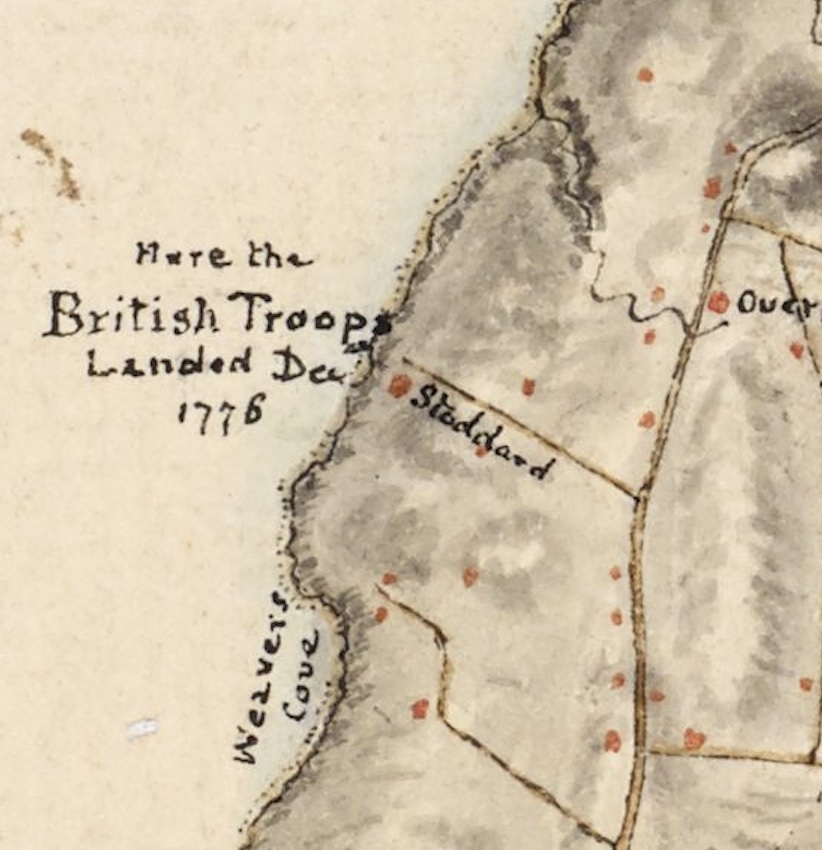
British General Prescott landed his troops on Aquidneck Island in December of 1776. They landed on the Western shore near the border of Middletown and Portsmouth at Weaver’s Cove. This was the beginning of the Occupation of Rhode Island (Aquidneck Island). The American militiamen were unable to mount a defense and they escaped by using the ferries to Bristol and Tiverton.
Fage Map
The British had ample reason to invade and occupy Aquidneck Island (called Rhode Island at that time). Newport had a fine harbor from which the British fleet could raid up and down the coast. It would enable them to blockade ships carrying supplies from abroad that were needed by the Americans. The Occupation would last almost three years and brought misery to Aquidneck Islanders.
July 9 – 10, 1777: British General Prescott captured by Col. Barton at Overing Farm in Portsmouth.
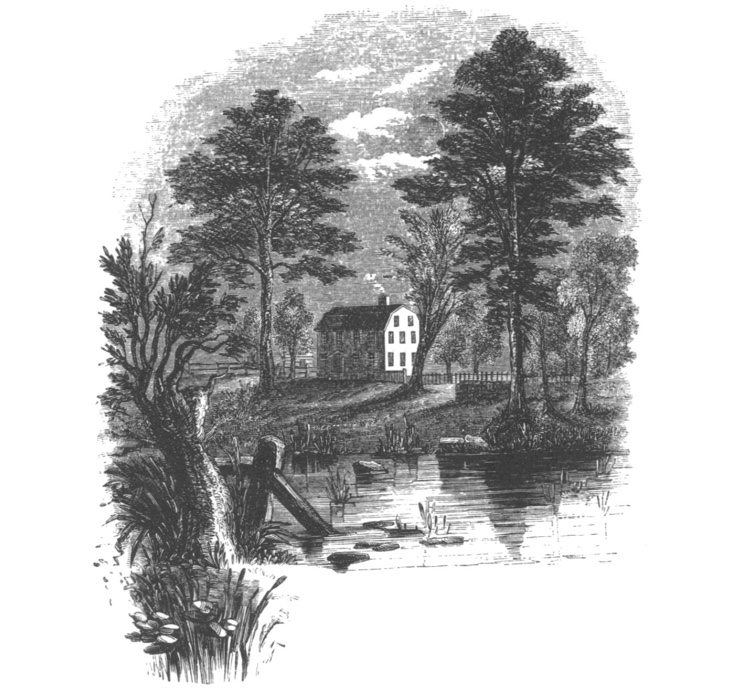
In July 1777, while Aquidneck Island was under the control of thousands of British soldiers, American Major William Barton (who was in Tiverton) received word through a runaway slave that the British Commander in Chief, General Prescott was staying at Mr. Overing’s house on West Main Road close to the Portsmouth/Middletown border. When Prescott was at his headquarters in Newport he was well protected. Visiting friends in the countryside, Prescott was less well defended. Barton planned to get Prescott so he could be exchanged for American Major General Charles Lee who had been captured in New Jersey.
Barton asked for volunteers for a dangerous and secret plan. Out of the many who stepped forward he picked out the best rowers and four who had lived on Aquidneck Island and could serve as guides. Barton had five whaleboats and each boat had eight soldiers and one officer. The river crossing between Tiverton and Portsmouth was closely watched, so Barton and his men rowed to Bristol and then all the way over to Warwick to begin their secret mission. The mission was so secret that even the volunteers did not know where they were going until after their journey had begun.
Overing House
The night of July 10th was perfect – it was very dark and the weather was good. Barton and his volunteers left Warwick Neck, rowed across the Bay with oars that were covered in wool to keep them quiet. They had to row around British ships that were stationed on the west side of the island. The Americans landed on the west shore of Portsmouth and followed a gully up to the Overing Farm on the Portmouth/Middletown border. Barton divided his troops and they approached the house quietly. There was only one sentry on guard at the guardhouse. Hearing noise, the guard asked: “Who comes there.” Barton responded: “Friends.” The guard asked for a countersign and Barton said he did not have one but asked the guard “Have you seen any deserters tonight.” With that the guard allowed Barton to pass and the American grabbed his musket.
They found Prescott in his nightclothes. Barton asked if he was Prescott and he responded. “I am”. Barton said: “You are my prisoner.” and Prescott said “I acknowledge it, sir. The men worked quickly and within seven minutes took Prescott, the sentry and Prescott’s aide-de camp with them. No shot was fired.
They again had to row through British ships on their way back. This capture gave the colonial troops some needed encouragement. There was a prisoner swap in which General Prescott was exchanged for American General Charles Lee, but Prescott made it back to Aquidneck Island.
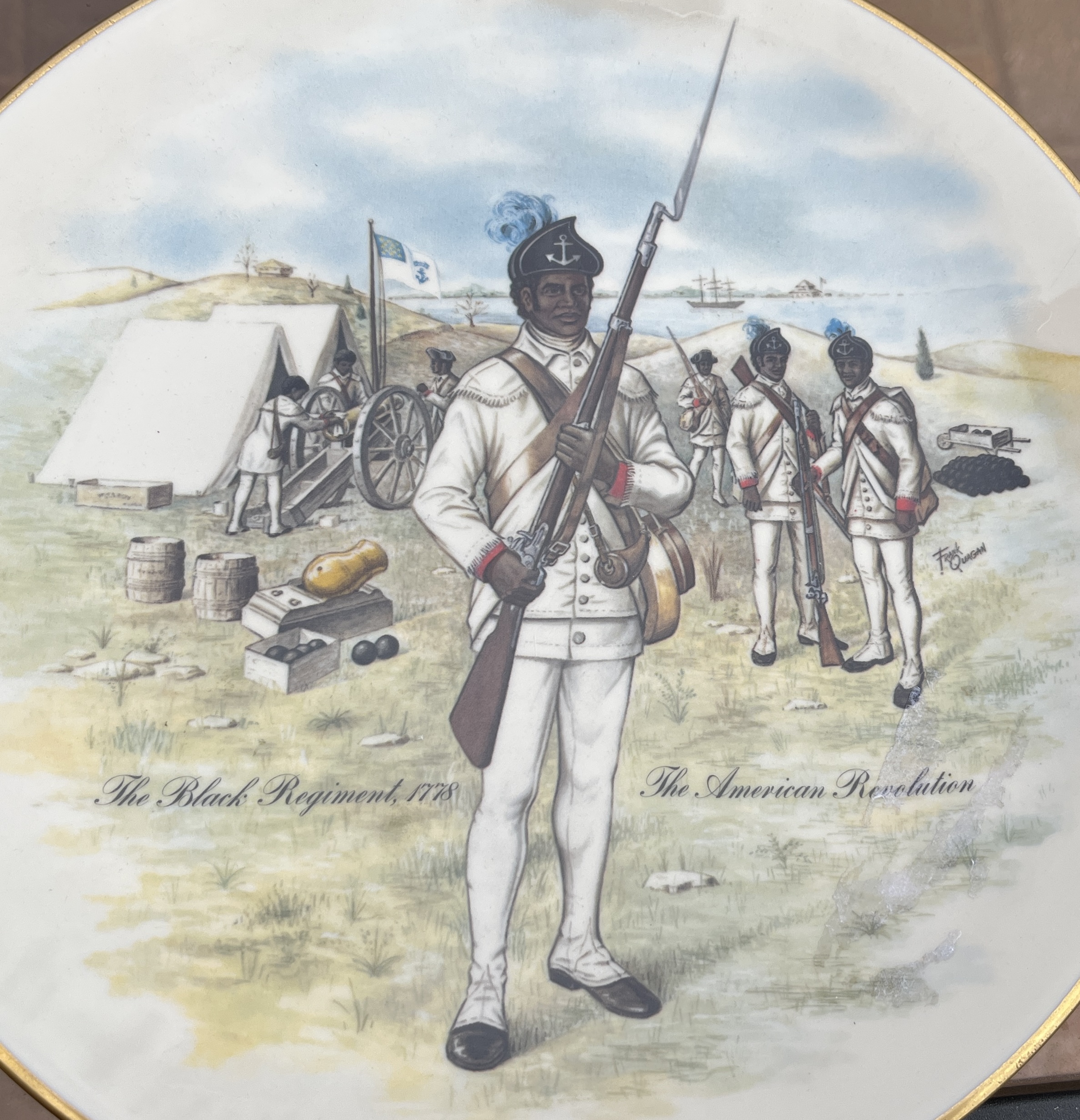
February 1778: RI Legislature authorizes raising a regiment of Black and Indigenous troops.
Rhode Island had trouble meeting its recruitment quotas with just white men, so General Varnum wrote to George Washington with the idea of allowing the ranks to be filled with Black and Native Americans. He asked Washington to send soldiers from Valley Forge to recruit these men. In the pre-amble to the letter, Varnum wrote that “History affords us frequent precedents of the wisest, freest, and bravest nations having liberated their slaves and enlisted them as soldiers to fight in defense of their country.” (RI Colonial Records VII, 640, 641.) Washington did not comment on the letter, but he sent it on to the Governor of Rhode Island, Nicholas Cooke.
On February 14, 1778, the Rhode Island Assembly voted to allow “every able-bodied Negro, mulatto, or Indian slave in this state to enlist into either of the Continental Battalions being raised.” The Assembly specified that: “every slave so enlightening shall, upon the passing muster before Colonel Greene, be immediately discharged from the service of his master or mistress and be absolutely free.” Owners of the slaves enlisted were to be compensated by the Assembly for the market value of the slave.
Rhode Island slave owners opposed the idea of the new regiment. In June of 1778 the Rhode Island Assembly repealed the decree, but during those four months that it was in effect, 100 free and formerly enslaved African Americans enlisted. Forty-four slaves enlisted even after this repeal. The First Rhode Island Regiment had 225 men, 140 of them were African Americans. At first the African Americans comprised a separate company, but slowly the regiment was integrated.
May 25, 1778: British forces raid Bristol – Warren
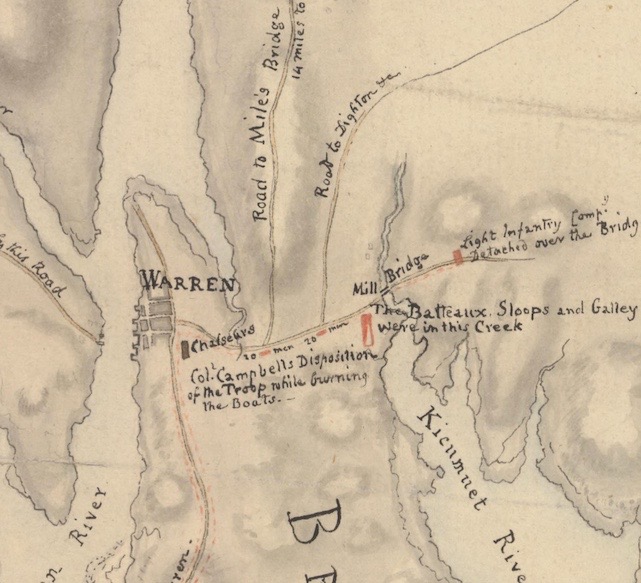
As the American forces were preparing for an attack on Aquidneck Island in Spring of 1778, the British forces were active in trying to crush the Rebel capability to transport troops across the river from Tiverton. The Rebels would need to reach Rhode Island (Aquidneck) by boat and the British planned to attack shipyards, lumber mills and military stores. On May 25, 1778, British soldier Frederick Mackenzie records that the 22nd Regiment, Companies of the 54th, Notenius’s Company of Hessian Chasseurs, ..etc. (500 men in total) moved to Arnold’s Point in Portsmouth. They embarked in flatboats and landed at the mouth of the Warren River. Campbell’s men were divided into two columns. In the town of Warren itself they burned down the Baptist meeting house and other buildings and ransacked homes and property. The other group of Campbell’s men headed to the Kickemuit River. By the Kikemuit Bridge they found and burned 125 boats, large batteaux capable of carrying 40 soldiers. They found a sloop loaded with military stores, a store house, and a corn mill and they burned them. They also burned houses, a bridge and gun carriages. They spiked cannons and set fire to a new Privateer Sloop as well as magazines of gun powder. Campbells troops returned by way of Bristol. They burned houses, a church, ammunition magazines and twenty of the principal houses. The British boats came round from Papasquash Point to the Bristol Ferry. The British ships Flora and Pigot covered the British troops as they crossed over from Bristol Ferry. Having raided Warren and Bristol and destroying American flatboats, Campbell’s forces made their way back to Newport on their own flatboats. The raids certainly delayed the American troops as they prepared for the Rhode Island Campaign.
Fage map of Bristol and Warren Raids
Other Raids
August 24, 1775 British Captain Wallace landed around 100 men on Prudence Island. They sacked the farm of John Allin seizing sheep, turkeys, corn and hay. In November of 1775 they raided again and took clothing, geese, kettles and even a desk.
August 30, 1775 – Frigate Rose conducts raids on Block Island and Stonington, Conn.
Dec. 10, 1775 – Frigate Rose raids Jamestown
August 5, 1777 – British raid Narragansett
May 31, 1778 – British forces raid Tiverton and Fall River
May 21, 1779 – British raid North Kingston
June 6, 1779 – British raid Point Judith
October 16, 1779 – British burn Beavertail Lighthouse before leaving Rhode Island
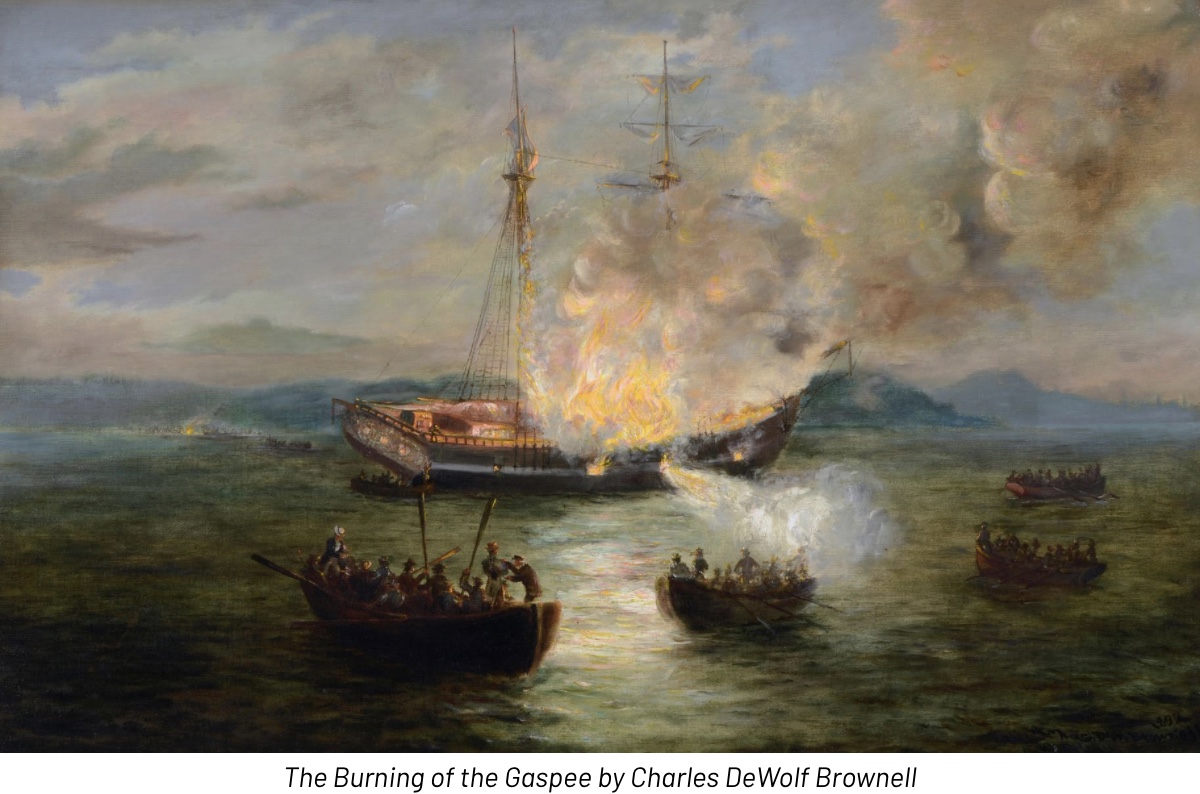
The burning of the British vessel, the HMS Gaspee on June 9, 1772 was a protest to the British Navigation Acts. The Navigation Acts were meant to force Americans to only trade with the British Empire. The Rhode Island economy was based in trade with the wider Atlantic. Just selling to the Empire was not enough for their molasses trade. That created a tension with the colonies (and Rhode Island in particular) and led to an increase in piracy and smuggling. The acts permitted the customs inspectors to board any colonial ship. In February of 1772, William Duddingston, the commander of the HMS Gaspee, arrived in Rhode Island. He used this permission to search any vessel as he saw fit. Merchants objected to his searches and seizures of their goods. The local Sons of Liberty, looked for an opportunity to retaliate.
Their chance came in June 1772. The HMS Gaspee was alone and without a local pilot, but it chased a local boat called the Hannah . The Hannah could manage the shallower water, but the Gaspee ran aground. The Gaspee would be released by the tide early the next morning,. While the ship was in a vulnerable position, the Sons of Liberty rowed out and attacked the crew. Captain Duddingston was wounded. After all crew members were taken off the ship, the Sons of Liberty set fire to the Gaspee.
The event was too blatant to ignore and Parliament wanted prosecution of the attackers. Some famous names associated with the attackers are John Brown, Abraham Whipple and Ephraim Bowen. Although there was reward money offered, Rhode Islanders refused to cooperate with the British and no one was ever prosecuted. Duddingston, however, was courtmartialed.This event led to the Committees of Correspondence, a network that united the colonies in their resistance to British rule.
Every year for 50 year the village of Pawtuxet (near Cranston and Warwick) celebrates this event with Gaspee Days and a Parade.
October 29, 1774: Rhode Island General Assembly actively organizing militias for war
As the threat of war intensified, the Rhode Island General Assembly passed a resolution on October 29, 1774 which listed militia forces that were to enlist men to fight against Crown forces. The Assembly had already ordered monthly militia drills and war preparations. Among the independent companies were the Kingston Reds, Pawtuxet Rangers, Gloucester Light Infantry, Providence Fusiliers, Providence Train of Artillery, and more. Earlier, in September, the Kentish Guards had received their charter. There was renewed interest in the traditional militias and independent companies were formed or renewed. Independent companies – Smithfield, Cumberland, North Providence, Wickford, Tiverton, Newport and Portsmouth were active. The Assembly had to create a committee to examine requests for establishing independent military companies. In Jan. 1775, these companies were grouped to form the R.I. 1st and 2nd Regiments, to answer the call of the Continental Congress which required two regiments in each colony.
Kentish Guards
April 22, 1775: 1500 troops raised in Rhode Island as an Army of Observation.
Upon hearing of the Battles of Lexington and Concord, the Kentish Guards marched toward Massachusetts to help the colonists. The Kentish Guards were a militia group that formed in East Greenwich, R.I. to protect the town from British attacks as tensions grew among the American colonists. The Guard was turned back at the state border at the order of Governor Wanton. Nathanael Greene and others went on to Boston to help. On April 22nd the Rhode Island General Assembly ordered a force of 1500 to be called into service of the colony as an “Army of Observation.” The purpose of this Army was repelling any ” insult or violence that may be offered to the inhabitants .” The Army was sent to the Boston area where it went into camp. Nathanael Greene of the Kentish Guards was made Commander of this Army of Observation and given the rank of Major General. Greene worked with the Army to bring discipline to the organization. Later this Army would be placed under the control of the Continental Army and Greene would become one of Washington’s best generals.
June12, 1775: Rhode Island becomes the first colony to establish its own navy.
Colonial General Assembly enacted a resolution to charter and arm two vessels for the protection of trade. In 1774, the British frigate, the Rose, under the command of Sir James Wallace, was sent to Narragansett Bay in Rhode Island. The Rose was successful in ending the smuggling that had made Newport wealthy. John Brown and other leading merchants advocated for the protection of Rhode Island trade. The Rhode Island Assembly directed the Committee of Safety to charter two vessels for protection. This action created the Rhode Island Navy, the first American Navy of the Revolution. Merchant Brown chartered one of his sloops, the Katy, to this new Navy.
June 15, 1775: First Naval Battle of Revolution
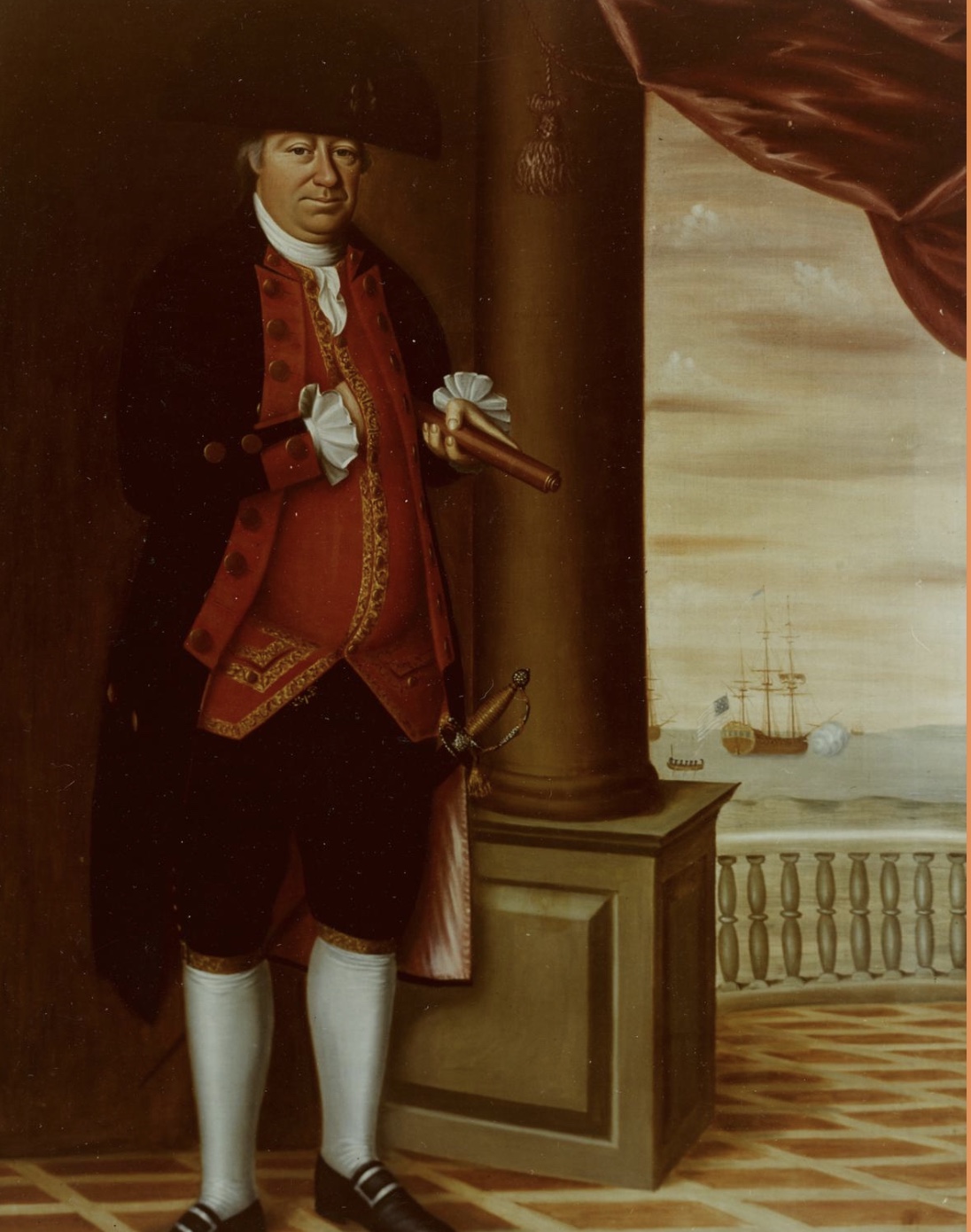
Abraham Whipple
Abraham Whipple assumed command of the Katy and a smaller vessel – the Washington. As the new commodore, Whipple lost no time in trying to clear the smaller ship tenders of the Rose from their positions in Narragansett Bay. Whipple had more fire power than the tenders and he was able to fire on the sloop Diana and take her as a prize. Whipple towed the Diana back to Providence and when the Rose sailed up the Bay to investigate what happened to the Diana, Newport citizens were able to recapture five out of the six Newport merchant ships that Wallace had confiscated.
October 13, 1775: Creation of Continental Navy.
The new Rhode Island Navy was not powerful enough to take on the British frigate Rose, so the Rhode Island Assembly instructed their delegate to Congress, Stephen Hopkins, to introduce a bill to create the national navy. Congress passed the bill on Octber 13, 1775. The Katy (owned by John Brown) became the first ship of the Continental Navy and was renamed the Providence.
May 4,1776: RI Legislature breaks allegiance to King George III.. First declaration of independence in the colonies.
Rhode Island’s General Assembly rejected King George and broke its legal ties to him two months before the independence was declared by the Second Continental Congress. What it did was repeal an earlier document which pledged Rhode Island to the King and Great Britain and it repealed language that bound the colony to Royal Authority. Before the declaration each elected officer in the colony had sworn allegiance to the king before assuming his duties. The General Assembly would continue to govern itself, and all court proceedings would be performed in the name of the state not the King.




 portsmouthhistorynotes