Recent Booklets on Revolutionary Portsmouth
July 9, 2025
Portsmouth History Battle of Rhode Island, Butts Hill Fort Leave a comment
Remembering Revolutionary Women
July 4, 2025
Portsmouth History Leave a comment
Judge Benjamin Cowell collected the stories of Rhode Islanders who applied for pensions many years after the war. He published his stories in a book called “Spirit of 76” and he started his book with the stories of women who had to step up and take extra responsibilities with their husbands at war. Cowell commented: “The women also of Rhode Island, with all the sympathies peculiar to their sex, took an active part in sustaining the “great cause,” and a more noble race of women never existed.”
Today is July 4, 2025 and I am thinking of what I have learned about what Rhode Island women endured during Aquidneck Island’s Occupation by the British (1776-1779). Would we have the bravery to face the hardships that women of that era faced?
Even before the fighting began the women of this island began to spin yarn to make homespun cloth as a protest to British taxes. Newspaper accounts confirm that “Daughters of Liberty” were active in local protest spins. The Stamp Tax required Americans to pay tax on everyday items like newspapers, marriage licenses, business papers and even playing cards. The act was named for the official “Stamp” on the paper that proved the tax had been payed. The money from the taxes were to pay for the presence of British troops in America. Some of the colonists saw this as “taxation without representation” because they had no representatives in the British Parliament.
In Newport this tax was met with some violence, but the women took more peaceful strategies. Colonists still imported a great deal of goods from Britain. The women hoped that if Americans boycotted English goods that British merchants would pressure Parliament to repeal the Act. Colonial women had the responsibility of purchasing and making goods their families needed. They were willing to make the sacrifices needed to make a political statement. It gave women a voice at a time when they couldn’t hold public office. Benjamin Franklin appeared before the British House of Commons to argue against the Stamp Act. He noted that while Americans used to take pride in wearing fine imported garments, it was now their pride “to wear their old clothes over again, til they can make new ones.” (see blog on “Revolutionary Women: the Daughters of Liberty” for more information on these protest spins.
Aquidneck Island women faced unimaginable hardships during the Occupation by British forces.
They faced homelessness when their homes were commandeered to house British forces.
They lost their orchards, wagons, fences and any other wood for the heating of the British forces.
They lost the ability to move about the island or move off the island. Travel was greatly restricted.
If their husbands were serving in the army or militia, women had to run their farms or their businesses on their own. They had to plant, tend and harvest the crops without their husband’s help.
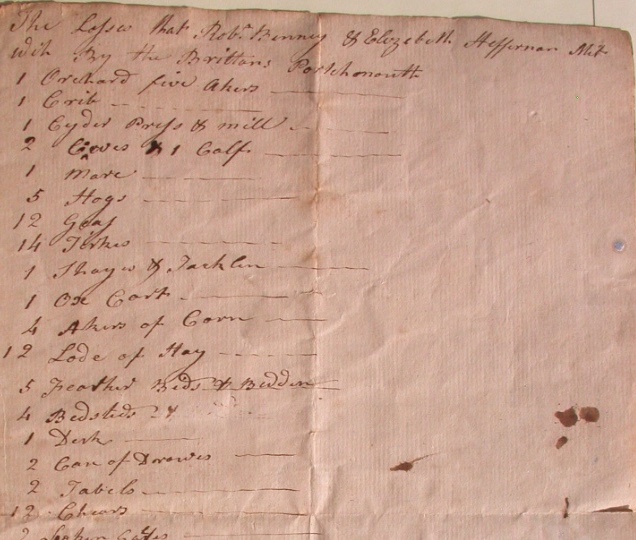
Looking at records of those petitioning for compensation for war losses, many lost all their animals, furniture, everything they had owned. The Binney Household Manifest in the collection of the Portsmouth Historical Society is an example of what Portsmouth families lost during the Occupation.

I orchard five acres. 1 crib
I cider press and mill 2 cows and one calf 1 mare
5 hogs
12 goats
14 forks
1 –jackass
1 ox cart
4 acres of corn
12 loads of hay
Aquidneck Island families suffered the most because of the Occupation. We need to remember their sacrifices towards the liberty gained in the Revolutionary War. It is certainly a time for us to ponder what we would sacrifice to keep our freedoms – our time, our voices, our money?
A Schoolhouse Mystery
June 25, 2025
Portsmouth History Southermost school Leave a comment
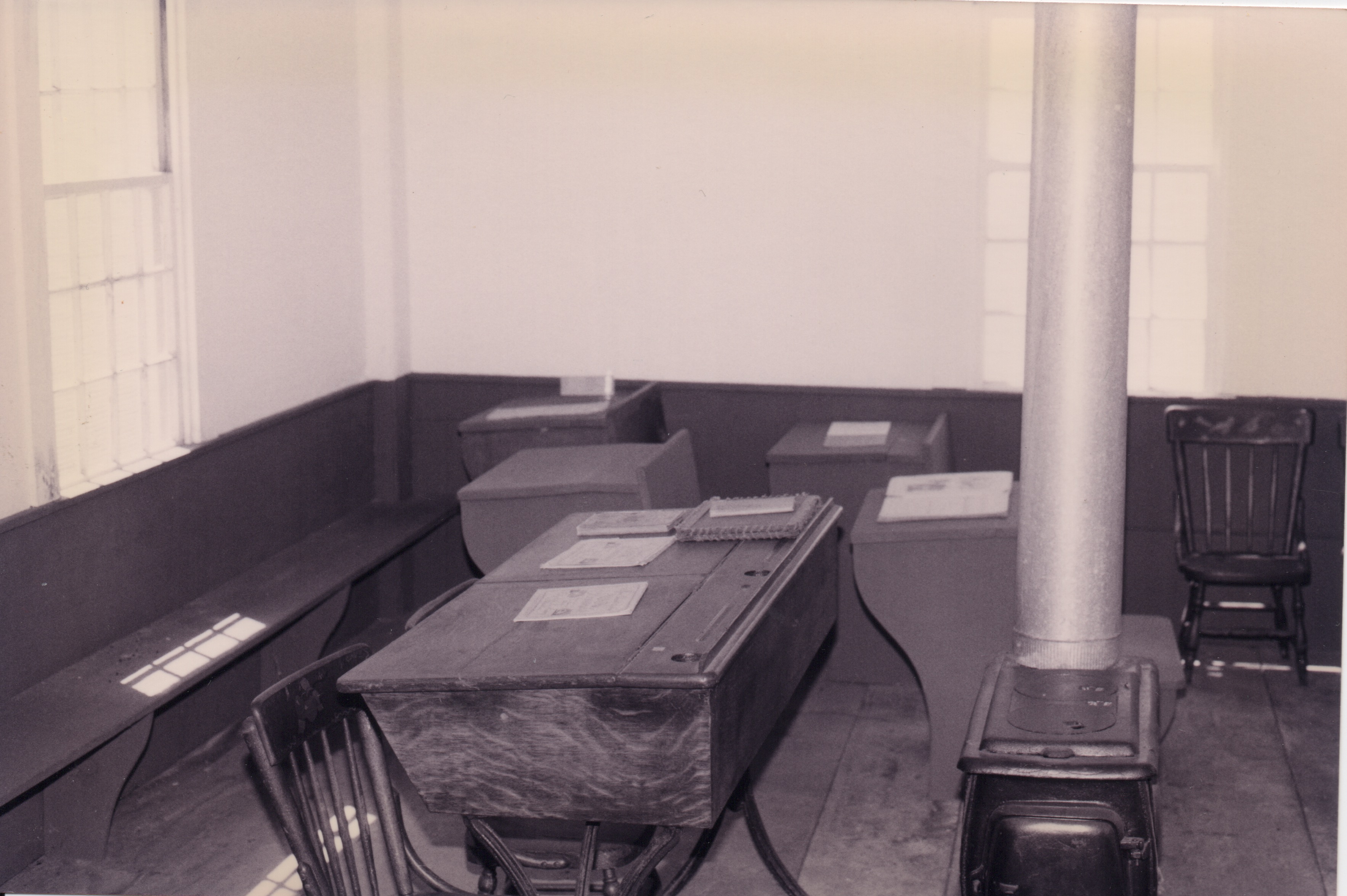
Did Portsmouth have a schoolhouse before the Southermost School? That was the question I had when I was transcribing a document that called for Portsmouth Freemen to “meet together at the town school house that is at the south end of said town..” I have been working on materials to celebrate the 300 anniversary of the Southermost School which we all assume was built in 1725. The problem for me was that the document was signed in 1723. We have been dating the schoolhouse from the bill for construction as the completion date and that bill was listed as March of 1724-25. Determining dates in colonial times can be tricky because the Julian Calendar year they used began in late March.
The Portsmouth Historical Society was saving documents for me that might be related to the school. This document was
“to give timely notice and warning to all the freemen of the above said town to meet together at the town school house that is at the south end of said town of twenty day of this instant, being according to the governor’s warrant and to meet at eight of the clock of said day then and there to make the choose of such and so many well qualified members Deputies to seat in general assembly according to the governor’s warrant to to meet at the colony house at Newport the 26 day of this instant ..”
Portsmouth freemen were to meet at the school house to choose Deputies to attend the General Assembly that would meet at the Colony House in Newport.
I wondered if the date had been copied wrong. Many of the documents in the Historical Society collection are duplicate copies, so I wondered if the date could be wrong. I checked the General Assembly dates and there was a meeting on November 26, 1723.
Was the school house mentioned our Southermost School, or was there an earlier schoolhouse? I went to an article written by Portsmouth historian Edward West – “Early Schoolhouses and Schoolmasters of Portsmouth, Rhode Island.” In his research I found my answer. West records minutes of a town meeting 31, August, 1716 that “we having considered how excellent and ornamental learning is to mankind, and the great necessity there is in building a Publick School-house on the South Side….which if erected will no doubt prove a great benefit to thos who look at the good and wellfare of their posterity.” Twenty pounds of town money was allocated and contributions to the cause would be welcome. William Sanford offered a triangular plot of land (3/4 of an acre).
By 1720 it seems that little had been done. A group of ‘Subscribers” – maybe parents who wanted an education for their children. This group was awarded the school house lot and the twenty pounds for construction. The land would belong to this group of subscribers. In 1723 town records show that “The school already erected, be finished by the town. The subscribers would relinquish their title to the land. The town would be looking for a schoolmaster.
At this point the school had not been finished. Captain George Lawton, Adam Lawton and William Sanford would finish the school house and dig a well for he use of the school. A year later in 1725 the town agreed to pay Adam Lawton 23 pounds, twelve shillings and seven pence. Finances did not get straightened out until 1725 when the money for the “subscribers” got straightened out.
It may have taken nine years (from 1716 approval) to the completion, but somewhere along the way the “subscribers” succeeded in building (but not completing) the Southermost School that we celebrate today. As one of the few town buildings, it clear that it served as a meetinghouse in 1723/24.
John Paul Jones Describes the Action during the Battle of Block Island
June 5, 2025
Portsmouth History Battle of Block Island, Esek Hopkins, John Paul Jones, navy Leave a comment
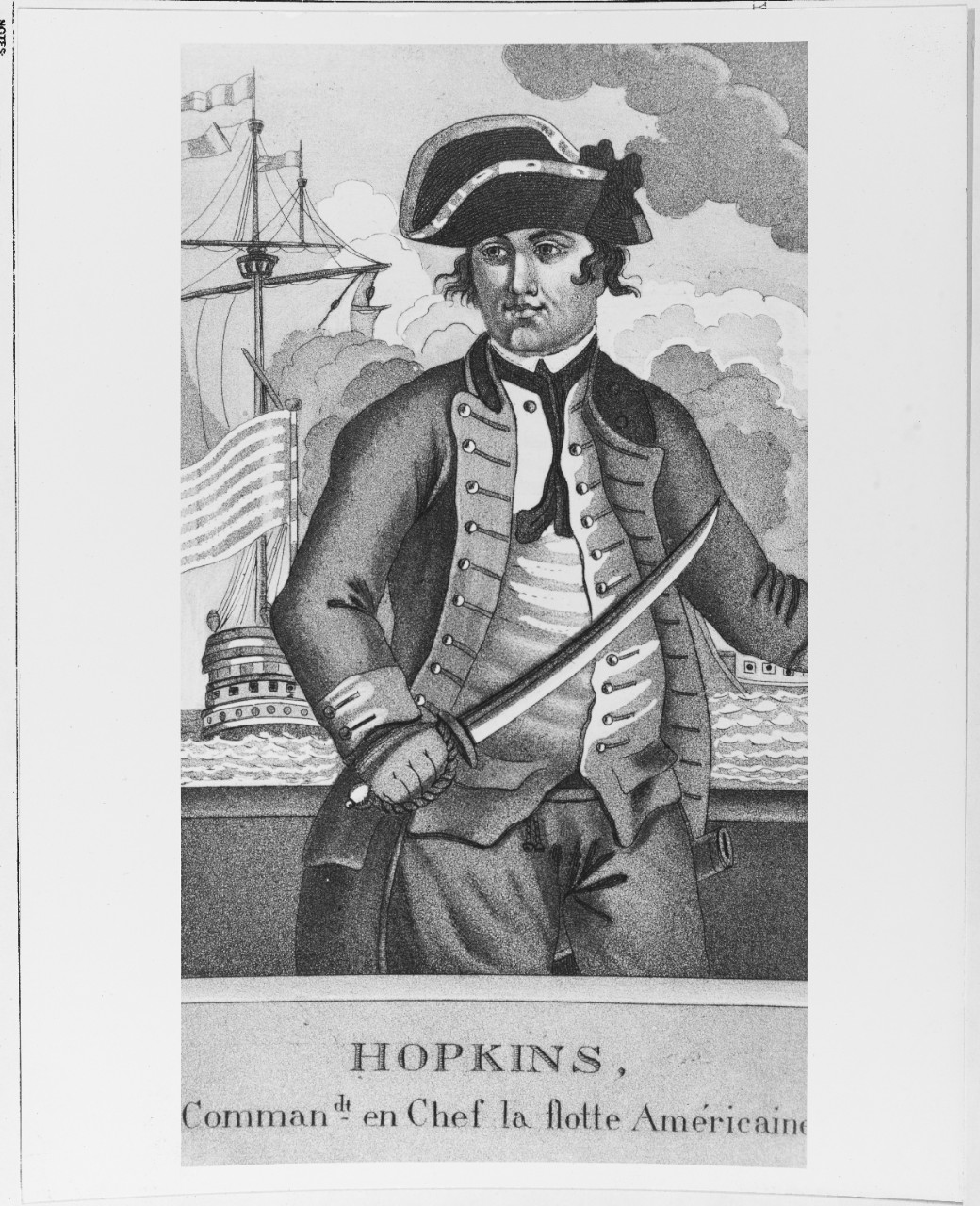
April 6, 1776 was the date of the Battle of Block Island, Rhode Island. This was an early battle (before the Declaration of Independence) for Esek Hopkins, commander in chief of the new Continental navy. It was considered a victory for the British because the British ship Glasgow was able to get away from the Americans. Hopkin’s fleet was returning from a successful raid on the town of New Providence on Nassau island in the Bahamas. The Americans seized eighty-eight desparately needed cannon, fifteen mortars, thousands of roundshot (types of cannon balls), other artillery implements and some gunpowder. The American ships spotted and gave chase to the HMS Glasgow, commanded by Captain Tryingham Howe. The Glasgow fired and hit the American flagship USS Alfred and disabled it. On April 7, 1776 American ships began dropping anchors off New London, Connecticut. Commodore Hopkins and the other commanders were criticized for their actions in the battle and even for their decisions to go to the Bahamas. This mission was controversial and marked the beginning of Hopkin’s downfall. The debate was over the nature of the orders Congress had given Hopkins before the raid.
John Paul Jones’s narrative of the action in the Alfred’s log-book gives details:
“At 2 A.M. cleared ship for action. At half past two the Cabot, being between us and the enemy, began to engage and soon after we did the same. At the third glass (a time reference) the enemy bore away and by crowding sail at length got a considerable way ahead, made signals for the rest of the English fleet at Rhode Island to come to her assistance, and steered directly for the harbor. The Commodore then thought it imprudent to risk our prizes, &c. by pursuing farther; therefore, to prevent our being decoyed into their hands, at half past six made the signal to leave off chase and haul by the wind to join our prizes. The Cabot was disabled at the second broadside, the captain being dangerously wounded, the master and several men killed. The enemy’s whole fire was then directed at us and an unlucky shot having carried away our wheel-block and ropes, the ship broached to and gave the enemy an opportunity of raking us with several broadsides before we were again in condition to steer the ship and return the fire. In the action we received several shot under water, which made the ship very leaky; we had besides the mainmast shot through and the upper works and rigging very considerably damaged.”


Block Islanders Endured Military Law during Revolutionary Times
June 1, 2025
Portsmouth History Block Island, New Shoreham, Revolutionary War Leave a comment
When I speak to student groups I stress the hardships of Aquidneck Islanders during the British Occupation 1776-1779. Until I began to research Block Island in the Revolutionary era, I didn’t realize that they were suffering as well. The Rhode Island Assembly believed that leaving resources on Block Island might tempt the enemy to attack the island. Historian Reverend Livermore comments:
“The policy adopted was much like that of befriending a banker by taking away his money to save him from being robbed.”
Aquidneck Islanders had their livestock taken to feed the British army.
Block Islanders would find their livestock taken by the Rhode Island Colony. An act Passed by the General Assembly in August of 1775 directed that the the island livestock “be brought off as soon as possible, and landed upon the continent.” According to Block Island Historian Rev. Livermore: “Such stock as was suitable was to be sent immediately to the army. Such as was not fit for market was to be sold at public or private sale..” Almost 2,000 sheep and lambs were taken but there was no record how many cows and oxen. Captain John Sands, Joshua Sands, and William Littlefield were authorized to determine how much livestock was needed to feed the islanders. This same committee collected firearms and delivered them to the Rhode Island Committee of Safety. Then the went door to door and suggested that since the livestock was gone, Block Island men should volunteer for the American Army.
Aquidneck Islanders had no freedom of movement during the Occupation. They couldn’t get on or off the island or they would be suspected of spying.
The Colony of Rhode Island decided that Block Island residents were “in the power of the enemy” and therefore they could not leave the island.
“Whereas the inhabitants of New Shoreham, from their peculiar situation, are entirely in the power of the enemy, and very pernicious consequences may attend the intercourse of the said inhabitants with the continent, by means of the intelligence and supplies which the enemy may procure thereby:
” It is therefore voted and resolved, that the said inhabitants be, and they are hereby prohibited from coming from said Island into any other part of this State, upon pain of being considered as enemies to the State, and of being imprisoned in the jail in the county where they may be found, there to remain until they shall be discharged by the General Assembly…”
By the end of 1776 a committee (Sands, Sands and Littlefield) was given permission to gather needed supplies and bring them back to Block Island. In 1777 Block Islanders who were on the mainland were able to go back to the island.
Block Islanders were left under suspicion and without help from the mainland.
August of 1779: General Assembly
“Whereas, many evil minded persons, not regarding the ties of their allegiance to the United States in general, and this state in particular; but influenced by the sordid principles of avarice, continue illicitly to correspond with and supply the inhabitants of New Shoreham, in the county of Newport, with provisions, and other articles, to the great detriment and distress of the virtuous inhabitants of this state.”
“And whereas, the said town of New Shoreham hath been for a long time, and still is, within the power and jurisdiction of the enemies of the United States, whereby they obtain, in consequence of the evil practices aforesaid, supplies for themselves, and intelligence from time to time of the situation of our troops, posts, and shores; by which means they are enabled to make frequent incursions, and thereby commit devastations upon, and rob the innocent inhabitants of their property, and deprive them of their subsistence; wherefore, “Be it enacted, &etc.”
What this act did was to prohibit all trade with the islanders except by special permit. The offender’s property would be confiscated and he might have to do service in a continental battalion, or war vessel until the end of the war. Corporal punishment was the alternative if the offender was a female or unfit to be a soldier. There are records that some Block Islanders were treated as prisoners of war but their fates are unknown. By the end of 1779 the acts prohibiting Block Islanders from going to or from the mainland were abolished, but there were still restrictions on transport of goods. Even Governor Greene had to comply with these rules.
In July of 1780 messengers from the colony came to take whatever horses, cattle, grain, fish or cheese they deemed the Block Islanders could spare.
The Block Island historian Rev. Livermore wrote:
“Thus the Islanders, besides the depredations from the British, denied traffic on the main, unrepresented in the General Assembly of Rhode Island, unprotected by the colony from the enemy, was burdened with a heavy tax. This was taxation without representation; nay more, it was the imposition of a heavy burden upon those cut off from the common privileges on the main and abandoned to the cruel mercies of the enemy. But even this their faith and patriotism could endure while patiently waiting for the dawn of freedom.” (Livermore, pg. 102)
Livermore, S. T. A history of Block Island from its discovery, in , to the present time, 1876. Hartford, Conn., The Case, Lockwood & Brainard co, 1877. Pdf. https://www.loc.gov/item/rc01002999/.
Rhode Island., Bartlett, J. Russell. (185665). Records of the colony of Rhode Island and Providence plantations, in New England: Printed by order of the General assembly. Providence: A. C. Greene and brothers, state printers [etc.].
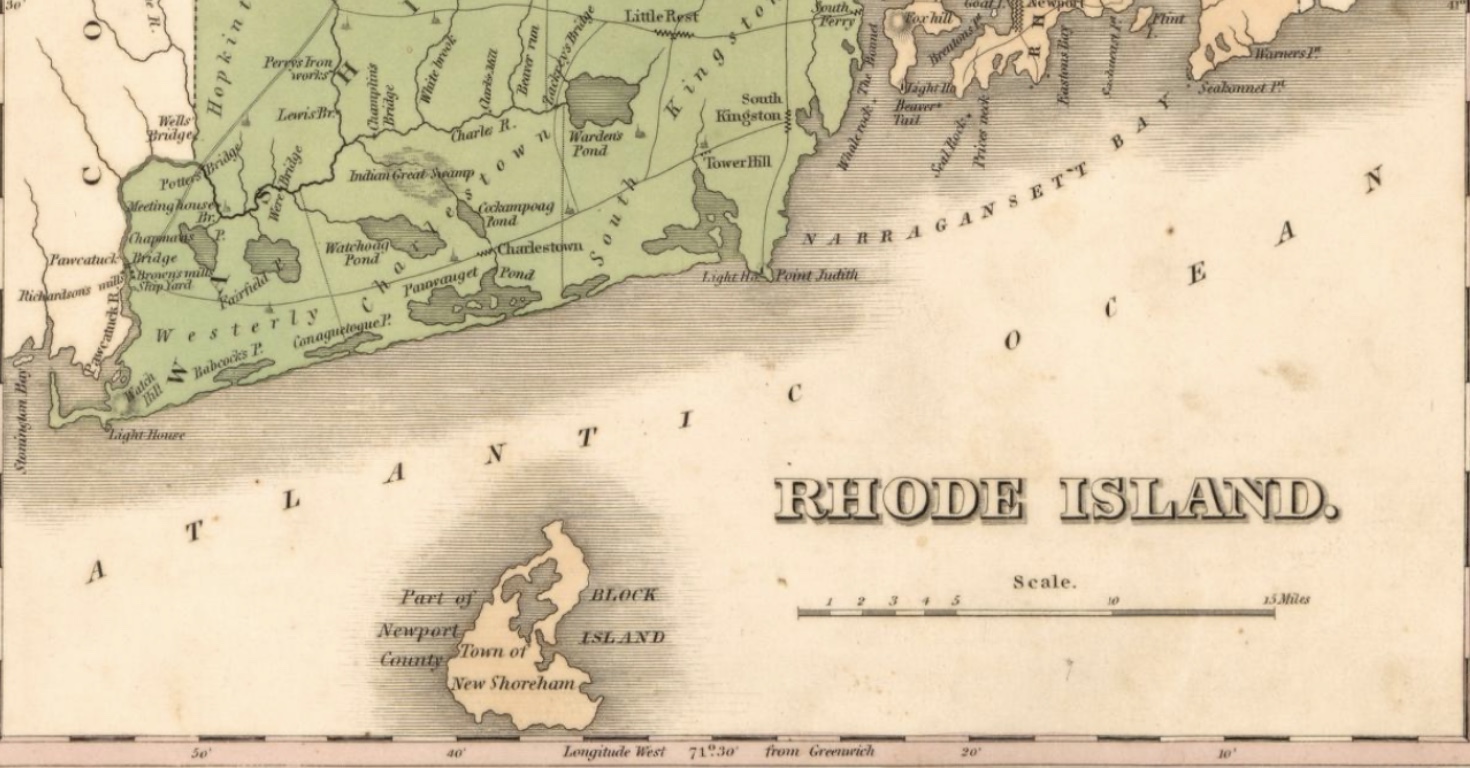
Finley, A, and Young & Delleker. Rhode Island
. [Philadelphia, 1829] Map. https://www.loc.gov/item/76692364/.
Resolves Against the Duties on Tea: Block Islanders in Union
May 28, 2025
Portsmouth History Block Island, Tea Duties Leave a comment
Although Block Island remained neutral in the Revolutionary War, they expressed their unity with other Rhode Island communities in a Town Meeting at New Shoreham, March 2, 1774. According to Livermore’s “History of Block Island,” Newport had sent a copy of resolves on the tea duties and Block Island was asked to unite with the other towns in the Colony. The resolves voted by the Town Meeting give us a glimpse of the grievances of the Americans.
What were the tea duties?
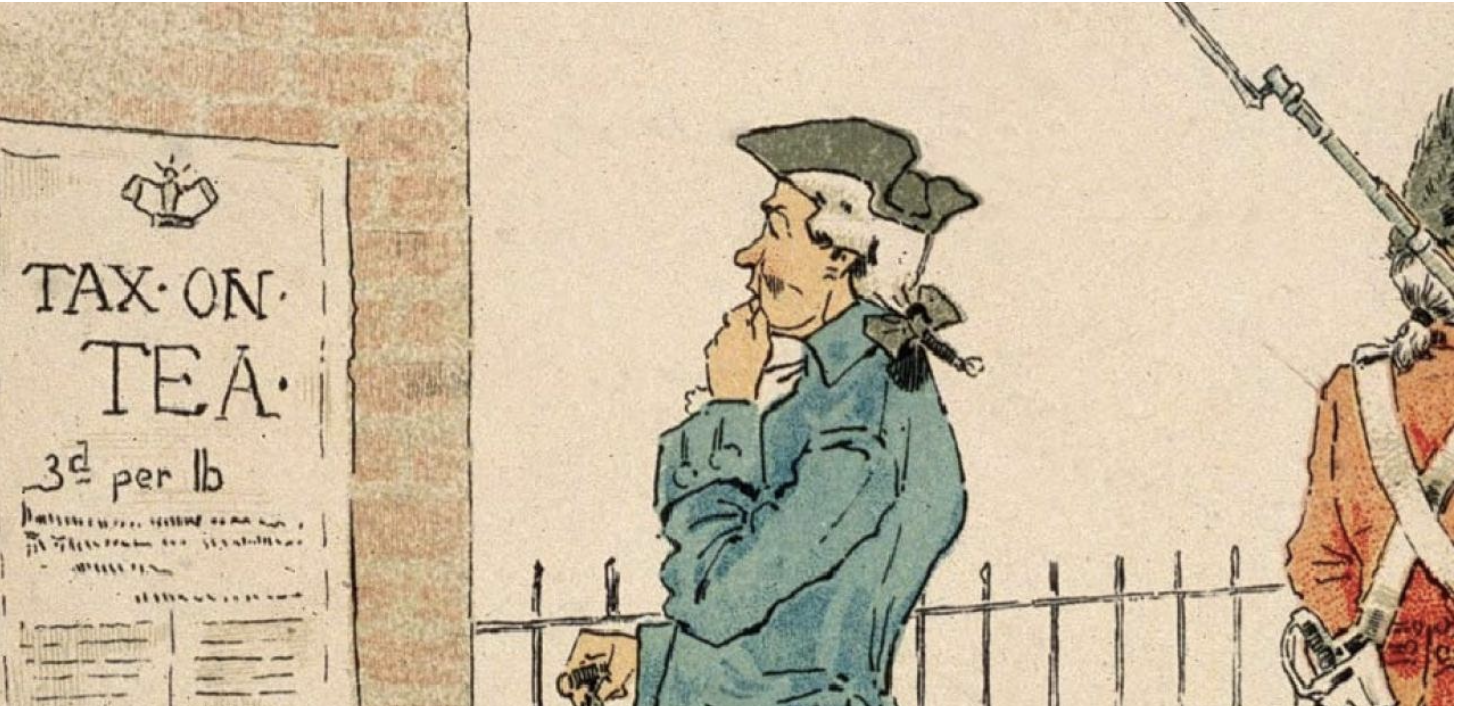
Americans were consuming smuggled tea and that hurt the profits of the East India Company. This company was a private business, but it was important to Britain’s economy. The British Parliament passed the Tea Act in 1773 to give the East India Company the right to ship its tea leaves directly to America. Only the East India Company could sell tea in the colonies. This lowered the price of East India Company’s tea in America. This forced the colonists to pay a tax of 3 pennies on every pound of tea. The Tea Act thus retained the three pence Townshend duty on tea imported to the colonies. The money was to go to the support of the British Army in the colonies.
What were the Block Island Resolves?
I am listing the resolves, bolding what struck me, and commenting briefly on the concern of the Block Islanders with parentheses.
- Therefore we the inhabitants of this town, being legally convened in town meeting, do firmly resolve, as the opinion of said town,
- 1. That the Americans have as good a right to be as free a people as any upon the earth; and to enjoy at all times an uninterrupted possession of their rights and properties, (Americans were concerned about maintaining their rights and properties)
- That the act of the British Parliament, claiming the right to make laws binding upon the Colonies, in all cases whatsoever, is inconsistent with the natural, constitutional, and charter rights and privileges of the inhabitants of this Colony. (Acts like the Tea duties go against the colonial rights given in colonial charters).
- That the express purpose for which the tax is levied on the Americans, namely, for the support of government, administration of justice, and defense of His Majesty’s dominions in America, has a direct tendency to render Assemblies useless, and to introduce arbitrary government and slavery. (The duty is suppose to go toward the support of British forces in America. This overrides the authority of the Colonial Assemblies.)
- That a tax on the inhabitants of America, without their consent, is a measure absolutely destructive of their freedom, tending to enslave and impoverish all who tamely submit to it. (The phrase “no taxation without representation” is evident here. The Americans have not voted for this.)
- That the act allowing the East India Company to export tea to America, subject to a duty payable here, and the actual sending tea into the Colonies, by said Company, is an open attempt to enforce the ministerial plan, and a violent attack upon the liberties of America. (As East India Company is the only sanctioned tea importer, this violates the right to choices in America.)
The other parts of the Block Island resolutions give us an idea of the sympathies of the islanders.
- That it is the duty of every American to oppose this attempt. (This is a strong statement of duty to oppose.)
- That whosoever shall, directly, or indirectly, countenance this attempt, or in anywise aid or assist in running, receiving, or unloading any such tea, or in piloting any vessel, having any such tea on board, while it remains subject to the payment of a duty here, is an enemy to his country. (Even stronger language calling those who assist in this are enemies.)
- That we will heartily unite with our American brethren, in supporting the inhabitants of this Continent in all their just rights and privileges. (This is a call to unity with the colonists).
- That Joshua Sands, Caleb Littlefield, and John Sands, Esqs., and Messrs. Walter Rathbone, and Edward Sands, Jr., or the major part of them, be appointed a committee for this town, to correspond with all other committees appointed by any town in this Colony; and said committee is requested to give the closest attention to everything which concerns the liberties of America; and if any tea, subject to a duty here, should be landed in this town, the committee is directed and empowered to call a town meeting, forthwith, that such measures maybe taken as the public safety may require.
- And we return our hearty thanks to the town of Newport for their patriotic resolutions to maintain the liberties of their country ; and the prudent measures they have taken to induce the other towns in this Colony to come into the same generous resolutions.
WALTER RATHBONE,
Town Clerk:’
Perhaps the sympathies of the Block Islanders were with the other towns in Rhode Island – even if later they technically remained neutral.
Reference: Livermore, ST. A History of Block Island. Block Island Historical Society – 14th printing 2024 (original 1877).
Block Island Revolutionary Connections – Patriots
May 26, 2025
Portsmouth History, Revolutionary War Block Island, Caty Greene, Gaspee Leave a comment
Block Island in the Revolution is on my mind as I prepare to visit a friend on Block Island. This is a collection of information on Revolutionary Block Island. My understanding is that the island remained uncommitted during the war, but Block Island people were involved in the fight for independence.


Caty Littlefield
A while back I researched women in the Revolution and I learned the story of Catherine Littlefield Greene Miller. Her family called her Caty and she was born on Block Island in 1755. Her mother descended from Block Island founders and her father, John Littlefield, was a member of the Rhode Island legislature. Her Block Island childhood ended with her mother’s death when she was only 10 years old, and Caty went to live with and aunt and uncle. At that time her uncle, William Greene, was a Supreme Court justice, but he went on to being Governor of Rhode Island. Under the guidance of her aunt and uncle, Caty learned how to read and write and how to manage a household. Caty would meet and marry General Nathanael Greene and she took a prominent role in his efforts. She opened her home in Coventry as a hospital when the Rhode Island troops were inoculated for small pox. Caty followed her husband to just about every assignment including Valley Forge.
William Littlefield
William Littlefield was Caty’s younger brother. We learn a little bit about his service in a letter he wrote to Washington to secure a federal position.
“I served my Country upwards of five years in the Continental line of the Army part of which time was in General Greenes family.”
The notes below the transcript of the letter inform us that he didn’t get the job, but he had been active in the war.
William Littlefield (1753–1822), a native of Block Island, R.I., was the younger brother of Catharine Greene, widow of Maj. Gen. Nathanael Greene. Littlefield had served with Varnum’s Rhode Island brigade during the early years of the Revolution and in 1779 had become an aide to his brother-in-law. He resigned on 20 June 1780 and returned to Block Island where he fell under suspicion of trading with the enemy although he was later exonerated (Bartlett, R.I. Records, 10:45). In 1785 and 1792 he represented Block Island in the Rhode Island legislature. Littlefield received no post in the civil service and later in the 1790s apparently moved to Tennessee. https://founders.archives.gov/documents/Washington/05-04-02-0052
Before the war started he is listed as being an ensign in Block Island’s militia.
Captain Samuel Dunn
Another Block Island figure was involved in the Gaspee attack. The Gaspee Committeed issued this statement:
“We conclude that it was Captain Samuel Dunn, 1710-c1790 of New Shoreham (Block Island), RI that took part in the attack on the HMS Gaspee, and later went on to service in the Revolutionary War. The Gaspee Days Committee therefore recognizes Captain Dunn as a true American patriot.”
I am confused about which Samuel Dunn was part of the Gaspee action. This Samuel has a son Samuel Dunn, Jr. who was born in 1743. The elder Samuel Dunn would have been over sixty when the Gaspee incident occured.
The next blog will be on the “Battle of Block Island” that featured Esek Hopkins.
Birds-Eye View of Butts Hill – May 2025 – Max McVay video
May 19, 2025
Portsmouth History Leave a comment
Did the British Chop Down All the Trees During Occupation ? – Or did Oakland Forest Survive
May 10, 2025
Portsmouth History British Occupation, Frederick Mackenzie, Oakland Forest, Old Growth Forest Leave a comment
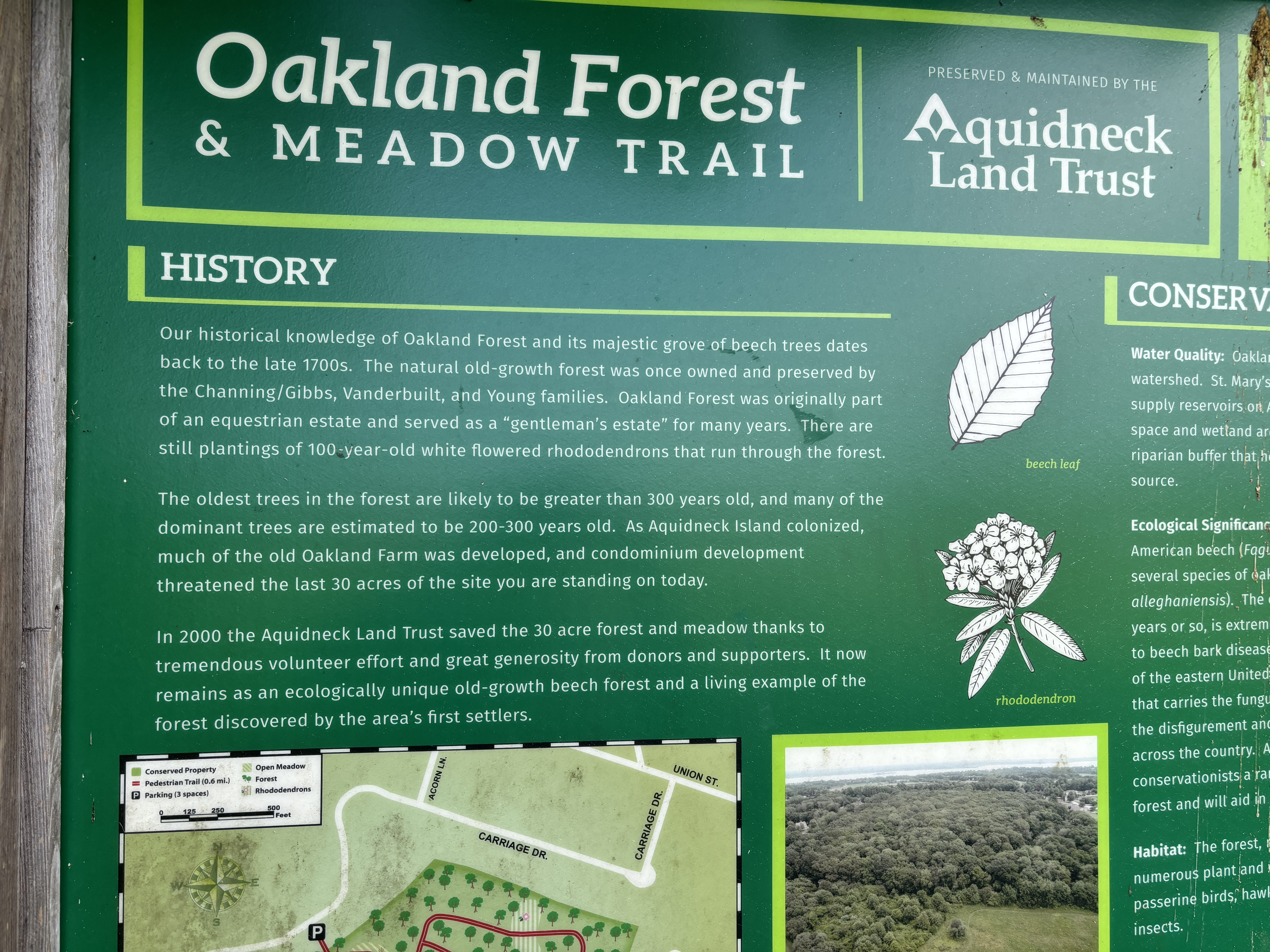
I attended a lecture on the beech trees of Newport and the director of the Aquidneck Land Trust commented that some the trees of this forest are 300 years old. I have researched the British Occupation of 1776-1779 and I usually make a point of saying that the British and Hessians (Germans) chopped down most all of our trees except those in the Glen. If the Oakland trees are 300 years old they were there during the Occupation.
A number of years ago I was privileged to take a tour of the Glen with arborist Matt Largess. He commented that the Glen itself was one of the few areas on the island with old growth trees because the British were not able to easily cut down the trees during the occupation of the Island. That explained why in the 1850s the Glen would be an attraction because its natural beauty had been preserved.
Online the Aquidneck Land Trust says: Aquidneck Land Trust’s Oakland Forest includes a regionally ecologically unique old-growth American beech forest, with trees estimated to be between 200 and 300 years old based on tree coring done in 2000.”
Reading through British soldier Mackenzie’s diary it is clear why so much wood was needed by the Royal forces. Mackenzie writes on December 6th, 1778:
“Every step is being taken to supply fuel: All the timber trees on the island are cutting down and the old wharves will be broken up.”
Vacant houses were taken apart and the wood was used for fuel. Rail fences were taken apart and burned. On December 13th his diary entry reads:
“All the carriages that can be collected on the Island are employed in bringing in the wood which is cut by the party out on the island.”
“Turf” was cut on Brenton’s Neck and used for fuel. When the island was exhausted, they sent fleets out to collect wood on Conanicut, Block Island and Long Island.
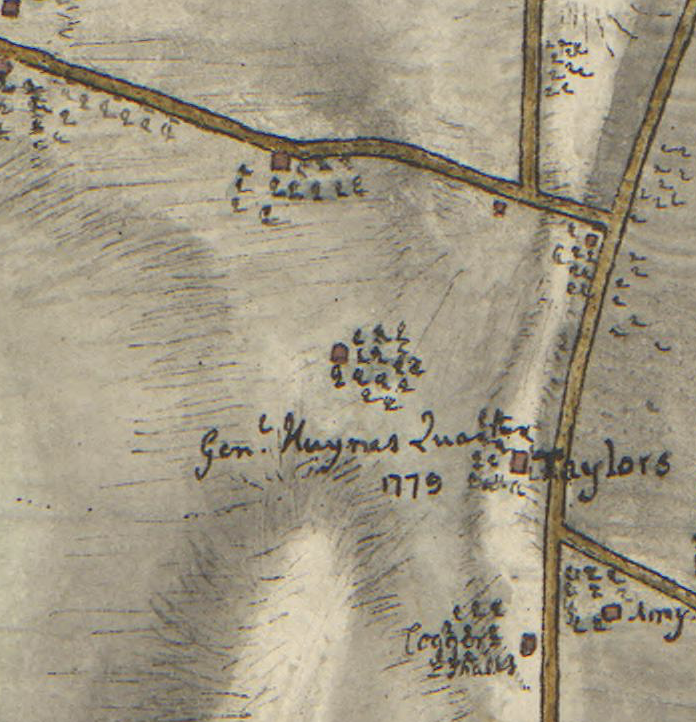
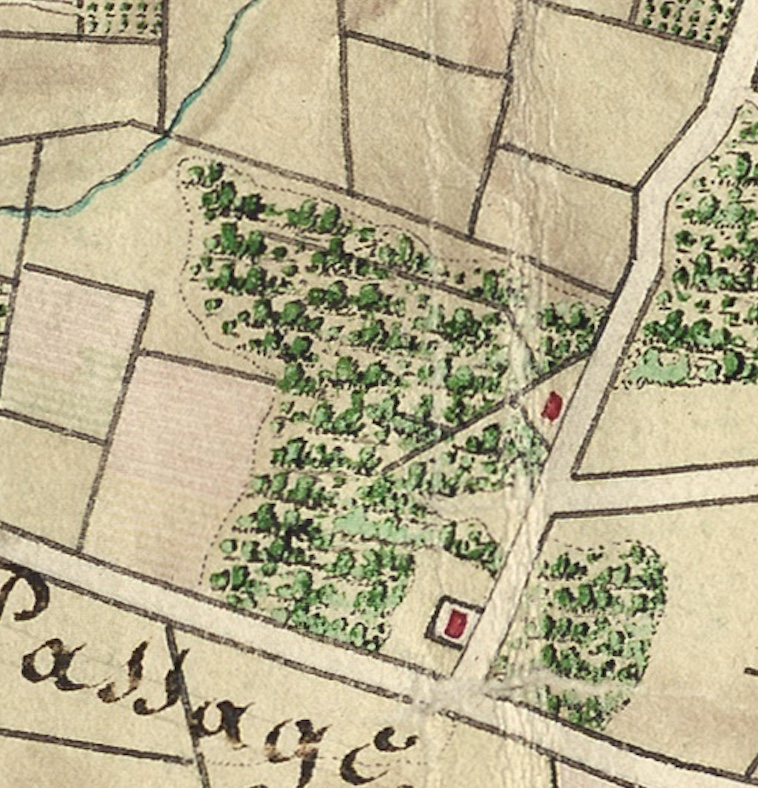
Looking at Revolutionary era maps, I do see areas still shown as forested.


I am not sure about the accuracy of the core samples, however I don’t dismiss them. From now on I need to express the probability that some of the trees at Oakland Forest were spared by the British.
The Story Behind the Rhode Island Campaign: Occupation
May 7, 2025
Portsmouth History Occupation of Rhode Island, Prescott, Rhode Island Campaign Leave a comment
On December 8th, 1776 British General Prescott landed his troops on Aquidneck Island. They landed on the Western shore near the border of Middletown and Portsmouth at Weaver’s Cove. This was the beginning of the Occupation of Rhode Island (Aquidneck Island). The American militiamen were unable to mount a defense and they escaped by using the ferries to Bristol and Tiverton.
The British had ample reason to invade and occupy Aquidneck Island (called Rhode Island at that time). Newport had a fine harbor from which the British fleet could raid up and down the coast. It would enable them to blockade ships carrying supplies from abroad that were needed by the Americans.


The British Occupation of Rhode Island would last until October of 1779. Life for the residents deteriorated throughout that time. There were different experiences for those who lived in Newport and those who lived in the farmlands of Middletown and Portsmouth. Newport had more British sympathizers and life for them was good at first. The “well to do” Newporters and British enjoyed concerts, dances, card parties, and Christmas concerts after the British first arrived in 1776. In 1777 daily routines continued. The occupiers took over houses, shops, wharves, and farms. The British and Hessians (German) came with wives and children and all needed food, supplies, housing and heat. The residents competed with the British for scarce items. The British took hay and confiscated cattle and livestock. Residents could hunt birds, catch fish and collect shellfish. The British collected boats and guns. The longer the Occupation lasted, the harder it was on those in the maritime trades such as coopers, sailors, rope makers, etc. Wharves were pulled up for fire wood. Merchants had no supplies coming in so they had little to sell.
Local citizens couldn’t count on growing food for their families. Gardens were raided, fruit was plucked from trees and potatoes were dug up by British soldiers. There was no freedom of movement. Women could travel a little more freely at first, but later they needed passes to leave town. The border of Newport and the rest of the island was gated and locked There was no free press or local government. Births, deaths, marriages were not recorded and Newport lost its property records when the British shipped them to New York and they were ruined by water.
Destruction was even more disastrous when the French fleet was arriving in August of 1778. In creating defensive works. the British demolished homes, chopped down orchards and trees for abatis (a defensive obstacle formed by felled trees with sharpened branches facing the enemy.). Conditions worsened after the Battle of Rhode Island and through to October of 1779 when the British left the island.
The Rhode Island Campaign was a plan by the Americans and their new allies the French to rid the island of the occupying forces.