Home

Annotated Timeline: After the Occupation To the End of War

Leave a comment

October 25, 1779: British garrison evacuated Newport:

By 1779 strategic changes led the British to abandon Rhode Island of their own accord. Weary of trying to subdue the New England colonies, the British re-directed their efforts to the southern states where the population was thought to be overwhelmingly Loyalist. In addition, with France now firmly in the war on the side of the Americans, the British needed more ships and more soldiers in the West Indies to protect their interests in the Sugar Islands from the French. The money brought to the Crown from the islands far exceeded that from their North American colonies.

July 10, 1780: French Army under Rochambeau arrives in Newport:

The French arrived in Newport in July of 1780. Most of the forces wintered in Newport except the Lauzun Legion which camped in Connecticut. Rochambeau was very skillful in handling his troops, and the Americans began to appreciate their presence. Where the British had demolished defenses, the French engineers worked on rebuilding them.

August 16th – November 28, 1780: American troops help French at Butts Hill

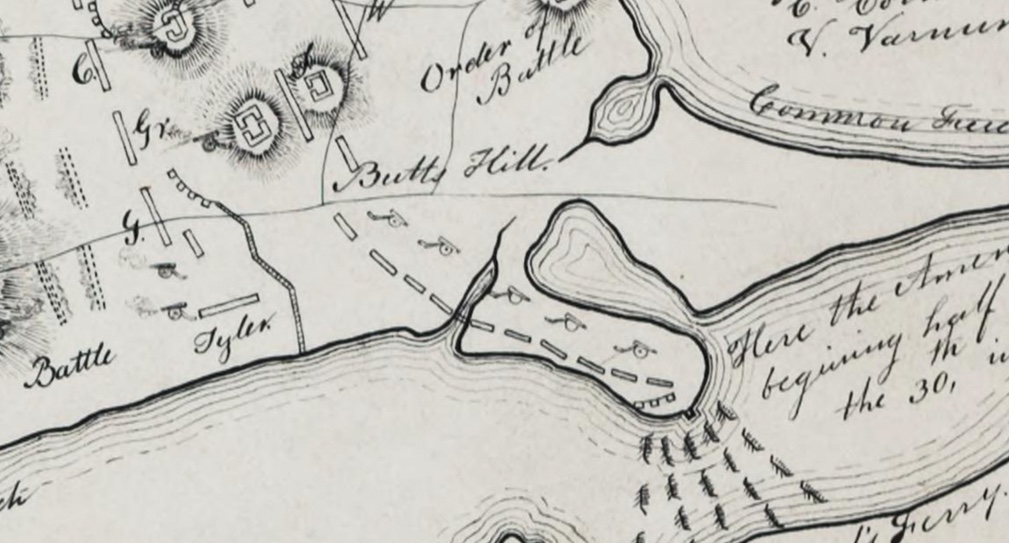

French map with Butts Hill Fort

There were American troops assigned to Butts Hill to support the work of the French troops in enlarging the fortifications there. They were stationed at “Camp Butts Hill” from August 16th to November 28, 1780. Major General William Heath’s diary for September of 1780 notes that “The batteries were strengthened, a very strong one erected on Rose-Island, and redoubts on Coaster’s-Island: the strong works on Butt’s-Hill (were) pushed.” A few days later he would remark: “The French army continued very busy in fortifying Rhode-Island: some of their works were exceedingly strong and mounted with heavy metal.” We know from orderly books (daily records) that the American militiamen were aiding the French masons as they enlarged and fortified Butts Hill Fort.

January 1, 1781: The First and Second Rhode Island Regiments were consolidated into the “Rhode Island Regiment”.

March 6, 1781: Washington Visits Rochambeau

General Washington visited Count de Rochambeau to consult with him concerning the operation of the troops under his command. Washington was hoping to encourage Rochambeau to send out his fleet to attack New York City. In an address to the people of Newport, Washington expressed gratitude for the help of the French.


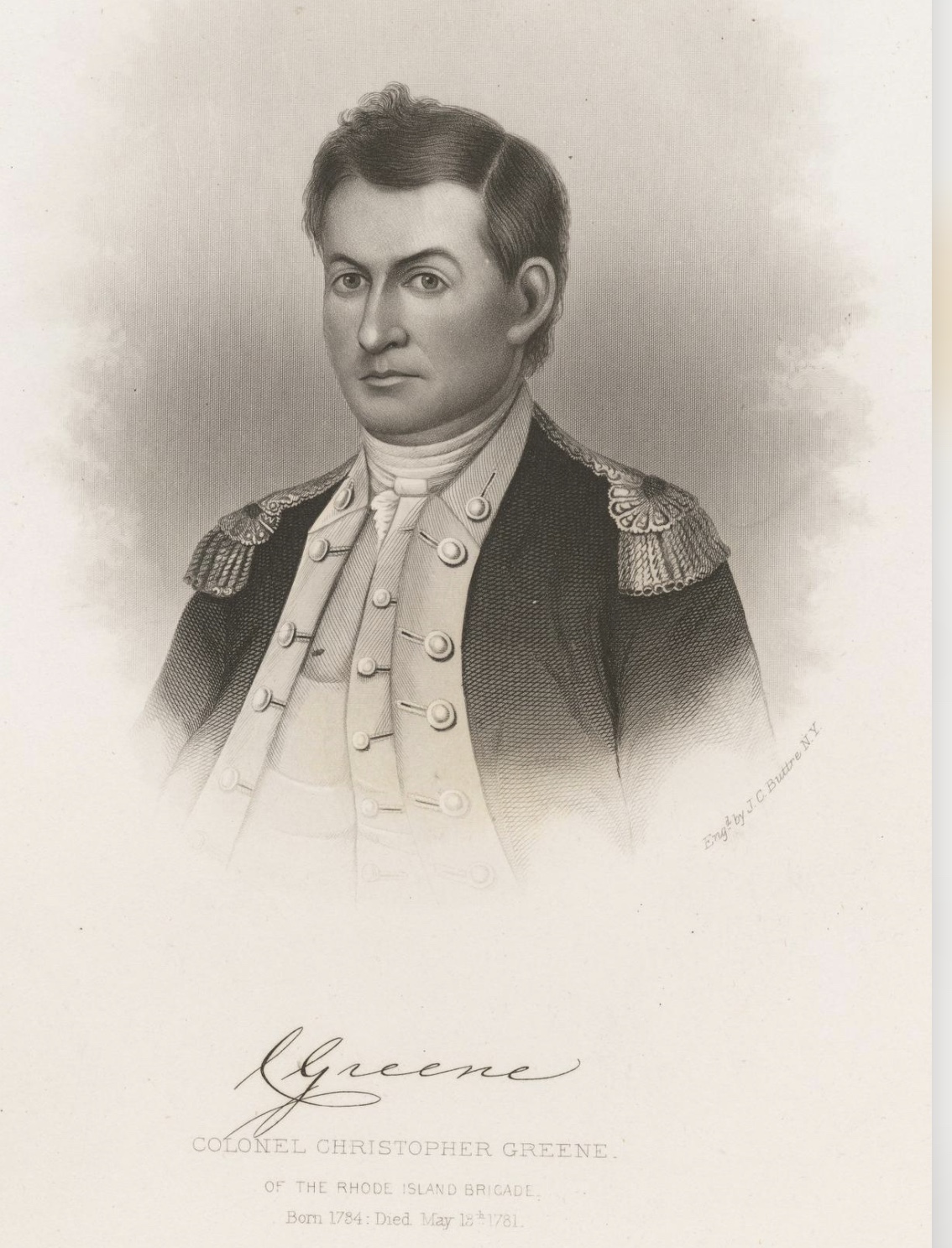
May 14, 1781: Col. Christopher Greene killed in a battle near Fishkill,

Col. Christopher Greene had charge of the Black Regiment. After the Battle of Rhode Island, Greene’s troops stayed around Rhode Island. They camped around Butts Hill and participated in the construction of Butts Hill Fort. Heading towards the action in the South, Greene and his soldiers camped near Peekskill, New York. They were guarding the Continental lines. On the morning of May, 14th a New York Loyalist unit attacked Greene’s men. They put up a fight, but Greene was killed in hand-to-hand fighting.

June 10, 1781: French Army starts its trail to Yorktown.
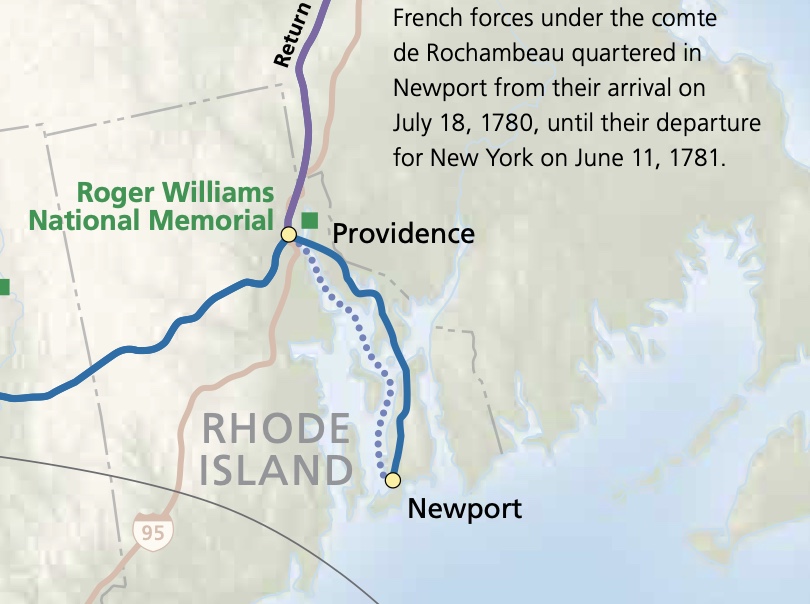
As the road to Yorktown began, Rochambeau and his general staff left Newport on June 10, 1781. He arrived at Providence the following day. Brigadier General de Choisy was left behind in Newport with some French troops. In August he sailed with Barras’ fleet to the Chesapeake area. On the morning of June 11, 1781, the first Brigade of French troops began to load onto the small vessels in the harbor of Newport. All the troops had left by the 12th and camped on the west side of Providence between Westminster and Friendship streets. The French Army performed a grand review in Providence on June 16, then set out for Coventry in four divisions. One division departed each day from June 18 to 21. Rochambeau left Providence with the first division (the Bourbonnais Regiment) and arrived at Waterman Tavern in Coventry in the evening of June 18.
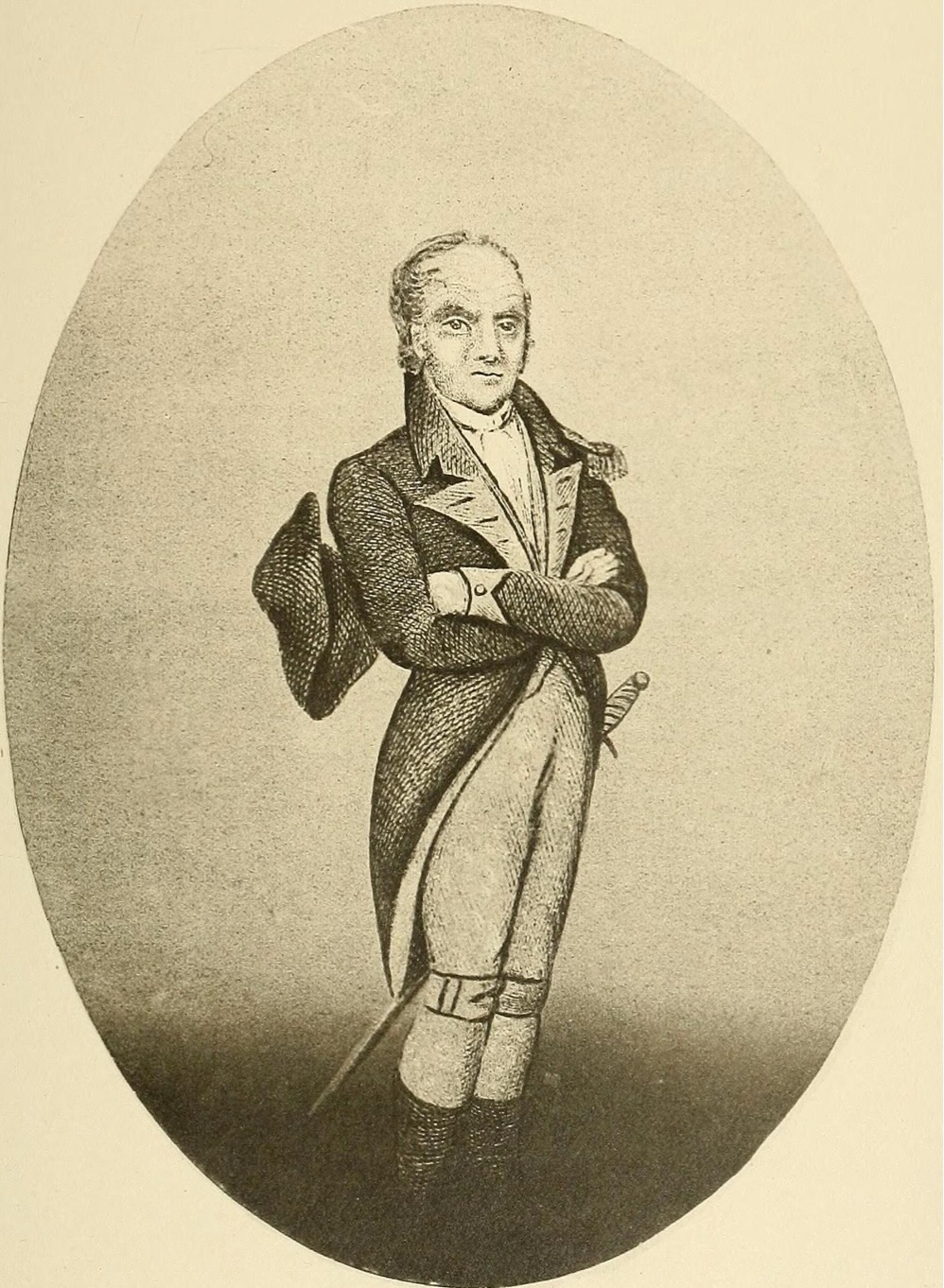
Stephen Olney

14 October 14, 1781: Stephen Olney of Providence leads the final charge in the Battle of Yorktown.

Olney led the Rhode Island soldiers (including those who had been in the Black Regiment. They served under Lafayette at Yorktown. Olney led them over the top of Redoubt 10 where they were attacked by British soldiers with bayonets. The redoubt was quickly taken, but Olney was badly injured.

September 3, 1783: Final peace treaty signed in Paris
Annotated Timeline: Battle of Rhode Island and Aftermath

Leave a comment

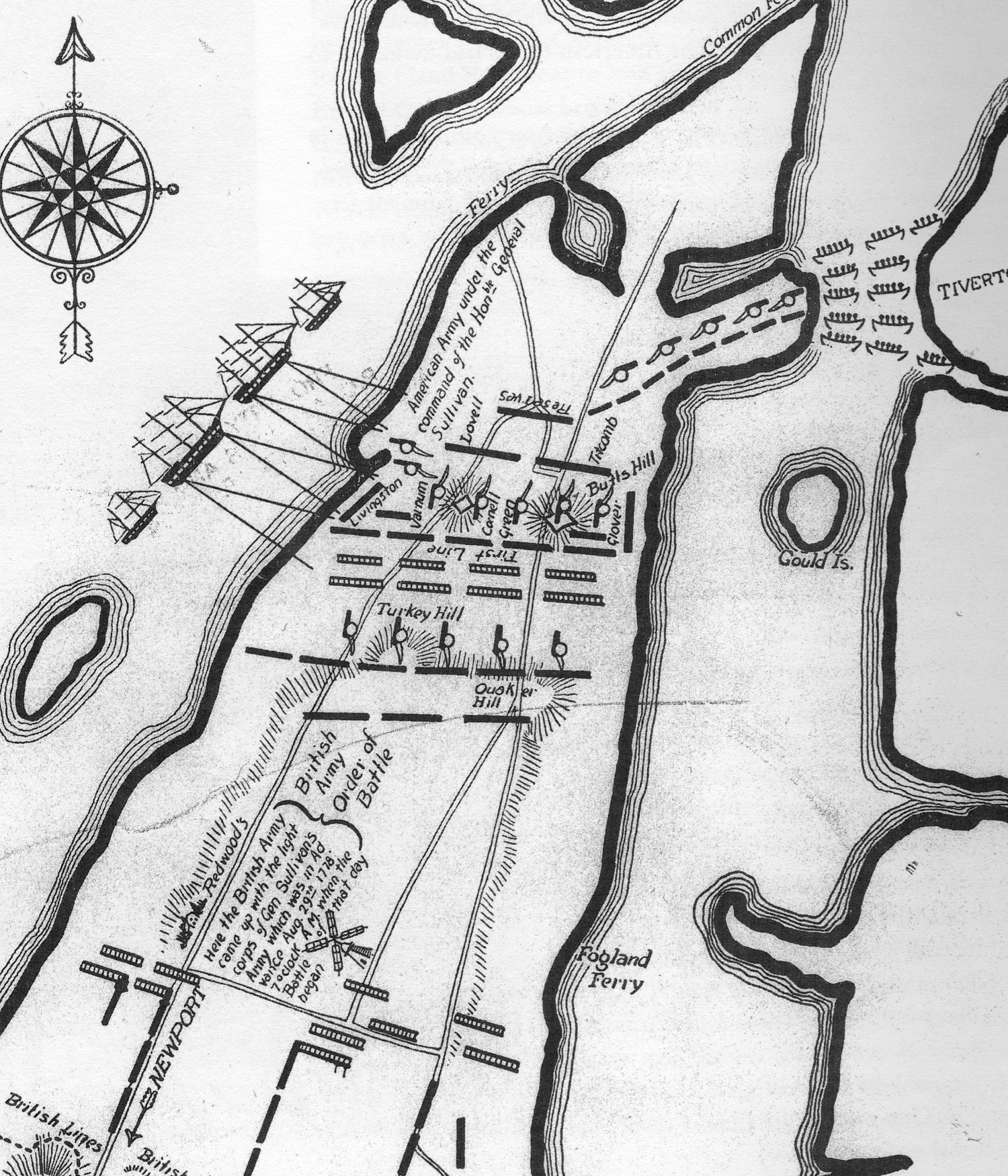
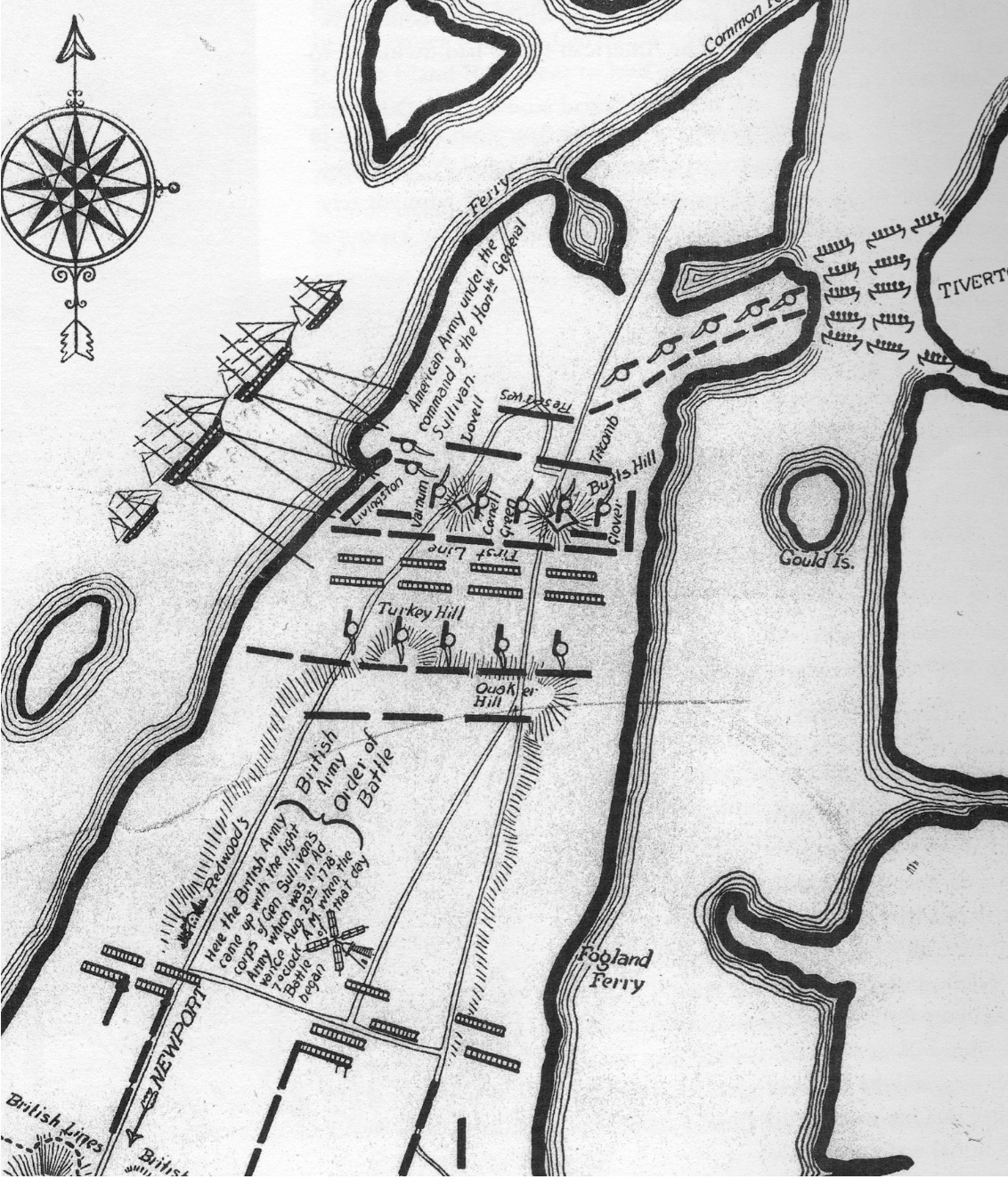
Overnight August 28 – 29, Sullivan began his preparations to defend the route to the Howland ferry towards safety in Tiverton. He positioned forces in a line from Turkey Hill by West Road and Quaker Hill on East Road. Holding this area so all his troops and baggage could get off the island was his aim. His best men, divided between militia and Continentals, were positioned to delay the British troops. John Glover commanded the troops on the left wing on the eastern side of the island. Command of the right wing was given to Nathanael Greene. Men were positioned in various positions up East and West Roads. Action in the Battle of Rhode Island took place along those two main road and Middle Road. Sometimes there were two or more actions going on at approximately the same time. This brief timeline is an approximation.

For clarification the British and Hessian leaders are noted with a (B) and the American leaders are noted with an (A).

August 29, 1778

Dawn:
*Captain Mackenzie (B) saw empty American works. He traveled to Pigot’s (B) headquarters to inform him of withdrawal. Pigot decided to hamper the retreat.

6:30 AM:
*General Prescott (B) moved out with the 38th and 54th Regiments to occupy fortifications at Honeyman’s Hill in Middletown.
*Brigadier General Smith (B) marched toward Quaker Hill by East Road with 22nd and 33rd Regiments with the flank companies of the 38th and 54th.
*On West Road Captain von Malsburg (B) and Captain Noltenius (B) with Hessian Chasseurs advanced toward Laurens (A). Behind them came Major General von Lossberg (B) leading two Anspach battalions.

7 AM:
*Von Malsburg (B) spotted Laurens (A) and Talbot (A) with their Light Corps behind stone walls to the south of Redwood House. Americans were driven back up West Road.
*Livingston’s men (A) attacked Smith’s men (B) from behind stone walls on East Road.
Commander Pigot ordered von Huyne’s Regiment (B) and Fanning’s Regiment (B) to support von Lossberg (B) on West Road.
*Pigot (B) orders Prescott (B) to send 54th Regiment and Brown’s Regiment to reinforce Smith (B) on East Road.

8 AM:
*Von Lossberg (B) sent troops toward Lauren’s positions on three sides.
*Coore’s and Campbell’s troops (B) ran into a group of Wade’s (A) pickets by the intersection of East Road and Union Street.
*British moved down Middle Road and East Road toward Quaker Hill.

8:30 AM:
*Von Lossberg (B) came to the aid of Hessian Chasseurs.
*Laurens (A) and his Light Corps was forced to retreat across Lawton’s Valley to the works on a small height in front of Turkey Hill.
*Lauren retreated to Turkey Hill. Laurens was told to retire to the main army as soon as possible.
Hessian (B) attackers arrived on top of Turkey Hill.

9 AM:
*Wigglesworth’s Regiment (A), Livingston’s Advanced Guard (A) and Wade’s pickets (A) waited for British at the intersection of East Road, Middle Road and Hedley Street.
*Quaker Hill was the scene of intense fighting.
*Americans retreated toward Butts Hill and Glover’s (A) lines.

9:30 AM:
*From top of Quaker Hill, Smith (B) could see strength of Glover’s position.
*Smith was under orders not to begin a general engagement, so he decided against a frontal assault. *Smith withdrew forces to the top of Quaker Hill.

*10 AM:
*Von Lossberg’s (B) troops arrived at Turkey Hill.
*Americans had positions on Durfee’s Hill and Butts Hill.
*Samuel Ward (A) and the 1st Rhode Island Regiment (Black Regiment (A)) held an Artillery Redoubt. *His men repulsed von der Malsberg’s (B) men.

11:30 AM:
*Von Lossberg (B) ordered von der Malsburg’s men (B) to try to attack Ward’s (A) First Rhode Island Regiment position again.
*British ships Sphynx, Spitfire, and Vigilant shelled the American positions from the West shore, but they did little damage.
*The Americans held their position.

1PM:
*British ships planned to attack American positions.
*General Greene’s (A) men dragged cannon down to the beach and forced the British ships to retreat.

2 PM:
*Pigot (B) reached Quaker Hill to observe the action.
*Pigot ordered Landgrave (B) and Ditfurth Regiment (B) to march to von Lossberg’s (B) troops.

4PM:
*General Glover (A) saw movement in British lines and ordered Tyler’s Connecticut militia (A) and Titcomb’s (A) Brigade of Massachusetts militia to positions behind stone walls (maybe Freeborn Street), but the British did not engage.

7PM:
*Landgrave (B) and Ditfurth (B) Regiments arrived at von Lossberg’s lines.

7PM (August 29) to 3AM (August 30) :
*There was sporadic artillery fire and light skirmishing. Musket and cannon shots were heard for seven hours.
*The Battle of Rhode Island was basically over.
*The Americans and British forces retired to their lines.

Aftermath of Battle

August 30

Sullivan assigns men to bury the dead. The wounded are ferried to hospitals on the mainland. American troops use the day to rest and recover. Sullivan receives word that d’Estaing is not coming back. He also receives a letter from Washington warning that Howe’s British fleet is on the way. The fleet is observed off Block Island. Sullivan moved quickly to complete a retreat off Aquidneck Island, but he staged Butts Hill to look like they were fortifying for a fight.

6PM:

*After all the baggage had been removed, Sullivan issued the order for all his men to depart the island.

11 PM:

*Lafayette returns from Boston. He assumes supervision of the retreat of the last of the pickets. He orders the building of fires to suggest the army was hunkering down.

*By midnight: Most of the troops are off the island.

August 31st: By 3 AM all the troops are on Tiverton side.

Revolutionary Places: Stories from Vernon House in Newport – A Spy, A Patriot, A Black Regiment Soldier, and French Heroes

Leave a comment

The Spy: Metcalf Bowler

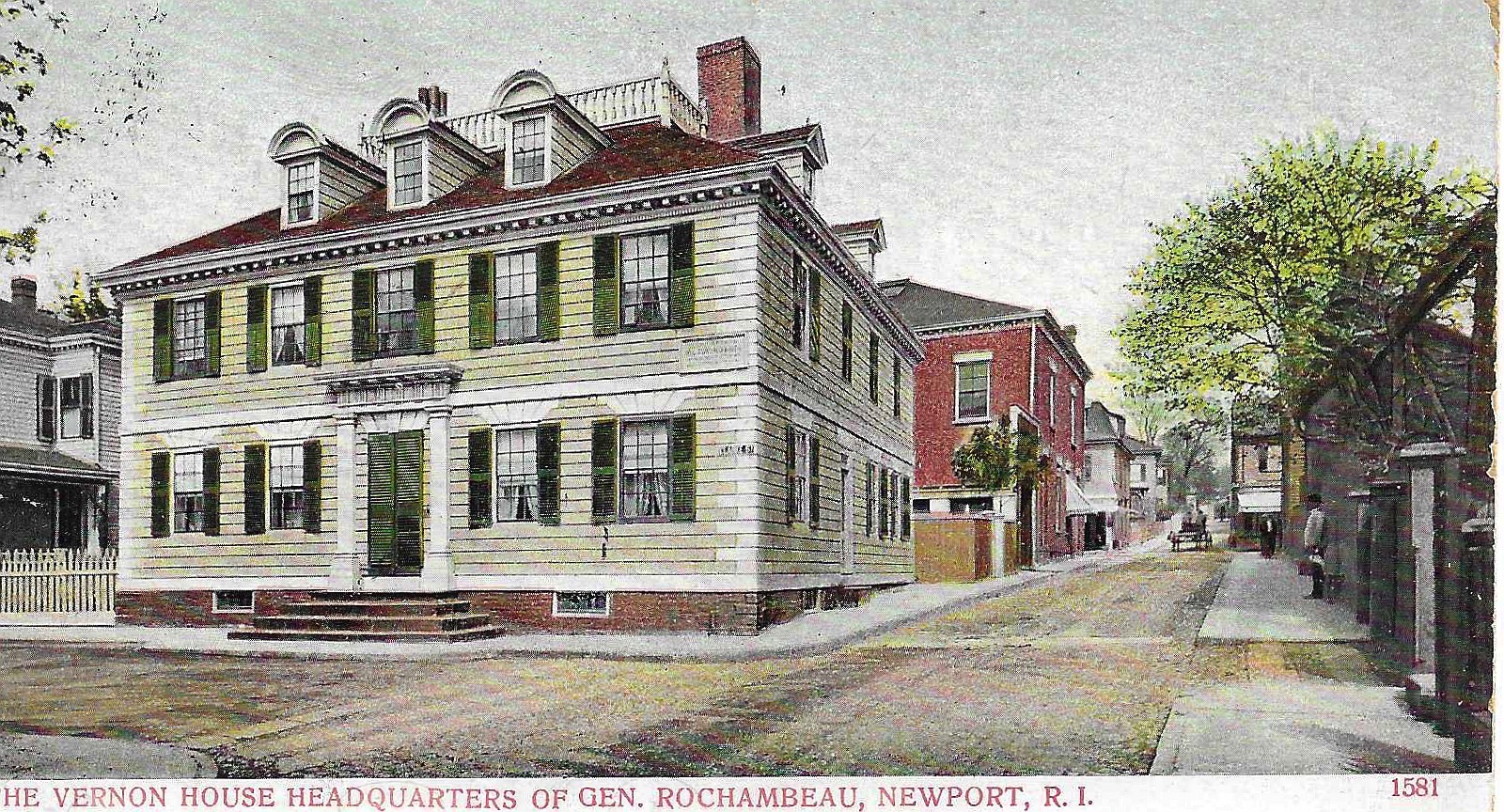
The Vernon House at 46 Clarke Street in Newport has special significance in the history of the Revolution in Rhode Island. It has connections to a British spy, an American war heroes and the French in Newport. It has a history dating from 1744, but the first owner with Revolutionary connections was Metcalf Bowler who bought the property from his father in 1759. Bowler was a noted merchant and judge, but we know now that he was also a British spy. He was concerned about his country estate in Portsmouth and hoped to salvage it from British destruction by providing information to British General Gates. In 1774 he sold the house on Clarke Street to William Vernon, a merchant and slave trader. Unfortunately for Bowler, his work as a spy did not protect his Portsmouth farm.

The Patriot: William Vernon

William Vernon and his brother Samuel were early supporters of the revolution, so when the British came to Newport, William fled Newport for Rehoboth, Massachusetts. Vernon moved to Boston and In 1777 Vernon was appointed by the Continental Congress as president of the Naval Board – a role resembling Secretary of the Navy. He was responsible for building and outfitting ships for the Continental Navy. He supported the Navy cause with his own money.

The Black Soldier: Cato Vernon

Cato Vernon was probably one of the two Black males aged under sixteen listed in the 1774 census as part of William Vernon’s household in Newport. By December of 1776 the British were in Newport and William Vernon had fled. In late 1776, Cato was working in East Greenwich as an apprentice to a ship carpenter.

On March 11, 1778, Cato enlisted in the First Rhode Island Regiment of Continentals (the famous “Black Regiment”). Cato may have enlisted without permission from William Vernon who was in Boston, but by law William was entitled to Cato’s value. Enlisting in the regiment for the duration of the war had the promise of securing freedom. The Black Regiment played a key role in the American retreat during the Battle of Rhode Island on August 29, 1778. The Regiment held back three charges of British allied Hessian troops and that was one factor enabling the Americans to get away to fight another day. Cato and the Black Regiment served all the way to the surrender at Yorktown.

Life was not easy for Cato after the war. In August 1793, Cato Vernon was in a Newport jail because he could not pay his debts. He wrote a letter from jail to William Vernon and there is a record of William Vernon paying that debt so Cato would be free.

The French in Newport

On July 11, 1780, the French Fleet arrived in Newport. The Comte de Rochambeau The commander in-chief of the French forces, used the house as his quarters and the headquarters of the French forces. Records show that on March 6, 1781 General George Washington slept at the Vernon House. On July 25, 1780. Lafayette remained in Newport with Rochambeau at Vernon House until July 31, 1780.

Resources:

Newport Restorations website on the Vernon House: https://www.newportrestoration.org/programs-initiatives/telling-stories-dispersed-monument/vernon-house/

“Saving the Blood of a Large Number of Brave Men”: A French description of Joint French and American War Games 1780

Leave a comment

In earlier blogs I wrote about a war game or “sham battle” described in the letter of an American doctor (John Goddard) to a colleague. This battle was on October 2, 1780, but there are also descriptions of later mock battles or skirmishes on October 8th and October 11th of 1780. Louis Bertrand Dupont d’Aubevouede Lauberdiere kept a Journal of his experience in the American Revolutionary War. Through the work of Norman Desmarais, we have an English translation – The French Campaigns in the American Revolution, 1780-1783: The Diary of Count of Lauberdiere, General Rochambeau’s Nephew and Aide-De-Camp.

We know through a brief Providence newspaper account that another “battle” occurred on October 8th. Lauberdiere described the battle as being “on the eighth.” In his diary he mentions yet a third of these war games on October 11th. There are some similarities of the mock battle descriptions in both the American and French accounts.

From Lauberdiere’s diary:

“May our comrades arrive soon and draw us out of the somber tranquility in which we live. The soldiers under canvas (tents) want to see the enemy, want to hear the cannon. In the absence of the British, Mr. De Rochambeau created some and, on the eighth he drilled the army on the point where the real enemy might land. We pretended that a fleet entered our harbor and planned a landing.” ( Road to Yorktown.” page 40-41).

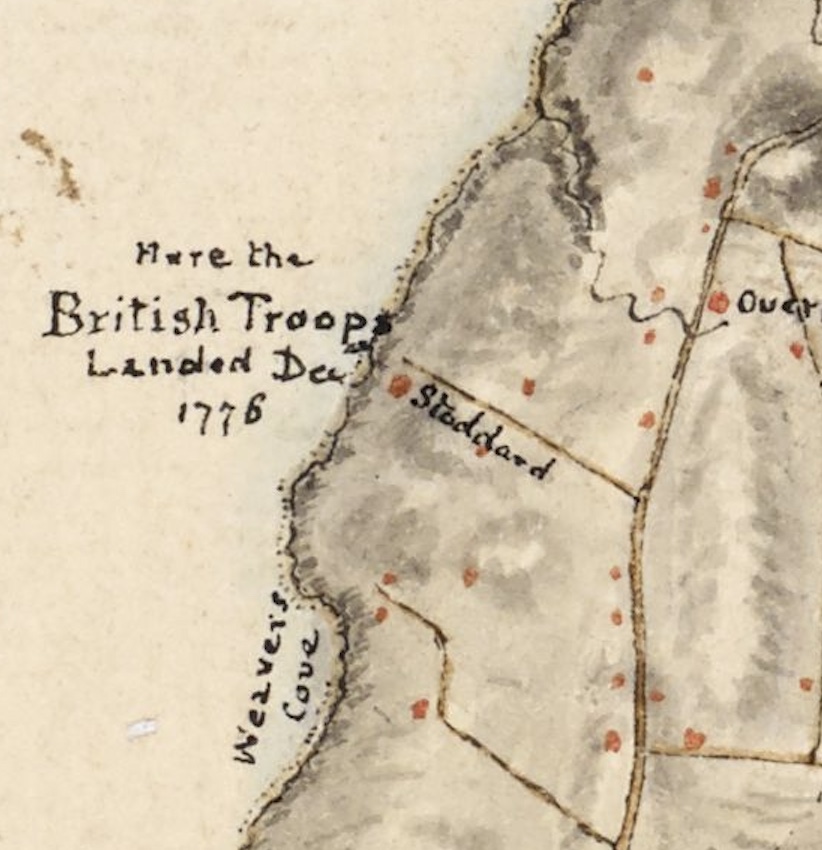
The British ships had been seen near Newport waters and the expectation was that they would invade. Rochambeau picked the location of the British invasion in 1776 as the site for the battle. The diary calls the location “Stauder’s House,” but the actual name was Stoddard. British maps label this location. close to the Middletown – Portsmouth border, as the landing site of the British.

“We put 1500 men under the command of the Viscount de Viomenil who was at Stauder’s house. It was there that our enemies first began to take possession of a few houses along the shore. Mr. De Rochambeau kept the rest of the troops with him for the imminent attack to which he joined the American Rhode Island Regiment commanded by Co. (Christopher) Greene. These troops were divided into two column. Mr. De Rochambeau personally led the left column. The Baron de Viomenil commanded the right. The grenadiers and light infantry battalions formed a separate one.”

In Goddard’s account of the October 2nd mock battle, the American forces, the Rhode Island First Regiment (the Black Regiment), under Col. Christopher Greene, took part in the drill. The French Army did have drills between their own men and some of those may have been in the Third Beach area of Middletown. This drill on the eighth of October was also a drill of combined forces of the Americans and their French allies.

Col. Christopher Greene

“The attack began with several discharges of cannon, well-executed to create a complete effect of the fictitious enemy leaving their boats and forming quickly. At the same time, the column of grenadiers advanced to dislodge the enemy from the houses as they began to establish themselves there. During this musket fire, the Baron de Viomenil turned their right under the protection of a hill which concealed his movement. When he was ready and the attack was fully engaged, Mr. De Rochambeau had the charge sounded. Everything advanced in good order. The enemy disappeared and reassembled on the seashore.”

An Accident Happens: Lauberdiere’s diary:

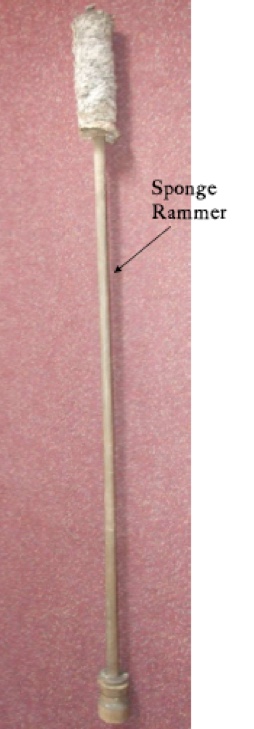
“An accident occurred during this drill. A cannoneer cleaning a piece lost an arm by the sponge. The one who was aiming it had neglected to cover the touchhole with his thumb. An ember remaining from the preceding shot ignited and the charge caught fire.”

During the Revolutionary War a sponge head was used to extinguish embers from the previous firing. The sponge was part of a sponge-rammer tool that pushed the round into the barrel. The sponge head was dipped in water and run down the barrel to quench any embers left over.

Lauberdiere continued:

“Other accidents might have also happened, always caused by the cannon. Many of our navy officers who wanted to witness this drill rented horses. They were usually poor horsemen and wanted to remove all doubt, as three or four were thrown on the ground with each cannon shot.”

It appears there was an audience for the October 8th battle as well as the one described in Goddard’s account of the one on October 2nd.

The diary goes on to describe another drill, this one on the 11th of October:

“Mr. The Count de Rochambeau had the same drill at the point of Stauder’s house on the 11th, just as on the eighth. It was not executed with enough precision or vivacity. It’s on when we are outside the lines and near the one giving orders that we can see the mistakes and know how important it is to have well-informed officers and experienced soldiers. The former understand the orders they receive more easily with experience. In the election, the latter are more prompt, often foresee the objectives and march with greater assurance.”

Lauberdiere’s diary gives an insight into the value of these drills.

“A skirmish is an image of a real battle when it is well conceived and it is also educational. The only real difference, I think, is saving the blood of a large number of brave men. Our general, then, could not make better use of the leisure time which the English gave or to which our small number reduced us, than to accustom his soldiers to the sound of the musket and the cannon to teach them to march without fear especially on the land where they would really fight if the enemy appeared.” (page 46)

A Sham Battle in Portsmouth 1780 – a Note to add to John Robertson’s presentation.

Leave a comment

Celebrating the First Rhode Island’s (Black) Regiment): The Story of Patriot’s Park

2 Comments

For over sixty years the Newport Chapter of the National Associate of Colored People (NAACP) has been calling attention to the valor of the soldiers of the First Rhode Island Regiment (called the Black Regiment).  I heard the story of their efforts at last year’s commemoration of the Black Regiment’s efforts in the Battle of Rhode Island.  Mrs. Fern Lima recounted all the milestones in the NAACP’s  efforts to create a memorial to these soldiers and to continue to tell their story.  Mrs. Lema’s presentation is from the notes of her father, Lyle Matthews, a past NAACP president and one of the earlier workers in the effort.  I recently had the opportunity to talk to longtime Newport County NAACP members, Mrs. Lema and Mrs. Victoria Johnson.  I had gathered a timeline from newspaper articles, but they had been participants and could give me their personal perspectives.  

One of the key information sources Mrs. Lema provided was a copy of the program for an earlier monument dedicated in 1976.  In the booklet for the Dedication, May 2, 1976, NAACP President William Trezvant quoted from historian Charles A. Battle’s booklet “Negroes on the Island of Rhode Island”.

“In August 1928 the one-hundred and fiftieth Anniversary of the Battle of Rhode Island was fittingly celebrated by the citizens of Rhode Island.  At that time the suggestion was made that the State of Rhode Island honor in bronze or stone the memory of Colonel Greene’s regiment.”  

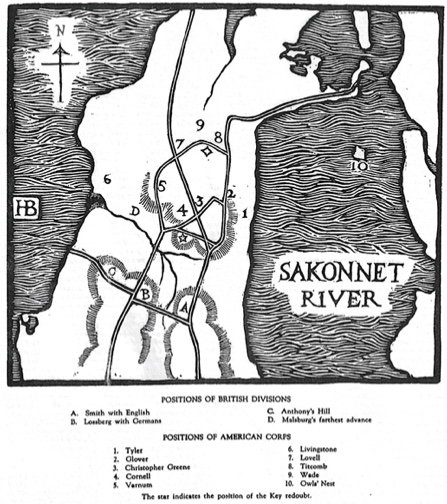
The dedication of the Black Patriot’s Monument in 1976 was just one milestone in a larger effort to bring the story of the Black Regiment to the attention of Rhode Island and the nation.  In an earlier letter (Nov. 12, 1975) Trezvant wrote: “The Goal is to have the Black Regiment take its rightful place in Rhode Island History and in the Nation’s fight for freedom.”   Early steps toward that goal were made by historian Charles Battle and those who researched the role of the First Rhode Island Regiment.  NAACP members Lyle Mathews, John Benson and State Senator Erich O’D. Taylor did the spade work in determining where the redoubt was located that the Black Regiment defended so valiantly.  Mathews was President of the NAACP at the time and Fern, his daughter, remembers field trips out to the Bloody Run Brook area where the men scouted a location that would be an appropriate site for a monument. One of the men, John Howard Benson, was a noted carver and created a woodcut map of the Battle with the redoubt’s position marked with a star.  This beautiful map was included in the program.

Mrs. Lima and Mrs. Johnson helped me with a timeline of the events in the completion of Patriot’s Park.  

In 1967 the NAACP began an annual celebration of the valor of the Black Regiment and to call attention to their role in history.  In July of that year a boulder on the property was dedicated to the Black Regiment.  State Senator Taylor was master of ceremonies and he introduced Oliver Burton who knew Charles Battles and was an early advocate for recognition of the Black Regiment’s role in history.  

In 1969 the remembrance was held in August and a flagpole was added to the site.   Children who had learned about the regiment from Battle’s book attended and Oliver Burton spoke.  Both Mrs. Johnson and Mrs. Lima have their own copies of Battle’s book and having a good history of the story of the First Regiment in the battle was helpful in making the community aware of the special role they played.

In 1972 over 150 gathered at the memorial area on the anniversary of battle. Newspaper accounts state that this was the 9th annual commemoration organized by the NAACP. 

In 1973 a large portion of the battleground was named a national historic site. This portion of the battlefield was called “Patriot’s Park.” At this time the site contained a small monument designating the historical site, a flagpole and simple boulder. Ceremonies celebrating the role of the Black Regiment continued to be held there.

In November of 1975 a fund drive was started to erect a monument to Rhode Island’s black patriots of Bloody Brook in Portsmouth. The Newport NAACP raised funds through the sale of commemorative pins. The plans for the monument were that it would be six feet high by 4 inches wide. The insignia of the 1st Rhode Island Regiment would be carved into the granite. The State Department of Natural Resources would  prepare the landscape.  

May 6, 1976 was the unveiling of a monument at Patriot’s Park. The monument was unveiled by Mrs. Oliver Burton, widow of a man who knew Charles Battle and had dreamed of erecting the memorial Battle had wanted. Plaques were presented to State Senator Erich O.D. Taylor and Dennis J. Murphy of the RI Dept. of Natural Resources for their efforts in the project.

In 1994 funding from the Federal Highway Administration for projects to improve or preserve historic sites associated with the federal highways became available. The Black Patriots Committee of the Newport NAACP and the RI Black Heritage society proposed improving the site.

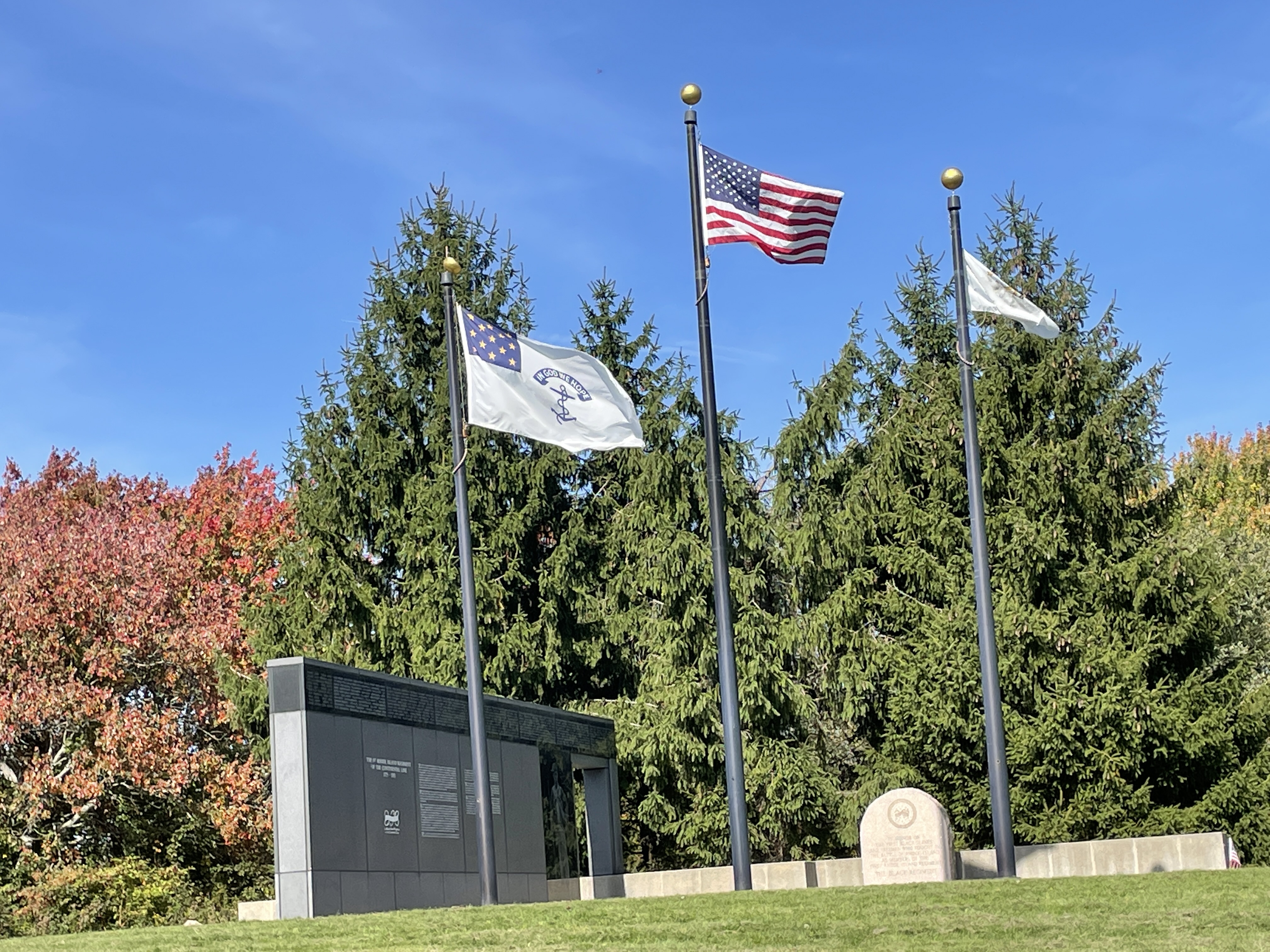
In 1996 the head of the Rhode Island Department of Transportation (RIDOT),  William F. Bundy, selected the Patriot’s Park Landscape Project as the state’s first enhancement project.  Paul Gaines was chosen to coordinate the creation of the memorial and he was working with designer Derek Bradford. Gaines and his committee spent 10 years on the project that created a 36-foot-long, 10-foot-high black granite memorial to the First Rhode Island Regiment. 

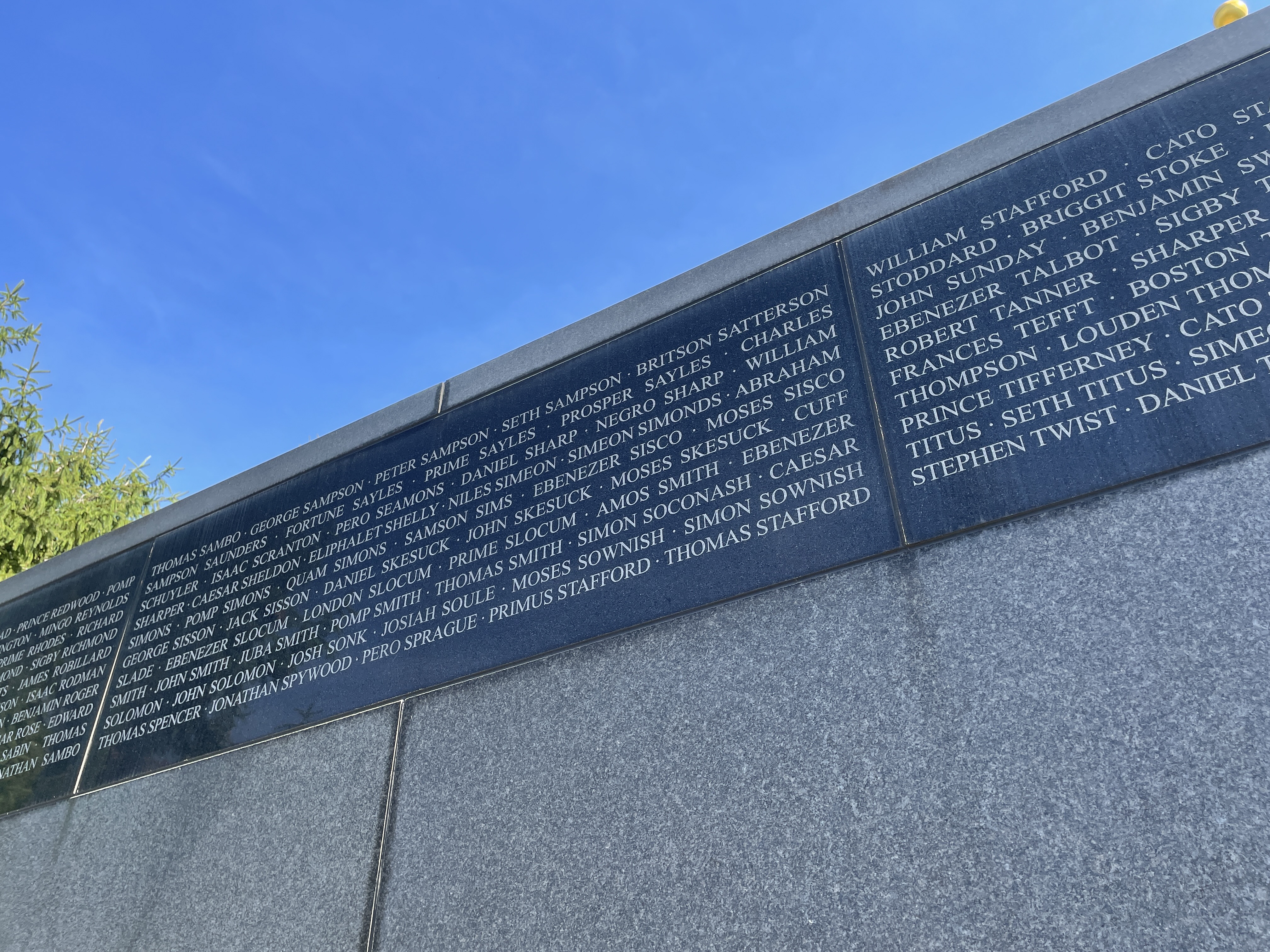
By 1999 Bradford submitted plan for the larger monument.  The design was a simple: platform with a wall that has two doorways and names of First Regiment soldiers engraved on the wall. Since no muster rolls were available for those just involved in the Battle of Rhode Island, Bradford agreed to engrave the names of all known members of the regiment. 

Federally funded projects require an Environmental Impact Assessment in which groups with direct interest are given opportunity to comment. RIDOT invited 12 groups – Black organizations, Native tribes, local institutions like Rhode Island Historic Preservation and Heritage to comment on the plans.  The basic list was the known black soldiers, but the list for inclusion was open to the families of indigenous soldiers and many of those names were added at their family’s request.

By February of 2000, two narratives had been written explaining the creation of the regiment. The battle narrative (written by Carl Becker and Louis Wilson) was agreed upon with corrections.  It took 4 years to reach agreement on the following text:3 “And to the soldiers of the Narragansett Indian Nation who fought alongside them.”

In 2006 the Memorial to Black Regiment was dedicated. The story of the valiant efforts of the 1st Rhode Island Regiment (the Black Regiment) is engraved for all to see and the names of these soldiers are remembered. 

The efforts to tell the story of the Black Regiment are not over.  The cause continues because the Memorial is in need of repairs and funds must be raised to do the required work.  

Through the efforts of the NAACP the story of the Black Regiment is being told and there is a dedicated spot on the battlefield to honor their valor at Bloody Run Brook.

Sick at Butts Hill: the Fort as Hospital

Leave a comment

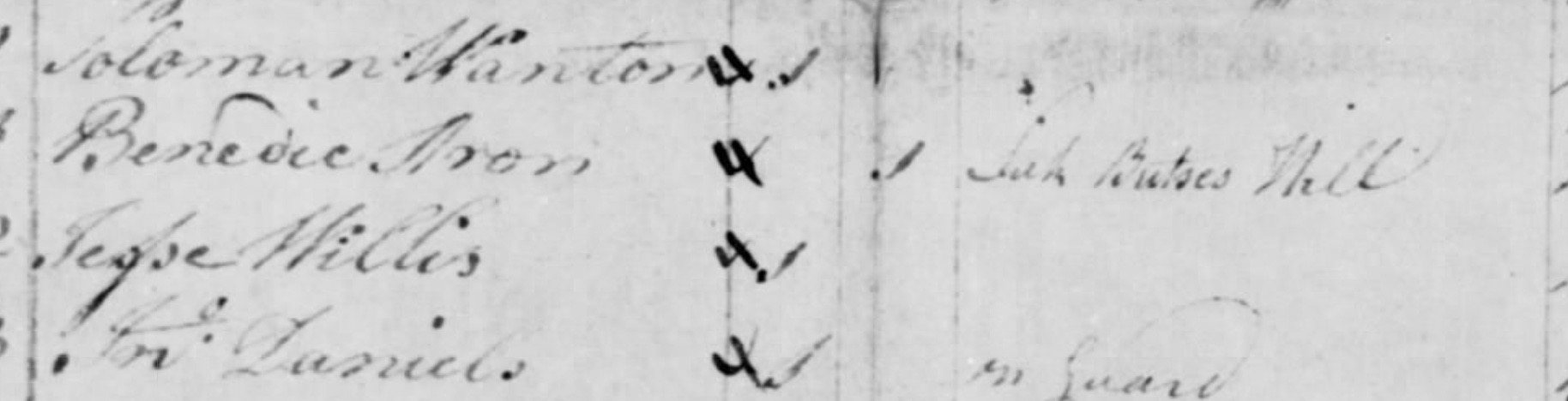
I have been trying to document the Black Regiment at Butts Hill, and Rhode Island historian Christian McBurney sent me a record of two soldiers who were listed as “sick, Butts Hill” in an August 22, 1778 muster roll. That led me to look into the role the fort played as a field hospital during the Siege of Newport and Battle of Rhode Island. I had come across a reference to this medical use in a orderly book for John Jacob’s Regiment of Massachusetts Militia. In this blog I will piece together what I have found so far on the Fort as a field hospital and what these field hospitals would have been like during Revolutionary War times.

Benedic Aron – Sick Butses Hill

A hospital was needed long before the Battle of Rhode Island and provisions had been made for it. The Hospital Department was created by Congress in 1775. There is a letter from Washington that made these provisions for Sullivan’s troops for the Rhode Island campaign.

From George Washington to Thomas Tillotson, 26 July 1778
To Thomas Tillotson
[White Plains, 26 July 1778]Sir,
You are to proceed, immediately, with two assistants to Doctor Isaac Foster Director in the Eastern department, and take his instructions for the procuring of hospital furniture, medicines instruments, and such things as may be thought necessary in the formation of a military & flying hospital for the use and benefit of the troops under the command of Major General Sullivan, at Providence, Rhode Island, in case or provided a proper hospital arrangement has not already taken place in that quarter either by the orders of Major General Sullivan or Doctor Foster. But should there be as yet no establishment of this kind you will repair to and continue with Major General Sulliva[n] in the faithful exercise of the several functions of your profession till dismissed by General Sullivan, the commander in that quarter, or the commander in chief of the army of the United States. Given at Head Quarters this 26th day of July 1778.
G. W——n

There were three main types of hospitals to care for Revolutionary troops: 

1. The general hospital housed in buildings and run by the Continental military.

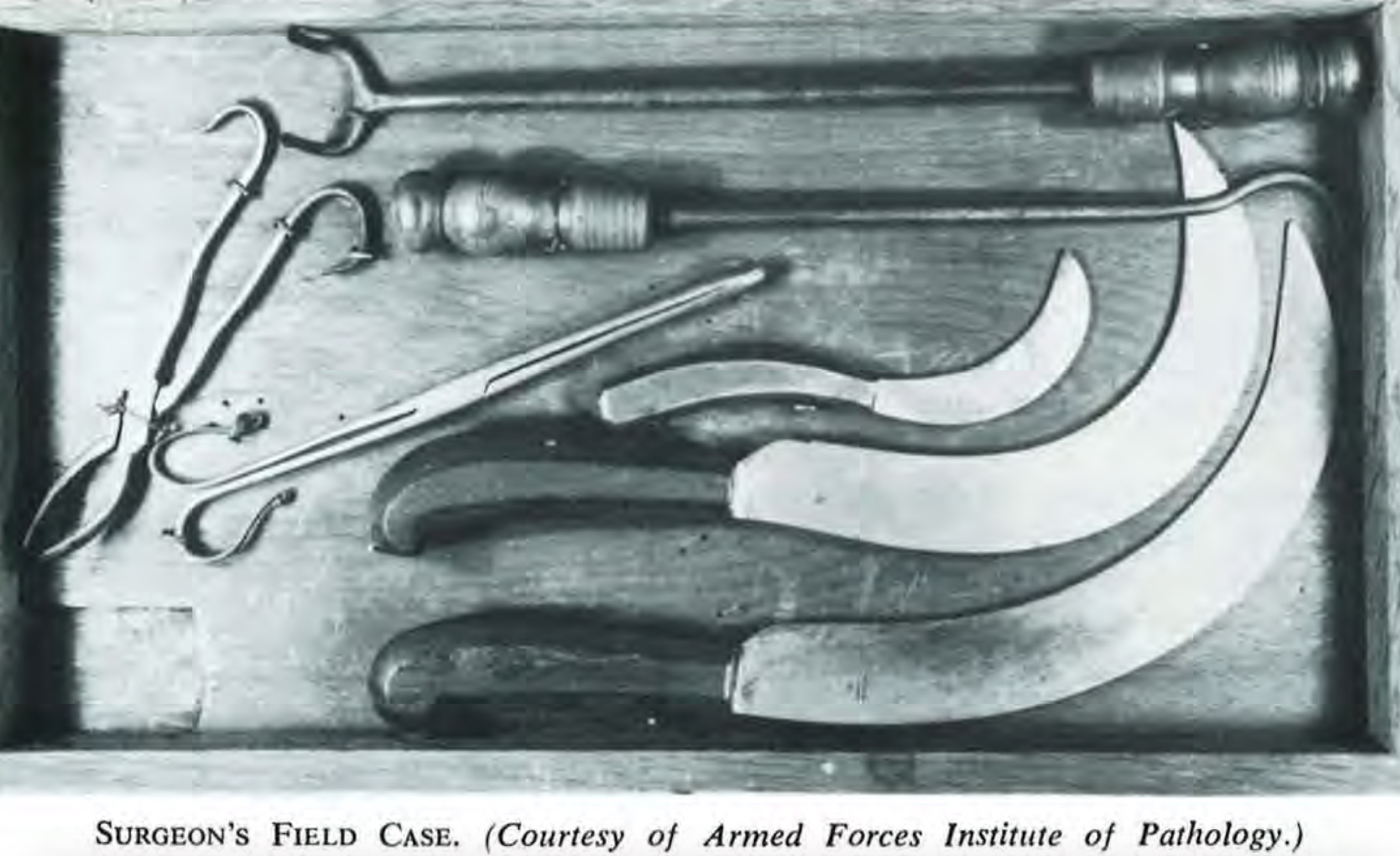
2. The mobile “flying hospital” also manned by Continental personnel in a hut or tent (with a few emergency beds and a surgeons table. These were like the later M.A.S.H. units.

3. The regimental hospital run by the regimental surgeon for larger numbers of soldiers. From the Orderly records it seems that the General Hospital was in Providence and Butts Hill would have been a “flying hospital.” Regimental surgeons and surgeon mates may have been closer to the battle doing triage and directing the wounded to Butts Hill.

Even before the Battle of Rhode Island there was a need for care of the “invalids.” The troops suffered through a major storm and there was little protection from the elements. During the Siege of Newport there were exchanges of fire and troops were wounded. 

Orders of August 12 included “A Return of all the Invalids and persons unfit for marching to be made at Headquarters Immediately that they may be properly Officered and left to man the Fort on the North End of the Island.” The “walking wounded” and sick were guarding the Butts Hill Fort area. The orders included asking the Regimental Surgeons to return their sick daily to the director general of the hospital. They also were to make an accounting of bandages and medicines “that they might be supplied.” 

On August 14th the orders included a statement that “a permit from the director General of the hospital will be a sufficient warrant for any Surgeon or sick person to pass to the main(land).” August 24th the orders read that Corporal Tilson is to grant papers to the mainland “as he thinks proper he will give only to the sick and those that attend them and the surgeon.” 

August 30, 1778 was a day of caring for the wounded and burying the dead. The orderly report expresses General Sullivan’s expectation the wounded and those who have care of them will not want for comfort. ”A party of 100 men from the front line are to collect and bury the dead of this Army who fell in action.” The orders from Tiverton on August 31st are ” All the sick and wounded of the Army are to be removed to Providence as soon as it may be done without endangering them.” 

There were more than 100 wounded in the Battle of Rhode Island. Others would have been injured in the storm and siege warfare. Accidents and illnesses would arise among the soldiers. There was a barracks at the Fort that might have served as a hospital caring for the wounded to stabilize them and send them on to more care in Providence. Regimental surgeons and their mates would have been providing the most immediate care, but the Battle of Rhode Island was an orderly retreat and all efforts would have been made to get the wounded to care at Butts Hill. 

Links to information about Revolutionary War Hospitals:

purposehttp://npshistory.com/publications/morr/medicine-surgery.pdf

Tredyffrin Easton Historical Society History Quarterly Digital archiveshttps://www.tehistory.org/hqda/html/v41/v41n1p025.html

The Action at “Bloody Brook” (Barker Brook)

Leave a comment

“Bloody Brook” is part of Portsmouth folklore. The story is that the brook ran red because of all the blood spilled there at the Battle of Rhode Island. What exactly happened there? Why is Bloody Brook or Barker Brook important to the battle?

Map with permission of the Benson Family

I came across an older account by Eric O’D Taylor with a map by John Norman Benson that helps me understand this.

“Immediately before the American line and just in front of the advancing German reinforcements was a brook, called even now from the appearance that day gave its muddy waters “Bloody Run Brook.” Where the road crossed, a bridge had been built. On either side of the road a soft marsh extended following both banks. If a battery could be placed so that it commanded the road, and, above all the bridge, all was not lost.

…Greene spotted nearly a quarter of a mile up the road at the base of a hill a slight eminence with a flat top and a clear command of the brook’s valley. Quickly he brought three field pieces to the place and opened on the advancing British ..

To return to Malsburg (a German commander). At nine AM he left his men north of Bloody Run Brook beside and even on the slopes of Barrington Hill. Re-crossing the brook, he came upon Lt. Murarius’ company already demoralized by the fire from the new battery. Reducing them to some sort of order, he continued to the rear and found the ammunition carts which he was seeking. …. If Malsburg was to advance, the troublesome redoubt with its three cannon must be taken or silenced. Eagerly he hurled again the insignificant mound all troops stills out of the brook. It was a distinct mistake. Slight as the elevation of the redoubt looked from the road and Turkey Hill, it loomed like a fortress above the low valley of the marshy brook. Encumbered in the marsh across which they must jump from grass tuft to grass tuft, the Hessians staggered forward. . Now they are on firm ground; the guns as just ahead of them; they slow up a moment to dress ranks for the charge. Does someone move in the bushes to right, to left, of the redoubt? It is too late. The word is given. The charge goes home—and crumples like paper before the sheets of flame which burst from behind the stone wall lining the road, from the windows of a house before now hidden in the trees, from the underbrush and from the super heights of the redoubt itself. As Malsburg withdrew his shattered column, finding refuge behind the wall on the right of the main road, he saw the elated defenders of the little redoubt, break out from their hidden defenses. “They were mostly wild looking persons,” he wrote, in their shirtsleeves. Among them, too, were many negroes.”

From Campaign on Rhode Island by Eric O’D Taylor and illustrated with woodcuts by John Norman Benson. This booklet is in the collection of Town Historian James Garman. There is an abbreviated pamphlet available online: http://www.newportalri.org/

Rhode Island Military Units: The Varnum Continentals

Leave a comment

The Varnum Continentals is a non-profit historic and patriotic organization that owns Varnum House Museum and the Varnum Armory and Military Museum. They are named in honor of James Varnum who served as Brigadier General in the Continental Army.

Varnum Continentals Image by Jay Killian

Varnum’s military career began with the Kentish Guards who were chartered as a militia by the Rhode Island General Assembly in 1774 as a unit of the Rhode Island Militia. Varnum was one of the founders of the Kentish Guards and he was elected their first commanding officer.

With the outbreak of the War for Independence, Varnum was commissioned by the RI Assembly as a Colonel of the First Regiment of Infantry. He served in the Continental Army as a Brigadier General from 1777-1779. He served in the siege of Boston, the battles of Long Island, White Plains, Red Bank (New Jersey), at Valley Forge and the Battle of Rhode Island. During the Battle of Rhode Island, Varnum’s Brigade – stretched across West Main Road and faced Turkey Hill. It was comprised of four continental regiments – 2nd Rhode Island, Livingston’s 1st Canadian, Sherburne’s and Webb’s. In all, Varnum commanded 800 Continentals in the Battle of Rhode Island.

Varnum was an advocate for the establishment of the 1st Rhode Island Regiment (known as the Black Regiment). This is his letter to Washington proposing the unit.

From Brigadier General James Mitchell Varnum
Camp [Valley Forge] Janry 2d 177[8]

Sir—
The two Battalions from the State of Rhode Island being small, & there being a Necessity of the State’s furnishing an additional Number to make up their Proportion in the continental Army; The Field Officers have represented to me the Propriety of making one temporary Battalion from the two, so that one intire Core of Officers may repair to Rhode Island, in order to receive & prepare the Recruits for the Field. It is imagined that a Battalion of Negroes can be easily raised there. Should that Measure be adopted, or recruits obtained upon any other Principle, the Service will be advanced. The Field Officers who go upon this Command are Colo. Greene, Lt Colo. Olney and Major Ward: Seven Captains, Twelve Lieuts., six Ensigns, one Pay Master, one Surgeon & Mate, One Adjutant & one Chaplin. I am your Excellency’s most obdt Servt
J. M. Varnum

In 1907 a group of local men -(many had formerly been members of the Kentish Guard) – chartered the Varnum Continentals “to perpetuate the customs, uniform and traditions of the period [of the American Revolution], and thereby, and in other ways, to encourage patriotism in the people.” On December 31, 1992, Bruce Sundlun (Governor and Captain General of the State of Rhode Island and Providence Plantations) formally reactivated Varnum’s Regiment of May 4, 1775, as a unit of the Rhode Island Militia.

References:

https://varnumcontinentals.org

McBurney, Christian. The Rhode Island Campaign. Westholme Publishing, Yardley PA, 2011.

Day of Battle: Skirmishes by Lehigh Hill

Leave a comment

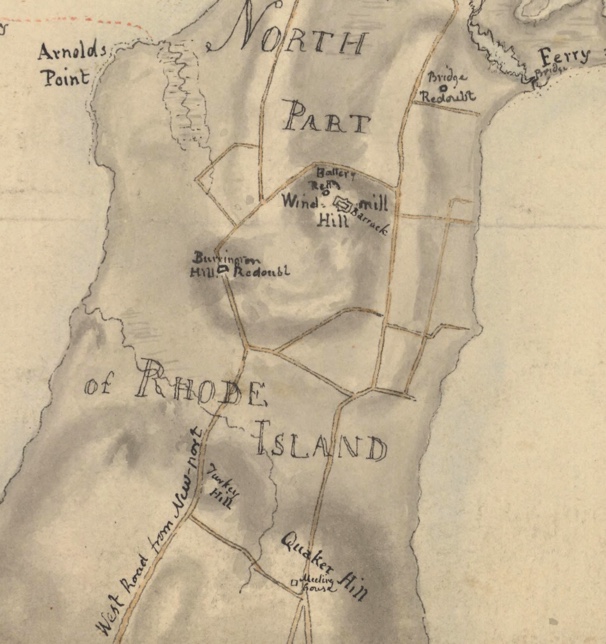
The skirmishes around Lehigh Hill have taken on importance because of the presence of the Black Regiment. We call the area Lehigh Hill, but the British called it Burrington’s Hill and it was known as Durfee Hill by the Americans. The British had constructed a redoubt (temporary fortification) right by the West Road.

This redoubt became a focal spot for American defenses and British attacks. During the Battle of Rhode Island this thick walled redoubt became the strong position of the Rhode Island First Regiment, the Black Regiment. Normally led by Christopher Greene, it was led at this time by Major Samuel Ward. Around 10 AM the British, led by von der Malsburg, charged this position. Malsburg would write: “We found obstinate resistance, and bodies of troops behind the work (redoubt) at its sides, chiefly wild looking men in their shirtsleeves, and among them many negroes.” Malsburg pulled back, but General von Lossberg ordered another attack around 11:30 AM. British vessels (the Sphynz, Spitfire and Vigilant) had put themselves in good position to be shelling the Americans from Narragansett Bay. This attack was repulsed on land and the naval attack was ineffective. General von Lossburg personally directed a third more powerful assault. American General Nathanael Greene ordered Colonel Israel Angell’s 2nd Rhode Island Regiment to support Ward’s First Rhode Island Regiment. They were able to reach the redoubt before the British forces.

We have some first hand accounts from the leaders of both American regiments.

From the diary of Samuel Ward (First Rhode Island Regiment):

Early yesterday morning, the enemy moved out after us, expecting that we were leaving the island, and took possession of the Heights in our front. They sent out parties in their front, and we made detachments to drive them back again. After a skirmish of three or four hours, with various success, in which each party gave way three or four times, and were reinforced, we drove them quite back to the ground they first took in the morning, and have continued there ever since. Two ships and a couple of small vessels beat up opposite our lines, and fired several shots, but being pretty briskly fired upon from our heavy pieces, they fell down, and now lay opposite the enemy’s lines. Our loss was not very great, it has not been ascertained yet; and I can hardly make a tolerable conjecture. Several officers fell, and several are badly wounded. I am so happy to have only one captain slightly wounded in the hand. I believe that a couple of the blacks were killed and four or five wounded, but none badly. Previous to this, I should have told you our picquets and light corps engaged their advance, and found them with bravery.”

From the diary of Israel Angell (Second Rhode Island Regiment):
August 29th, 1778. A Clear morning and Very Cool the ( ) Recd orders last evening to Strike their tents and march to the north end of the island; the advanced piquet was to come off at 12 oclock the enemy finding that we had left our ground pursued with all possible speed. Come up with our piquet about sunrise and a smart firing begun, the piquet repulsed the Brittish troops 2 or 3 times but was finally obliged to retreat as the Enemy brought a number of field pieces against them. The Enemy was soon check’t by our Cannon in coming up to our main body and they formed on Quaker Hill and we took possession of Buttses Hill the left wing of the British army was Compossed of the hessians who Attackt our right wing and a Sevear engagement Ensued in which the hessians was put to flight and beat of the ground with a Considerable loss. Our loss was not very great but I cannot assertain the number. I was ordered with my Regt to a Redoubt on a Small hill which the Enemy was a trying for and it was with Difficulty that we got there before the Enemy. I had 3 or 4 men kill’d and wounded today at night I was ordered with my Reg to lie on the lines. I had not Slept then in two nights more than two or three hours. The Regt had eat nothing during the whole Day. This was our sittuation to goe on guard, but we marched off Chearfully and took our post.

At this point the Americans were being flushed out of the area in the valley north of Turkey Hill and some of the British soldiers had moved beyond the redoubt. Nathanael Greene in command of the American troops saw an opening to attack a vulnerable spot in the Hessian lines. He sent in Sherburne’s and Jackson’s Continentals. The American line included 1600 soldiers (Varnum’s Brigade of 2nd RI, Livingston’s 1st Canadian, Sherburne’s, Webbs) as well as 1st RI, Lauren’s Guard and Jackson’s men. A bayonet charge by Jackson’s troops helped turn the tide. Greene sent in Lovell’s brigade with John Trumbull in charge to attack the Hessians. The British forces began to retreat to Turkey Hill. By 3:30 PM the fighting on the west side had ended.

In his August 31st letter to Congress, General Sullivan would write”

“The firing of artillery continued through the day, and the _ with intermission six hours. The heat of the action continued near an hour, which must have ended in the ruin of the British army, had not their redoubts on the hill covered them from further pursuit. We were about to attack them in their lines, but the men’s having had no rest the night before, and another to eat either that night or the day of the action, and having been in constant action through most of the day, it was not thought advisable, especially as their position was exceedingly strong, and their numbers fully equal, if not superior to ours.”

Plan of the Battle of Rhode Island from a Commonwealth Land Title Insurance Company map, 1926

Resources: As always, an excellent description of the Battle is in Christian McBurney’s Rhode Island Campaign.

Other sources include Paul Dearden’s The Rhode Island Campaign of 1778 (1980)

Anthony Walker’s So Few the Brave, 1981.

Geake, Robert. From Slaves to Soliders. Yardley, Pennsylvania, Westholme Publishing, 2016.

Angell, Israel. Diary of Colonel Israel Angell Commanding the Second Rhode Island Continental Regiment during the American Revolution 1778-1781. Edited by Edward Field. Providence; Preston and Rounds, 1899.

A Memoir of Lieut – Colonel Samuel Ward, First Rhode Island Regiment, Army of the American Revolution; John Ward, New York, 1875. (available on Kindle)

Older Entries