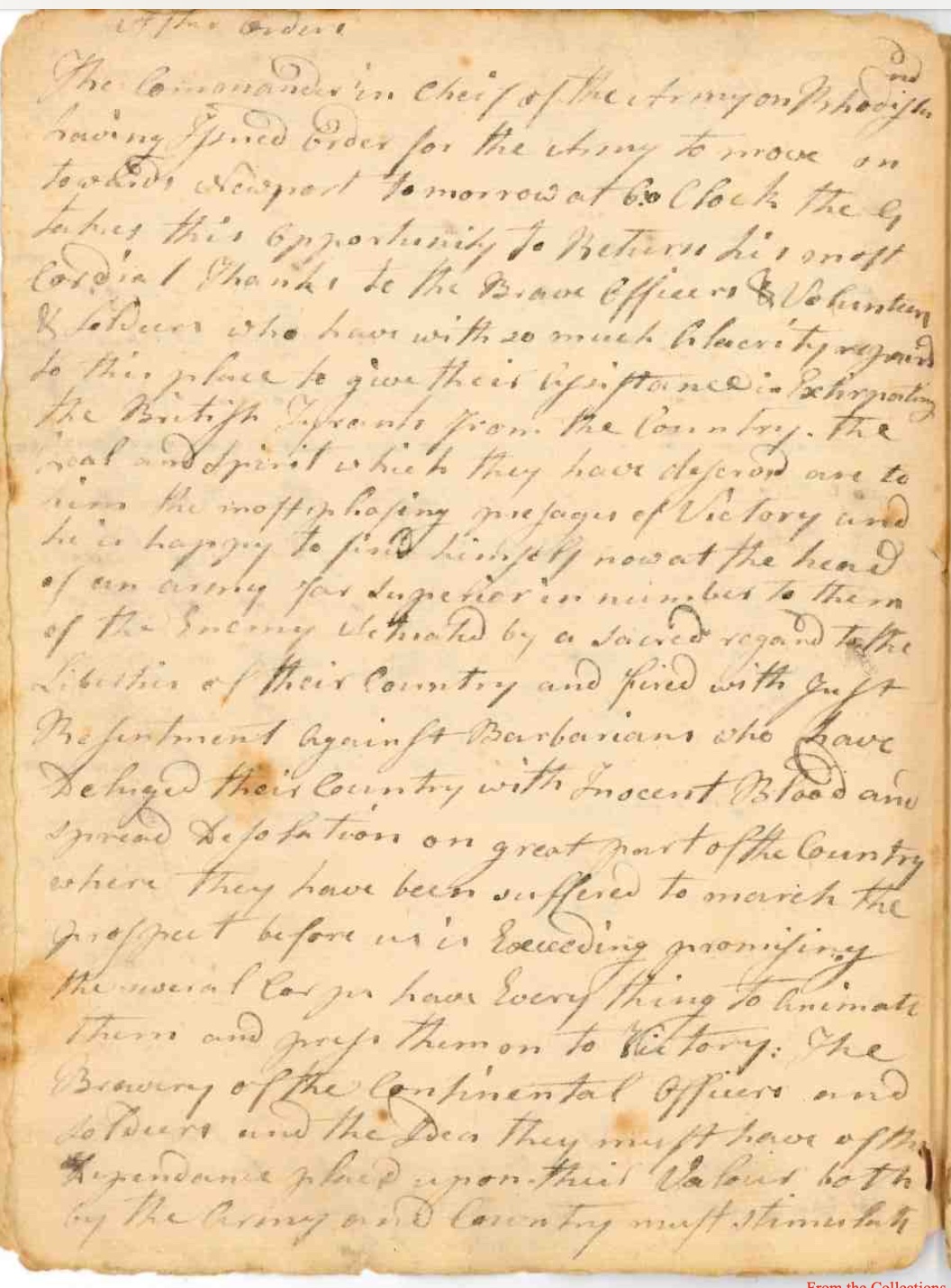
Orderly books help us to put together the pieces of what happened during the Battle of Rhode Island. Orderly books were kept by each Revolutionary War regiment. They documented troop movements, military orders, troop pay, conflicts, and the day to day happenings of that regiment. They tell us about who was in charge and what the plans were and sometimes offer details of concerns and punishments. Recently I came across an orderly book online at the Henry Ford Museum from a Connecticut Militia that fought in the Rhode Island Campaign. This orderly book belongs to Colonel Samuel Chapman’s Connecticut Militia Regiment. Transcribing these books is an art in itself, but Historian John Robertson was kind enough to give me his transcription.
After Orders [MG Sullivan]
The G (General) takes this opportunity to Return his most Cordial Thanks to the Brave Officers & Volunteers & soldiers who have with so much Alacrity repaird to this place to give their Assistance in Extirpating the British Tyrants from the Country. the Zeal and sprit which they have des???d are to him the most pleasing presages of Victory and he is happy to find himself now at the head of an army far superior in numbers to them of the Enemy.
Actuated by a Sacred regard to Liberties of their Country and fired with Just Resentment Against Barbarians who have deluged their Country with Inocent Blood and Spread Desolation on great part of the Country where they have been suffered to march the prospect before us is exceeding promising the Several Corps have Every thing to Animate them and press them on to Victory: The Bravery of the Continental Officers and Soldiers and the idea they must have of the Dependance placed upon their Valour both by the Army and Country must stimulate them to support the Character they have so Justly acquired
The Independant Corps and Volunteers have so Chearfully come to assist in this Enterprize have every Inducement to Exert themselves to support the Reputation they have acquired by flying so freely to the Relief of their Distressed Country The State Troops which the G. has Long since had the Honor to Command he has the strongest reason to believe they will not suffer themselves to be Outshines in acts of Bravery by any Troops in the Army the Militia composed of the Respectable Freemen & Citizens of America who Fought the year must now feel every Inducement to spur them on to Conquest and Glory.
The character of the Several Corps which compose the Army the Expectation of the Country the safety of our Land and in short every thing which animates men to fight and conquer calls aloud upon us to act a part worthy of Freemen and becoming the Character of Americans. The Gnll. on his part assures the Brave army that he will with the utmost chearfulness share with them Every Danger and fatigue and is ready to Venture his Life in every Instance where the good of his Country callsfor it to them and to his Country he stands reday ph??? or to sacrifice his Life if Necessary and from the Brave Officers and men which he has the honor to Command he Expects to find the same sentiments in so just a Cause we must Conquer we must Win the laurels which await us and return in Triumph to the Arms of our grateful Country.
The commanding Officers of Corps will forbid their men in the most positive manner plundering the Inhabitants disobedience of this order will be punished with the utmost severity.
M:G for the day to morrow Green B:G: Cornel F:O: Colo. Bigelow LtColo. Peabody Mr. Philips BM Johnson
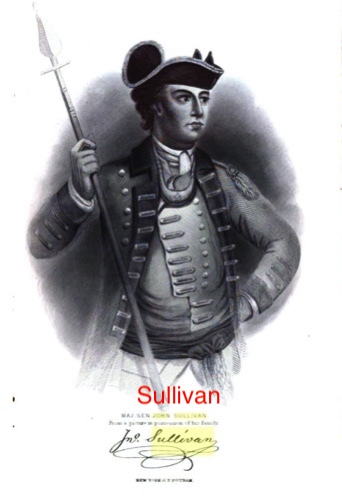
The Occupation of Aquidneck Island dragged on for almost two years when a plan was devised to work with French allies in pushing the British out of the island. On May 4, 1778 Congress ratified a treaty of alliance with France. The Rhode Island Campaign was devised as a wedge action. The Americans, under the leadership of John Sullivan, would cross from Tiverton to Portsmouth and drive south to set up a siege of Newport. Meanwhile the French, led by d’Estaing, would arrive by sea and attack the British from the sea.
July 11, 1778, Continental Congress authorized Washington to request the northeastern states to raise militia for a joint operation with the French.
July 20, 1778, d’Estaing announced he would sail for Newport and not the alternate target of New York.
July 22, 1778, Washington’s delayed letter informs Sullivan that the French fleet is headed to Newport, and he directs Sullivan to increase the size of his militia forces from 5000 to 7500. Varnum’s and Glover’s brigades along with an additional attachment under Henry Jackson would head towards Providence.
July 27, 1778, Washington dispatches two Continental Army divisions under General Nathanael Greene and General Lafayette to Rhode Island. Although Greene was the Army Quartermaster, he was anxious to have a command, especially in his home state.
July 29, 1778, French ships arrive at Narragansett Bay. Washington had arranged for pilots to guide the French ships in the Bay. Two or three ships were stationed in the shallow Sakonnet River to the East of Aquidneck Island. Other ships positioned anchored near the entrance to the Sakonnet Channel. Most of the French ships had anchored about three miles south of Conanicut Island (Jamestown).
Four British frigates anchored at various points of the west side of Aquidneck Island where they would remove their cannons, ammunition and supplies. On the Sakonnet side the Spitfire and Alarm and the sloop Kingfisher were unloading at Fogland Ferry. In Newport harbor the Flora and Falcon did the same.
July 30, 1778, trapped by the French navy, British ships the Kingfisher, Alarm and Spitfire were ordered to be torched. Ammunition that had remained on the vessels caused explosions.
August 1, 1778, General Sullivan and Admiral d’Estaing meet, agree on simultaneous attacks on the Island on August 8. British Commander Pigot was expecting a siege and he ordered all sheep and cattle in Portsmouth and Middletown (except one per family) to be driven behind British lines in Newport. Carts, wagons, and tools like picks and axes were all collected and brought to Newport. The soldiers’ families and regimental baggage were brought to Newport. Wells in Portsmouth and Middletown were filled in so there would be no drinking water for the enemy.
August 3, 1778, British forces felled trees to block the roads running from Portsmouth and Middletown into Newport. To prevent the French from landing their troops, five or six transports were sunk by Goat Island. One of them (the Lord Sandwich) had been James Cook’s ship Endeavour.
August 5, 1778, more British ships (Orpheus, Lark, Cerberus, Juno and Pigot) were purposely sunk in the harbor to hinder the French and to avoid their capture.
August 6, 1778, Due to late arriving militia, Sullivan informs d’Estaing of postponement of the attack. British cannons fire on French ships.
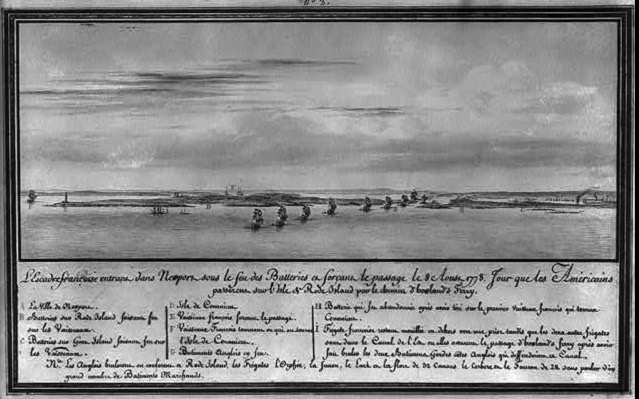
August 7-8, 1778, d’Estaing enters Narragansett Bay, causing the British to withdraw from north end of the Island into prepared positions along the Newport-Middletown border.
French ships in a row
August 9, 1778, Realizing the British had withdrawn south, Sullivan moves his forces onto the Island. Two to three thousand French forces land on Conanicut Island. D’Estaing is furious that the Americans have reached Aquidneck Island early. D’Estaing is alerted to the imminent arrival of Howe’s fleet which was coming from New York. He decides to go out and fight Howe’s fleet and then go to the aid of the Americans. There was shelling between the French fleet facing Newport and the shore batteries controlled by the British.
August 10, 1778, French head out to sea. Both French and British fleets maneuver for advantage, but before they can engage, both fleets are scattered and damaged by a hurricane. Both leave for port and repairs. American commander John Sullivan prepared to shorten the distance between the American lines and the British line. He was going to lay a siege because by then he had 11,000 men.
August 11 – 12, 1778, General Sullivan prepares to work toward British positions, but the hurricane causes him to delay. The weather during the night of the 12th was especially fierce and the Americans had little shelter from the pelting rain and wind. The camp was a swamp.
For the British and French fleets out on the water, the weather turned to serious wind gusts. Heavy rain, gale force winds and thick fog hampered both fleets. The winds began to topple the masts. By 4 am on the 12th the French flagship Languedoc had lost its bowsprint, all of its masts and its rudder. It was simply floating without being able to steer.
August 15, 1778, Americans open the Siege of Newport. The Americans needed to construct defensive works, so Sullivan marched them south with banners flying. By 5 PM they halted and pitched camp by Honeyman Hill in Middletown. This was a high point where the Americans could view the British lines. However the 20 day enlistments of many militia units were up and they left. Sullivan was waiting for new units to arrive. Col. Paul Revere commanded the Boston artillery train and John Hancock was major general of the 3000 member Massachusetts militia.
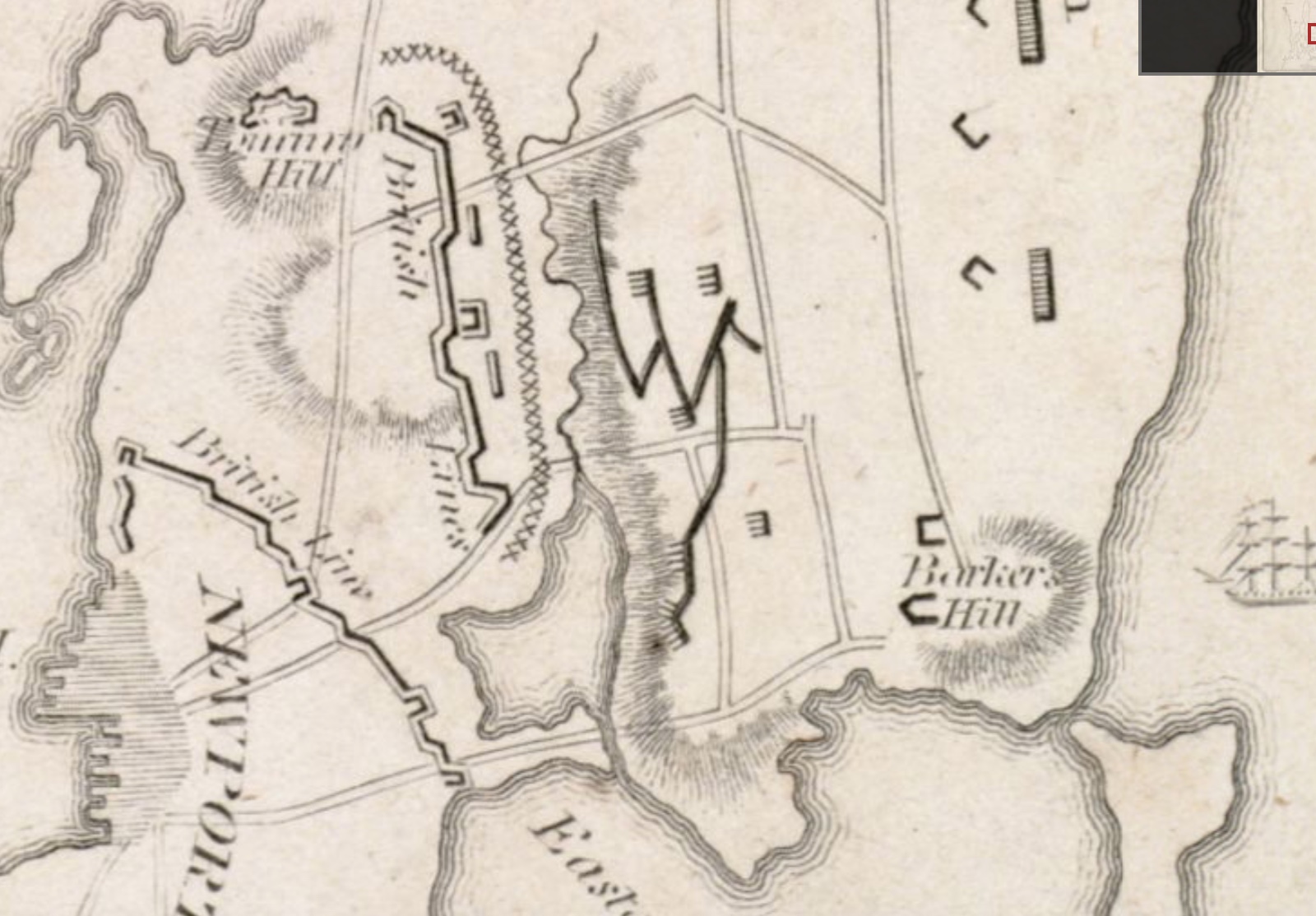
British lines on the left – American lines on the right.
August 16, 1778, Americans were preparing a four cannon battery on the western slope of Honeyman Hill. The British opened fire as the fog lifted, so the Americans worked on the trenches and battery in the dark or fog.
August 20, 1778, d’Estaing’s battered ships return to Narragansett Bay. D’Estaing informs Sullivan he must immediately leave for Boston for repairs. His order from the King of France was to protect his fleet.
August 21, 1778, Sullivan sends Nathanael Greene, Lafayette and Col John Langdon to board the Languedoc – d’Estaing’s ship and talk with d’Estaing. D’Estang still decides to have the fleet sail for Boston.
August 24, 1778, Sullivan receives word that a British naval force is on its way to Newport. Sullivan and his officers prepare for a quick withdrawal. At a council of war there is unanimous agreement to move the troops to the Portsmouth end of the island to wait for the French return. Sullivan advocated for a gradual and orderly retreat.
August 25, 1778. All unnecessary baggage was removed off the island. Work on the trenches stopped. Volunteers began to leave in large numbers. Revere and his artillery and Hancock and his Massachusetts militia are among those leaving the island. Hancock asks for a letter of introduction to talk to d’Estaing in Boston. Mortars and heavy cannon were taken off the island.
August 27, 1778, Sullivan sends Lafayette to Boston to determine when d’Estaing would come back to Rhode Island. Lafayette made the 70 mile trip in just 7 hours. By this time Sullivan had lost 3,000 volunteers through illness or decisions to leave the island.
August 28, 1778, American council of war decides to withdraw Patriot forces to defensive positions around Butts Hill. They would be close to the ferry landings if they needed to withdraw completely. By 8PM the soldiers put down their tents and marched out with Greene commanding the West column up West Main Road and Glover leading the other column up East Main.
Resources: This timeline is based on Christian McBurney’s book – The Rhode Island Campaign.
The Occupation of Aquidneck Island dragged on for almost two years when a plan was devised to work with French allies in pushing the British out of the island. On May 4, 1778 Congress ratified a treaty of alliance with France. The Rhode Island Campaign was devised as a wedge action. The Americans, under the leadership of John Sullivan, would cross from Tiverton to Portsmouth and drive south to set up a siege of Newport. Meanwhile the French, led by d’Estaing, would arrive by sea and attack the British from the sea.
General GreeneSiege of Newport
Timeline for the Campaign
July 22, 1778, Washington informs Sullivan that the French fleet is headed to Newport, and he directs Sullivan to increase the size of his militia forces from 5000 to 7500.
July 27, 1778, Washington dispatches two Continental Army divisions under General Nathanael Greene and General Lafayette to Rhode Island.
July 29, 1778, French ships arrive at Narragansett Bay.
August 1, 1778, General Sullivan and Admiral d’Estaing meet, agree on simultaneous attacks on the Island on August 8.
August 6, 1778, Due to late arriving militia, Sullivan informs d’Estaing of postponement of the attack until August 10. A British Fleet under Admiral Sir Richard Howe leaves New York for Newport.
August 7-8, 1778, d’Estaing enters Narragansett Bay, causing British to withdraw from north end of the Island into prepared positions along the Newport-Middletown border.
August 9, 1778, Realizing the British had withdrawn south, Sullivan moves his forces onto the Island. D’Estaing is alerted to the imminent arrival of Howe’s fleet.
August 10, 1778, French head out to sea. Both French and British fleets maneuver for advantage, but before they can engage, both fleets are scattered and damaged by a hurricane. Both leave for port and repairs.
August 11, 1778, General Sullivan prepares to invest British positions, but the hurricane causes him to delay.
August 15, 1778, Americans open the Siege of Newport.
August 20, 1778, d’Estaing’s battered ships return to Narragansett Bay. D’Estaing informs Sullivan he must immediately leave for Boston for repairs.
August 21, 1778, French fleet sails for Boston.
August 28, 1778, American council of war decides to withdraw Patriot forces from Rhode (Aquidneck) Island
August 29, 1778, Battle of Rhode Island is fought as Americans retreat northward.
August 30-31, 1778, overnight Sullivan’s army withdraws across the Sakonnet Straight to Tiverton with all its equipment.
Robert Pigott- 1720-1796 Sir Robert Pigot was from a prominent Huguenot family in London. His brother Hugh was an admiral in the Navy. Pigot joined the British Army before the Revolutionary War and in 1758 was a major in Seventieth Regiment. Although he continued in the army, he was elected as a Member of Parliament. He commanded the Fifty-Fifth Regiment in Ireland as colonel in 1775. After this assignment he moved to America. During the Battle of Bunker Hill, Pigot commanded the left flank of Howe’s army. He led the second assault on the colonists’ position but he failed to break the Americans. In 1776, he was promoted to Major General and was placed in command of the British forces occupying Rhode Island. In 1778 he was in command of British forces during the Rhode Island Campaign. This was a joint effort of French and American forces, but the French pulled out unexpectedly when a storm damaged their ships. When the French ships had arrived near Newport, Pigot ordered his forces to evacuate Portsmouth. The Americans progressed close to Newport, but they began a retreat off the island when it was clear that the French would not come back to help them. Pigot’s forces hoped to catch the Americans in their retreat and his men chased the Americans as they prepared to leave via Howland’s Ferry. This action was known as the Battle of Rhode Island. The British were not able to prevent the Americans from retreating off the island. Rhode Island remained in British hands, but Pigot faced criticism for failing to capture the retreating army. He soon moved back to England.
Eyewitness Account – Pigot gives his orders on August 29th: “As soon as the day broke this Morning and we could see as far as the Enemys Encampment it was observed that their tents were struck; I went immediately on top of Dudleys house, and when it grew lighter, I could plainly perceive that the Rebels had struck their whole Camp, and had marched off; hardly a man was to be seen in their Batteries or Trenches. I rode as fast as possible to General Pigot’s quarters in Newport and informed him of it, and returned to the Camp with his orders for all the troops to get under arms with the utmost expedition. The General came to Irishes Redoubt by the time the Troops were assembled, and being satisfied that the Rebels had quitted their position, he gave orders for a part of the Army to march out, in three Columns, to pursue them, but to advance with caution, and not bring on an Action with a part of our force.” Frederick Mackenzie’s Diary – August 29, 1778.
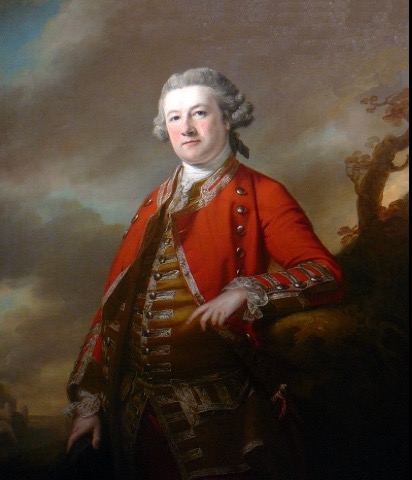
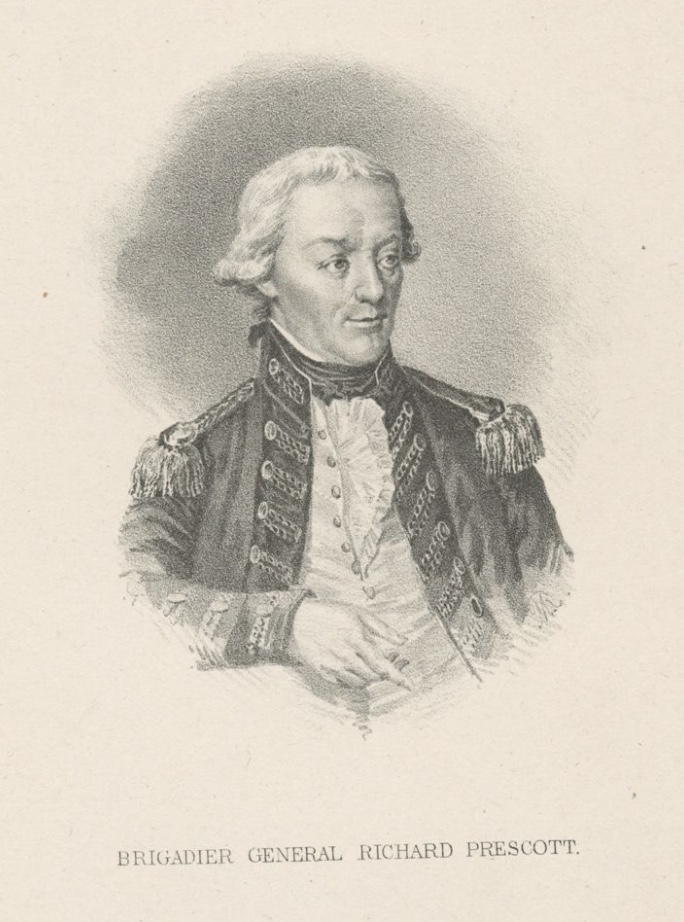
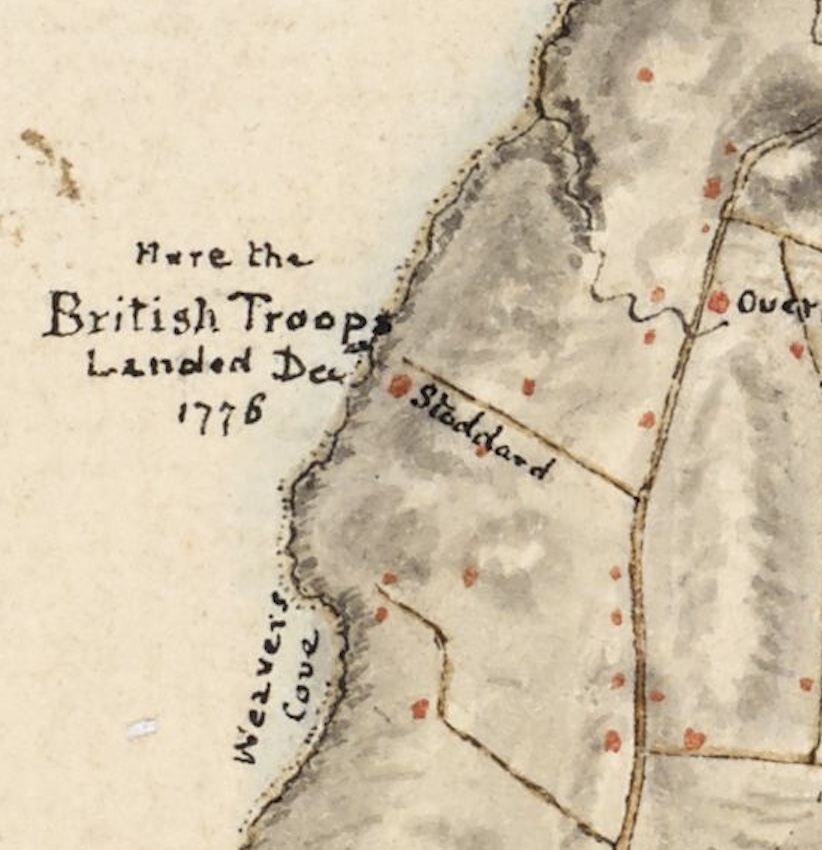
On December 8th, 1776 British General Prescott landed his troops on Aquidneck Island. They landed on the Western shore near the border of Middletown and Portsmouth at Weaver’s Cove. This was the beginning of the Occupation of Rhode Island (Aquidneck Island). The American militiamen were unable to mount a defense and they escaped by using the ferries to Bristol and Tiverton.
The British had ample reason to invade and occupy Aquidneck Island (called Rhode Island at that time). Newport had a fine harbor from which the British fleet could raid up and down the coast. It would enable them to blockade ships carrying supplies from abroad that were needed by the Americans.
Prescott from New York Public Library CollectionFage Map 1777
The British Occupation of Rhode Island would last until October of 1779. Life for the residents deteriorated throughout that time. There were different experiences for those who lived in Newport and those who lived in the farmlands of Middletown and Portsmouth. Newport had more British sympathizers and life for them was good at first. The “well to do” Newporters and British enjoyed concerts, dances, card parties, and Christmas concerts after the British first arrived in 1776. In 1777 daily routines continued. The occupiers took over houses, shops, wharves, and farms. The British and Hessians (German) came with wives and children and all needed food, supplies, housing and heat. The residents competed with the British for scarce items. The British took hay and confiscated cattle and livestock. Residents could hunt birds, catch fish and collect shellfish. The British collected boats and guns. The longer the Occupation lasted, the harder it was on those in the maritime trades such as coopers, sailors, rope makers, etc. Wharves were pulled up for fire wood. Merchants had no supplies coming in so they had little to sell.
Local citizens couldn’t count on growing food for their families. Gardens were raided, fruit was plucked from trees and potatoes were dug up by British soldiers. There was no freedom of movement. Women could travel a little more freely at first, but later they needed passes to leave town. The border of Newport and the rest of the island was gated and locked There was no free press or local government. Births, deaths, marriages were not recorded and Newport lost its property records when the British shipped them to New York and they were ruined by water.
Destruction was even more disastrous when the French fleet was arriving in August of 1778. In creating defensive works. the British demolished homes, chopped down orchards and trees for abatis (a defensive obstacle formed by felled trees with sharpened branches facing the enemy.). Conditions worsened after the Battle of Rhode Island and through to October of 1779 when the British left the island.
The Rhode Island Campaign was a plan by the Americans and their new allies the French to rid the island of the occupying forces.
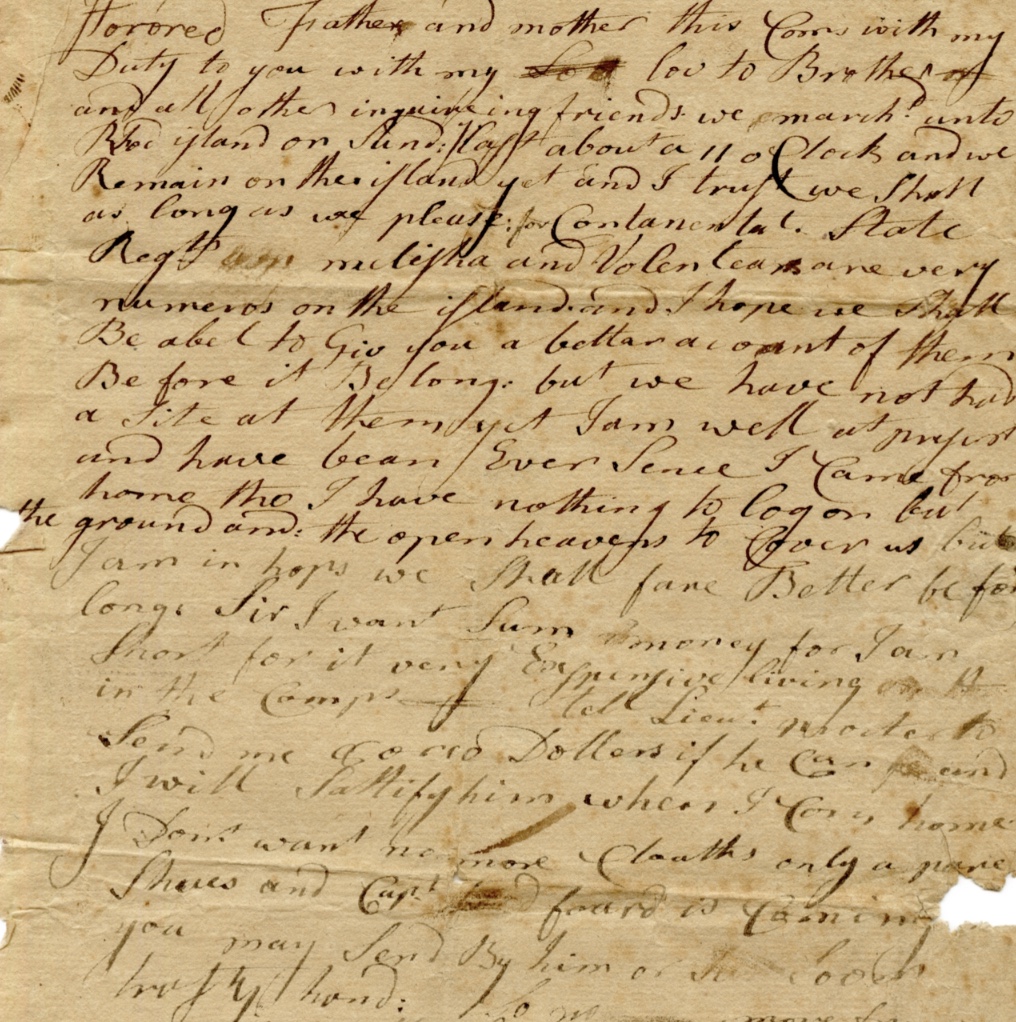
I am always on the look out for primary sources related to the Rhode Island Campaign. I recently came upon two such sources. One is a letter to home from the Portsmouth camp and the other is an orderly book that records orders, events, etc. for a militia regiment from Connecticut. A conversation at a reenactment of the Bristol and Warren raid led me to a letter home from a soldier in the Massachusetts militia. Thankfully the owner of the letter shared both the image and the transcription. The orderly book is in the collection of the Henry Ford Museum, and the museum graciously sent me scans. Historian John Robertson had already transcribed the book so I benefited from his work. The letter was written on a date covered by the orderly book and the two sources together can give us some added details of the early days in the camp before the Siege of Newport.
The auction advertised that the letter was written by John Bettey of Chelmsford, Massachusetts to his father, on August 11, 1778, from the American camp near Portsmouth, Rhode Island.
Bettey wrote: “We march onto Rhode Island on Sunday last about at 11 oClock and we remain on the island yet..” The Sunday would have been August 9th. He is hopeful that they can remain on the island “as long as we please for Continental State Regt. Militia and Volunteers are very numerous on the island.” …”But we have not had a site at them (the enemy) yet.”
Conditions were very poor. Bettey says he is “well at present” although “I have nothing to lay on but the ground and the open heavens to cover us but I am in hope we shall fare better before long.” He complains that it is very expensive at camp and he could like some money. He also wanted his family to send some shoes.
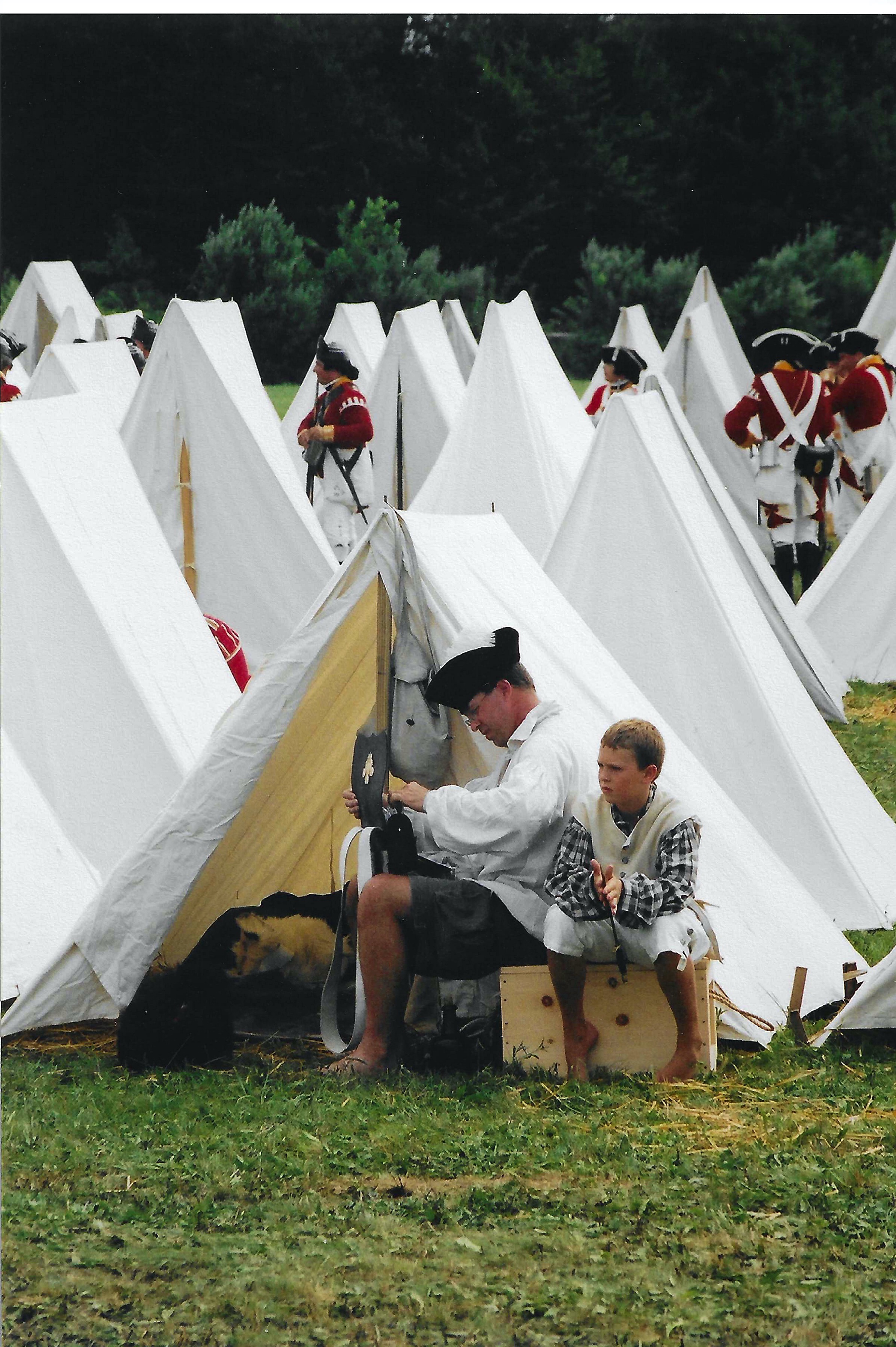
The Orderly Book of Col. Samuel Chapman’s Connecticut Militia Regiment gives us a similar view. From headquarters on August 10th General Sullivan had “Directed to send over all the spare Tents and Destribute them among the Troops that are destitute of Covering also the Volunteers…. Those men that cannot be furnished with Tents are to build Huts and Bush houses …..Comders of Regts and Corps who have Tents on the other side of the River will Immediately send a Detachment from their Companies to bring them over.”
It is hard for me to imagine the soldiers having to build huts and bush houses around Butts Hill just to have shelter. When the storm (hurricane like) hit over the next several days, that lack of shelter would be a major issue.
The letter and the orderly book are small pieces of the puzzle of what happened during the Rhode Island Campaign. However, these small pieces bring the events to life. I will continue to gradually share the events listed in the orderly book as time goes by.
Bettey LetterMissing tentsConnecticut Orderly Book
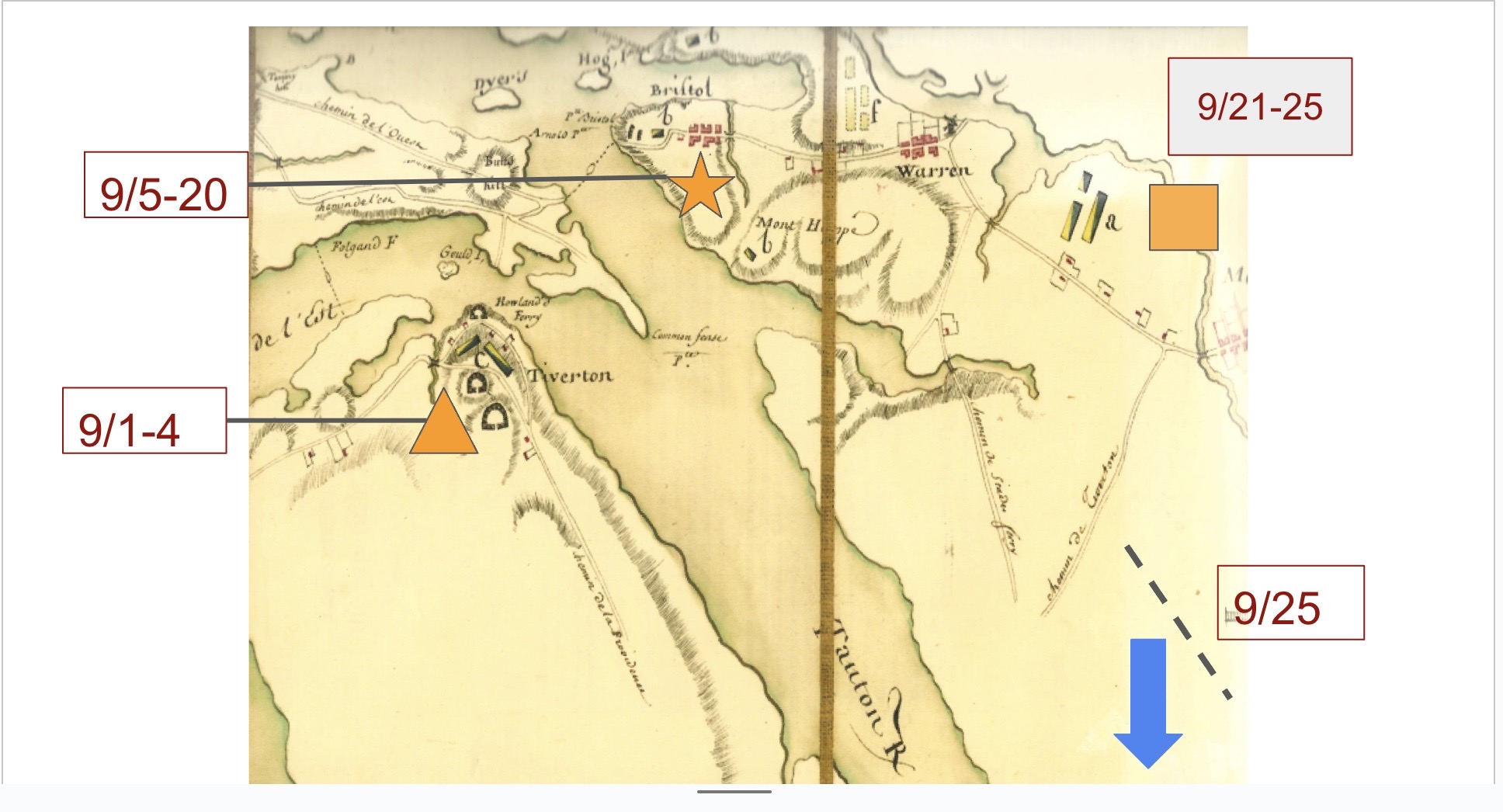
September 1st to 4th. Lafayette is in Tiverton (marked by ORANGE TRIANGLE). He has command of the Eastern Shore of Rhode Island. Lafayette writes a letter from Tiverton on 9/1.
September 5th to 20th. Lafayette is in Bristol (marked by the ORANGE STAR). His headquarters was the Reynolds House. Lafayette writes a letter from Bristol on September 5. On September 8th he writes ”the Bristol post continues to be the most exposed one, and consequently I shall remain here.” Israel Angell’s diary reports he had dinner with Lafayette in Bristol on September 6 and heard that New Bedford had been attacked by the British. He dined with Lafayette on the 12th as well. On September 8th he writes to Silas Talbot from Bristol suggesting a plot to captures the British vessel Pigot. September 13th he writes to his wife Adrienne from Bristol.
September 21st through 24th. Lafayette camps outside of Warren (ORANGE SQUARE near Warren.) He writes to d’Estaing and George Washington from Warren on September 21. In his letter to Washington he comments that in response to advice from General Sullivan, he “is in a safer place behind Warren.” On September 23rd he writes to the President of Congress from outside Warren. ”The moment I heard of America, I loved her. The moment I knew she was fighting for freedom, I burnt with the desire of bleeding for her..”
September 25th. Lafayette left for Boston and the Rhode Island Campaign is at an end. (BLUE LINES OFF TO BOSTON).
By October 5 Washington has requested that General Sullivan grant permission for Lafayette’s leave from duty.
Reynolds House, Bristol. Lafayette Headquarters
Resources: 1899, The Diary of Colonel Israel Angell Commanding Offifficer, 2nd Rhode Island Regiment, Continental Army, Edward Field, Israel Angell, Norman Desmarais
As a researcher for the Battle of Rhode Island Association, I was asked to investigate Lafayette’s role in the Rhode Island Campaign. I looked at the usual “Lafayette stayed here” locations and I wrote about them, but the more I researched the more I realized the very special role Lafayette played in the Rhode Island Campaign. My current project is to trace Lafayette’s movements throughout Rhode Island. It is both a timeline and an attempt to follow him on a map made by his cartographer at the time. What I am sharing now are my approximations. I have used his letters, Orderly Reports, diaries, and trusted secondary sources. Accounts do not always agree, so I have tried to make sure I had confirmations before I listed places and times. This is a work in progress and I would welcome corrections that give me more factual information.
On the Road: The Gathering of the Troops
The Marquis de Lafayette was hopeful about the Rhode Island Campaign as he marched toward Rhode Island. He wrote to General John Sullivan from Saybrook on 28 July, 1778: “I hope a pretty decent set of laurels may be collected upon that island, and we will terminate the whole by joining English country dances to French cotillions in company with the fine and reputed ladies of the charming place.” (1) (Idzerda)
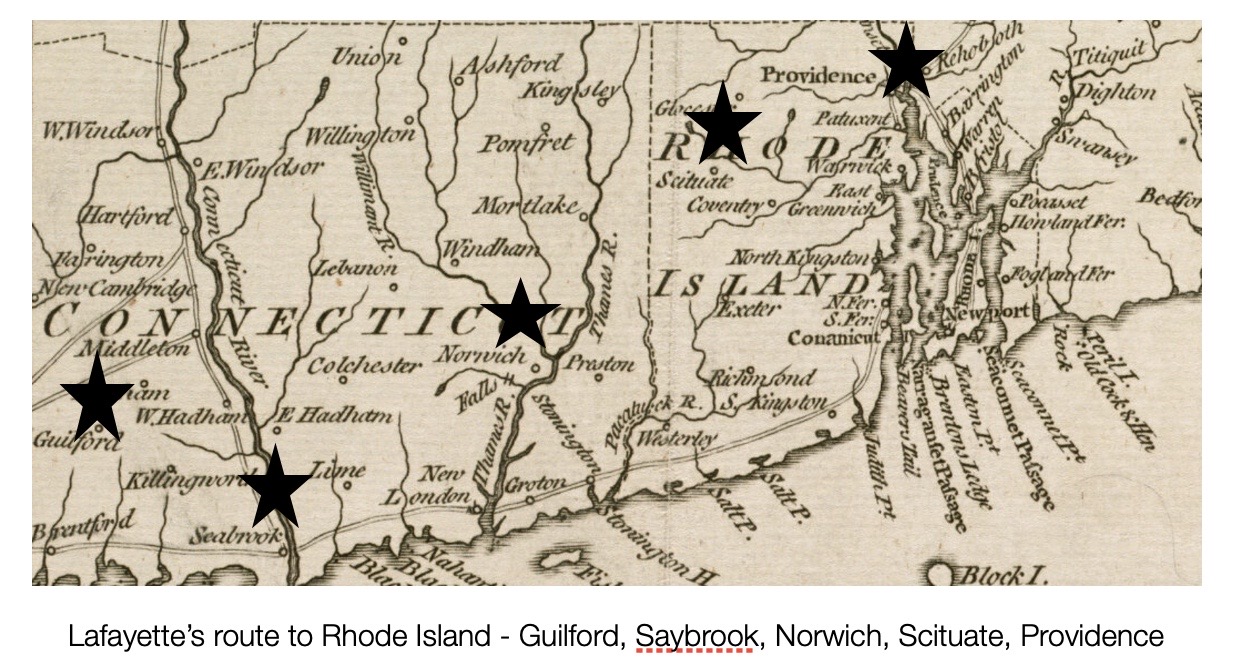
The Rhode Island Campaign was the first joint effort of the American and French forces during the American Revolution. In July of 1778 the French fleet under d’Estaing sailed to America. One idea was for the French to help American forces to free New York from British control, but the fleet had problems sailing in that direction. As d’Estaing steered his fleet toward Rhode Island, General Washington wrote to General Sullivan ordering him to raise 5,000 New England troops. He was to gather provisions and flatboats in preparation to work with the French fleet in releasing the British hold on Aquidneck Island (Rhode Island). Washington put twenty year old Lafayette in charge of General James Varnum’s four regiments as well as Glover’s and Jackson’s regiments. The troops had already started on the road to Rhode Island, and Lafayette had to catch up with them. By July 28th, 1778, Washington divided the forces into two divisions – one under General Nathanael Greene and the other under the leadership of Lafayette. The divisions would include both militia and the more experienced Continental troops. Lafayette caught up with his troops in Lyme, Connecticut. He took a route through Guilford, Saybrook, Norwich and Plainfield, Connecticut before he moved into Rhode Island.
Lafayette had a major role in the Rhode Island Campaign. To his dismay, he would miss being in the action at the Battle of Rhode Island, but he was active in every other phase of the Campaign. This timeline of his movements actually serves to illustrate the various stages of the Campaign. Lafayette was intimately involved in most segments of the action from August 1, 1778 to the end of September.
George Washington gave him joint command of the American troops.
He often served as “Major General of the Day” during the Siege of Newport. That meant he had the responsibility of reviewing the troops, checking supplies, attending the hospital, and carrying out discipline. He would assess the lines and entrenchments to place fortifications. He was the eyes and ears of the commander.
He was an American representative in talks with d’Estaing. He was sent to Boston in a last ditch effort to bring the French Fleet back to Newport.
On his return from Boston he led the last of the American forces off of Aquidneck Island.
He commanded the American troops guarding the East side of Narragansett Bay.
August 1,1778. Lafayette’s first stop is Angell’s Tavern (the GREEN SQUARE) in South Scituate, Rhode Island. The 2 divisions which had headed for Rhode Island met there. This was about 12 miles from Providence, so it was an opportunity for the troops to rest.
August 2-5 1778. Lafayette goes to Providence (located at the Green Circle) ahead of his troops. He stays with Governor Bowen. He accepts Washington’s orders that he shares command with General Greene.
August 4,1778. Lafayette was aboard the French flagship Le Languedoc (Brown Square) to meet with French commander d’Estaing. The French fleet was waiting off of Point Judith and d’Estaing provided Lafayette with the ship Provence to bring him back to Providence. Lafayette writes to d”Estaing on August 5th summarizing their discussions and he also relays the hesitance of Sullivan and Greene to a plan where Lafayette would head a joint effort with French soldiers.
August 6th through the 8th, 1778. Lafayette and his men march toward Tiverton through Rehoboth, Swansea and Fall River to the Howland Ferry., marked by the BLUE STAR. Lafayette is at Sullivan’s Headquarters at Tiverton by August 8th.
Idzerda, Stanley. Lafayette in the Age of the American Revolution, Selected Letters and Papers, 3 Volumes , 1776-1790. Cornell University : Ithaca,N.J. 1979.
This is an account by an eyewitness, but Joseph Durfee is penning his reminiscences many years after the events. At the time of the Battle of Rhode Island, Durfee was a major in Col. Whitney’s Regiment. The last blog related Durfee’s account of the “Battle of Fall River” and this blog entry is a continuation of the account beginning with the Americans crossing to Aquidneck Island.
Preparation for invasion of Aquidneck
” During a considerable part of the month of August following (the Battle of Fall River – see the previous blog), we were busily engaged in procuring arms, ammunition, and provisions for the soldiers, and in building flat-bottomed boats and scows for the troops to cross over the river on to Rhode Island, with a view to dislodge the British army, who then had possession of the island. A barn, now standing near the Stone Bridge, was occupied for a commissary store, of which I had the charge until things were in readiness and the troops prepared to cross over to the island, when I left the store in charge of my friend and relative, Walter Chaloner.
The Expedition Begins
In the fore part of August 1798, the American troops embarked in the boats and scows prepared for them and landed on Rhode Island, where I joined them, having been appointed a Major in Colonel Whitney’s Regiment. Our troops were then marched to a spot but a short distance to the North of what is called Butts’ Hill; where they encamped for the night with nothing but the canopy of heaven for a covering and the ground for our beds. But we were animated with the hope of liberty–with a belief that we were engaged in a righteous cause—and that He, who sways the sceptre of the universe would prosper our undertaking.
Waiting on the French
At this time we were anxiously looking for the French fleet from which we hoped for assistance against the enemy, whose numerous bodies of troops were before us. Soon the French fleet bore in sight, when the British set fire to the shipping in the harbor and blew up most of the vessels within their reach. Not long after the French fleet came up, the British fleet appeared in the offing. Immediately the French fleet tacked about, went about and attacked the British squadron, when broadsides were exchanged and a bloody battle ensued.
The Storm
A tremendous storm came on long remembered as the Angust storm, in which the two fleets were separated, and many who had escaped the cannon’s mouth found a watery grave. The French feet, or so much of it as survived the storm, went into Boston to repair and the remnant of the British fleet went into New York.
Siege of Newport
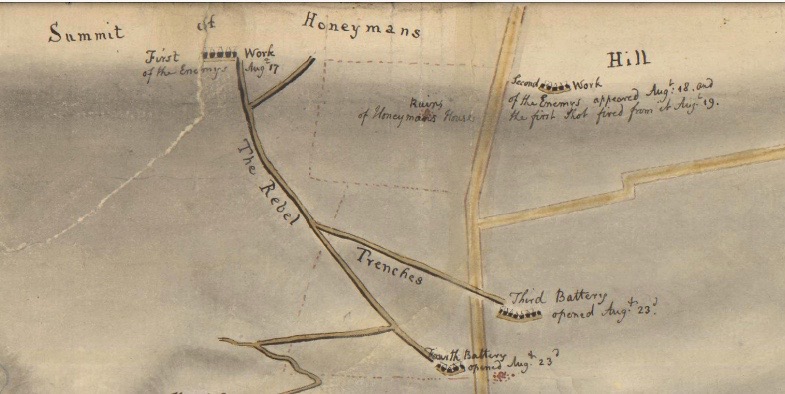
Soon after this storm, our troops marched in three divisions towards Newport. One on the East road, so called one on the West road, and the Brigade, commanded by General Titcomb moved in the centre, until we came in sight of Newport–when orders were given to halt, erect a marque and pitch our tents. General orders were issued for a detachment from the army of three thousand men – our number being too small to risk a general engagement with the great body of British troops then quartered on the South end of the Island. Early on the next morning a detachment of troops, of which I was one, was ordered to proceed forthwith and take possession of what was called Hunneman’s Hill. The morning was foggy and enabled us to advance some distance unobserved by the enemy — but the fog clearing away before we reached the hill, we were discovered by the British and Tory troops, who commenced such a heavy cannonade upon us, that it was deemed expedient by the commanding officers, to prevent the destruction of many of our brave troops, that we should fall back and advance under the cover of night. Accordingly when night came, we marched to the hill undiscovered by the enemy. We immediately commenced throwing up a breast work and building a fort. When daylight appeared, we had two cannon mounted–one twenty-four pounder and one eighteen–and with our breast work we had completed a covered way to pass and repass without being seen by the enemy. The British had a small fort or redoubt directly under the muzzles of our cannon, with which we saluted them and poured in the slot so thick upon them that they were compelled to beat up a retreat. But they returned again at night to repair their fort, when they commenced throwing bomb shells into our fort, which however did but little damage. I saw several of them fiying over our heads and one bursting in the air, a fragment fell upon the shoulder of a soldier and killed him.
Retreat
At this time, we were anxiously waiting the return of the French fleet from Boston, where they had gone to repair. But learning that they could not then return, and knowing the situation of the British troops, that they were enlarging and strengthening their furts and redoubts, and that they had reinforcements arriving daily from New York, it was deemed expedient by our commanding officers, Lafayette, Green and Sullivan, all experienced and brave Generals, that we should retreat to the North end of the Island. Accordingly, on the 29th day of August, early in the morning we struck our marque and tents and commenced a retreat. The British troops followed, and soon came up with our rear-guard and commenced firing upon them. The shots were briskly returned and continued at intervals, until our troops were joined by a part of our army a short distance to the South of Quaker Hill, so called, when a general engagement ensued, in which many lives were lost on both sides. At night, we retreated from the Island to Tiverton. On the following day we left ‘Tiverton, crossed over Slade’s ferry and marched through Pawtucket and Providence to Pawtucket where we remained until our service expired.”
Resources:
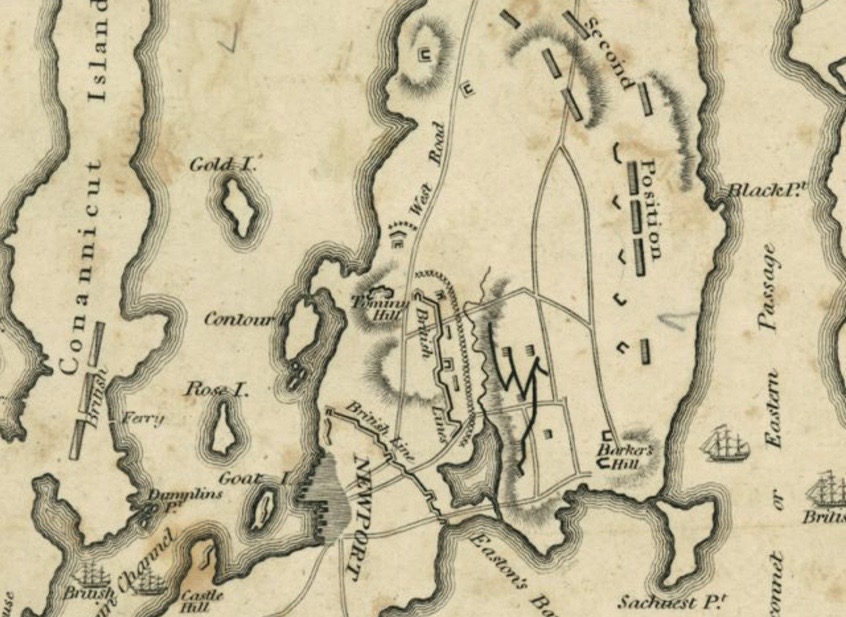
“Plan of the works, which form the exterior line of defence, for the town of New-Port in Rhode Island : Also of the batteries and approaches made by the rebels on Honeymans Hill during their attack in August 1778 / This plan surveyed and drawn by Edward Fage, lieutt of artillery, November 1778.”. https://quod.lib.umich.edu/w/wcl1ic/x-8373/wcl008443. University of Michigan Library Digital Collections. Accessed November 21, 2022.
Reminiscences of Col. Joseph Durfee : relating to the early history of Fall River and of Revolutionary scenes. (1830s)
We often focus on the day of the Battle of Rhode Island, but the Rhode Island Campaign was more than just a day. It began with the cultivation of French help in the war and then the buildup of French and American forces in the Rhode Island area. This blog will focus on the American gathering of troops at Tiverton. The next blog will feature the amassing of flat bottom boats for the landing on Aquidneck Island.
7/22/1778 – Washington received word from Alexander Hamilton that the French were sailing for Rhode Island. Col. John Laurens was sent to Providence to be liaison officer with the French.
DuChesnoy Map
7/23/1778 – Varnum and Glover and Jackson marched toward Rhode Island. “The game for Rhode Island was on.”
7/27/1778 – Lafayette was ordered to surrender half his command to Major General Nathanael Greene.
7/29/1778 – The French fleet arrived off Point Judith. General Sullivan came aboard to tell French the Continentals and militia had not arrived. The Fleet had to wait.
7/31/1778 – General Nathanael Greene appeared in Rhode Island. He brought carpenters and boat builders under Major Benjamin Eyres. Greene devoted himself to supply and transportation issues. He wrote the Board of War. “It will be necessary for the board to order that one half of the militia fit for actual service be drafted and none others. If something of this sort don’t take place, there will be a great diminution of our expected force.” The Rhode Island Council of War waited until the French arrived to draft the militia and that call up was only for fifteen days so as not to delay the harvest. The militia were not due to arrive until August 6th.
Glover’s brigade arrived in Providence.
8/3/1778 – All the Continental forces had arrived in Rhode Island. Troops were camped in Swansea in Massachusetts and in Tiverton, Bristol and Providence.
8/4/1778 – Lafayette boarded the Languedoc – d’Estaing’s flagship.
A plan was agreed upon. The French were to block the entrance of the Newport harbor on August 8th. The next convenient day, after militia arrived, there were to be two simultaneous landings (1st – by Americans at Fogland Ferry. 2nd by French and some American reinforcements near Lawton’s Valley.). This would cut off Portsmouth and give Americans control of Northern forts.
The forces would unite and move against the works at Newport.
Sullivan’s address to his troops before moving onto Aquidneck Island: (quoted in Taylor’s Campaign on Rhode Island but I have not be able to find this in another source.)
“The commander in chief in Rhode Island takes this opportunity to return his cordial thanks to the brave officers and soldiers and volunteers who have with so much alacrity repaired to this place to give their assistance in extirpating the British tyrant from this country. The zeals which they have discovered are to him the most pleasing presages of VICTORY; and he is happy to find himself at the head of an army far superior in numbers to that of the enemy, animated by a sacred regard for the Liberties of their country and fired with a just resentment against the Barbarians who have deluged with innocent blood and spread desolation on every part of the continent where they have been suffered to march.
The prospect before you is exceeding promising. The several corps have now everything to animate them and to press them on to VICTORY. The tried bravery of the Continental officers and soldiers and the idea they must have of the dependence upon their valor of both the army and country stimulates them to support themselves in the character they most justly acquired. Independent corps and volunteers who have so cheerfully come to assist in the enterprise have every inducement to exert themselves to meet the expectations they have acquired by flying to the relief of their country. The state troops which the General has so long had the honor to command, he has the strongest reasons to believe will not suffer themselves to be outshined or excelled in bravery by any troops in the army. The militia composed of respectable freemen and citizens of America who have so ably fought and conquered the last year must now feel every inducement inspirit them on to Conquest and Glory.
The character of the several corps which compose the army; the expectations of their country; the safety of our land; the protection of our property; and, in short, everything which animates men to fight and conquer calls aloud upon us to act the part of freemen, becoming to the character of Americans.
The General, for his part, assures his brave army that he will with the utmost cheerfulness share with them in every danger and fatigue and is ready to venture his life in every instance where the good of his country calls for it – to them and to his country he stands ready to sacrifice his life if necessary – And from the brave officers and men which he has the honor to command, he expects to find the same disposition. Fired with the same sentiment and engaged in so just a cause, we must conquer. We must win the laurels which await us; and return into the arms of a grateful country.”
Major General John Sullivan.
References Campaign on Rhode Island 1778 by Erich A. O’D. Taylor, 1928 The Rhode Island Campaign by Christian McBurney, 2011.
Map: Capitaine Du Chesnoy, Michel, and Marie Joseph Paul Yves Roch Gilbert Du Motier Lafayette. Carte des positions occupeés par les trouppes Américaines apres leur retraite de Rhode Island le 30 Aout. [1778] Map. https://www.loc.gov/item/00555648/.




 portsmouthhistorynotes