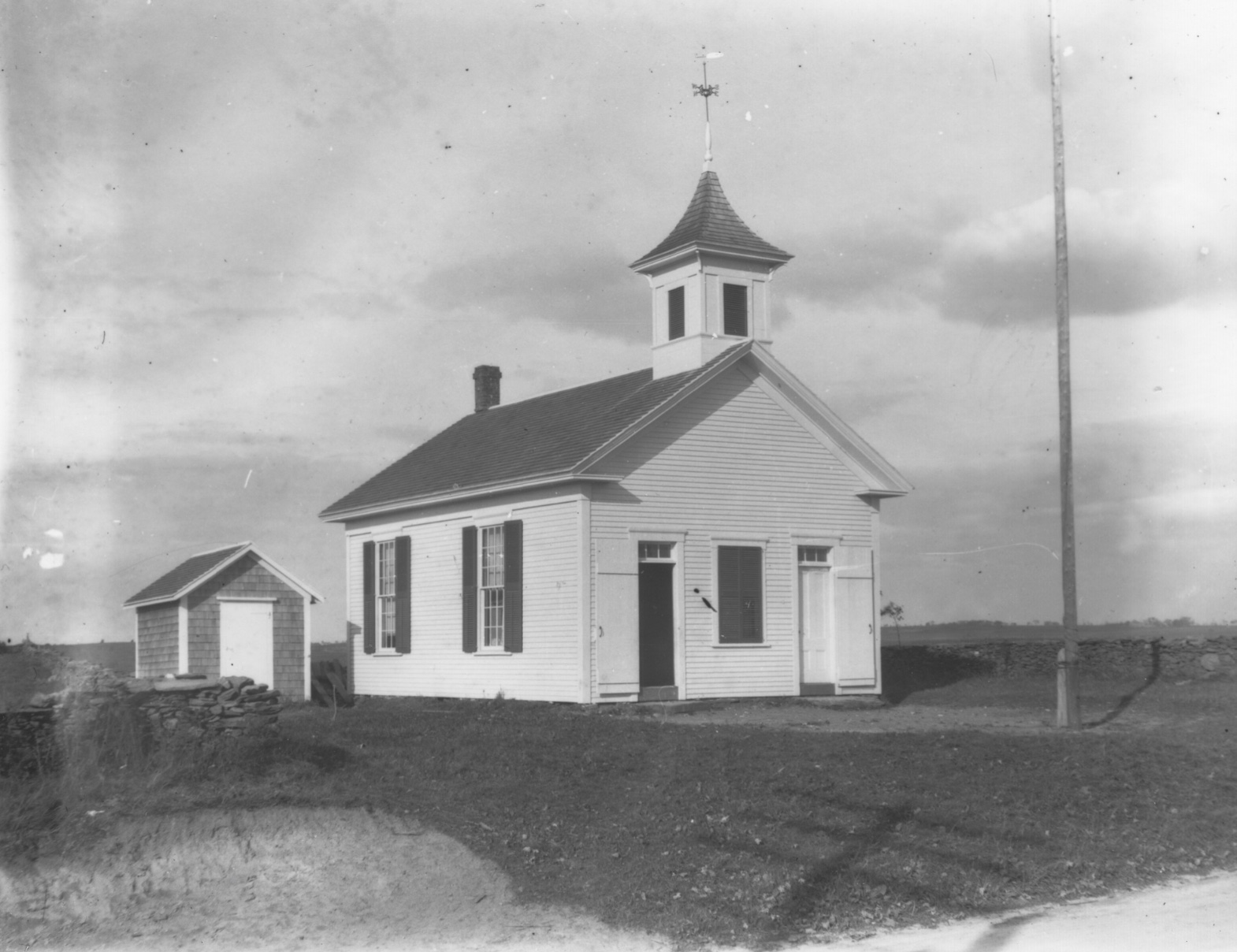
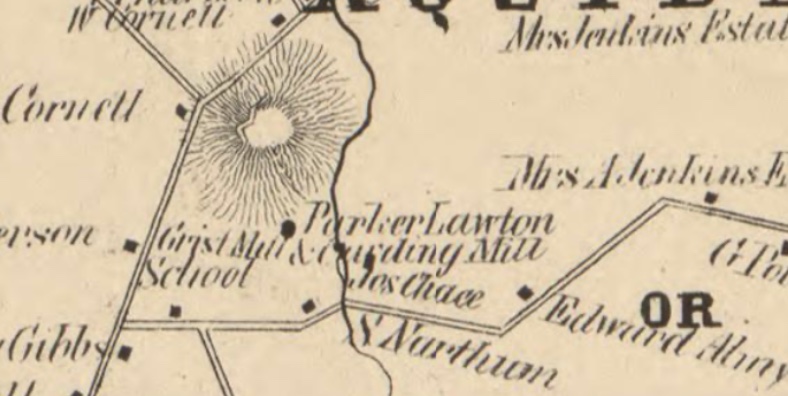
“If it wasn’t here, it was near.” That was the repeated phrase of our guide when we toured the Holy Land. I find myself saying the same thing when it comes to the second location of the Southermost School. I always thought that location was the same lot that was the home of the Gibbs School. The timing worked out perfectly. The schoolhouse went to Lakeside Farm when the Almy family bought it at auction in 1863. The building date of the Gibbs School was 1864. I imagined that the Southermost School had to be moved away for the construction of the newer school. When I went to research the Gibbs School, I began to have my doubts. There was much debate about what to do with the Gibbs School when it was no longer needed in the 1940s, because the original donor of the land (Listed as Parker Lawton in one newspaper article and Edward Lawton in another) stipulated that the property is “to be used and improved by School District No. 3 for school purposes only, forever.” (Note – at that time each of the one room schools functioned independently as is own district.). This was written in a deed in 1845. Parker sold the lot to the town for $60, but family members claimed that the land should go back to the Lawton family if it is not needed for a school.
Gibbs School from Collection of Jim Garman
Some histories of the Southermost School said it was moved around 1800 to a location on Union Street closer to West Main Road. If the Gibbs School lot wasn’t available, Southermost School could not have been in its location unless it was not on town property. A newspaper account from 1970 reports that “Southermost School was moved from its first location to the west end of Union Street – the Fred Sherman land now owned by Mrs. Robert Young.” The article states that the Gibbs School was built across Union Street from the land where the Southermost school had been. What is further confusing is that the 1850 Ward map of Newport County shows the schoolhouse to the North of Union Street close to West Main Road. Confusing!
Did Portsmouth have a schoolhouse before the Southermost School? That was the question I had when I was transcribing a document that called for Portsmouth Freemen to “meet together at the town school house that is at the south end of said town..” I have been working on materials to celebrate the 300 anniversary of the Southermost School which we all assume was built in 1725. The problem for me was that the document was signed in 1723. We have been dating the schoolhouse from the bill for construction as the completion date and that bill was listed as March of 1724-25. Determining dates in colonial times can be tricky because the Julian Calendar year they used began in late March.
The Portsmouth Historical Society was saving documents for me that might be related to the school. This document was
“to give timely notice and warning to all the freemen of the above said town to meet together at the town school house that is at the south end of said town of twenty day of this instant, being according to the governor’s warrant and to meet at eight of the clock of said day then and there to make the choose of such and so many well qualified members Deputies to seat in general assembly according to the governor’s warrant to to meet at the colony house at Newport the 26 day of this instant ..”
Portsmouth freemen were to meet at the school house to choose Deputies to attend the General Assembly that would meet at the Colony House in Newport.
I wondered if the date had been copied wrong. Many of the documents in the Historical Society collection are duplicate copies, so I wondered if the date could be wrong. I checked the General Assembly dates and there was a meeting on November 26, 1723.
Was the school house mentioned our Southermost School, or was there an earlier schoolhouse? I went to an article written by Portsmouth historian Edward West – “Early Schoolhouses and Schoolmasters of Portsmouth, Rhode Island.” In his research I found my answer. West records minutes of a town meeting 31, August, 1716 that “we having considered how excellent and ornamental learning is to mankind, and the great necessity there is in building a Publick School-house on the South Side….which if erected will no doubt prove a great benefit to thos who look at the good and wellfare of their posterity.” Twenty pounds of town money was allocated and contributions to the cause would be welcome. William Sanford offered a triangular plot of land (3/4 of an acre).
By 1720 it seems that little had been done. A group of ‘Subscribers” – maybe parents who wanted an education for their children. This group was awarded the school house lot and the twenty pounds for construction. The land would belong to this group of subscribers. In 1723 town records show that “The school already erected, be finished by the town. The subscribers would relinquish their title to the land. The town would be looking for a schoolmaster.
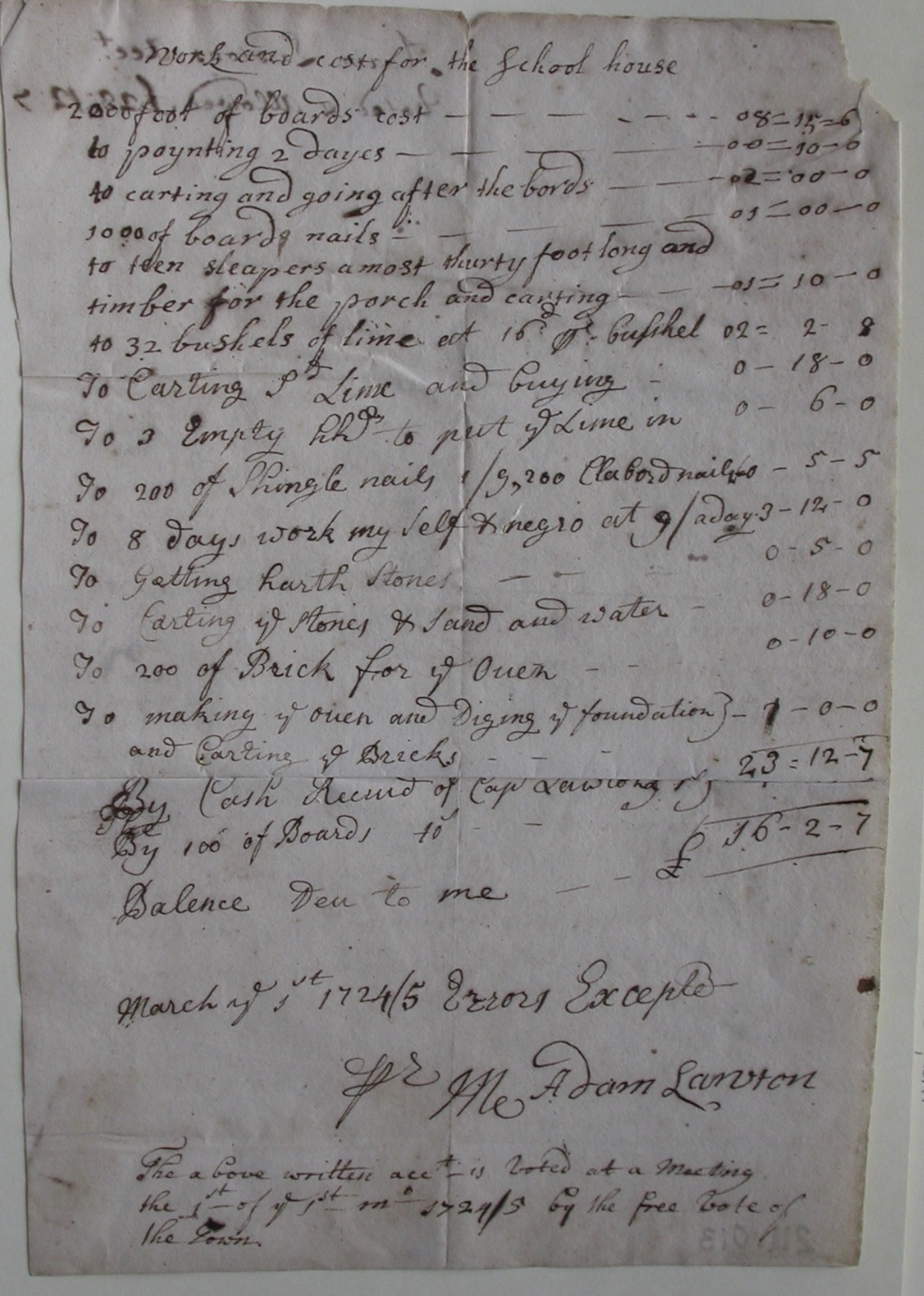
At this point the school had not been finished. Captain George Lawton, Adam Lawton and William Sanford would finish the school house and dig a well for he use of the school. A year later in 1725 the town agreed to pay Adam Lawton 23 pounds, twelve shillings and seven pence. Finances did not get straightened out until 1725 when the money for the “subscribers” got straightened out.
It may have taken nine years (from 1716 approval) to the completion, but somewhere along the way the “subscribers” succeeded in building (but not completing) the Southermost School that we celebrate today. As one of the few town buildings, it clear that it served as a meetinghouse in 1723/24.
“Do you know if the school taught girls alongside boys, and if so, when that co-ed started? Also, any indication of any Black or Indigenous ever being taught there?” I received these questions from a Portsmouth Historical Society board member and I have been searching through new and old resources to try and answer that question
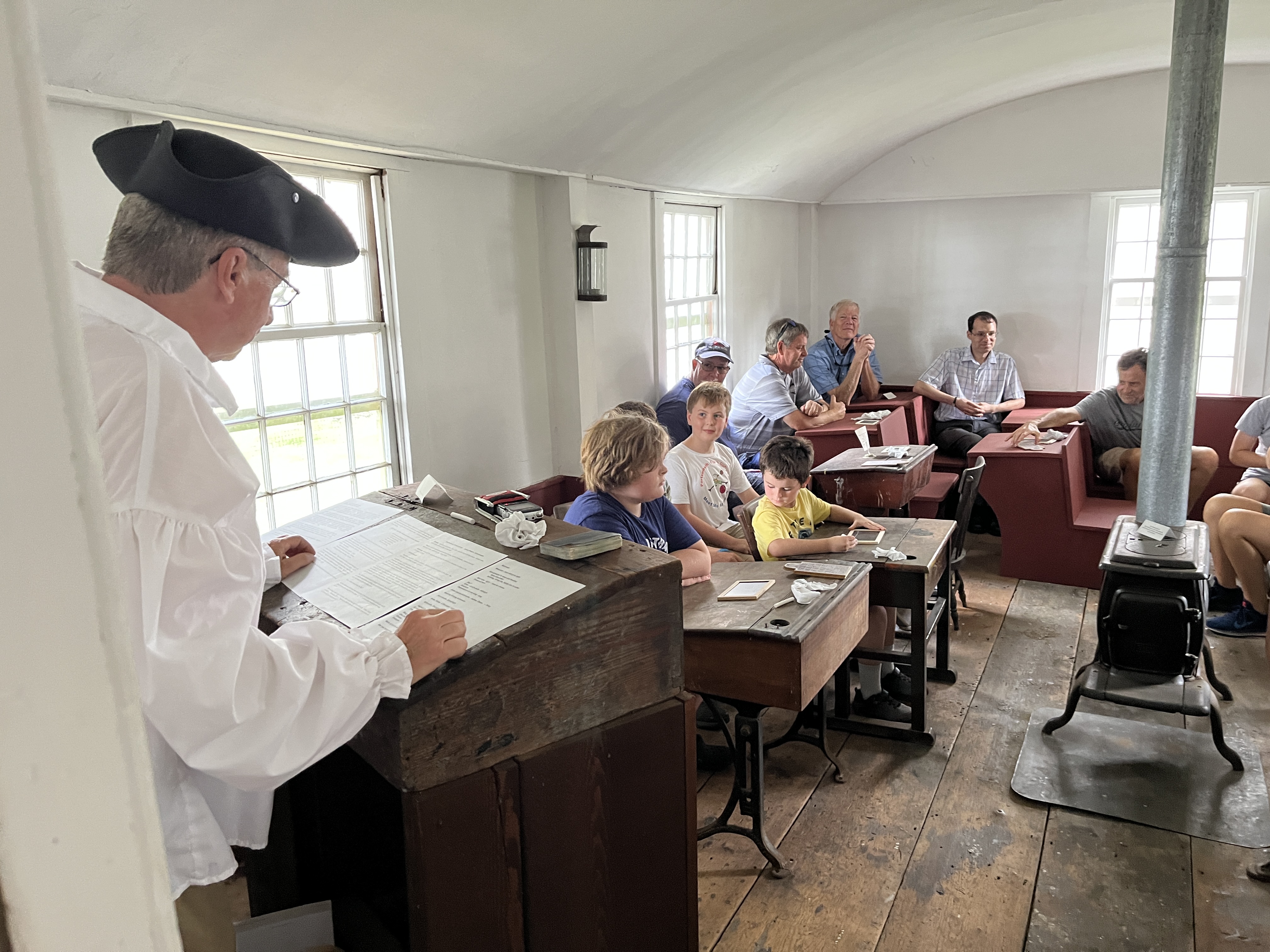
When my husband portrays James Preston to a school group, the “students” are a mixture of boys and girls. There are few sources on the students at Southermost, but state orders and details drawn from newpaper articles on the school may help us draw some tentative conclusions.
R. Schmidt portrays James PrestonInside Southermost
Public or Private?
Newport and Providence had schools that were established in earlier days then Southermost. These were private and religiously based schools. Portsmouth founders had a core belief in religious freedom and they had suffered under the hand of ministers. They may not have been interested in having their children’s education formed by religious leaders. Private schools and religious based schools were available on the island in Newport. Portsmouth residents advocated for a school that was open to all students (boys). The schoolmaster was not a religious leader. The first schoolmaster’s background seemed to be as a mariner judgeing from his books.
Boys and Girls?
Chances are that before 1800 education was for boys only.
State guidelines for education in public schools in 1800 show that at that point the general view was white students only.
“for the instruction of all the white inhabitants of said town, between the ages of six and twenty years, in reading, writing and common arithmetic, who may stand in need of such instruction, and apply therefor.” (1)
A chart in the History of Education book lists Portsmouth as having 4 schoolhouses in 1828. School was held in the winter, but one or two of the schoolhouses stayed open over the summer as well.
In 1832 there were 8 schools and 360 students. There were two male teachers. By 1844 there were 6 male teachers and 4 female teachers. That detail leads me to wonder of there were female students at that time.
By 1876 the laws were clear on girls attending.
Gexeral Provisioxs Relating to Public Schools. Section 1. No person shall be excluded from any public school in the district to which such person belongs, if the town is divided into districts, or if not so divided, from the nearest public school, on account of race or color, or for being over fifteen years of age… (A history of public education)
In newspaper articles from the time of the Hall family donation of the school, Herb Hall comments that there was grafiti left in the school from before it was moved to the Almy farm. Names included Sarah Coggeshall and Mary Spooner. If the school was moved around 1863, it would be evidence of girls attending the school before that. Herb said the family found a list of punishments at the school. That rules list refers to boys and girls.
List of Rules and Punishment posted at Southernmost School. • Boys and girls playing together – 1 lash • Fighting at School – 5 lashes • Quarreling at school – 3 lashes • Climbing for every foot over 3ft up a tree – 1 lash • Telling tales out of school – 8 lashes • Giving each other ill names – 3 lashes • Misbehaving to girls – 10 lashes • Leaving school without leave of the teacher – 4 lashes • Wearing long fingernails – 2 lashes • Boys going to the girls’ play place – 3 lashes • Girls going to the boys’ play place – 2 lashes • For every word you miss on your heart lessons without a good excuse – 1 lash • For not saying yes or no sir or yes or no marm – 2 lashes • Telling lies – 7 lashes • Swearing at school – 9 lashes.
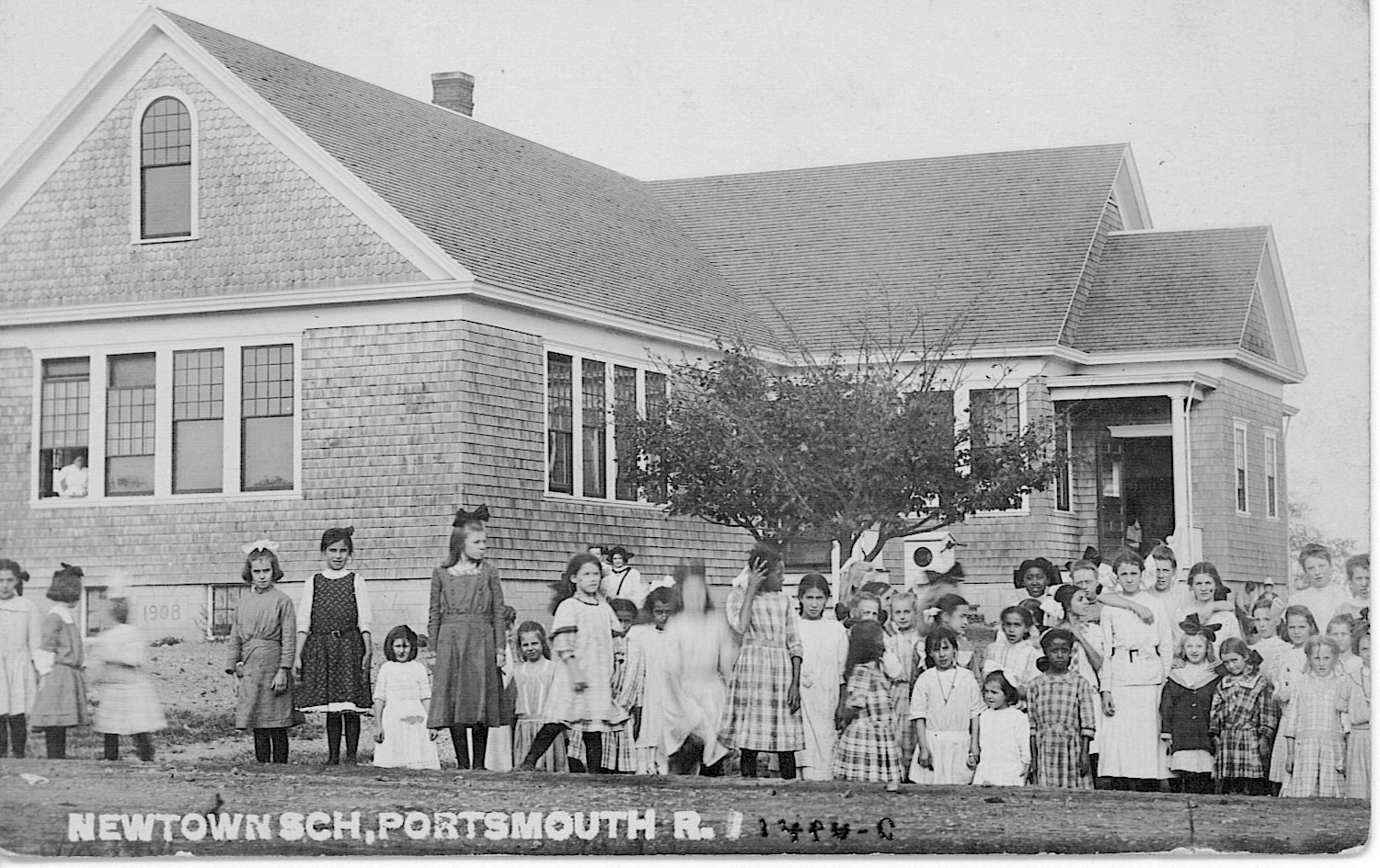
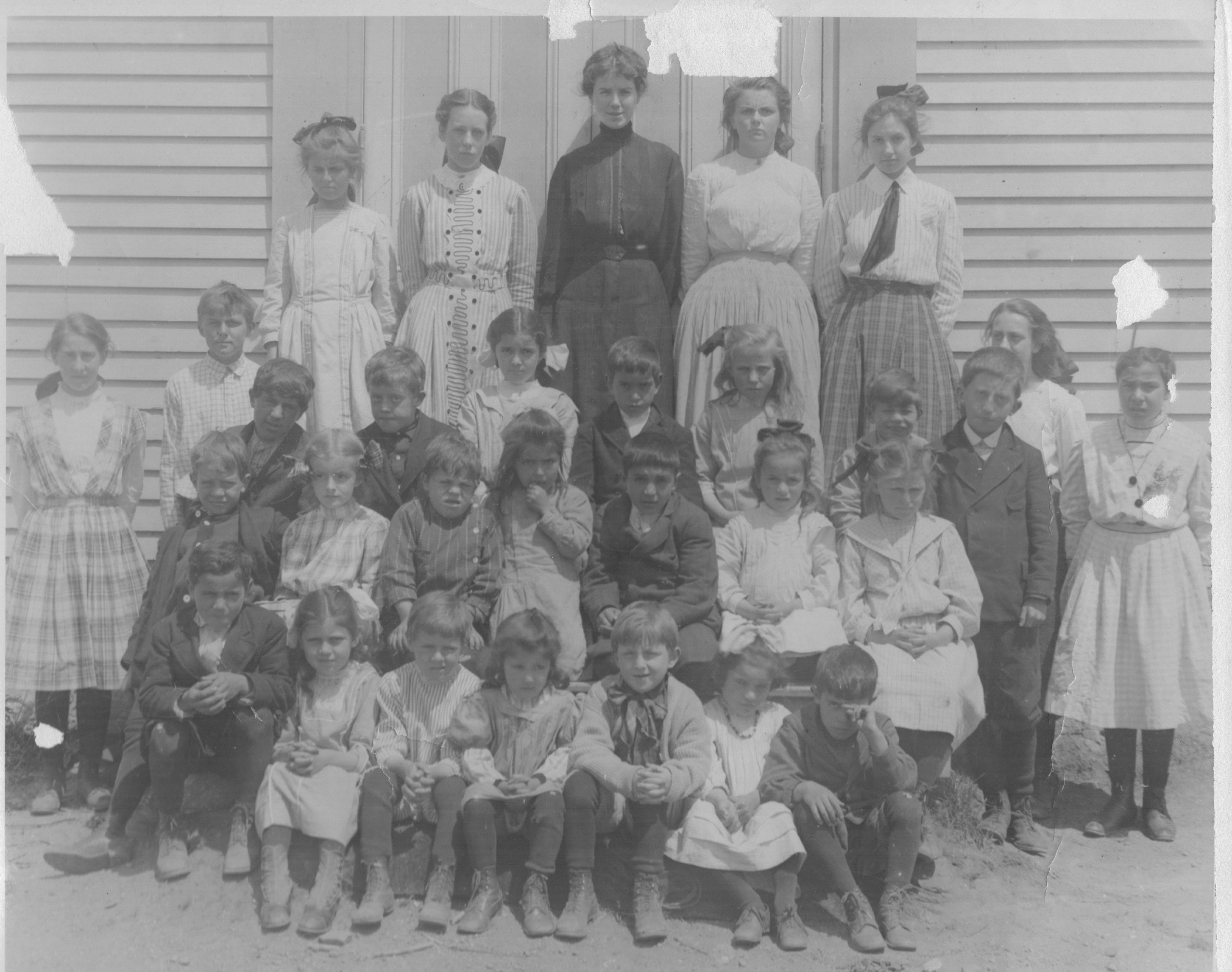
I haven’t found information on when “all races” could attend public school in Portsmouth. We gather through school photos at the turn of the 20th century that those classes were well integrated. Indigenous attendance is something I cannot determine.
Newtown SchoolBristol Ferry School
Extra Notes from historian Edward West.
The donor of the land, William Sanford, commended on his reason for the donation: “…for and in consideration of the venerable estreem I have for the Town of my Nativity and also to my very much esteemed friends and neighbors, but more especially for the better encouragement of bringing up and educating children in litteral learning. “
Sources:
Stockwell, Thomas B., Ed, Thomas Wentworth Higginson, Edwin Martin Stone, and Rhode Island. Board Of Education. A history of public education in Rhode Island, fromto 1876 . Providence, Providence press company, printers to the city and state, 1876.
Portsmouth Historical Society has images from one-room schools.
Newspaper articles. Daily News August 29, 1968 –
Edward West, Early Schoolhouses and Schoolmasters of Portsmouth, Rhode Island.
What books would you think Portsmouth’s first schoolmaster had in his collection? You might guess an arithmetic book and a dictionary. Schoolmaster James Preston had those, but would you think of books for seamen and navigators? We happen to know what books he had because there is a record of the town selling eight books that comprised the library of the ” James Preston, school master, late deceased.”
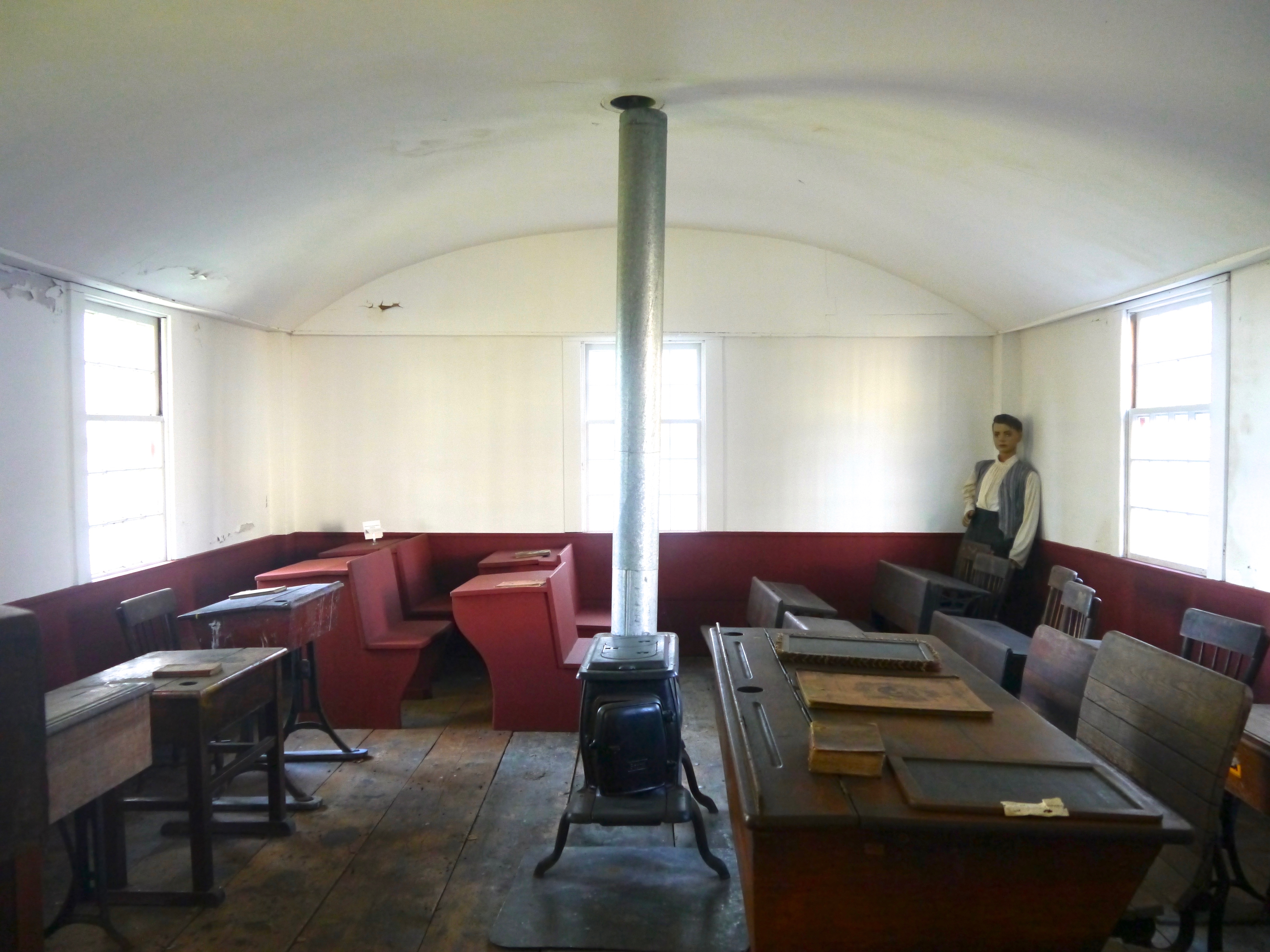
Southermost School on the grounds of the Portsmouth Historical Society.
Preston’s books:
Norwoods Epitomy of Navigation, Cockers Decimal Arithmetic, Mariners Compass Rectified, Seamans Kelender or an Ephemerides, The Art of Measuring, Marriners New Calendar, The Great English and Latin Dictionary and Gumbers Scale.
Preston’s book titles lead me to believe that Preston was trained as a navigator, not a teacher. Attracting a well trained teacher would have been difficult in the small town of Portsmouth. Town records show that in 1724 it was voted that “that the schoolhouse erected and built in said town be improved by the freemen of said town and will hire and settle a schoolmaster in each house for the benefit of all children as shall be sent to be instructed therein.” The Southermost School would serve the children in the south end of the town and the Northermost School would be built to serve the students in the more settled area of the north part of town. By the next year at least the Southermost School was open.
Historian Edward West was able to go through town records to write an article about Portsmouth’s early schools and schoolmasters. He found that our first school teachers were mostly poor, had large families and with the little salary they received they had a hard time providing for their families. West believed that Southermost School was built to house the families of the schoolmasters because it was constructed with an oven in the cellar. West found a mention in the town records that “James Preston (school master) present at this meeting Engaged upon his word that he would Remove himself and his family out of the School House by the first day of September next except the Freemen of the Town should see cause to Improve him to keep school there after the Expiration of said Term.”
Although Preston and his family had lived in the cellar of Southermost School, it was clear from the records that they also boarded with parents of students. West found records that it was the town’s responsibility to keep the schools in repair, but that the parents of the children who attended the school paid for the expenses of the school.
The town had responsibility for the poor and there were few public buildings to house someone who was down on his luck. In December of 1727 the Town Council heard that James Preston was sick and helpless. Two men were appointed to “take care for his relief,” to find a place of residence for him and his family and to provide a nurse for his wife (who was pregnant?). All that James Preston had, including his books and his cow, were sold to contribute to his upkeep. When James Strange refused to house Preston any longer, it was ordered the the family be relocated to Southermost School in the cellar. By 1729 the Town Council ordered ” that James Preston and his family be removed out of the School house wherein they now live…” His wife was ordered to “bind out” her oldest children so they would no longer be a burden on the town.
Richard Schmidt portrays James Preston at a Portsmouth Historical family day.
Credit to the work of Edward H. West: Early Schoolhouses and Schoolmasters of Portsmouth, Rhode Island. In the files of the Portsmouth Historical Society
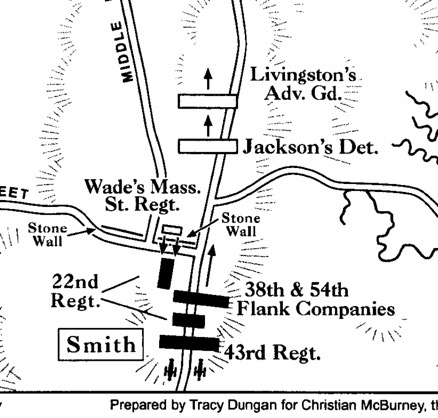
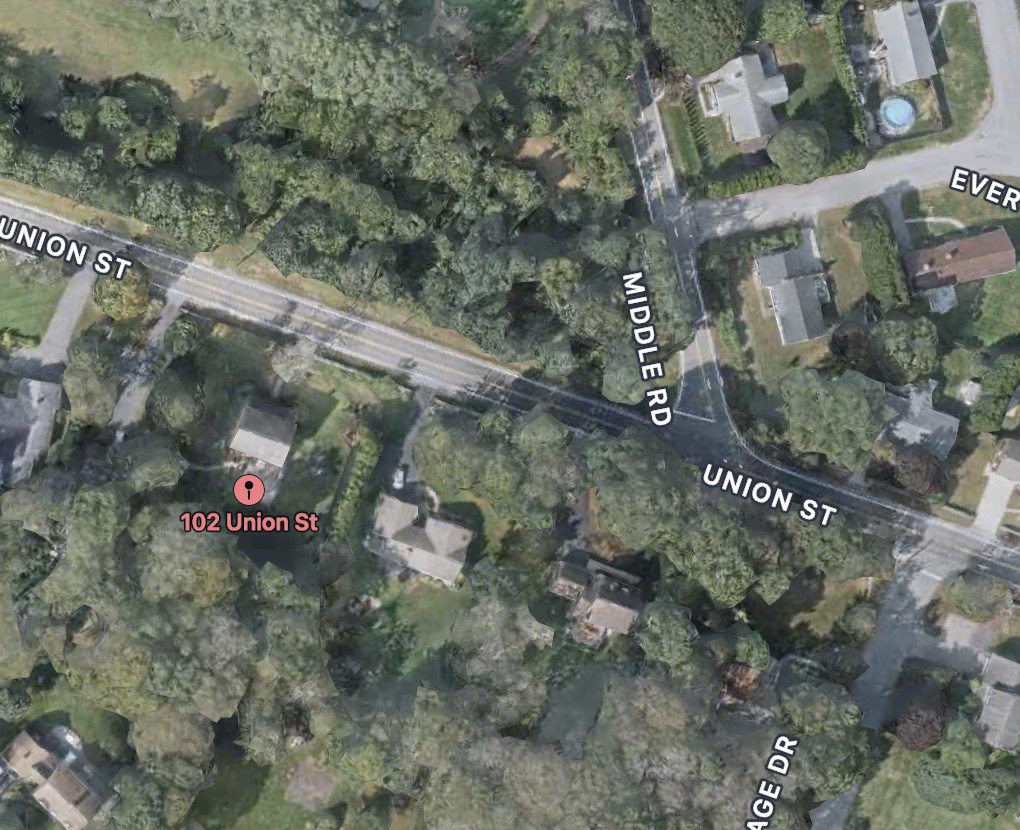
The original location of Southermost School may have been on Union Street near Middle Road. Edward West’s land grant maps are interesting, but may not be precise. A newspaper article quotes past Historical Society President Herb Hall as 102 Union Street as the location. That is slightly different from the land grant maps, but it still puts the building close to the action of the second skirmish of the Battle of Rhode Island. It would have been directly across from the stone walls where Wade’s men were hiding.
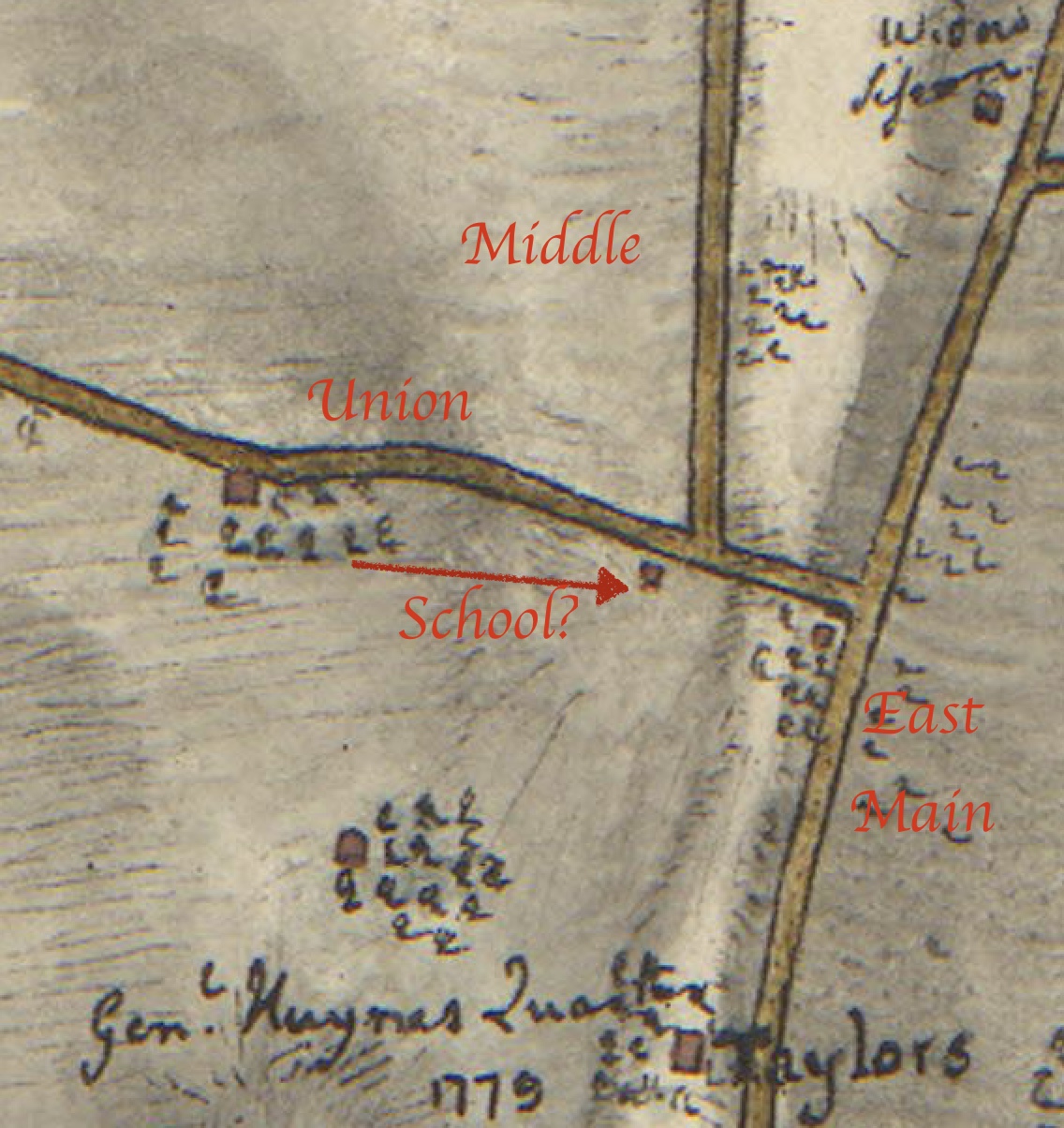
Another Revolutionary map (Fage 1779) shows a building that might be the school. The building on the corner of Union and East Main may have been the home of the Strange family. West’s maps show that was a small land grant to that family.
Fage Map – 1779Based on Google Maps
Portsmouth followed the example of Newport and Providence in wanting education for their children. Once Sanford had donated the necessary land, the town freemen “having considered how excellent an ornament learning is to mankind,” made in 1716 an appropriation for building a school-house. The experiment was successful, and six years later two others were built— one of them sixteen feet square, the other thirty by twenty-five.
Southermost School becomes a home.
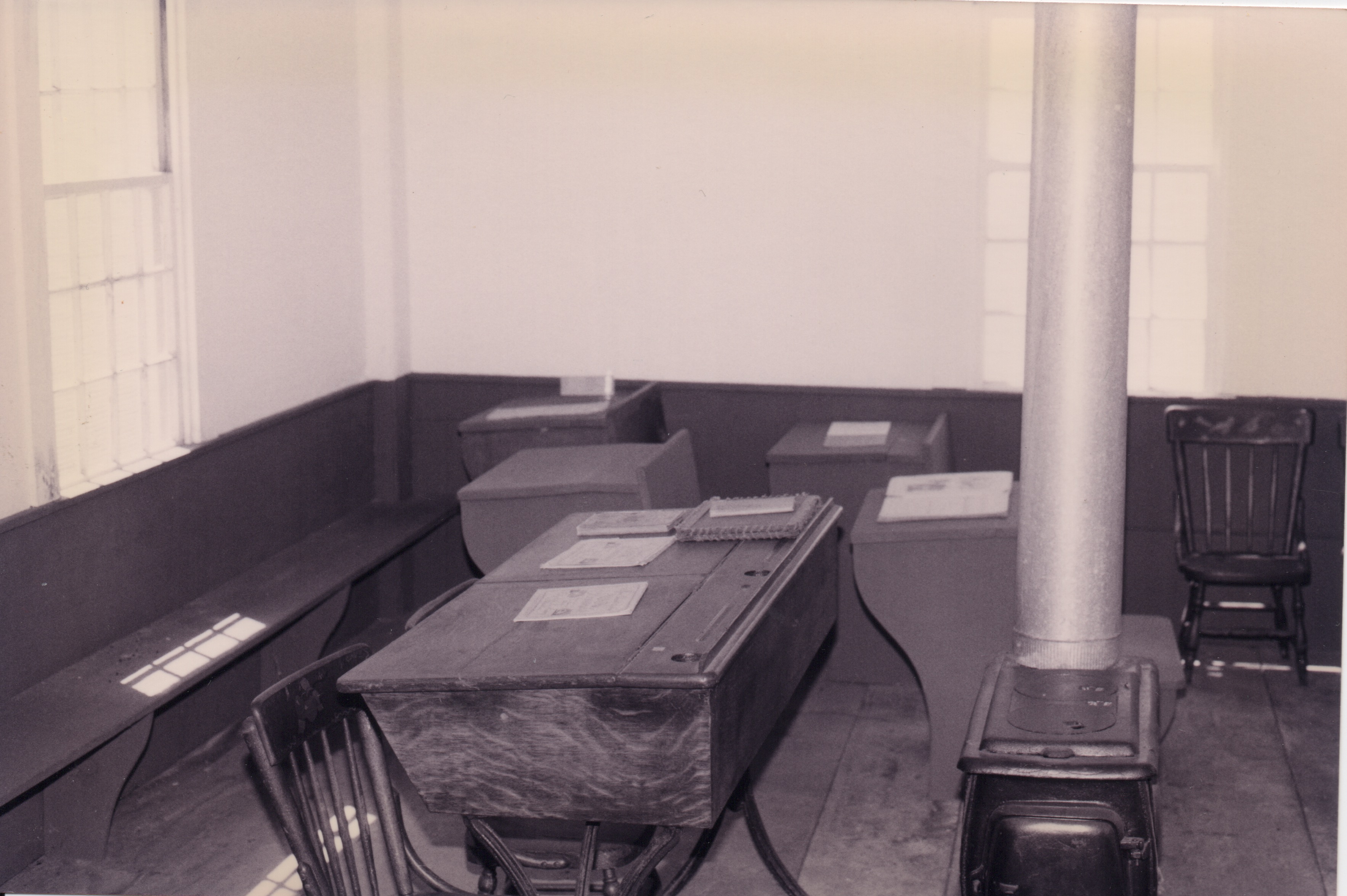
Upstairs in the school room there was a hearth that provided warmth for the classroom. The town was to support the building and the students’ families provided room and board for the schoolmaster and his family. Schoolmaster James Preston and his family stayed close by at the home of the Strange family. As one of the few public buildings here in town it is also used for many purposes such as town meetings, church services and sheltering needy families. When the schoolmaster Preston became ill and later died, the Strange family refused to board Preston’s family. Schoolmaster James Preston was reported as being sick and helpless in 1727. In the early days it was the families of the school children that were responsible for the room and board of the schoolmaster and his family. In an article on “Relief Problems of Old New England,” West reports on Portsmouth Town Council decisions. “James Strange (Sarah’s husband) refuses to entertain James Preston and his family any longer in his dwelling house it is agreed by this council that said Preston and his family be settled in the Southermost School house in the town for the present, that is in the cellar part thereof…” The Town Council agreed to pay Preston’s wife money weekly to provide for the family. Now the building at that time was twenty-two feet by fourteen feet – not large at all to house a family and the school children.
In 1730 it was ordered “that James Preston and his family be removed out of the School house wherein they now dwell and that Rebecca his wife pay the charges of their removal and house rent out of the weekly allowance.” Rebecca was forced to “bind out her two eldest children otherwise the said council will put out the said Children in order for the lessening the Towns Charges therein.” Soon afterwards James Preston died and the town paid his funeral charges. There is no further mention of the family in town records.
In a turnabout, the Strange family ended up living at Southermost School. From the lands of Portsmouth – article by Edward West. pg 75
“Continuing along this road we come to the site of the Southern School House, where the widow Sarah Strange took up her residence after the death of her husband; for at a Town Meeting in 1746, she and her family were ordered out, so that the school house might be improved in the use for which it was built.”
Would the Southermost School have been witness to the early skirmishes in the Battle of Rhode Island?
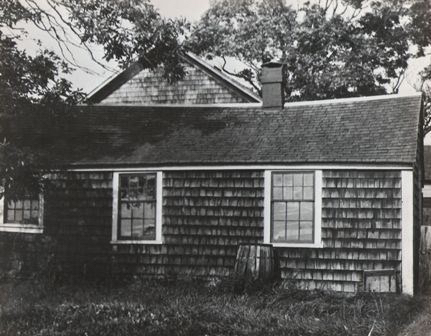
Southemost School before restoration
The Southermost School traveled up and down Union Street. Where was it located at times?
With the coming celebration of the 300th Anniversary of the Southermost School, I am revisiting the information I have gathered in the past. Maps, histories, and documents help us to answer those questions.
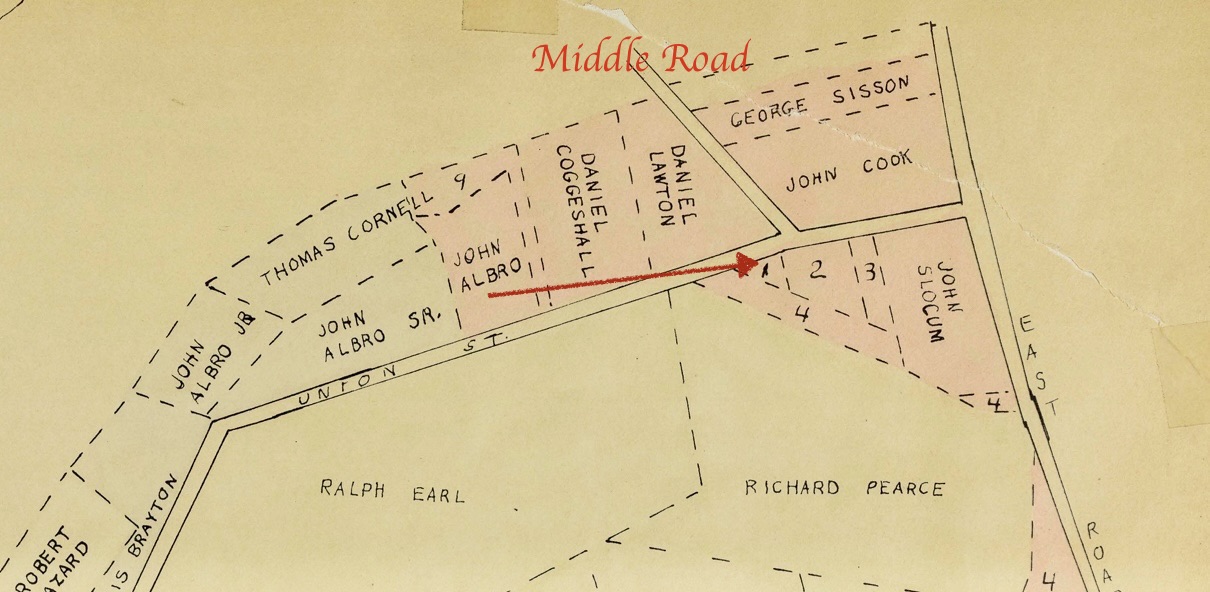
According to Portsmouth historian Edward West in his History of Portsmouth 1638-1936, in August of 1716 a school won approval at the Town Meetings. It was to be located on public land between Child Street and Church Lane. The other was approved on September 10th. It would be build on land donated by William Sanford. This was a small triangluar shaped parcel granted to him in 1713. West’s land grant maps help us visualize the location.
I have placed an arrow pointing to this piece of land Sanford Donated. It was labeled as 1. It is on the south side of Union Street and just past Middle Road.
The Portsmouth Historical Society today would be in part of the land of John Cook.
It took nine years for the school to actually be built. The Portsmouth Historical Society has a copy of the bill.
This document gives us some interesting details about what the schoolhouse looked like in its original form.
It had an oven made of 200 bricks. It had a stone hearth. Adam Lawton and a “negro” worked for 8 days on the building. It was completed in March 1725. It is listed as 24/25 because of the change over in the calendar. There was a porch. Lots of lime was used in the building. It took 2 days to paint. Some of the boards were as long as 30 feet.

 portsmouthhistorynotes