Home

Revisiting the Elmhurst/Glen Nature Walk

Leave a comment

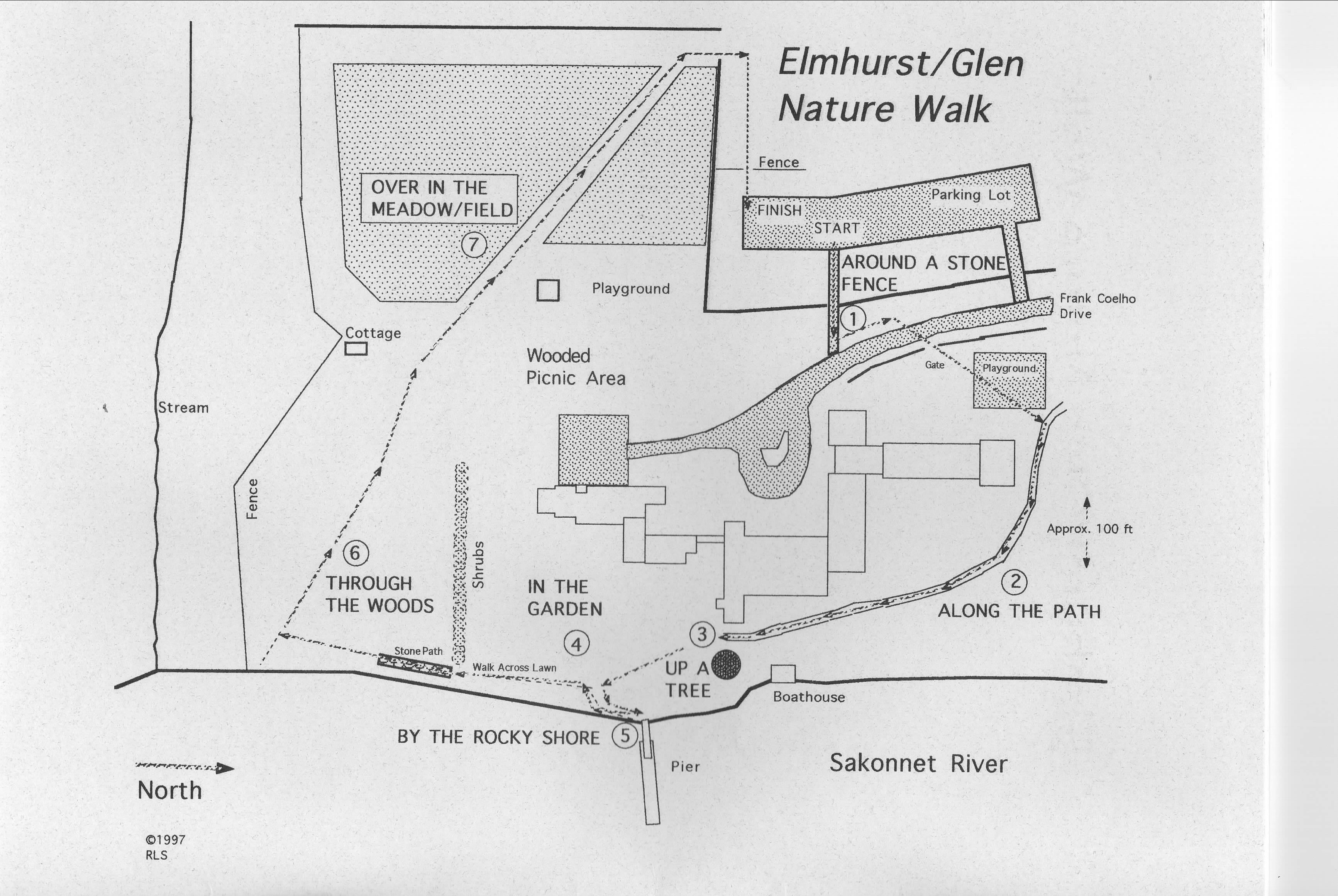
As librarian at Elmhurst School, I liked to teach research skills by having my students work on a local project. Elmhurst is gone now, but the setting of our school offered spectacular subjects for study. In 1996 through 1997 my students worked on an Elmhurst/Glen Nature Walk. Today my husband and I revisited that walk and found that we can still enjoy the variety of habitats along the way.

The walk is about 3/4 of a mile long and is easy going most of the way. The path is not quite the same as it was over 20 years ago.
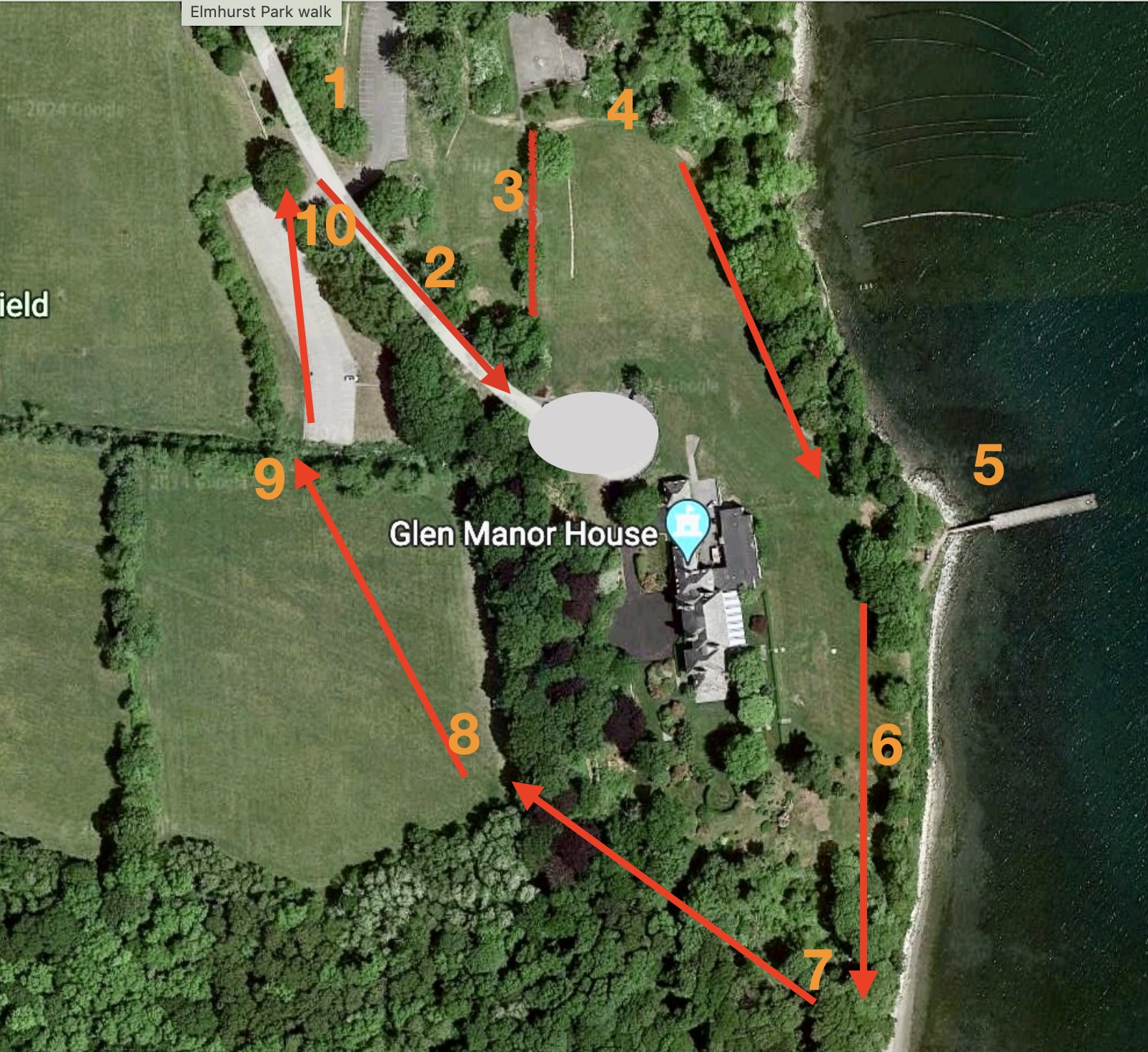
  1. Starting Point: This is the new parking lot for “Elmhurst Park.”
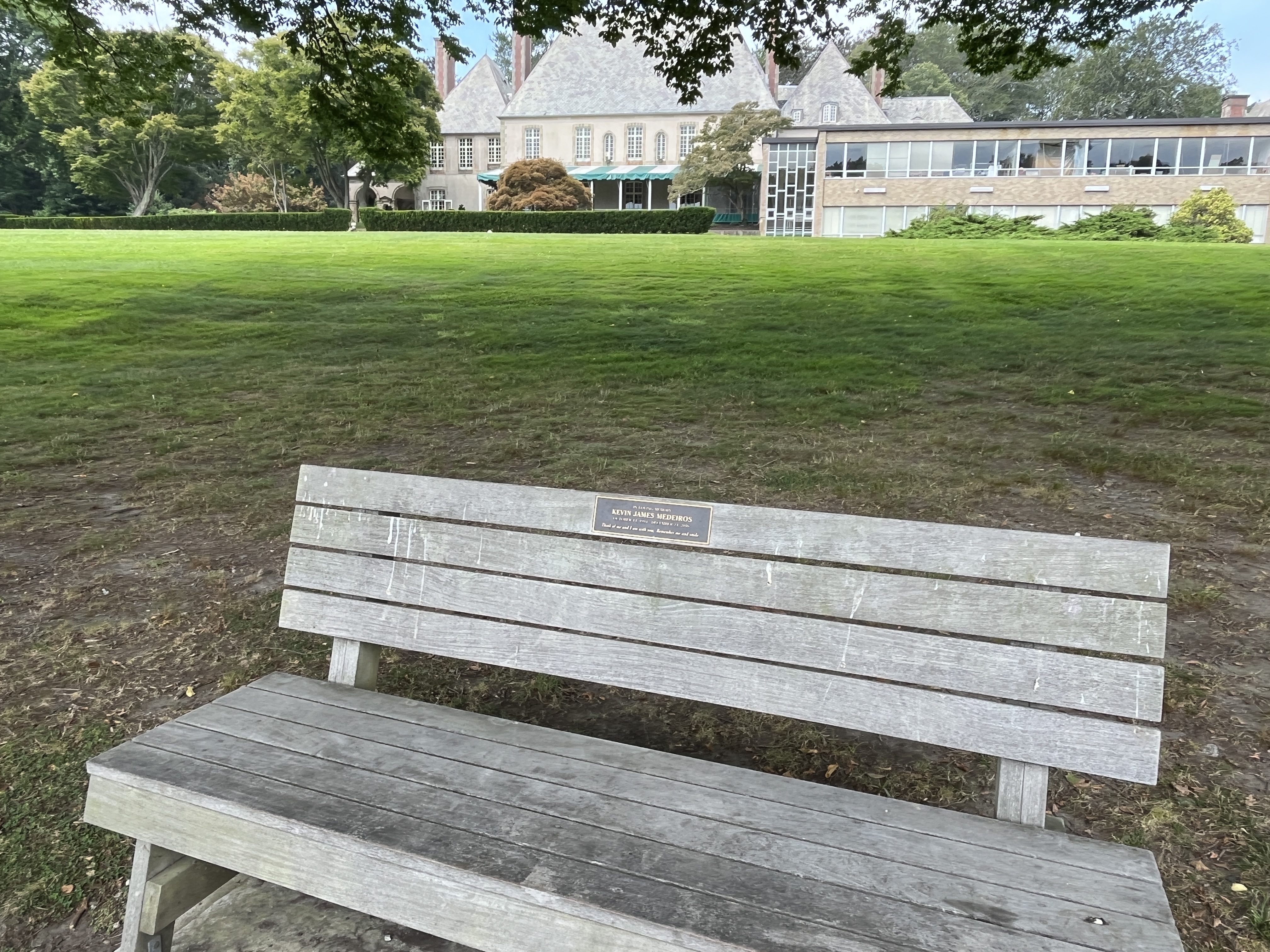
  2. Follow Frank Coelho Drive towards the Manor House.
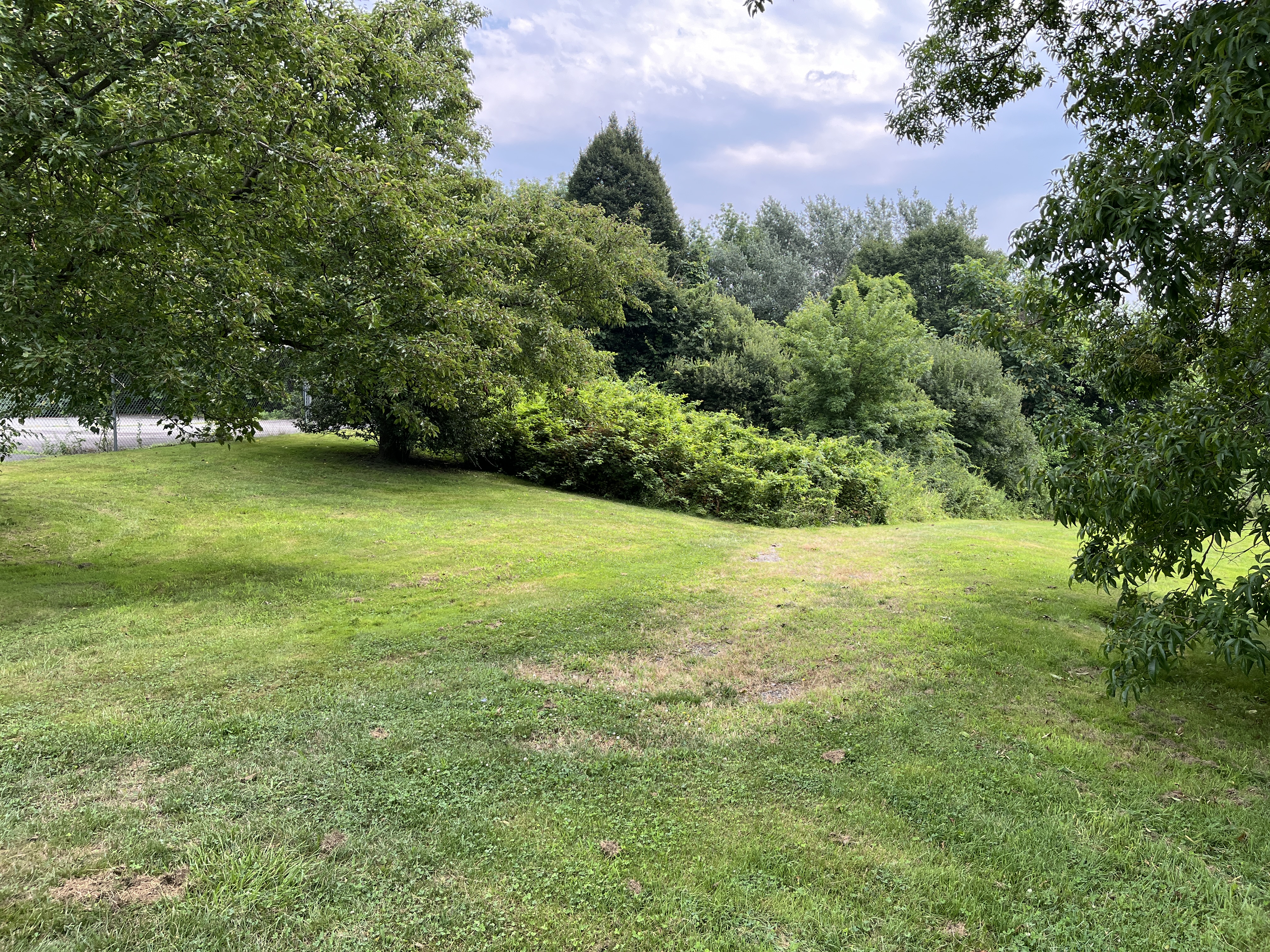
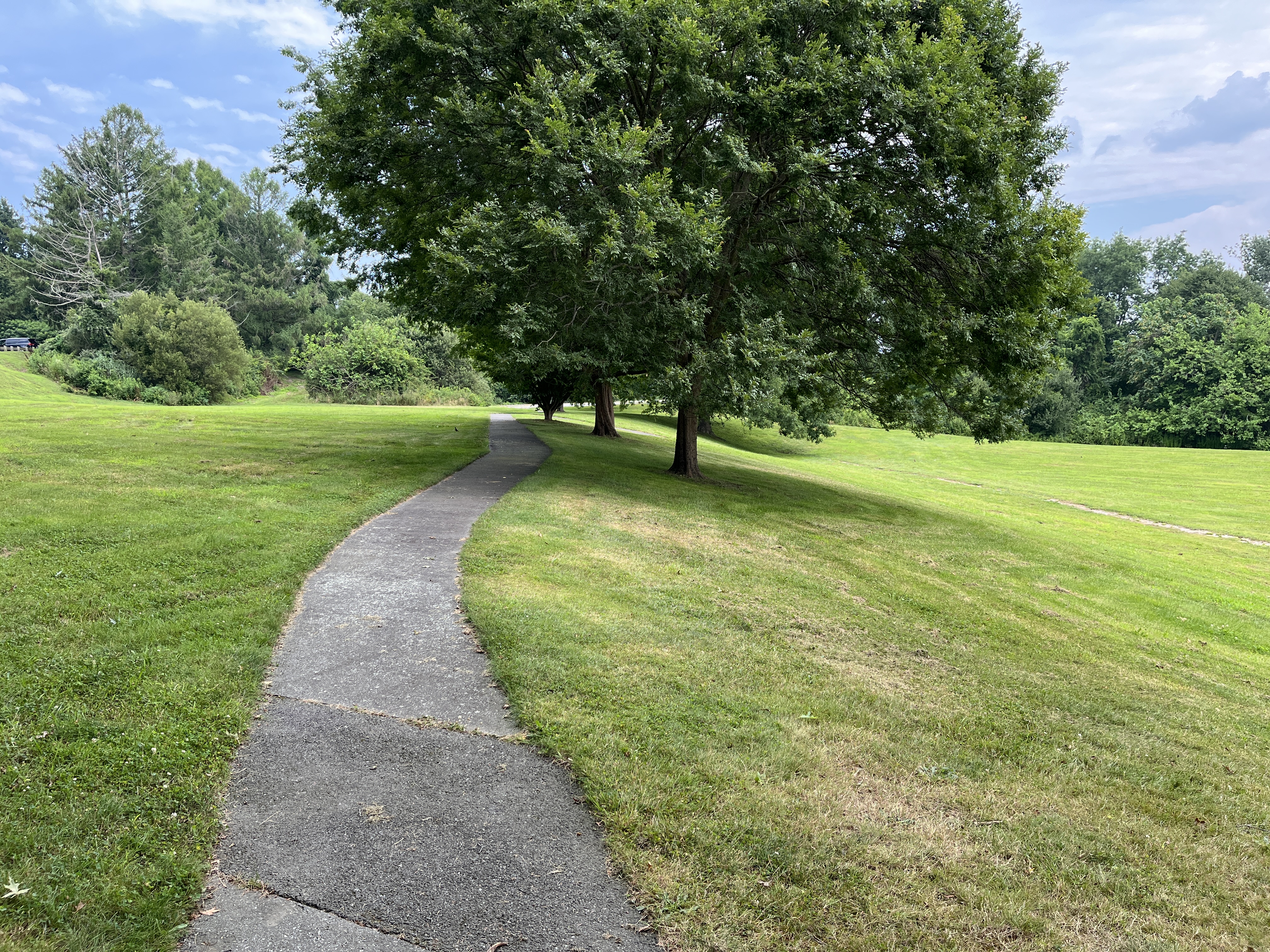
  3. As you approach the old Elmhurst Circle, take the old Elmhurst Playground walkway toward the left.
  4. At the end of the walkway turn right. There are remains of a carriage path that was the way to the old Fogland Ferry. This was the “Along the Path” section of our booklet.
    • Most of this is grass now, but throughout the warmer months it is a nice place to see some wildflowers. My students used to take pictures of them so we could identify them with field guides. Now you can identify them through a google information setting.
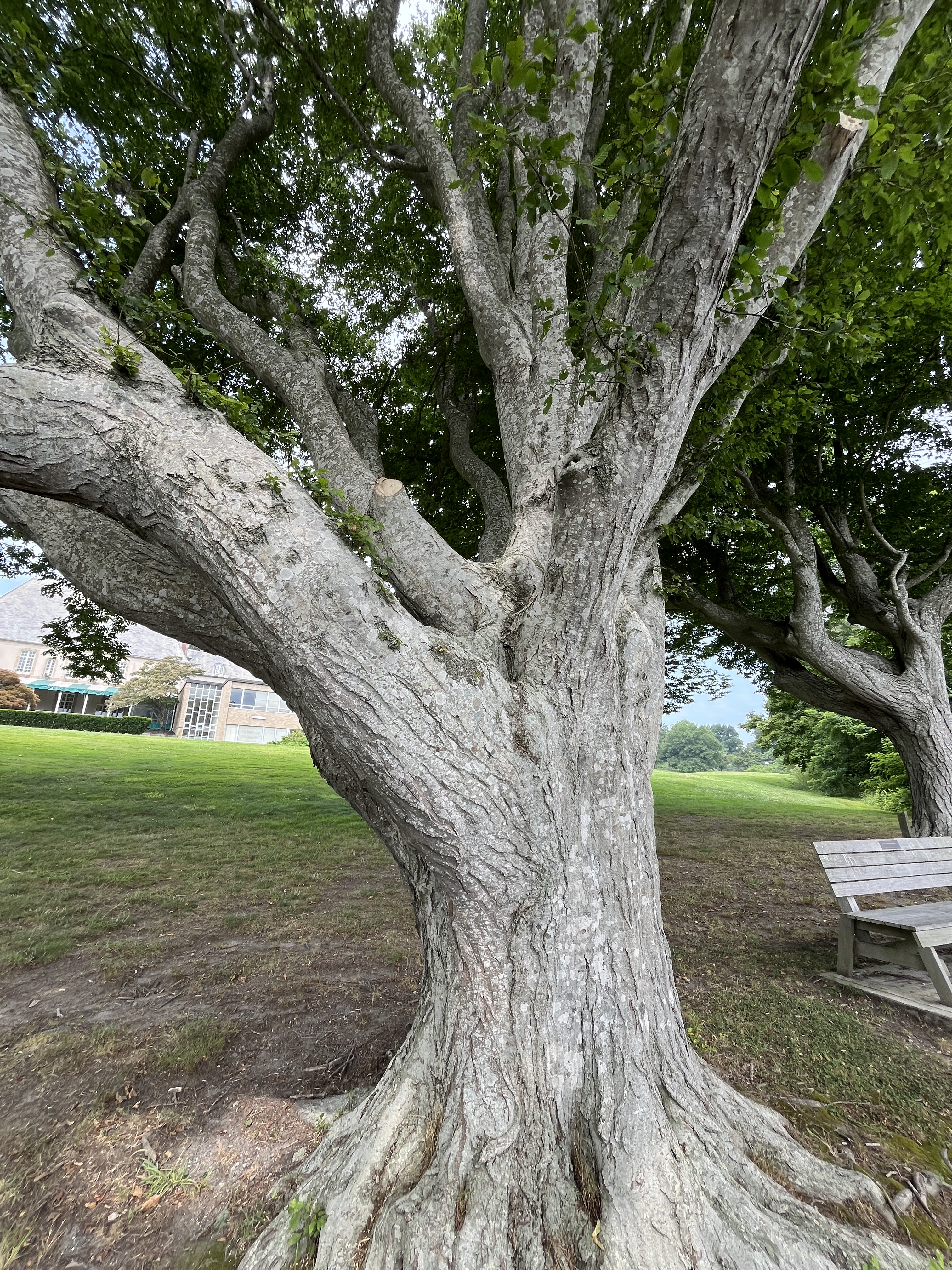
    • Toward the water there are still some of the old trees from the days when the Taylor family lived at the Manor House. Mrs. Taylor was very particular about where each of these trees were planted in the 1920s. Our students studied the old trees as habitats in themselves. We called this “Up a Tree” in our guide.
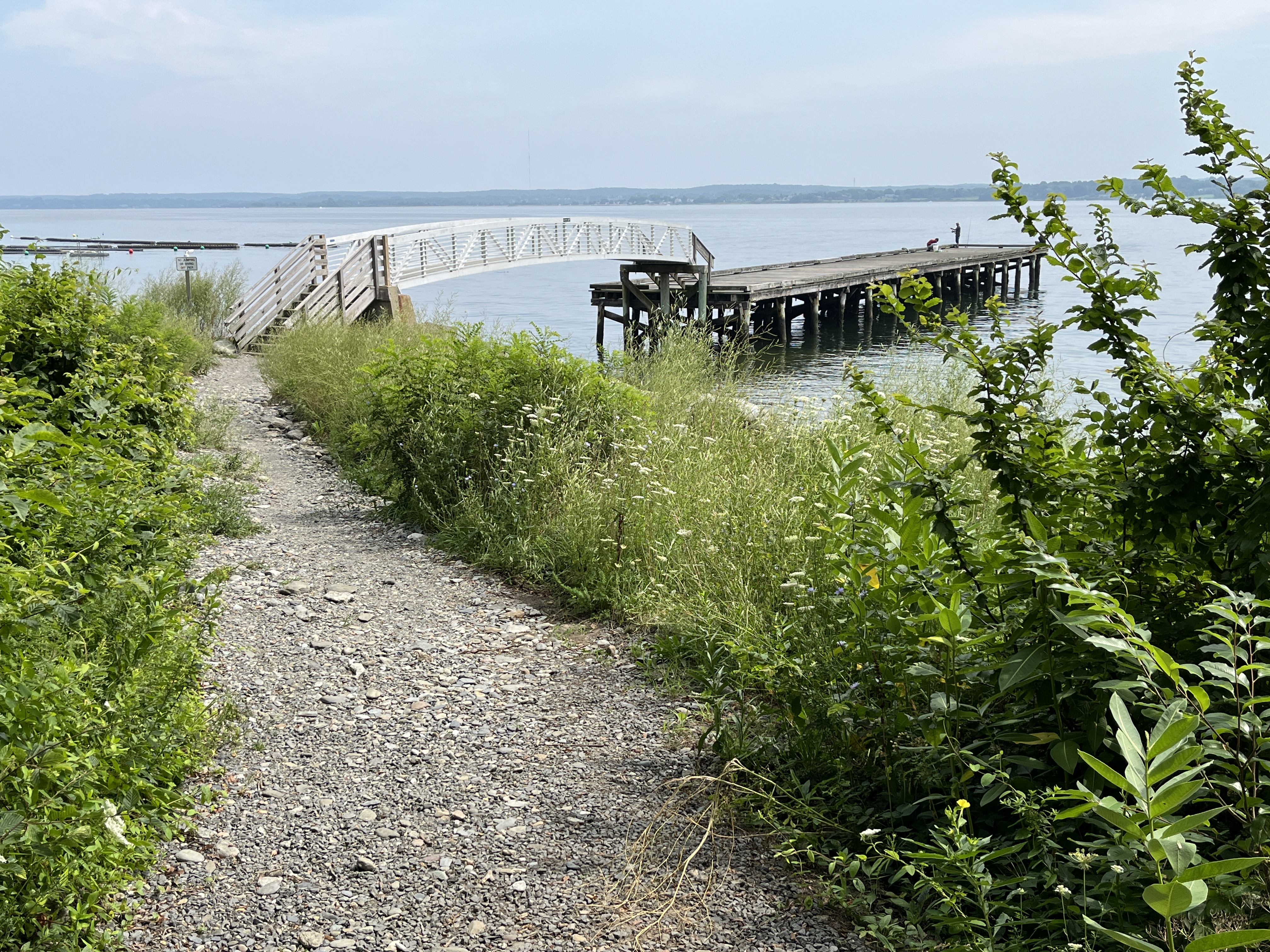
  5. “By the Rocky Shore” explored the dock and rocky shoreline. We can see Sandy Point Beach in the distance to the right. Our town beach was a gift of the Taylor family. To the left is an oyster farm. Life along this shoreline depends on the constant cycle of the tides. The current dock is a replacement for the original “L” shaped dock that the Taylors used. You may see fishermen on this dock and it is a good place to watch for marine birds.
  6. Heading back to the trail we see the Glen Manor House and its gardens. Landscaped gardens are a different kind of habitat. The Olmsted Brothers did the original landscape architecture. Mrs. Taylor loved fresh flowers and varieties were selected that would bloom while the Taylors were in residence during July and August. The “In the Garden” section suggested that as you look at the gardens from a distance, you can look for geometric shapes in landscape designs.
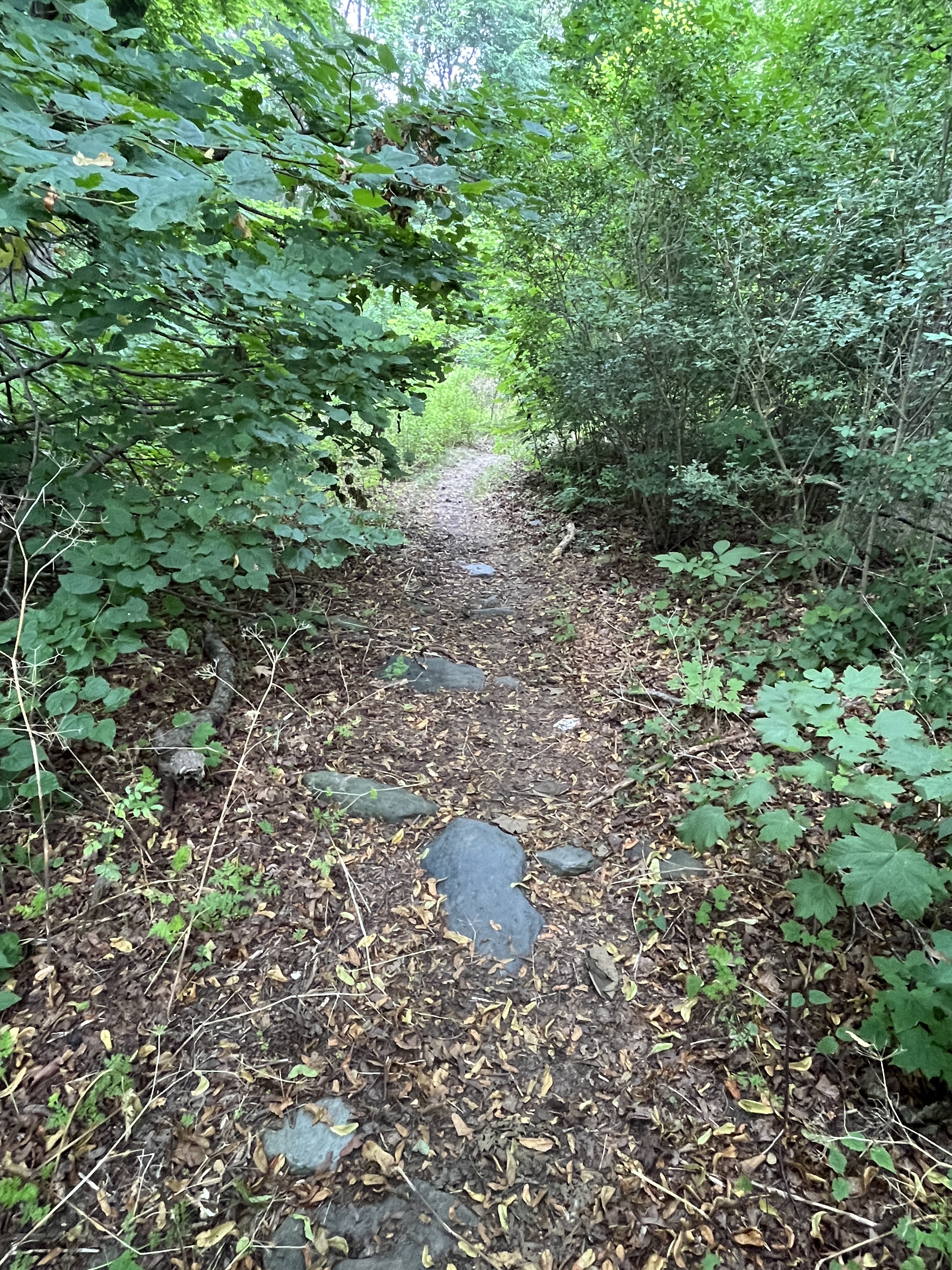
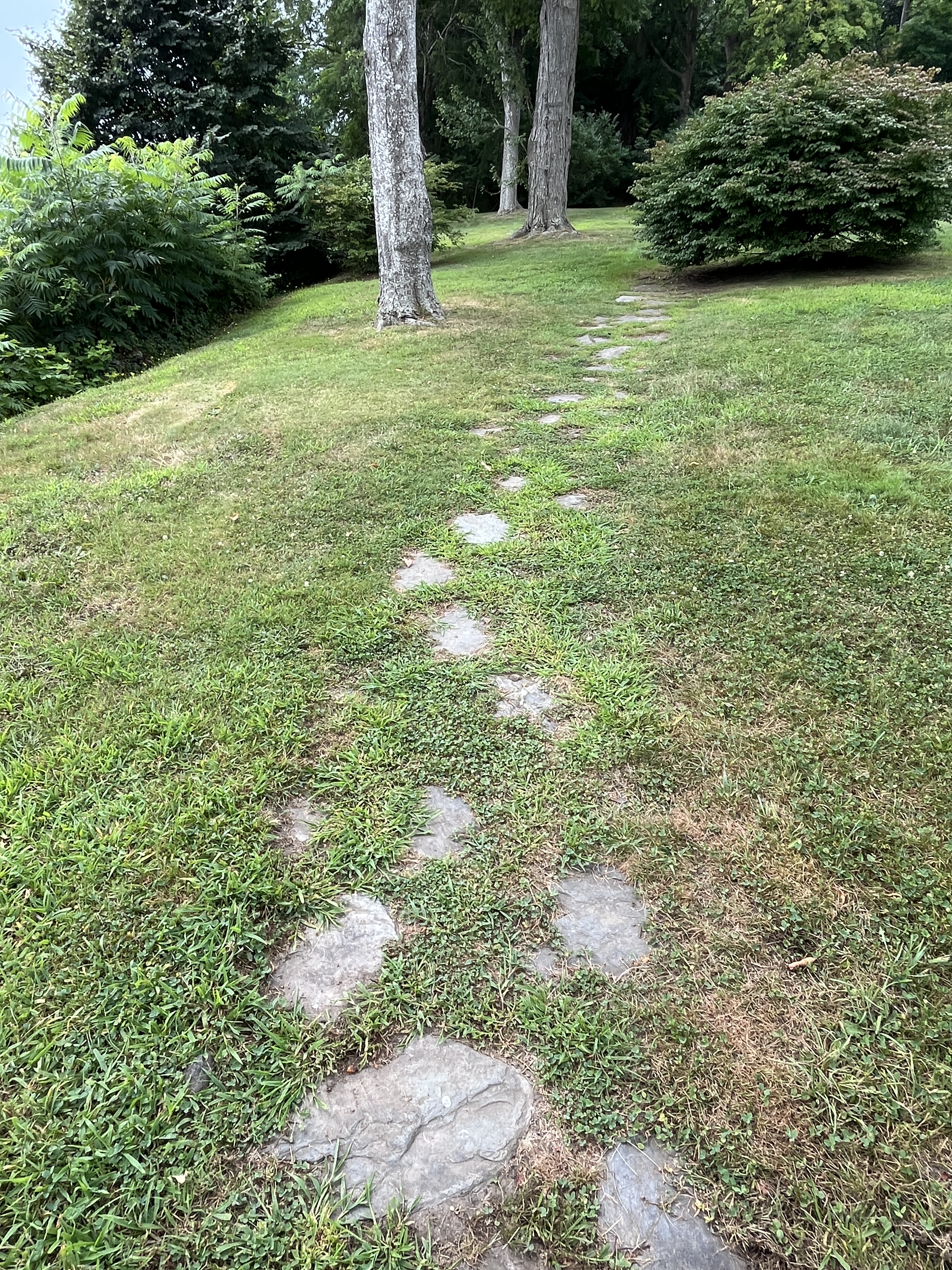
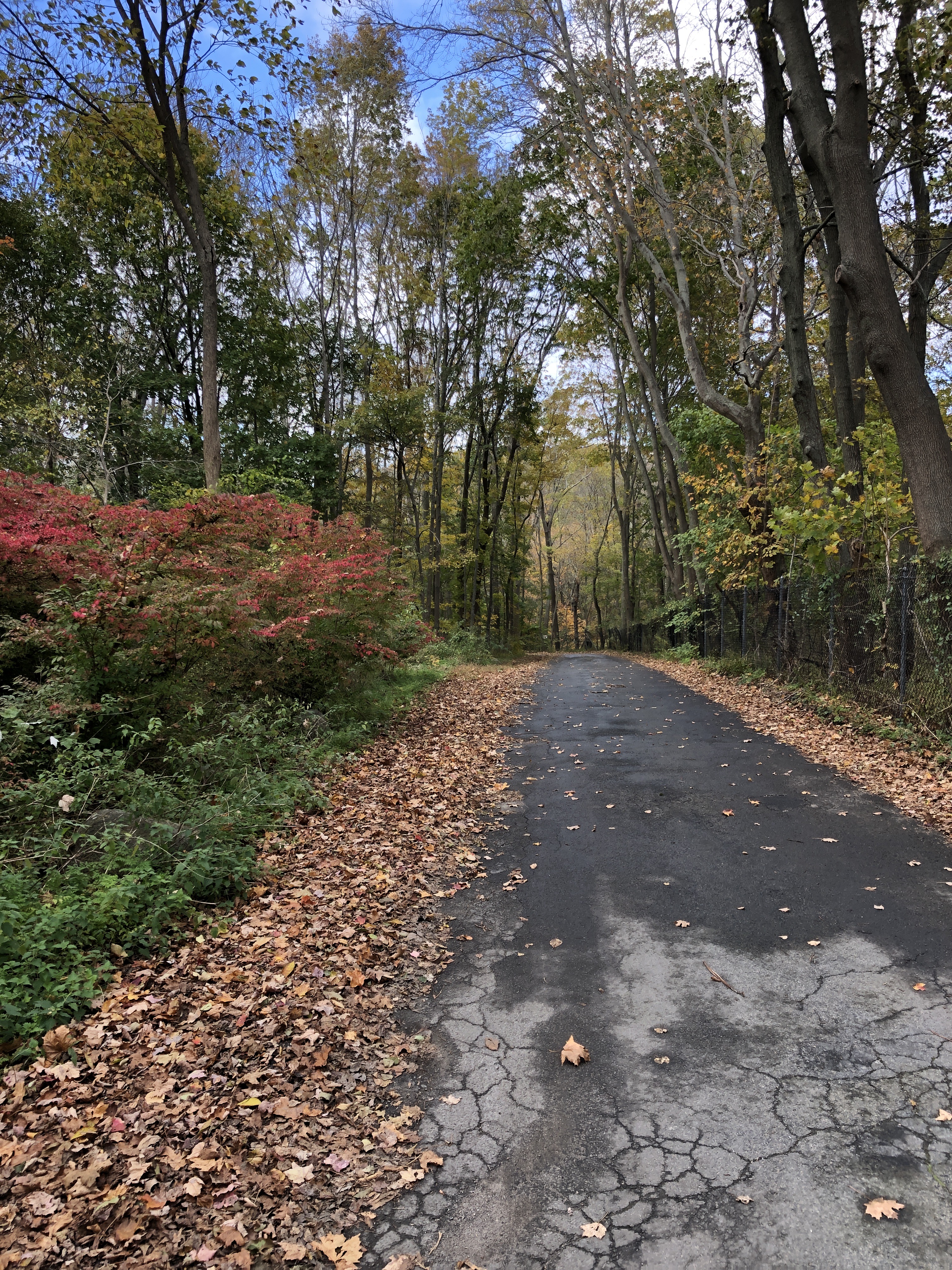
  7. A walkway of stones leads you “Through the Woods.” Where there are stones in the paths is easy walking, but as the path heads up the trail it is narrower.
    • You have to watch for tree roots, but the woods habitat is full of interesting things. My students suggested a scavenger hunt for types of fungi, bark beetle tunnels, woodpecker holes, green moss, and tree holes that were homes for animals.
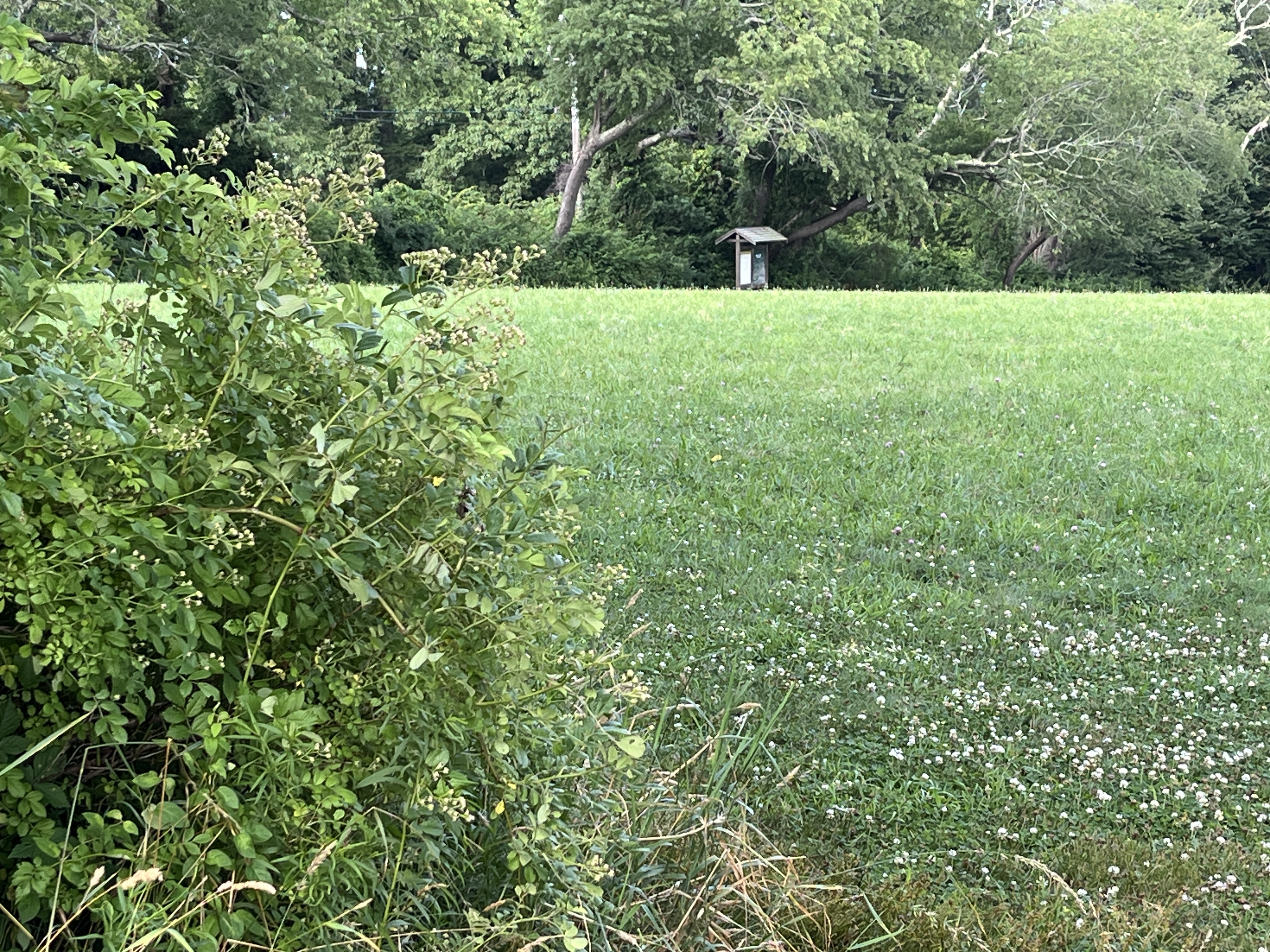
  8. You come out of the woods to “Over in the Meadow/Field.” When we did our habitat study the fields were allowed to grow tall so we could find flowers and seeds and look for signs of animals. Today it is mostly mowed. This field is a reminder that it used to grow crops to feed the 25 families who lived and worked on the farm.
  9. Cross the Meadow/Field towards the Trail sign that marks a longer Brown House/Glen Farm Trail. That trail is over 2.5 miles and is a good one for a longer hike. To the left of the sign is a rocky cut in the stonewall that leads you to the old Elmhurst parking lot. Cross the lot to the North entrance.
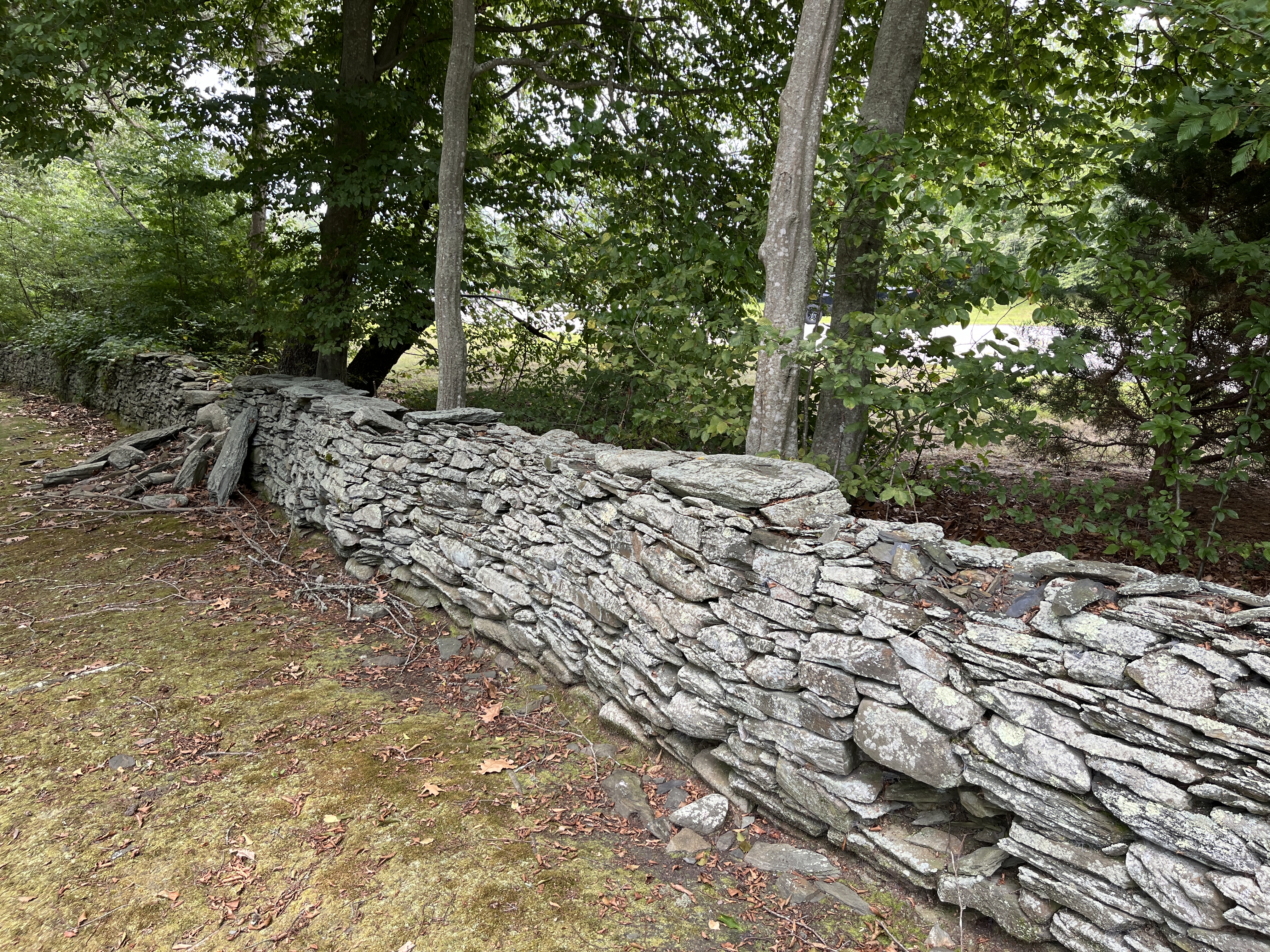
  10. Outside the parking lot entrance, notice the stonewalls. “Around a Stone Fence” was our last natural neighborhood. The rock walls and fences are a reminder of the way this land was used in the past. They are a sign of cleared land and they were used as boundaries between pasture and cropland. The Glen area was used for farming from the 1640s (Thomas Cook) through the 1950s (Taylor family).
    • Stonewalls are man-made, but nature takes them over. Look for lichen (a crusty fungus growth over the rocks), and evidence of spots were animals might hide.

You are back at the parking lot.
Discover Your Portsmouth: Brown House/Glen Farm Trail

1 Comment

If you would like to take a long and beautiful walk, try the Brown House/Glen Farm Trail. This route was developed as an Eagle Scout Project by Chace Little and is about 2.7 miles in a loop. Hikers describe it as “fairly easy, some small hills.” There is parking off of Linden Lane after the Brown House and near the entrance to the Sakonnet Greenway Trail and the kiosks for the two trails are close together. The Brown House/Glen Farm Trail is mostly paved, but there are sections over grass. The trail is not well marked so I am trying to give some visual clues as trail markers.

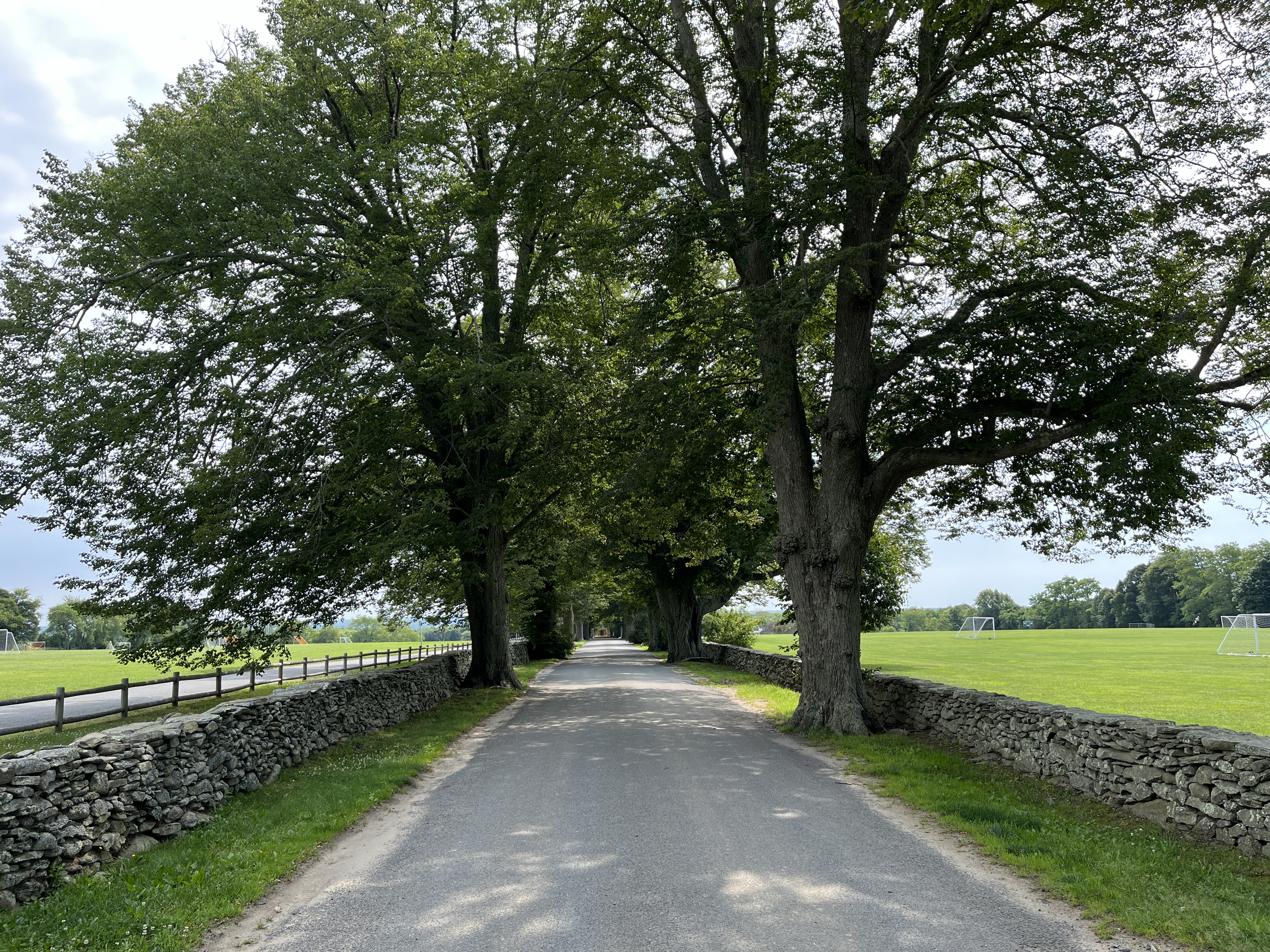
  1. You will be walking down Linden Lane passing the polo fields and beautiful stone walls. You continue straight pass the Red Cross House where the women of Glen Farm would meet to roll bandages and support the war effort in World War II. The trail leads you to Glen Farm Road where you will turn left.
  2. On your right is “The Glen” – a favorite spot to enjoy nature during the early 1800s. That is private property, but from the road you can view the mill stream. Through the years waterpower from mills ground corn, washed and pull strands of wool (carding and fulling) and even produced a course fabric called “Negro Cloth” in a factory. Up a hill and to your left is the Glen Barns complex.
  3. Down Glen Farm Road you view the Gardener’s Cottage to the left and on the right by the gateposts is a house that dates from the 1700s.
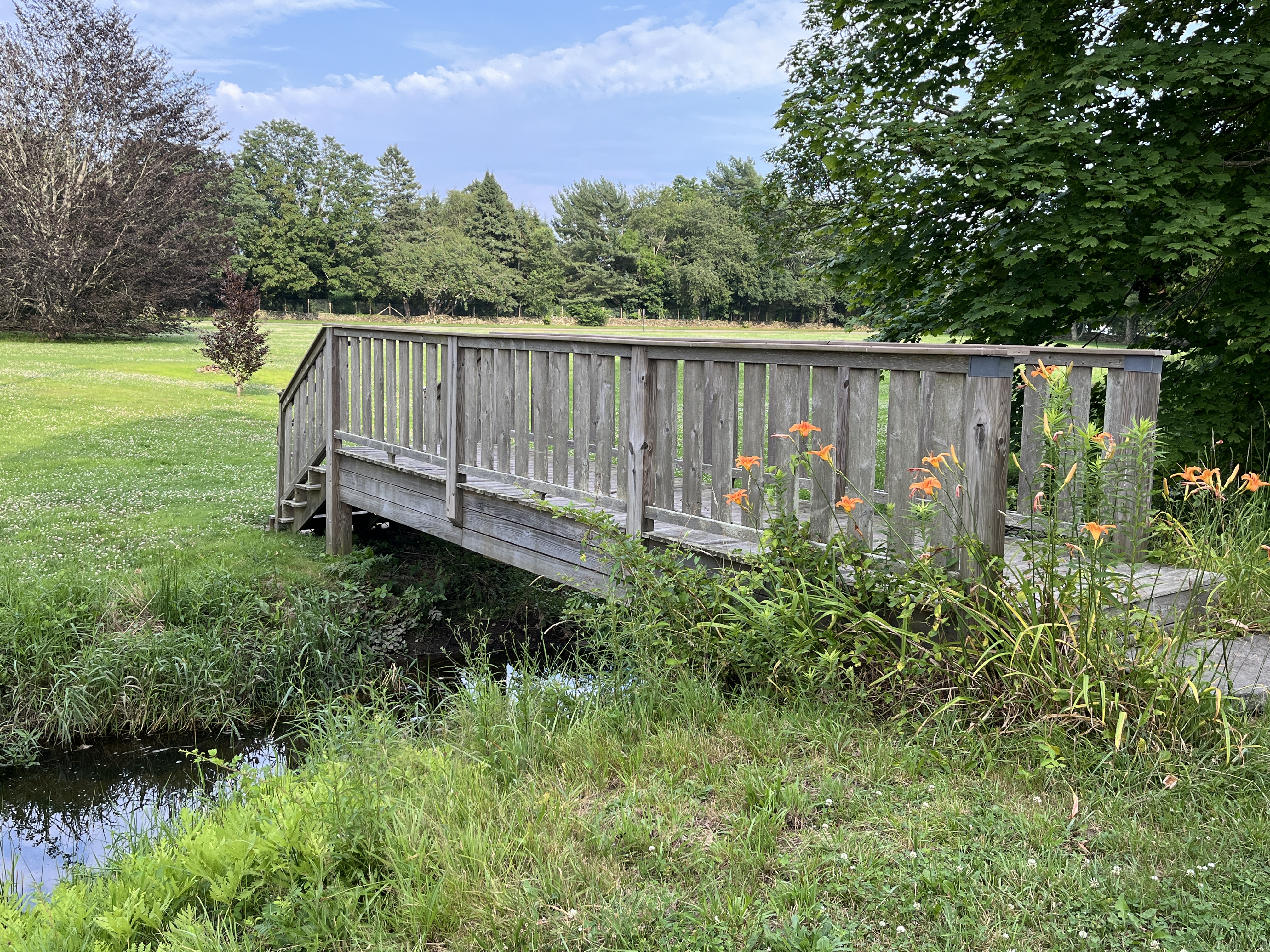
  4. Turn right through a cut in the stone wall to the Glen Park area. In a short distance find your way across the brook on a bridge built by another scout as his Eagle project. (Jameson Harding did the bridge and his friends did the other trail markers).
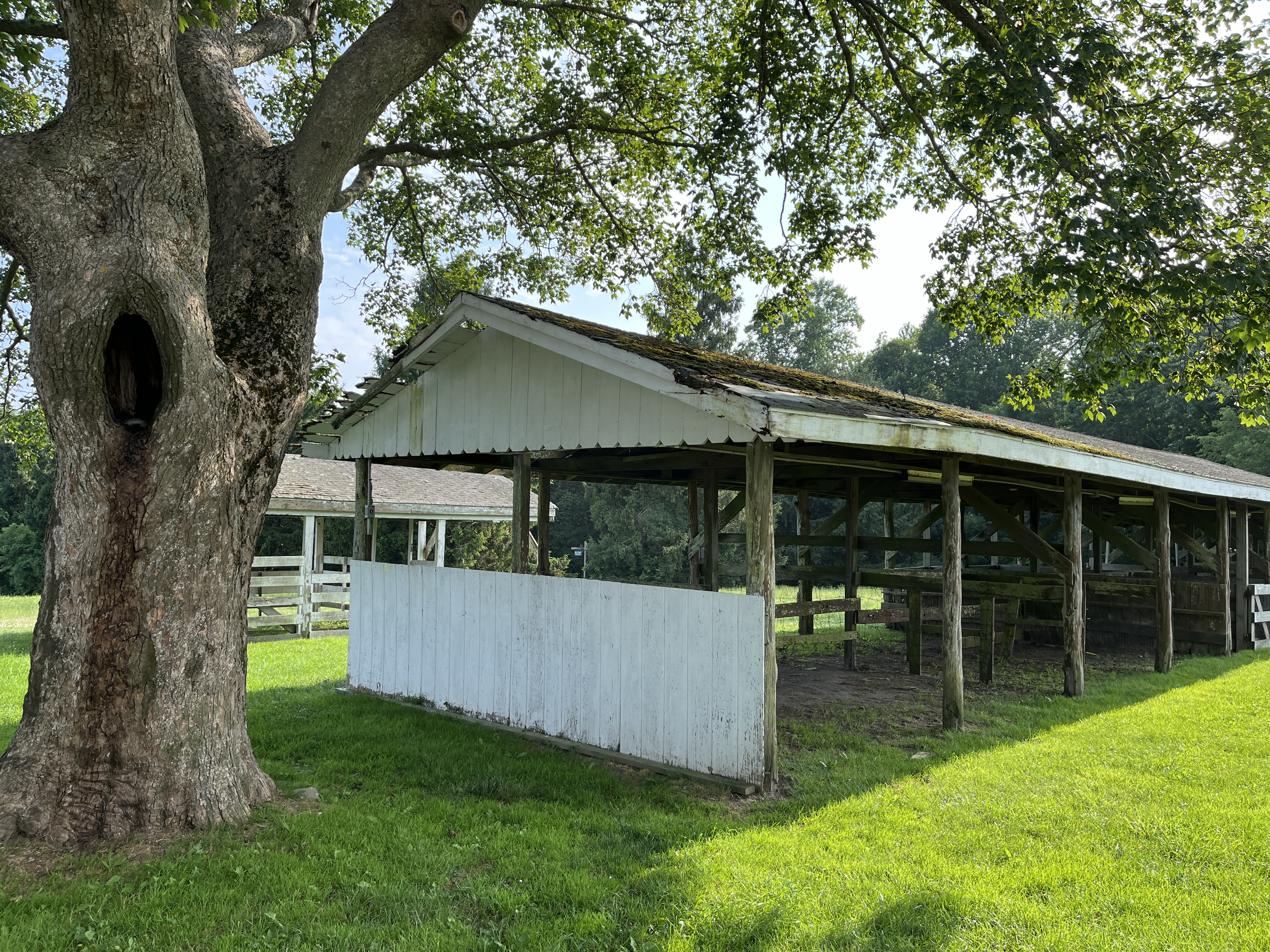
  5. Walk up Barker Road through to Glen Park. There are picnic grounds here and the area is used for special events like the 4H fair. Continue south to the stalls used for the livestock and head South along the tree line.
  6. Turn East with the tree line and skirt around a field that holds the foundation to the old sheep shed. Turn North with the tree line until you come to a cut in the stone wall. You will see a second kiosk for the trail. Once you have reached that, head back up the field and past the ball field until you come to the livestock stalls again.
  7. Turn right down Barker Lane and retrace your steps across the bridge and out the stonewall cut to Glen Farm Road.
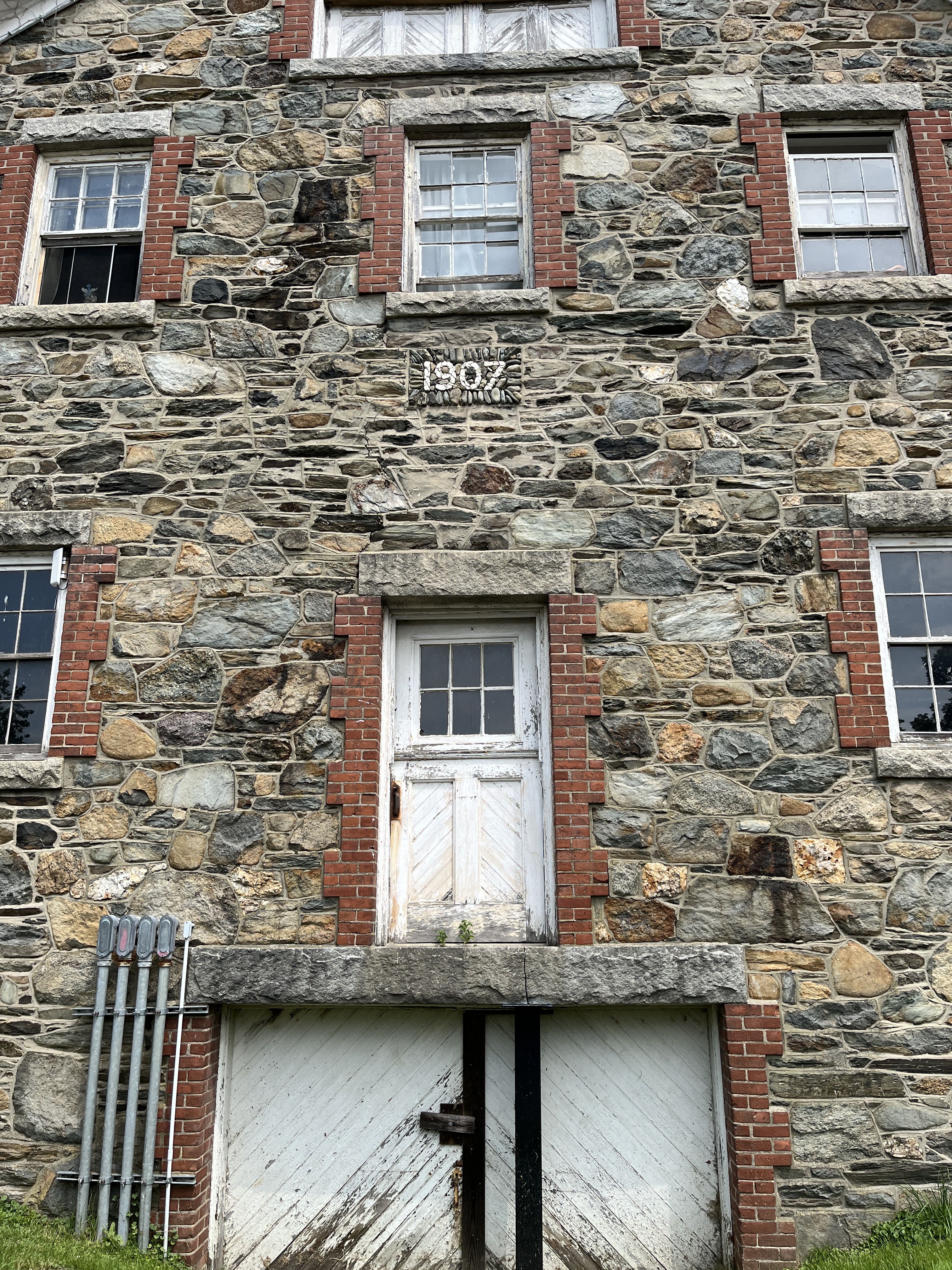
  8. As you head back, take a right turn through the barn complex. From the 1880s to the 1950s, Gentleman Farmer H.A.C. Taylor, his son Moses Taylor and daughter-in-law Edith Taylor Nicholson raised championship horses, sheep and cows. Glen Farm was a self-sustaining farm with 25 families, its own electricity, telephone and fire department. This is still a working equestrian area, but you can carefully explore the barns. Most of the stone barns date from early 1900.
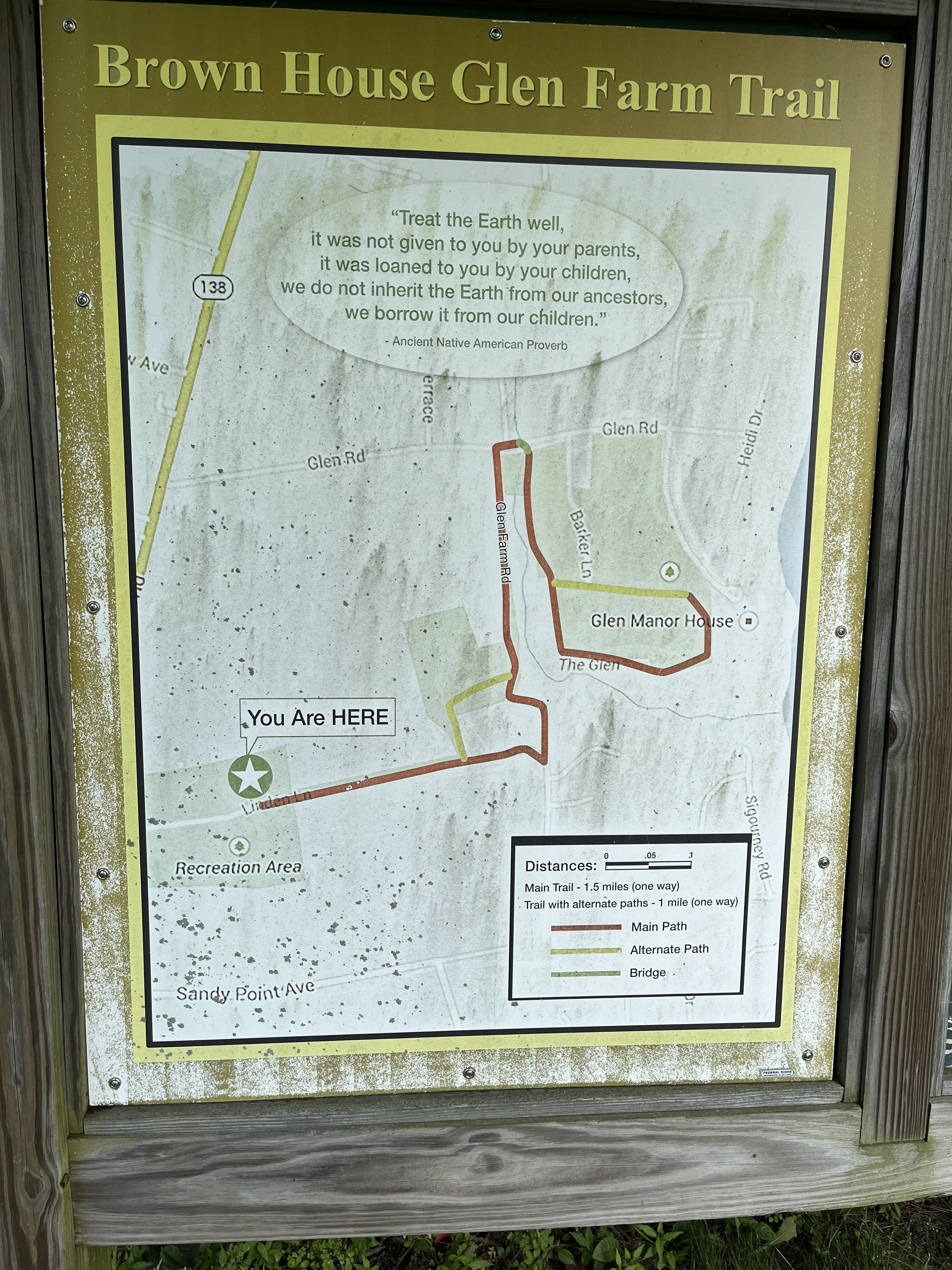
  9. Follow the dirt road to the left to come back to Linden Lane at Red Cross House. This should take you back to the trailhead and parking.

Discover Your Portsmouth: Glen Barns

Leave a comment

In 1989 the people of Portsmouth made a bold move. They voted to purchase the Glen Farm barns complex and what is now the Gardner Seveney Sports Fields. Together with the 1973 purchase of previous Glen Farm land around the Glen Manor House and Glen Park area, this gave the town a remarkable piece of open space for recreation. It also gave the town a special piece of Portsmouth history to enjoy and to preserve.

What were the beginnings of Henry Augustus Colt -“H.A.C.” Taylor’s famous Glen Farm? Taylor was one of the wealthy bankers and railroad owners who came to summer in Newport. The Vanderbilts and others had their Portsmouth farms, but Taylor was sincerely interested in breeding the best animals. On September 28, 1882 Halsey P. Coon sold his “Glen Farm” to H.A.C. Taylor. The land evidence records note that it was a parcel of land with “two dwelling houses, a grist mill, two barns, two cribs and other out buildings” The tract of land was about 111 acres of land. The “Glen” is a traditional name for the area and Taylor continued to call it “Glen Farm.” In the hands of the Taylor family, the farm grew in value, prestige and land area.

Below is an older birds eye view of the barn complex. Note some wooden barns have been torn down.

  1. Pump House: This was home to the equipment that pumped water from the stream to supply the farm with water.
  2. Stone Horse Barn: Built in 1911. During World War II the stalls were removed and it was outfitted as a field hospital.
  3. Silo: This stone silo is attached to the stone barn with a stone passageway. It was probably built before 1926. There was a wooden silo, too, but it has been removed.
  4. Stone Cow Barn: Built in 1907, this barn was for dairy cows. This is where the Glen dairy was located.
  5. Stone Bull Barn with Bull Pen: This barn is dated 1910. There was a fire in this barn in 1926, but no animals were injured.6. Frame Cow Barn: The is one of the oldest of the barns and is the model for the barn architecture.
  6. Frame Horse Barn: Built in 1902, this barn may have had a fire at the south end in the 1940’s.
  7. Tool House: Wooden barn built before 1907.
  8. Wagon Shed: Wooden structure built before 1907. The Wagon Shed has now been removed.
  9. Garage: Stone structure built after 1907. Held Taylor cars until a garage was constructed at Stanton Farm.
  10. Slocum-Cundall Cemetary: Slocum graves from 1713 on are on the northeast corner. Cundall stones beginning with Joseph in 1811 are on the west side. Slocums and Cundalls had mills in the Glen.
  11. Mill: This mill is in the same spot as the original grist mill. It was probably built on the old mill’s foundation and was used as the carpentry shop for Glen Farm.  This building has been restored as a single family home.

The barns are arranged to provide courtyards of shelter from bad weather.

Discover Your Portsmouth: Leonard Brown House Area at Glen Farm

3 Comments

This blog is one of a series on historical and recreational lands owned by the Town of Portsmouth. We (the Portsmouth Conservation Commission and I) hope that October will be a month when Portsmouth residents will visit and enjoy the properties they own as taxpayers.

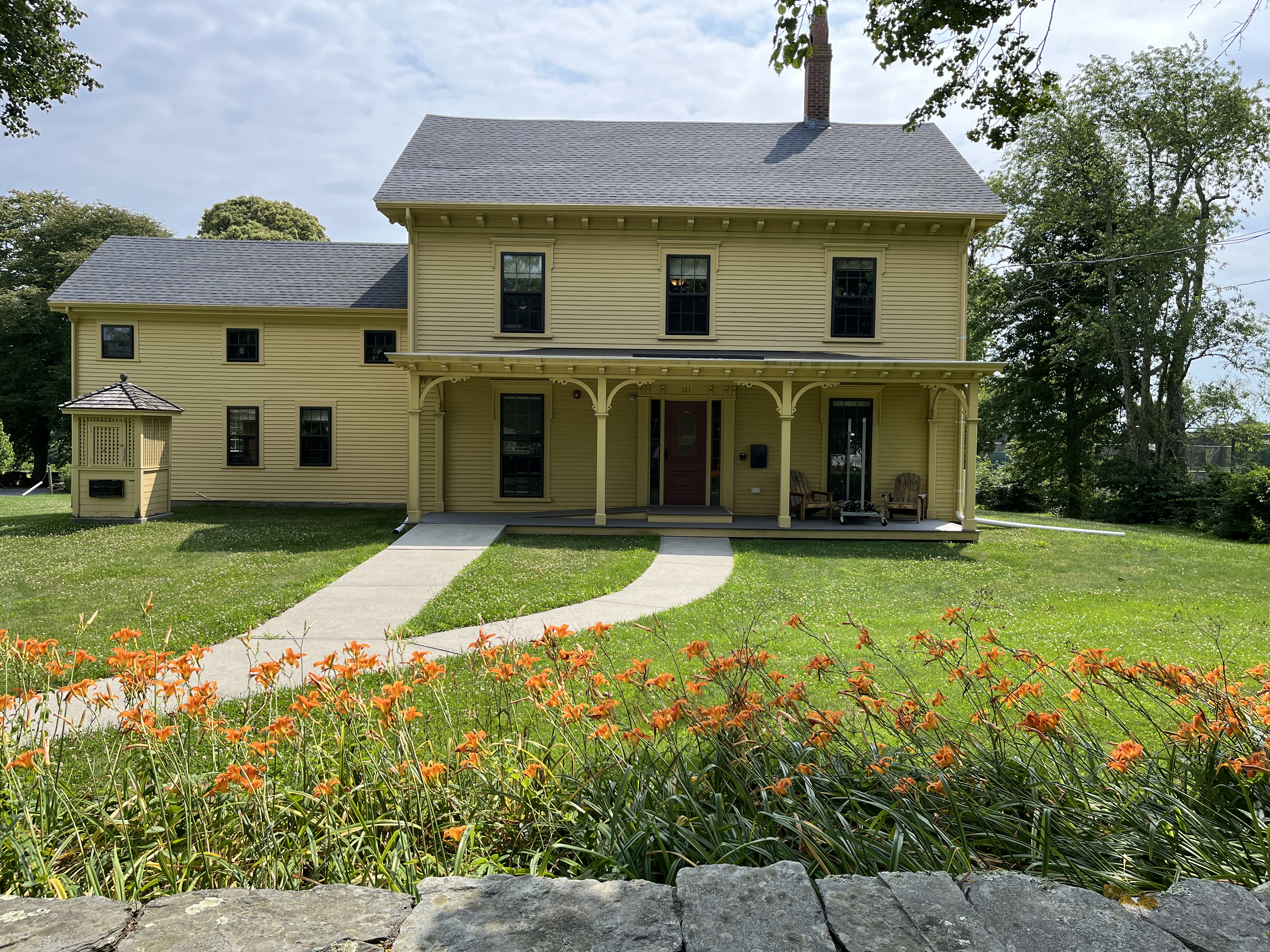
As you drive down Linden Lane through the Gardner Seveney Sports Complex, you will notice a golden yellow house at the end of the row of trees. This is the Brown House, the Leonard Brown House. It is newly restored and is the home of Portsmouth’s Parks and Recreation Department. It is a useful house, because twenty years ago an organization (Friends of Leonard Brown House) worked to save it and the town finished the process to restore it.

These recreational fields were once part of the property grants of John Cooke. It was passed down to Cook Wilcox who was part of Portsmouth’s militia in the Revolutionary War. After Wilcox died the property came into the ownership of Leonard Brown through his wife, Sarah Wilcox Brown.

Who was Leonard Brown? Brown was considered one of the best farmers in Portsmouth. He raised poultry and pigs and brought them to market in New Bedford. Along with farming, Brown served as a wheelwright and a blacksmith. Leonard Brown represents the Yankee farmers, the descendants of the original English settlers. Brown and the farmers like him were the backbone of Portsmouth. They served in political offices, farmed and were the skilled craftsmen of the town.

When Leonard Brown died in 1896, the Brown farm was sold to H.A.C. Taylor and became part of the Glen Farm. It was always painted yellow because the Taylor’s chose that color for their Glen Farm buildings.

Location: From East Main Road take a turn onto Linden Lane. There is a new traffic light at that corner. There is parking by the soccer fields to the right as you drive down Linden Lane and also parking by the Brown House.

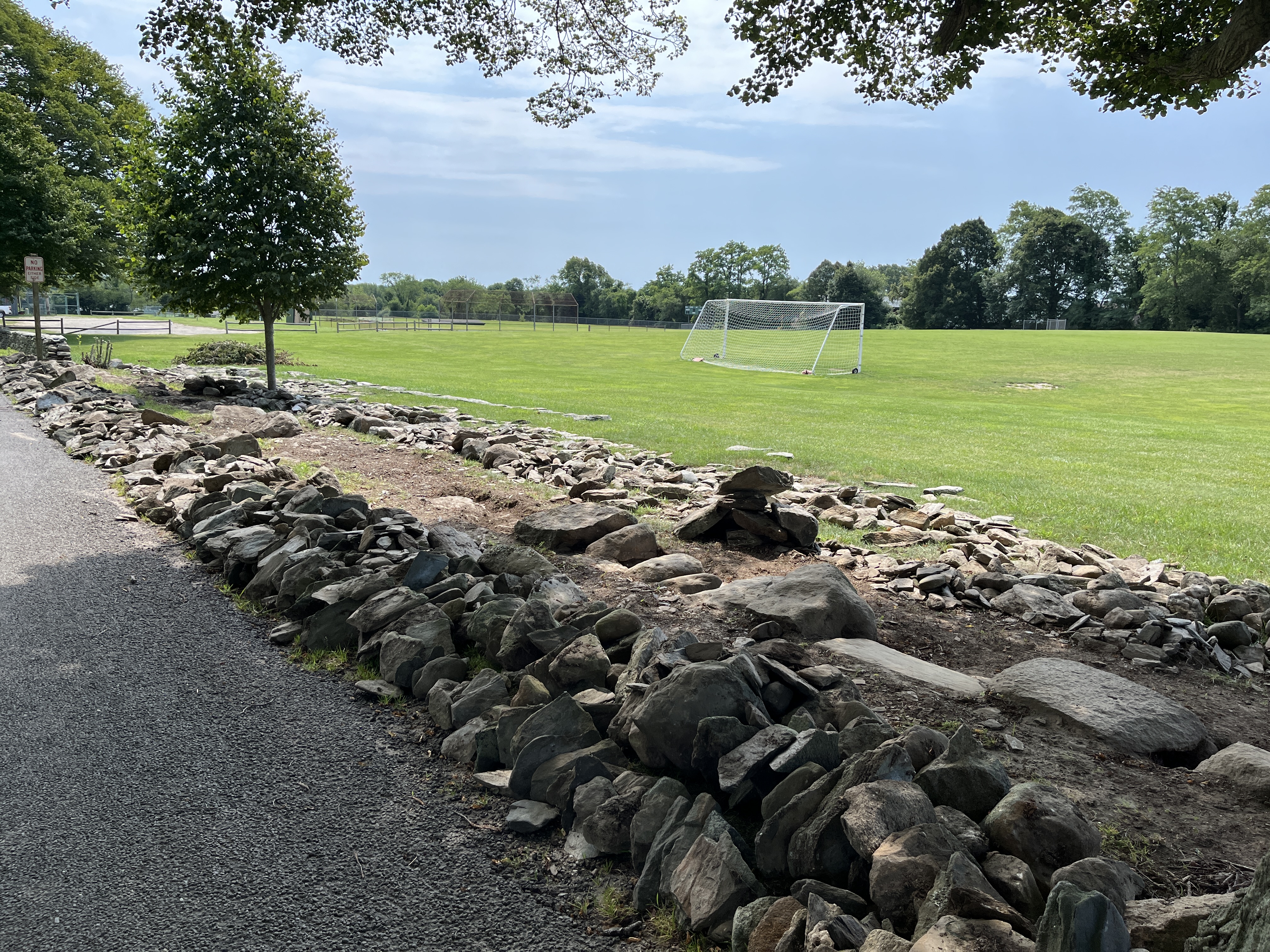
Activities: For the casual walker or dog walker, Linden Lane is ideal. The trees provide shade in summer and the road is paved. The walk from the top of Linden Lane to the “Red Cross” house and back is a little over a mile. Right now you can watch the reconstruction of the stone walls along the way. The setting at Brown House – house, stone wall, flowers and trees – is ideal for sketching or painting.