The Butts Hill Fort is emerging through the efforts of the Butts Hill Fort Restoration Committee this year.
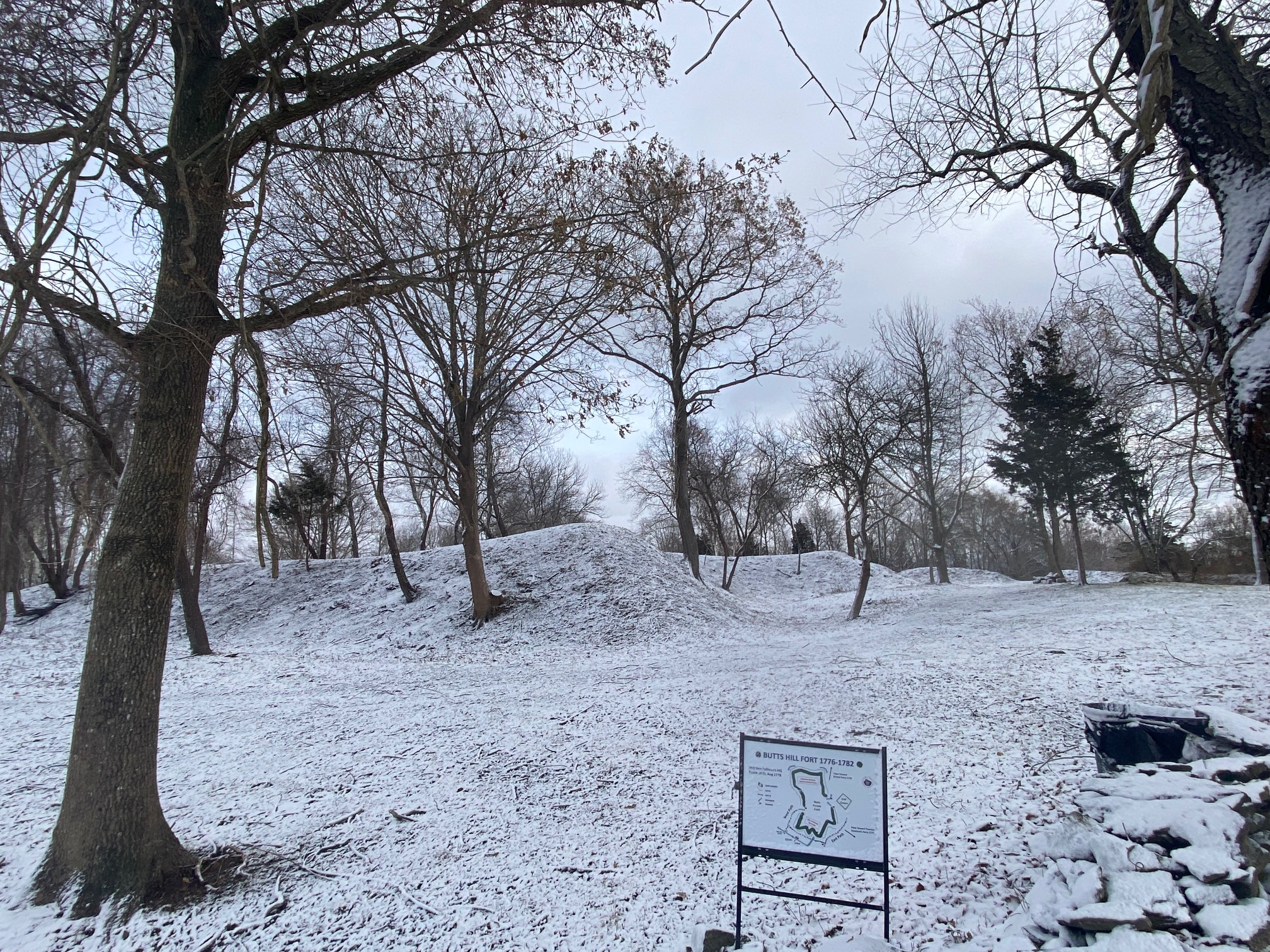
Butts Hill Fort 2024
“As we close 2024, we can report that the Butts Hill Fort complex has now emerged as a truly open and accessible historic campus. One with fully connected and improved pathways circumnavigating the site, while offering full visibility of the steeply sloping historic earthworks–from the outside looking in–for the first time in many decades. Moreover, the preservation clearing work has also opened up the site to be more understandable as Revolutionary War Era Aquidneck Island’s central defensive feature with improved view corridors to key battle landmarks such as Quaker, Turkey and Durfee hills to the south, and Howland’s Ferry, Tiverton and the Sakonnet to the east. (From: Butts Hill Fort 2024 Southern Earthworks Improvement Project Completion Report)
Butts Hill Fort 1778
The December after the Rhode Island Campaign was a harsh one. The British had systematically gathered all the fuel for fires on Aquidneck Island. At first the British and Hessians (Germans) felled the trees closest to their camps. The Hessians had a camp above Fogland Ferry. They continued to cut further away from their camps until there were no trees to cut and burn. British officer Frederick Mackenzie records that they then turned to cutting down orchards next on Common Fence Point and other locations. After the orchards, all other sources of wood were eyed. Vacant houses, wood carriages, and even wooden farm tools went into the wood supply.
Mackenzie writes on December 6th, 1778: “Every step is being taken to supply fuel: All the timber trees on the island are cutting down and the old wharves will be broken up.” Vacant houses were taken apart and the wood was used for fuel. Rail fences were taken apart and burned. On December 13th Mackenzie’s diary entry reads: “All the carriages that can be collected on the Island are employed in bringing in the wood which is cut by the party out on the island.” Turf” was cut on Brenton’s Neck and used for fuel. When the island’s wood supply was exhausted, they sent fleets to collect wood on Conanicut, Block Island and Long Island.
On Christmas Day of 1778 a blizzard began that lasted until December 28th. Hessian soldier Johann Dohla records in this diary: “26 December: A frightful snow fell here, accompanied by strong winds and a violent snowstorm such that we could hardly remain in our houses because of the snow. Tonight a Hessian sergeant got stuck in the snow near Quaker Hill and froze to death.” In another diary Hessian soldier Stephen Popp records the snow depth to be three or four feet. Mackenzie records drifts of up to 20 feet.
Portsmouth residents were huddled in their homes on Christmas Day of 1778. The mostly Quaker residents would not have had grand celebrations anyway. Christmas was yet another day to do God’s work.
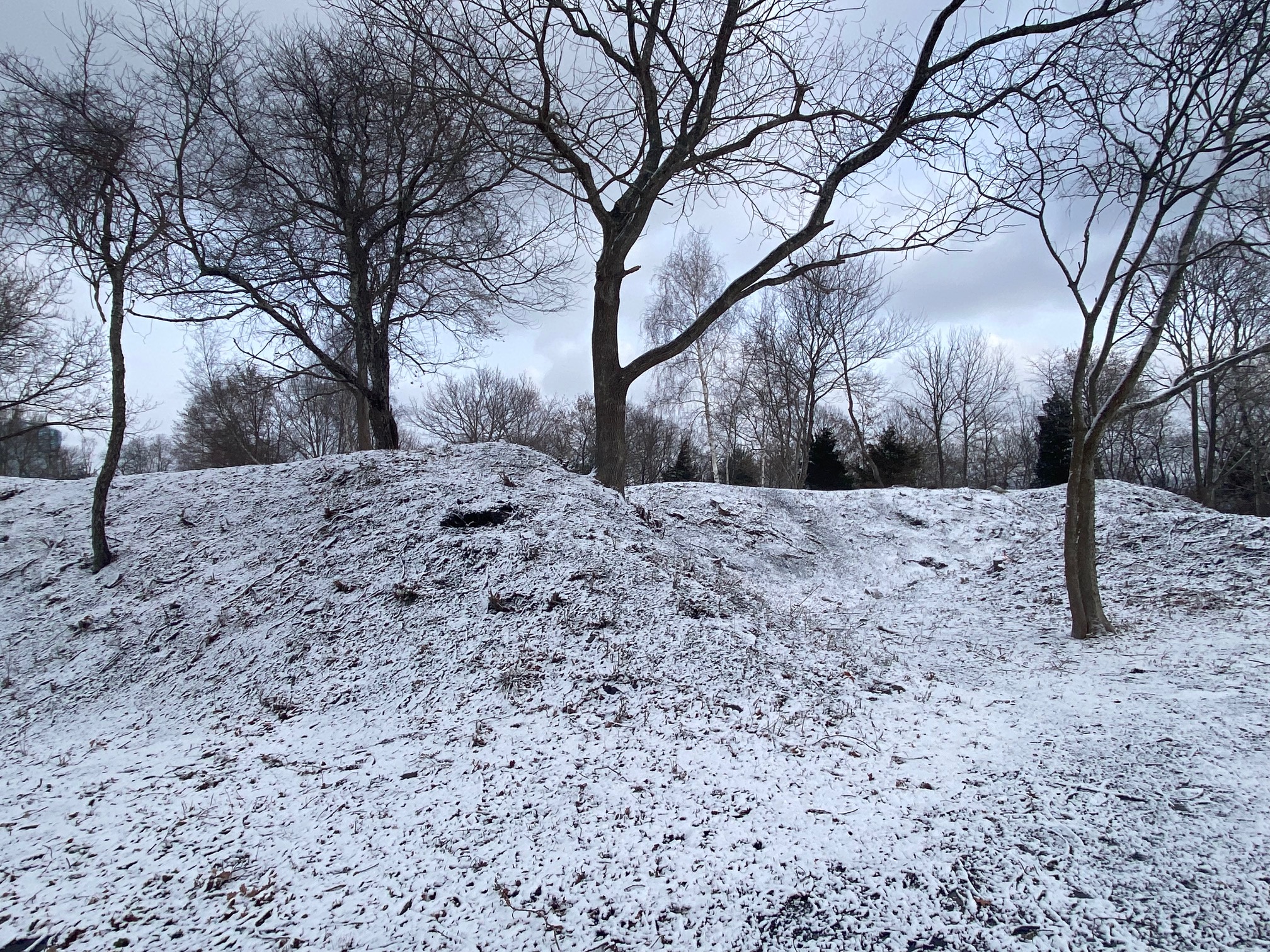
Photo by Paul Murphy
 portsmouthhistorynotes
Dec 24, 2024 @ 10:49:34
True, Quakers did not celebrate Christmas here at that time. However, most Protestant groups did not celebrate Christmas here in New England at that time either. Here is a good summary: “When the Revolutionary War began, Christmas boycotts rose in popularity as the day was again tied to royal control and tyranny. After the war, Congress met on Christmas Day, businesses were open, and while private celebrations were not uncommon, there was no official recognition of Christmas in New England.”