Home

Portsmouth People: George Manchester – 1822-1879

2 Comments

george mSo often we focus on the famous people associated with Portsmouth – Anne Hutchinson, Julia Ward Howe, the Vanderbilts.  This blog will call attention to one of those pillars of Portsmouth life who gets little recognition.  As I research Portsmouth history, George Manchester’s name keeps appearing.  He is like a thread that runs through the fabric of town society.

George Manchester was born in 1822, the son of John and Lydia (Albro) Manchester.  If you look at the town directories, George  is listed as  a carpenter.   He helped construct many homes in Newport County working with his wife’s family, the Coggeshalls.  One of his descendants has parts of his diary and from a diary entry we were able to mark the construction of the Leonard Brown House because he reported on construction there in 1850.  George built his own home and it was part of our “Whose Home Is It.” exhibit at the historical society museum last year.

As clerk of the Christian Union Church, George provided us with beautifully written descriptions of the spiritual life of the church.  He was a devoted member of the church at the location of today’s Portsmouth Historical Society, and taught Sunday School there.

Many Portsmouth farmers and tradesmen filled town positions, but George held quite a number of offices.   He was a public servant who represented Portsmouth in the RI General Assembly for several terms, as had his father, John, and his grandfather Giles Manchester.  At various times George held the offices of Superintendent of Public Schools in Portsmouth, State Railroad Commissioner, State Auditor, Customs Officer, Justice of the Peace, and High Sheriff of Newport County.  George was an active Republican and he helped organize an event for the Newport Wide Awakes (a group of young Republican men who were supporting Abraham Lincoln).  Newspaper articles are filled with examples of George’s ability as an orator.

George served as Vice President of the local Temperance organization.  He loved to read and collect books.  He wrote book reviews and articles for magazines such as Harper’s, and for religious publications such as the Herald of Gospel Liberty and the Christian Inquirer.  When the new Christian Union Church was built in 1865, a lending library was included.  George was part of the Library and Intellectual Culture Committee at the church.

George had his sorrows and struggles.  He and his wife Phebe Taber Coggeshall lived on Glen Road.   A Daily News article from November of 1862 provides an account of what they called “the melancholy death of the wife of George H. Manchester.”  At that time George was a clerk in the Providence Post Office.  He would stay in Providence during the week and come home to Portsmouth on weekends. This particular week, George “left his wife on Monday and she bid him good-bye and shortly after started for a walk to the Glen near by her residence.”  When she didn’t return her family looked for her and found her body near the old wharf.  “Near by was found her bonnet, shawl and parasol, all nicely laid together, and everything had the appearance of a premeditated death. ”  Why she would end her life seemed a mystery to her family and friends.  With the sorrow of his wife’s death, George would also have the responsibility for three children – Alfred, Charles and Leonora.    George found love again and in 1873, he married Eliza Maria (Peckham) Rogers, widow of Thomas G. Rogers.  George died in 1879 and is buried in St. Mary’s Church cemetery.

We owe a debt of gratitude to George Manchester and the others like him who volunteer their time and talents to make Portsmouth a better place.
The Night the “Wide Awakes” Came to Portsmouth

Leave a comment

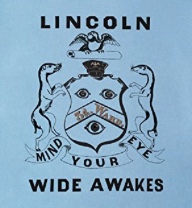
Wide Awake insignia available on tee shirts on Amazon today.

A Newport Mercury account from 1860 details an excursion the Newport Wide Awakes made to Portsmouth Grove. I came across this article while researching George Manchester, a prominent citizen who will be featured in our History Comes Alive 2017 presentation on Oct. 8th. George was part of the group credited with organizing the event. He was part of the crowd that give the men “an honest farmer’s welcome” as they arrived on the steamer Perry at the dock to the Portsmouth House. They Wide Awakes performed a short drill and the men formed a line to listen to the speeches. The article mentions “blazing torches” revealing the military discipline and “noble appearance” of the men. It seems that George made a “brief, pithy, hearty speech” welcoming the companies of Wide Awakes to the hospitality of Portsmouth.  Major Paine of Johnston  gave  the principal speech which concerned Mr. Douglas, the Democrat candidate for President.  The group was treated to a bountiful supply of food.

I had never heard of the Wide Awakes, but the article gave me a few clues to what they represented. “The four companies were out in full ranks, making a fine show, while thee were many others present in citizens dress, who were unable to appear in the ranks from the want of uniforms.” This sounded like a military organization. The article quotes someone as saying “We hope that by efficient drilling..our boys can make themselves, as they can, the best in the state.

A Providence Evening Press article from September of 1860 provided information on the origin of the “Wide Awakes.”  In February of 1860 some young men were excited by Cassius Clay, a well known Republican orator.  These young men decided to act as an escort for Clay.  They borrowed torches from the fire department.  They cut capes out of glazed cloth to protect their clothes from the torches.  Some glazed caps as well.  Their makeshift uniform drew attention to the group.  On their way home they were attacked by a sturdy Democrat; but a blow from a torch stopped him from disturbing them.  They were angry at the attack so they formed a club equipped with swinging torches and black capes and caps to promote the Republic cause at public events.  The name “Wide Awake” came from the name of John Brown’s Company in Kansas.  There were about 400,000 “Wide Awakes” in the Northern States and they drilled, wore uniforms and had officers.  This military or militia like experience created a group of young men ready to volunteer for battle when the Civil War began.

Portsmouth People: Emeline Eldredge, Suffrage Agitator

2 Comments

300Emeline EldredgeWhen Emeline Eldridge died at eighty years of age in 1934, her obituary mentioned many ways she made a difference in Portsmouth.  She had been Superintendent of Schools in an era when that was a rare role for a woman.  Emeline (also known as Mrs. John Eldredge) was a long time board member of the Portsmouth Library Association.  She was an active member of St. Paul’s Church and the Ladies Association.  For many years she was in charge of the Social Studio at Bristol Ferry “where (said the obituary) young people used to gather for dancing lessons, instruction in wood carving and other work.”
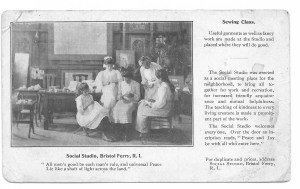
The Social Studio was founded by Emeline’s friend and neighbor Sarah J. Eddy around 1900.  It was a gathering place for youth in Portsmouth.  Emeline had no children of her own, but she worked with young people at the Social Studio for twenty years or more.    A 1913 Newport Mercury article mentions that Emeline was directing a group of twenty two girls called the “Girls Industrial Club” which met at the Social Studio.  The girls learned basketweaving, leather work, wood-carving, embroidery and other useful arts.

Social studio 1

Classes at Social Studio: collection of GSchmidt

Can you picture this School Superintendent, library supporter, craft teacher and church lady as a suffrage agitator?  Her obituary doesn’t mention anything about her efforts to secure the vote for women, but newspaper articles lead us to believe that she was an integral part of the Newport County Woman Suffrage League that was founded in 1908.  A group of Bristol Ferry area friends and neighbors was  (according to Elizabeth Cady Stanton) “among the nerve centers of suffrage activity in Rhode Island.” Among the members of this group were Emeline Eldridge, Cora Mitchell, Sarah J. Eddy,  Julia Ward Howe and her daughters Maud and Florence, Mrs. Oscar Miller and Mrs. Bertram Storrs and Mrs. Barton Ballou.  In Cady’s book on the History of Woman Suffrage, she compliments the women because “All rendered priceless service to what was then an unpopular and unfashionable cause.”  “..It took some courage in fashionable Newport to ‘come out’ for woman suffrage.  Emeline hosted some events by the Newport County Women Suffrage League at the Social Studio.  Emeline may not have been a nationally recognized figure in the suffrage movement but she certainly contributed to it here in Portsmouth.


Another View of History: Blueprints and Technical Drawings

Leave a comment

As we inventory the collection at the Portsmouth Historical Society, we come across another group of primary sources that give us a

view of historical places.  We have blueprints and technical drawings of Fort Butts, Muscle Shoal Bed Lighthouse, Portsmouth High School, Pearson Yacht building and the Glen Manor property.  We may discover more as we go through all the storage drawers.  What blueprints and technical drawings give us is another view – maybe an inside view – of what things used to look like.  They provide dimension and details that we would not get from a map or a photograph.  Looking at blueprints we start with the legend to ground us in what kind of information we can find.

Cemeteries as an Information Source

2 Comments


Family genealogists often contact the Portsmouth Historical Society about the location of family cemeteries in Portsmouth. In the days before the larger cemeteries became popular, many families would bury their dead on family plots on their own property. These historic cemeteries are being inventoried as part of Portsmouth’s Comprehensive Plan. Volunteers are needed for this work – contact town planner Gary Crosby if you would like to help in the effort.  Click on the following link for a pdf of the cemeteries map.  family-cemeteries-map-2

My husband and I volunteered to do the inventory for the Giles Slocum Cemetery which is opposite the Glen Farm barns. I chose this particular one because I know the stories behind many of the people buried there. In 1995 my students at Elmhurst were researching Glen Farm and I brought a group of student photographers up to the barn area. The students were interested in the ancient cemetery and many chose to take pictures of the old tombstones. This sparked my interest in researching the stories behind the names engraved on the tombstones.

slocum cem

Elmhurst Students at the Slocum Cemetery in 1995

Once you step inside that tree shaded historical cemetery you may notice that the gravestones tell the story of two families, the Cundalls and the Slocums. The Cundall burials range from 1810 to 1820 and they are on the westside of the plot and the head of the stones face west. Among those buried here is miller Joseph Cundall who lost his life in a Christmas Eve blizzard, his frozen body found only a few feet away from where he now rests forever. The headstones for the Slocum family are of an earlier time – 1703 to 1722. They lie in the northwest corner of the plot and the engravings face south.

You might think that the tombstones are primary sources because they date from the time of the person they memorialize. What is written on the stone represents what someone else thinks they know about the person who has died. In my own family, for example, we still do not know the year of my grandmother’s birth. She lied about her age for years and since she was born in a Canadian territory, we have had no luck in tracking down accurate records. A historian will look for other sources to confirm the information on the stones. I found confirmation of the Christmas Eve death of Joseph Cundall in Newport Mercury accounts of the miller’s death.

The inscriptions on tombstones provide valuable clues for genealogists and historians.

History Detective’s Guide: Oral History Interviews

Leave a comment

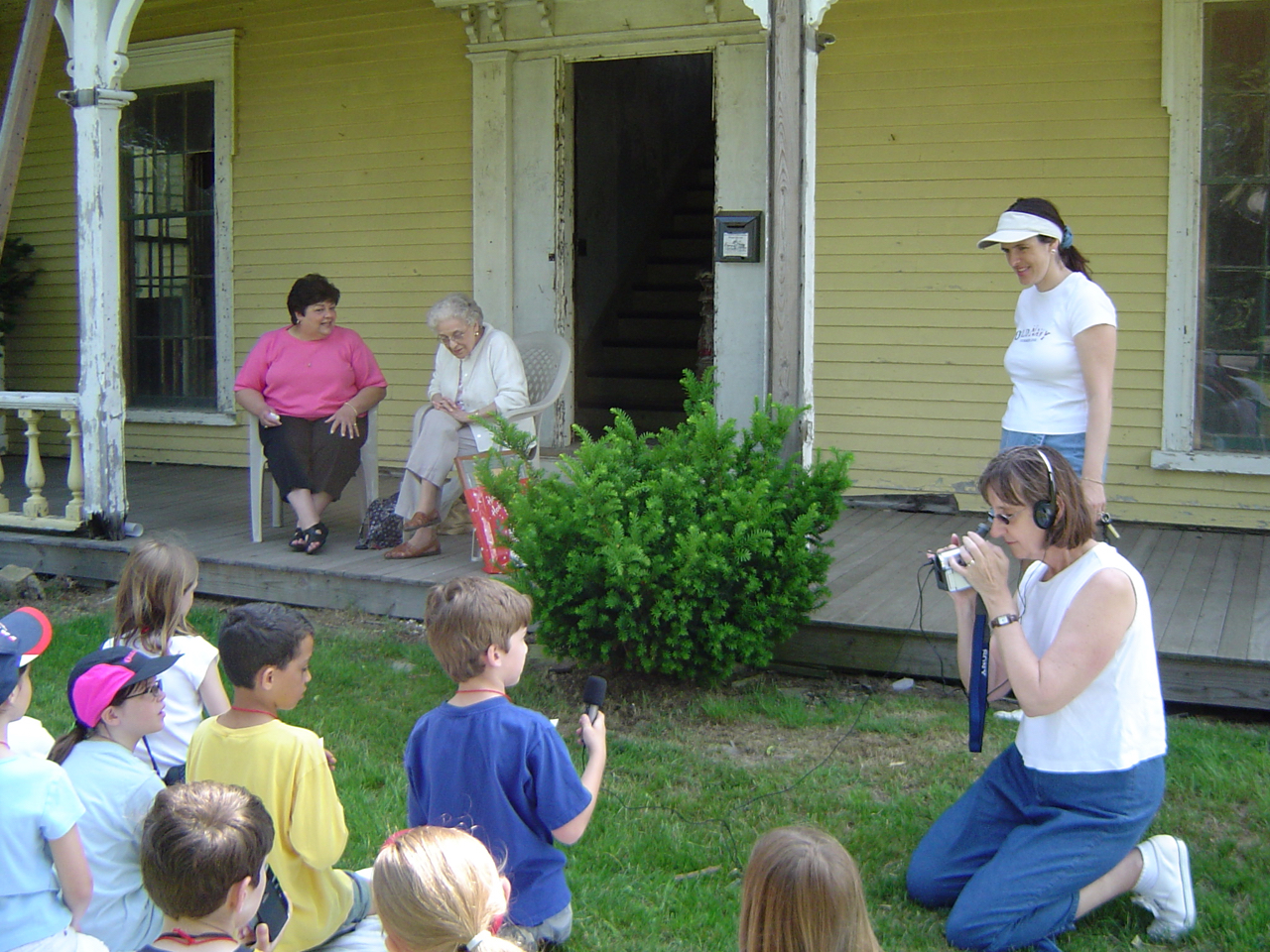
Elmhurst third graders interview the Camara sisters.

People are a wonderful source of information, but you have to prepare before you even begin to ask questions.

Before the Interview:

1. Research as much about the person or topic as you can. When my students interviewed an organic farmer, we had to know what was involved in organic farming. When we interviewed a stonemason, we researched how a stone wall was put together and what stones you might find in our walls.
2. Prepare a list of questions for the interview. You need not follow the list exactly because other questions may come up as you proceed with the questioning.
3. Put the simplest questions first and ask more complicated or thoughtful questions more toward the end.
4. Write questions that are “open ended” and can’t be answered by “yes” or “no.”
5. Don’t ask “two part” questions. Plan to ask one question first, listen for the answer and then follow up with the second question.
6. Interviews are better when you have sent the interviewee a list of your questions ahead of time. This gives them time to think about things and it takes away some of the fear that they will be asked a question that they might find uncomfortable. We have had some of our interviewees check with other family members for answers or bring photos to the interview.

At the Interview:
1. Treat the interviewee with respect.
2. Introduce yourself and thank them for sharing with you. You might share why you are interested in the story of the person or this particular topic. When we interviewed the Camara sisters we told them that we were interested in knowing what it was like to grow up on Glen Farm.
3. Don’t try to take notes – record the interview in some way. You might use a tape recorder, video recorder or even use a notes function on a cell phone.
4. Test the recorder to make sure it is working. Once you know the recorder is working, give your full attention to the interviewee. Let the recorder run.
5. Speak slowly, clearly and loud enough to be heard. The tone of your voice will set the tone for the interviewee.
6. After you ask a question, stop…and wait for an answer, even if you have silence for a while. Interviewees sometimes need some time to get their thoughts together.
7. Don’t hurry them or cut them off or they will think that what they say isn’t important to you.
8. Reflect back on which questions gave you the most information.

History Detective: Guide to Historical Portsmouth Maps Online

Leave a comment

Glen area map 1885

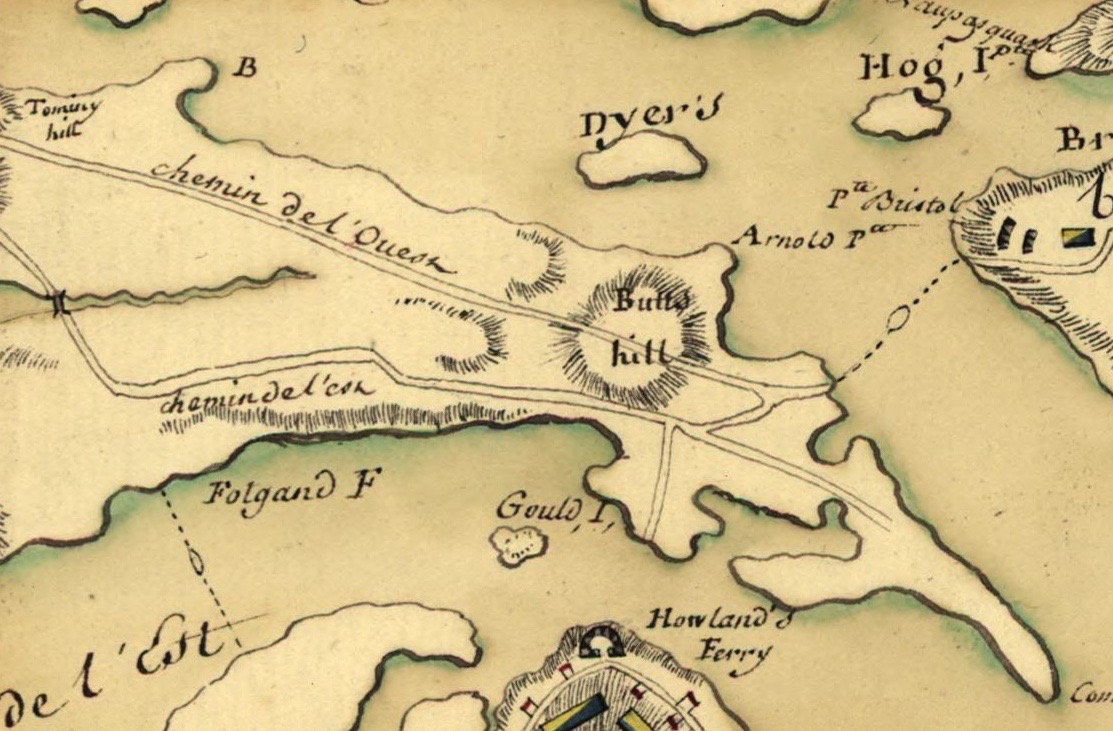
French revolutionary war map

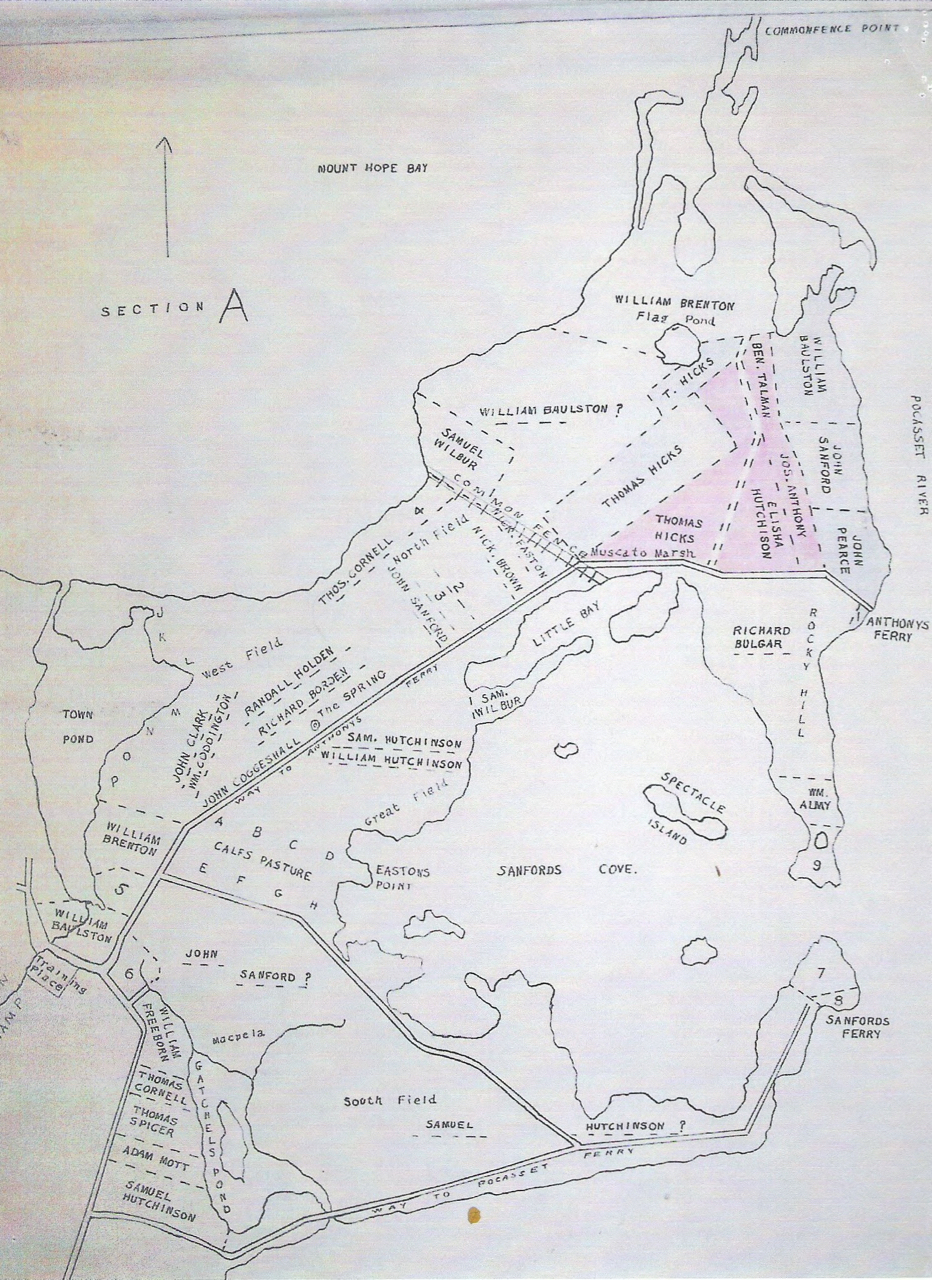
Land Grant Map Section A Map

Many wonderful historical maps of the Portsmouth area are available online.  This is a guide to how to location some of them.

One of the most valuable sets of maps for researching early Portsmouth are the West Land Grant maps. Most maps are considered “primary” or first hand sources, but this one is a little different. In 1932 historian Edward H. West tried to match the land deeds from 1638 to 1781 with where in Portsmouth that land would be. The West maps are an invaluable resource for families are trying to figure out where their ancestors lived in Portsmouth. The maps are Edward West’s attempt, but some family genealogists have found fault with the work. I still consider this a very valuable source. The original maps were color coded to when the land grants were given, but the colors have faded and it is difficult to see the coloring.

Land Grant Maps are being archived in the high resolution Portsmouth History Center Archives (http://www.portsmouthhistorycenterarchive.org). On the home page, put “maps” in the search box and it should bring you to a page with maps from the Portsmouth Free Public Library collection.

From Rhode Island Gen Web
There are some wonderful maps on the Rhode Island Gen Web site.

1893 Map of the Island of Rhode Island
http://www.rootsweb.ancestry.com/~rinewpor/maps/Newport1893a.html

Beers map 1870

I would recommend a visit to the Library of Congress site and search for “Rhode Island maps.”
Here I found some great maps dating from the Revolutionary War.

A German map from 1777: https://www.loc.gov/resource/g3772r.ar101400/
A French Rev. War  1778: https://www.loc.gov/resource/g3772r.ar101600/
Attacks upon rhode island August1778 https://www.loc.gov/item/gm71000685/

19th century maps of Portsmouth from the Library of Congress

Aquidneck Island Road Map 1849 Hammett- https://www.loc.gov/item/2012593354/
Aquidneck Island land owners map 1870 Ward- https://www.loc.gov/item/2012593354/ 1870 Dripps – https://www.loc.gov/item/2013593287/
1850 Walling – https://www.loc.gov/item/2013591358/

Brown University has Sanborn Insurance maps online. These maps show buildings and out buildings.
Island park Sanborn map: https://repository.library.brown.edu/studio/item/bdr:212703/
Sanborn Portsmouth map 1921 https://repository.library.brown.edu/studio/item/bdr:
384480/

SaveSave

SaveSave

History Detective: Working With Maps

Leave a comment

Version 2

1921 Insurance Map

Historical maps help us to visualize what Portsmouth was like in years past. When you start looking at a map, you need to take some time to look at a few elements of the map to get an accurate picture of what information it might supply.

Title — Can you find a title? This is very helpful in understanding why the map was created.

Date— A date can help you understand how the map fits into Portsmouth historical time periods.

Orientation — Can you find a compass rose or at least an error pointing North? Most map makers place North at the top of the map, but that is not always the case.

Scale — When you are dealing with a physical map, a scale of how many miles to the inch can be helpful. When you deal with a map online or printed in greater magnification, the scale information is not as helpful.

Legend — The legend is like a key to the symbols used by the map maker. It is very important to know what these symbols mean.

Author or Company creating map — Knowing who created the map gives us an idea of the bias of the map. Is the map created by a national publisher, a local company, or even drawn by a particular person. How much would they know about Portsmouth?

Questions for you to think about:
1. Why was the map created? Was it to illustrate battles fought, help firefighters know what structures are on properties, mark the landowners or show the roads in town…something else?
2. How does this map compare with maps created befor it or after it.?
3. What new information does this map provide? Does it mark the windmills, show the schools, show the changes in transportation?

SaveSave

Pictures of Old Portsmouth

Leave a comment

Vintage pictures of Portsmouth are a valuable resource. How can you find them? Efforts are being made to have more images available online.

If you enjoyed the photos in John Pierce’s book Historical Tracts of the Town of Portsmouth, you will enjoy viewing the images online.  The John T. Pierce, Sr., Historical Collection was put online by the Portsmouth Free Public Library in 2007.   Materials for this site were donated to the Library by retired Portsmouth Police Chief Pierce,  and the site was funded by a grant from BankNewport. To view the collection, visit http://portsmouthlibrary.wordpress.com/ 

The Portsmouth Historical Society is beginning to digitize their collection of photos.  Wonderful images of Reginald Vanderbilt’s Sandy Point Farm and the Vanderbilt’s Oakland Farm are available through the Portsmouth History Center website:  http://portsmouthhistorycenter.org   This digital archive is a project funded by the proceeds left from Portsmouth’s 375th celebration. From the home page you have access to the Pierce Collection and the Digital Archives. Photos are not the only resources available.   The Digital Archives provides access to documents, diaries, church records, etc. from the collection of the Portsmouth Historical Society.

The Portsmouth Historical Society has a few hundred photos that need to be recorded and photographed so they can be added to an online collection.  Volunteers are needed so that these photos can come out of storage and be available online.  Many items are starting to fade and we need to digitize them just to preserve them.  Check out the Portsmouth Historical Society website, portsmouthhistorical.org to see how you can volunteer.


SaveSave

SaveSave

SaveSave

History Detective’s Guide: Picturing the Past

1 Comment

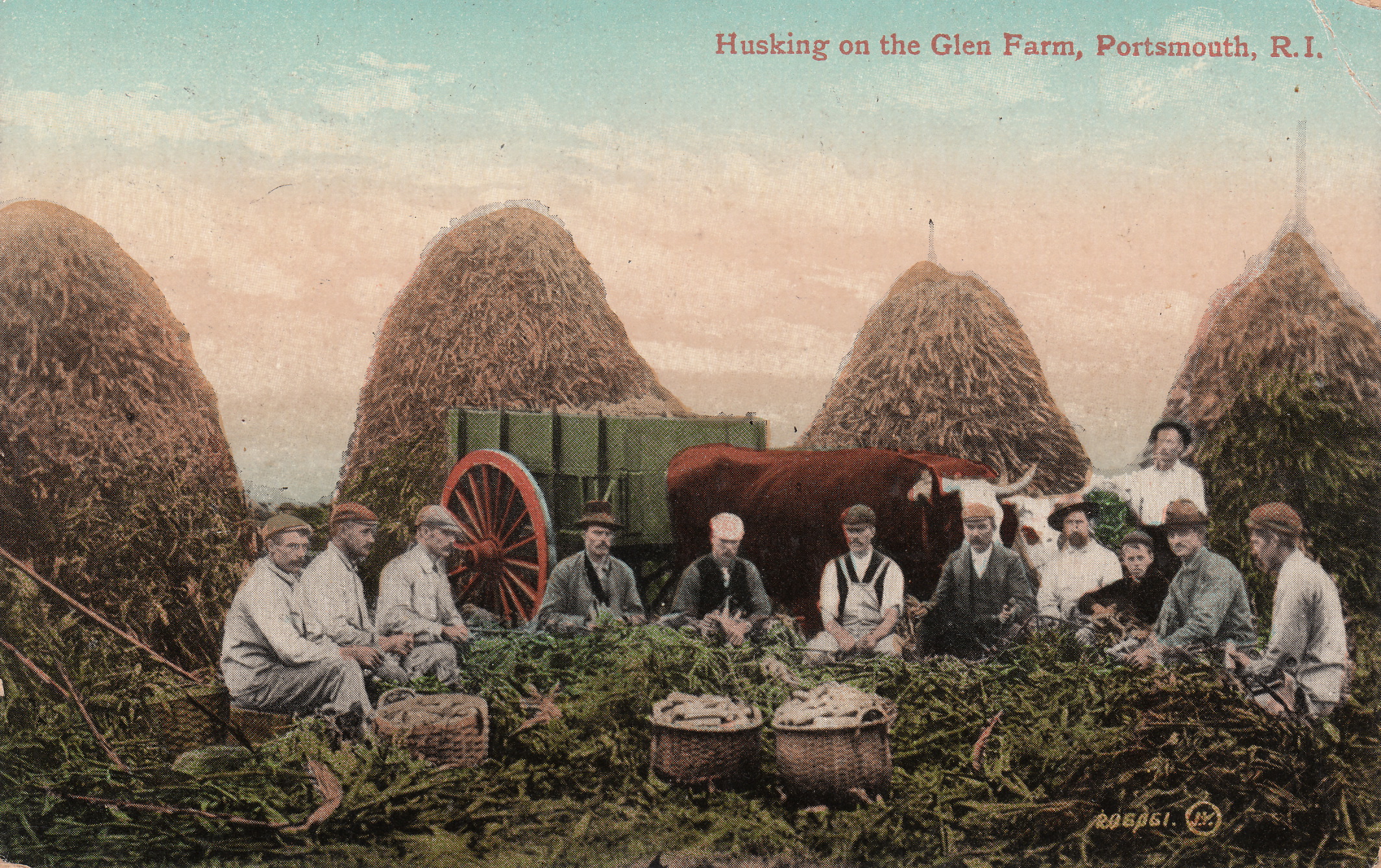
Corn husking on Glen Farm

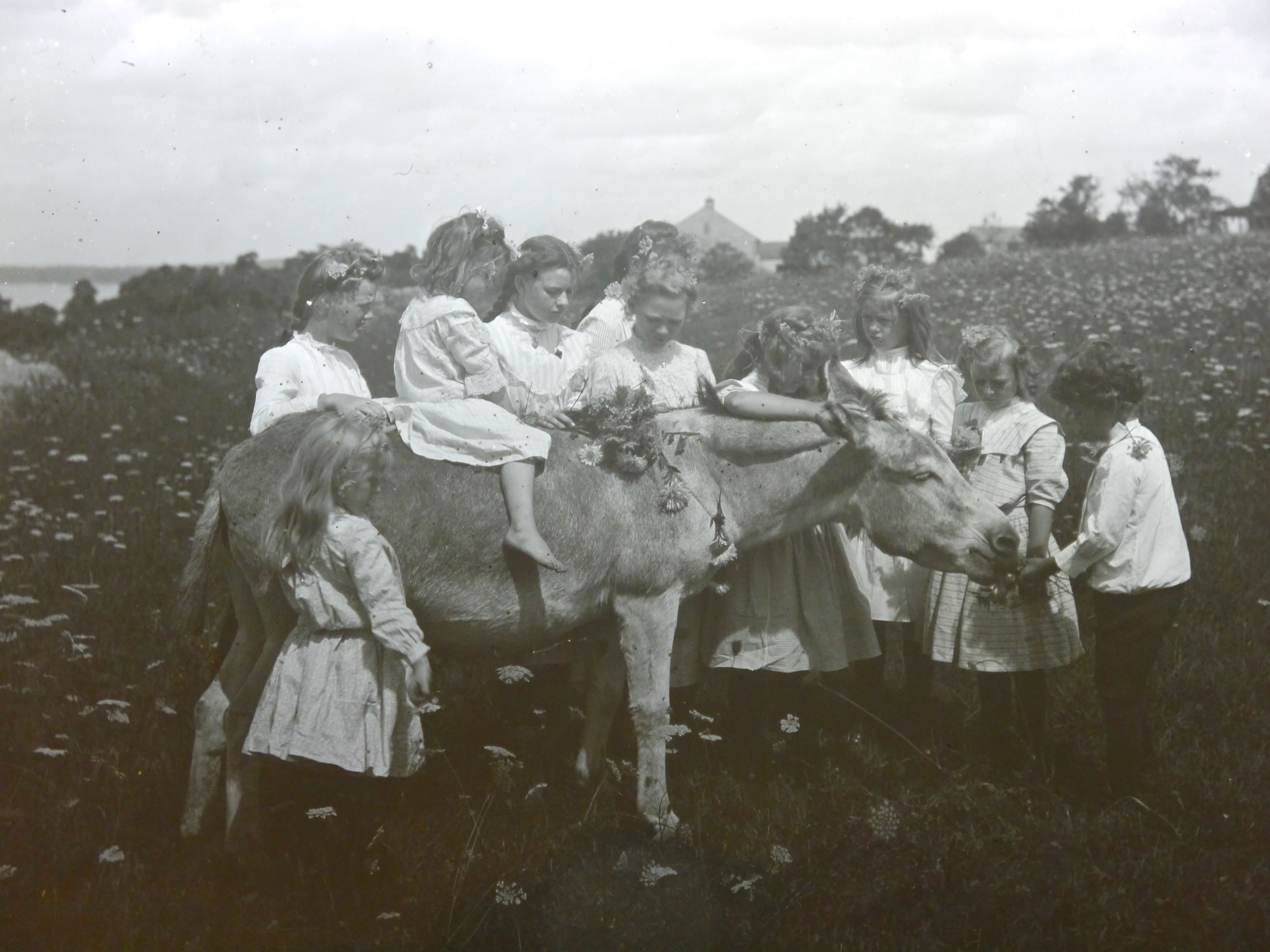
Sarah Eddy photograph of Portsmouth children.

A vintage photograph is an excellent primary source. It is a snapshot of a moment in past time. How do you get the most information from a photograph?  You have to spend time with the photo and carefully look at the details.

Steps in Analyzing a Historical Photograph

  1.  Study the photograph for at least two minutes to get an overall view. Think about why the photographer took this image. Does it record an event? Is it a professional portrait? Is it a postcard meant to show off interesting landscapes and buildings in town?
    In your mind, divide the photo into four quarters.
  2. Look at each quarter separately. Use a magnifying glass if it helps you to enlarge and note the details of the picture.
  3. If there are people in the photo? What can you tell about them. How old are they? What can you tell from the clothes they are wearing?
  4. If this is a photo of an event, what is happening?
  5. When and where was the photo taken?
    a. Are there clues about the location? Does the landscape or buildings look familiar? What do you see in the background?
    b. What year or decade was it taken? Can you tell from the signs, vehicles or even the presence of electric wires.
    c. What season is it? Is there snow on the ground, leaves on the trees?  Are people dressed for warm or cold weather?
    d. What time of day is it? Can you tell by shadows or lighting?
  6. Use a magnifying glass to find the objects that are in the photo. Are there tools, signs, buildings, vehicles?
  7. What questions does the photograph raise? Can you think of other sources that could help answer those questions.  Would a map help? How about a city directory?

SaveSave

SaveSave

Older Entries Newer Entries