This blog is one of a series on historical and recreational lands owned by the Town of Portsmouth. We (the Portsmouth Conservation Commission and I) hope that October will be a month when Portsmouth residents will visit and enjoy the properties they own as taxpayers.
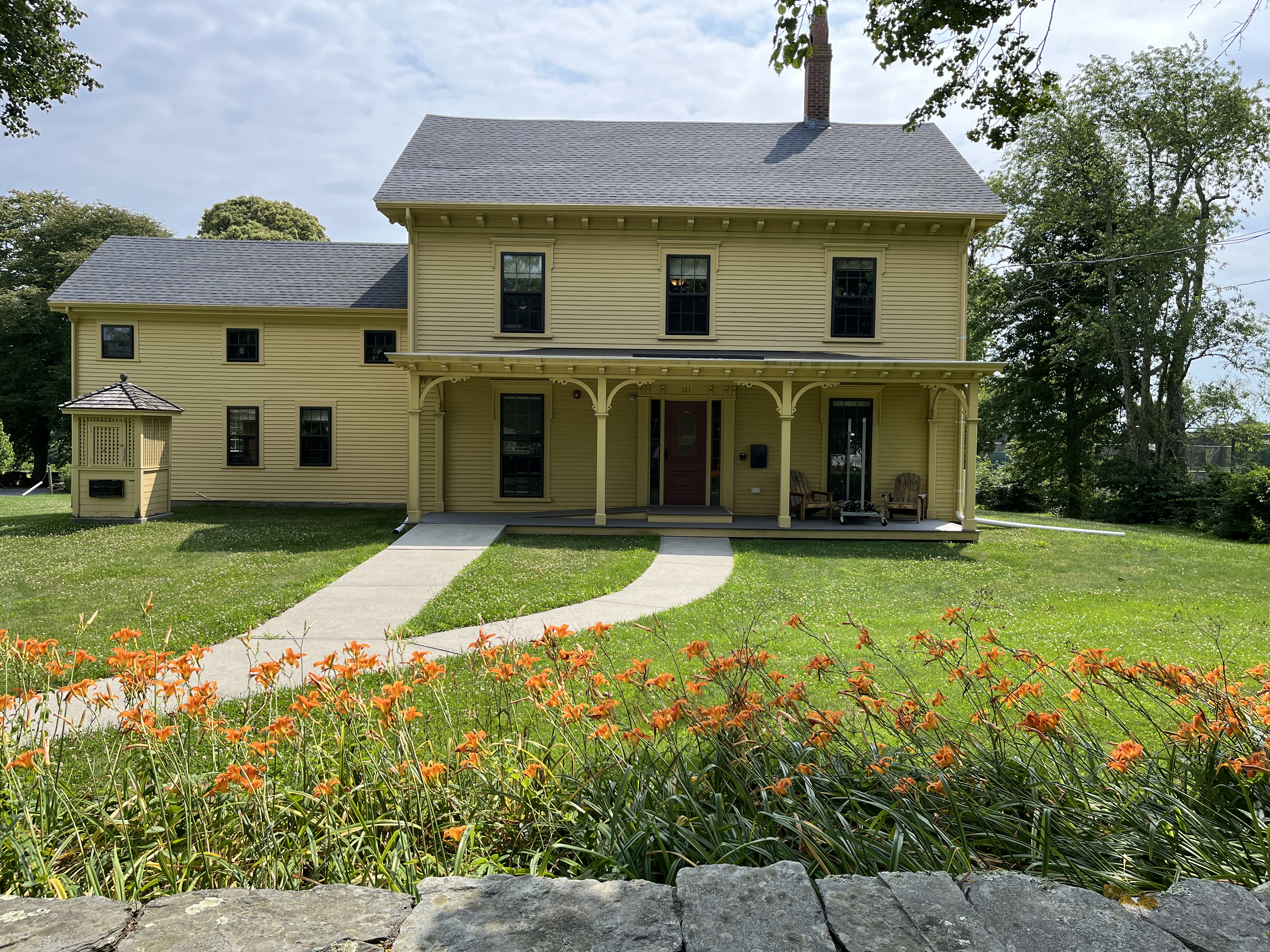
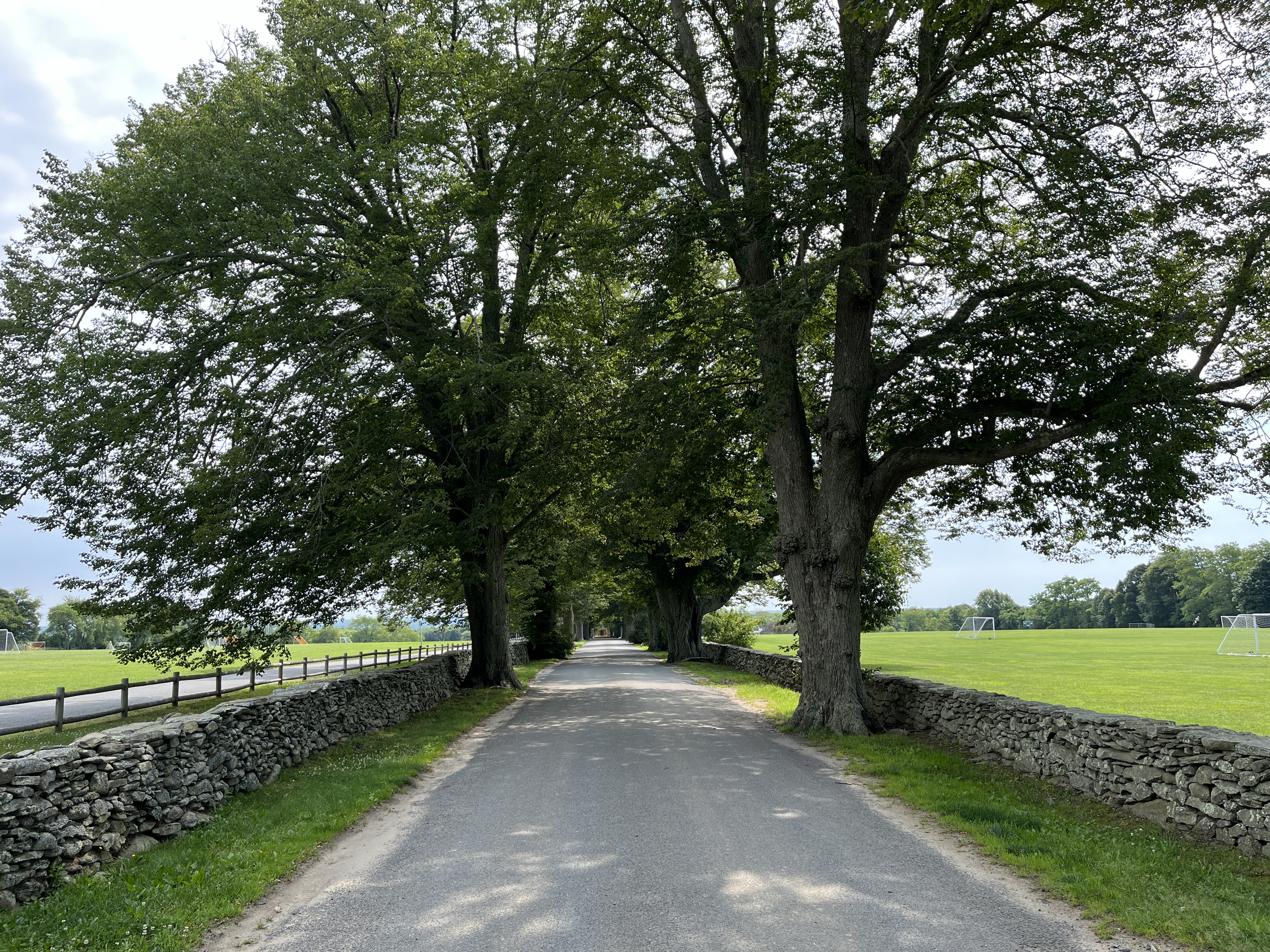
As you drive down Linden Lane through the Gardner Seveney Sports Complex, you will notice a golden yellow house at the end of the row of trees. This is the Brown House, the Leonard Brown House. It is newly restored and is the home of Portsmouth’s Parks and Recreation Department. It is a useful house, because twenty years ago an organization (Friends of Leonard Brown House) worked to save it and the town finished the process to restore it.
These recreational fields were once part of the property grants of John Cooke. It was passed down to Cook Wilcox who was part of Portsmouth’s militia in the Revolutionary War. After Wilcox died the property came into the ownership of Leonard Brown through his wife, Sarah Wilcox Brown.
Who was Leonard Brown? Brown was considered one of the best farmers in Portsmouth. He raised poultry and pigs and brought them to market in New Bedford. Along with farming, Brown served as a wheelwright and a blacksmith. Leonard Brown represents the Yankee farmers, the descendants of the original English settlers. Brown and the farmers like him were the backbone of Portsmouth. They served in political offices, farmed and were the skilled craftsmen of the town.
When Leonard Brown died in 1896, the Brown farm was sold to H.A.C. Taylor and became part of the Glen Farm. It was always painted yellow because the Taylor’s chose that color for their Glen Farm buildings.
Location: From East Main Road take a turn onto Linden Lane. There is a new traffic light at that corner. There is parking by the soccer fields to the right as you drive down Linden Lane and also parking by the Brown House.
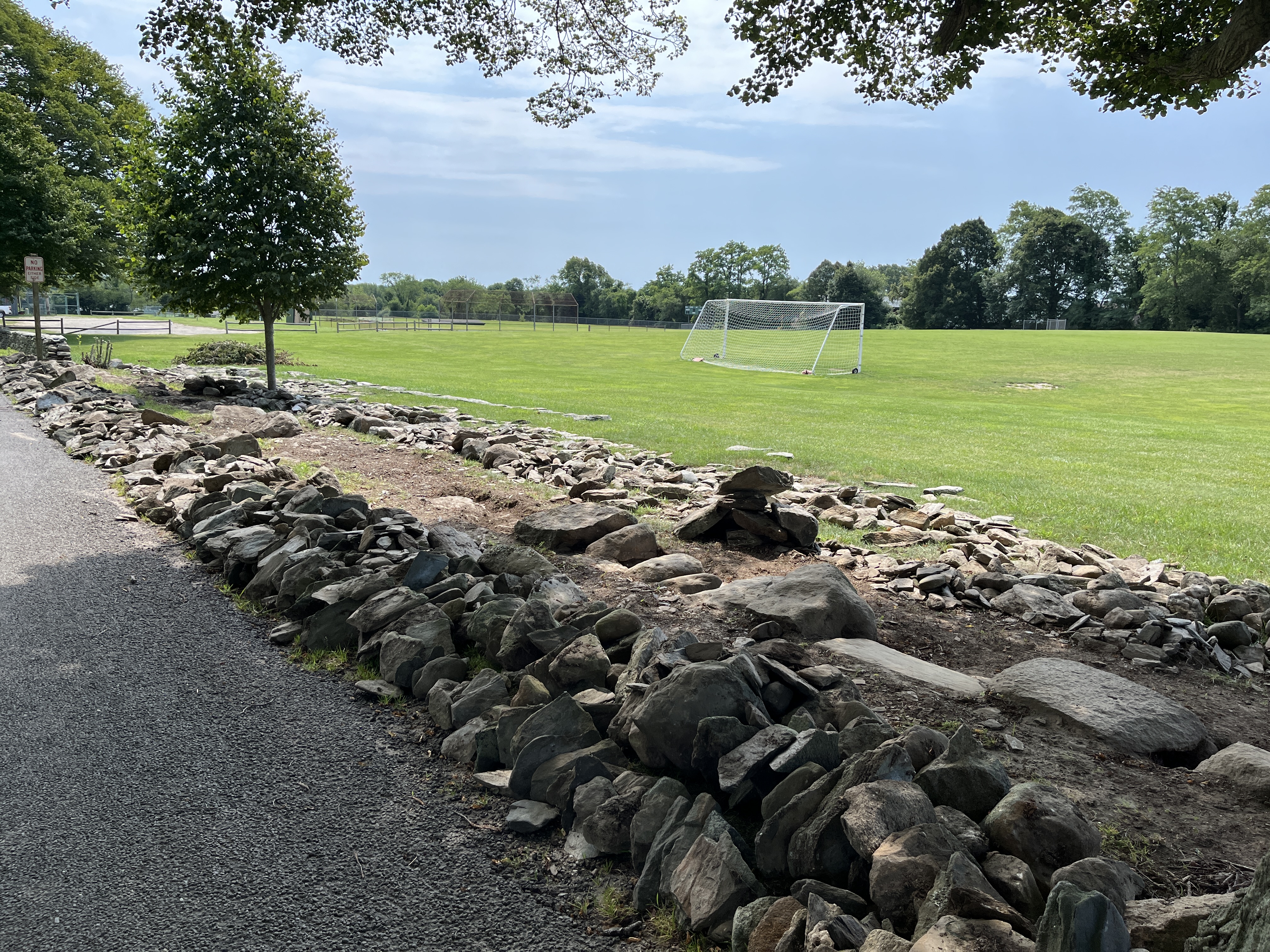
Activities: For the casual walker or dog walker, Linden Lane is ideal. The trees provide shade in summer and the road is paved. The walk from the top of Linden Lane to the “Red Cross” house and back is a little over a mile. Right now you can watch the reconstruction of the stone walls along the way. The setting at Brown House – house, stone wall, flowers and trees – is ideal for sketching or painting.


 portsmouthhistorynotes