We tend to think of the Rhode Island Campaign ending as the Americans retreated to Tiverton. I have been researching the movements of Lafayette in Rhode Island and I am more aware of the actions of the Continental troops on the East and West Bays directly after the retreat. Lafayette wrote letters that provide us with clues to what was happening in the East Bay. The Americans were successful in moving their troops and equipment off Aquidneck Island, but the decision of the French to leave for Boston to repair their ships left bitter feelings. Lafayette had an idea for a small victory to boost morale. On September 8th, 1778 he wrote to Silas Talbot . I am quoting the letter, but phrasing some of it in more modern language.
Sir,
The reputation which you have already acquired by your zeal and skill in the artificial way (as a mechanic in the military), leads me to communicate to you a plan where I think some success could be obtained. I wish to have heavy and strong scows upon each of them a twenty-four pounder would be fixed and then by a calm night, attack an English frigate who lies upon the North end of the island. The directions we could take should prevent her giving us any broadside before receiving many shots directed in such a way as to annoy them extremely.
In the same time she would be busy in her defense I wish two or four fire boats full of fascines, tar, old muskets, and bombs could be directed to the other side so as to enflame her.
If you believe, sir, such a scheme might succeed, I would be obliged to you to come immediately from Providence with such artificial provisions as would enable us to try the experiment without loss of time. You could take down two or three or more large scows or ferry boats who would extremely well do the business for fixing cannon on them. That affair must be kept very secret. With the greatest and more sincere esteem I have the honor to be dear sir your most obedient servant.
Silas Talbot did follow through with Lafayette’s idea. In coming blogs I will give more background on the adventures of Talbot and his daring exploits.
Letter taken from Lafayette in the Age of the American Revolution. Edited by Stanley J. Idzerda.
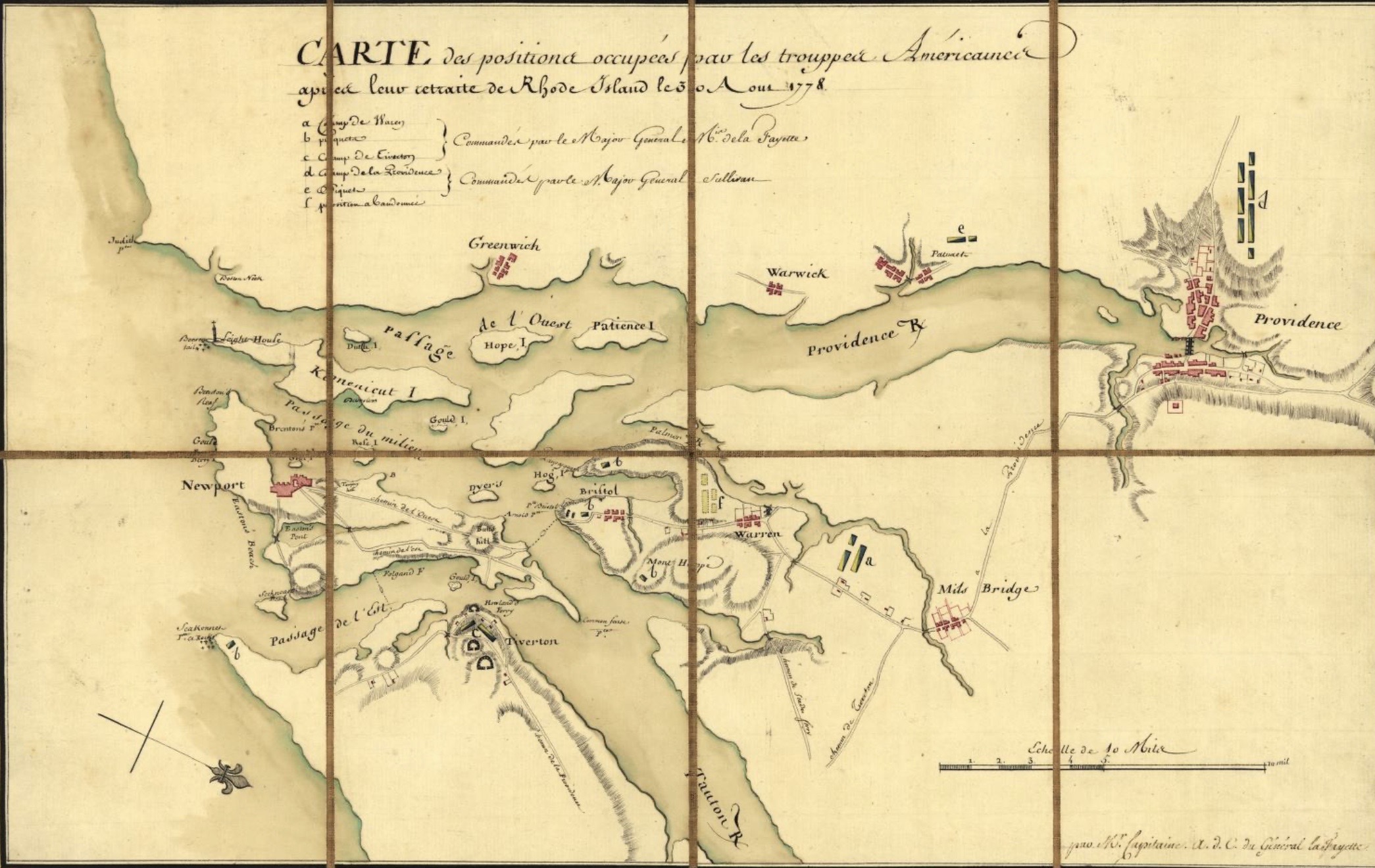
I have been searching for a way to illustrate the Marquis de Lafayette’s movements in Rhode Island and I came across a map that will be very helpful. It is a map of the positions of American troops in August of 1778. Rhode Island shorelines are prominent and the American camps are laid out so I can mark Lafayette’s positions throughout the Campaign.
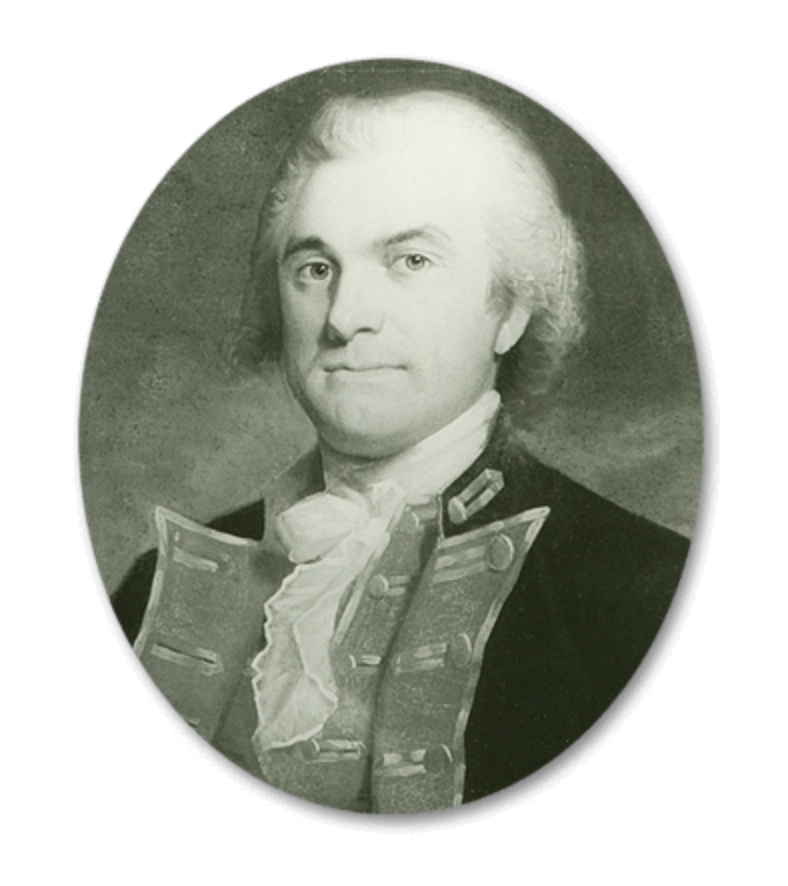
I have seen (and used) this map before, but as I read Lafayette’s letters just before the Rhode Island Campaign, I came to appreciate this map and the French mapmaker, even more. The mapmaker was Michel Capitaine du Chesnoy. Chesnoy arrived in Charlestown, South Carolina with the teenage Lafayette. He was struck by an illness and it was only in the Spring of 1778 that he was well enough to help Lafayette. In his recovery he made maps of battles that he did not witness personally. He did a survey of the British positions at Ticonderoga, (Plan of Carillon or Ticonderoga). The map of Ticonderoga is unique, as mapmaker Chesnoy created the battlefield map through a combination of scouting accounts and secondary maps without visiting the area.
Chart of the positions occupied by American troops in Rhode Island August 1778 – Chesnoy
When Chesnoy came to America he was thirty-one years old and had been a lieutenant in the French army. He was made a Captain in the engineer corps of the Continental Army. Lafayette was unhappy with that because he considered Du Chesnoy his personal aide. The Marquis wrote to Henry Laurens in a letter dated July 23 from White Plains, New York.
“Mr. Capitaine one of my family has got the commission of a captain of engineers. ..Mr. Capitaine was in the Marshal of Broglios family, they made me a present of him and I attached him to serve me not only in America and in war but also to stay in the family in peaceable times. Such an officer I can’t spare, and I will employ him to make plans of our positions and battled for Gal. Washington, for me and for the king…The only way of getting him out of the engineer is to have for him a commission of Major in the line, he is now in my family but I want to have him entirely my supern-aide-de camp.” Note: A supernumerary aide had no regular duties and is held in reserve by the commander.
In January of 1779, Chesnoy followed Lafayette back to France. Chesnoy’s maps were used to persuade the French to continue to support the American forces. He presented a collection of his maps to the King of France. When he joined Lafayette in returning to America in 1780 he received a promotion to Captain in the French Army. He continued to serve as Lafayette’s mapmaker and aide-de-camp. His maps record the victories of the Virginia Campaign.
Chesnoy returned to France with Lafayette in 1781 but he kept his commission in the American army until it disbanded in 1783. He died in France in 1804, but his maps are still a valuable resource as we study the Rhode Island Campaign.
Resources:
Map: Capitaine Du Chesnoy, Michel, and Marie Joseph Paul Yves Roch Gilbert Du Motier Lafayette. Carte des positions occupeés par les trouppes Américaines apres leur retraite de Rhode Island le 30 Aout. [1778] Map. https://www.loc.gov/item/00555648/.
Did Paul Revere fight in the Battle of Rhode Island? No, but he participated in the Siege of Newport commanding his artillery company. A letter he wrote to his wife in August of 1778 gives us a glimpse of the experience of the American soldiers during the Siege.
We know the story of Revere’s “Midnight Ride,” but he was involved in more of the war effort than that. George Washington came to Boston in the Spring of 1776 days after the British had evacuated. Tradition has it that Washington asked Paul Revere (a craftsman) to repair the damage the British had done to the cannons on Castle Island. Revere was able to make the repairs and worked on a new type of gun-carriage as well. When Washington left Boston he took the majority of the Massachusetts troops with him. Boston was left to defend itself and on April 10th Revere was commissioned a major in the militia raised to defend Boston. Revere was sent to the Bridgewater area to learn from a French foundry man the method of casting of brass and iron to make cannons as well as the forges to make 18 pound shot. Revere would again meet this French foundry man, Louis de Maresquelle (a.k.a Lewis Ansart), when the Frenchman was an aide de camp to General Sullivan during the Rhode Island Campaign.
Newport Artillery Company fires a Paul Revere Cannon
Paul Revere took part in two efforts to remove the British from Aquidneck Island. The presence of the British in Rhode Island was a threat to Massachusetts. In the fall of 1777 Revere’s troops marched to Rhode Island and then back again. Boston printer John Boyle commented: “Nov 1 the 9000 Men lately raised to go upon a Secret Expedition returned home without effecting any Thing.”
Encouraged by the new French alliance, a second expedition was mounted in the summer of 1778. Col. Revere commanded the Boston artillery train and John Hancock was major general of the 3000 member Massachusetts militia. Revere’s heavy artillery headed for Rhode Island. At first Revere was encouraged about their chances of dislodging the British. While on Aquidneck Island Paul Revere wrote to his wife Rachel. (Annotations are added to make the references clearer to our modern readers.)
“My dear Girl, …Pray take care of yourself & my little ones. I hoped ere this too have been in Newport, my next hope will be dated there. We have had the most severe N. East Storms I ever knew, but thank Heaven, after 48 hours it is over.”
The storm was devastating to all sides. The French and the English warships were severely damaged. American troops had little shelter from the storm.
“I am in high health and spirits, & (so is) our Army. The Enemy dare not show their heads. We have had about 50 who have deserted to us; Hessians and others. They say more will desert & only wait for opportunity. I am told by the inhabitants that before we came on, they burned 6 of their Frigates; they have destroyed many houses between them & us. I hope we shall make them pay for all.”
When the French fleet entered Narragansett Bay on August 5, HMS Orpheus a 32 gun frigate was run aground at Almy’s Point and set on fire a few miles north of Newport on the west side of Aquidneck Island. The Juno, Lark and Cerberus were also scuttled and burned so that the French and Americans would not capture them. The were positioned so that the wrecks would block shipping lanes.
British maps recording the Siege of Newport show where houses were leveled in order to give British cannons a better line of fire.
“The French Fleet are not returned but I just heard they were off Point Judith with 3 frigates, prizes, this, I am told, comes from Head Quarters. I do not assert it for fact, but hope it is true”
When he wrote this letter, Revere was not aware of the damage to the French fleet.
“You have heard this Island is the Garden of America indeed it used to appeal so, but those British Savages have so abused and destroyed the Trees (the greater part of which was Fruit Trees) that it does not look like the same Island; some of the inhabitants who left it hardly know where to find their homes.”
After almost two years of occupation, Aquidneck Islanders lost almost all their trees and anything made of wood – docks, farm tools, wagons.
“Col. Crafts is obliged to act under Col. Crane which is a severe Mortification to him. I have but little to do with him having a separate command.”
Col. Crafts had turned down a military appointment because it was not high enough for someone of his stature. In the Rhode Island Campaign he was under the command of someone he had criticized as not being worthy of his position.
“It is very irksome to be separated from her whom I so tenderly love, and from my little lambs, but were I at home I should want to be here. It seems as if half Boston was here. I hope the affair will soon be settled. I think it will not be long first.”
The phrase, “It seems as if half Boston was here” is often quoted. The Boston militia was there.
“I trust that Allwise Being who has protected me will still protect me, and send me safely to the Arms of her whom it is my greatest happiness to call my own. Paul is well; send Duty and love to all. …Col. Matescall, (Lewis Ansart) who is one of General Sullivans Adi Camps, tell me this minute that the French have took a Transport with British Grenadiers, but could not tell particulars. Your own, Paul Revere”
Paul is Revere’s 18 year old son. He had been his father’s lieutenant and served with him.
When Paul Revere wrote this letter he did not know of the damage to the French fleet. When it was clear that the fleet would not return, the Massachusetts troops under John Hancock began to leave Aquidneck Island. Hancock complained of the length and tiresomeness of the campaign. He had heard that his child was sick and dying and he thought that if the the fleet had gone to Boston, he could facilitate the re-fitting of the ships. Hancock did his best to smooth over the testy relationship between D’Estaing who commanded the French fleet and the Americans.
Back in Boston Revere was losing men to service on three types of ships: privateers, Continental and Massachusetts. Some of his men had lost their blankets on the retreat from Rhode Island and lacked clothing, pay and ways to feed their families. Revere entered the action in Rhode Island with high spirits, but found discouragement in the aftermath.
Resources
Forbes, Esther. Paul Revere and the World He Lived In. Boston: Houghton, Mifflin, 1942. This source provided the background to Revere’s story and the letter from the Siege.
Boyle, John. Journal of Occurrences in Boston, 1759-1778 in N.E. Historical General Register. Quoted in Forbe’s book on Revere.
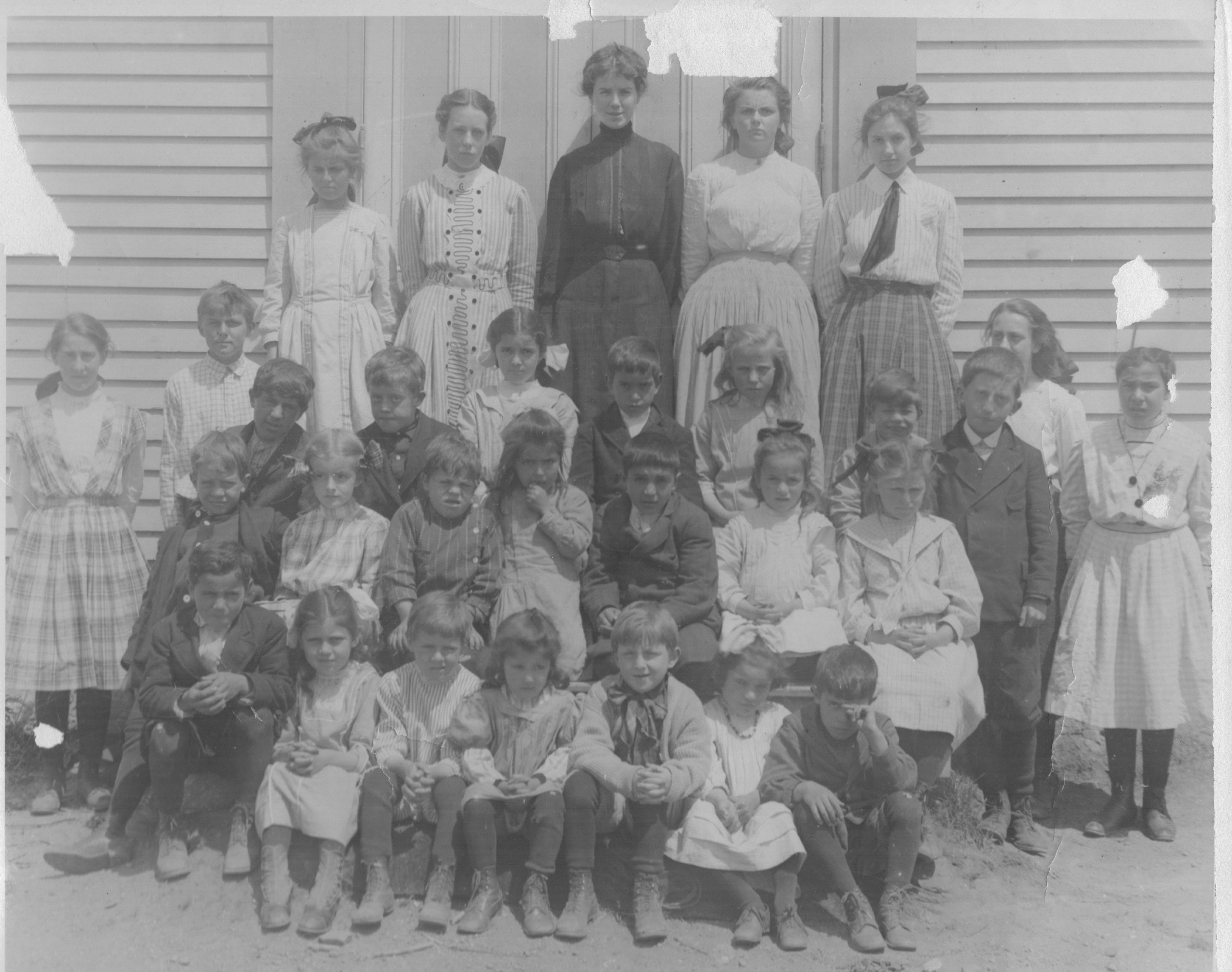
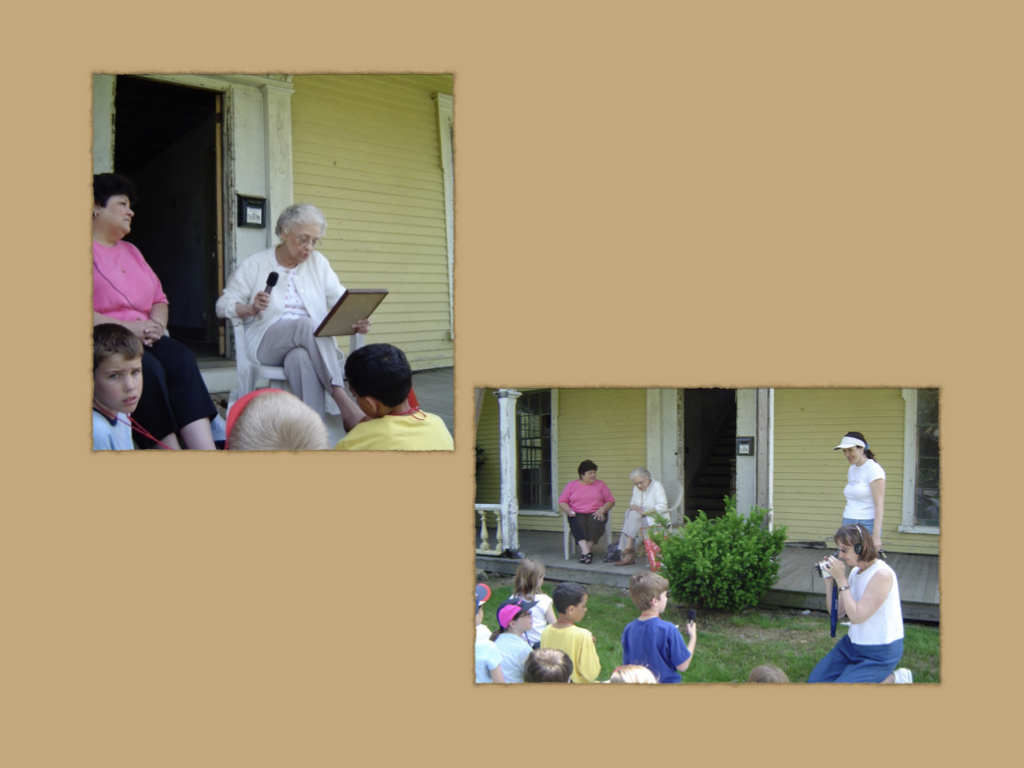
What was it like to go to a one or two room school? In 2005 Elmhurst 3rd graders interviewed Portsmouth residents who had that experience. Here is a sample of some of the questions and answers from those interviews.
Interview of Mr. Douglas Wilkey Quaker Hill School and other schools in the district
What did you wear? They wore knickers that went right under the knee and socks that pulled up and folded at the end.
How many students were in your class? There were from 32 to 36 students in the class.
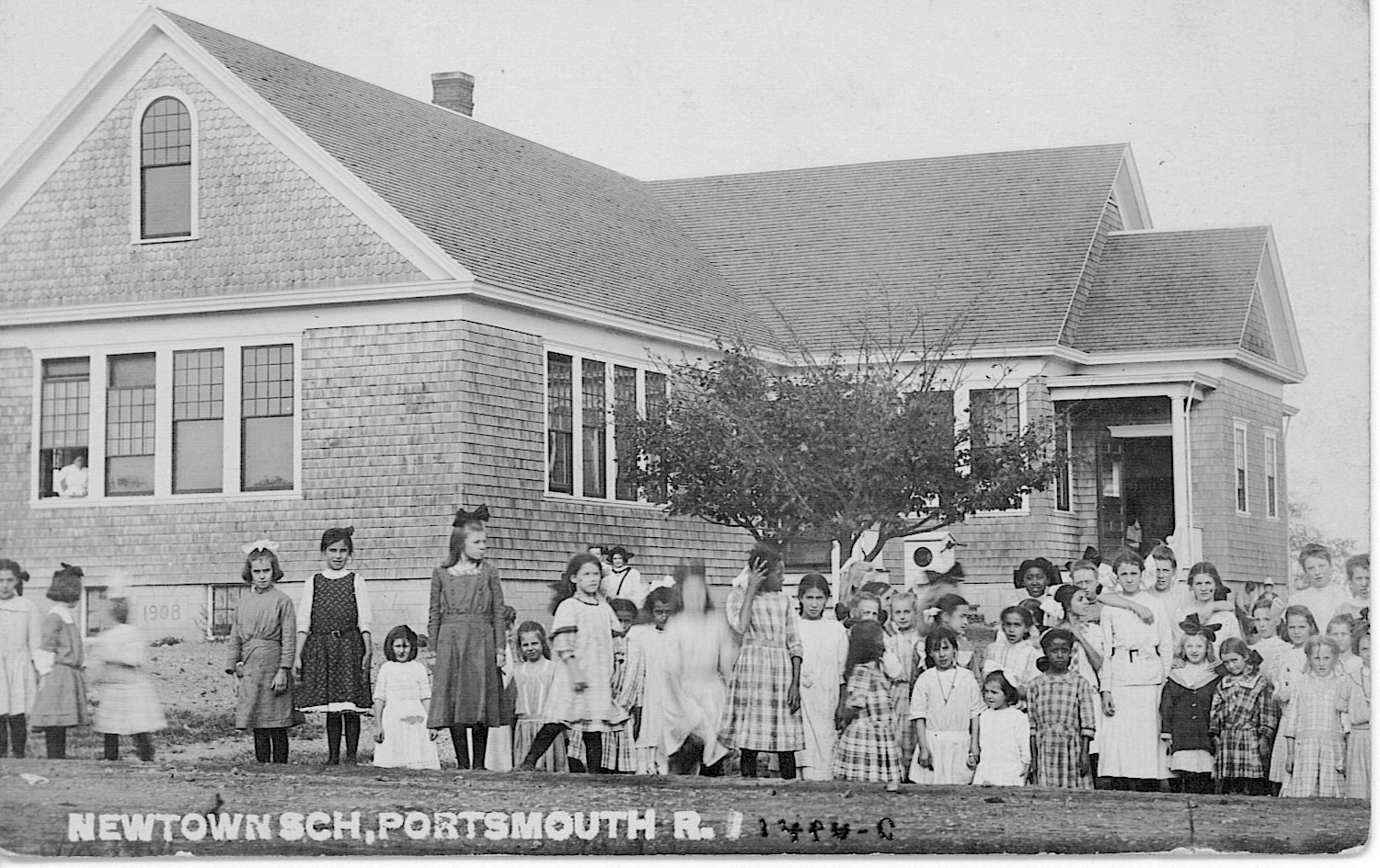
How many classrooms were in your school? There were three classrooms at Newtown School. There were two rooms at Quaker Hill School. Anthony School had ten rooms. Anne Hutchinson and Coggeshall had four classrooms.
How were kids punished? We were whacked with rulers.
Mrs. Joy Schuur went to Coggeshall School
What were your teachers like? The teachers were single and when they got married they weren’t teachers.
What subjects did you have? We had more music than you do. They didn’t have library or gym. They had math, spelling and language.
What kind of holidays did you have? We had no spring break. There was a long Christmas and Easter break.
Miss Fay and Mrs. Powers went to Bristol Ferry School
What games did play at recess? We played hopscotch, jump rope and jacks. They had a morning recess which was fifteen minutes and afternoon recess after lunch which was an hour long.
How many grades were in your school? They had grade one to grade eight.
What did you wear to school? Girls wore dresses and cotton stockings. Boys wore pants or knickers.
What was the discipline like? If you got in trouble you would get sent out of the room, sent to the principal’s office or had to sit in the corner. The first thing they would do was have you sit in front.
What were the bathroom’s like? There was one outhouse.
Mrs. Wilkey went to Newtown School Some information the students learned.
Newtown School had three classrooms. The oldest students might have been 16 years old. They had spelling bees and Mrs. Wilkey did well. They had an art teacher and a music teacher, but no library or physical education class. Ten or twelve students might not pass on to the next grade. Girls were not allowed to play team sports. If students were bad, the principal would call the parents and they were in trouble at home.
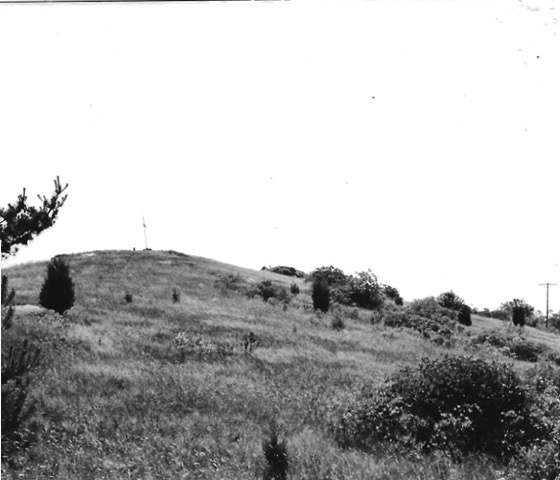
What was the Butts Hill Fort like before Roderick Terry saved the property in 1923? Around 1900 Benjamin Hall owned the fort land at Butts Hill. He seemed to own a good portion of Portsmouth land. The 1914 Portsmouth tax book has him owning (beyond his own residence and estate) the Orswell land, the Baker land, Fort land, Greene land, Ogden land, Dyer land, George Hall land, Copper Works, house lots, Davol Place, Willow Lane, and lot 25 Ocean View. There were rumors that he would sell the Butts Hill Fort land to the state for a park, but what he had in mind was selling it as 200 house lots! Images from Jim Garman’s collection help us to visualize the land at this time.
Vintage photos originally in John Pierce Collection.
For Portsmouth School Department officials, the dedication of Portsmouth High School on July 25, 1964 was the realization of a thirty year dream. As a parent of four graduates of Portsmouth High School, I never realized how difficult it was to establish a high school in Portsmouth. In reading newspaper accounts from the period, I have come to understand that those on the school board really had to fight for the establishment of the school.
The effort began in 1931 when land was offered to the town by Governor William H. Vanderbilt to build a high school for Middletown and Portsmouth. When Portsmouth students graduated from eighth grade, the town provided tuition for their students to go to Rogers High School in Newport or another school. The amount of tuition Portsmouth paid for a public high school could also go toward tuition for those who wished to attend parochial or private schools. Parents who wanted that tuition to send their children to schools like St. Catherines or De La Salle Academy in Newport were opposed to the foundation of the high school. It is interesting that arguments for public funding of private education are still made today. At that time neither Portsmouth nor Middletown was interested in establishing a high school. Interest began to develop when Newport warned that they wouldn’t accept Portsmouth students after 1960. In a special election in 1954, voters in Portsmouth rejected a plan for a joint school with Middletown and Tiverton.
In 1958 the Portsmouth School Department began to look into the issue again. Portsmouth voters rejected establishing a school and opted to create a 9th grade in town and send upper class students to Warren High School. Portsmouth began to plan for what to do with their secondary students. A 13 member study commission was named and a professional consulting service was hired. When Warren barred Portsmouth students beginning in the fall of 1962, the town developed an urgency to solve the problem. In June of 1961 voters began to fund and plan for the high school. Land was purchased adjacent to the Fort Butts School. The newly built and enlarged Fort Butts School would become part of the high school. What remains of Fort Butts School is known as the E Wing today.
High School students attended double sessions at the Fort Butts School until on November 23, 1963 the West Wing was opened and double sessions were no longer needed. This memorable day was also the date of the assassination of President Kennedy, so the first flag to fly that day was lowered to half staff. Portsmouth High School was at that time a six year, Junior-Senior High School. Even as the high school opened, there were predictions that a new school was needed. By 1970 plans were in the works to build a middle school.
Resources: Much of the information came from Newport Daily News articles from the 1950s to 1965. The issue of July 25, 1964 about the school dedication was particularly helpful.
I was looking through a box of memories from my days at Elmhurst School. There were CDs with an oral history done around 2002. My third grade students interviewed the Camara Sisters, (Mary Lou Lemieux and Geri Leis) about their childhood on Glen Farm. These same students the next year used the interviews to create a video calling for the restoration of the Leonard Brown House. This is the first of the videos – about the people on Glen Farm. The ladies endured interview questions from four different classes and often there were several versions of the same story. It is raw – it is a work product and not a finished product, but as a historian I believe that oral histories are very important to understanding life in the past. Both of the ladies are gone now, but their stories remain with us through their interviews.
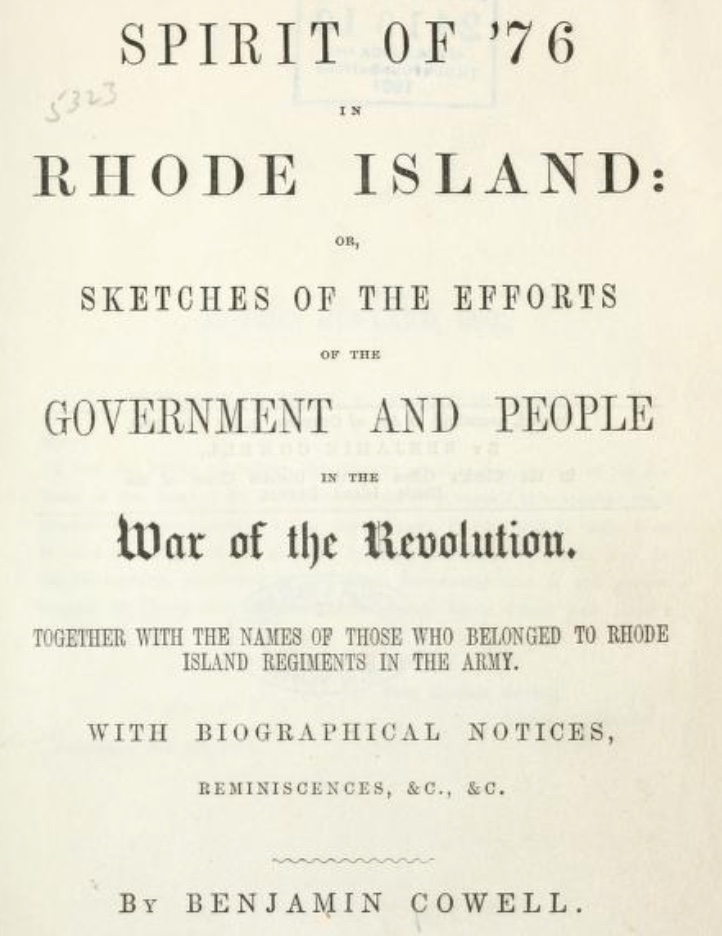
In researching another topic in Revolutionary Rhode Island, I came across a book by Judge Benjamin Cowell. Cowell was born in 1781, so he wasn’t a Revolutionary War Veteran, but he made it his aim in life to help Rhode Island veterans get their pensions. He began recording the stories these old soldiers had to tell to justify their service. Cowell began to gather eyewitness accounts, speeches, letters, rosters and every piece of information he could find on Rhode Island’s role in the War for Independence. In 1850 he gathered all this material into a book: Spirit of ’76 in Rhode Island. I am gradually making my way through this book, but I found a Portsmouth story to share.
Cowell introduces the story this way (he refers to himself as “the writer”: “In the summer of 1849, the writer reconnoitered the battle ground on Rhode Island to ascertain any interesting facts which might be within the recollection of any of the old inhabitants in the neighborhood; and in his researches, he called at the house of Mr. Seth Anthony, an aged “Friend” who now lives on the farm where the battle took place, and always lived in the neighborhood. From him he gathered no little information, and from questions which the writer put to him he received a few days afterwards the following reply, which deserves a place in these sketches.
Portsmouth, Oct 13, 1849. To Benjamin Cowell, Providence, Respected Friend, —In answer to thy questions I have to say, that I was about twelve years of age at the time of Sullivan’s expedition against the British, and lived with my father on the west road on the Island, about two and a half miles from Bristol Ferry, lived there all the time the British were in possession of the Island, and I have now, although eighty-two years of age, a distinct recollection of most of the events that took place, at least in our neighborhood. The battle on the 29th of August, 1778, took place on the farm on which I now live, which is a little to the westward of the house where my father lived; there had been skirmishing all day, but the principal fight was a little northward of “Anthony’s Hill.” (Note that we call it Almy’s Hill.) Before the American troops came on the island, the British had fortified Butt’s Hill, one of their Generals (Smith) quartered at my father’s house, the Hessians quartered in the Friends’ Meeting House on Quaker Hill. After General Sullivan came on, the enemy retreated towards Newport, and I recollect General Greene took up his quarters at my father’s house.
Almy Hill Battle Site – Garman photo
When the enemy came back on the 29th, while Gen. Greene was eating his breakfast, our house-maid said to him, the British would have him; he observed very cooly “he would eat his breakfast first;” after he had done he went to his troops. During the day some Hessians entered our house, and plundered every thing they could,— they took my father’s silver knee-buckles; I saw one of them take hold of my father and demand his money and threatened his life, but he did not get it; my father had about two thousand dollars in gold and silver, but he had taken the precaution to bury it under an old stone wall. The Hessians also searched my mother’s pocket, turned it inside out, but there was no money in it. My father and mother were “Friends,” and we kept silence as to our political opinions. I remember Gen. Green once observed that his mother was a Friend, and was opposed to his going into the army, but she said “if he would go, to be faithful.” There appeared to be fighting all day, sometimes one side would drive the other and then be obliged to retreat. But as far as I could judge, the main armies did not fight. It appears to me the events of that day will always be fresh in my recollection.
I also remember the great storm some days before the battle, I never knew so severe a storm before; it lasted several days, and did a vast deal of damage. The day after the battle the Americans all left the Island. And I also do distinctly recollect that the day after the fighting the British determined to burn all the houses in our neighborhood, and would have done it if the Americans had not left the Island that night.- We had this information from the British Officers.. (Signed). Seth Anthony
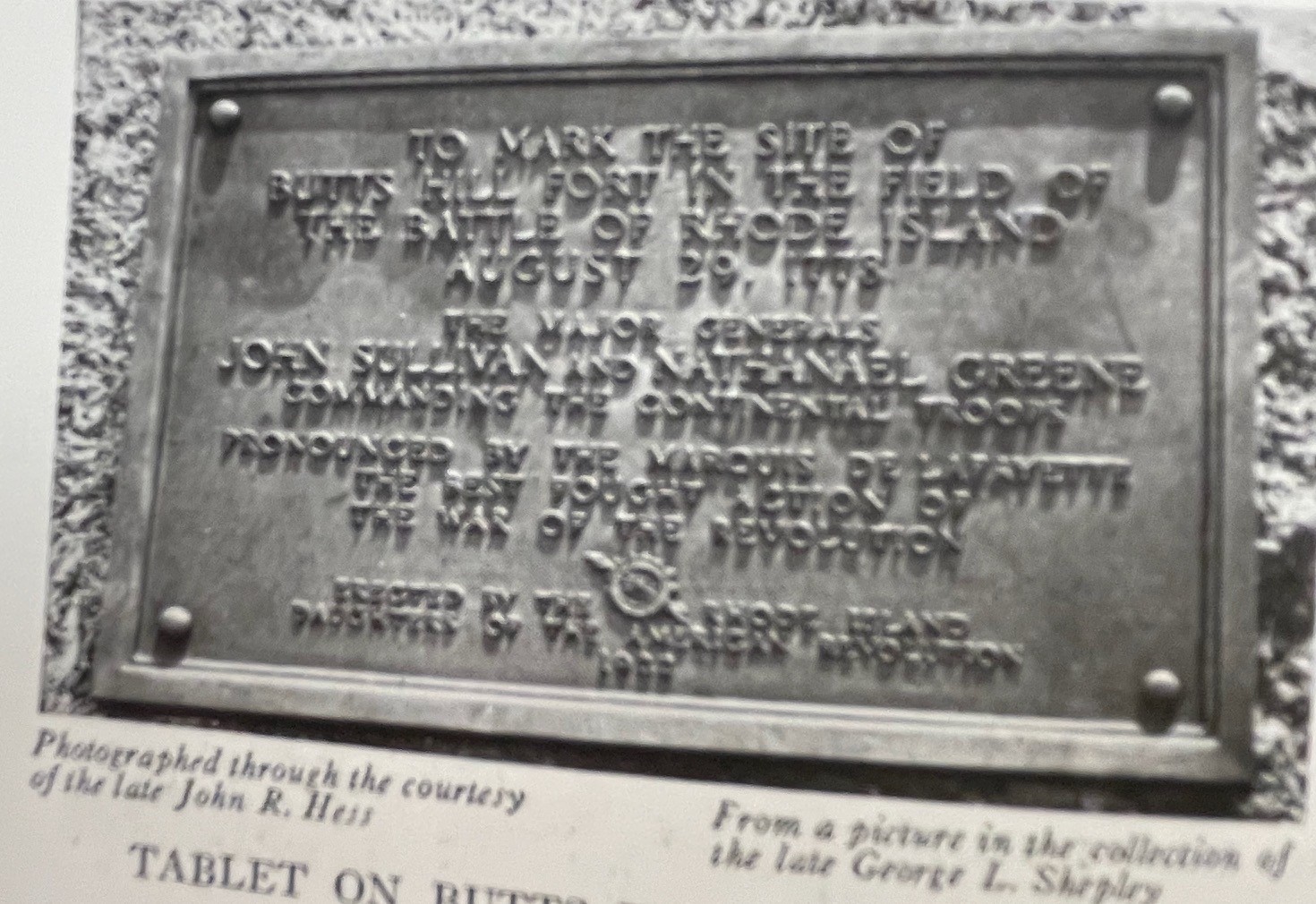
In a corner of Butts Hill Fort there is a boulder that obviously once held a plaque. The Butts Hill Fort Restoration Committee is diligently working on clearing the area around the boulder and there are hopes of restoring the plaque or making a facsimile to restore the memorial to its intended tribute. Today the original memorial is damaged and in the protective custody of the Portsmouth Historical Society. We know what it looked like in its prime.
A 1925 book “France and New England” by Alan Forbes and Paul Cadman, prominently mentioned the plaque and features an image of it. (1)
“Butts Hill Fort, on the east road between Tiverton and Newport and in the township of Portsmouth, on the north end of the island of Rhode Island, has been permanently associated with Lafayette by placing at the southeast corner of the earthworks a native boulder, on the face of which is a bronze tablet, the inscription reading as follows:
To mark the site of
Butts Hill Fort in the Field of the Battle of Rhode Island
August 29, 1778
The Major General
John Sullivan and Nathanael Greene
Commanding the Continental Troops
Pronounced by the Marquis De Lafayette
The Best Fought Action of
The War of the Revolution
Erected by the Rhode Island
Daughters of the American Revolution
1922
Even before Rev. Roderick Terry purchased the land that encompassed Butts Hill Fort, the Daughters of the American Revolution (D.A.R.) were honoring the fort on the one hundred and forty-fourth anniversary of the Battle. Newspaper accounts at the time report that two hundred and fifty people gathered on August 29, 1922 to unveil a tablet that “commemorates the battle on August 29, 1778 when sturdy Americans under Gen. John Sullivan fought the best planned battle of the Revolution.” (2)
The unveiling drew members of the D.A.R. from all “corners of Rhode Island and neighboring states.” (Newport Mercury). Other organizations took part in the ceremonies as well. Portsmouth Girl Scouts gave the bugle call and sang the “Star Spangled Banner.” Invitations were sent to the Sons of the American Revolution, Rhode Island Historical Society, Newport Historical Society, Rhode Island Citizens Historical Society, Bristol Train of Artillery, Sons and Daughters of the Puritans and Quequechan Chapter from Fall River. The public was invited to attend. (3)
After the unveiling, prayers and speeches, the guests were treated to a basket lunch at the Sprague Street home of Mrs. D. Frank Hall. It was the Hall family that owned the fort property before Rev. Terry bought it and put it into the care of the Newport Historical Society.
The Lafayette quote “The best fought action of the War of the Revolution” intrigued me because I have been researching the Marquis’ role in the Rhode Island Campaign. This quotation is widely attributed to Lafayette, but I could not find a confirmation in any of his letters of the time. Lafayette missed most of the action in the Battle of Rhode Island because he was sent to Boston to persuade the French fleet to come back to Newport. He did however, lead the last of the American troops to safety in Tiverton. He greatly admired Sullivan’s skill in executing a well planned retreat.
Sources:
Forbes, Aland and Paul Cadman. The French in New England. Boston, State Street Trust, 1925.





 portsmouthhistorynotes