Home

What Julia Ward Howe and a Murder Victim have in Common

Leave a comment

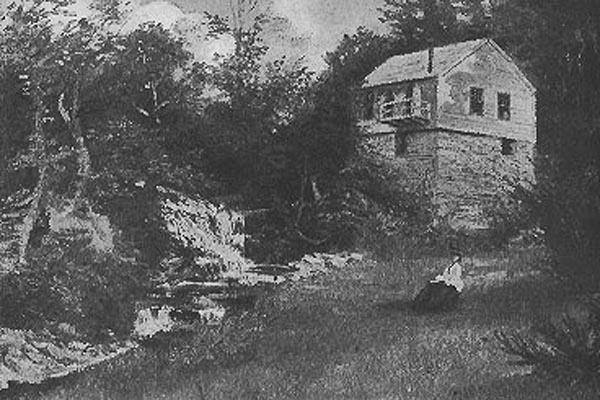
Julia at her first Lawton Valley home.

Portsmouth women were at the forefront of the Woman’s Rights Movement.  We focus our attention on the effort to gain the right to vote, but there were many more rights that needed to be gained for women along the way.  As I worked on research for a play and read a biography of Julia Ward Howe for a book club the sad situation for married women kept emerging.

We recently presented a play (Murder at the Coal Mines) that was based on a true case of domestic crime. I wrote the court room drama from the detailed newspaper accounts of the testimony given in the murder trial of miner Robert Casey in October of 1875. Casey had acted in jealousy.  He had spent eight months away from his family and returned to accuse his wife of infidelity.  He tried to poison both her and himself and then provided an antidote so they would live.  At gunpoint, Casey made his wife “confess” her adultery to his children and then he took away the two older children to New Jersey to live with his family.  His fury was not spent.  Using his pistol again, Casey made his wife and the man he accused of adultery travel to Fall River and get married by a justice of the peace.  One newspaper account said he even “gave away the bride”.  Fearing for his life, the “other man” ran away, but Lizzie was left in the home with Casey.  When the sheriff came to arrest Casey for assaulting another miner, Casey shot himself and his wife.  Lizzie, his wife, died.  Casey recovered from his wound and stood trial for the murder.

As we read through the play, there was something missing – the point of view of Lizzie Casey, the victim. We decided to add a prologue to the play where Lizzie would present her side of the situation that led to her husband killing her and attempting to kill himself.  I began to research the status of married women in Rhode Island during that time period.   Going through the facts of the case, I had many questions.  Why would Lizzie stay in a marriage after her husband had tried to poison her?  How could Robert Casey just take her older children away to New Jersey?  Why couldn’t Lizzie run away from the abuse and maybe support her children with a job somewhere else?

I’m not sure just when the laws began to change, but throughout most of the 19th century laws concerning married women in Rhode Island were rooted in British Common Law.  According to the bible, when a man and woman marry they are considered as one person.  At marriage the woman lost her identity.  As far as the law was concerned, the rights of that “one person” were centered on the husband.  When a woman married, she lost the right to own her own property, enter into contracts or even decide about the care of her own children.  Robert Casey, as the husband, had all the rights.  Any property she owned went to her husband, even the clothes on her back.   Even if Lizzie had left and tried to find a job, any income she earned would be given to her husband.

As I read Elaine Showalter’s biography “The Civil Wars of Julia Ward Howe,” I realized that even the famous Julia Ward Howe had much in common with Lizzie.  Julia wrote: “Even women of fortune possessed nothing individually after their marriage. The ring which promised to endow them with all the bridegroom’s earthly goods, really endowed him all that belonged to them, even to the clothes that they wore. Their children were not their own. The father could dispose of them as he might think fit.”

Julia Ward Howe did not come into her own until after her husband’s death.  Samuel Gridley Howe (Julia called him Chev) believed that a wife and mother should find all fulfillment in family.  Although Julia had a passion for writing, her husband refused to let her publish.  She learned stealth and published her poetry book anonymously.  Even the poem for “The Battle Hymn of the Republic” was only published because Julia’s minister had asked her to write it.  Julia became famous for her poem, but Chev insisted that she not make any public appearances.

Howe used his right to the children to threaten Julia into  re-establishing  a sexual relationship.  He took full advantage of his rights to her money when he bought the Lawton Valley property with her money but only put his name of the deed. Later he sold their first Lawton Valley home without consulting her.   He frequently uprooted his family and moved at will even though Julia would beg to stay in her home.

The day after Chev died in January of 1876, Julia wrote:  “Began my new life today.”  To add insult to injury, Chev left nothing to Julia in his will.  She had to move on and she moved to Oak Glen in Portsmouth with her daughter Maud.  Her lectures and writing became the way she supported herself.

Information on Julia from Elaine Showalter’s “The Civil Wars of Julia Ward Howe.”  Simon and Schuster, New York, 2016.
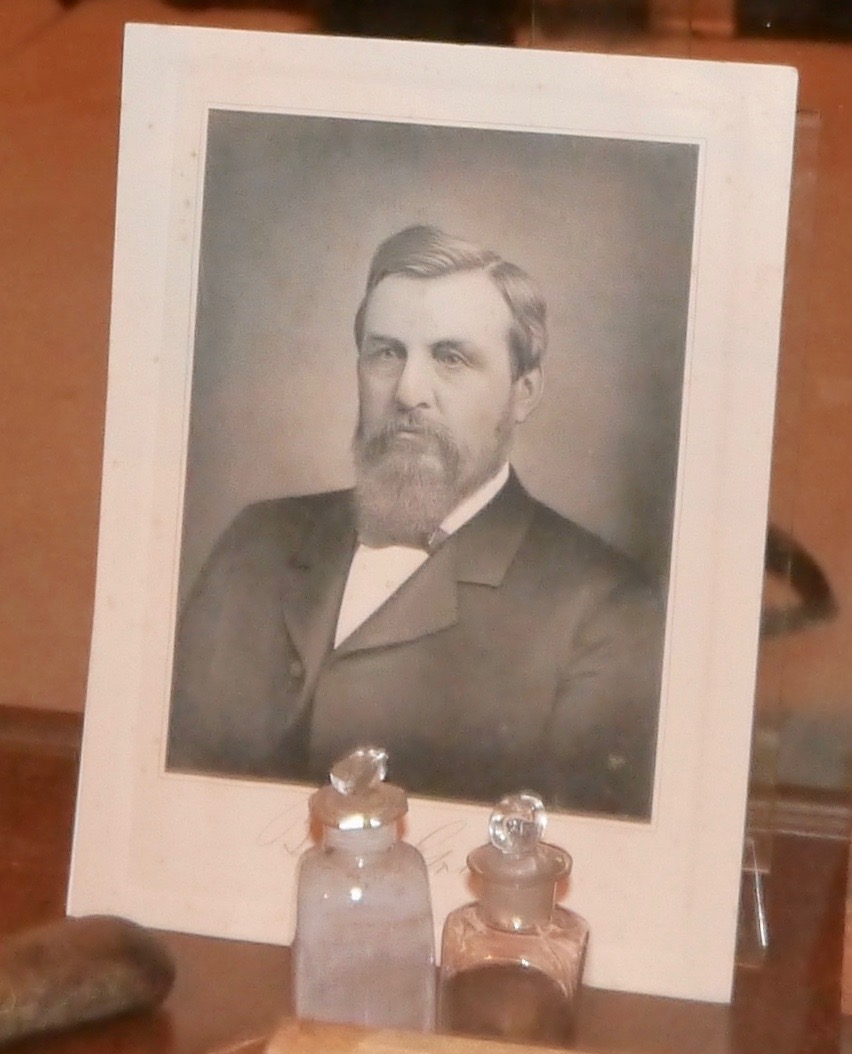
 

Cast of Characters: Dr. Benjamin Greene (1833 -1908)

Leave a comment

Dr. Benjamin Greene

Dr. Greene may be familiar to you if you have visited the Portsmouth Historical Society. There is a neat display with his photo, some of his medical books and some items he would have used in his long practice in Portsmouth. Through the tragedy of the “Murder in the Coal Mines,” Dr. Greene would play a role in treating the infamous convicted murderer. He testified at the trial and he continued to treat his patient at the prison even after the trial.

Greene was born in Exeter, Rhode Island.  In 1856 he began to study medicine under the instruction of his uncle, Dr. Job Kenyon.  He enrolled in the University Medical School in New York in 1857.  When he graduated from medical school he went directly to Portsmouth to establish his practice.  In 1860 he married Eunice Chase who descended from old Portsmouth families.

He became a member of the Rhode Island Medical Society and had a successful practice in town.  He dabbled in real estate transaction in Fall River as well and was successful at that.  He was active in the Methodist Church and in the Masonic order. Newspaper accounts show he was a delegate to the Republican State Convention in 1884 and he was active in the temperance movement along with his wife Eunice.    Bayles’ History of Newport County comments that “he enjoys the respect and confidence of the community in which he lives, and of his professional brethren.”

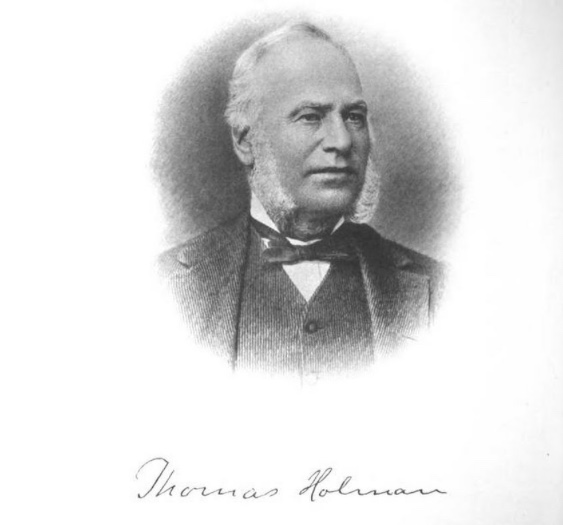
Cast of Characters: Thomas Holman (1818-1904)

1 Comment

Thomas Holman’s life was a Portsmouth rags to riches story.  He was the immigrant miner who worked his way up to becoming Superintendent of the coal mines.  His role in the “Murder at the Coal Mines,” however, is shrouded in mystery.

Holman was born in Gwinear in Cornwall, England.  Thomas’ parents were poor and they died when he was very young.  He had little opportunity for education and found himself working in the copper and lead mines by the time he was eleven years old.  He continued to work in the mines in Cornwall until 1840 when he decided that there was little chance for advancement in England.  Twenty-two year old Thomas headed directly to Portsmouth where he could get better pay for his mining skills. There are records of Cornwall families migrating to Portsmouth and to Pennsylvania were other Holman family members resided.   He became well known for his skill at mining and he worked himself up to the position of Superintendent of the Portsmouth Coal Mines.

Thomas Holman may have worked at the coal mines until 1877, but he was preparing himself for the farming life.  He started by buying farmland nearby the Coal Mine village which later became the Benjamin Hall farm..  Over time he bought the “Hill Township Farm” which is known as Seameadow Farm today.  His farm covered over 100 acres and he was successful at general farming and stock raising as well.  Thomas married into two prominent Portsmouth families. He was married to Mary Sherman and after she died, he married Hannah (Anna) Barker Albro.

The article on Thomas Holman in Representative Men and Old Families of Rhode Island relates that “He was a man who made a success of life, which he accomplished by hard work, and strict attention to his business.  He never received much education in the schools of his native country, but he was a self-educated man.  He was much devoted to his wife and family and was a good citizen in every respect.”  (pg 2277)

Most prominent Portsmouth citizens held some town office, but outside of serving on the School Committee, he declined all other offices.  Maybe he valued education more than most because of his lack of opportunity to gain an education in England.  He was active in the community as a staunch Republican and vestryman at St. Paul’s Episcopal Church.

In 1875 Holman testified at the trial that formed the basis of “Murder at the Coal Mines.”  We know through genealogy records that Thomas Holman was actually the uncle of the victim, but there was no mention of the family relationship in the newspapers or in the court records.


Cast of Characters: Deputy Asa Anthony

1 Comment

Asa Anthony (1828-1904)

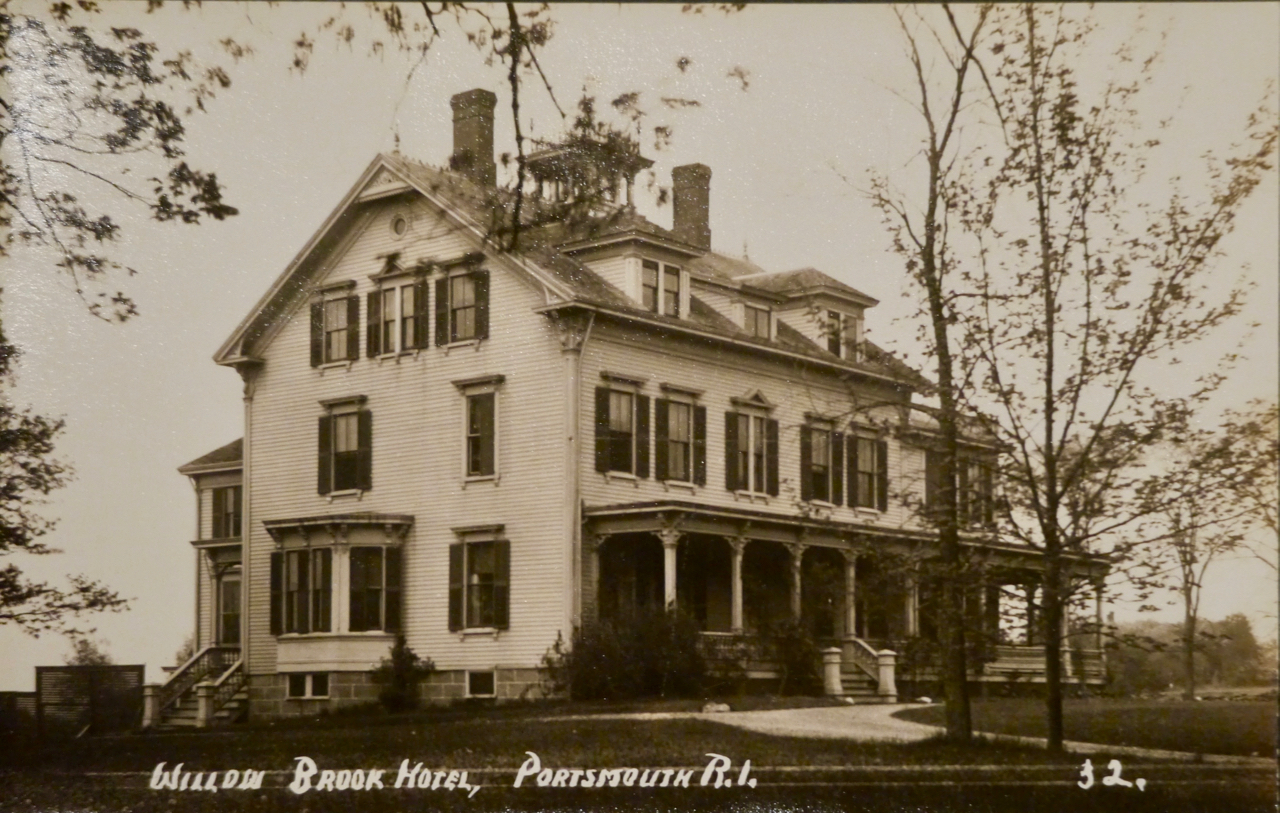
Sheriff’s Deputy Asa Anthony was a central character in the 1875 “Murder at the Coal Mines” case. Asa Burrington Anthony was born on Willowbrook Farm on West Main Road. It was originally the home of his father David Anthony and then it became Asa’s home as well. Willowbrook was a short walk from the Coal Mine area of Portsmouth.

Willowbrook – Asa’s Home

Like most people in Portsmouth, Asa was a farmer. He had some skills for other necessary occupations as well. Asa served in a number of roles in Portsmouth life. In 1871, Asa served as Justice of the Peace and in 1875 he was serving as the Deputy Sheriff. He knew enough about animals to be a good veterinarian and he served as the Town Coroner for Portsmouth for many years. To aid his duties as coroner, Asa bought a used hearse. He often had to transport the deceased to his home until family members could make funeral arrangements.

An 1882 newspaper article gives us an example of what he had to do on the job as Town Coroner. The Church Brothers had a fishing steamer called the Jemima Boomer. They were unloading fish at the oil works at 5 in the morning. The fish were being hoisted by a derrick when the gaff on the derrick broke and a tub of fish fell on three men who were in the hold. One man was killed and two were seriously injured. Asa had to summon a six-man coroner’s jury who immediately came to the scene of the accident. After hearing the evidence they returned a verdict of accidental death. The doctor was summoned to treat the injured men but it was Asa’s task to transport the poor soul that died that day. It is ironic that his home, Willowbrook, serves as a funeral home today.

Asa’s hearse can be seen today in the Old Town Hall at the Portsmouth Historical Society. Newspaper accounts tell us that Asa’s family gave the hearse to the historical society in the 1940s. It was stored for many years, but the Historical Society is trying to preserve it and display it.

An Introduction to the Coal Mine Community of Portsmouth

Leave a comment

Coal mines operated in Portsmouth from around 1808 to about 1912. In colonial days coal deposits were found very close to the surface.  The coal bed runs from Narragansett to Mansfield, Massachusetts.  It is anthracite coal and it was not easily used for home heating. In fact, one inspector claimed that “when the final conflagration came” the Portsmouth mines would be a fine place to hide because the coal would never burn.    It could only be used in industrial grade furnaces. By 1867 the Taunton Copper Works was in operation using Portsmouth coal.  At that time there were about 40 workers and eight one and a half story tenements were constructed to house them.  The coal mine wharf was extended out into the bay making it 280 feet long.  There was a spur connection to the Old Colony and Newport Colony Railroad.  The railroad line extended from Fall River to Newport.  The Willow Lane Station by the Coal Mines became the major station for Portsmouth.  Raw materials came into the Coal Mines area and coal and finished copper products were shipped out both by water and railway.  Copper products from the Taunton Copper Works were used as a protective lining for the bottom of ships and for steam pipes on ships.  It could also be used in the production of brass and decorative items.   The Taunton Copper Works used the Portsmouth coal in their production of copper and the Mt. Hope Company next to it was mining from the South Shaft and transporting it to other locations by way of the railroad and wharf.

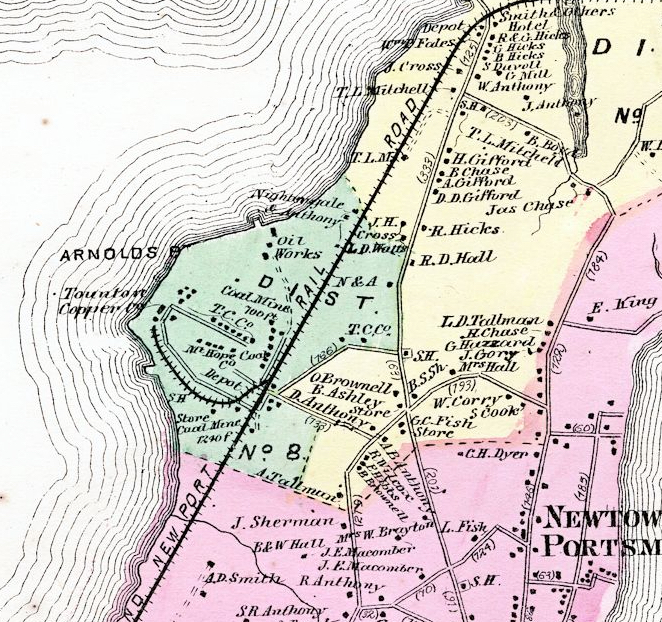
1870 Map. Note the Coal Mines area shaded in green.

In 1870 the Copper Works and coal mines area was like a self-contained community within Portsmouth. The area included 320 acres of land.    There were company housing, company stores, a school, a church, offices, a boarding house for single workers, workshops and barns.  There was a strong sense of belonging to a “Coal Mine” community.  An 1870 article in the Providence Journal states:  “There are about fifty miners and operatives employed by the Mt. Hope Company and about one hundred and twenty children belonging to the employees of the two companies have a right in the school house.”

Those who knew the coal mines community best described it as a peaceful place.  Frank Anthony, the stationmaster for the railway, described the miners as follows.  “They were an honest, law-abiding God loving people.  They were industrious, thrifty, and withal generous-hearted in the extreme.”  Miners mostly came from two countries.  Skilled workers came from the Allihles copper mines of Ireland and the Cornwall mines of England.  Portsmouth locals, too, worked in the mines and many miners married into old Yankee Portsmouth families.  Workers were paid $1.25 a day for a workday that lasted from 6:30 AM to 4 PM.  The average rent for a tenement was $4 a month.  They raised their own vegetables and fished the bay for food.  After work there were social gatherings, dances and sporting events.

William Dwyer in a reminiscence published in the Fall River Herald June 11 of 1927 stated:  “It was a typical American community in which each individual had an unquestioned right to his political, religious or other views.  Intolerance had no place in the community life of the coal mines, and the result was a perfect harmonization of the different races and the establishment of a little colony which was an El Dorado to the humble peace-loving people that inhabited the sunny slopes of Portsmouth.”

Some of the depictions of life at the coal mine area claim that there was no crime at the coal mine community.  We know there was a infamous domestic disturbance that ended in a death in 1875, but in searching databases of the Newport Mercury and Daily News from the time, I don’t find many other reports of crimes.  Was this the idyllic place described?  I’m not so sure that the life of miners can be as rosy as described.  On the other hand, there were several generations of miners who continued to work the mines when they remained open.

For more information on the operation of the mines, Jim Garman’s book “Looking Back:  Historic Tales of Newport County” has an excellent chapter on the coal mines.


Portsmouth Women: Sarah Gibbs, St. Mary’s and Oakland Farm

2 Comments

Oakland Farm in Sarah Gibbs day

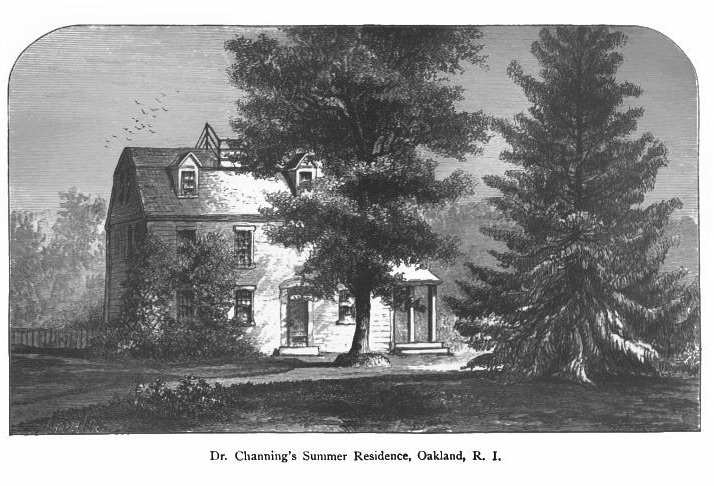
Sarah Gibbs was the force behind the founding of St. Mary’s Episcopal Church in Portsmouth. She was born in 1784 in Newport. Her father, George Gibbs was a grain merchant.   His firm of Gibbs and Channing owned up to seventy-five vessels sailing from Newport. In 1787, he married Mary Channing of Newport, the sister of his partner, Walter Channing.  Among their children were Sarah Gibbs and Ruth Gibbs Channing.  Ruth would marry famed Unitarian minister William Ellery Channing.  Sarah Gibbs was a devout Episcopalian and would never go to hear William Ellery Channing speak, but that did not prevent her from opening her home (Oakland Farm)  in hospitality to him every summer.  The house was always filled with guests.  Channing brought not only his wife and children, but also governesses for his daughters.  Famed social reformer Dorothea Dix came with the family as a governess and she had a close relationship with Sarah.  Dorothea started her mental health efforts while here in Portsmouth.  She even started the Sunday School for the Christian Union Church across the street at Mrs. Durfee’s Tea House.  Dorothea continued to come to Portsmouth even after the death of Rev. Channing.

Channing found Oakland Farm was a retreat that refreshed him.  He would get up early and spend time out in Portsmouth’s nature before breakfast.  He enjoyed the gardens.  He wrote about Oakland Farm to a friend:  “Here I spend four or five months annually, enjoying my tranquillity almost too much; almost reproaching myself for being so happy, when I am doing so little for the happiness of others.”

About the founding of St. Mary’s  Church

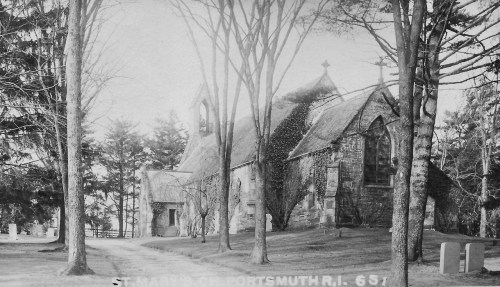
In 1843 Sarah Gibbs wanted to bring the Episcopal Church closer to her home.  She invited Rev. Hobart Williams to Portsmouth to begin a church.  The first service was December 17th, 1843 in temporary quarters.  In 1844 Sarah donated 88 acres known as “Potter Farm” as a site for a seminary and church.  The cornerstone was laid Sept. 2, 1847.  Architect Richard Upjohn was chosen to design the church.  On May 20, 1852 the building was consecrated.  Bishop Henshaw wrote:  “I consecrated St. Mary’s Church, Portsmouth, a gift of faith and love from a pious and magnificent churchwoman, Miss S. Gibbs, costing about $11,000.”  Sarah lived to see a vibrant church community at St. Mary’s, but the seminary never developed.   Sarah died in 1866 and is buried by the church she founded.

St. Mary

Vintage image of St. Mary’s Church


Portsmouth Women: Barbara Norman Cook and “Prescott Place”

Leave a comment

Kittymouse

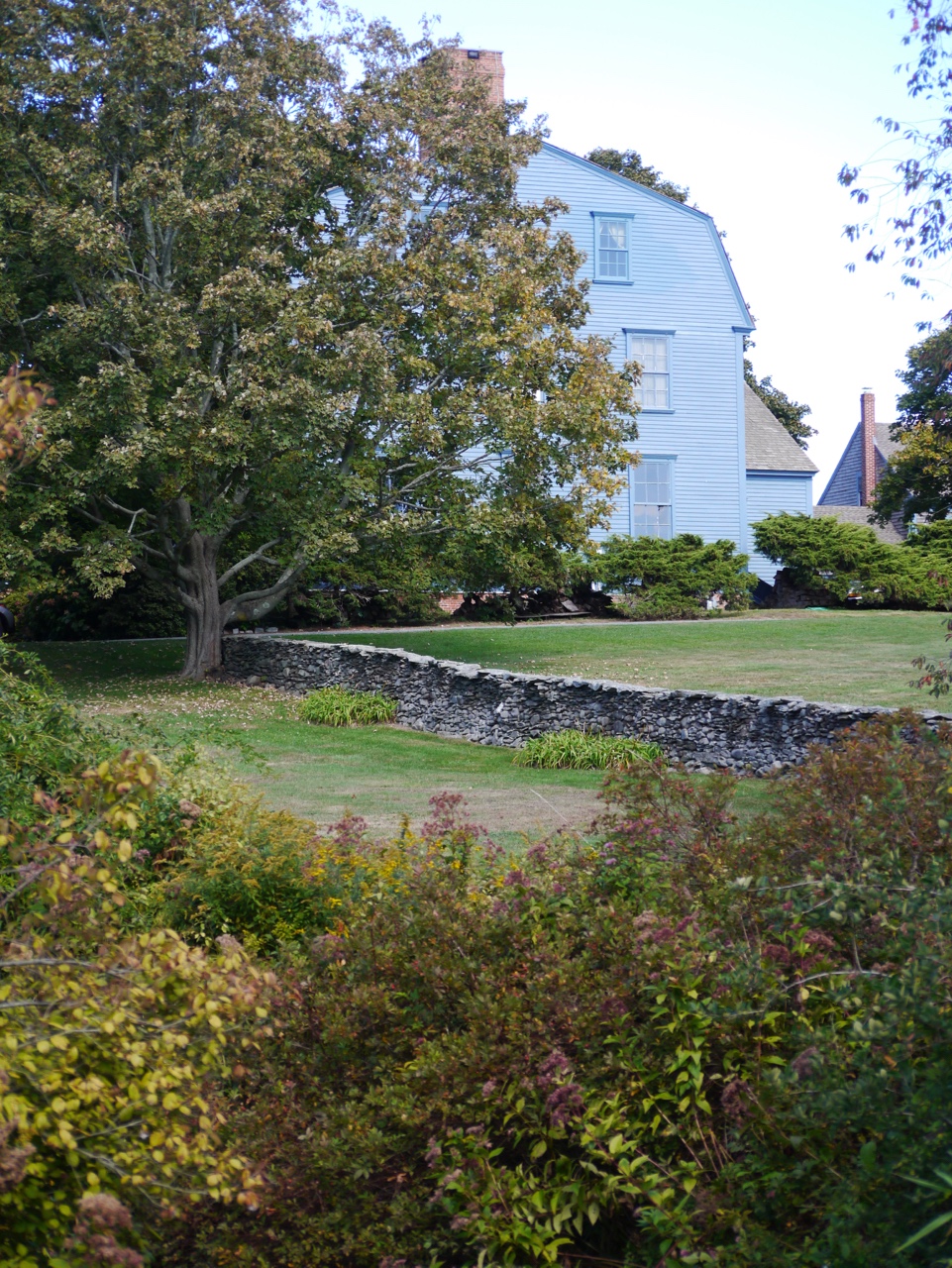
View of Prescott House from Prescott Farm

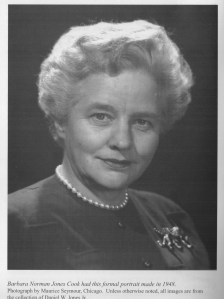
As you pass by the Prescott House on the Portsmouth/Middletown border by West Main Road, you might think of it as the location of the famous raid of Colonel Barton to capture British General Prescott during the Revolutionary War.    There is a strong Portsmouth woman associated with that house as well.  Her name was Barbara Norman Cook, aka “Kitty Mouse” Cook.  Barbara was born in Newport and she was the granddaughter of George Norman who founded the Newport Water Works.  The Norman family was a major property owner in Portsmouth and owned land from the Middletown boarder to Redwood Farms.  Barbara’s father was Bradford Norman.  He owned Brook Farm and across the street the old Overing Property.  He willed his property on the east side of West Main Road to his daughter. In his will, he referred to this property as “Prescott Place.” By the time that Barbara Norman Cook came into the property in 1949, the farm included roughly 33 acres.

Barbara Norman married Daniel W. Jones in 1918 and the two moved to Portsmouth in 1930.  Both were co-administrators for the National Recovery Act under President Franklin Roosevelt and both were active in the Democratic Party.  Jones died in 1942, and Barbara married Benjamin Ladd Cook, Sr. in 1943.  She continued her wartime work, this time hosting a half-hour morning radio show telling listeners how to use their ration coupons.  She was active in civic organizations like the American Cancer Society, League of Women Voters, Birth Control League, Boys Club and the Newport Music Festival.  Barbara was one of the seven founders of the Portsmouth Historical Society and was awarded lifetime membership in the society.

Barbara bought the Lawton Valley Glen area from her grandfather’s estate in 1952.  She hoped to preserve the property for recreation.  It had long been a popular picnic spot and Boy Scout camping area.

Barbara Norman Cook lived in her Prescott Place house until 1969, when she sold it to Doris Duke for the sum of $475,000.  Doris Duke then deeded the property to the Newport Restoration Foundation in 1970. The home is a rental property now and not open to public view, but the Newport Restoration Foundation has established Prescott Farm on the Middletown side of the property.  Old Portsmouth buildings have been moved there as well as the Sherman Windmill.  This area is open to the public as well as lovely hiking trails in the back of the property.

In 1981 Barbara wrote a memoir “L’Histoire de Mme. Kitty Mouse.”  It relates tales of her youth in Newport.  Barbara died in 1985.

Portsmouth Women: Alice Brayton and Green Animals

Leave a comment

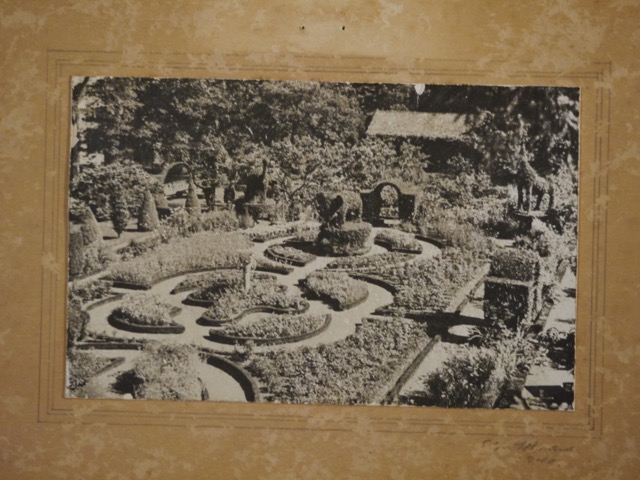
Vintage image of Green Animals from the collection of the Portsmouth Historical Society

Alice Brayton

Alice Brayton was born in Fall River in 1878, but she was a constant summer resident of Portsmouth.  She made her permanent residence here in 1938.  Her father, Thomas Brayton (treasurer of the Union Cotton Manufacturing Company),  bought property on Cory’s Lane in Portsmouth in 1877 to be a summer home for his family. Alice’s father hired a Portuguese mill worker, Jose Carriero, to develop and manage the grounds of his Portsmouth estate in 1905. Carreiro was superintendent of the property from 1905 to 1945, and his son-in-law, George Mendonca continued as superintendent until 1985.  They were responsible for creating the topiaries. There are more than 80 pieces of topiary throughout the gardens, including animals and birds, geometric figures and ornamental designs, sculpted from California privet, yew, and English boxwood.

When Thomas Brayton died in 1939 at age 96, he left this estate to his son and daughter – Edward and Alice.    Alice Brayton had re-opened the main house on the Portsmouth estate in 1936 to begin renovations to make it her permanent residence. She moved to the estate in the spring of 1939 naming it “Green Animals” for the topiary animals in the garden.

Alice Brayton was a woman of many interests.  During the Depression she helped to found a relief program in Fall River to bring milk, food and clothing to the needy.  She founded a nursing association in Fall River.  In Portsmouth she was active with the Red Cross and even opened her home for “home nursing” lessons.   She published many books and contributed  to “Gardens of America”  – a major work on historical gardens.  She wrote  a scholarly work on Bishop Berkeley who was a colonial resident of Middletown.  She encouraged excavations around the Old Stone Mill in Newport and wrote a paper on this.  She was a force in the early days of the Preservation Society of Newport Country.  Miss Brayton left Green Animals to the Preservation Society of Newport County at her death in 1972.  Newspaper accounts list her as a speaker for a number of local societies.  She spoke to the Portsmouth Historical Society in 1966 about “More Recollections of a Portsmouth Native.”  Obviously she considered herself a Portsmouth native.

Alice Brayton loved to garden and she loved to entertain  She hosted Jacqueline Bouvier’s (Kennedy) debutante party.  When President Eisenhower visited the area, she opened her gardens to the First Family and the White House press corps.  Alice’s topiary gardens survived the hurricanes in 1938 and 1944, but the 1954 hurricane badly damaged a double row of spruces and a large hemlock.  The famed topiaries were coated with salt spray.  Although some experts thought many could not be saved, George Mendonca and his helpers rewired and trimmed the sculptures.  Alice herself would putter around the gardens. She said she had a habit of mowing around the base of a topiary policemen “so that he wouldn’t hurt his feet standing all day on the grass.”  Alice Brayton was known for her wit.  One of her last public events was a $1,000 a plate dinner for the election of Nixon in 1968.  Alice took a sip of sherry and headed home without dinner “because it was past her bedtime.”

During her lifetime, Alice enjoyed letting the public enjoy her gardens.  Today “Green Animals” attracts thousands of visitors to Alice Brayton’s beautiful gardens.


Portsmouth Women: The Mitchels – Cora, Sophie, Floride and Clara May Miller

2 Comments

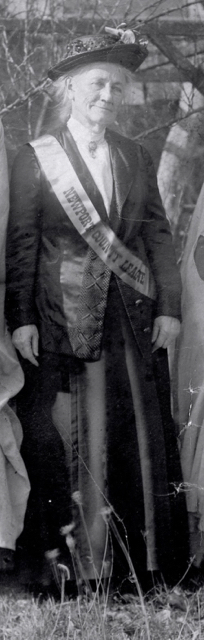
Womens suffrage photo

Cora Mitchel

The Mitchel Sisters – Cora, Sophie and Floride – were very active in Portsmouth culture and social reform movements.  Through their mother, Sophia Brownell Mitchel, they had long roots in the Bristol Ferry area.  Their father was a cotton merchant in Florida before the Civil War and the Mitchel family had to literally escape the South once the fighting began.  They came to Bristol Ferry because it was an ancestral and summer home for them.

Did you know that the Bristol Ferry area was a hotbed of the Women’s Suffrage movement.  Elizabeth Cady Stanton in her History of Woman Suffrage 1900-1920 wrote: “Among the nerve centers of suffrage activity in Rhode Island the Newport County Woman Suffrage League had a definite place from its founding in 1908, by Miss Cora Mitchell, its first president. The League’s work was at first largely carried on by an active group of philanthropic women of Bristol Ferry, Miss Mitchell’s friends and neighbors, among whom were Miss Sarah J. Eddy, Mrs. John Eldredge and Mrs. Barton Ballou. Gradually the suffrage agitation spread over the entire island, which includes the three townships of Portsmouth, Middletown and Newport.”  Cora remained active in demonstrations and organizing activities for many years.

Sophie was a talented artist and was among those in the Bristol Ferry artist community that had gathered around Sarah Eddy.  Sophie had studios in both Brooklyn and Portsmouth.  In 1908 Sophie built a house and studio on Bristol Ferry.  She traveled around the United States and Europe.  Subjects for her landscapes were Newport, Nantucket, Germany, Mexico, Long Island, New Hampshire, Connecticut, Cape Cod, etc.  She often led young socialite ladies on sketching tours.  She liked painting portraits, but she was more known for her landscapes and flower themes.  She exhibited in her own studios and also in more prestigious Boston art shows.

Floride Mitchel May was a mother and grandmother. Floride was the older sister of the Mitchel girls and she married around the time the Civil War began.  She and her husband moved from Florida to Georgia and Cora was sent to live with her and go to school.   Their mother, Sophia Brownell Mitchel, did not want to move north without Cora, so she undertook a very dangerous trip to get Cora before she managed to shepherd her family to Bristol Ferry.  Floride came to Bristol Ferry, probably after her husband died.

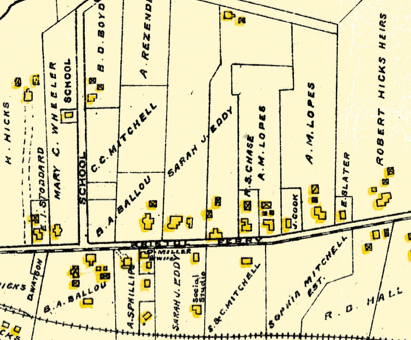
Bristol Ferry Map edit

Note Mitchel family land on 1907 Portsmouth map.

Floride’s daughter,  Clara, married famous artist Oscar Miller.  Clara took part in many of the activities that her aunts pursued.  She was among those doing suffrage work.  She was active in the arts exhibits in the County Fair.  Once the women got the vote, Clara was active in Republican politics.  In 1920 she was one of the organizers of the Newport County Women’s Republican Club.  She was a delegate to the state Republican convention.  Even after her husband’s death she continued as a patron of the arts for a Swanhurst Concert.

Portsmouth benefited from the work of all the Mitchel/May women.  Their activities in suffrage, the arts and politics made them women ahead of their time.


Portsmouth Women: Gerry, Mary Lou and Nan: Growing up on Glen Farm

Leave a comment

Camara Sisters

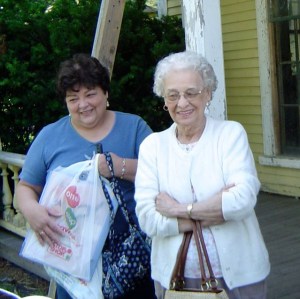
Gerry Leis and Mary Lou Lemieux

Growing up on Glen Farm was idyllic for an adventurous girl named Geraldine Camara.  Gerry and her sister Mary Lou shared stories of their childhood with Elmhurst students many years ago.   The students interviewed the Camara sisters on the porch of the Leonard Brown House.  They lived at that house (and others on the farm) because their father, Manuel Camara,  was a long term worker on the farm.  His story is another one that deserves to be told in a separate blog.

Stories about Gerry – in the words of the student interviewers.

Gerry was born at the Brown House on a very cold January day. She was so tiny they had to keep her warm, so the nurse put her on the oven door.

The fields around the house were filled with cows – Angus, Guernseys and later Charolais.  The girls had to walk up Linden Lane to get to the school bus and the cows followed them all the way.

Gerry was always getting into trouble.  She used to climb into the hayloft of the barns and she even tried to ride the cows.

There were seven wooden bridges over the paths around the stream that ran from the mill pond to the river.  One day Gerry used the wood from one of the bridges to make a raft.  Then there were only six bridges.

The Glen families were careful to let the Taylor family have their privacy.  They were the owners after all.  When Gerry picked daffodils from Mrs. Taylor’s garden, her mother was very upset with her.

Glen Farm has beautiful stone walls.  Mrs. Taylor’s second husband didn’t like to see the children sitting on the walls.  he paid them a quarter not to sit on the walls.  He had a fancy car and when the girls saw the car coming, they sat right on the walls so he would give them more quarters.

Gerry made the sheep barn into her own clubhouse.

It could get cold at the Brown House, so the workers would “bank the house.”  That meant they would put a wood frame around the outside of the basement and fill the frame with leaves to help keep the heat in.  Geri would walk on the frames even though she wasn’t suppose to do that!

The Camara sisters, Gerry Leis and Mary Lou Lemieux, have both passed away, but we cherish the stories they told us and continue to share them with other generations of Portsmouth school children.

The Brown House has memories for many families.  It was one of three homes Nan Howell Waters called home on the farm.  Nan was on the farm because her father, Arthur Howell, worked on the farm.  He started out as a mechanic, moved to bookkeeper for dairy cattle and then to superintendent of the farm. His office was in the Cow Barn and he worked up until he died at 76 years old. He worked close to 50 years on the farm.

DSCN3119

Nan Howell Waters

Nan came to Glen farm when she was a baby.  When Nan lived at the Brown House it was divided to hold two families.  Her family lived downstairs and the Camara family lived upstairs.  On their floor was a bath room,  two bedrooms, kitchen (with a wash tub and pantry),  dining room and a large living room.  It was heated with a big coal stove in the basement.  The basement was good sized and each family had partitioned areas.  The children like to play store in the basement.  With the four Camara girls and Nan and her brother, there was always someone to join in play.

Glen Farm was a self contained community.  They had electricity and telephone service.  There was a switchboard operator on the farm and they had a phone in the hall with each family having a different number of rings to signal calls for them.

Outside the yard was set off from the field by a stone wall.  There were kitchen gardens – each family had one.  Each family had a garage.  There was a chicken shed for each family, so they had fresh eggs.  Milk, meat and other vegetables came from the farm itself.


Older Entries Newer Entries