Home

The Old Stone Bridge

Leave a comment

Howland’s Ferry went across the narrowest part of the Sakonnet River, and that is just where the first bridge off Aquidneck Island was constructed.  A toll bridge was constructed by the Rhode Island Bridge Company in 1795.  The bridge was rebuilt and washed away again in 1798 and remained closed until 1808.  The Great September Gale of 1815 destroyed it and it was rebuilt again under the name of the Stone Bridge.  The draw part of the bridge was washed away in 1869, and the owners sold the Stone Bridge to the towns of Tiverton and Portsmouth.  The towns, in turn, gave the bridge to the state to maintain.  The bridge was rebuilt and reopened in 1871 as a free bridge without a toll.  More damage was done by storms and ships that rammed the bridge and it closed after Hurricane Carol. Ferries such as the West Side were used while the bridge was out.   In 1957 it was replaced by the then new Sakonnet River Bridge. What remains of the Stone Bridge is used as a fishing pier today.
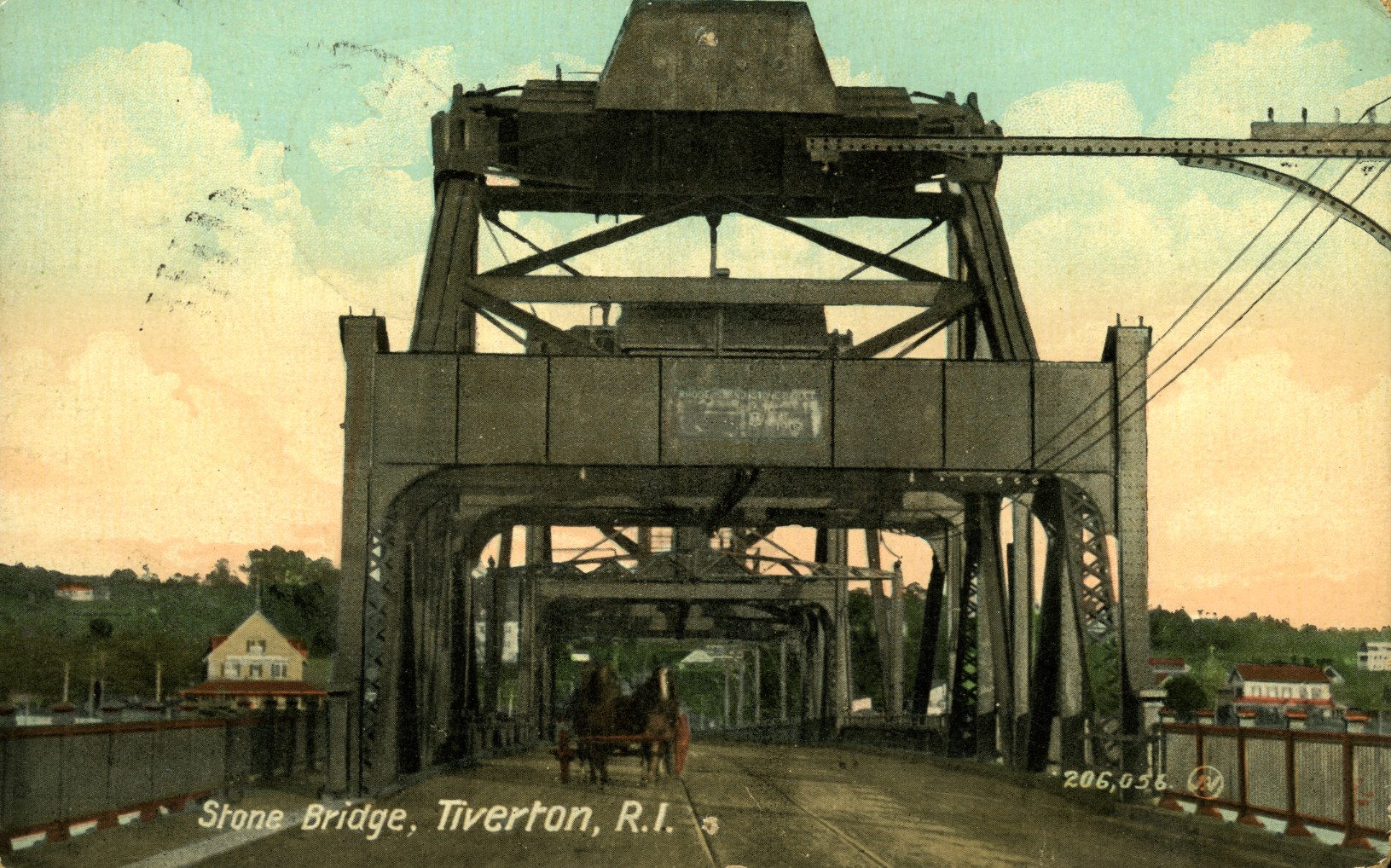
Howland Ferry area

The Stone Bridge began as a toll bridge.

Bristol Ferry Town Common

Leave a comment

Blaskewitz Map of Bristol Ferry Area

During Revolutionary times there was an active community around the Bristol Ferry landing. Blaskowitz chart.

The way to Bristol Ferry became a bustling community with taverns and shops. By the old ferry landing is the Town Commons.  On March 12, 1714, the common is listed in a list of “Rhodes, Ways and Lanes in Portsmouth.” This document is available in town archives. Regarding the Bristol Ferry Common, it states that,

“… the piece of  land near Abel Trip house adjoining to the ferry against Bristol, is left for the conveniency (sic) of the Public in importing  and transporting of Cattel (sic), Sheep, Horses, wood, rails, etc. and is bounded on the bank against the salt water 12 rods, and against the land of John Earl & John Earl _____ twelve rods and against the land of  John Pool, John Tripp and Abel Tripp, that is, from the Earl ____ his corner to Thomas Borden’s Northeast corner aforesaid, is twenty rods and from Borden’s down to the lege (sic) of the bank next to the salt water is nineteen rods.”

Bristol Ferry

Leave a comment

Tripp, Borden and Gifford Ferries

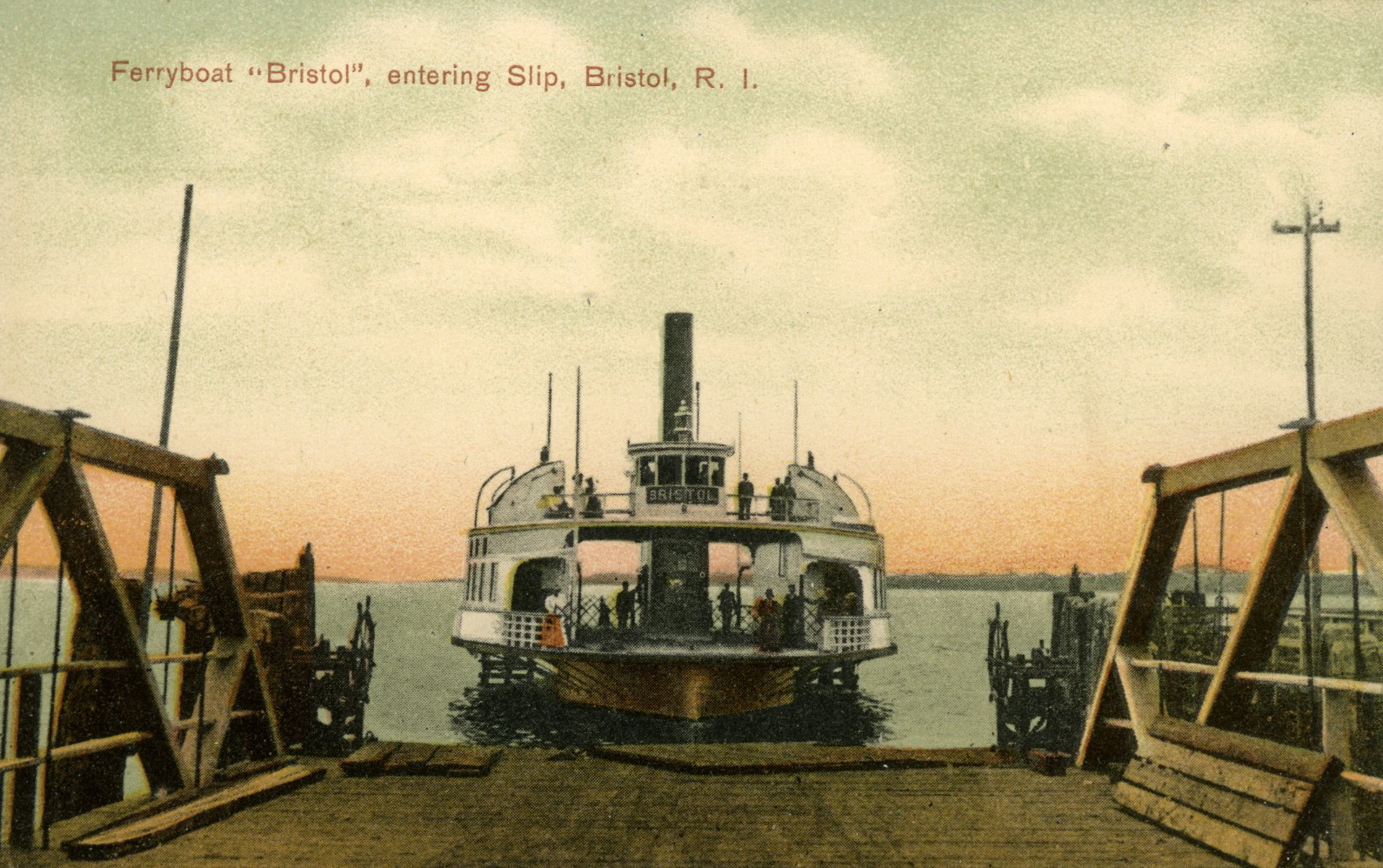
The Bristol arrives at the ferry landing. (Image: G. Schmidt collection)

West Main Road in colonial times was known as the Path to Bristol Ferry.  Howland Ferry to Tiverton came first in 1640, once the ferry to Bristol was established, it became the primary way off the island to the mainland and Providence.  The ferries on the Portsmouth side were known as the Tripp’s Borden’s and Gifford’s ferries after the owners.  Early records show John Tripp was paid for ferrying the colony’s general assembly across to Bristol.  John’s son Abiel built a wharf around 1680.  In 1698 John Borden had a ferry operation alongside the Tripp ferry.  In 1766 Thomas Tripp sold his wharf and land to Joseph Borden (John’s brother) and after that the ferry was generally known as the Bristol Ferry.  In 1774  Joseph Borden sold the land, ferry house and ferry privileges to David Gifford. All ferries were discontinued during the British occupation of Aquidneck Island during the Revolutionary War.    Gifford’s sons, Gideon and Jeremiah, bought even more land to form “Ferry Farm” to care for the horses that were used to power the new type of ferries.  Horseboats were not all that practical at the Portsmouth ferry, so that ended in 1845.

Fogland Ferry

Leave a comment

Cook Ferry

The Cook family began to ferry their animals to Fogland to graze during the day.

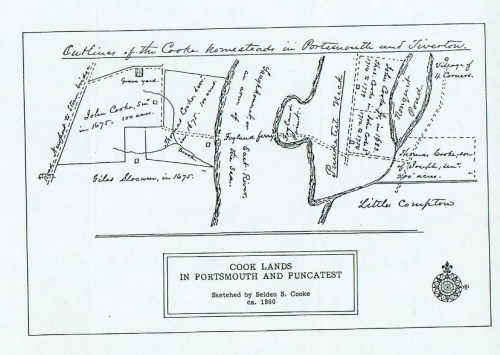
Fogland Ferry (or Cooks Ferry) began when Thomas Cook bought grazing rights to Fogland across the river in what is now Tiverton. Cook lands were located in the Glen area. Thomas Cook’s home was where the Glen Manor House is today. Later on the family seems to have established a public ferry. In 1762 Joseph Cook sold 31 acres of land with wharves, buildings and ferry rights to Christopher Cadman. When he died in 1787, the Cadman Ferry was left to Gideon Cadman, Christopher’s son.

Purchase of Hearse

1 Comment

Purchase of Hearse:

From the records of the Church Board meetings from the 1870s which were kept by George Manchester, Clerk.  At the Board Meeting on March 12, 1871:

“The board unanimously recommended that Br. John J. Brown purchase a hearse of Langley and Bennett at a cost of $162 provided the sum of $200 is raised.”

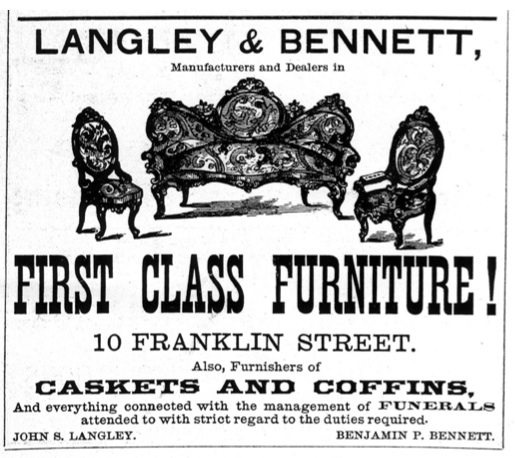
After researching the City Directory for Newport for 1871 we found this ad for the Langley and Bennett furniture company.  This company not only built furniture but also furnished “everything connected with the management of funerals.”

1871 Advertisement for Langley and Bennet

Christian Union Church Horse Drawn Hearse

Leave a comment

The Christian Union Church of Portsmouth, RI purchased this horse drawn hearse in 1871 and used it for many years.  It was made in Newport, RI by the furniture maker, Langley and Bennett.  When the church dissolved in the 1930s the hearse was moved to the Breakers Stables in Newport.  In 1970 there was a fire at the stables and in 1974 the Little Compton Historical Society provided storage for the hearse in the basement of their barn.  In 2009 the hearse was moved to the Portsmouth Historical Society which is at the Church’s original location.

1871 horse drawn hearse returns to the Union Church.

Newer Entries