Home

Comparing the Denison Map and RI Archives Map

Leave a comment

The Denison Map of the Battle of Rhode Island is filled with information. I generally look for specific pieces of information from this gem, but today I am going to methodically go through the information it provides. As I go through this map, I am comparing it to the map from the General Sullivan Collection that is in the state archives. I am noting that the handwriting and comments are very similar.

Looking at the Denison map in general there is a compass on the left hand side. There is a scale for two miles and there is a legend of sorts for the positions of the American commanders. The mapmaker lists himself as J. Denison “Scripsit” which means writer. The map covers the areas and dates involved in the “Rhode Island Campaign” – mainly Aquidneck Island and the surrounding waterways. Notes on the bottom of the map tell us that the original is at the Massachusetts Historical Society and that this version is a copy. A note at the bottom provides a legend for symbols in color in the original.

The legend for the battle positions is given at the bottom.

First Line:

G is for Glover, Gr is for Greene, C is for Cornell, V is for Varnum.
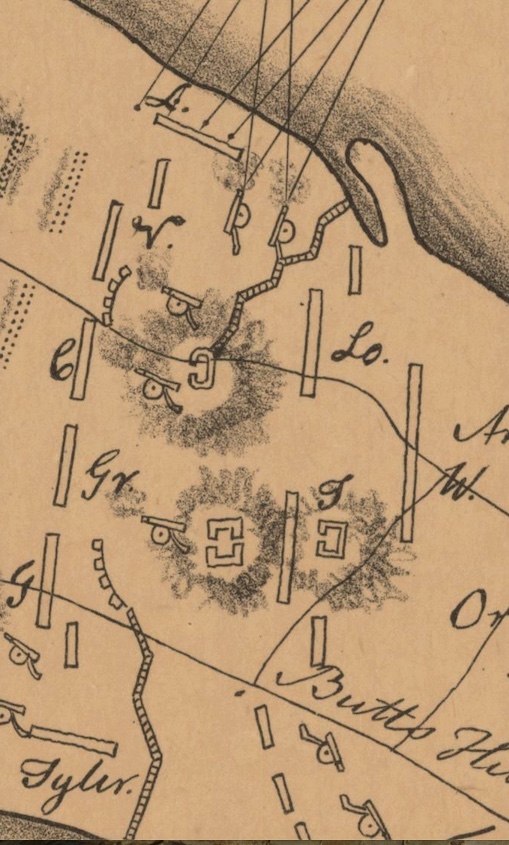
Second Line: T is for Titcomb, L is for Lovell.

Reserve: W is West

Flanking Divisions: L is for Livingston and Tyler

The Archives map has no key, but it does have a compass and scale. The names of the commanders are written out, but the positions are the same as in the Denison map.
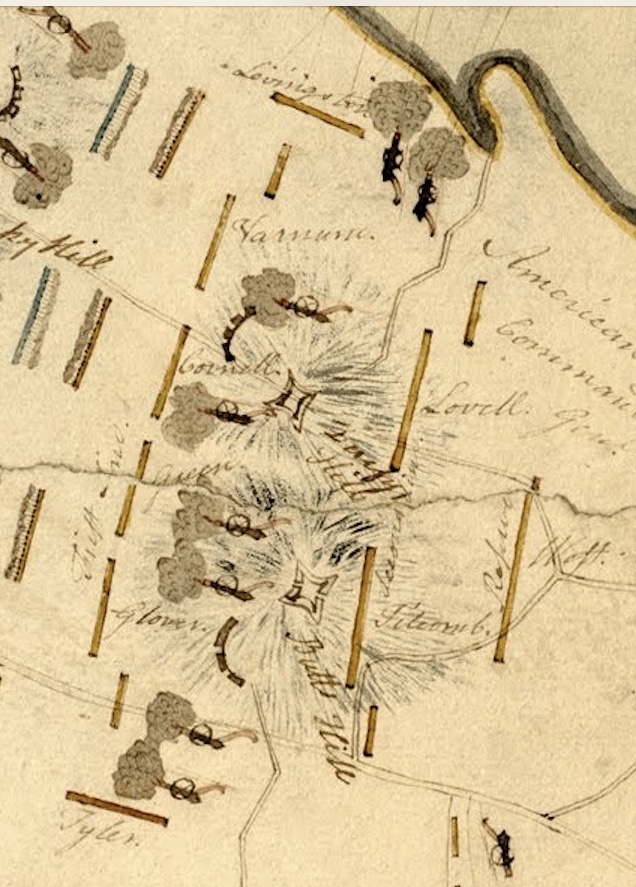
Comments comparison:

By Howland Ferry: Denison: Here the American Army landed August 9th 1778 beginning half after 6 o’clock A.M. and retreated the 30th in the evening.

By Howland Ferry: Archives: Here the American Army landed August 9th 1778 beginning half after 6 o’clock A.M. and retreated the 30th in the evening.

The comments close to Union Street about the beginning of the battle were the same. :

The comments between East Main and West Main are the same.

What is different is that the Denison map has notations on the French Fleet. These are absent from the Archives map:

On the Sakonnet: “French ships going out to join the French Fleet going to Boston, August 20, 1778.”

In Newport Harbor”. “French fleet going out in pursuit of the British Fleet August 10th 1778, which were then at anchor Near Point Judith.”

By Hog Island: “British ships firing on the American Troops in time of Battle August 29, 1778.”

There is no Author statement on the Archive’s map, but I believe both maps were drawn by J Denison. The Dennison map is more finished. The Archive map looks to be more a record taken at that time and the basis for the Denison map. Perhaps others were aware that these two maps are basically the same, but this was revelation to me. I am still trying to find out about the mapmaker, j Denison. I would appreciate any information about him. He is credited with many more maps through the years.
Maps as an Information Source : Argomaps – Map of the Seconnet Passage

Leave a comment

I have come across an excellent source that gives us easy access to many of the maps of the Revolutionary Rhode Island era. https://www.argomaps.org/about/ is the link to this great source.

From their website:

ARGO: American Revolutionary Geographies Online is a new project led by the Leventhal Map and Education Center at the Boston Public Library and the George Washington Presidential Library at Mount Vernon. Leveraging new technology and the recent drive by many museums, libraries, and archives to digitize their collections, the portal collates digitized maps of North America made between 1750 and 1800 into a single user-friendly portal. In addition to providing users from many backgrounds with easy, intuitive access to beautiful high-resolution images, ARGO seeks to give users of all kinds the tools they need to learn and understand through interpretive essays, curated collections, classroom materials, and more. As a platform for scholarship, education, and exploration, the goal of ARGO is to make the rich visual legacy of our Revolutionary past accessible to the public as never before.”

ARGO’s Advice on using maps as a primary source.

Our number one piece of advice? Take time to look. Just as you would read and reread any other primary source document, be sure to examine your selected map. You can look over the map with the following questions in mind:

What does the map focus on?
How did the maker get you to focus? Did they use color? Are some things larger than others (scale)? What is at the center of the map? What features are accompanied by text?
What is overlooked? What is unlabeled, at the edges, or missing altogether?
How is the map intended to be used? To show political boundaries? Navigation? Sharing data? Depicting a particular place for promotion or propaganda?

What i do:

  1. I always look at the cataloguing information. It usually gives me such information as who the mapmaker was, when was it made, size, etc. Who the mapmaker was can tell us something about the intention of the map.
  2. I do look at the whole map, but I also break it down and specifically take note of what is in sections. Usually I look at the map in four sections. That helps me to notice minor details that may be important.
  3. I try to find a map of the same location today. Names change. McCorrie Point is frequently referred to as “Sandy Point” at the time.
  4. I always look for detail like the compass for orientation, scale, and legend. If this map is a rough sketch, these items might not be present.

Here is an example of how I work with a map that is new to me.

Checking out the bibliographic information.

What information can I cull?

Author: signed H.C. – this is in the Henry Clinton collection

Title: Taken from the back of the map.

Size: about 16 by 13 inches.

Materials: Pen and ink

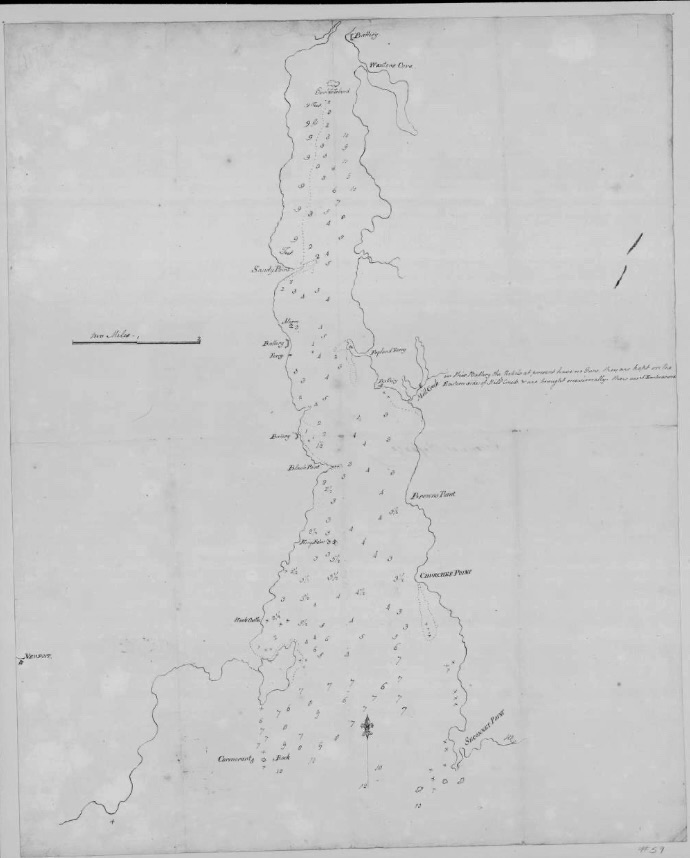
Notes: Depth soundings are listed. Are they in fathoms? At one location the “Feet” is listed. American and British redoubts are included.

Now I have some information to bring to viewing the actual map. https://www.argomaps.org/maps/commonwealth-oai:hd76wz10d/

My observations: Although this map has a scale and a compass, it doesn’t have a legend, maker’s name or date. It seems to be a utilitarian map prepared for those defending the East coast of the Sakonnet. The passage depths listed and the scale helps defenders pinpoint locations where the Americans are most likely to cross. There is a special note about the redoubt at the Mill Pond – how it is armed and what weapons they have. As I expected, “Sandy Point” on the map is what we call McCorrie Point. There is even a tracing of what the point is like at low tide. American and British redoubts are listed. It would be good to compare them to other maps to get a sense of the dating of this map. The ferry locations are also listed.

Bristol Ferry Road Neighborhood: Travelers, Artists, Suffragists and A Bridge

Leave a comment

Travelers

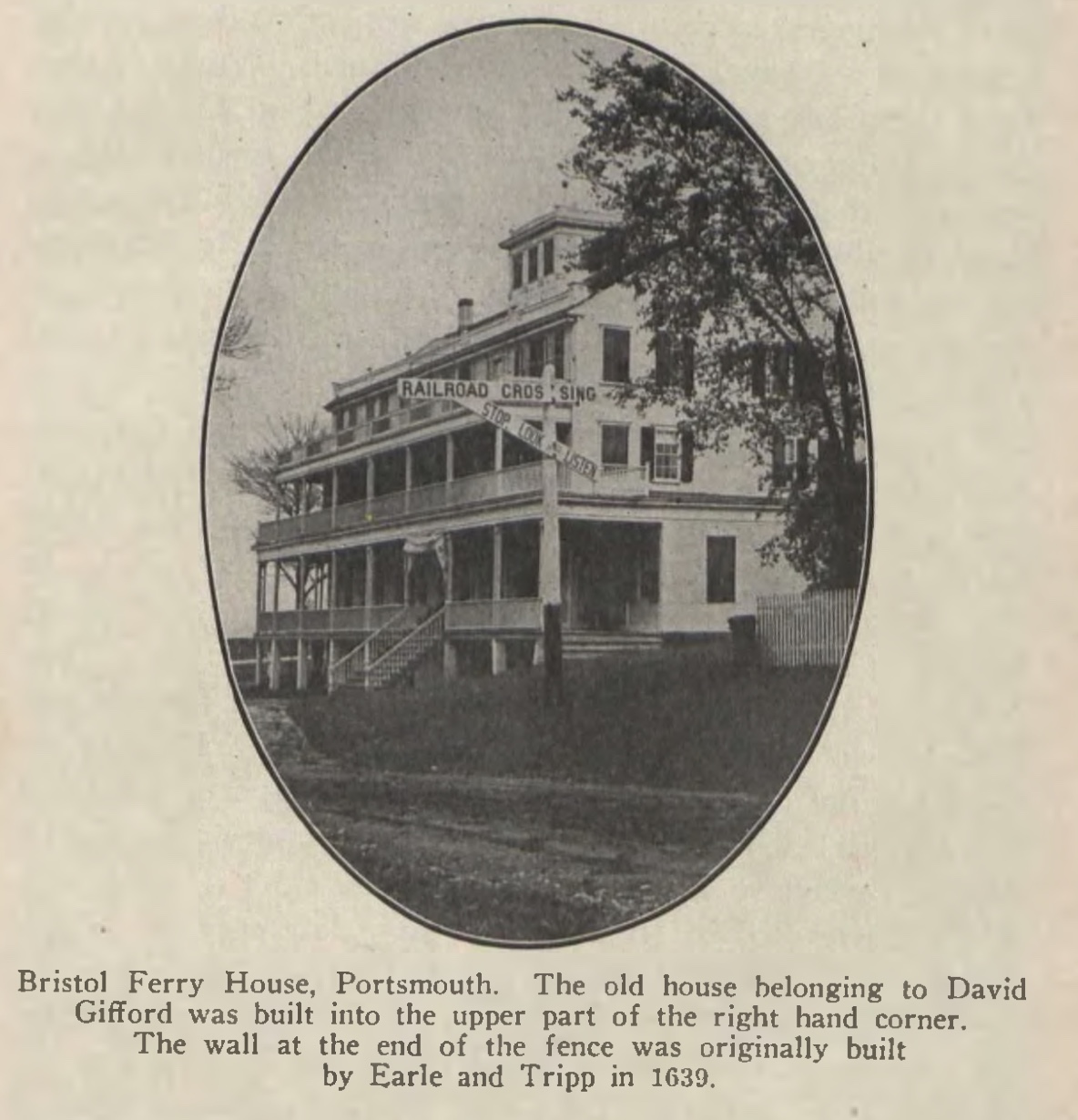
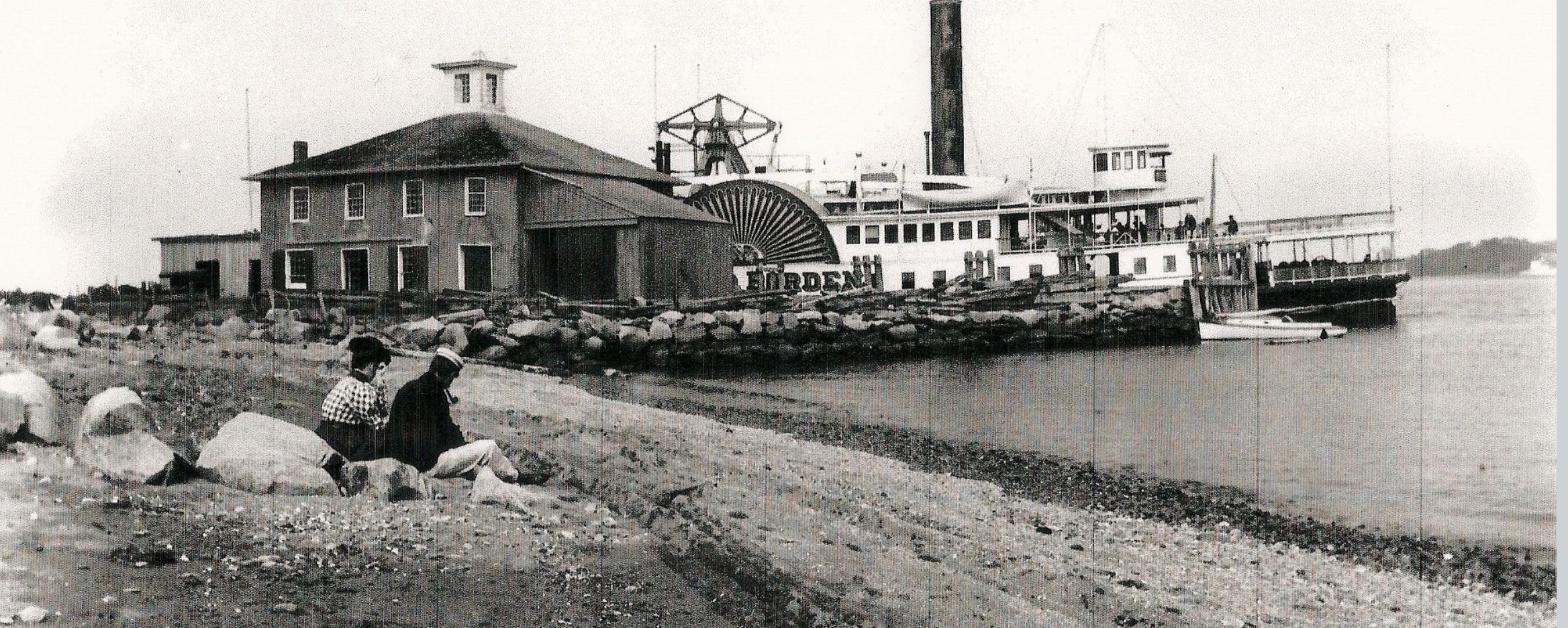
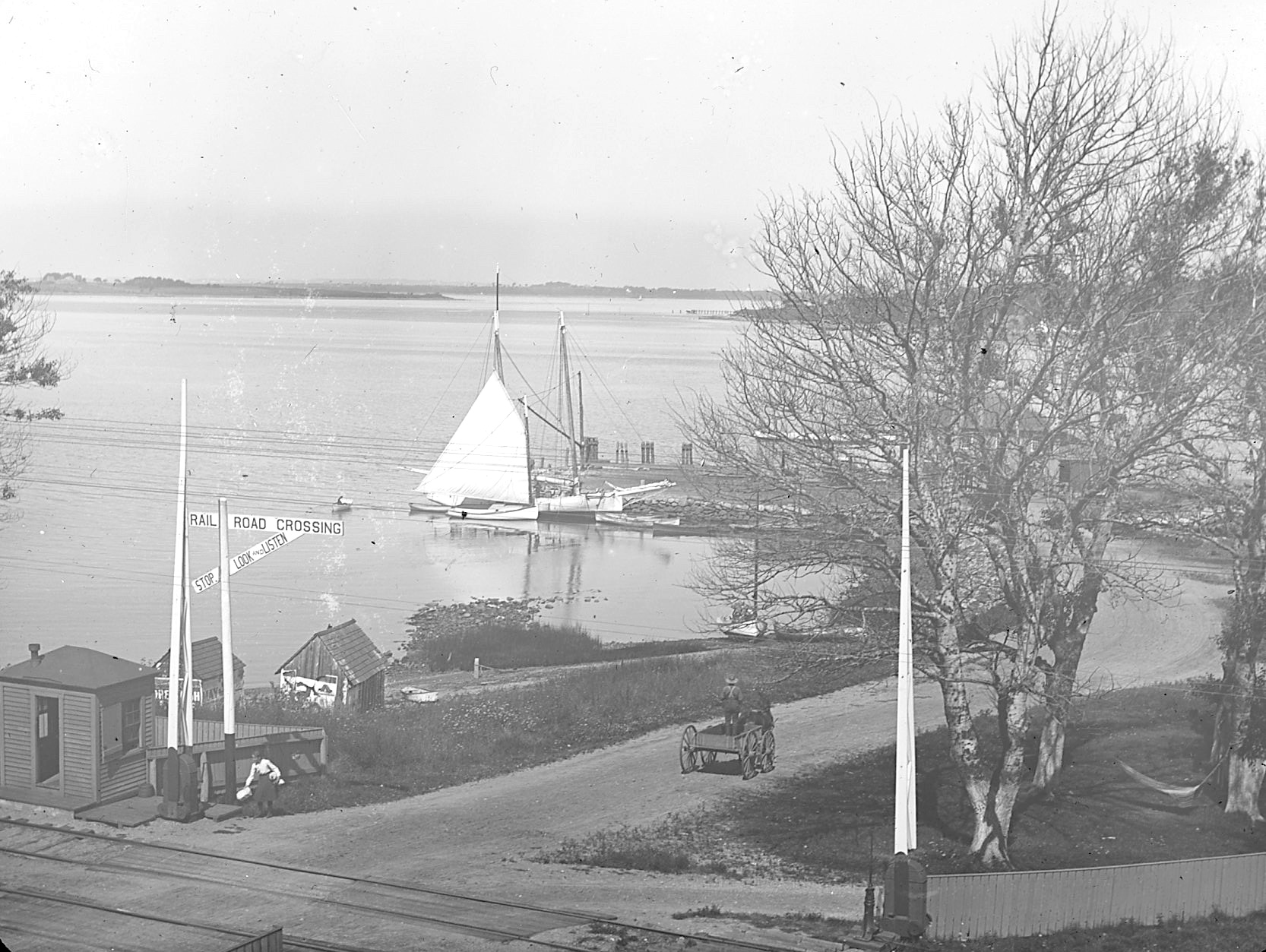
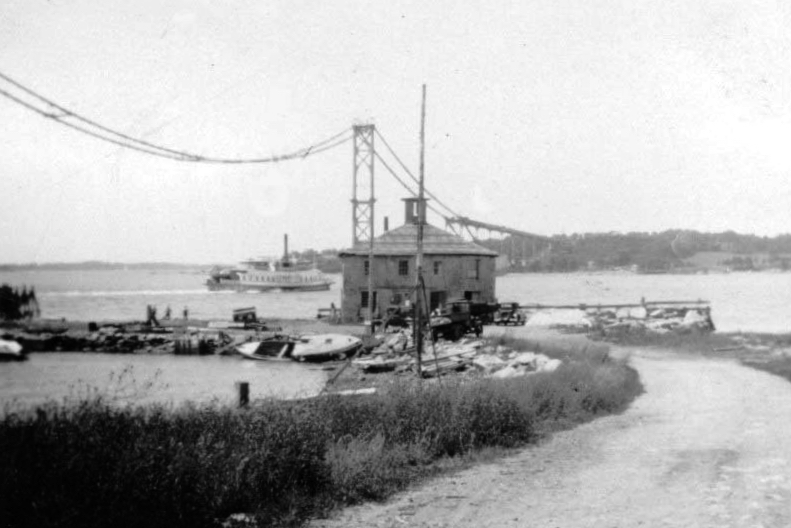
The Bristol Ferry grew in importance after the Revolutionary War and a whole transportation network developed around it. Railroad service, steamers (even the famous Fall River line in the 1860s), and trolleys had stops at this hub. A summer colony grew up around the ferry landing and that drew wealthy people from Providence. Around 1850 a large hotel that could accommodate 50 guests was in service and continued for the next 75 years. Bristol Ferry Landing became a thriving center with the hotel, a wharf, stores, a railroad station, post office, telegraph office and summer cottages.

Artists

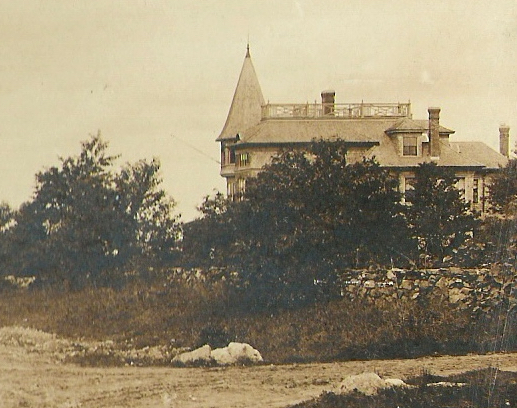
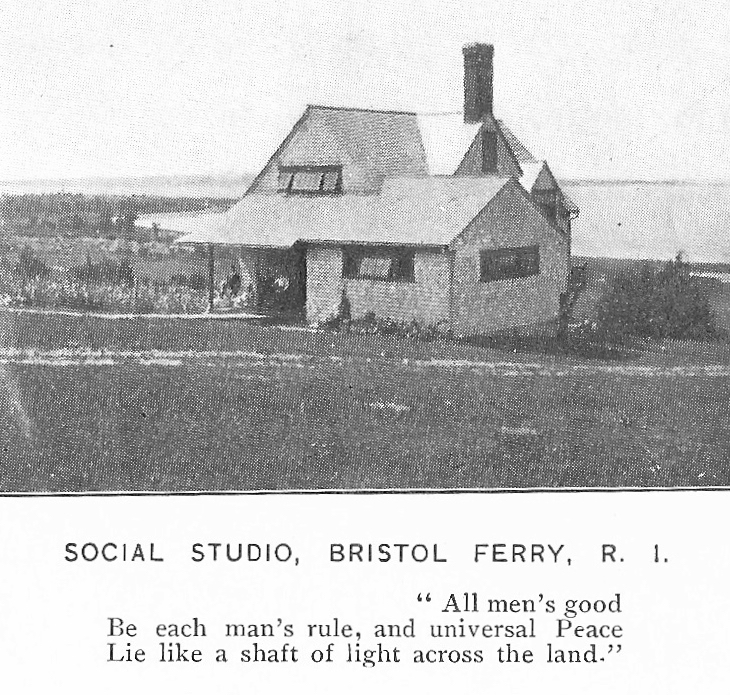
In the late 19th and early 20th centuries the Bristol Ferry neighborhood was known as an artist colony. Along Bristol Ferry Road large homes were built as summer residences. Noted artist, sculptor and photographer Sarah Eddy brought art students to Bristol Ferry to enjoy the special light in the area. Sarah started a “Social Studio” to teach crafts and kindness to the local youth. Internationally known artist Oscar Miller made Bristol Ferry his home when he married into local Mitchell family.

Suffragists

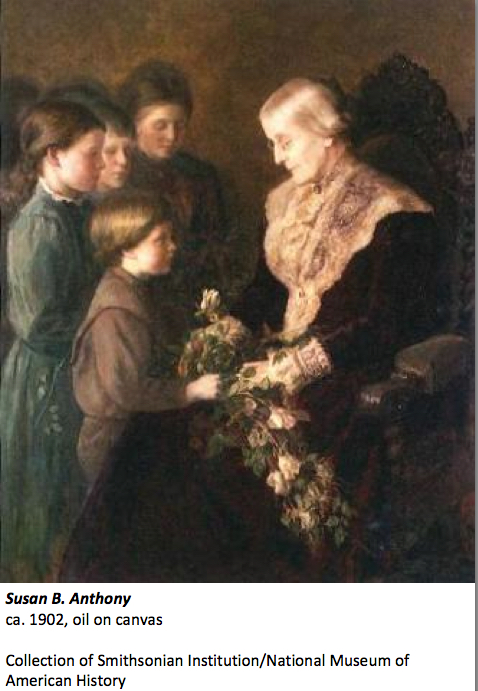
Sarah Eddy had connections with national leaders in the abolition and woman’s suffrage movement. Susan B. Anthony even came to Eddy’s house in Portsmouth to have her portrait painted. The women who lived in the Bristol Ferry area became the hub of the Aquidneck Island and Rhode Island suffrage movement.

The Bridge changes everything

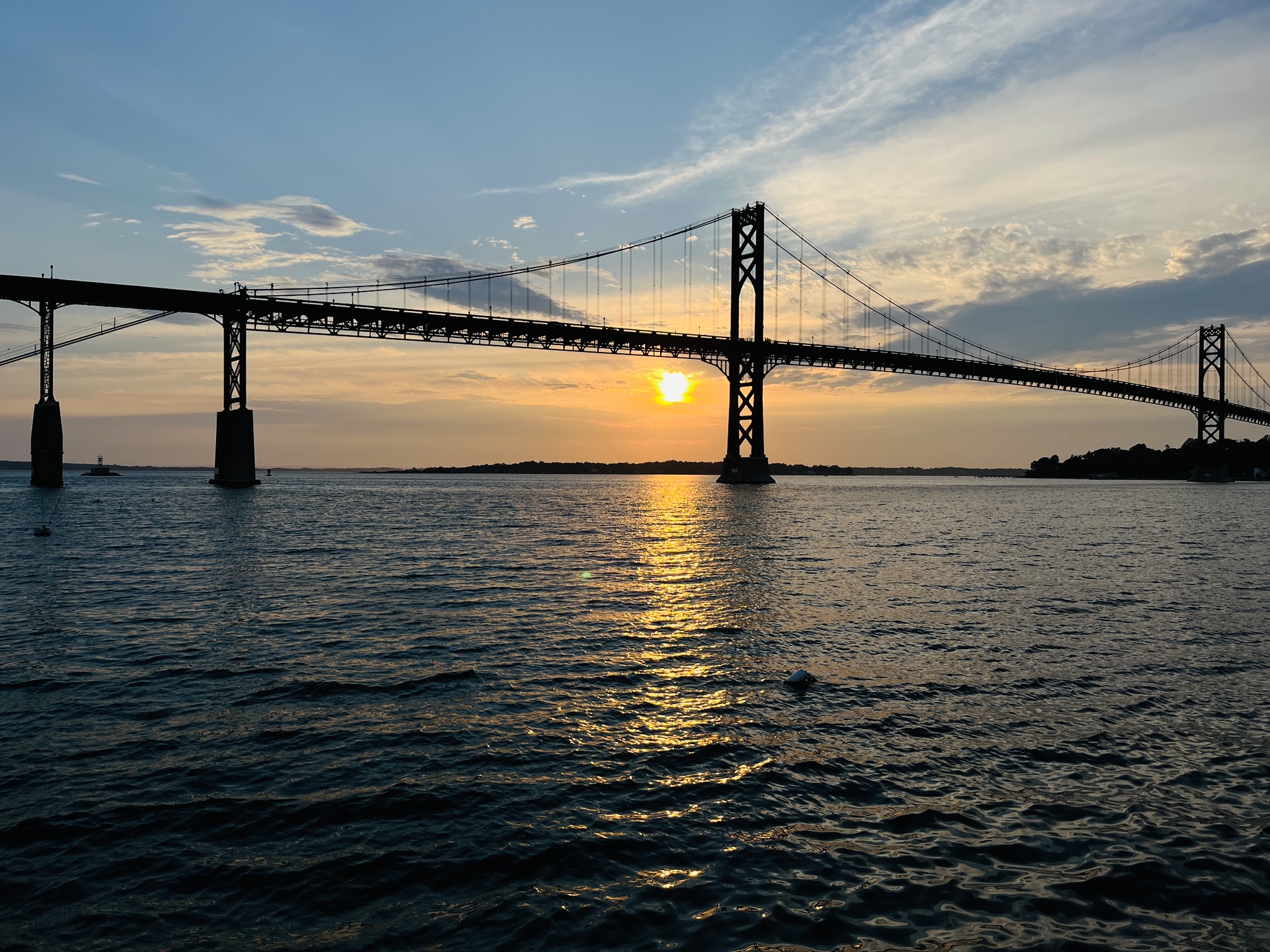
The Mount Hope Bridge, designed in 1927 by a private company and opened for travel in 1929 is a prize-winning suspension bridge over Narragansett Bay between Providence and Newport. With the bridge, the use of the Bristol Ferry Landing diminished. Today that high transportation area is the beautiful Mt. Hope Park, a quiet spot to enjoy a sunset.

Portsmouth Neighborhoods: Bristol Ferry/Commons – Colonial Days

Leave a comment

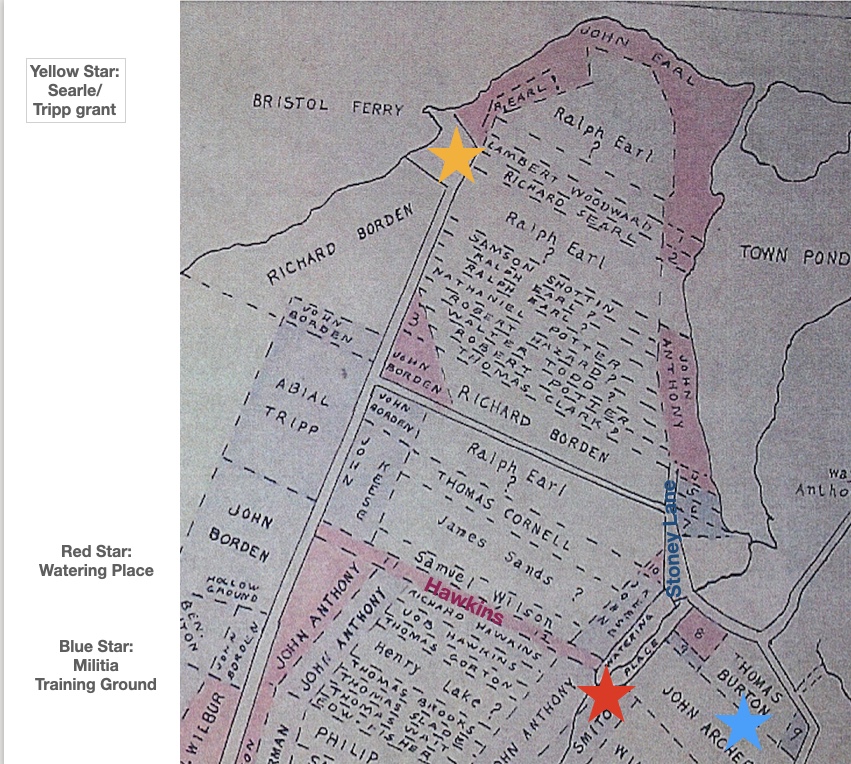
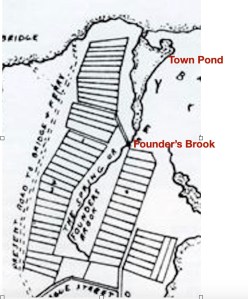
As the Portsmouth founders moved away from the settlements around the Town Pond, Common Fence and Founder’s Brook, the Bristol Ferry community to the northwest began to develop. In the 1930s, Portsmouth historian Edward West did some remarkable work with land evidence. Among his works are the Land Grant Maps that tell us where the early settlers were given land. How he worked through all the locations with rods as measurements, we will never know. West tells us that upon founding the town “they immediately made laws governing the size and location of the house lots.” They began recording property in a book. There were times when land transferred without records, so the accuracy of the land evidence may be questionable in some cases. West illustrates the grants and town plan with his maps. Some of the first grants given were in the Bristol Ferry area.  As the town was laid out, Sprague Street was the southernmost border.  Land grants were given out in 1657, 1693 and the last lands were given out in 1713.  By 1713 the commons were laid out, highways were straightened and the town was considered finished as laid out from Sprague Street northward. As the Portsmouth population spread to the north and west of Town Pond, the town fathers and surveyors thought they had finished laying out the town.

The first street to the right was “Stoney Lane.”  It was a short “driftway” (a path used to drive cattle or sheep) between Richard Borden’s property and that of Mistress Harts.  South of that was a lane that led to a “watering place” now called Founder’s Brook. On the map it is called Hawkins Lane for Richard Hawkins and his wife Jane who was a friend of Anne Hutchinson. This “watering place” was laid out in 1713 as a public place for the washing of sheep and general water uses.  Also in 1713 Thomas Burton received a piece of land that was known as the “Training Place” before that.  That ground may be where the militia had trained.

Waiting for the Ferry

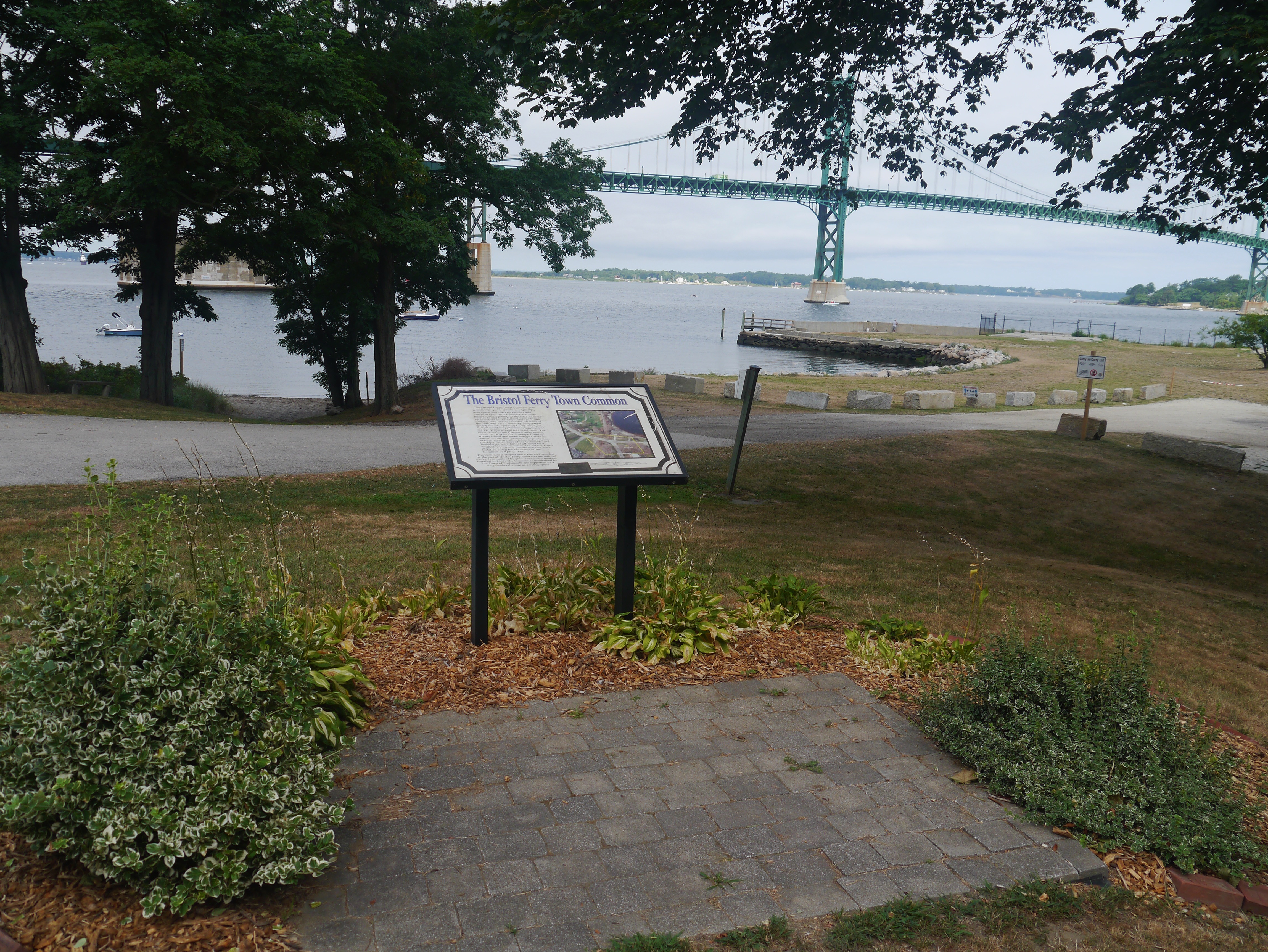
The tip of the Bristol Ferry area developed commercial businesses like taverns and shops that catered to those using the ferry. Ferries were more informal at the beginning. Those with boats provided a service to passengers and goods that needed to be transported to the mainline at Bristol. This is the site of a town common dating back to 1714. Ferry service started here in 1640. This 1.5 acre space was originally used by farmers and others to keep their livestock and other goods while waiting for the ferry to Bristol. The Bristol Ferry area had a British fort during the occupation. This area was the transportation hub for Aquidneck Island (Rhode Island) and there are records of George Washington passing through here after visiting with General Rochambeau in 1781. The French and Americans would make the start of their long journey to victory at Yorktown through Bristol Ferry.

A Bristol Ferry story

Just above the Bristol Ferry is the 3 acre lot that Richard Searle sold to Mary Paine.  Mary was a bar-maid at Baulston’s public house.  Searl exchanged his lot for a pint of wine.  He didn’t give Mary a deed, but the town council ratified the sale on the testimony of a witness in 1666.  Mary later married John Tripp and that piece of land became the site of his ferry house.

Recommended Reading

 West, Edward. Rhode Island Historical Society Journal in July of 1932 (The Lands of Portsmouth, R. I., and a Glimpse of Its People).

Pocasset, the First Neighborhood

1 Comment

Founded on the Compact.

The original settlers of Portsmouth were dissenters with Anne Hutchinson fleeing from Boston’s church rule. Portsmouth’s town seal proclaims “Founded on the Compact 1638.” Through the Compact twenty three men and their families agreed to form a secular government. Will and Edward Hutchinson (Anne’s son) traveled to Providence to Roger Williams who arranged a meeting with Narragansett Sachems Miantonomo and Canonicus. On March 24th they gave the sachems “a gratuity” of forty fathoms of white wampum beads, ten coats, and twenty hoes. The Narragansett removed themselves from the island, but selling land was not a concept in their culture. To the English settlers, this was a sale.

Pocasset Settlement

When they journeyed to Aquidneck Island, the Island was a wilderness and shelter was a big concern. They crawled into caves around the banks of the cove (Town Pond) where they landed. They followed the native’s example by bending birches into house frames, using mud for walls and weaving twigs to make a thatched roof.  When the group of founders began their settlement, they called it “Pocasset.” It is an Algonquian word that refers to the width of the river, but it is also the name of the Pocasset Wampanoag Tribe of the Pokanoket Nation whose land included Tiverton and much of Southeastern Massachusetts..

Re-named Portsmouth

On May 12, 1639 the settlement’s name was changed to Portsmouth. The settlement of Pocasset/Portsmouth included the area around the Montaup Country Club, Town Pond, Founder’s Brook and south to Portsmouth Park. At this time the founders located their houses on small lots around water sources like springs and brooks. They were frightened by the sound of the wolves roaming around the camp.  This was a major threat because livestock was unprotected. They brought with them horses, cows, sheep and hogs. While Anne Hutchinson and the others walked from Boston the animals were brought by ship around Cape Cod.  With the aid of Roger Williams, members of the Narragansett tribe came and laid traps to kill the wolves. The settlers decided to make a Common Fence.  Five rails with no more than three inches between each rail was judged sufficient to keep out predators.  The first fence was built around the common pasture for the whole town and we know that today as Common Fence Point.

They were given land on the provision that they must built homes within a year. Town Pond was in the middle of activity. There were two springs that provided water – one was to the right of Town Pond near the Common Fence that held their animals. The other was by Founder’s Brook and that provided a central gathering spot and washing area. Baulston’s Tavern was located at the southern tip of the Pond. The Training Ground was across the way by the brook.

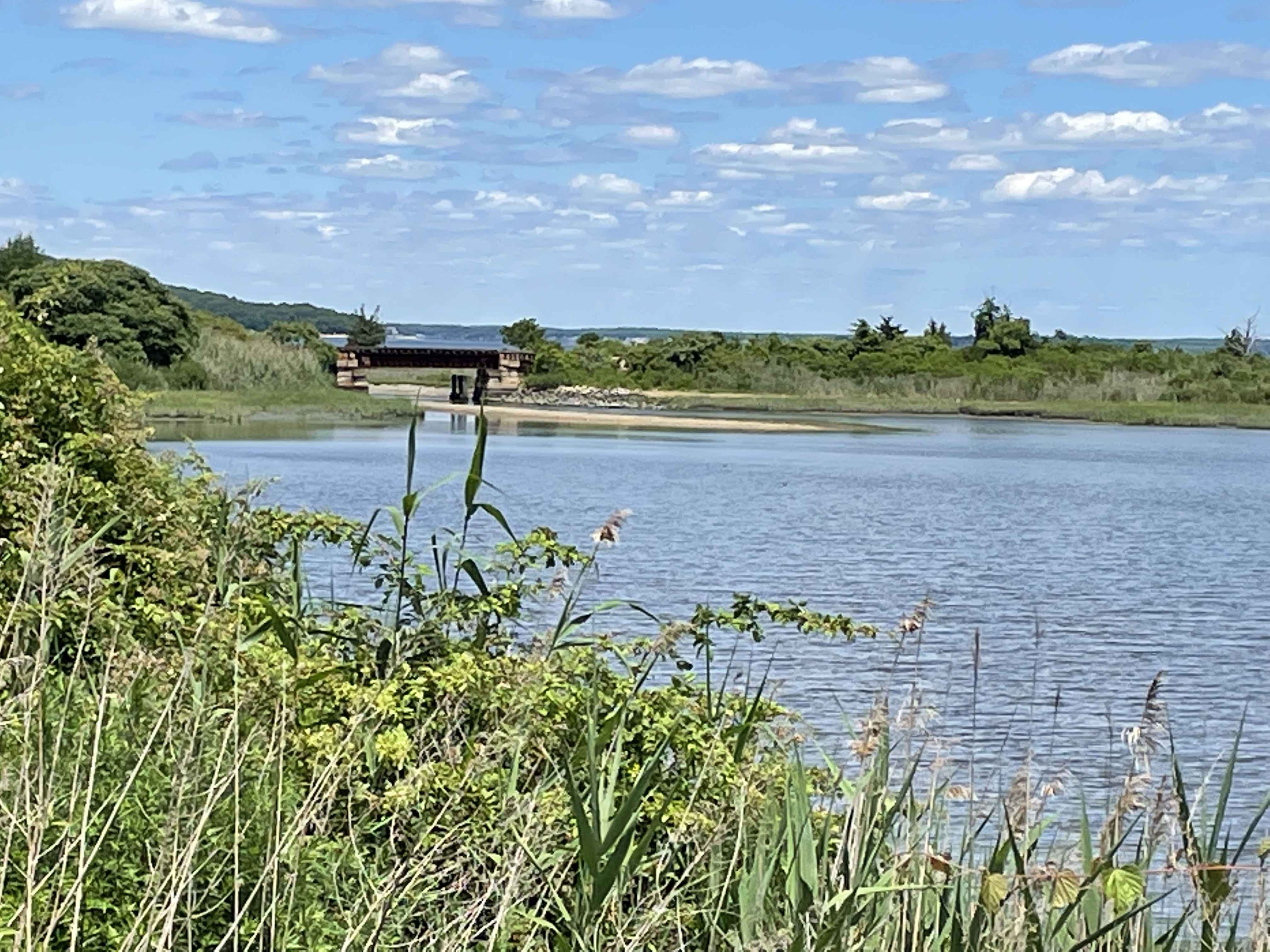
It wasn’t long before most of these settlers sold their house lots and moved out to their farm land grants. Town Pond and Founder’s Brook are worthwhile visiting today. The murmur of the brook and the bronze copy of the Compact at Founder’s Brook reminds us of the primitive life of the early settlers and their intention to band together as a political body. Town Pond can be viewed from a half mile hiking trail. The Pond has been restored to a tidal estuary, and you can imagine the scene as the founding families first stepped on Portsmouth ground.

Recommended reading: John Barry’s book on Roger Williams and the Creation of the American Soul.

Roger Williams played a great roll in the founding of Portsmouth.

Common Fence Point: A History

Leave a comment

Some places in Portsmouth have changed names over the years, but Common Fence Point was the name used in 1638 and it is the name used today.  A Borden family genealogy gives us the root cause for the name: “To the northeast of the spring a neck of land extends about two miles, which was nearly separated by creeks, marshes and the town pond from the rest of the island.  This strip of land, called by the natives Pocasset Neck, was set off by the settlers as a common by running a fence from the south end of the pond to a cove on the east side of the island. This common was called the fence common, to distinguish it from the lands outside to the south and west of it, which were all common; and the north point then received the name of common fence point. “(1)

The original settlement of Portsmouth took a pattern that was familiar to the English – homes were in a central village location and their animals grazed on common land around the homesteads.  Recording how each family branded their animals was very important with their stock intermingled in the commons. While this may have been a good pattern the first year when they needed to be close together for safety, this land use soon gave way to larger scattered farm lots which included their homes.

The 1849 Hammett Map shows Abner Chace holding Common Fence Point and the Chace (or Chase) family seemed to own pieces of the Point for many years.  In 1865  a charter was granted to several men to build and operate the Rhode Island Oil and Guano Company on Common Fence Point.

Edward West map of original settlers.

Pogy boats
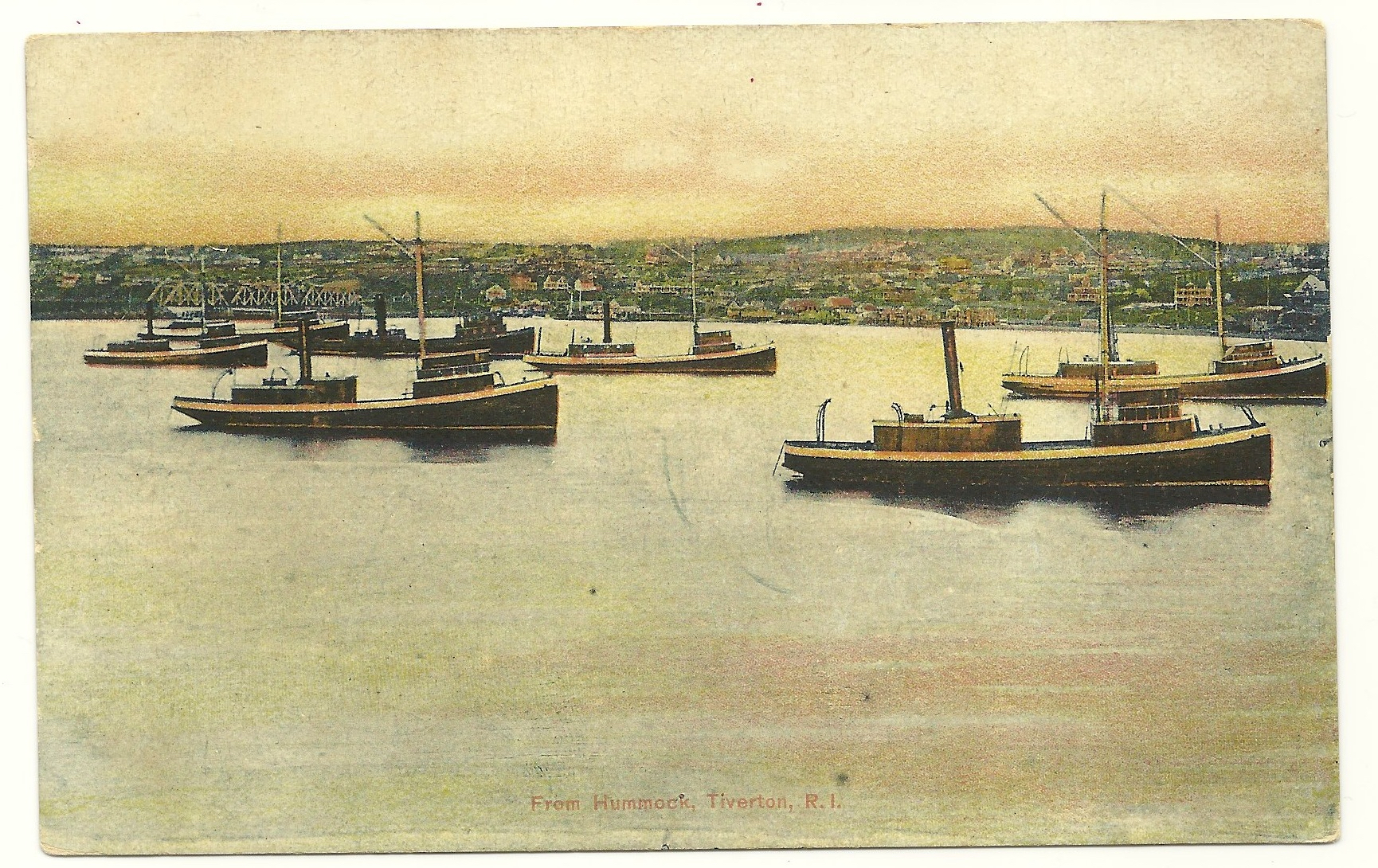
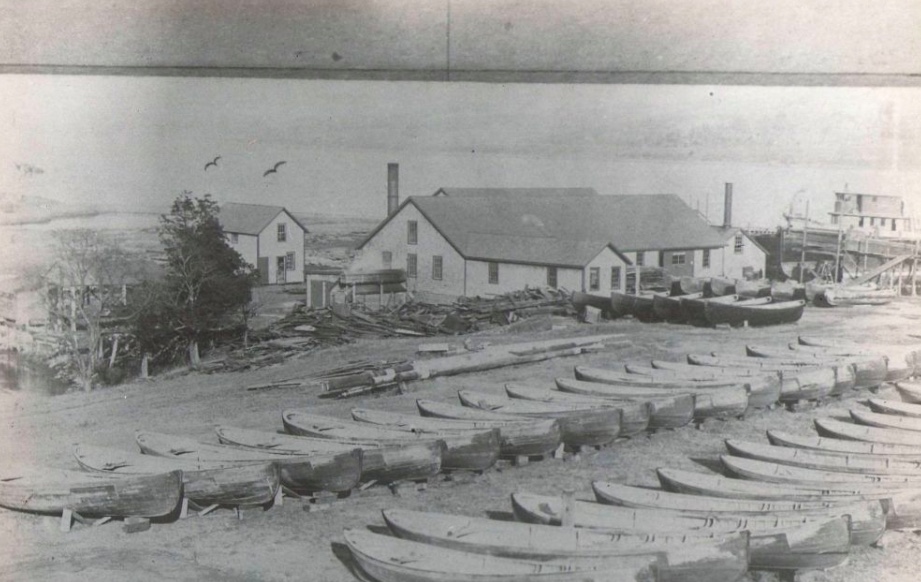
By 1900 part of Common Fence Point held the largest fish factory in the country.  The Tiverton based Church Brothers – Daniel, Nathaniel, Joe, Jim, Isaac, Fisher and George went into business together in 1870.  They commissioned the Herreshoff boatyard in Bristol to build the first fishing steamer – the Seven Brothers.  At first they were fishing for food, but they realized that fish oil and fertilizer from the pogy fish (menhaden)  had potential for profit.  They brought a menhaden processing factory in Maine, dismantled it and rebuilt it on Common Fence Point. The complex cookhouse was 35 ft square and there were two large dinning rooms to feed three hundred workers.  A large building held sleeping quarters and a net mending area.  A cooper made barrels for transporting the oil and there were boat shops.  The Church Brothers Fisheries barn burned in 1928 and that was the last of the Church facilities on Common Fence Point.

Common Fence Point gradually developed into a community.  At first many of the houses served as summer homes, but they gradually became occupied year round.  The Common Fence Point Improvement Association has been active in the community since he 1950s and continues to serve the residents of Common Fence Point with music programs, classes, activities for children and as an Arts Center.

(1) Historical and Genealogical Record of the Descendants as Far as Known of Richard and Joan Borden, who Settled in Portsmouth, Rhode Island, May, 1638: With Historical and Biographical Sketches of Some of Their Descendants H.B. Weld, 1899

(2) The Descendants of Thomas Durfee of Portsmouth RI-Vol. 1, by Wm. Reed.  1902.

(3) Genealogical Records of the Descendants of Thomas Brownell compiled by George Brownell, New York, 1910.

Portsmouth Neighborhoods

Leave a comment

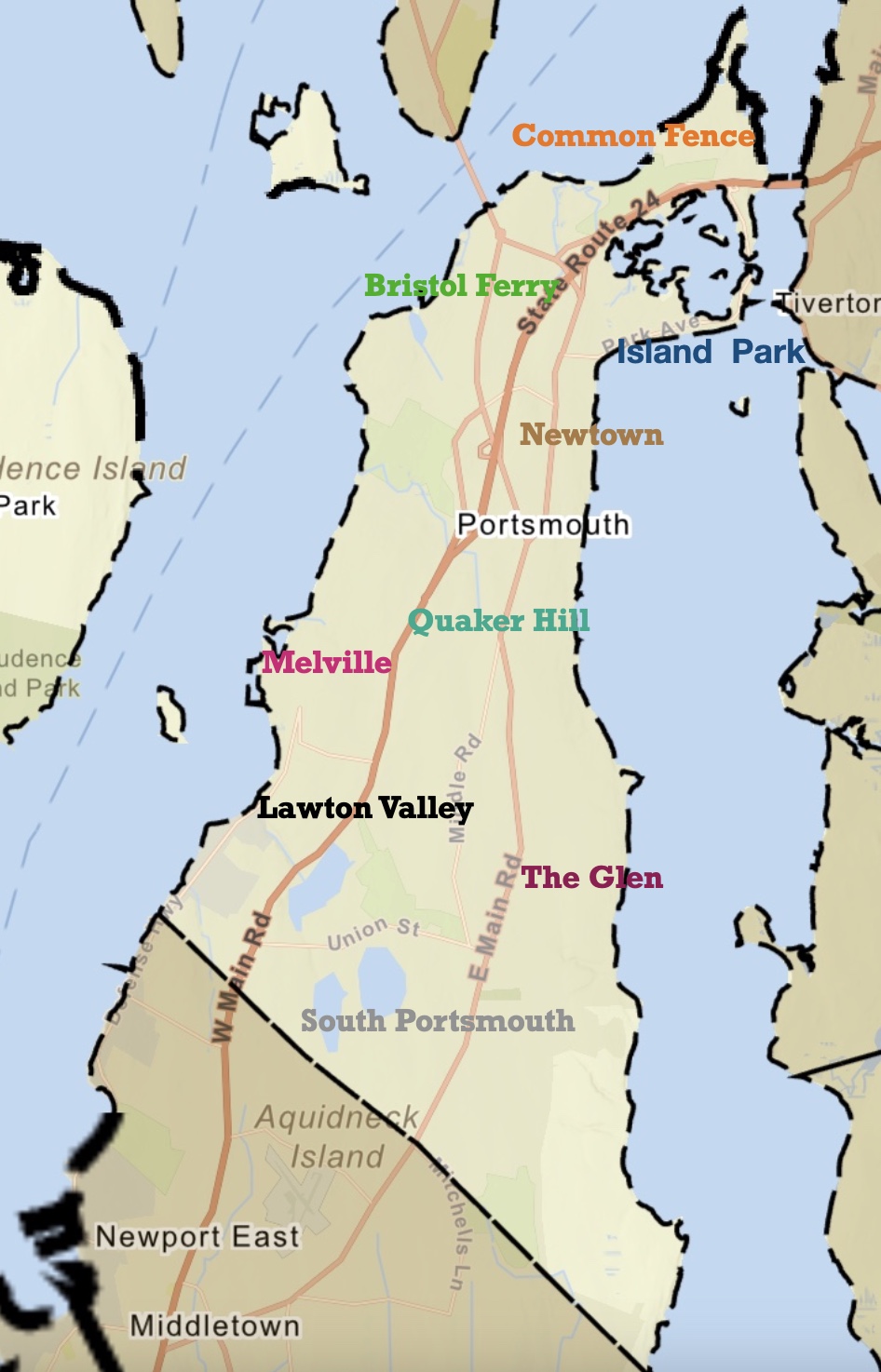
What’s the story of Portsmouth’s various neighborhoods? Over the winter I will be gradually exploring our communities. What history happened here? Who are people of note who lived here? What can you see of the past and what recreations can you enjoy today?

Portsmouth has never had a central “downtown” area like most communities. The original settlers tried to create a traditional town with residences clustered together and farm lots further away, but that is not what the settlers wanted.

Original settlements centered around Common Fence and Town Pond. They opted to live spread out on their farmlands. So Portsmouth developed neighborhoods instead of a central town.

Some of those neighborhoods centered around the ferry landings – Bristol Ferry Road and Glen Street heading to the Fogland Ferry.

The Glen area of Portsmouth featured the grand Taylor family Glen Farm.

South Portsmouth featured large “Gentlemen’s Farms.”

Quaker Hill and Middle Road took on importance as a central spot with Town Hall and the Quaker Meeting House.

The Melville area took on importance when the military claimed most of the Westside of town.

Lawton’s Valley – Wading River was the home of Julia Ward Howe and the site of the mysterious death of Rebecca Cornell.

Newtown was a planned central downtown, but it never seemed to reach its promise. The location along East Main Road, however, made it somewhat a commercial and social area with churches, the library and businesses.

Island Park was created as a summer resort and Park Avenue – on the way to the Stone Bridge and Ferry, was as close to a “downtown” as Portsmouth ever would experience.

“Saving the Blood of a Large Number of Brave Men”: A French description of Joint French and American War Games 1780

Leave a comment

In earlier blogs I wrote about a war game or “sham battle” described in the letter of an American doctor (John Goddard) to a colleague. This battle was on October 2, 1780, but there are also descriptions of later mock battles or skirmishes on October 8th and October 11th of 1780. Louis Bertrand Dupont d’Aubevouede Lauberdiere kept a Journal of his experience in the American Revolutionary War. Through the work of Norman Desmarais, we have an English translation – The French Campaigns in the American Revolution, 1780-1783: The Diary of Count of Lauberdiere, General Rochambeau’s Nephew and Aide-De-Camp.

We know through a brief Providence newspaper account that another “battle” occurred on October 8th. Lauberdiere described the battle as being “on the eighth.” In his diary he mentions yet a third of these war games on October 11th. There are some similarities of the mock battle descriptions in both the American and French accounts.

From Lauberdiere’s diary:

“May our comrades arrive soon and draw us out of the somber tranquility in which we live. The soldiers under canvas (tents) want to see the enemy, want to hear the cannon. In the absence of the British, Mr. De Rochambeau created some and, on the eighth he drilled the army on the point where the real enemy might land. We pretended that a fleet entered our harbor and planned a landing.” ( Road to Yorktown.” page 40-41).

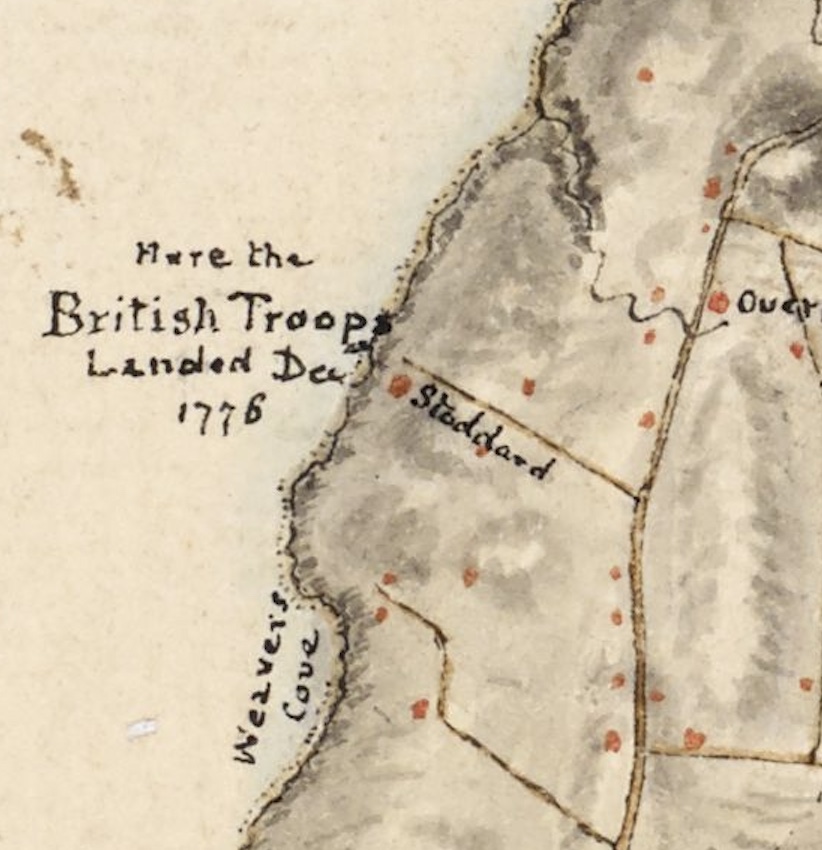
The British ships had been seen near Newport waters and the expectation was that they would invade. Rochambeau picked the location of the British invasion in 1776 as the site for the battle. The diary calls the location “Stauder’s House,” but the actual name was Stoddard. British maps label this location. close to the Middletown – Portsmouth border, as the landing site of the British.

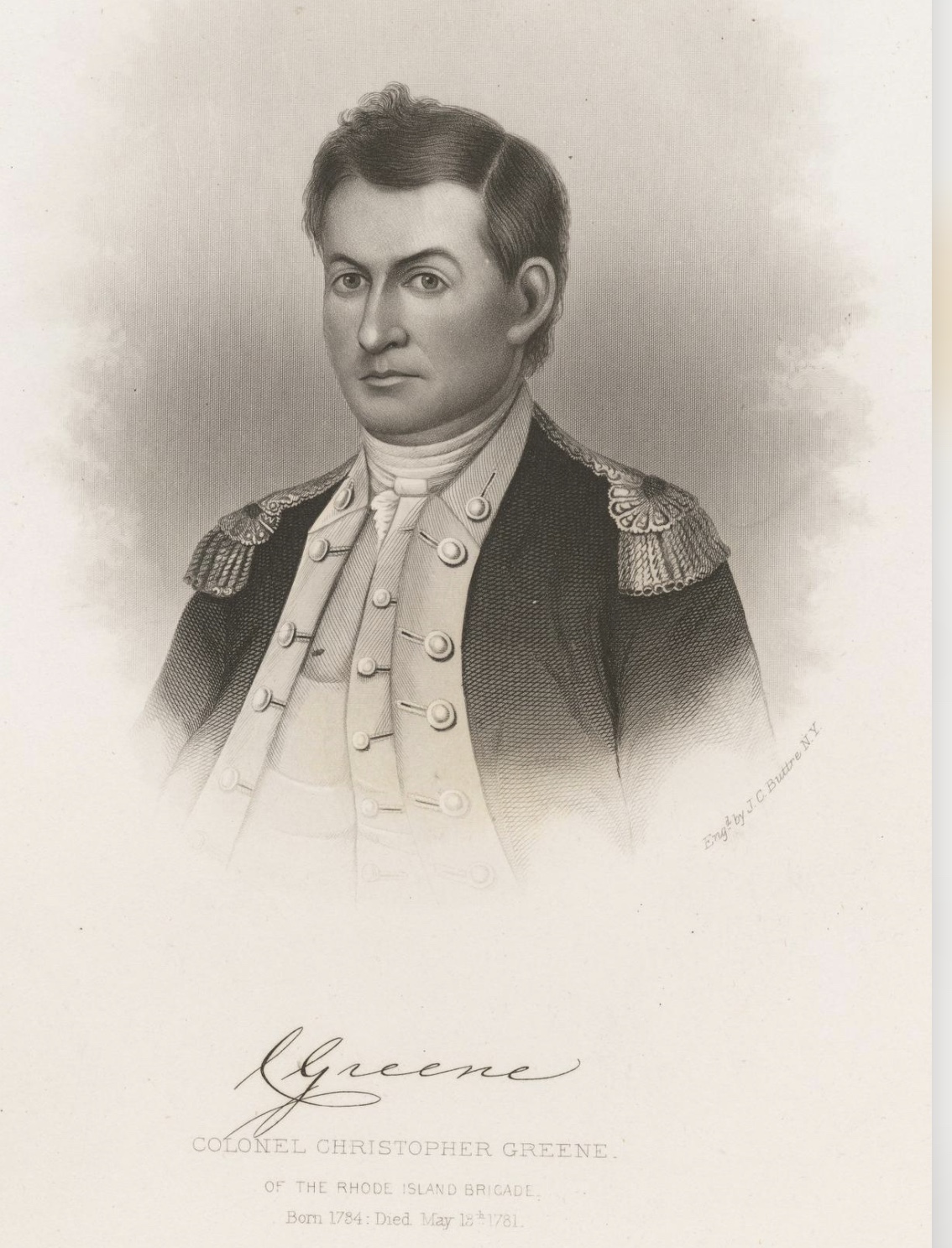
“We put 1500 men under the command of the Viscount de Viomenil who was at Stauder’s house. It was there that our enemies first began to take possession of a few houses along the shore. Mr. De Rochambeau kept the rest of the troops with him for the imminent attack to which he joined the American Rhode Island Regiment commanded by Co. (Christopher) Greene. These troops were divided into two column. Mr. De Rochambeau personally led the left column. The Baron de Viomenil commanded the right. The grenadiers and light infantry battalions formed a separate one.”

In Goddard’s account of the October 2nd mock battle, the American forces, the Rhode Island First Regiment (the Black Regiment), under Col. Christopher Greene, took part in the drill. The French Army did have drills between their own men and some of those may have been in the Third Beach area of Middletown. This drill on the eighth of October was also a drill of combined forces of the Americans and their French allies.

Col. Christopher Greene

“The attack began with several discharges of cannon, well-executed to create a complete effect of the fictitious enemy leaving their boats and forming quickly. At the same time, the column of grenadiers advanced to dislodge the enemy from the houses as they began to establish themselves there. During this musket fire, the Baron de Viomenil turned their right under the protection of a hill which concealed his movement. When he was ready and the attack was fully engaged, Mr. De Rochambeau had the charge sounded. Everything advanced in good order. The enemy disappeared and reassembled on the seashore.”

An Accident Happens: Lauberdiere’s diary:

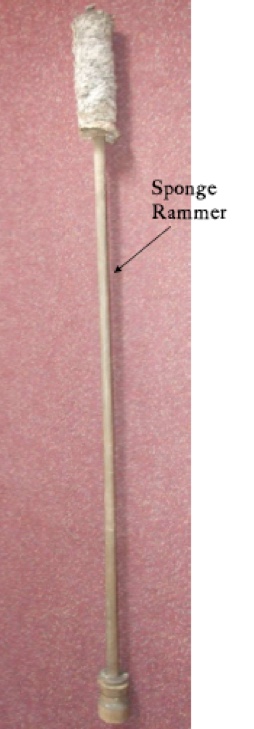
“An accident occurred during this drill. A cannoneer cleaning a piece lost an arm by the sponge. The one who was aiming it had neglected to cover the touchhole with his thumb. An ember remaining from the preceding shot ignited and the charge caught fire.”

During the Revolutionary War a sponge head was used to extinguish embers from the previous firing. The sponge was part of a sponge-rammer tool that pushed the round into the barrel. The sponge head was dipped in water and run down the barrel to quench any embers left over.

Lauberdiere continued:

“Other accidents might have also happened, always caused by the cannon. Many of our navy officers who wanted to witness this drill rented horses. They were usually poor horsemen and wanted to remove all doubt, as three or four were thrown on the ground with each cannon shot.”

It appears there was an audience for the October 8th battle as well as the one described in Goddard’s account of the one on October 2nd.

The diary goes on to describe another drill, this one on the 11th of October:

“Mr. The Count de Rochambeau had the same drill at the point of Stauder’s house on the 11th, just as on the eighth. It was not executed with enough precision or vivacity. It’s on when we are outside the lines and near the one giving orders that we can see the mistakes and know how important it is to have well-informed officers and experienced soldiers. The former understand the orders they receive more easily with experience. In the election, the latter are more prompt, often foresee the objectives and march with greater assurance.”

Lauberdiere’s diary gives an insight into the value of these drills.

“A skirmish is an image of a real battle when it is well conceived and it is also educational. The only real difference, I think, is saving the blood of a large number of brave men. Our general, then, could not make better use of the leisure time which the English gave or to which our small number reduced us, than to accustom his soldiers to the sound of the musket and the cannon to teach them to march without fear especially on the land where they would really fight if the enemy appeared.” (page 46)