Home

Plans for Musslebed Shoal Light

Leave a comment

The plans for the later Musselbed Shoal Lighthouse are part of the collection of the Portsmouth Historical Society. These are plans for the 1877 lighthouse. Ice floes moved the entire structure of the original lighthouse.    The stone pier was enlarged to protect the structure, but this house was also damaged by ice and hurricanes.  The fog bell was mounted on the roof.

Plans for the Musselbed Shoal Light in PHS collection

Bristol Ferry Landing

Leave a comment

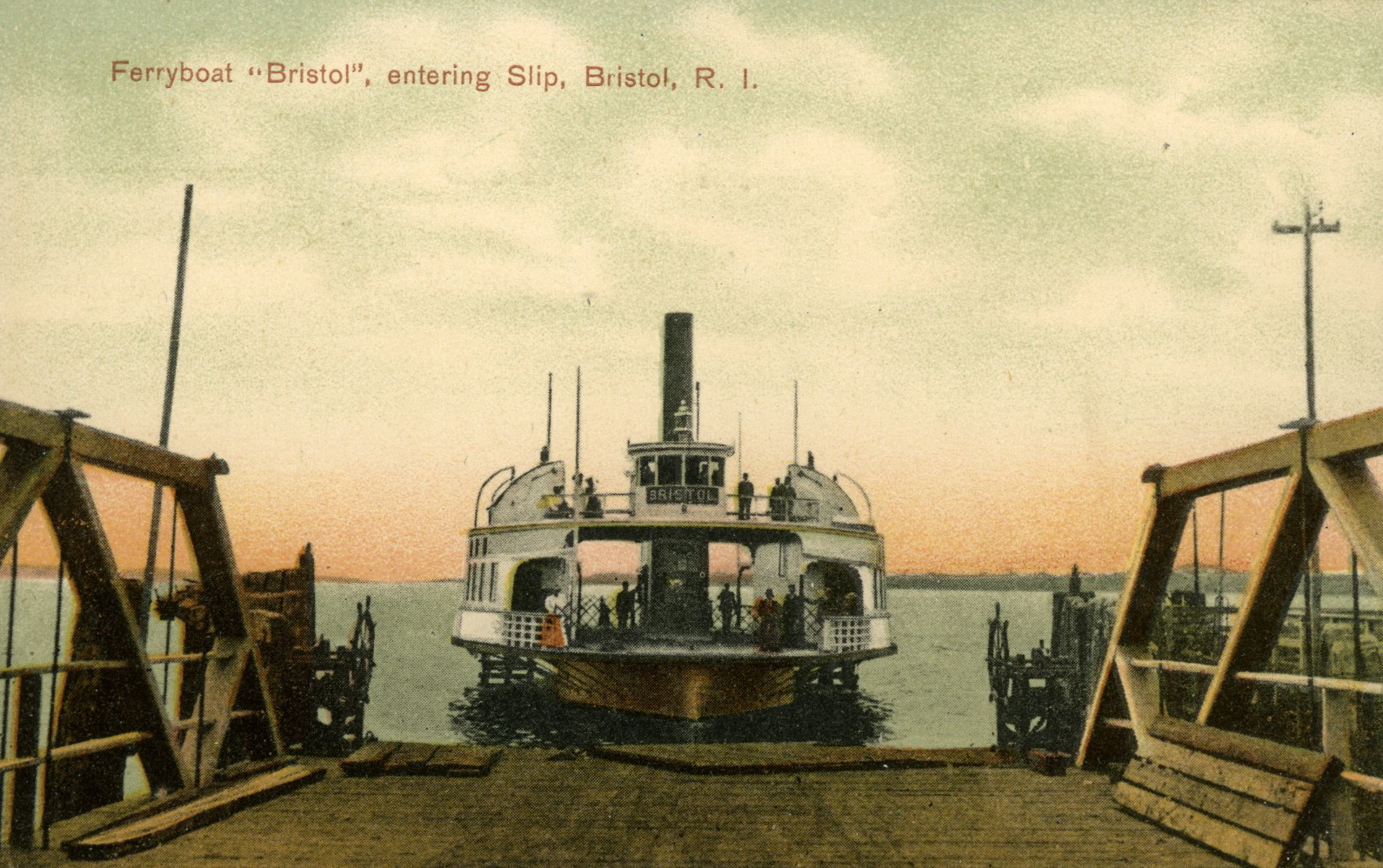
The Bristol Ferry Landing area was a transportation hub for Aquidneck Island travelers. (Image - G. Schmidt)

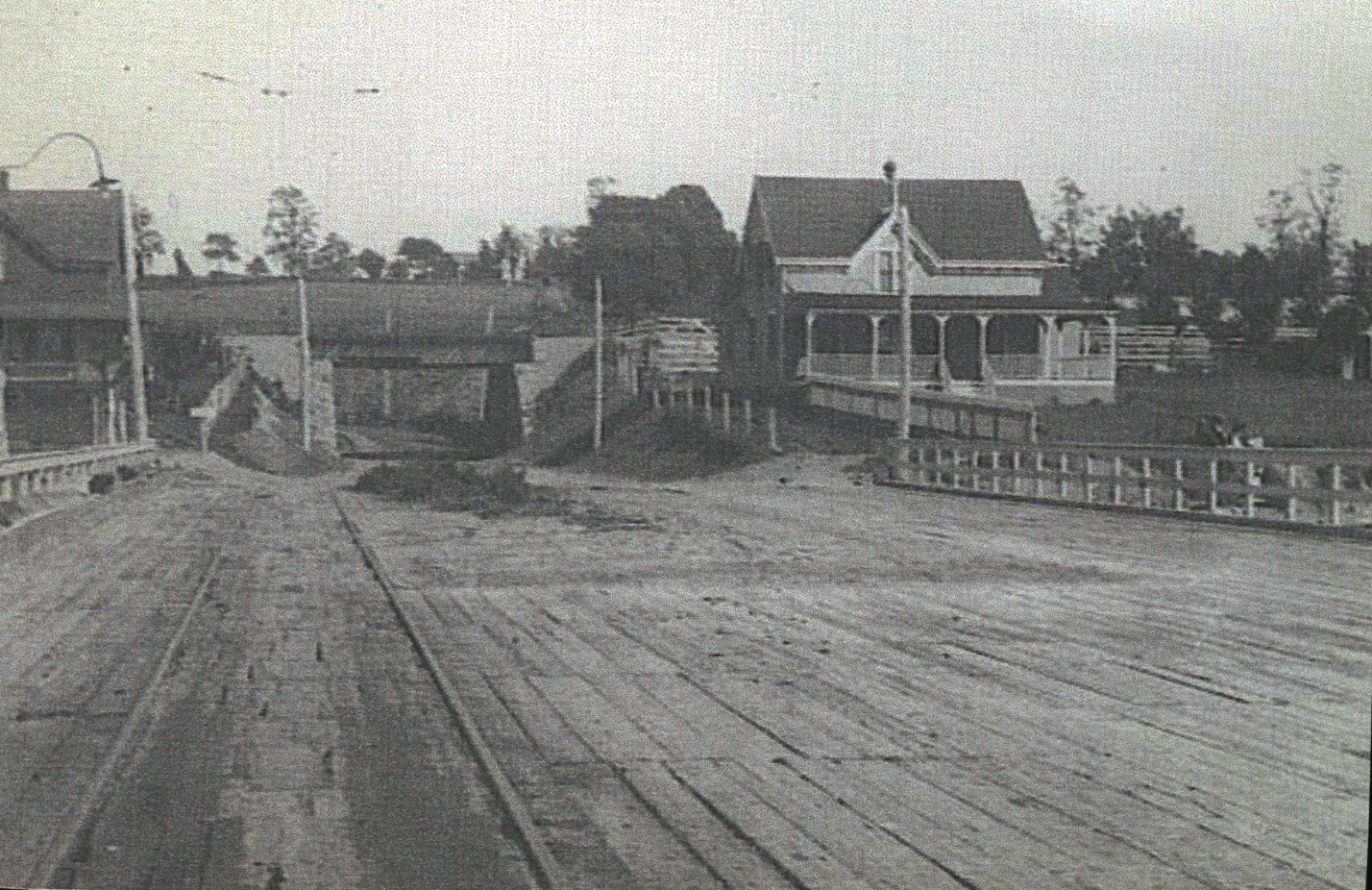
The Bristol Ferry area of Portsmouth was a transportation hub even in colonial times. It was a train station, a ferry landing, a loading dock for animals headed to market, a stage coach stop, a trolley car stop and a landing place for steam boats. To accommodate travelers, the village area at Bristol Ferry included places to eat and spend the night.

Bristol Ferry Town Common

Leave a comment

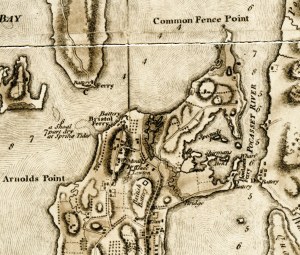
Blaskewitz Map of Bristol Ferry Area

During Revolutionary times there was an active community around the Bristol Ferry landing. Blaskowitz chart.

The way to Bristol Ferry became a bustling community with taverns and shops. By the old ferry landing is the Town Commons.  On March 12, 1714, the common is listed in a list of “Rhodes, Ways and Lanes in Portsmouth.” This document is available in town archives. Regarding the Bristol Ferry Common, it states that,

“… the piece of  land near Abel Trip house adjoining to the ferry against Bristol, is left for the conveniency (sic) of the Public in importing  and transporting of Cattel (sic), Sheep, Horses, wood, rails, etc. and is bounded on the bank against the salt water 12 rods, and against the land of John Earl & John Earl _____ twelve rods and against the land of  John Pool, John Tripp and Abel Tripp, that is, from the Earl ____ his corner to Thomas Borden’s Northeast corner aforesaid, is twenty rods and from Borden’s down to the lege (sic) of the bank next to the salt water is nineteen rods.”

Bristol Ferry

Leave a comment

Tripp, Borden and Gifford Ferries

The Bristol arrives at the ferry landing. (Image: G. Schmidt collection)

West Main Road in colonial times was known as the Path to Bristol Ferry.  Howland Ferry to Tiverton came first in 1640, once the ferry to Bristol was established, it became the primary way off the island to the mainland and Providence.  The ferries on the Portsmouth side were known as the Tripp’s Borden’s and Gifford’s ferries after the owners.  Early records show John Tripp was paid for ferrying the colony’s general assembly across to Bristol.  John’s son Abiel built a wharf around 1680.  In 1698 John Borden had a ferry operation alongside the Tripp ferry.  In 1766 Thomas Tripp sold his wharf and land to Joseph Borden (John’s brother) and after that the ferry was generally known as the Bristol Ferry.  In 1774  Joseph Borden sold the land, ferry house and ferry privileges to David Gifford. All ferries were discontinued during the British occupation of Aquidneck Island during the Revolutionary War.    Gifford’s sons, Gideon and Jeremiah, bought even more land to form “Ferry Farm” to care for the horses that were used to power the new type of ferries.  Horseboats were not all that practical at the Portsmouth ferry, so that ended in 1845.

Newer Entries