Home

Notables at the Battle: Rufus King, Constitution Signer, Senator

Leave a comment

Who fought at the Battle of Rhode Island? Many of those young soldiers went on to brilliant careers. Rufus King was one of them. His contributions to the new nation far outshine his efforts in the battle, but it is important for us to know and recognize those who fought here.

John Trumbull painting of King

It may be easy to find who the generals and commanders were, but I am interested in discovering who else was there. Old books can provide nuggets of information for an historian and I have found interesting accounts in “Our French Allies” by Stone. This blog is actually a continuation of a first hand account of the battle by John Trumbull which was quoted in the French Allies book and featured in my last blog.

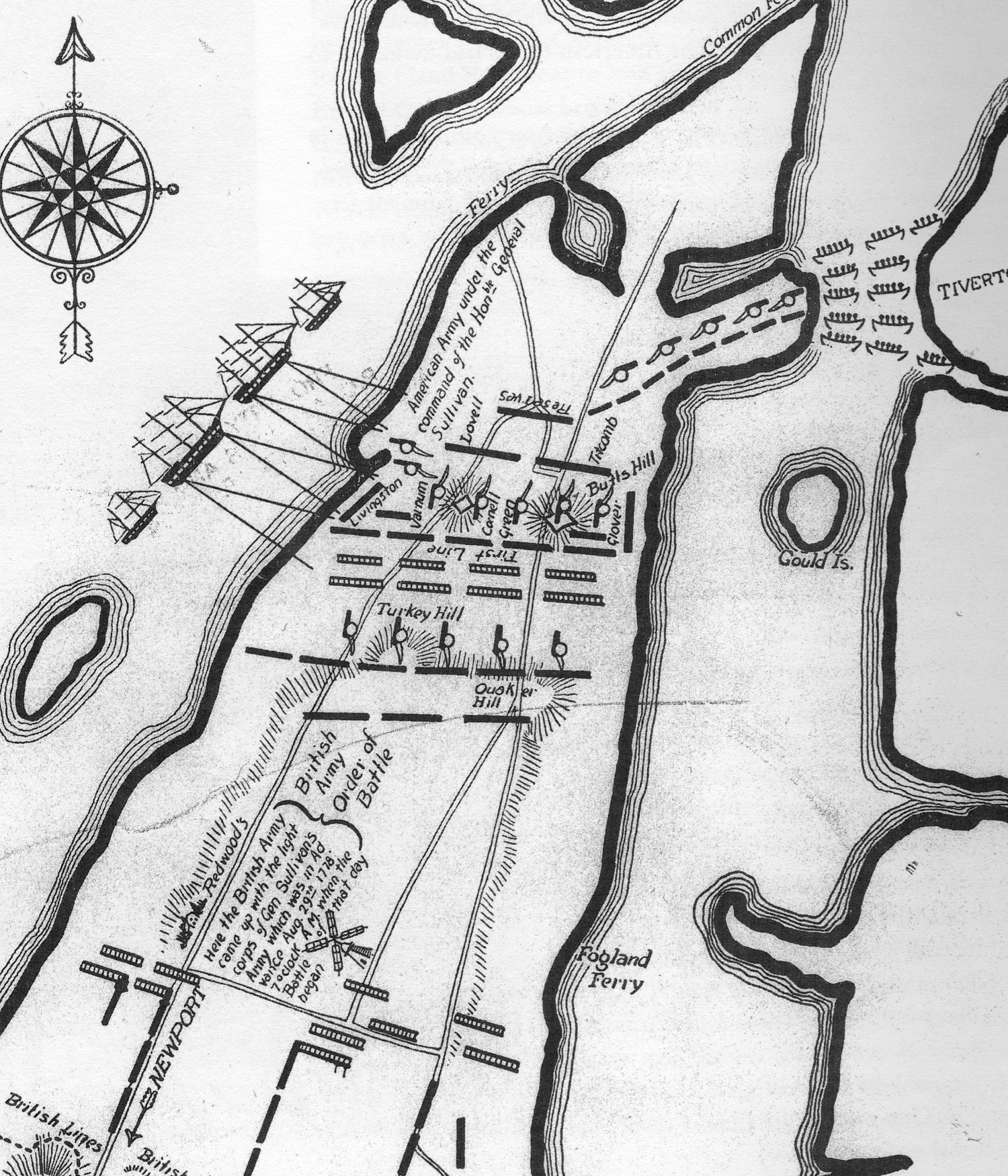
“Mr. Rufus King was acting that day as a volunteer aid de camp to General Glover, whose quarters were in a house at the foot and east of Quaker Hill, distant from the contested positions the rear guard a long mile. The general and the officers who composed his family were seated at breakfast, their horses standing saddled at the door. The firing on the height of the hill became heavy and incessant, when the General directed Mr. King to mount, and see what and where the firing was. He quitted the table, Sherburne took his chair, and was hardly seated, when a spent cannon ball from the scene of action, bounded in at the open window, fell upon the floor, rolled to its destination, the ankle of Sherburne, and crushed all the bones of his foot. Surely there is a providence which controls the events of human life, and which withdrew Mr. King from this misfortune.”

King didn’t leave much in the way of an account of his time on Rhode Island (Aquidneck). “I enjoyed fine health upon the Island and the scene was not disagreeable to me…I saw and experienced enough to satisfy my curiosity.”*

King did not have aspirations as a soldier. He came to the battle from a different place than many of the soldiers. He was born in Scarboro, then in Massachusetts – now in Maine, where the King family was accused of Loyalist sympathies. He went to Harvard and studied law and while in Boston he became part of a club that would become the Federalist Society. King considered himself a New Englander and he enlisted in 1778 in defense of New England. At that time Massachusetts mobilized its militia for Major General Sullivan. King volunteered along with others from his Boston Club. King received a commission as a major of infantry and was appointed as an aide to Brigadier General Glover of Marblehead. With Sullivan’s forces gathered at Tiverton, King and Glover’s men crossed to the island to join other militia and continental units to construct redoubts and siege lines. King’s Boston friends, John Hancock and Paul Revere, left the island when it seemed the French fleet would not return. Rufus King remained on duty. When Sullivan had to withdraw, Glover’s brigade covered the withdrawal and King narrowly escaped death.

After the Battle of Rhode Island, King returned to law practice in Massachusetts. He served in the State legislature, and as delegate to the Continental Congress from his state. After the war, when confidence in the Articles of Confederation was low, he joined other delegates as representatives to the Constitutional Convention. He was Instrumental in the call for a Bill of Rights and was one of the signers of the Constitution. In 1789 King moved to New York and a few years later became a senator from that state. He went on to a diplomatic career and in 1796 began his long assignment as ambassador to Great Britain under three presidents.

  • King Correspondence Volume I. Edited by Charles King and quoted in Ernst’s biography of Rufus King.

Notables at the Battle of Rhode Island: John Trumbull, Patriotic Painter

Leave a comment

Who fought in the Battle of Rhode Island? As I research for the upcoming website for the Battle of Rhode Island Association, I keep coming across some interesting individuals who took part in that battle. Many of the soldiers went on to very promising careers, but I did not expect to find a prominent artist among them. I came across an eyewitness account of the battle written by John Trumbull. When I searched for information on him, I found that he was an artist noted for portraits and depictions of leaders and events in the American Revolution. I had read about him in the past, but I did not think he had a local connections.

Born in 1756 in Lebanon, Connecticut, John Trumbull graduated from Harvard College in 1773. He served with the Connecticut First Regiment in the early months of the revolution. Many of the biographical materials I read had him resigning from that regiment and going on to England to study painting. How could he write about the Battle of Rhode Island if he wasn’t there? Further research gave me an answer. In 1778 he became an aide-de-camp to General John Sullivan in Rhode Island.

Portrait of Trumbull by Frothingham in Brown University Collection

This is a portion from “Reminiscences of his own Times” by John Trumbull that describes events on August 29th, 1778. My notes are in bold italics.

“Soon after daybreak the next morning, the rear-guard, commanded by that excellent officer, Colonel Wigglesworth, was attacked on Quaker, otherwise called Windmill Hill {actually it was Butts Hill that was called Windmill Hill} and General Sullivan, wishing to avoid a serious action on that ground, sent me with orders to commanding officer to withdraw the guard. In performing this duty I had to mount the hill {Quaker Hill} by a broad smooth road {East Main}, more than a mile in length from the foot to the summit, which was the scene of conflict, which, though an easy ascent, was yet too steep for a trot or a gallop. It was necessary to ride at a leisurely pace, for I saw before me a hard day’s work for my horse, and was unwilling to fatigue him.

Nothing can be more trying to the nerves, than to advance deliberatively and alone into danger. At first I saw a round shot or two drop near me, and pass bounding on. I met poor Colonel Tousard, who had just lost one arm, blown off by the discharge of a field piece, for the possession of which there was an ardent struggle. He was led off by a small party. Soon after, I saw Captain Walker, of H. Jackson’s regiment, who had received a musket ball through his body, mounted behind a person on horseback. He bid me a melancholy farewell, and died before night. Next, grape shot began to sprinkle around me, and soon after musket balls fell in my path like hailstones. This was not to be borne. I spurred on my horse to the summit of the hill, and found myself in the midst of the melee. ‘Don’t say a word, Trumbull;’ cried the gallant commander, ‘I know your errand, but don’t speak; we will beat them in a moment.’

‘Col. Wigglesworth, do you see those troops crossing obliquely from the west road towards your rear?’

‘Yes, they are Americans, coming to our support.’

‘No sir, those are Germans; mark, their dress is blue and yellow, not buff; they are moving to fell late your rear, and intercept your retreat. Retreat instantly — don’t lose a moment, or you will be cut off.’

The gallant man obeyed, reluctantly, and withdrew the guard in fine style, slowly, but safely.”

Trumbull’s Reminiscences quote in Our French Allies: https://www.google.com/books/edition/Our_French_Allies/YY8LAAAAIAAJ?hl=en

Portsmouth Women: Enduring a “Distressed Situation”

Leave a comment

As the memorial stone at Butts Hill Fort reads, it is important for us to honor the “memory of those brave men who” fought in the Battle of Rhode Island”. It is also important for us to remember the Portsmouth women and their families who endured almost three years of British Occupation from December of 1776 to October of 1779. When the Portsmouth Town Council was able to meet again in 1779, the members pleaded with the state to have pity on us because the town was in a “Distressed Situation.” As I research this Revolutionary Era in Portsmouth history, the plight of Portsmouth women and their families was indeed disstressed.

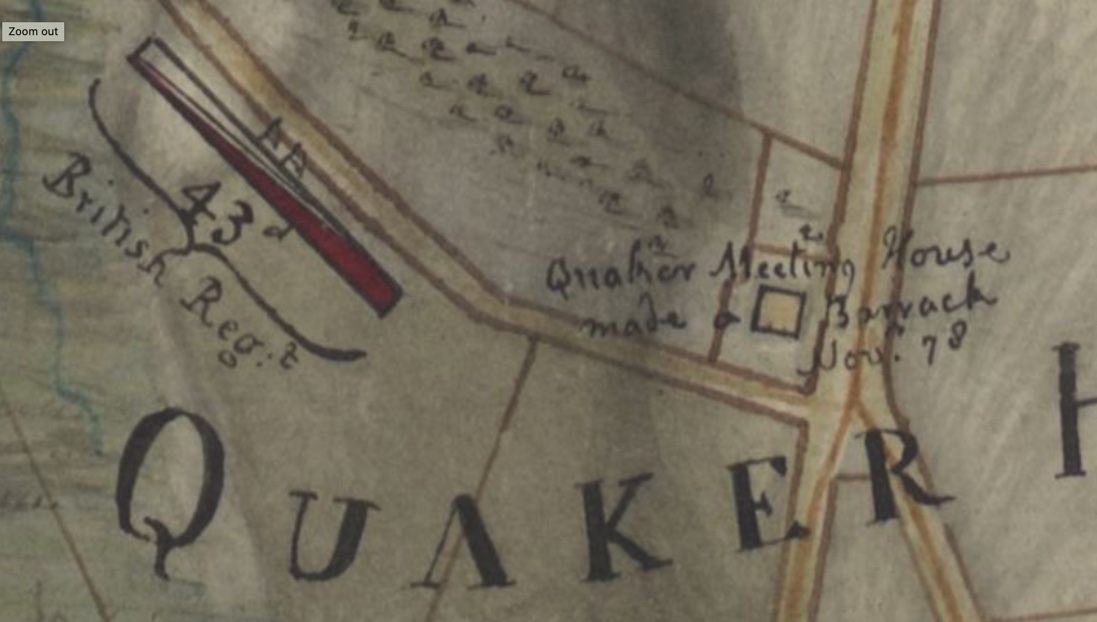
What was Portsmouth like when the British came? The diary of British soldier Frederick Mackenzie provides a rosy picture. “There is a hill about 7 miles from Newport, and on the Eastern side of this Island called Quaker Hill, from there being a Quaker meeting-house on it, from whence there is a very fine view of all the N. part of the Island, and the beautiful bays and inlets, with the distant view of towns, farms, and cultivated lands intermixed with woods, together with the many views of the adjacent waters, contribute to make this, even at this bleak season of the year, the finest, most diversified, and extensive prospect I have seen in America.” This fine prospect did not last long under British military control. Much has been written about Occupied Newport, but the situation in Portsmouth had its own set of troubles. At times citizens were allowed to leave the island, but if you were a Portsmouth farm family you stayed to work and protect your farm. There were many Loyalists in the commercial port of Newport, but the majority of families in Portsmouth leaned towards the Rebel side. Only about ten percent of Portsmouth citizens left the island.

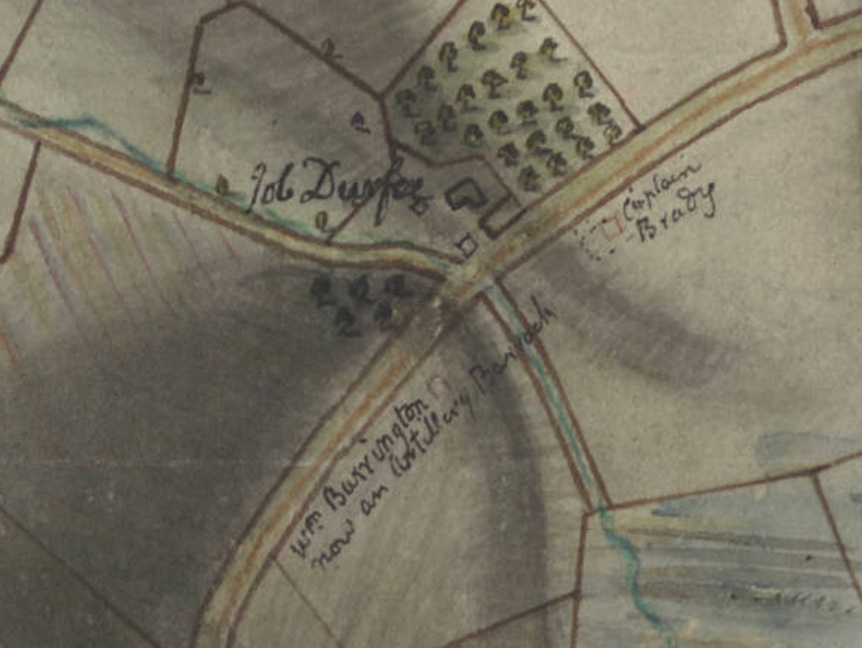
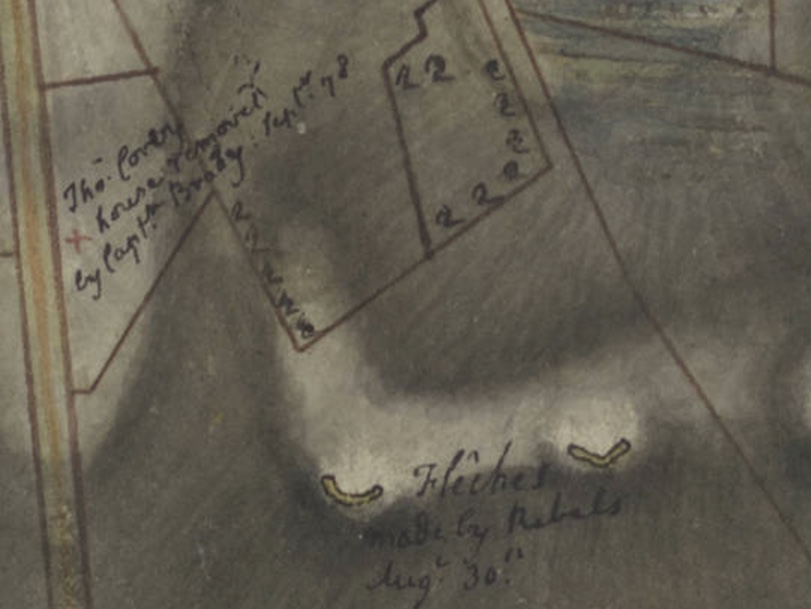
What happened to Portsmouth women and their families when the British arrived? British maps from the Revolutionary Era give us some idea.

  1. Some families lost their homes. For example, the British fortified Bristol Ferry and they tore down homes that blocked their vision of the ferry landing. Some houses were taken over as barracks for troops or as housing for officers and generals.
  2. Almost all families lost their trees and orchards. As time went by just about every tree on the island was cut down for firewood. The families were left in the cold while the British warmed their troops.
  3. Farm families lost their livestock. There were many soldiers to be fed. Mackenzie’s diary says the British left families with a means of feeding themselves. They could keep one gun to hunt birds and they could keep a boat for fishing.
  4. The British took just about every wagon and wooden farm tool. Wooden vehicles were used by the British for carrying loads, and almost anything wooden was burned for fuel.
  5. Women assumed greater responsibility to care for their families. With the exception of Quaker families, almost all Portsmouth men served some time in the American cause. Even those who were on the island during the Occupation were impressed into service by the British to work on fortifications on Butts Hill and elsewhere.
  6. When the British left the island they filled in just about every well – the source of water for families.
At the withdrawal of British troops in 1779, Portsmouth farm families had a difficult time getting their farms back into operation. Families listed their losses in hopes of getting some reparations. One of these lists is in the collection of the Portsmouth Historical Society. It gives us an idea of how devastating the household losses were. This list shows the losses of Edward Binney and Elizabeth Heffernan – in-laws who lived in a joint household just north of the Friends Meeting House on Quaker Hill.

Among the losses:

Livestock: 2 cows, one calf, 5 hogs, 12 goats, 1 jackass

5 acres of orchards, a cider press and mill, 4 acres of corn, 12 loads of hay,

Farm tools: An ox-cart, 3 hoes, forks, 2 spades

Household goods: desks, beds, drawers, wood cards, kettles, pots, gowns, tablecloths, etc.

It is clear that we should honor the brave Portsmouth women who cared for their families under such difficult circumstances.

Fortified Jamestown: Conanicut Battery and Dumplings

Leave a comment

Conanicut Battery

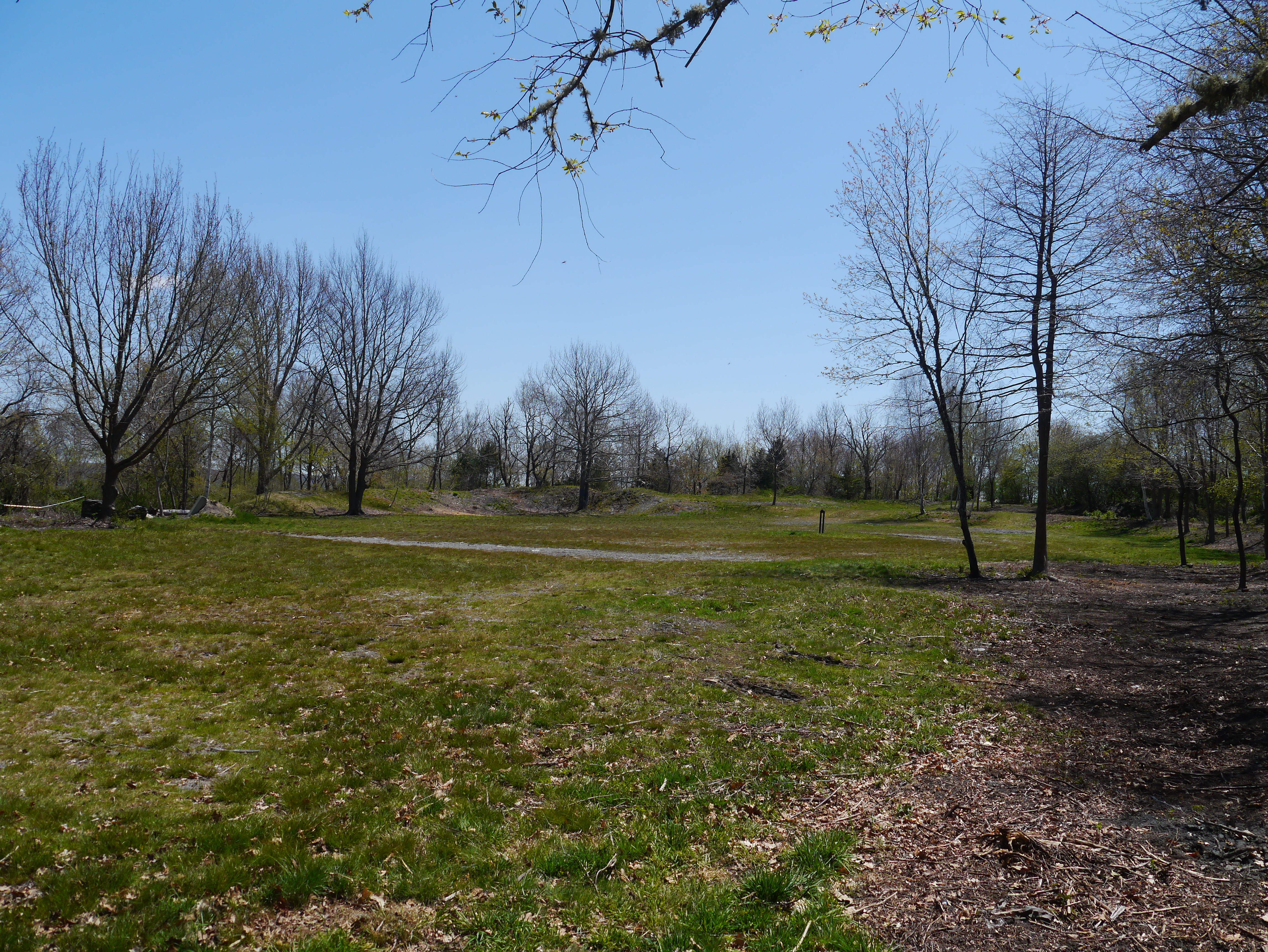
The Conanicut Battery is a Revolutionary Era fortification that can be seen today on the West side of Beavertail on Jamestown. In preparation of war, the Rhode Island General Assembly ordered the building of the Conanicut Battery in 1776. Originally a crescent-shaped earthwork, it was designed for six to eight heavy cannon and soldiers. When the British invaded Aquidneck Island they also captured Jamestown (Conanicut Island) and held it (basically) from December 1776 to October 1779.

Image by Seth Chiaro

In his diary entry for December 7, 1776, Frederick Mackenzie writes: “…at 12 made the Light House on the S. point of Connonicut Island at the entrance of Rhode Island harbour….and about 1 o’clock that ship (The Experiment with Capt. Wallace) took the lead, and stood up the Western Channel between Connonicut, and the Main(land)… About 2 miles from the Light House, Rebels had a Battery or Redoubt with 4 Embrazures towards the Channel, But it appeared to be abandoned.”

The British remade the fortification into the shape you can see today with ditches surrounding on all sides. The fort held heavy cannon to defend the West Passage. French forces coming to the aid of the Patriots manned the Conanicut Battery in 1780 and 1781.

The Dumplings

Maps show a battery located close to the Dumplings Rock formation. High on cliffs 50-70 feet in height, this battery would have guarded Newport Harbor. It was abandoned when the British fleet entered Newport Harbor December 8, 1776. During the British Occupation (1776-1779) both British and German/Hessian soldiers occupied and enlarged the earthworks. Hessian troops abandoned the site on July 29th, 1778 when d’Estaing’s French fleet came into the harbor to aid the Americans. When the British fleet appeared, the French withdrew their troops.

References:

On the Dumplings: https://www.hmdb.org/m.asp?m=189618

Rhode Tour on Conanicut Battery: https://rhodetour.org/items/show/51


Cook Wilcox: The Glen, Coal Mines and Revolutionary War

Leave a comment

Cook Wilcox (1752-1830) is a name I have come across many times in the 30 years I have been researching Portsmouth history. I first came across his name when I was doing research on the Leonard Brown House. The Seveney Athletic fields are what we see today as we walk down Linden Lane were once the farm of Cook Wilcox, a descendent of Thomas Cook.  The Cook (Cooke) family were among Portsmouth’s earliest families and their land grants ranged from East Main Road to the Sakonnet and from Glen Road to Sandy Point, an area that has been traditionally called “The Glen.” The men of the Cook family migrated to their holdings in Tiverton, so the women of the family brought the Glen area property into their families as they married. Cook Wilcox was named after his mother’s side of the family. When Cook Wilcox died in 1830, the farm was left for his wife Mary (Perry) use until her death. The land was passed down to Cook and Mary’s daughter, Sarah, who married farmer Leonard Brown. The widow Mary must have lived with Sarah and Leonard and by 1850 the Wilcox home was removed from its location on East Main Road. Leonard and Sarah built their home further up what we call Linden Lane.

The next time I came across the name of “Cook Wilcox’ (or Cooke Wilcocks as it is sometimes found), I was working on a project with Revolutionary Era documents for the Portsmouth Historical Society. In 1774 Rhode Islanders were among those objecting to British taxes and they often avoided following British laws. During the summer of 1774 the British blocked Narragansett Bay. Two hundred and fifty British troops attacked Prudence Island and drove off the local soldiers. The Rhode Island General Assembly set amounts for what each community should supply to defend against the British. In the beginning stages of the Revolutionary War, the assembly organized branches of “minutemen” or citizen soldiers for the towns. In August of 1775 the leaders of the Portsmouth defenders were John Earl (captain), James Peckham (lieutenant) and Cook Wilcox (ensign). The Citizen soldiers would be provided by the colony with heavy guns on carriages.  Documents from the collection of the Portsmouth Historical Society show that in 1776 the General Assembly ordered Portsmouth and other towns to raise a fourteen member “artillery company” which will “March out to Action” when needed.

A few years ago I was doing research on the Coal Mines area of Portsmouth for a play I was writing for the Portsmouth Community Theater. I came across the name of Cook Wilcox again. Coal was discovered on his land in 1808. This parcel of land was on the West side of Portsmouth off of Bristol Ferry Road and would have been close to the Wilcox family lands.

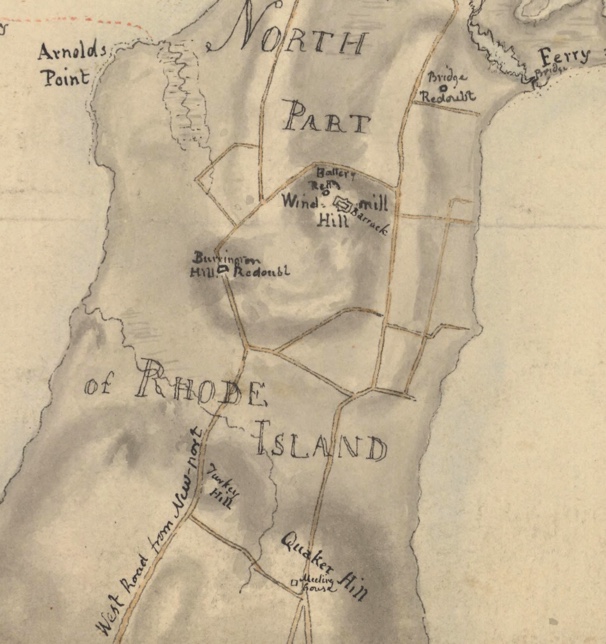
As I recently analyzed the North Portsmouth map from the Huntington Library, (a British map from 1778 describing action in the Battle of Rhode Island), the Wilcox name came up again. The Wilcox “house burnt by some fire from the Lark Frigate when she blew up August 1778.” As the French fleet was arriving in late July of 1778, the British ordered that their ships would be destroyed rather than be taken by the enemy. The frigates Lark, Cerberus, Orpheus and the Juno were no match for the French ships coming in. The Lark’s Captain Smith ran his ship aground and set her on fire. The Lark’s 76 barrels of gunpowder exploded and ignited the Wilcox home (probably belonging to Cook’s father, John Wilcox). Flaming debris landed as far away as three miles.

Cook Wilcox and his family (ancestors and descendants) are part of the fabric of Portsmouth History.

Wilcox grave at Union Cemetery

Fortified Newport: Patriot Port Defenses at Brenton Point and Goat Island

Leave a comment

As early as 1700 there was a fort located at Goat Island. Royal officials deemed Newport an important port to defend. The Goat Island fort was originally named “Fort Anne.” It would later be called “Fort George,” “Fort Liberty” and then “Fort Washington.” In his “Revolutionary Defenses in Rhode Island,” Edward Field states that it was the only fort in the colony at the start of the War for Independence. Men were not permanently stationed there, but it was well supplied and had fifty guns mounted. Those guns were shifted to Providence, but in 1776 it was furnished with twenty-five guns, 18 and 24 pounders and fifty men manned it.

On April 29, 1776 a town meeting was held in Newport “to enter, at once into the defense of the town.” A large group of Newport citizens erected fortifications at Brenton Point where Fort Adams is today. Townspeople were ordered to work on the defenses and were fined if they did not. Newport citizens also worked on the “North Battery” on Washington Street.

When the British occupied Aquidneck Island in December of 1776, it appears that they used the defenses at Brenton Point and Goat Island. British soldier Frederick Mackenzie wrote in his diary on May 19, 1778:

“As there appears a great probability of the Rebels receiving assistance from the French, and affairs may have undergone a great change since the date of our last accounts from England, I think it would be prudent to mount some heavy Cannon in the Battery at Brenton’s point, and on Goat Island. The entrance of the harbour is at present totally undefended, and a few guns at those places may be of great service.”

References:

Field, Edward. Revolutionary Defenses in Rhode Island

Fage Map, Clinton Collection – Clement Library

History of Fort Adams: https://fortadams.org/discover-the-fortress/fort-adams-history/full-history/

Frederick Mackenzie Diary

Portsmouth Women: Edith Taylor Nicholson and the Portsmouth Free Public Library

Leave a comment

Most people associate Edith Taylor Nicholson with her Glen Farm and Glen Manor House, but she was a major benefactor to a Portsmouth institution. The Portsmouth Free Public Library was one of those places where you can see her good works. Ernest Dennome in his history of the library gives us an idea of her generosity.

“A cultured lady of kind concern for her adopted Community Portsmouth, Mrs. Nicholson was a splendid volunteer worker and an outstanding Red Cross Chairwoman during War War II. She was extremely generous with her huge personal fortune and spent her active senior years in Portsmouth on her 1000 acre estate, Glen Manor and Farm.”

rEdith Taylor Nicholson as Red Cross Chairman.

By the 1940s the library was collecting more juvenile books. This was a point in time when the publication of good books for beginning readers was growing. The Millers (Clara May Miller and her family) donated a special fund to buy children books. Edith and other donors like Clara Anthony, Pauline Weaver and Sue Brady, donated to the collection. By 1952 the board of directors of the library decided to make the Art Room (which had been donated by Sarah Eddy) into a Children’s Room. Edith had made some donations to the library in the 1930s. When the needs of the library were made known to her in the 1950s, she was prepared to make a donation of $5,000 for repairs to make the Children’s Room functional.

Edith made a bequest of $25,000 to the library and with matching state funds the library constructed the North wing. The Wing was dedicated as a memorial to Edith after her death in 1959.

When you visit the North Wing today to browse for a good book, think of Edith Taylor Nicholson and others who have made donations that make the Portsmouth Free Public Library the heart of the Portsmouth community today.

On the Map : Siege of Newport and Battle of Rhode Island

Leave a comment

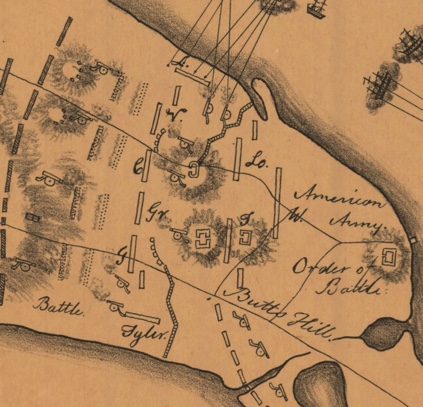
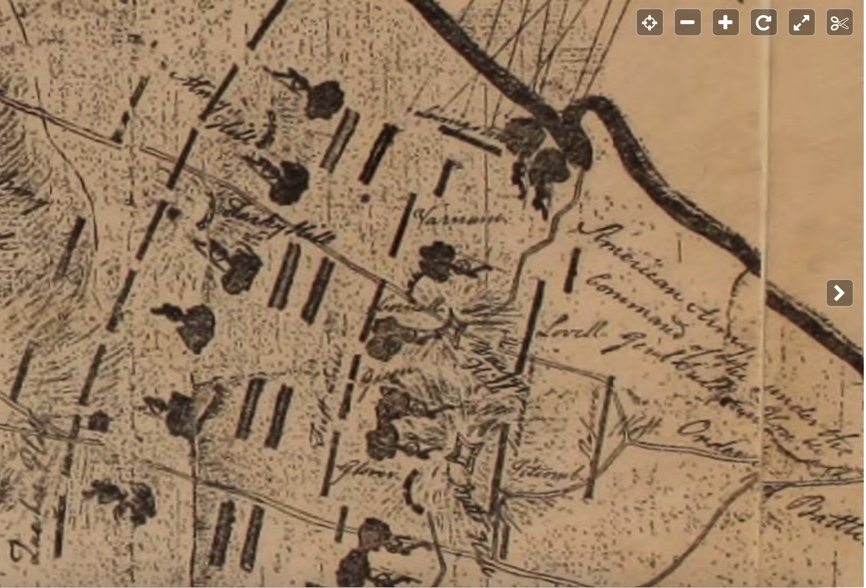
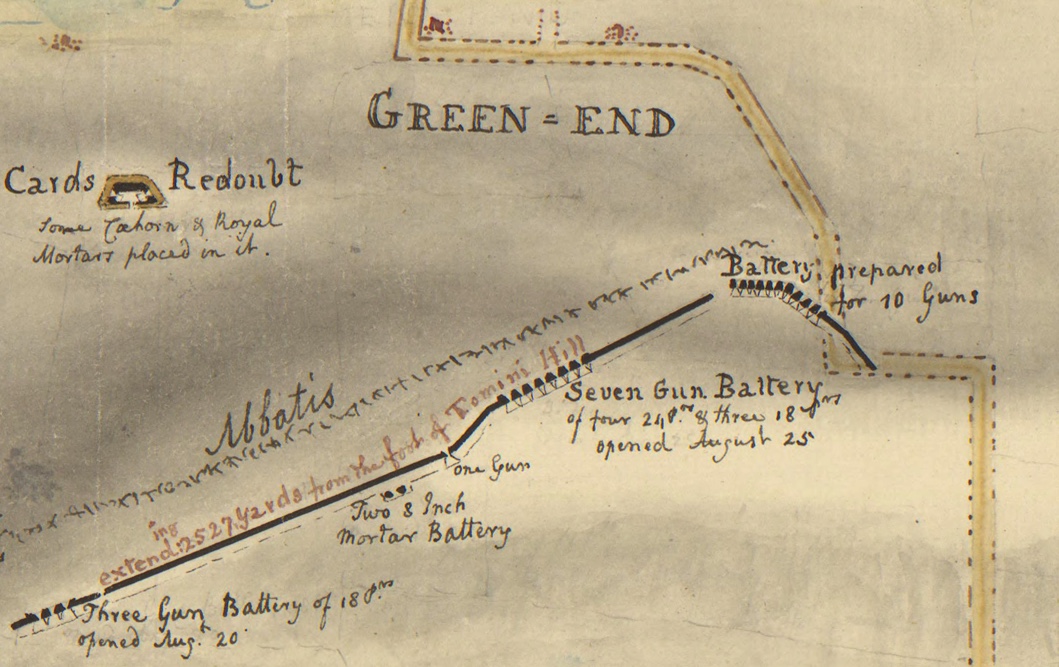
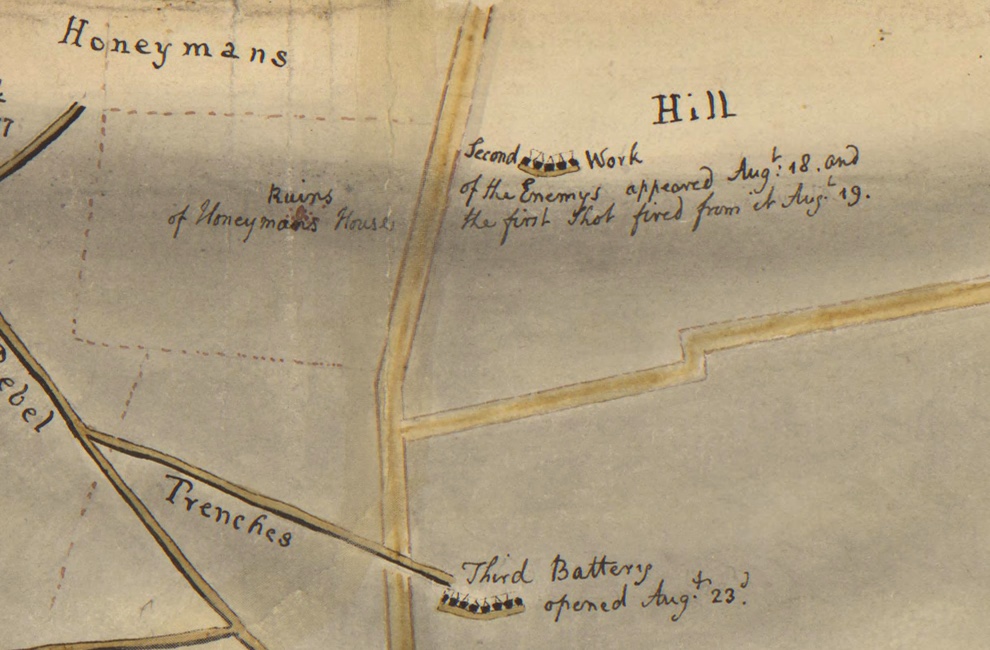
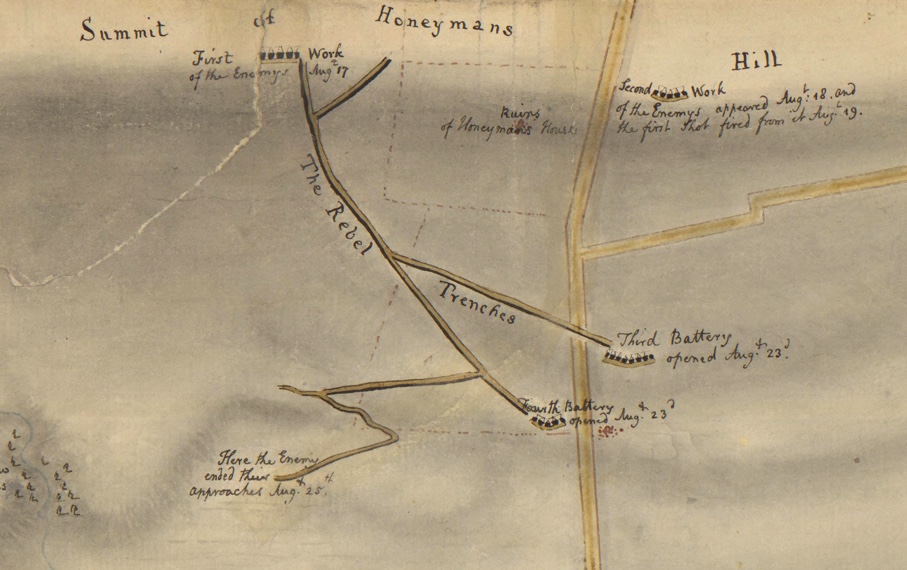
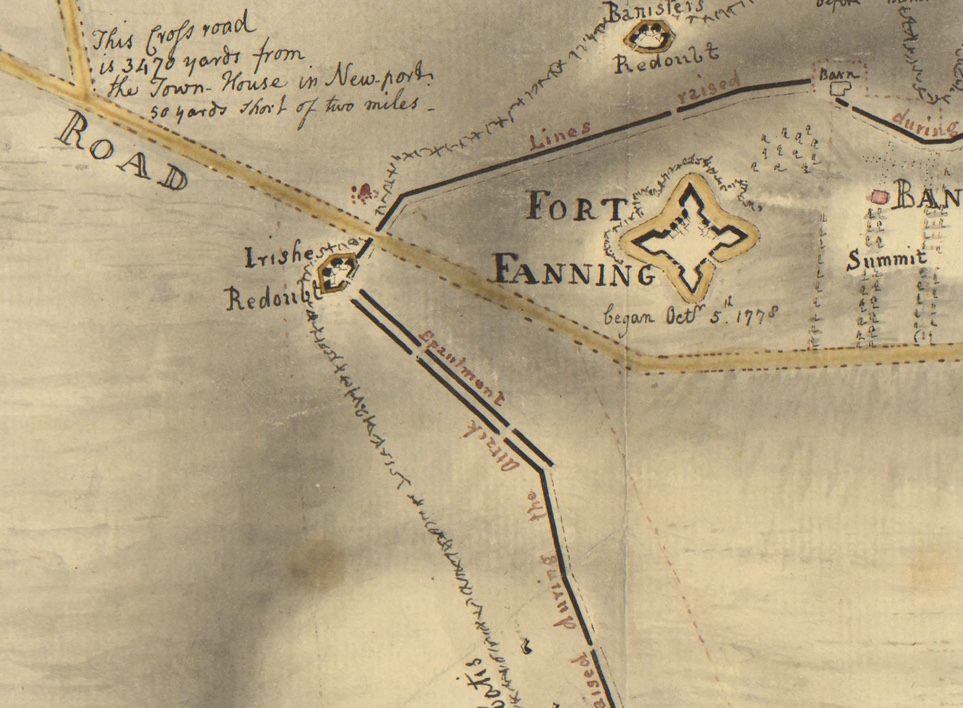
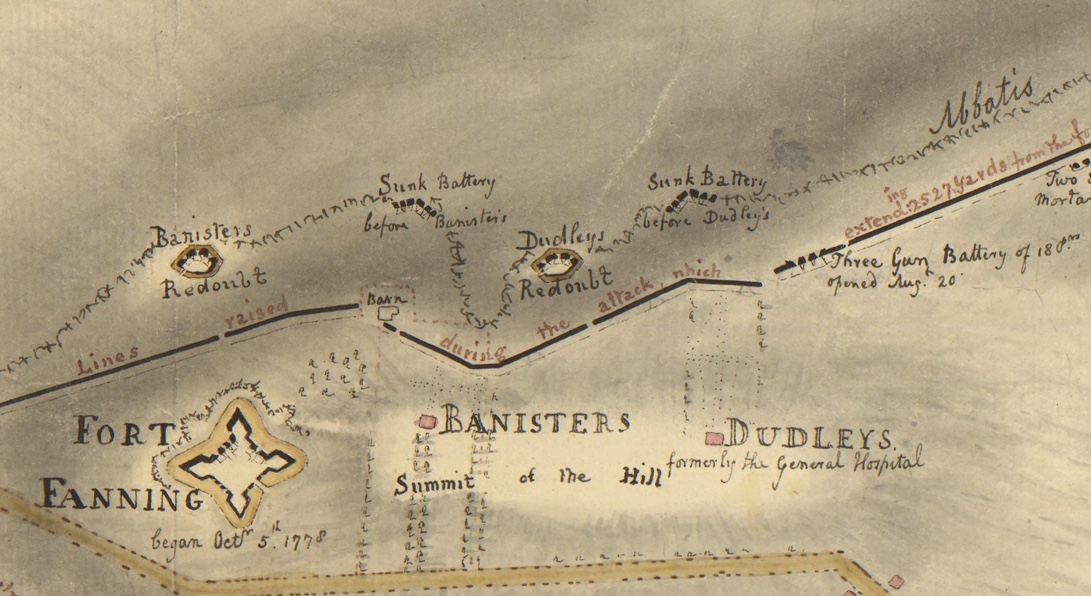
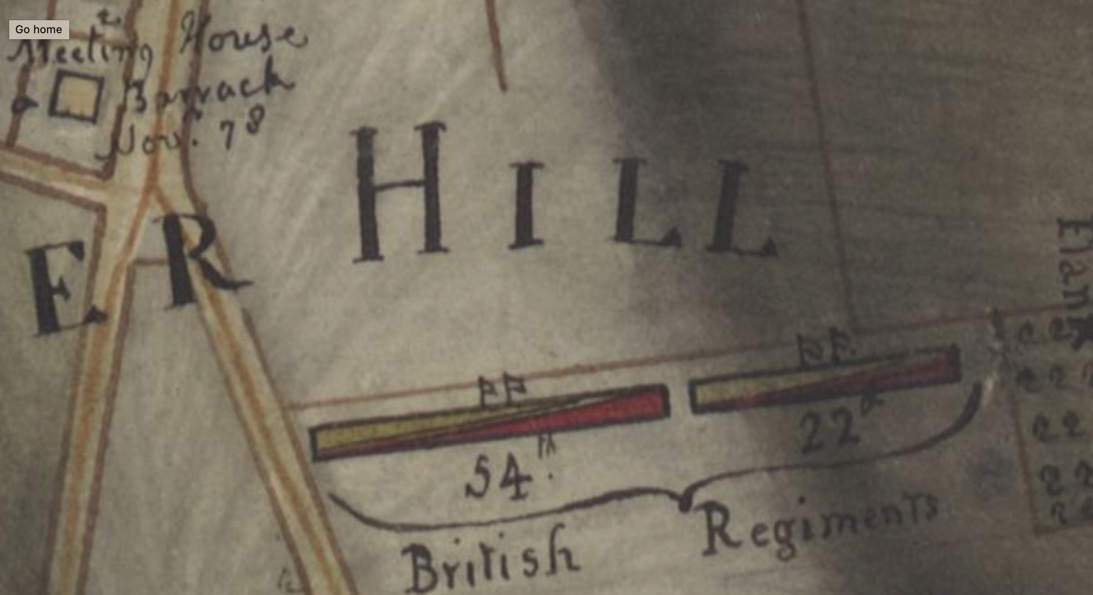
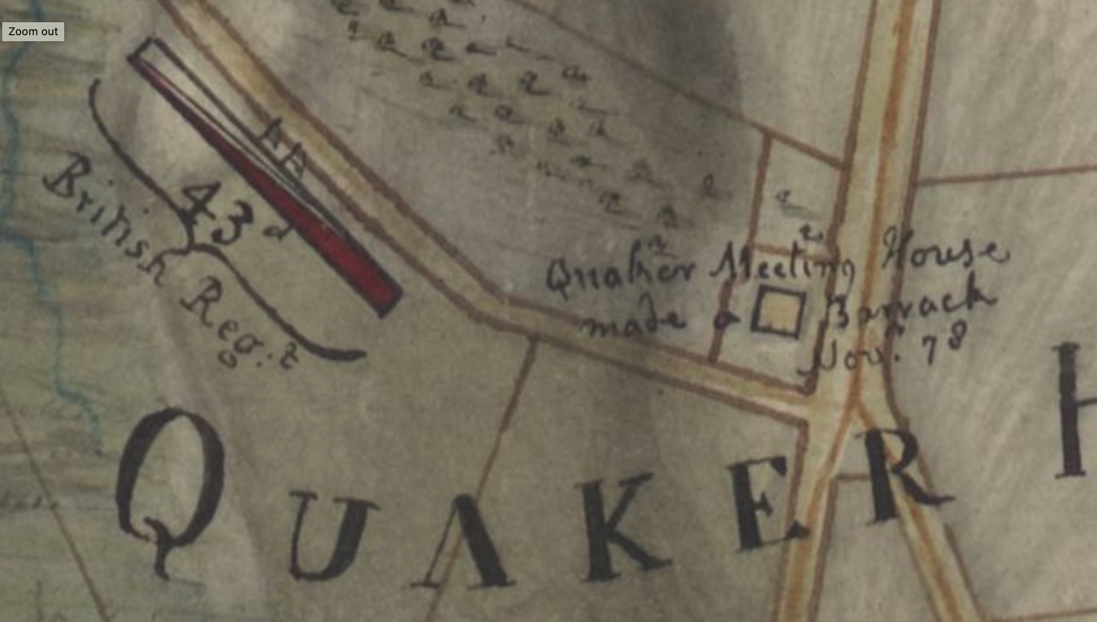

Maps are wonderful primary sources. I have begun collecting as many Revolutionary Era maps as I can. The Clinton Collection of the Clement Library and the Collection of the Library of Congress have some maps that help us understand the actions in the Siege of Newport and the Battle of Rhode Island. The Huntington Library Map of North Portsmouth helps us to understand a British perspective of the battle. I will post more as I find them. I urge you to go to the embeded URL to go to the map directly and use the zoom feature to travel around the map. It is in examining the map close up that we find our most intriguing information.

Fage August 1778 British Defenses (Clement Library- Clinton Collection)

https://quod.lib.umich.edu/w/wcl1ic/x-6052/wcl006125

Plan of the Works – Fage- Defense of Newport – Clinton Collection of Clement Library

https://quod.lib.umich.edu/w/wcl1ic/x-8373/wcl008443

Fage – After the Battle: 29 August – Clinton Collection – Clement Library

https://quod.lib.umich.edu/w/wcl1ic/x-8379/wcl008450

Huntington Library Map after Battle

https://cdm16003.contentdm.oclc.org/digital/collection/p15150coll4/id/16295/rec/3

Attacks upon Rhode Island, Augt. [1778] Map. https://www.loc.gov/item/gm71000685/.
Library of Congress: Attacks Upon Rhode Island

Portsmouth Women: Clara May Miller

Leave a comment

If you attended the recent exhibit of the works of internationally recognized artist Oscar Miller, you may have seen the portrait he painted of his wife, Clara. Clara is another one of those remarkable Portsmouth women. Oscar was drawn to Portsmouth by the artists’ community that centered around Sarah Eddy. Sarah introduced him to Clara and to prepare for their marriage, Oscar built a home and studio on the Mitchel property on Bristol Ferry Road. As the wife of a painter, Clara traveled to Europe and New York, but Portsmouth was always a part of their lives.

Clara – painted by Oscar Miller

Clara came from a family with long roots in Portsmouth. The Mitchel Sisters – Cora, Sophie and Floride – were very active in Portsmouth culture and social reform movements.  Through their mother, Sophia Brownell Mitchel, they had long roots in the Bristol Ferry area.  Their father, Clara’s grandfather, was a cotton merchant in Florida before the Civil War and the Mitchel family had to literally escape the South once the fighting began.  They came to Bristol Ferry because it was an ancestral and summer home for them. Clara was the daughter of Floride Mitchel May.

Clara took part in many of the activities that her aunts and mother pursued.  She was among those doing suffrage work. In 1917 she was one of the Vice Presidents of the Newport County Women’s Suffrage League.  Her aunt, Cora Mitchel, was the first president of the group. As the women of Portsmouth prepared to vote, the sixty women at the voter orientation meeting elected Clara Miller to be chairman.  Once the women got the vote, Clara was active in Republican politics.  In 1920 she was one of the organizers of the Newport County Women’s Republican Club.  She was a delegate to the state Republican convention.  Even after her husband’s death she continued as a patron of the arts and was active in the arts exhibits in the County Fair.

North Battery, Newport – aka Fort Greene and Battery Park

Leave a comment

Battery Park in Newport is a lovely place to sit and view the harbor. From its name you can imagine that it was the site of a battery (a cluster of cannons) during the American War for Independence). The British called it North Battery and it was an important element in the defenses of Newport. British soldier Frederick Mackenzie writes in his diary in September of 1777 that they were doing the principal work “enclosing the town of Newport from Easton’s beach, round the three windmills, to the North Battery and extent of 3000 yards.”

The Battery began as an earthen work begun by American forces. The British re-enforced this so it could be manned by seven soldiers. In preparation for the arrival of the French fleet in 1778, the British thickened the walls and installed guns. The battery was part of the defenses to protect Newport from a sea attack and was armed with two 24-pound and three 12-pound cannons.

When the British abandoned Aquidneck Island in December of 1779, they leveled the fortifications at North Battery. The Americans tried to reconstruct the battery when they returned to the Aquidneck Island. The North Battery was re-named Fort Greene in 1798 in honor of Rhode Island’s General Nathanael Greene.

Resources: Kathy Abbass’ Rhode Tour:

https://rhodetour.org/items/show/54

“Plan of the town and environs of Newport, Rhode Island / Exhibiting its defenses formed before the 8th of August 1778 when the French fleet engaged and passed the batteries, the course of the French fleet up the harbor, the rebel attack and such defensive works as were erected since that day untill the 29th of August when the siege was raised; also the works proposed to be erected in the present year 1779..” https://quod.lib.umich.edu/w/wcl1ic/x-6052/wcl006125. University of Michigan Library Digital Collections.

Older Entries Newer Entries