Home

Gideon Manchester: a Notable Character

Leave a comment

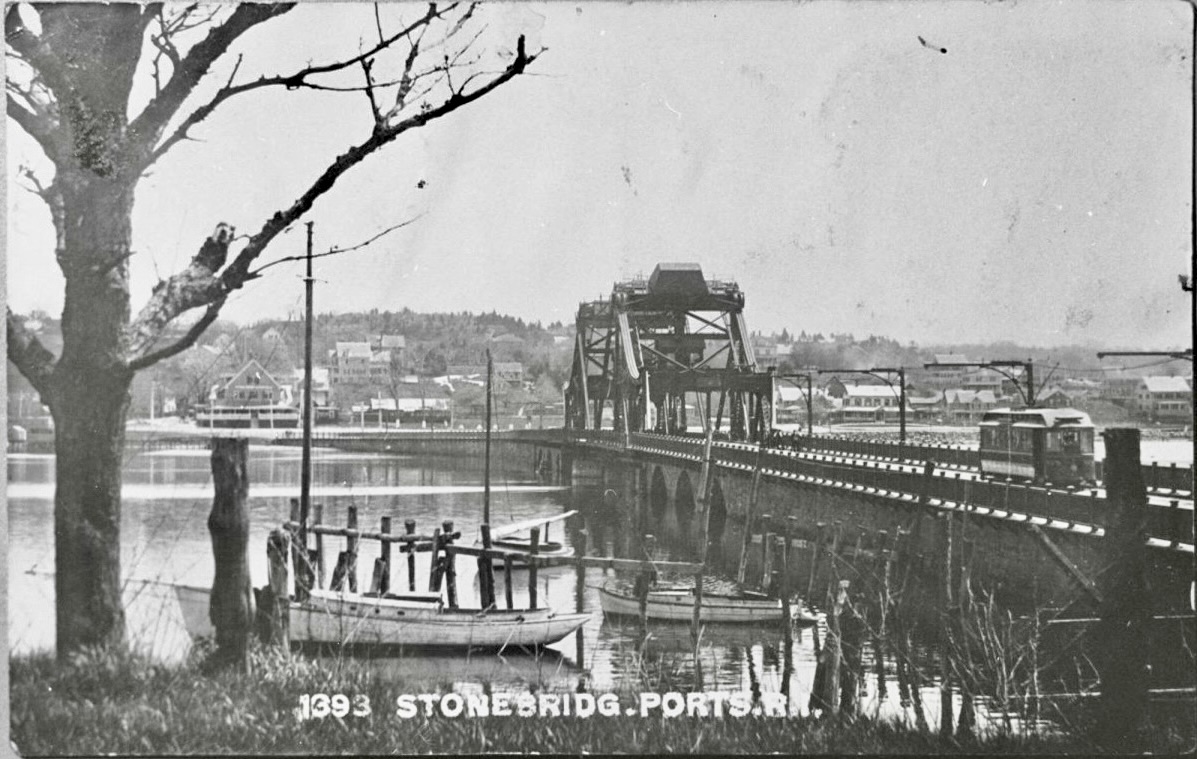
Newspaper accounts provide the curious story of Gideon Manchester’s life. “Gid,” as he was known, was the tender for the drawbridge for the Stone Bridge which united Tiverton and Portsmouth.

“Mysterious Affair”. Rutland County Herald, August 1,1844

“A man named Gideon Manchester, belonging to Tiverton, was committed to the jail, in this town, last week under very suspicious circumstances. It appears this man about eighteen months since married a young widow with two children, that after living with her two months he had taken her to her mother’s house where he left her under the plea that he was unable to support her, some time in the month of August last, and directed her to come through the woods and meet him early the next morning at a certain place in the road, where he promised to meet her with a horse and wagon and take her to New Bedford.”

She accordingly left her home for that purpose, and since no trace of her can be discovedred. Manchester the same day arrived in New Bedford without any baggage and shipped immediately for a voyage to sea. Previous to his sailing he presented to a female relative an old fashioned gold ring,which has been identified as having been worn by his wife at the time of her leaving home. “

Manchester returned from sea and was charged and had a trail, but nothing came of it. Many years later another newspaper account raises new questions about Manchester.

“Buried in the Sands” – the mysterious case of the coffin Dug up on Shore near Island Park.

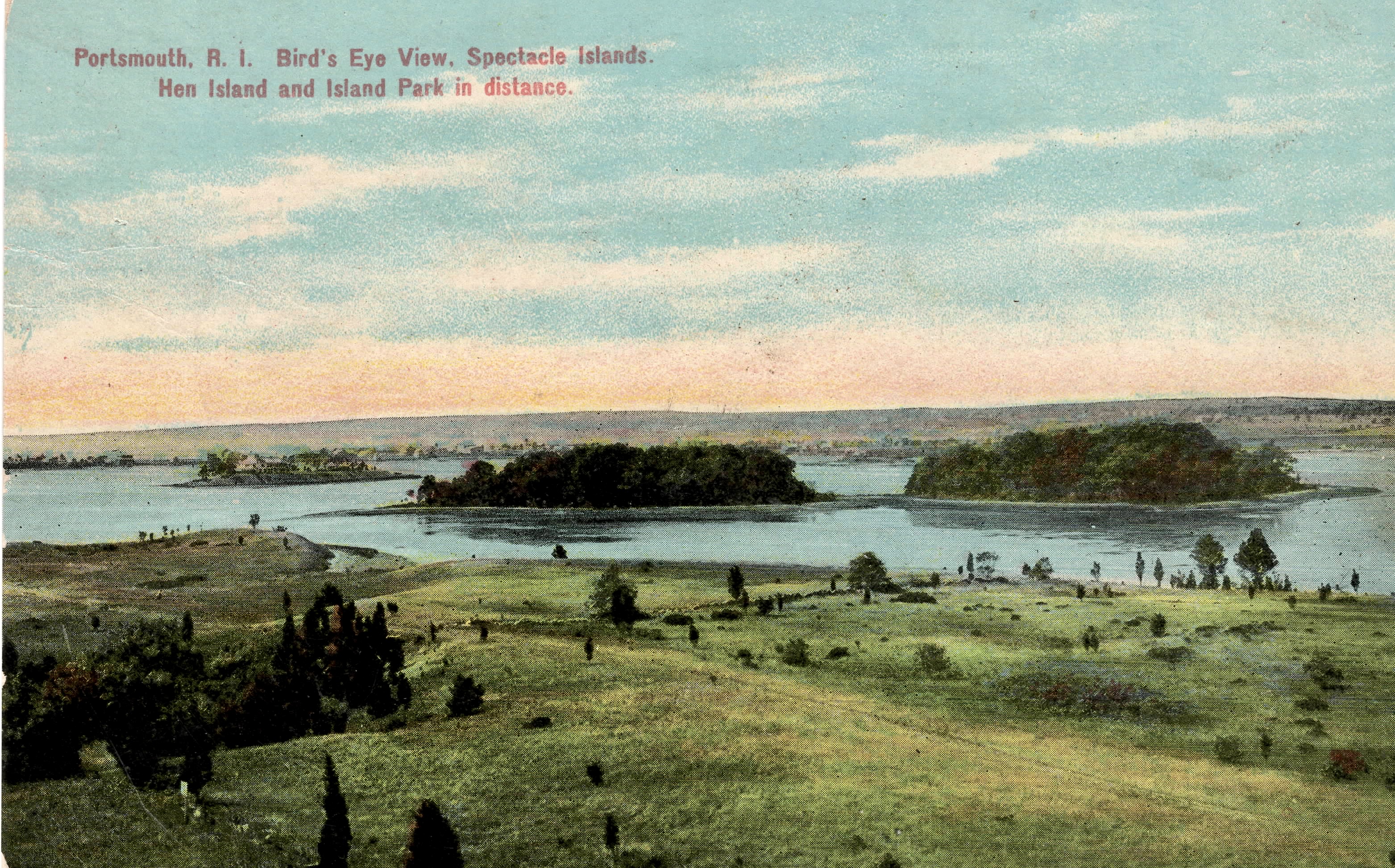
Newspaper accounts in March of 1902 tell of a skeleton found in a pine box below the tidal waters of Island Park. The box was dug out by two boys laying a fishing net in an area where the currents had changed. The box was handmade as were the nails that held it together. Inside the box was the skeleton of a woman who had been in the water for many years. Speculation arose that it was the remains of Mrs. Manchester who had disappeared 50 years before. At the time of her disappearance, her husband, Gideon Manchester, claimed his wife had go out to meet him in New Bedford and gone missing. All that was found was her shoes and stockings that were found in a local swamp. Her rings were in the possession of a young girl who claimed a man had given them to her. The keeper of the toll gate at Stone Bridge testified that at midnight of the day Mrs. Manchester had gone missing, a “lone man with a big and mysterious box crossed the bridge in the direction of Island Park.”

Fall River Daily Herald – March 28, 1902.

Manchester’s obituary in the Fall River Herald (May 22, 1906). presents another side of Gideon Manchester. Gideon had been in charge of the bridge for twenty-five years. The author of the article noted that during Gideon’s tenure, the bridge had undergone transformations. One bridge was replaced by a more modern bridge put down by the railway company. It was suppose to run by electricity, but Manchester was still needed. At some stage the bridge was so damaged by weather than yet another version of the bridge was required.

Manchester had remarried and at the time of his death (in 1906 at age 90+) resided with daughter Hattie in his Portsmouth home. He had a son as well – Otis. Other articles at the time talk about his saving a woman from committing suicede and jumping into the river to rescue swimmers. The newspaper accounts call him a “notable character” and he was that.

The Town Farm and the “Portsmouth Cripple”

Leave a comment

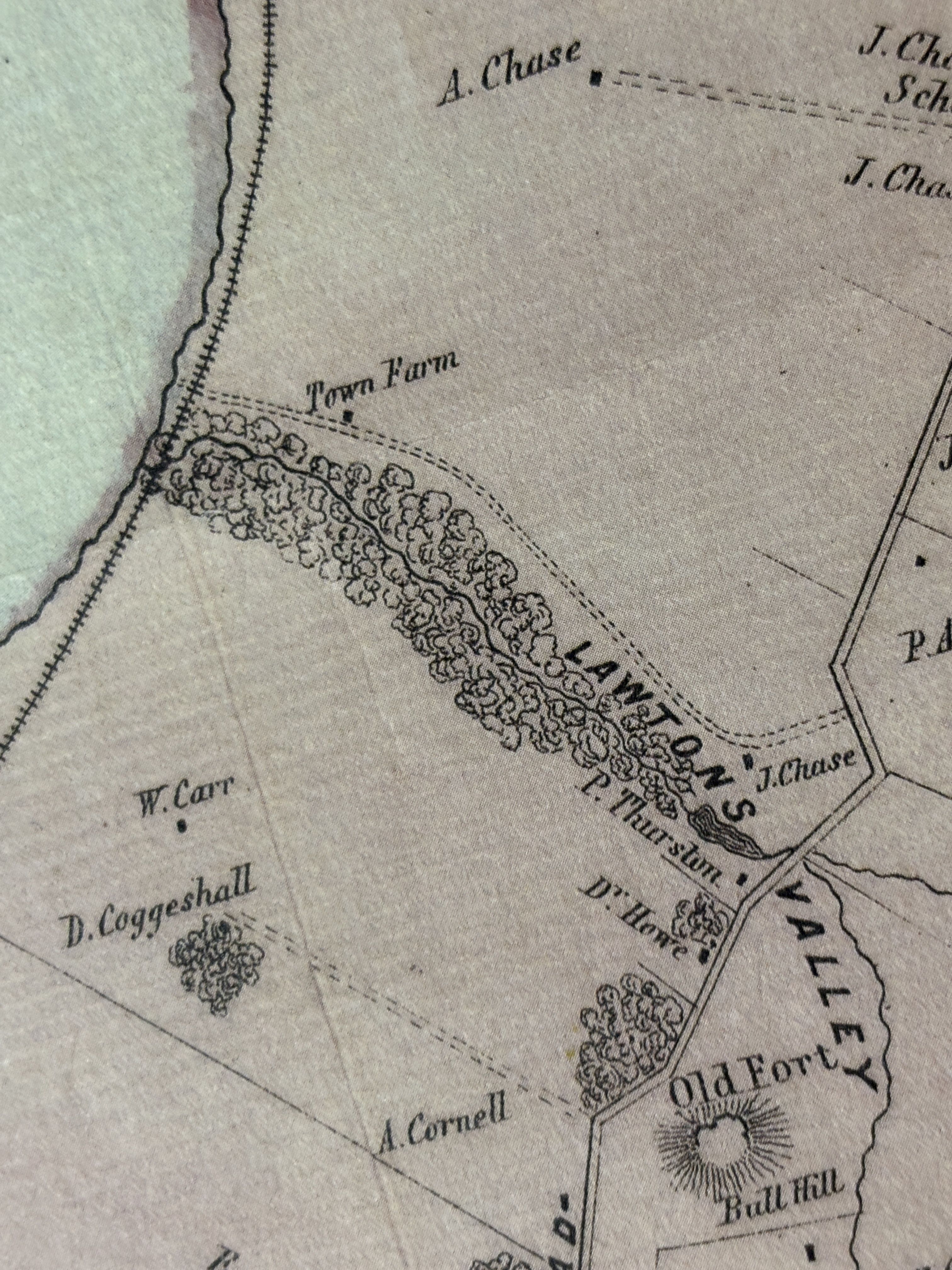
“The town of Portsmouth, a few years since, purchased a farm obtaining about 60 acres of land, as an Asylum for the Poor.  It is most delightfully located, an every necessary comfort is furnished the inmates, which their condition requires.”   This brief description was included by Edward Peterson’s 1853 book The History of Rhode Island and Newport. The farm’s location is on the north side of Lawton’s Valley and is Raytheon property today.  While the “Town Farm” is “Lost to Time,” the Asylum Cemetery is left as a reminder of those who lived and worked there.

Whether the Asylum furnished all the needs of the inmates is debatable.  The Asylum operated from 1833 to 1929.  It’s aim was to be a home for the homeless, the disabled and the mentally ill.  It was an “almshouse” that required residents to work if they were able.  

Thomas Hazard of Portsmouth worked hard to improve the lot of the “poor and insane” in Rhode Island.   He reported on all the asylums in the state and he visited the Town Farm often.  One of those he visited and helped was William Fales who called himself the “Portsmouth Cripple” in his published memoir.  Fales had been diagnosed with “inflammatory rheumatism” at the age of six. It was thought to be the result of a dip into cold water.  Doctors tried the remedies of the day such as bleeding, but the pain never left him.  By sixteen he could no longer stand.  At age twenty-five he came to the Portsmouth Town Farm.  When Hazard met him he could barely move and was in constant pain, but he didn’t feel sorry for himself.  He thought of his suffering as bringing him closer to God.  In 1848 his devotion to faith attracted pious visitors from Philadelphia and elsewhere.  We know William’s story because they published his memoirs and letters to them.  

In one of the published letters from December 5, 1849,  he describes Hazard visiting and mentions his suffering.

“I had a visit from my kind friend T. R. H., who brought me a number of tracts to read, and then I am to distribute them among my comrades, and to those who may visit the house. Much of the time we have religious meetings once in two weeks, at which time I generally present a few tracts to those of the neighbors who attend. For some days past I have not felt so well as common ; my appetite is poor, and I have disagreeable, dull feelings through my head, especially across my forehead. A piece of my jaw-bone has protruded through the gum, yet it firmly adheres to the main portion; perhaps after a while it will work loose, and come out.“

Hazard ultimately frees Fales from the conditions at the Asylum.  

“Surely the 28th of last month was an eventful day to me, for on that day I was removed from the Asylum, and though I felt loth to accept the kind offer, on account of my entire un-worthiness, yet I plainly saw the hand of Providence in it, and thought it would he wrong to refuse so desirable a change. My friend T. R. H. told me that you had desired him to procure a place for me in a private family, where I might have things that were convenient, and receive proper attention. Accordingly, I was removed on the 28th, and bore the ride much better than I had expected. Surely, my friend, this is “the Lord’s doing, and marvellous in my eyes.”  Hazard had located him with a family whose property was very close to his own farm.  Fales enjoyed the change, but died unexpectedly just before his thirtieth birthday.

Ward’s Map of Aquidneck Island 1850

Competition at the Newport County Fair

Leave a comment

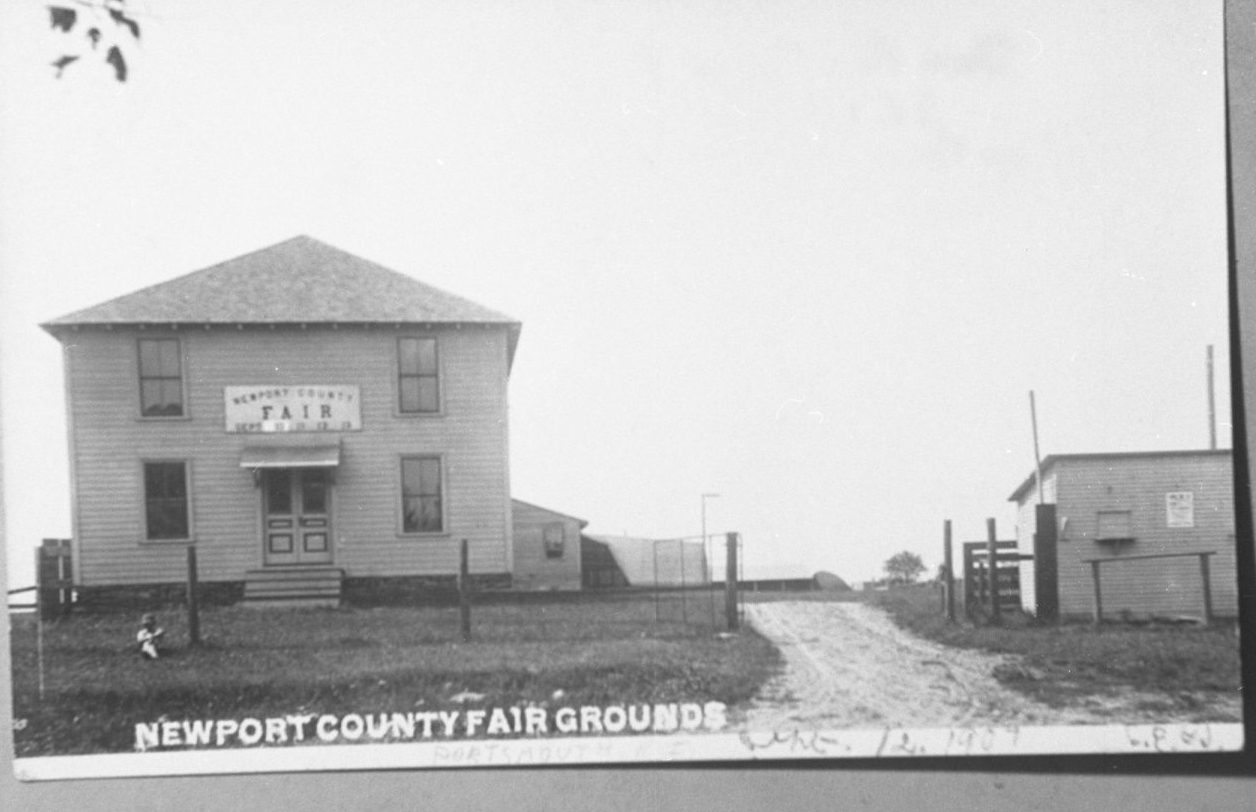
The Newport County Fair in September was a highlight of the year for Portsmouth farmers and residents. The fairgrounds were across from where St. Barnabas Church is today. Since a 1907 article from the Newport Mercury names that year’s fair as the 10th annual, it probably started in 1897. I have found newspaper articles mentioning the fair in the 1930s, but I don’t have a definite ending date. The fair was sponsored by the Newport County Agricultural Society.

What was the fair like? Newspaper account give us some clues.

The 1904 article in the Newport Mercury raves about the dinner and supper served in the large dining hall. There was a “cosey corner” available for fair goers to take a rest and sit down. This was called “Home Rest” and was organized by Mrs. Eldredge of the Social Studio at Bristol Ferry. The Rhode Island Rug Works featured an exhibit of rugs made from old carpets. Outside on the grounds there were activities for girls and boys that would test their strength. There was even a tent with a rattlesnake!

A 1907 account tells us that the vegetable exhibits were “a great surprise to the farmers themselves since this had been a very hard year for crops. Oakland Farm’s exhibits of fruits and vegetables outdid the displays by the other farms. Glen Farm had a special exhibit instead of entering the usual classes of competitions.

The 1914 Fair featured a long distance telephone on the grounds. There was a “baby health” contest judged by a doctor. Prizes included five dollar gold pieces, silver spoons and bronze medals. There was a baby beauty contest open to Rhode Island babies over six months and under three years old. That contest would be judged by “women living outside the state and unknown to the contestants.”

The fair had more than farm produce. There were displays of gramophones and musical instruments. The embroidery department featured eyelets, pretty hats, and shirtwaist dresses. The artists had their work on display. Bessie Cram showed her hand painted china and Sarah Eddy and Sophia Mitchell displayed their paintings. Kitchen cabinets, dining room furniture and kitchen ranges were featured.

The children’s department (which probably featured works by children from the Social Studio, included burnt wood cork, hammered brass and pencil drawings.

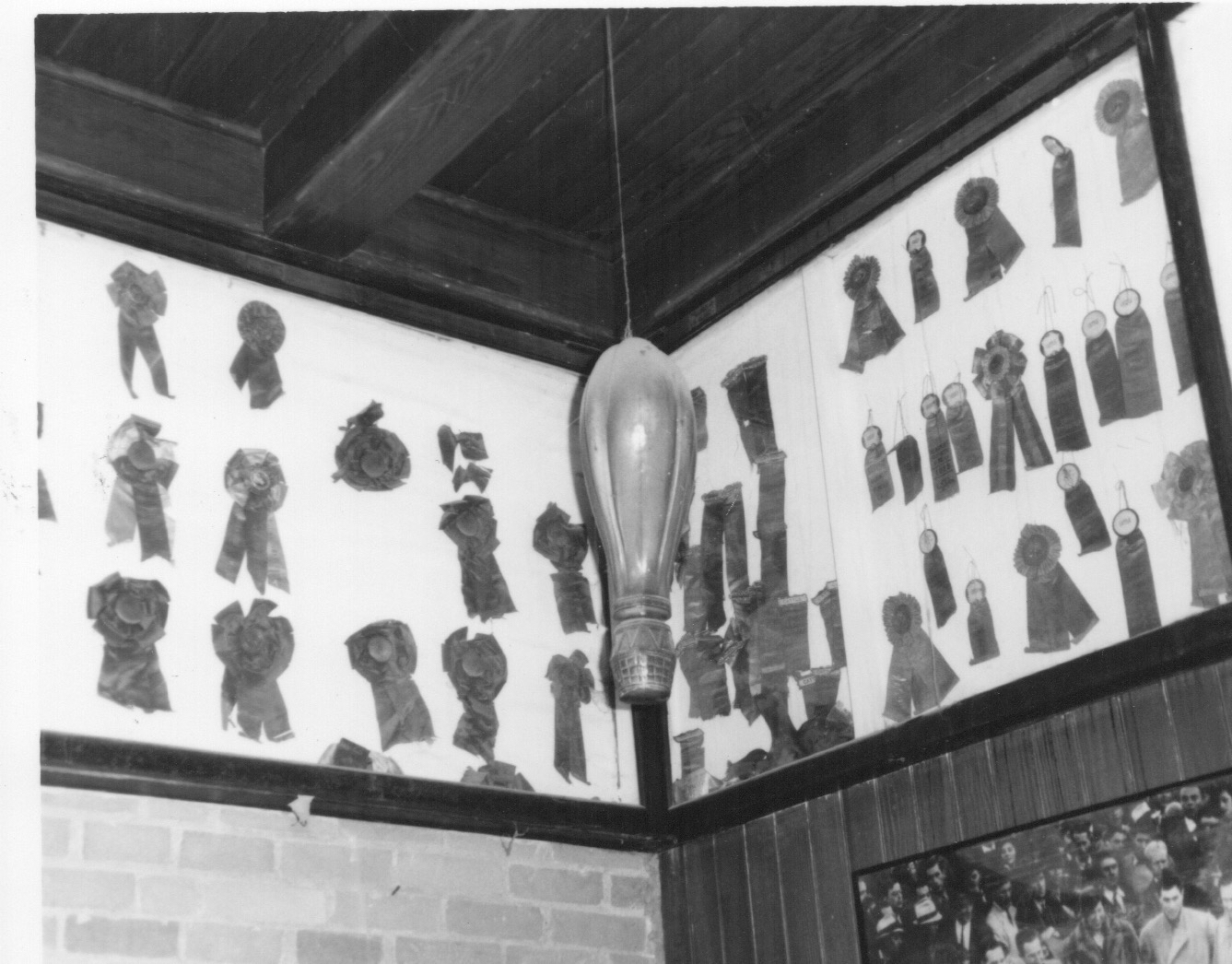
Winning medals at the fair assured bragging rights for the lucky contestants. The competition between the Gentlemen’s Farms was especially fierce.

Ghosts in the Gardens of Vaucluse

Leave a comment

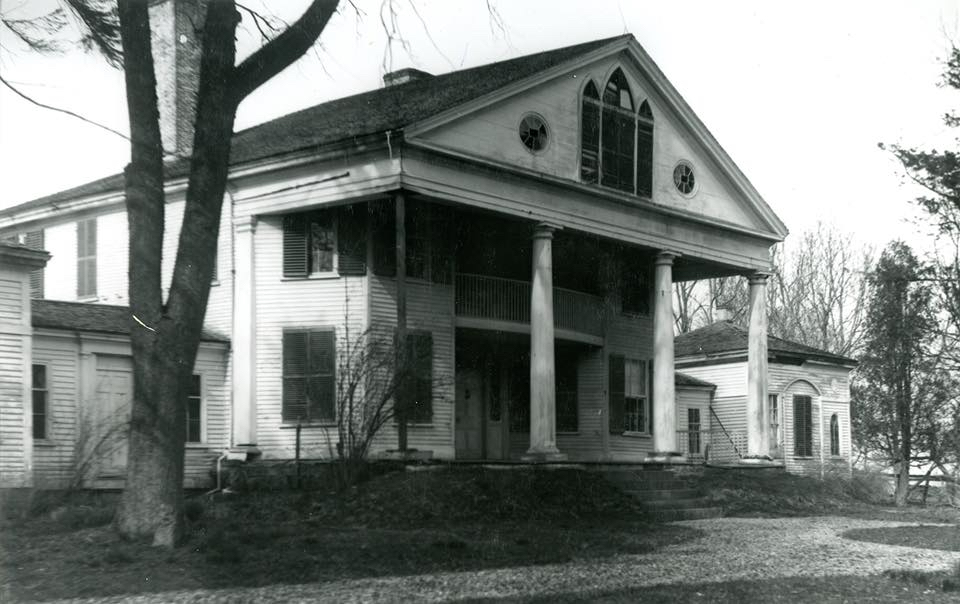
Samuel Elam, one of the owners of Vaucluse, dressed as a Quaker yet lived in opulent style. He was a banker who traveled between his Portsmouth farm and his Newport home. He had been rejected by Miss Redwood, and he turned to Petrarch’s poetry to soothe him. The name “Vaucluse “comes from the “Fontaine de Vaucluse” in Provence, France where Petrarch retreated after the death of the woman he loved. Elam also adopted the melancholy mood of Petrarch. In 1793 Elam had a miniature Roman temple built on the precipice of the ravine that led to the river. His garden was a boxwood maze. By1803 Elam was building a grand mansion with classical temple columns.

After Elam’s death Vaucluse was purchased by Charles de Wolfe, but when he went bankrupt Vaucluse was purchase in 1838 by Thomas Robinson Hazard and Frances Minturn his wife. The Hazards were from the West Bay of Rhode Island, but at age 40 he moved to Portsmouth to devote himself to sheep farming. He was known as “Shepherd Tom” Hazard. Hazard revived the mansion and grounds. He busied himself with tending to his farm and advocating for abolition and compassionate care of the insane. He visited “poor farms” across the state and worked with Dorothea Dix to advocate for the needs of the poor and mentally ill.

For a while Hazard and his wife had a blissful existence at Vaucluse. In 1854, however, Frances died suddenly. At that time the Hazards had five children under twelve. Shepherd Tom was wracked with grief. He invited guests like Julia Ward Howe and her children to come and enjoy the grounds. After his tea-parties the adults would gather on the porch to talk about Spiritualism which was popular at the time.

Tragedy again haunted them when daughter Anna died of consumption at age twenty-two. Daughter Fanny also died of consumption at age thirty five. Her twin sister Gertrude drowned herself in a pool on the grounds. At this point Shepherd Tom immersed himself in Spiritualism. He believed that the spirits of his wife and daughters visited him for hours at Vaucluse. He brought in mediums for seances. Although his wife had been dead for over twenty-five years, he could feel her spirit in the gardens.

Shepherd Tom died in 1886 and the property was left to Barclay, his only son. Barclay abandoned Vaucluse to the ruins of time. It was left vacant and untended.