At a Portsmouth Historical Society Open House, someone asked me about Portsmouth’s African American families. There was nothing in the exhibits that spoke to that question and Marge Webster and I decided to take on that question as a research topic. The stories we found were exciting and this blog is a short summary of what we found about one of the families.
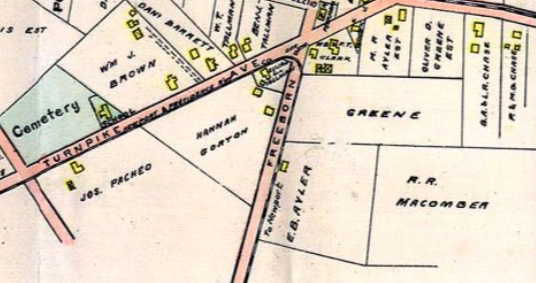
Much of Portsmouth history is farm history and the Ayler family represents the best in Portsmouth farming. In 1870, Morgan Ayler, his wife Matilda and three of his children are listed as residing on the farm of Joseph Macomber off East Main Road in Portsmouth. Macomber went to Washington after the Civil War and brought back 16 former slaves to live in Portsmouth. We don’t know the reason he brought the 16 with him, but Macomber was a devout Quaker and aiding former slaves was an important activity for members of the Society of Friends. Morgan moved from being a farm laborer on the Macomber farm to owning his own farm. He won awards for his produce at the Newport County Fair.
Morgan’s son Edward went on to farm 80 years in Portsmouth. Edward Ayler’s obituary (published in the Newport Mercury in June of 1935) provides some clues to understanding their success in Portsmouth life. “Edward Ayler, one of the oldest and best known citizens of Portsmouth, died last Friday at his home on Freeborn Street.” Edward was one of the founders of the Portsmouth Free Public Library.
The Ayler family was very involved in Portsmouth activities. Edward Ayler’s wife (Louise Jackson Ayler) was active in the Woman’s Christian Temperance Union. She often hosted meetings at her home. She was active in the Friends Missionary Society. The early generations of the Aylers were strong Quakers, but there seems to be a split among the third generation. Edward’s sons Raymond and Emerson and daughter Alice Ayler Morris were known for their singing in the Friends Church before World War I. During the war, however, Raymond H. Ayler was commissioned as Second Lieutenant after having been drafted “with the colored boys” (Mercury, 9/13/18) while brother Osceola received a deferment because of his Quaker faith. In the 1920s Raymond would be on the executive board of the American Legion along with William Vanderbilt and Bradford Norman.
There is little left in Portsmouth as reminders of the Ayler family. Macomber’s farm has been sold and his house torn down. Morgan Ayler’s farm at Cozy Corners has become commercial property and Edward Ayler’s home is only foundations left on Freeborn Street. The family moved on to Newport and to the Boston area. They came to Portsmouth and they made a difference.
I have to go back to my blog on places Lafayette stayed during the Rhode Island Campaign and make a note that the 1760 farm house associated with Lafayette in Tiverton has been torn down. Through the years Portsmouth has lost many historic buildings. One of Jim Garman’s early books was on historic Portsmouth homes and he has noted when one of the houses he studied are lost to us.
Within the last few years the Artemas Fish house on Glen Road (built circa 1760) was torn down to facilitate the building of new homes. Fish received a pension at Newport, Rhode Island, for eighteen months active service in Babcock’s Regiment, Rhode Island Militia during the American Revolutionary War. Babcock’s/Lippitt’s Regiment was a regiment raised for the defense of Rhode Island during the American Revolution. The regiment was one of two formed by the state of Rhode Island between November 1775 and January 1776 to deter an attack by the British against Rhode Island.
The regiment was again authorized by the Rhode Island General Assembly on January 8, 1776 with 12 companies under the command of Colonel Henry Babcock. The regiment was originally located on Aquidneck Island and along with Richmond’s Regiment left the island at the time of the British invasion.
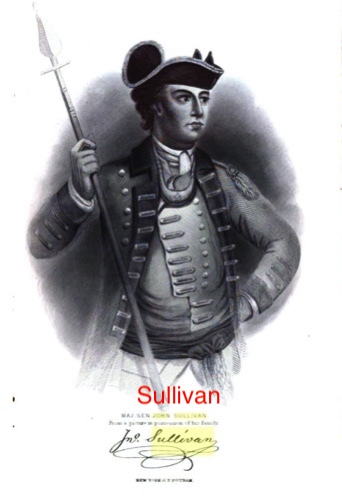
In his pension application when he was in his seventies, Fish listed his service during the Battle of Rhode Island – which he calls the Battle of Quaker Hill. Three witnesses for his pension application stated that Fish was part of Sullivan’s Life Guard. Sullivan sent this elite group into the thick of the battle at Quaker Hill.
..in the year 1778 he was employed, at least for six months, in the service in Capt. Joseph Knight’s company in the same regiment. He was much under Capt. Knight towards Sullivan’s expedition against Rhode Island – that he recollects that in the battle on Quaker Hill, besides the man who shot under him (near him?), & that on the evening of the second day after the battle, according to the best of his recollection, they retreated to Tiverton – that he also was a volunteer in Spencer’s expedition under the same Capt. Knight towards East Greenwich. Mentioned – that after the British left Rhode Island, he was often called out to guard, & in 1780 served for two months under Capt. Isaac Knight – that he was employed in actual service during the Revolutionary war for about twenty-six months. ” (Fish’s testimony in application for a pension can be found online – Fold3)
Artemas Fish had a long life. He served as Postmaster of Portsmouth 1808-1810. He died in February of 1834 in Rhode Island. His grave is in Fish Cemetery, Portsmouth, Newport County, Rhode Island, USA, Died at 90 in 1834,
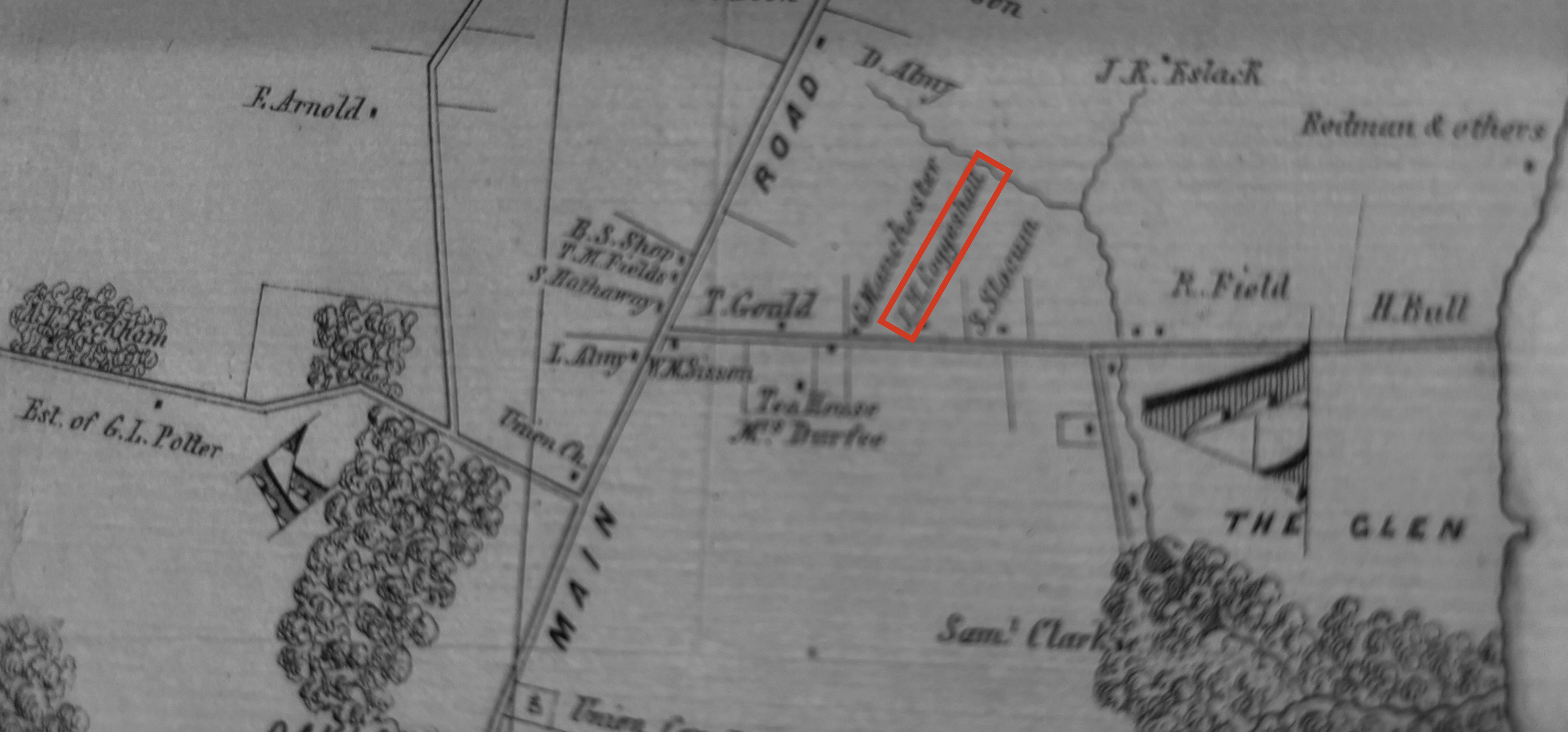
The house became the property of Dr. Peter Wales, Portsmouth’s first doctor. The house was passed down to his granddaughter, Lydia, who was married to one of Portsmouth’s best builders – John Coggeshall. Coggeshall was the builder for the Christian Union Church, now the headquarters of the Portsmouth Historical Society.
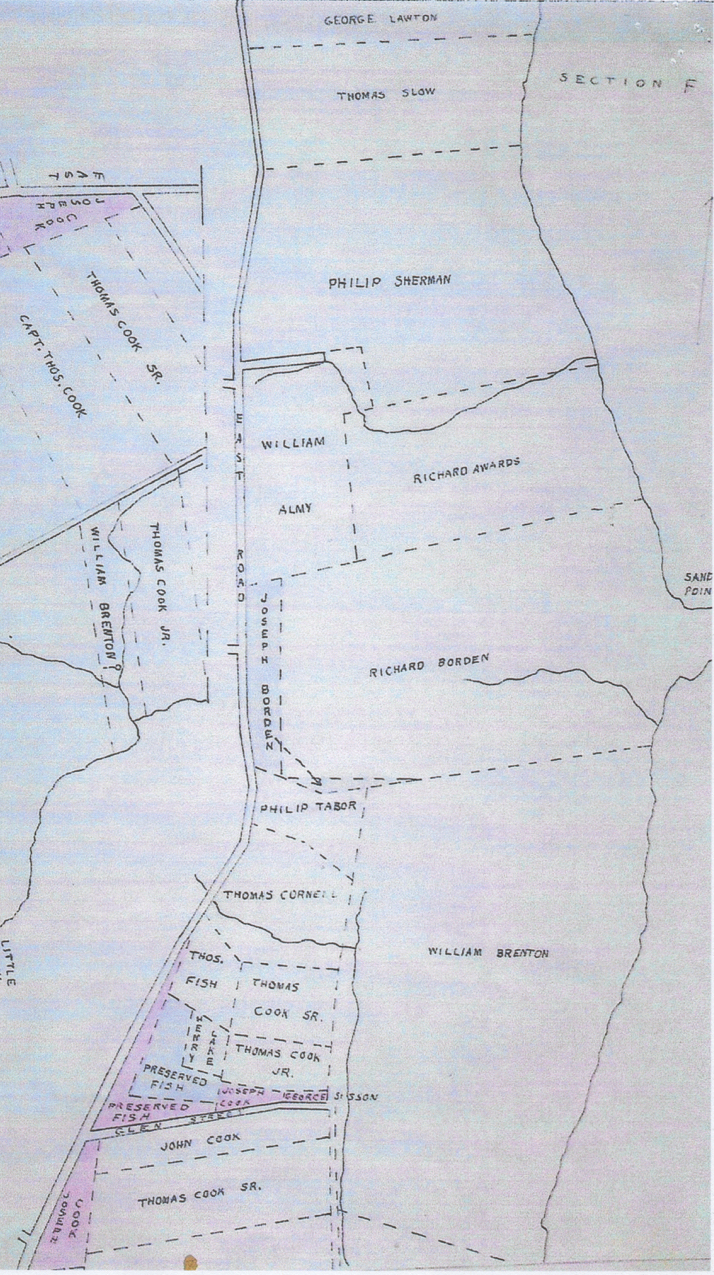
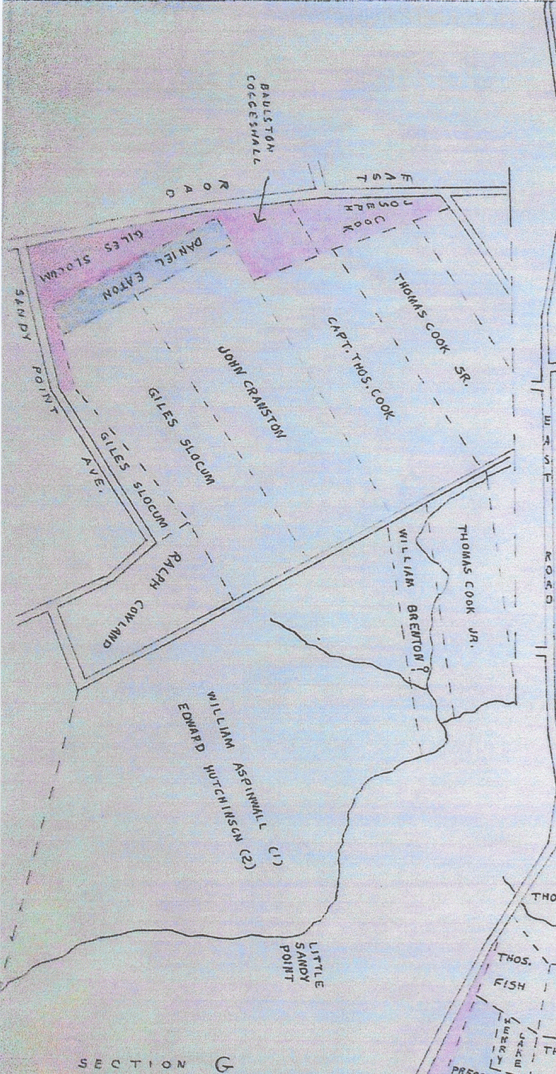
This blog is part of a study of Portsmouth neighborhoods. Some areas have a very rich history and the history of the Glen Farm area and South Portsmouth is an example. There will be a few articles to get us through the centuries. Information about this early land grant period for the Glen/South Portsmouth comes from historian Edward West’s article on the “Lands of Portsmouth” in the Rhode Island Historical Society Journal. West drew these land grant maps by going through the property records and there is some question about accuracy. However they give us a good start in learning about the various neighborhoods in town.
From the Lands of Portsmouth: A Glimpse of Its People. Edward West. Rhode Island Historical Society Journal, July 1932
“Let us now turn down the Newport path (East Main Road) until we come to a road, nearly to the line,(Sandy Point?) which was laid out in 1713. Turning east through this road we come to what has been for many years known as Wapping Road. This road was mentioned in the list of 1661, and ran between many of the large farm grants. In the 1717 list of highways mention is made of the “Great Rock” near the line, a great mass of pudding stone. (Perhaps the great puddingstone at the corner of Wapping Road and Mill Road).
The farms here belonged to Bartholomew West, Samuel Hutchinson, and John Sanford. On the west side of the road was the Long Swamp farm of Thomas Lawton, made up of several grants which he purchased of the grantees. On the east side was the farm of Thomas Burton, granted in 1640, to run from the middle of the first water south of the second sandy point to the middle of the fourth water. In 1648, in a grant to Thomas Cook, mention is made of Mr. Burton’s ferry. I have never been able to find any other mention of this ferry. I suppose it was probably the first ferry to Fogland. Turning east through a former road we come to Sandy Point first granted to William Aspinwall, and after he left, to Edward Hutchinson.
We will now take a cart path to the north, passing the grants, on the right, to Ralph Cowland, Giles Slocum, John Cranston and Thomas Cook. We now come to what has been called for many years, the Glen. This was granted. to William Brenton but was acquired by Giles Slocum, who built a fulling mill on the bank of the stream.
North of this was the farm of William Brenton, called by him Middleford Farm. There was a broad approach to this farm… Returning to the Newport path we come to a brook, now called Mint Water Brook, which crosses the road and runs into what was known in 1657 as Briggs Swamp, when Phillip Sherman was granteci 30 acres here. To the north of this, on the east side of the road, was more of Phillip Sherman’s land, in what was known as Birch Swamp. Here, also, was the land of William Almy, who fenced in the road to the watering place and was compelled by the court to open it again.
According to the pension application testimony of Daniel Bowen, Sullivan’s body guard was recognized by Congress as a part of the Continental Army. (War Department Communication dated December 1, 1819). This was a company of volunteers called a “Life Guard” to Major General Sullivan who was appointed commander of the state of Rhode Island. He remembers Aaron Mann, Levi Hoppen, George Potter and John Prescott (may be John Wescott) as officers of the group.
Sullivan sent in his Life Guard to reinforce the American troops at Quaker Hill and there was intense fighting there.
From his testimony
“Our circumstance however, I recollect , —service between Butts and Tominy Hills, the Sullivan guards did not arrive at the commencement of the action and as we neared __ up to meet the British, we could but meet by some carrying off The wounded, who said to us, “that’s right my boys, go and give it to them’ as the were borne off, upon the shoulders of their comrades. And we did go on, until we were overpowered by numbers.”
Bowen would go on to serve with Silas Talbot on the Sloop Argo and then aboard the Privateer Washington (a ship of 20 guns) which was also commanded by Talbot. The Americans were taken prisoner and ultimately exchanged for British prisoners.
Bowen called his Revolutionary War experience “days of danger and fatigue and repeated misfortunes.”
Resources: Case Files of Pension and Bounty-Land Warrant Applications Based on Revolutionary War Service, compiled ca. 1800 – ca. 1912, documenting the period ca. 1775 – ca. 1900. I accessed this through Fold3 military records online.
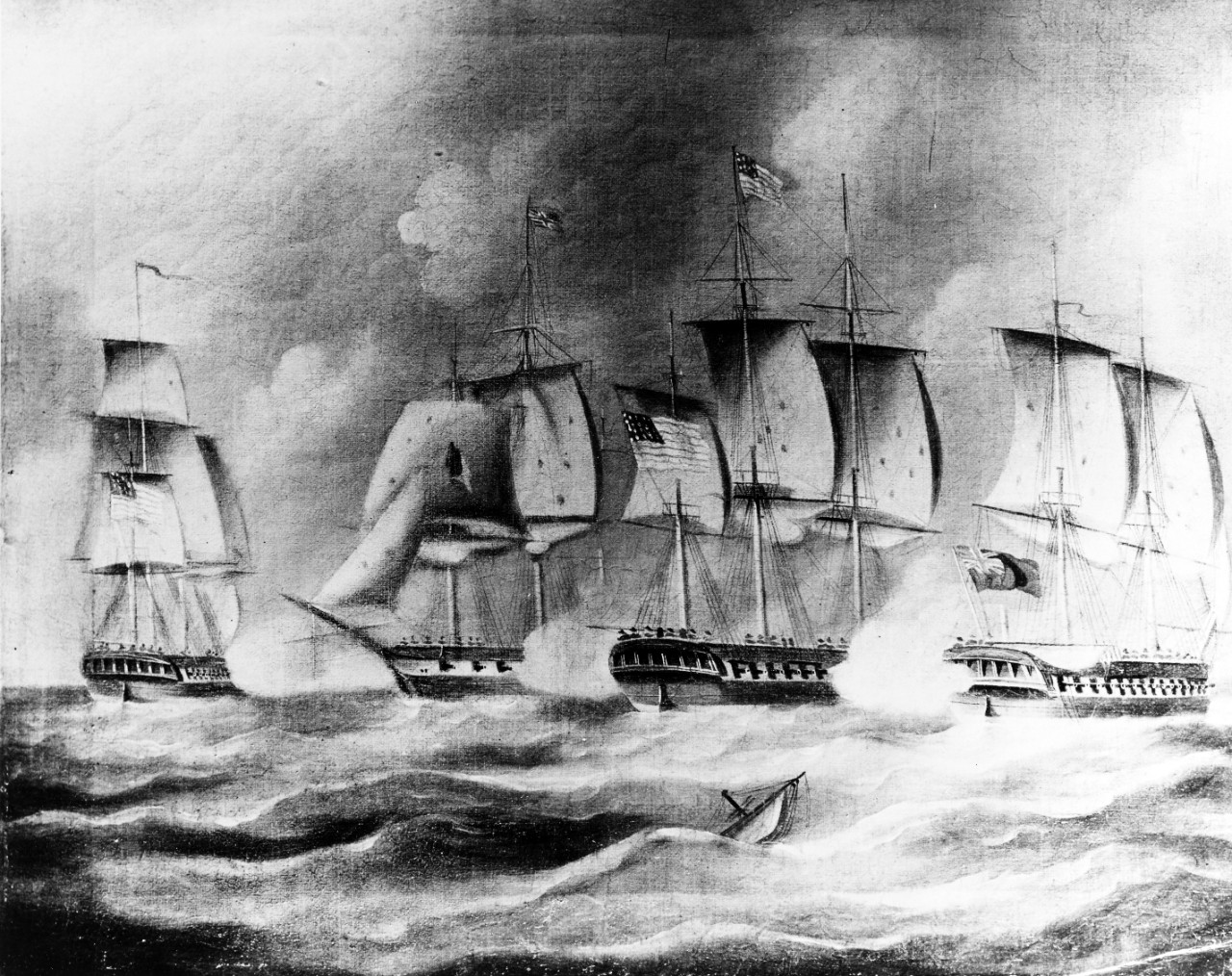
Image: PIGOT and ARGO capture British schooner LIVELY and two privateers, off the coast of Providence. Naval History and Heritage Command.
Aaron Mann of Providence was the commander of Sullivan’s Life Guard and his pension testimony offers us a first hand view of the American retreat on August 30, 1778. Mann had been serving as a soldier when needed beginning in 1775. He served in the Continental Navy in the ill fated Battle of Block Island. Next he was sent to Rhode Island (Aquidneck Island) to protect against British Captain James Wallaces’ raids around Narragansett Bay until the Americans had to flee the Island in December 1776 when the British invaded. He marched to Boston for the Battle of Bunker Hill and he took part in Spencer’s failed expedition in 1777.
From his testimony:
“In May or June 1778, then was got into a company called General Sullivan’s Life Guard – and I entered therein as a commander – Sullivan was quartered in Providence and I with him – I should think about through November 12 of 1778. I went on Sullivan’s expedition.”
He goes on to give a brief recounting of the Rhode Island Campaign. He went onto the island around the 12th of August. He talks about D’Estaing’s arrival and departure, and Lafayette’s efforts to persuade him back from Boston.
The part of his testimony that was most interesting to me was a description of the retreat. A portion of the Life Guard was to guard the retreat of the rear guard.
“Attached a portion of the life guard to guard the retreat of the rear guards and also make fires when lighted up through the camp to deceive the enemy. On this expedition I commanded the life guards – was wounded in my forefingers which were broke. Had Obadiah Brown one of my company killed. Israel Low of Providence wounded in the ankle. Antrum Fenner of Scituate wounded in the stomach and Charles Scot of Cumberland shot in his hip badly and made a cripple for Life.”
Because of his bravery in commanding the Guard during the retreat, Mann was appointed Captain on September 10, 1778. Records show Mann and the Guard at Tiverton through November 10 when the Guard may have been relieved of duty for a while.
In the book Spirit of ’76 Covell, who had listened to countless testimonies for pension applications, records that one of the Guard (Levi Lee) describes Mann in the action. “..while in the act of flourishing his sword, he had one of his fingers shot away, but the only remark he made..was “the d eternal souls shoot pretty close. Don’t mind, my boys, stick to em.” Covell writes that Sullivan’s Life Guards were selected by Lafayette to cover the “rear guard” in the retreat and suffered badly in the action.
Resources
Christian McBurney’s book The Rhode Island Campaign has most of this story on page 181. I was able to see and transcribe Aaron Mann’s testimony through Fold3/Ancestry.com.
Spirit of ’76 in Rhode Island: or, Sketches of the efforts of the government and people in the war of the revolution. Together with the names of those … notices, reminiscences, etc., etc
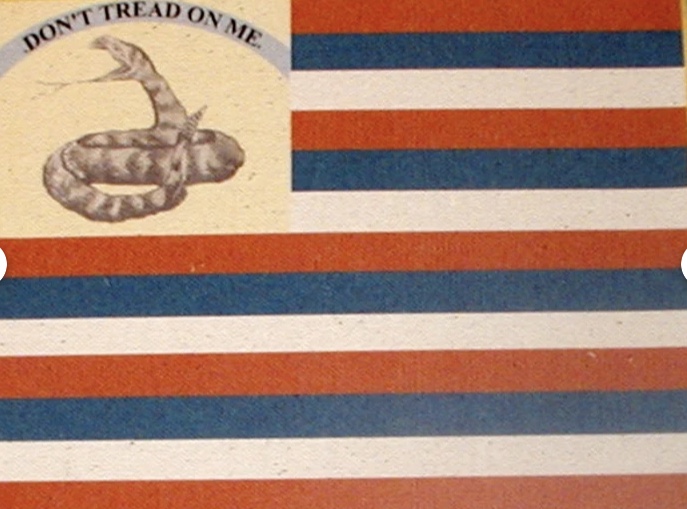
I have been exploring the stories behind some of the local Revolutionary War flags and this flag has led me to interesting areas of research. The “rattlesnake” emblem on it is very popular these days.
The first time I heard of Sullivan’s Guard was through Christian McBurney’s book on the Rhode Island Campaign. That gave me the name of one of the Guard members to research and his story will come in a later blog. This is a first article about the men of the Life Guard.
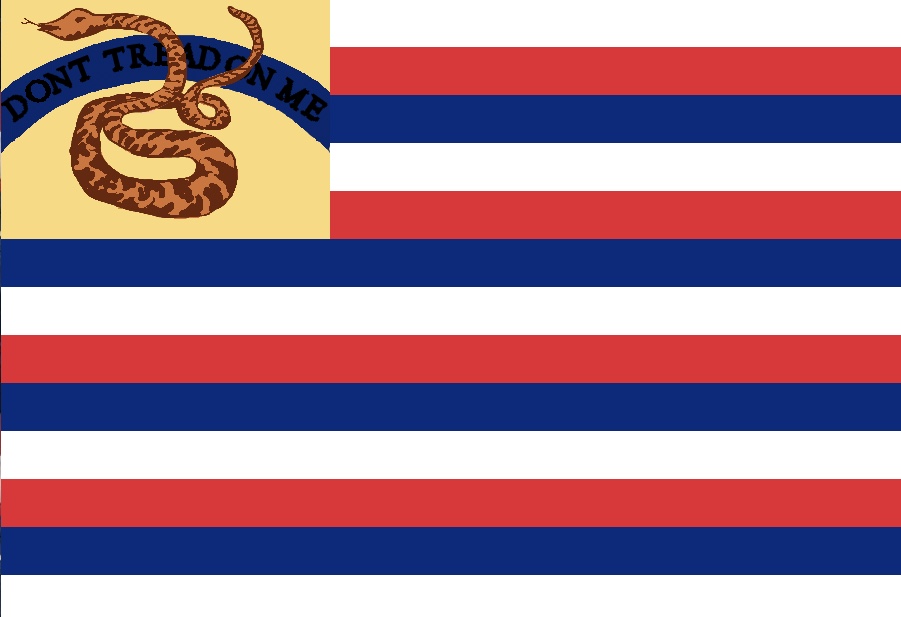
Searching for general information on Sullivan’s guard and the flag was difficult. Reproductions of the flag are available to buy and it is also known as the Tri-Colored Stripes with Rattlesnake Union. One source describes the flag:
“This flag’s field consists of the tri-colored striped flag as designed by Arthur Lee in 1779: thirteen alternating white, red, then blue stripes from top to bottom, ending with a white stripe. But rather than having a canton of stars, this flag has an image of a coiled rattlesnake on a buff colored background for the canton. Behind the rattlesnake is a motto: “Dont Tread On Me” in black lettering on a curved, rainbow-shaped blue band that connects the hoist edge with the third stripe from the top (blue).” https://www.motherbedford.com/Flags27.htm
What was the Life Guard? Who was part of it? What was their service at the Battle of Rhode Island and elsewhere? These are the questions I have been trying to answer.
With the help of Military Historian John Robertson, I was able to get the names of some of the Life Guard soldiers. I have been searching through the Fold3 database for records of the men and some of the pension applications were very helpful in answering some of those questions
“I William Wilkinson of Providence State of Rhode Island on oath do testify that I served in the Rhode Island Brigade of State Troops in the War of the Revolution from July 1777 to March 16, 1780. I stated in a former deposition that I fully recollected that Ford Westcott served during a part of that period in General Sullivan’s Guard, and my impressions are that he was a non-commissioned officer. The Soldiers of the Guard were some of them taken from the Brigade and some were enlisted especially for that service, but were all enrolled in the Brigade. I have no knowledge at what period said Wescott enlisted, but know that the term of enlistment not only of the Brigade but of the guard did all expire on the 16th day of March in the several years of 1770, 1779, 1780. I further testify that for more than forty years I was intimately acquainted with Capt. Man who commanded the Guard and like many other old soldiers have fought our battles over again – and as said Westcott resided in Providence, his name was mentioned by said Man as a good soldier.”
William WILKINSON SEPT 16,1836, Providence (US, Revolutionary War Pensions, 1800-1900)
Let’s look at one question at a time.
What was the Life Guard? “The Soldiers of the Guard were some of them taken from the Brigade and some were enlisted especially for that service, but were all enrolled in the Brigade.” Christian McBurney writes that the guard may have been modeled on George Washington’s Life Guard. In 1776 Washington ordered Commanding officers of each regiment to select four men from each regiment who would form his personal guard. He wanted them good men, sober, five feet eight to five feet 10 and cleanliness was desired. Their job was to protect Washington, the cash and to gather and keep the orders Washington gave..
In researching the names of Sullivan’s guard, I have found they came from at least two of the state militia units – the Pawtuxet Rangers and Crary’s. Some were designated by their commanders and some enlisted themselves.
More information on the Sullivan’s Life Guard will come in future blogs. The flag may not have been at the Battle of Rhode Island. One source says it originated in 1779. Another flag site said it was at the Battle of Rhode Island.
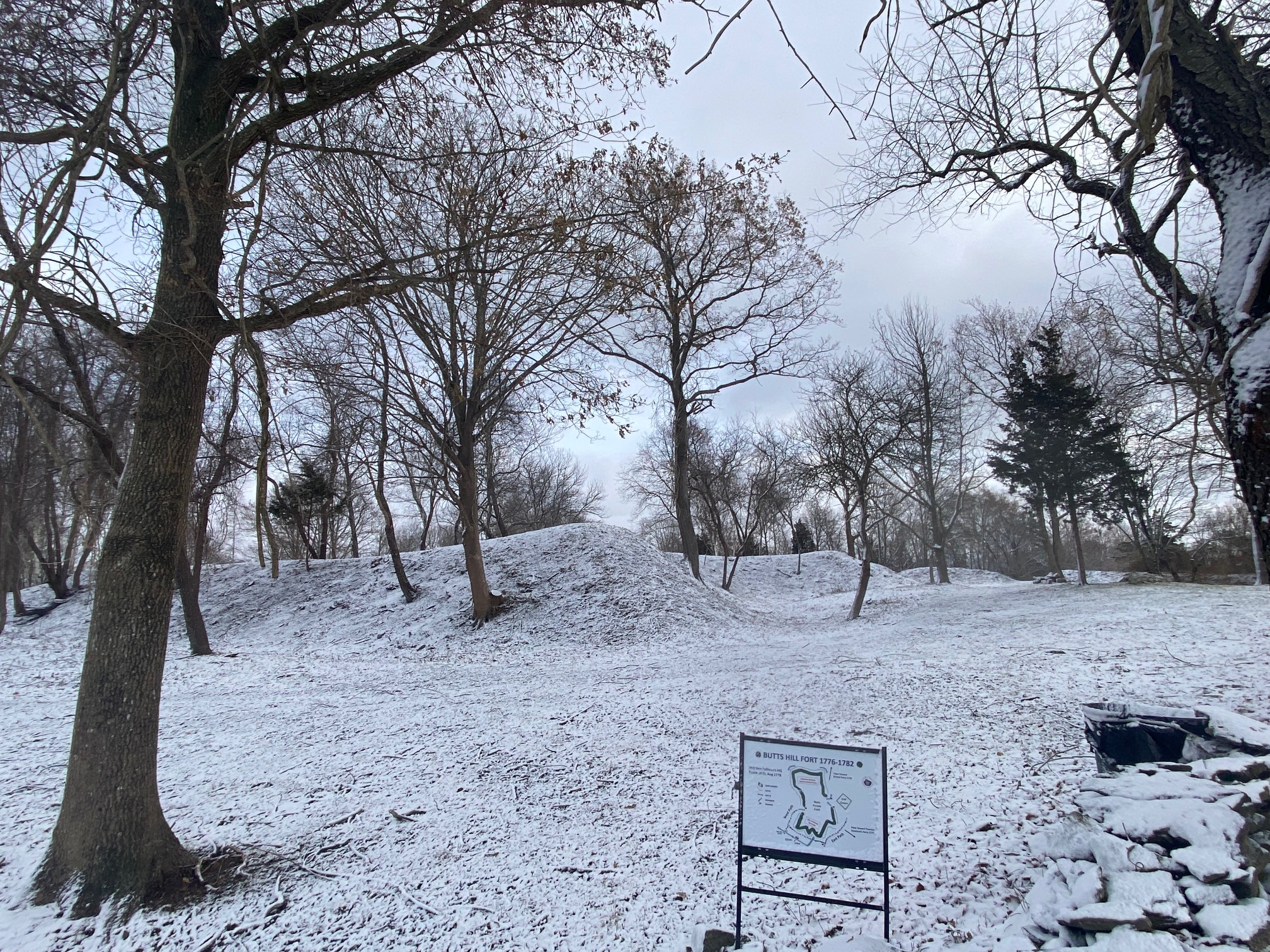
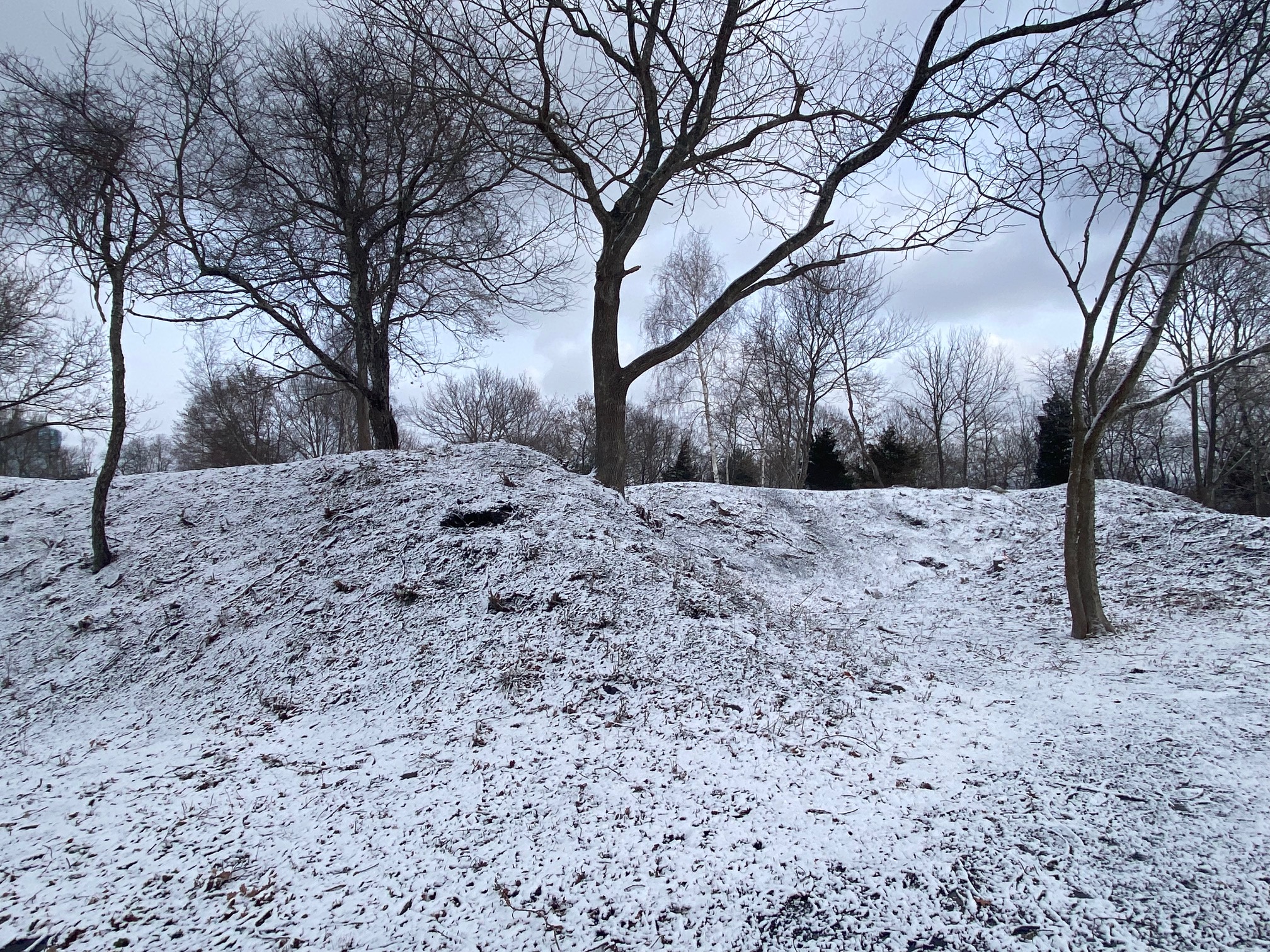
The Butts Hill Fort is emerging through the efforts of the Butts Hill Fort Restoration Committee this year.
Image of Butts Hill Fort – first day in Winter by Paul Murphy.
Butts Hill Fort 2024
“As we close 2024, we can report that the Butts Hill Fort complex has now emerged as a truly open and accessible historic campus. One with fully connected and improved pathways circumnavigating the site, while offering full visibility of the steeply sloping historic earthworks–from the outside looking in–for the first time in many decades. Moreover, the preservation clearing work has also opened up the site to be more understandable as Revolutionary War Era Aquidneck Island’s central defensive feature with improved view corridors to key battle landmarks such as Quaker, Turkey and Durfee hills to the south, and Howland’s Ferry, Tiverton and the Sakonnet to the east. (From: Butts Hill Fort 2024 Southern Earthworks Improvement Project Completion Report)
Butts Hill Fort 1778
The December after the Rhode Island Campaign was a harsh one. The British had systematically gathered all the fuel for fires on Aquidneck Island. At first the British and Hessians (Germans) felled the trees closest to their camps. The Hessians had a camp above Fogland Ferry. They continued to cut further away from their camps until there were no trees to cut and burn. British officer Frederick Mackenzie records that they then turned to cutting down orchards next on Common Fence Point and other locations. After the orchards, all other sources of wood were eyed. Vacant houses, wood carriages, and even wooden farm tools went into the wood supply.
Mackenzie writes on December 6th, 1778: “Every step is being taken to supply fuel: All the timber trees on the island are cutting down and the old wharves will be broken up.” Vacant houses were taken apart and the wood was used for fuel. Rail fences were taken apart and burned. On December 13th Mackenzie’s diary entry reads: “All the carriages that can be collected on the Island are employed in bringing in the wood which is cut by the party out on the island.” Turf” was cut on Brenton’s Neck and used for fuel. When the island’s wood supply was exhausted, they sent fleets to collect wood on Conanicut, Block Island and Long Island.
On Christmas Day of 1778 a blizzard began that lasted until December 28th. Hessian soldier Johann Dohla records in this diary: “26 December: A frightful snow fell here, accompanied by strong winds and a violent snowstorm such that we could hardly remain in our houses because of the snow. Tonight a Hessian sergeant got stuck in the snow near Quaker Hill and froze to death.” In another diary Hessian soldier Stephen Popp records the snow depth to be three or four feet. Mackenzie records drifts of up to 20 feet.
Portsmouth residents were huddled in their homes on Christmas Day of 1778. The mostly Quaker residents would not have had grand celebrations anyway. Christmas was yet another day to do God’s work.
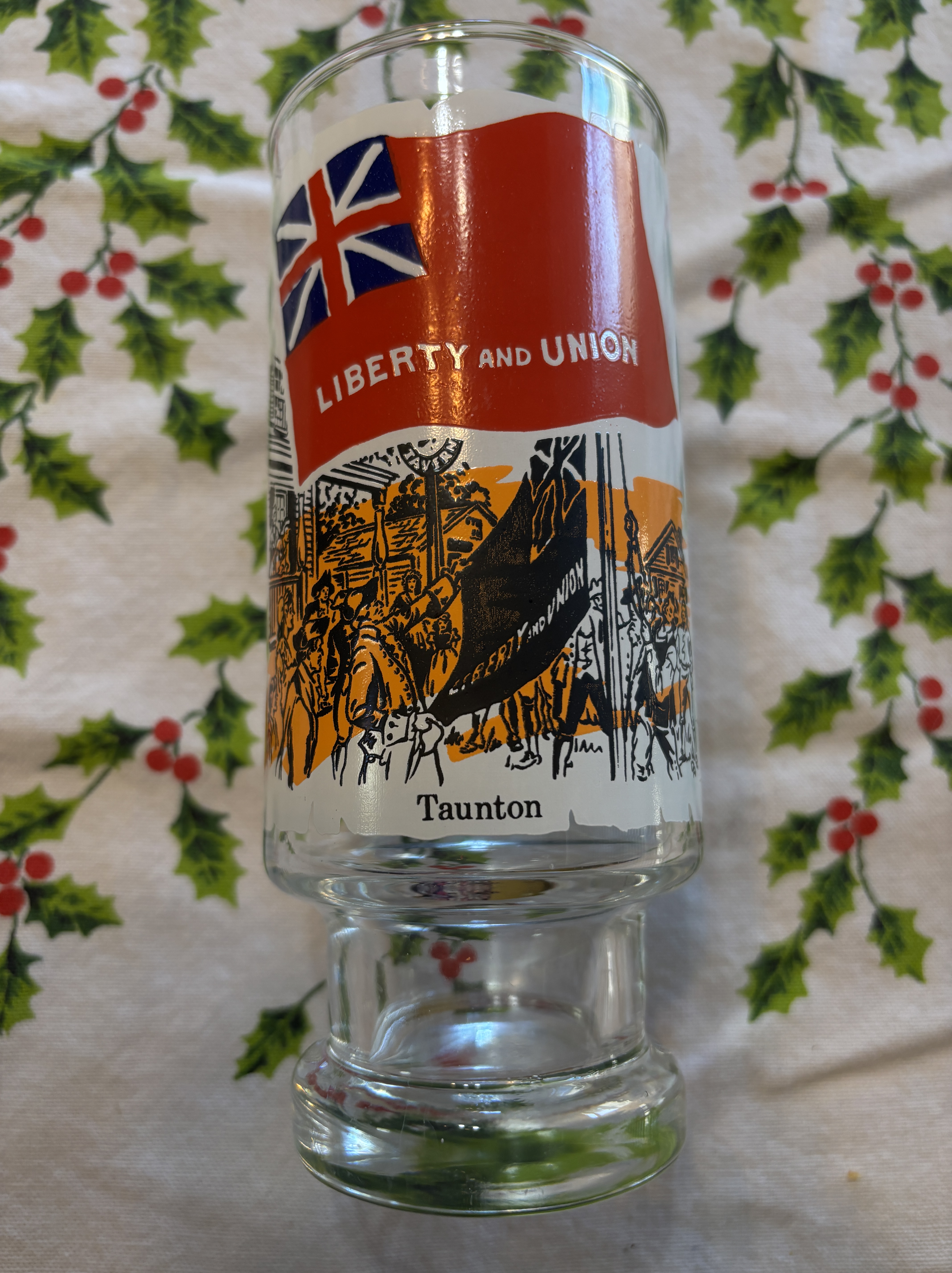
“We have just received the following intelligence from Taunton, ‘that on Friday last a Liberty Pole of 112 Feet long was raised there, on which . . . a Union Flag [was] flying, with the Words LIBERTY and UNION thereon. . . . ‘“ (1). So wrote an unnamed correspondent from Taunton in the pages of the Boston Evening Post’s edition of October 24, 1774.
Sometimes antique shopping can lead to a history lesson. I look for bicentennial items and I was attracted to a glass with an early American flag – the Taunton Flag. According to the text on the back of the glass, Taunton residents took the English Red Ensign and added the words “Liberty and Union.” They raised a flagpole on the Taunton Common and one October 21st, 1774 and they hoisted the flag as a symbol of their dissatisfaction with Britain.
The Old Colony Museum in Taunton has posted good information on the flag. Colonial self-rule was threatened by the passage of laws like the Stamp Act in 1765. British troops were sent to Boston to maintain order when colonists began to protest that their rights as Englishmen were threatened. The “Intolerable Acts” closed Boston Harbor to shipping and the 1692 Massachusetts charter was revoked. Conventions were held in counties to coordinate resistance. The Bristol County convention was held in Taunton. At that time the sovereignty of George II was accepted, but Parliament was blamed. Taunton relied upon the maritime industry and the closure of the port of Boston impacted their economy. Loyalists were blamed and several notable ones were run out of town. The flag was created by the Sons of Liberty, and was the first flag to fly in protest to British rule while still remaining loyal to the crown.
Some sources believe that the Taunton Flag symbolized that at that time local Americans were not looking for independence but were looking to maintain their union with Great Britain. They wanted to keep their liberties and Englishmen.
I am working on a simple timeline for Butts Hill Fort that might go into signage sometime. There are a lot of dates I have firmly determined, but I am stumped on an origin date and credit to which side first began to construct fortifications.
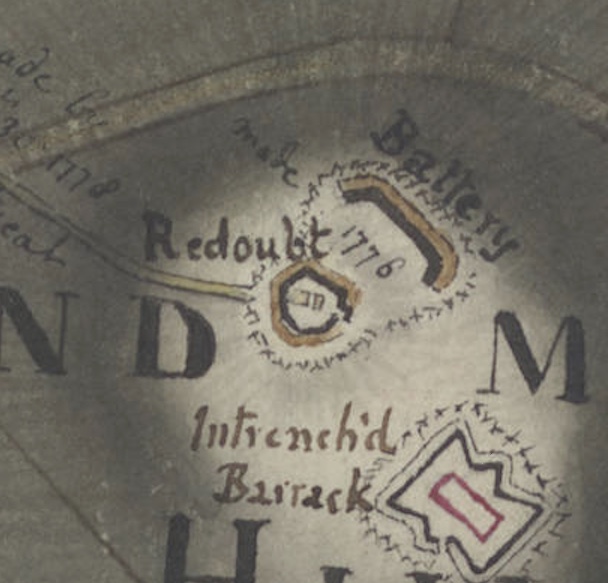
I am not a military historian, but John Robertson is. He credits the British with the first fortification in December of 1776. One reason I have believed that the American militia had to have created some fortifications is notations on the Huntington Library’s map of North Portsmouth. The note reads “made in 1776.” The British did not invade Aquidneck Island until December 8th, 1776. They would have had to work quickly in the cold winter to construct a battery that quickly.
Robertson believes that when the British arrived they found only two American fortifications and they were by the ferries.
Our best resource on British activities in Occupied Portsmouth is the diary of Frederick Mackenzie. Unfortunately Mackenzie was away from the island for the beginning months of 1777, but we have his accounts of December 1776. His account of troop distribution on December 17th doesn’t show any troops stationed at “Windmill Hill” (Americans called it Butts Hill). Those mentioned were “At Bristol ferry house,” (which would have been close to the Commons area today) detached to a house at the point (probably Common Fence Point), Town Pond, at the Neck and at the road to Howland’s Bridge.
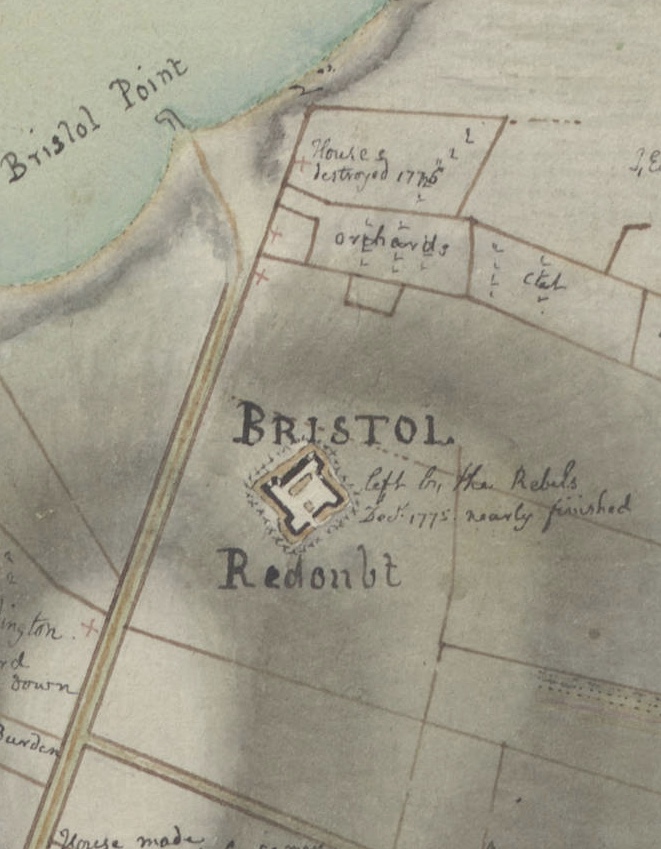
Mackenzie diary on December 30 mentions that the British took over a fort that had been constructed by the American up the hill at Bristol Ferry. The notation here specifically mentions that they Rebels built this fortification in 1775. His diaries mention the hard frosts the British encountered so I imagined that digging for battery building would have been hard to accomplish.
After a being away in New York, Mackenzie mentions “Windmill Hill” June 3, 1777.
” A Picquet of one of the Regiments on Windmill, is ordered to reiRnforce the advance posts every evening ’til further orders.” What happened from January until June is missing in the diary.
D.K. Abbass writes that the American Militia had a fortification on the hill. I have tried to find confirmations when I research the Rhode Island Militia. Although Portsmouth did have an active militia, I can’t find mentions of specific use of the hill. I have looked at locations of signal beacons. Butts Hill would be the perfect place to put a beacon. I know there were reports of a beacon in Portsmouth, but I cannot find a specific mention of the Butts Hill site.
Readers – help me write the origin line.
1776 Americans
1776 British
1777 British
I am aware that as we research and find other sources, there might be a change in how we write an origin of the fort. But for now….I have to put something down.
Dr. Robert Selig’s translation of Rochambeau’s Orderly Book gives us an understanding of the French presence at “Camp Butts Hill” in 1780 to 1781. Orderly books contain daily “Morning Reports”, “Garrison orders” and “General Orders”. They don’t give a narration of what happened, but they often give us clues as to who was performing what tasks. We have had access to at least two orderly books from Massachusetts militia units, but Selig’s work brings us a fuller picture from the French side. Selig will be continuing his research and I look forward to adding new information from the engineers who were in charge of the construction at the fort.
In Selig’s article on the French engineers, he provides background to why the French were interested in building a stronger “Butts Hill Fort.” When the French arrived the fort was in poor shape and there was concern that the British may come back and invade Aquidneck Island again. General Rochambeau, Lafayette and others saw the fort as a key communications point if the British returned.
Colonel Jean Nicholas Desandroüins left a description of the fort of December 1780, just as Rochambeau’s engineers began their work. Desandroüin’s observations give us an idea of the condition of the fort when the French began their work.
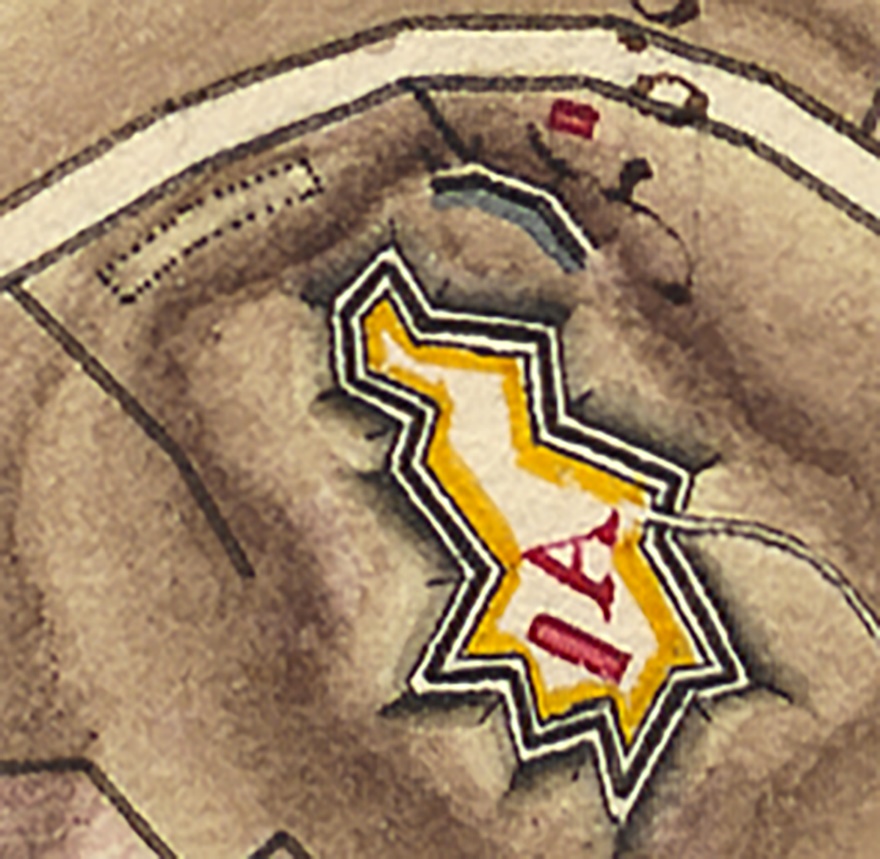
“It was also necessary to provide the means of being rescued by ensuring communication with the mainland. With this in mind at the far end (northern-most point) […] a fort called Bootshill was built on the height which dominates (overlooking) the space between the two passes or ferry crossings of Bristol and of Howlands. Assistance can assemble under its protection. This good work is of a high elevation, well flanked, preceded by a ditch as wide and deep, dug partly in the rock. It was sufficiently stocked with artillery and could hold 500 men. For its construction, we took advantage of two older, very imperfect, redoubts, whose mutually supporting fronts were shaved off, and which were joined together by two branches with breaks and redans, to make a single piece of good defence and capacity.” (Quoted in Blondet, Jeux de Guerre, p. 239. Blondet dates the letter to 9 December 1780.)
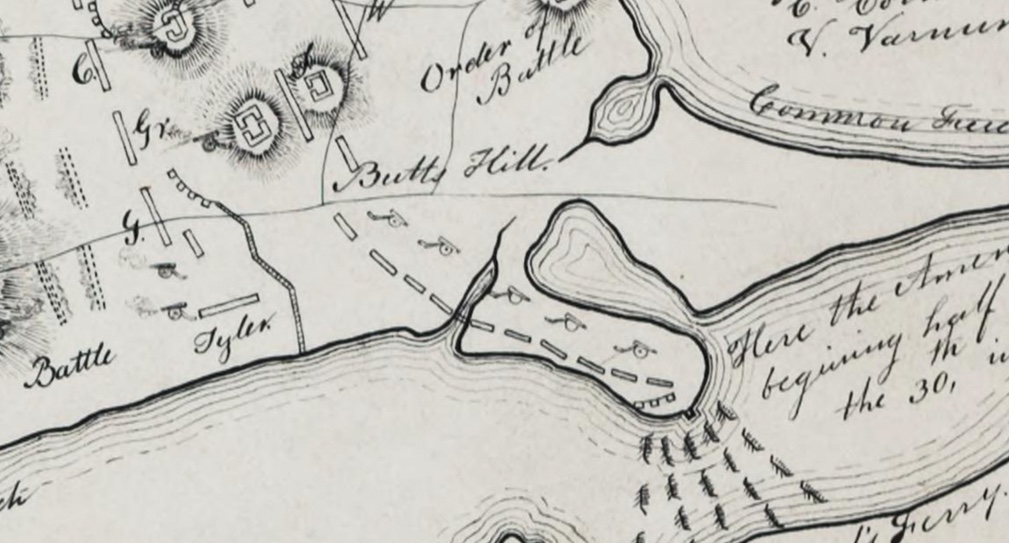
Butts Hill Fort from the Berthier Brothers Map 1780-81
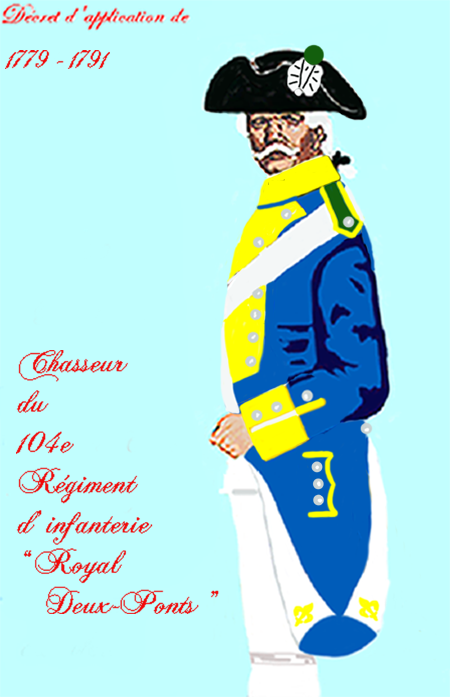
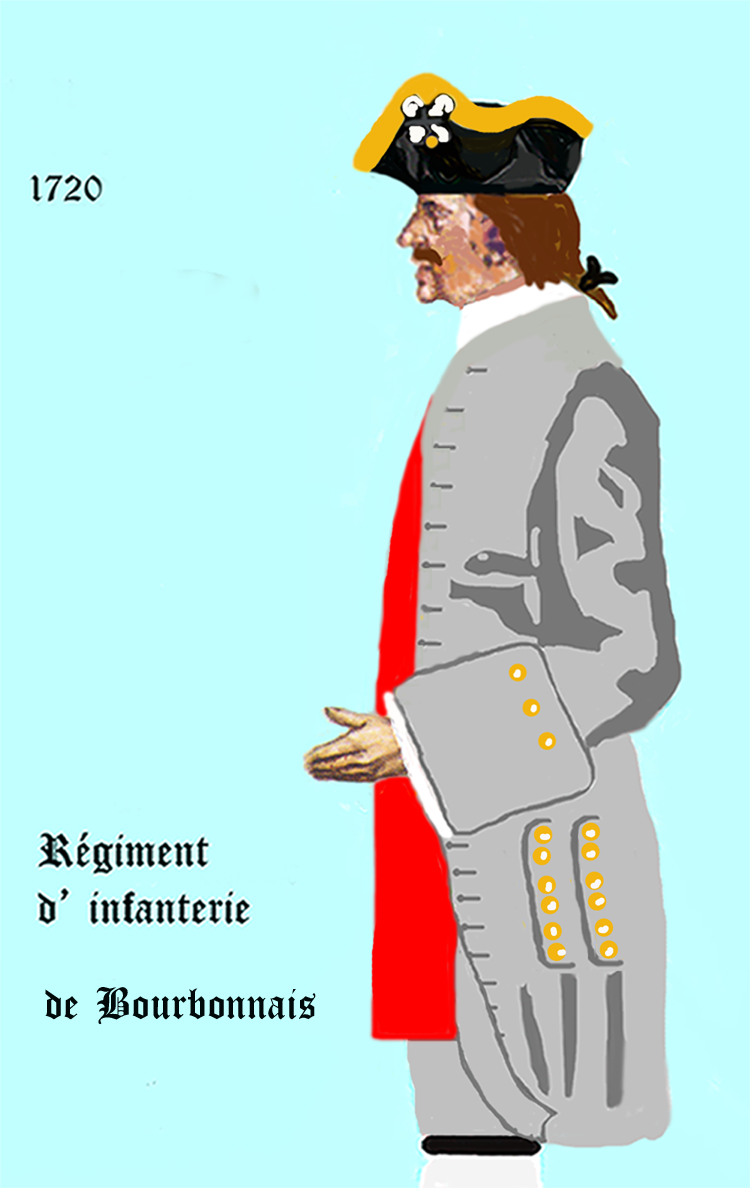
As I read the American Orderly Books from “Camp Butts Hill” (for example Orderly books of Ebenezer Thayer, Jr.) I imagined American militia aiding the French engineers and doing the physical labor at the fort. What I am discovering through Dr. Robert Selig’s work with Rochambeau’s orderly book, is that four French regiments where also present at the construction of the Butts Hill Fort. They included the Soissonnois, Bourbonnois, Royal Deux Ponts, and Santonge Regiments.
Quoting from the Selig’s English version of the orderly books:
Order of 9 December 1780 “Each regiment will furnish two squads [at 12 men each] and a sergeant, the brigade of Soissonnois a lieutenant, and that of Bourbonnois a Capitaine en second who will command the whole, they will assemble at 7 o’clock in the morning near the guardhouse on the Parade Ground. This detachment will march with arms and baggage to Butts Hill Fort near Howland’s Ferry to work there as directed to them by the engineer who will be there, they will take with them cooking pots, mess tins, flasks, and provisions for five days, which each regiment will take care to procure today. The captain who will command the detachment ordered to work at Butts Hill Fort, a mile from Howland’s Ferry, will keep his soldiers in good order and discipline, he will order each day only one corporal and four men as guards, and will not allow more than one cook be employed per regiment in order to keep as few men as possible from the work.”
This entry demonstrates that the French soldiers were actively working at fort construction. Five would work as guards and one as cook, but they wanted to “keep as few men as possible from the work.”
In the table below I have outlined the rotation of French Regiments as detailed in Rochambeau’s Orderly Book.
Date
Unit
Duty
Comment
12/23/1780
Each regiment
Distribute provisions
12/28/178
Soissonnois, Santonge, Royal Deux Ponts – Bourbonnais 23
3 regiments return. Take orders from Palisse, Major of the Royal Corps of Engineers
For the security of the post, the police of the guard, and the preservation of the fort’s works. The detachment will also take orders from Monsieur de Palisse, Major of the Royal Corps of Engineers, and from Monsieur Planchard for the work that can be done.
Order of 31 December 1780
Soissonnois
Relieve previous
1/4/1781
Saintonge
Relieve previous
1/9/1781
Deux Ponts
Relieve previous
All the working soldiers employed in repairing the camp effects will be exempt from roll call and will be allowed to work until 8 o’clock in the evening.
1/14/1781
Bourbonnais
Relieve previous
1/16/1781
Rochambeau grant
Quarter supplement to the ration of bread per day to the workers at the fort of Butts Hill Fort.
1/19/1781
Soissonnois
Relieve previous
1/24/1781
Saintonge
Relieve previous
1/29/1781
Royal Deux Ponts
Relieve previous
2/2/1781
Bourbonnais
Relieve previous
2/7/1781
Soissonnois
Relieve previous
2/13/1781
Saintonge
Relieve previous
2/18/1781
Royal Deux Ponts
Relieve previous
2/23/1781
Bourbonnais
Relieve previous
2/28/1781
Soissonnois
Relieve previous
3/5/1781
Saintonge
Relieve previous
Will be relieved by the first American troop that will establish itself in this fort
3/18/1781
Soissonnois
Send to Butts Hill the soldiers named Armand,Corporal and Foucault, soldiers of the company de lay Boyere, fleur Damour of that company of Anselm and Bourdet of the company of Scanty were they will take the order of M. De Turpin, Captain of the Engineers
Americans relieve
4/1/1781
Royal Deux Ponts
One sergeant and a squad
4/11/1781
Soissonnois
One corporal and six men
4/16/1781
Saintonge
One corporal and eight men
4/21/1781
Deux Ponts
One sergeant and one corporal and 10 men
4/25/1781
Bourbonnais
One sergeant, one corporal and 10 men
4/29/1781
Soissonnois
One sergeant and one corporal and 10 men
5/3/1781
Saintonge
One sergeant and one corporal and 10 men
5/8/1781
Deux Ponts
One Sargent, three corporals and 20 men.
5/18/1781
Soissonnois
Three corporals 10 men
5/23/1781
Saintonge
One sargeant, three corporals 10 men
5/28/1781
Deux Ponts
One sargeant, three corporals 10 men
6/2/1781
Bourbonnais
One sergeant, three corporals and ten men.
6/7/1781
Soissonnois
Three corporals 10 men
The presence of, and the work carried out by, French soldiers at Butts Hill Fort from July 1780 and June 1781 is beyond doubt. The Orderly Book clearly established that within a week of their arrival in Newport, French engineers, most notably Major de Palys, were supervising repairs at the fort. At this point the work was carried out by American militia. It was only in December 1780, that French soldiers began working at Butts Hill Fort, which they did until June 1781, when Rochambeau’s forces deployed to New York.
References:Dr. Robert Selig’s research is detailed in a video on Battle of Rhode Island Association website. Rochambeau’s Engineers at Butts Hill.

 portsmouthhistorynotes