Home

The French in Newport: The Road to Yorktown Begins

Leave a comment

October 25, 1779: The British evacuate Newport to consolidate their position in New York.

On July 11, 1780 a squadron of French warships approached Newport. It was not the first time the French came to Newport’s waters. The Treaty of Alliance with France was signed on February 6, 1778. On July 29, 1778 a French squadron sailed into Narragansett Bay. It created a military alliance between the United States and France against Great Britain. On the American side it was negotiated by Benjamin Franklin, Silas Deane, and Arthur Lee. This treaty stipulated that France and America would not negotiate a separate peace with Britain and that American independence would be a requirement before any peace treaty was signed. The Rhode Island Campaign in 1778 was the first French and American operation under the treaty. This joint action ended prematurely when damage from a storm took the French out of the Campaign.

In 1780 the “Expedition Particuliere” or Special Expedition would be a successful alliance. In July of 1781 Rochambeau’s French troops would leave Newport to join Washington’s army for the ultimate victory over the British in Yorktown.

The French arrived in Newport in July of 1780. Most of the forces wintered in Newport except the Lauzun Legion which camped in Connecticut. Rochambeau was very skillful in handling his troops and the Americans began to appreciate their presence. Where the British had demolished defenses, the French engineers worked on rebuilding them. Major General William Heath’s diary for September of 1780 notes that “The batteries were strengthened, a very strong one erected on Rose-Island, and redoubts on Coaster’s-Island: the strong works on Butt’s-Hill (were) pushed..” A few days later he would remark: “The French army continued very busy in fortifying Rhode-Island: some of their works were exceedingly strong, and mounted with heavy metal.” We know from orderly books (daily records) that the American militiamen were aiding the French masons as they enlarged and fortified Butts Hill Fort.

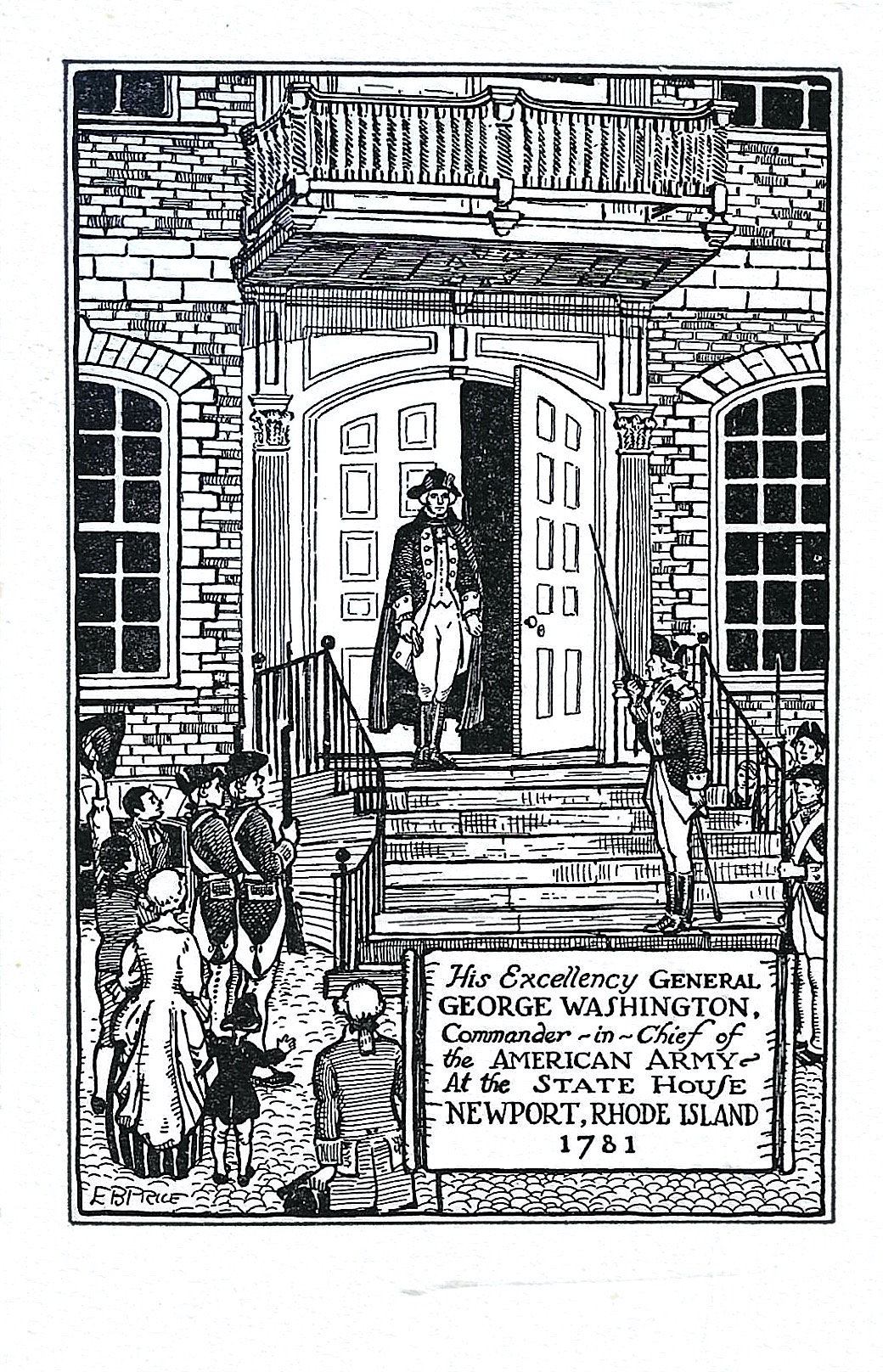
On March 6, 1781, three months before the French army departed from Newport, General Washington visited Count de Rochambeau to consult with him concerning the operation of the troops under his command. Washington was hoping to encourage Rochambeau to send out his fleet to attack New York City. In an address to the people of Newport, Washington expressed gratitude for the help of the French:

“The conduct of the French Army and fleet, of which the inhabitants testify so grateful and affectionate a sense, at the same time that it evinces the wisdom of the commanders and the discipline of the troops, is a new proof of the magnanimity of the nations. It is a further demonstration of that general zeal and concern for the happiness of America which brought them to our assistance; a happy presage of future harmony…appeasing evidence that an intercourse between the two nations will more and more cement the union by the solid and lasting times of mutual affection.” (Quote taken from New Materials for the History of the American Revolution by J. Durant. Henry Holt, New York, 1889.)

Washington left Newport and journeyed overland to Providence. On his departure he was saluted by the French with thirteen guns and again the troops were drawn up in line in his honor. Count de Rochambeau escorted Washington for some distance out of town, and Count Dumas with several other officers of the French army accompanied him to Providence. We know that General George Washington travelled by Butts Hill Fort on the old West Main Road on his way to the Bristol Ferry because the West Road was the customary route from Newport to the ferry. Washington’s aide, Tench Tilghman, recorded the fee for the Bristol Ferry on the expense book.

In May of 1781 Washington and Rochambeau met again, this time in Weathersfield, Connecticut. This meeting confirmed the joining of the forces and the march South.

The French left Newport in stages:
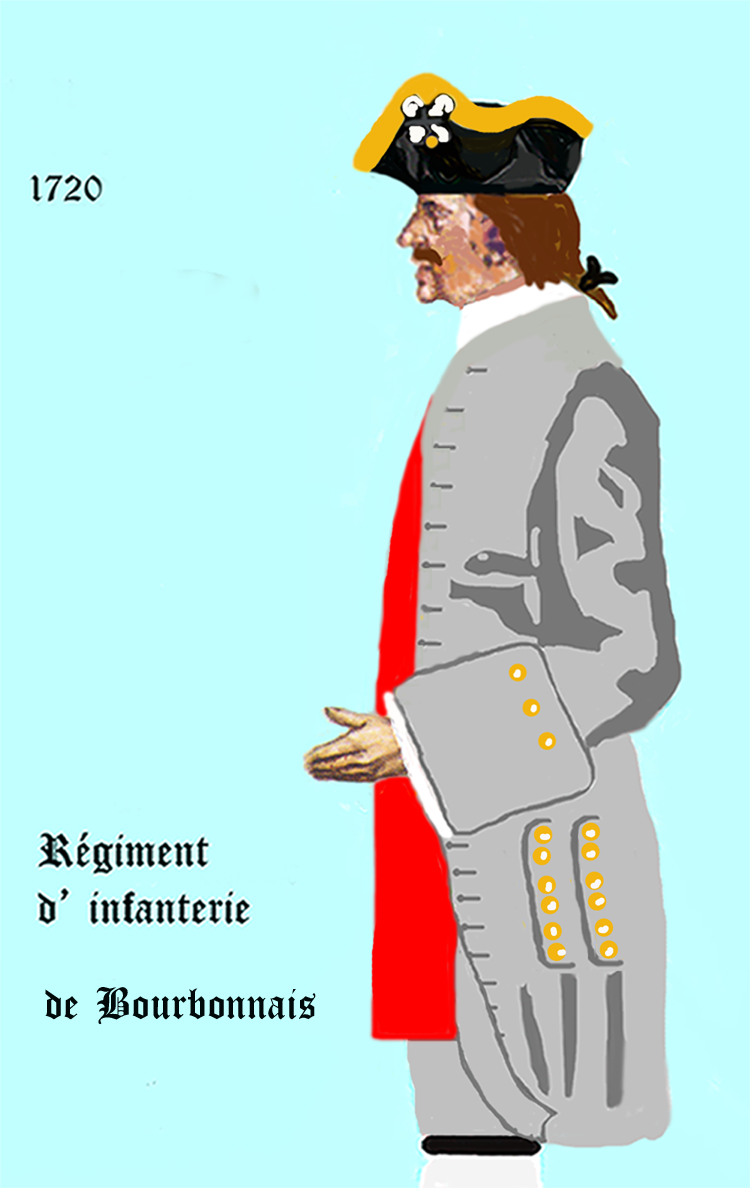
Regiment Bourbonnois under the vicomte de Rochambeau, left on June 18
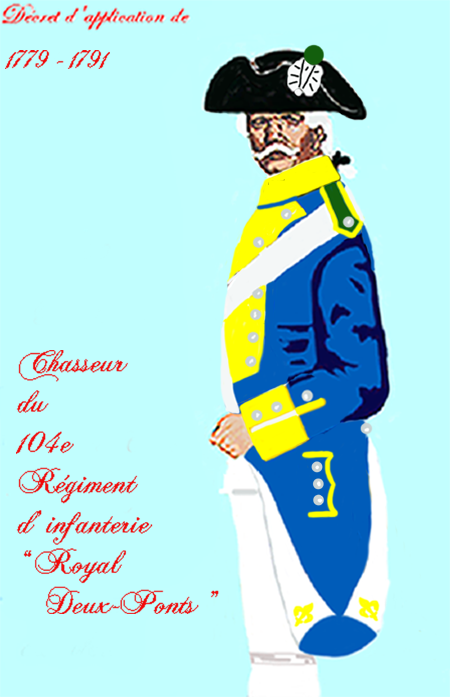
Regiment Royal Deux-Ponts under the baron de Vioménil, left on June 19
Regiment Soissonnois under the comte de Vioménil, left on June 20
Regiment Saintonge under the comte de Custine, left on June 21.

Brigadier General de Choisy was left behind in Newport with some French troops. He sailed with Barras’ fleet to the Chesapeake area in August. In the summer of 1781, General Rochambeau’s French Army joined forces with General Washington’s Continental Army, With the French Navy in support, the allied armies moved hundreds of miles toward victory in Yorktown, Virginia in September of 1781.

Resources:

https://www.nps.gov/waro/learn/historyculture/washington-rochambeau-revolutionary-route.htm

By Robert Selig, PhD. for the Washington-Rochambeau Revolutionary Route Resource Study & Environmental Assessment, 2006.
https://digitalcommons.providence.edu/cgi/viewcontent.cgi?article=1018&context=ri_history. Visit of George Washington to Newport in 1781 – French E. Chadwick. 1913
Loughrey, Mary Ellen. France and Rhode Island, 1686-1800. New York, King’s Crown Press, 1944.
Revolutionary Places: Stories from Vernon House in Newport – A Spy, A Patriot, A Black Regiment Soldier, and French Heroes

Leave a comment

The Spy: Metcalf Bowler

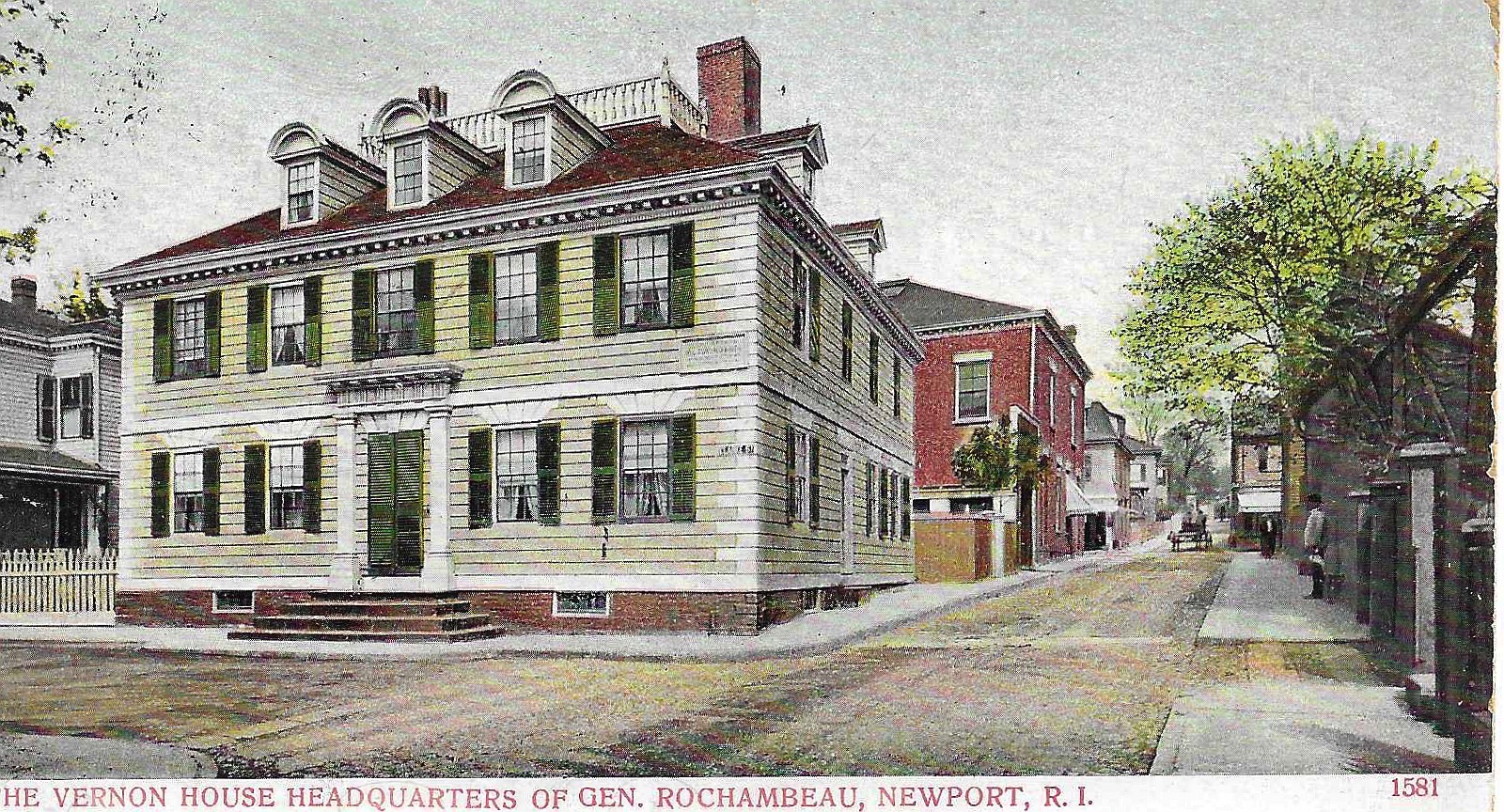
The Vernon House at 46 Clarke Street in Newport has special significance in the history of the Revolution in Rhode Island. It has connections to a British spy, an American war heroes and the French in Newport. It has a history dating from 1744, but the first owner with Revolutionary connections was Metcalf Bowler who bought the property from his father in 1759. Bowler was a noted merchant and judge, but we know now that he was also a British spy. He was concerned about his country estate in Portsmouth and hoped to salvage it from British destruction by providing information to British General Gates. In 1774 he sold the house on Clarke Street to William Vernon, a merchant and slave trader. Unfortunately for Bowler, his work as a spy did not protect his Portsmouth farm.

The Patriot: William Vernon

William Vernon and his brother Samuel were early supporters of the revolution, so when the British came to Newport, William fled Newport for Rehoboth, Massachusetts. Vernon moved to Boston and In 1777 Vernon was appointed by the Continental Congress as president of the Naval Board – a role resembling Secretary of the Navy. He was responsible for building and outfitting ships for the Continental Navy. He supported the Navy cause with his own money.

The Black Soldier: Cato Vernon

Cato Vernon was probably one of the two Black males aged under sixteen listed in the 1774 census as part of William Vernon’s household in Newport. By December of 1776 the British were in Newport and William Vernon had fled. In late 1776, Cato was working in East Greenwich as an apprentice to a ship carpenter.

On March 11, 1778, Cato enlisted in the First Rhode Island Regiment of Continentals (the famous “Black Regiment”). Cato may have enlisted without permission from William Vernon who was in Boston, but by law William was entitled to Cato’s value. Enlisting in the regiment for the duration of the war had the promise of securing freedom. The Black Regiment played a key role in the American retreat during the Battle of Rhode Island on August 29, 1778. The Regiment held back three charges of British allied Hessian troops and that was one factor enabling the Americans to get away to fight another day. Cato and the Black Regiment served all the way to the surrender at Yorktown.

Life was not easy for Cato after the war. In August 1793, Cato Vernon was in a Newport jail because he could not pay his debts. He wrote a letter from jail to William Vernon and there is a record of William Vernon paying that debt so Cato would be free.

The French in Newport

On July 11, 1780, the French Fleet arrived in Newport. The Comte de Rochambeau The commander in-chief of the French forces, used the house as his quarters and the headquarters of the French forces. Records show that on March 6, 1781 General George Washington slept at the Vernon House. On July 25, 1780. Lafayette remained in Newport with Rochambeau at Vernon House until July 31, 1780.

Resources:

Newport Restorations website on the Vernon House: https://www.newportrestoration.org/programs-initiatives/telling-stories-dispersed-monument/vernon-house/

Walking Butts Hill

Leave a comment

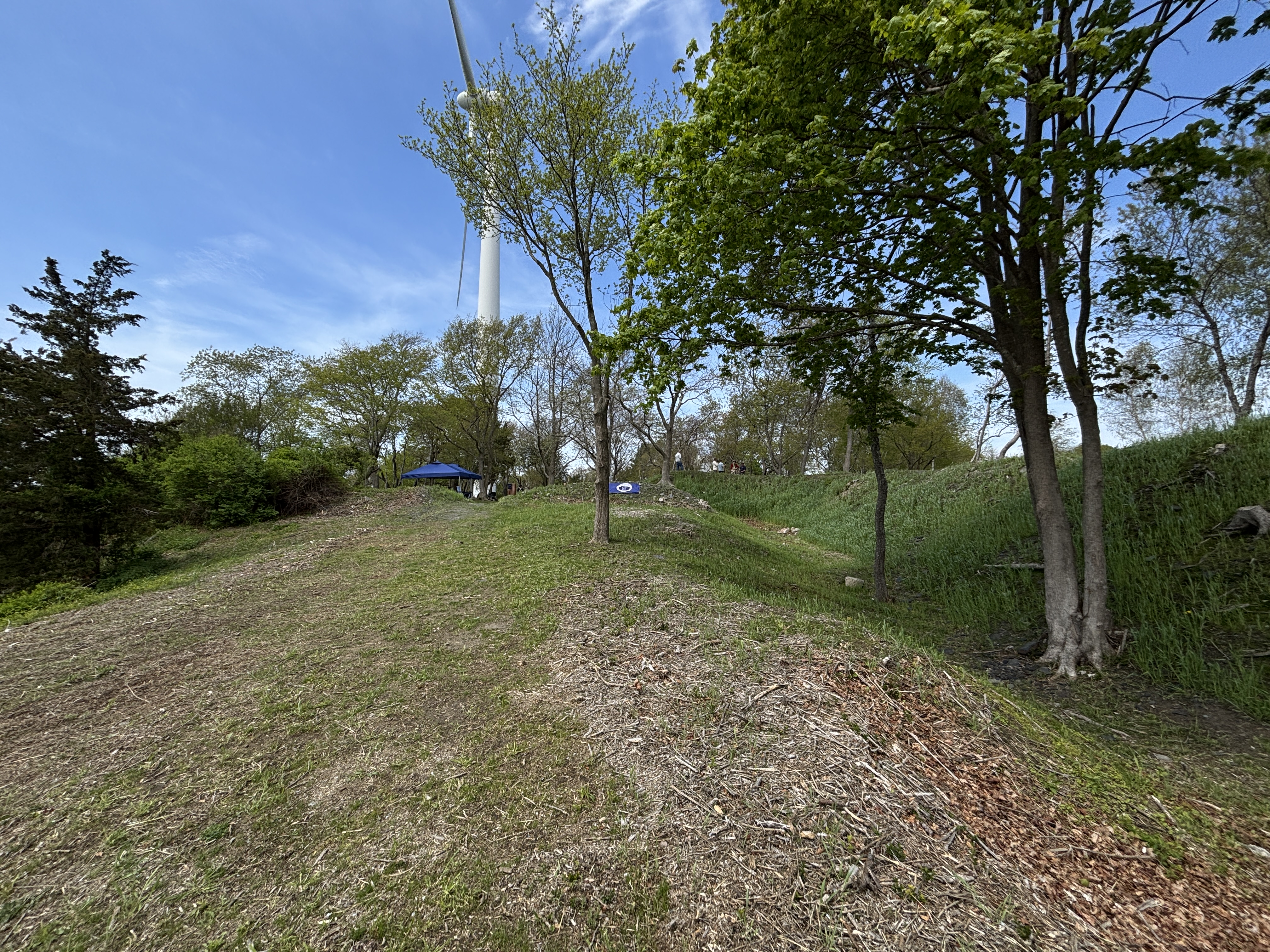
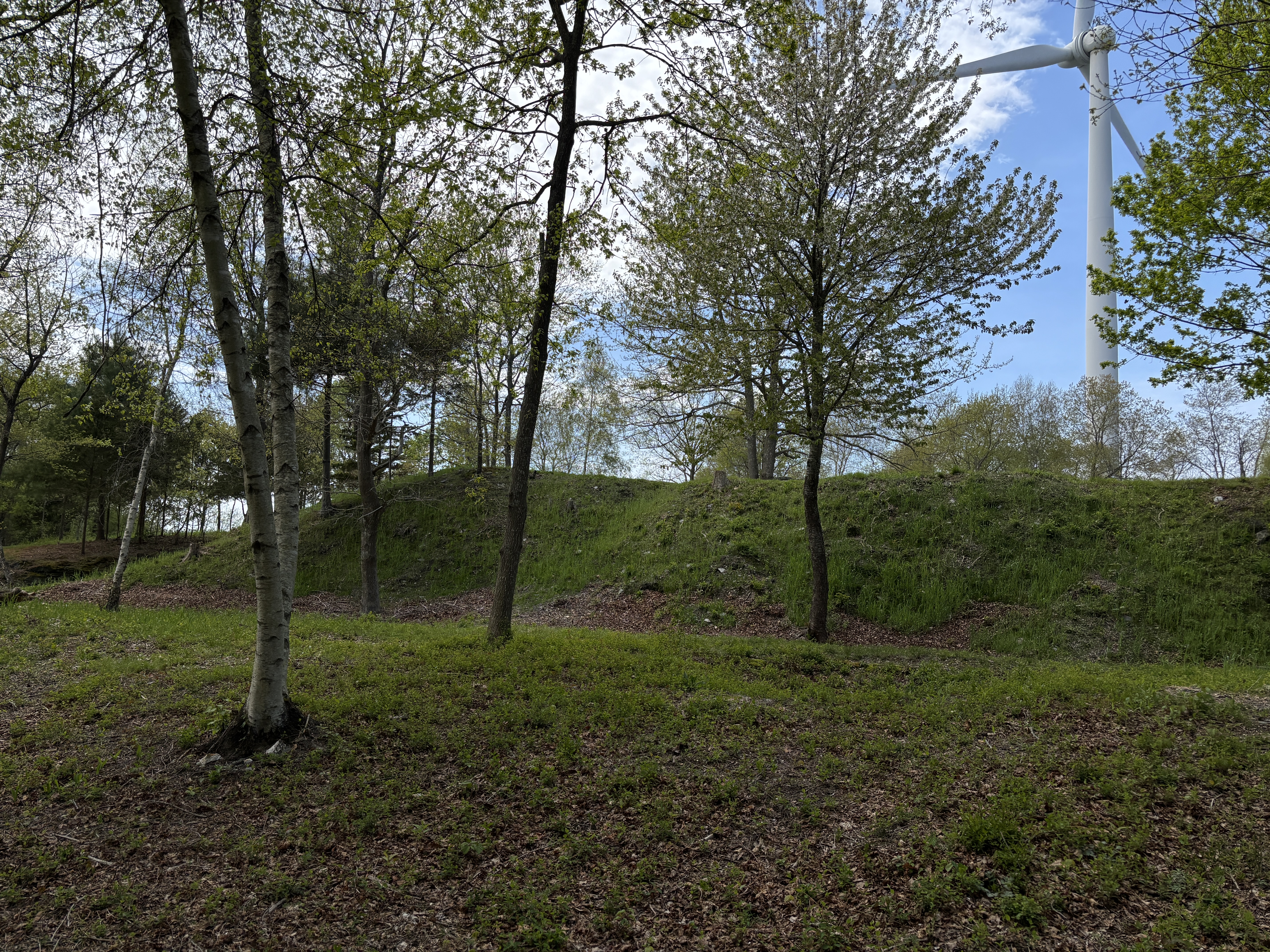
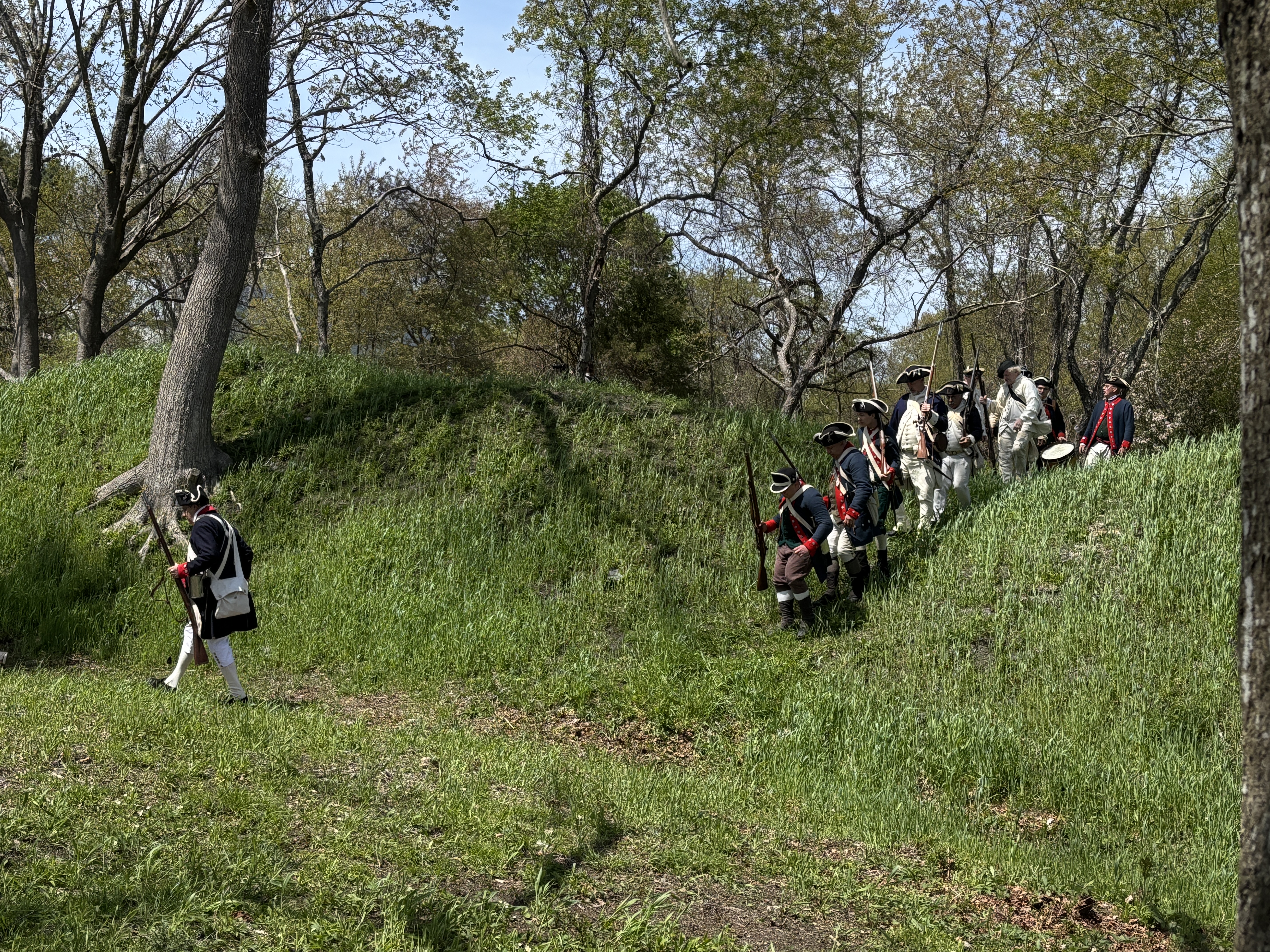
If you haven’t been to Butts Hill lately, this is an excellent time to go. This week we hosted 46 AP History students from Portsmouth High Schools on a tour of Battle of Rhode Island skirmish sites. We ended with a walking tour of the fort.

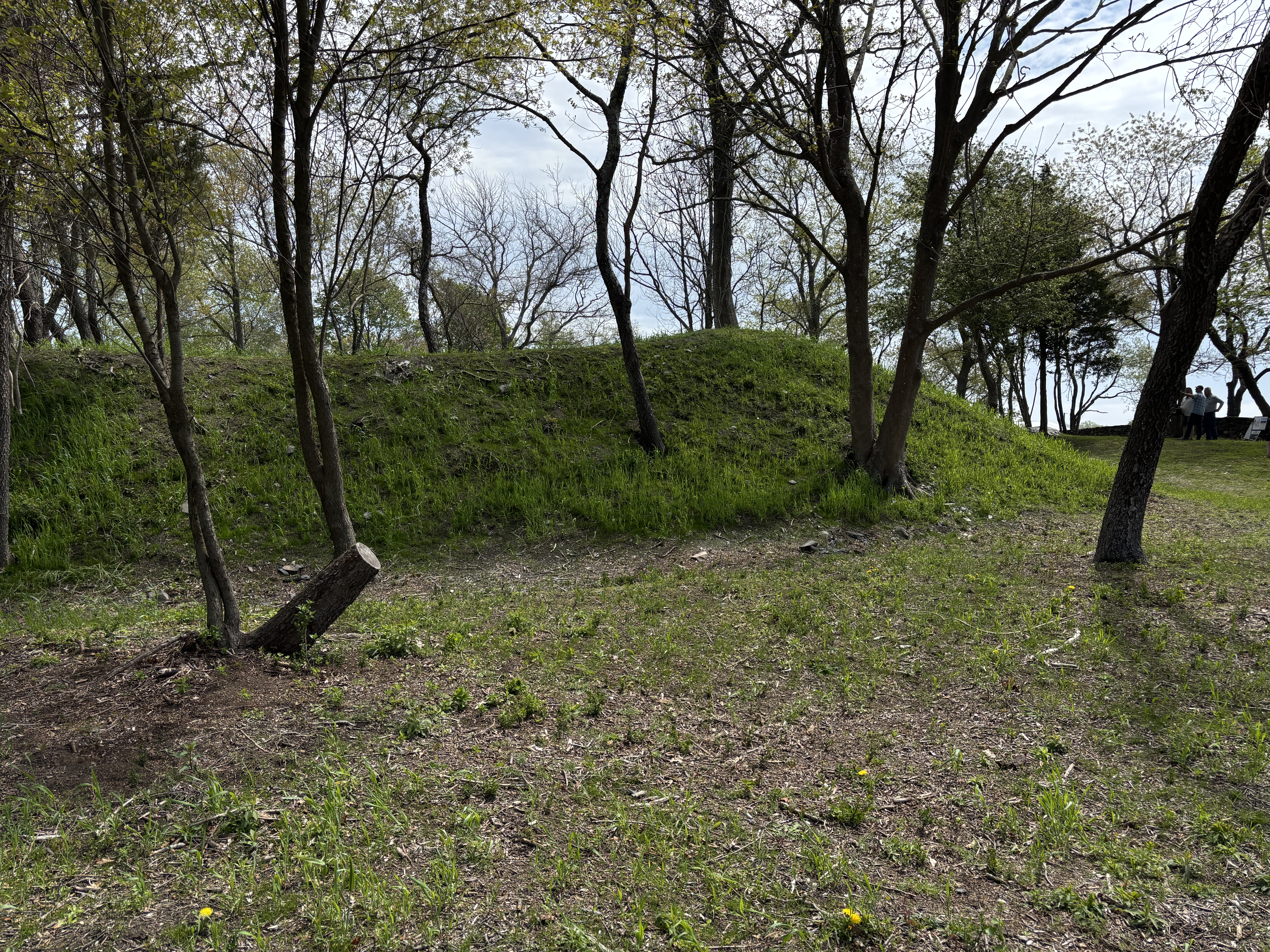
We hope to have better signage up in the coming year and full self-tour with QR codes. Meanwhile we have some resources to help explain what you see walking through the fort.

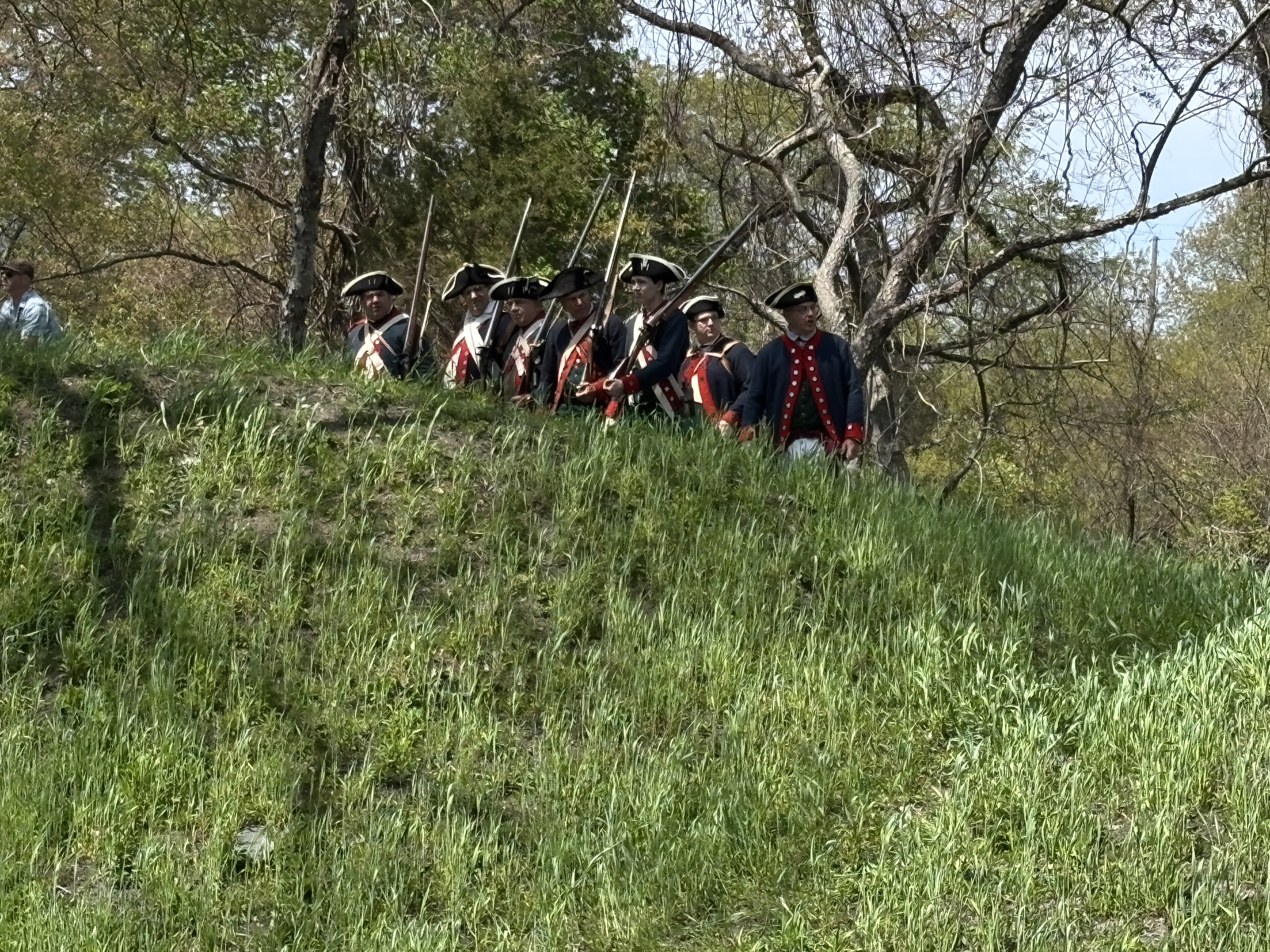
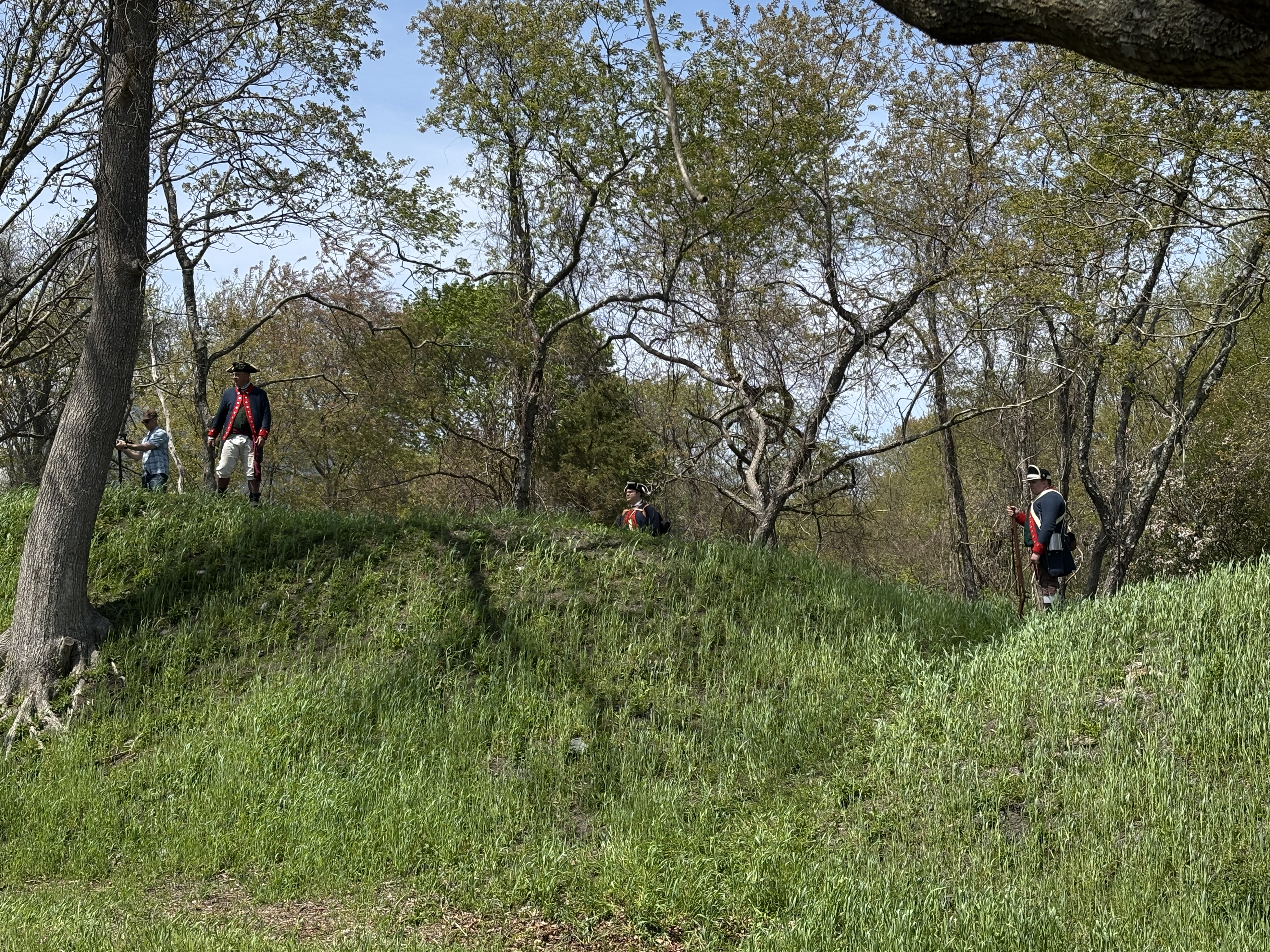
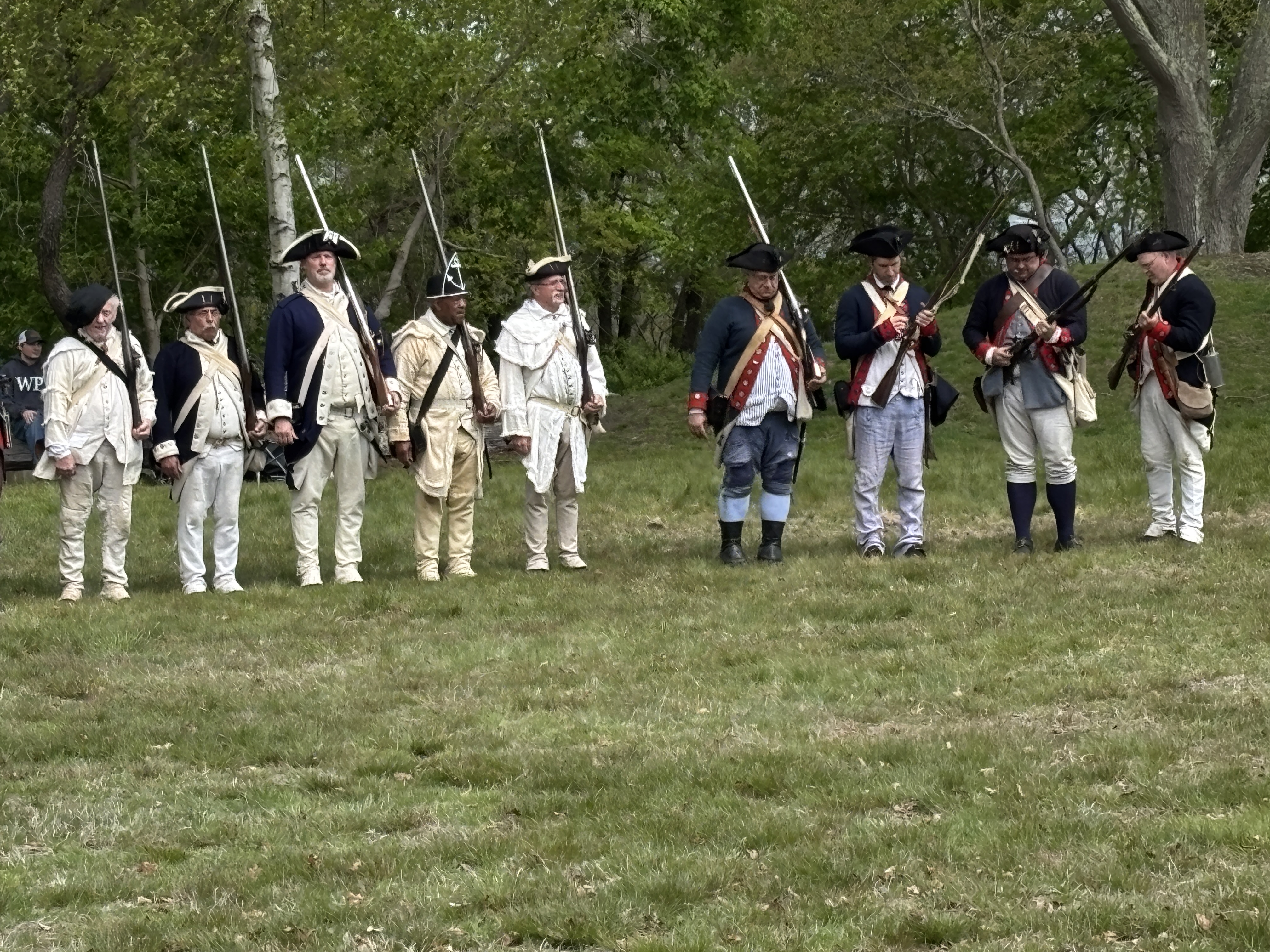
Photos from Brigade of the American Revolution event in May 2025

Rochambeau’s Orderly Book: A Key to Understanding The French at Camp Butts Hill

Leave a comment

Dr. Robert Selig’s translation of Rochambeau’s Orderly Book gives us an understanding of the French presence at “Camp Butts Hill” in 1780 to 1781. Orderly books contain daily “Morning Reports”, “Garrison orders” and “General Orders”. They don’t give a narration of what happened, but they often give us clues as to who was performing what tasks. We have had access to at least two orderly books from Massachusetts militia units, but Selig’s work brings us a fuller picture from the French side. Selig will be continuing his research and I look forward to adding new information from the engineers who were in charge of the construction at the fort.

In Selig’s article on the French engineers, he provides background to why the French were interested in building a stronger “Butts Hill Fort.” When the French arrived the fort was in poor shape and there was concern that the British may come back and invade Aquidneck Island again. General Rochambeau, Lafayette and others saw the fort as a key communications point if the British returned.

Colonel Jean Nicholas Desandroüins left a description of the fort of December 1780, just as Rochambeau’s engineers began their work. Desandroüin’s observations give us an idea of the condition of the fort when the French began their work.

“It was also necessary to provide the means of being rescued by ensuring communication with the mainland. With this in mind at the far end (northern-most point) […] a fort called Bootshill was built on the height which dominates (overlooking) the space between the two passes or ferry crossings of Bristol and of Howlands. Assistance can assemble under its protection. This good work is of a high elevation, well flanked, preceded by a ditch as wide and deep, dug partly in the rock. It was sufficiently stocked with artillery and could hold 500 men. For its construction, we took advantage of two older, very imperfect, redoubts, whose mutually supporting fronts were shaved off, and which were joined together by two branches with breaks and redans, to make a single piece of good defence and capacity.” (Quoted in Blondet, Jeux de Guerre, p. 239. Blondet dates the letter to 9 December 1780.)

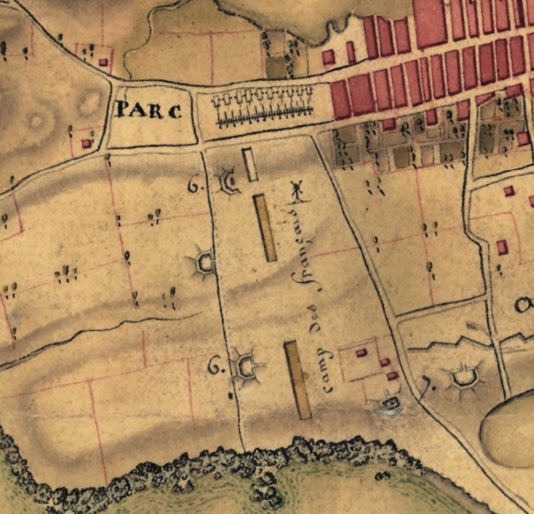
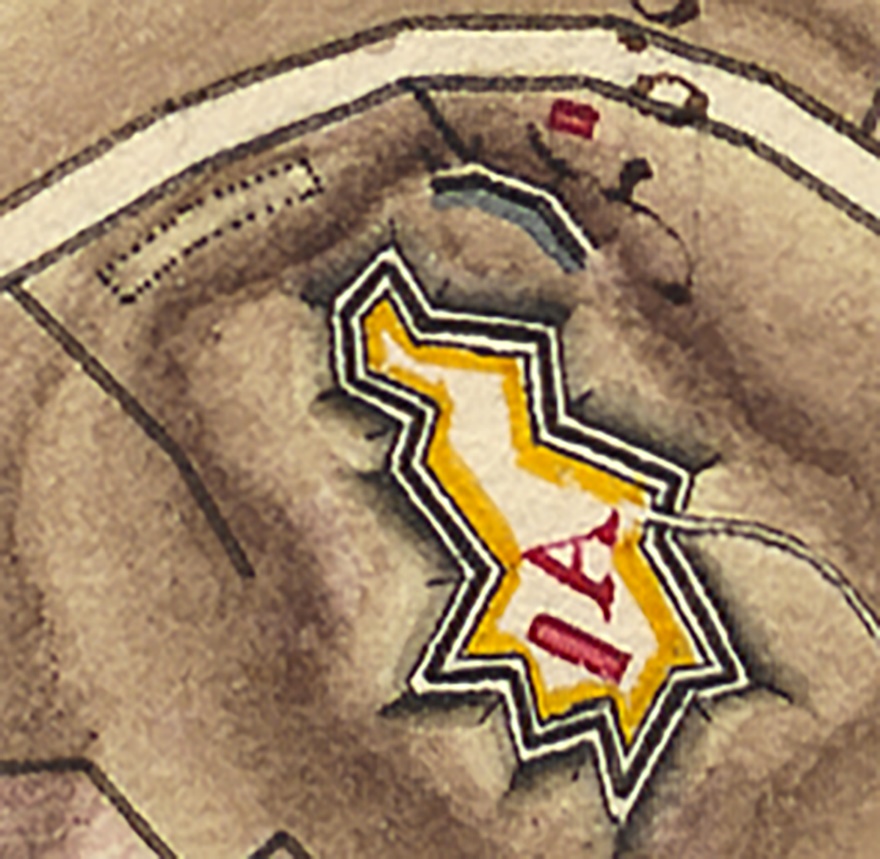
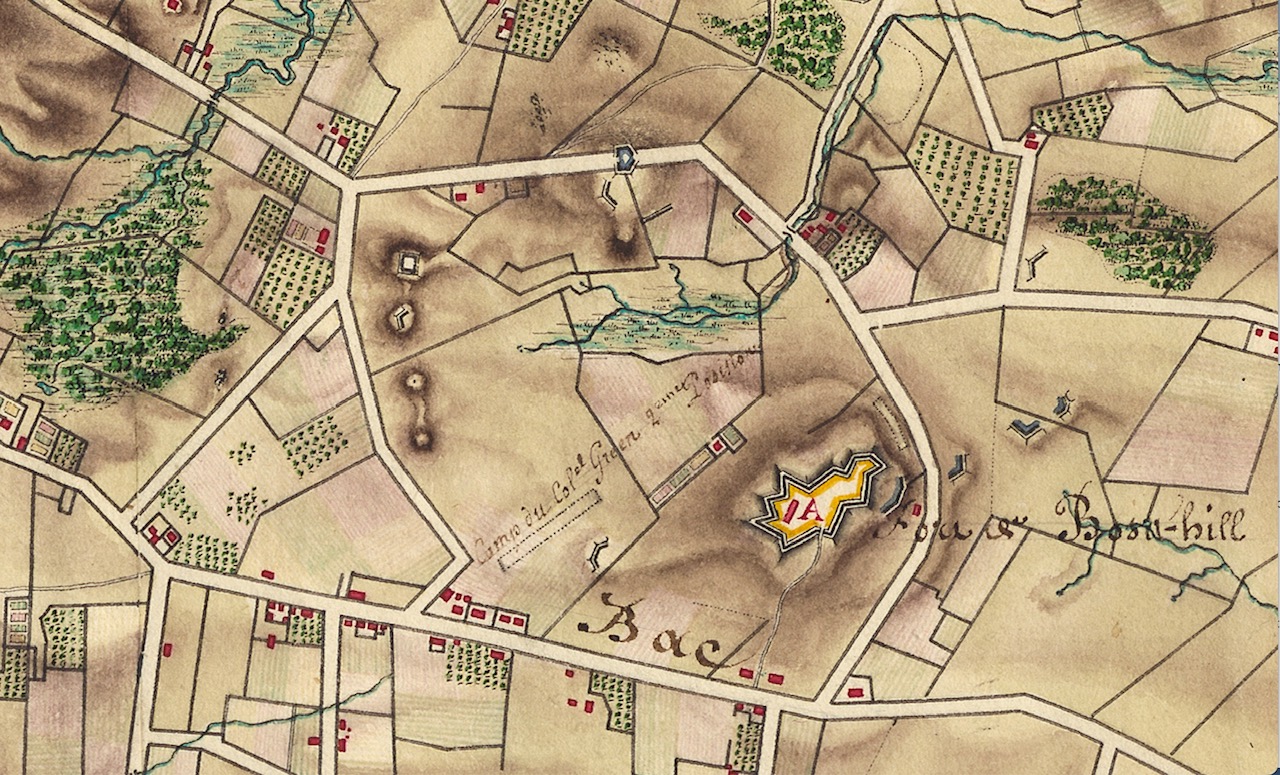
Butts Hill Fort from the Berthier Brothers Map 1780-81

As I read the American Orderly Books from “Camp Butts Hill” (for example Orderly books of Ebenezer Thayer, Jr.) I imagined American militia aiding the French engineers and doing the physical labor at the fort. What I am discovering through Dr. Robert Selig’s work with Rochambeau’s orderly book, is that four French regiments where also present at the construction of the Butts Hill Fort. They included the Soissonnois, Bourbonnois, Royal Deux Ponts, and Santonge Regiments.

Quoting from the Selig’s English version of the orderly books:

Order of 9 December 1780
“Each regiment will furnish two squads [at 12 men each] and a sergeant, the brigade of Soissonnois a lieutenant, and that of Bourbonnois a Capitaine en second who will command the whole, they will assemble at 7 o’clock in the morning near the guardhouse on the Parade Ground. This detachment will march with arms and baggage to Butts Hill Fort near Howland’s Ferry to work there as directed to them by the engineer who will be there, they will take with them cooking pots, mess tins, flasks, and provisions for five days, which each regiment will take care to procure today. The captain who will command the detachment ordered to work at Butts Hill Fort, a mile from Howland’s Ferry, will keep his soldiers in good order and discipline, he will order each day only one corporal and four men as guards, and will not allow more than one cook be employed per regiment in order to keep as few men as possible from the work.”

This entry demonstrates that the French soldiers were actively working at fort construction. Five would work as guards and one as cook, but they wanted to “keep as few men as possible from the work.”

In the table below I have outlined the rotation of French Regiments as detailed in Rochambeau’s Orderly Book.

DateUnitDutyComment
12/23/1780Each regimentDistribute provisions
12/28/178Soissonnois, Santonge, Royal Deux Ponts – Bourbonnais 23 3 regiments return.  Take orders from Palisse, Major of the Royal Corps of EngineersFor the security of the post, the police of the guard, and the preservation of the fort’s works. The detachment will also take orders from Monsieur de Palisse, Major of the Royal Corps of Engineers, and from Monsieur Planchard for the work that can be done. 
Order of 31 December 1780 
SoissonnoisRelieve  previous
1/4/1781SaintongeRelieve previous
1/9/1781Deux PontsRelieve  previousAll the working soldiers employed in repairing the camp effects will be exempt from roll call and will be allowed to work until 8 o’clock in the evening. 
1/14/1781BourbonnaisRelieve  previous
1/16/1781
Rochambeau grantQuarter supplement to the ration of bread per day to the workers at the fort of Butts Hill Fort.
1/19/1781SoissonnoisRelieve  previous
1/24/1781SaintongeRelieve  previous
1/29/1781Royal Deux PontsRelieve  previous
2/2/1781BourbonnaisRelieve  previous
2/7/1781SoissonnoisRelieve  previous
2/13/1781SaintongeRelieve  previous
2/18/1781Royal Deux PontsRelieve  previous
2/23/1781BourbonnaisRelieve  previous
2/28/1781SoissonnoisRelieve  previous
3/5/1781SaintongeRelieve  previousWill be relieved by the first American troop that will establish itself in this fort
3/18/1781SoissonnoisSend to Butts Hill the soldiers named Armand,Corporal and Foucault, soldiers of the company de lay Boyere, fleur Damour of that company of Anselm and Bourdet of the company of Scanty were they will take the order of M. De Turpin, Captain of the EngineersAmericans relieve
4/1/1781Royal Deux PontsOne sergeant and a squad 
4/11/1781SoissonnoisOne corporal and six men
4/16/1781SaintongeOne corporal and eight men
4/21/1781Deux PontsOne sergeant and one corporal and 10 men
4/25/1781BourbonnaisOne sergeant, one corporal and 10 men
4/29/1781SoissonnoisOne sergeant and one corporal and 10 men
5/3/1781SaintongeOne sergeant and one corporal and 10 men
5/8/1781Deux PontsOne Sargent, three corporals and 20 men.
5/18/1781SoissonnoisThree corporals 10 men
5/23/1781SaintongeOne sargeant, three corporals 10 men


5/28/1781Deux PontsOne sargeant, three corporals 10 men


6/2/1781BourbonnaisOne sergeant, three corporals and ten men.
6/7/1781SoissonnoisThree corporals 10 men


The presence of, and the work carried out by, French soldiers at Butts Hill Fort from July 1780 and June 1781 is beyond doubt. The Orderly Book clearly established that within a week of their arrival in Newport, French engineers, most notably Major de Palys, were supervising repairs at the fort. At this point the work was carried out by American militia. It was only in December 1780, that French soldiers began working at Butts Hill Fort, which they did until June 1781, when Rochambeau’s forces deployed to New York. 

References:Dr. Robert Selig’s research is detailed in a video on Battle of Rhode Island Association website. Rochambeau’s Engineers at Butts Hill.

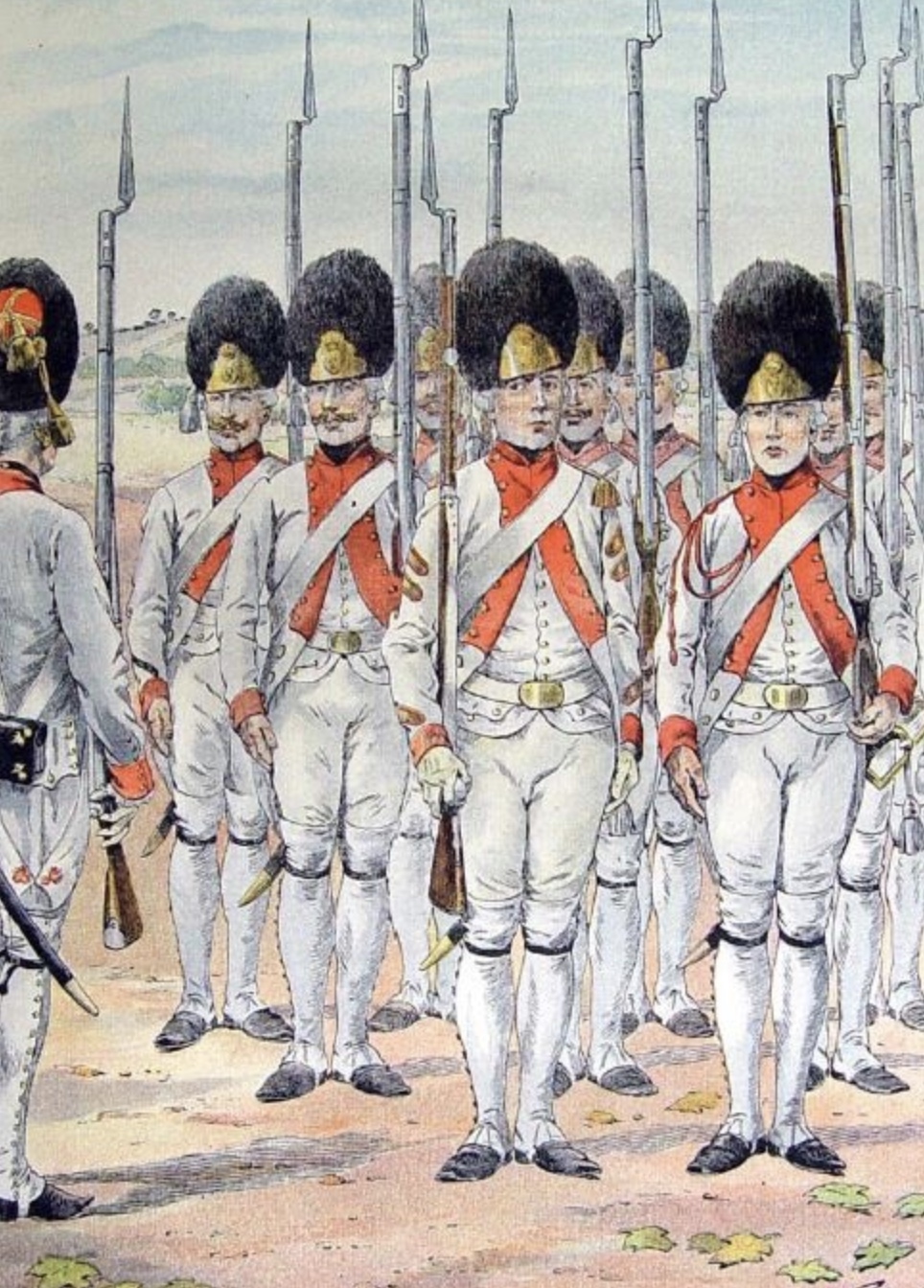
Illustrations: Par Claude-Antoine Littret de Montigny — Bibliothèque nationale de France, gallica.bnf.fr, Domaine public, https://commons.wikimedia.org/w/index.php?curid=84807137

“Saving the Blood of a Large Number of Brave Men”: A French description of Joint French and American War Games 1780

Leave a comment

In earlier blogs I wrote about a war game or “sham battle” described in the letter of an American doctor (John Goddard) to a colleague. This battle was on October 2, 1780, but there are also descriptions of later mock battles or skirmishes on October 8th and October 11th of 1780. Louis Bertrand Dupont d’Aubevouede Lauberdiere kept a Journal of his experience in the American Revolutionary War. Through the work of Norman Desmarais, we have an English translation – The French Campaigns in the American Revolution, 1780-1783: The Diary of Count of Lauberdiere, General Rochambeau’s Nephew and Aide-De-Camp.

We know through a brief Providence newspaper account that another “battle” occurred on October 8th. Lauberdiere described the battle as being “on the eighth.” In his diary he mentions yet a third of these war games on October 11th. There are some similarities of the mock battle descriptions in both the American and French accounts.

From Lauberdiere’s diary:

“May our comrades arrive soon and draw us out of the somber tranquility in which we live. The soldiers under canvas (tents) want to see the enemy, want to hear the cannon. In the absence of the British, Mr. De Rochambeau created some and, on the eighth he drilled the army on the point where the real enemy might land. We pretended that a fleet entered our harbor and planned a landing.” ( Road to Yorktown.” page 40-41).

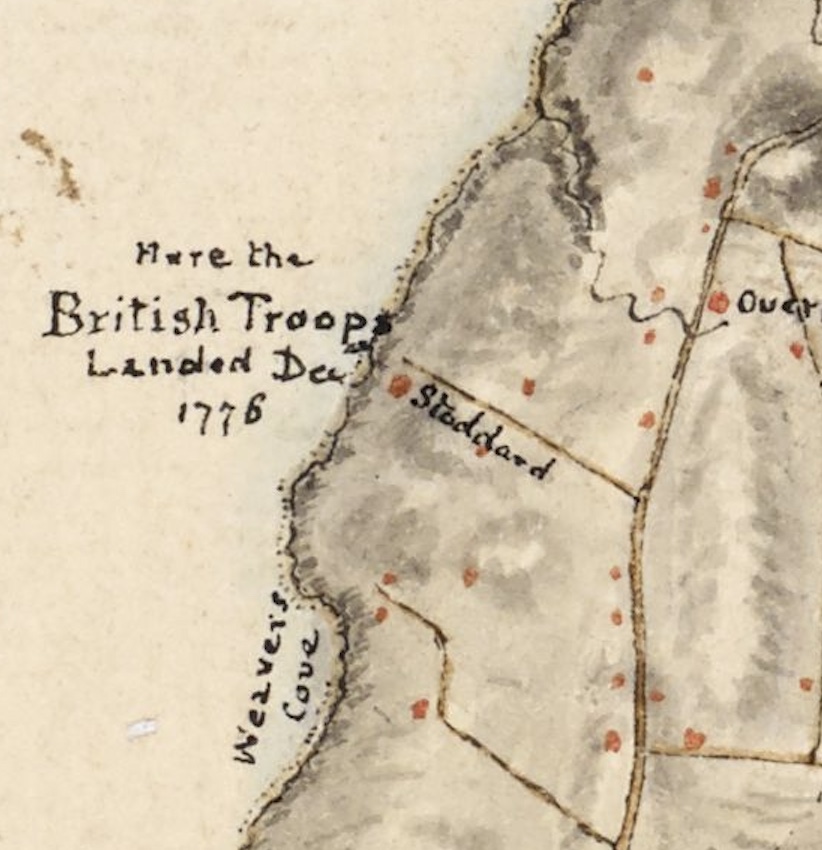
The British ships had been seen near Newport waters and the expectation was that they would invade. Rochambeau picked the location of the British invasion in 1776 as the site for the battle. The diary calls the location “Stauder’s House,” but the actual name was Stoddard. British maps label this location. close to the Middletown – Portsmouth border, as the landing site of the British.

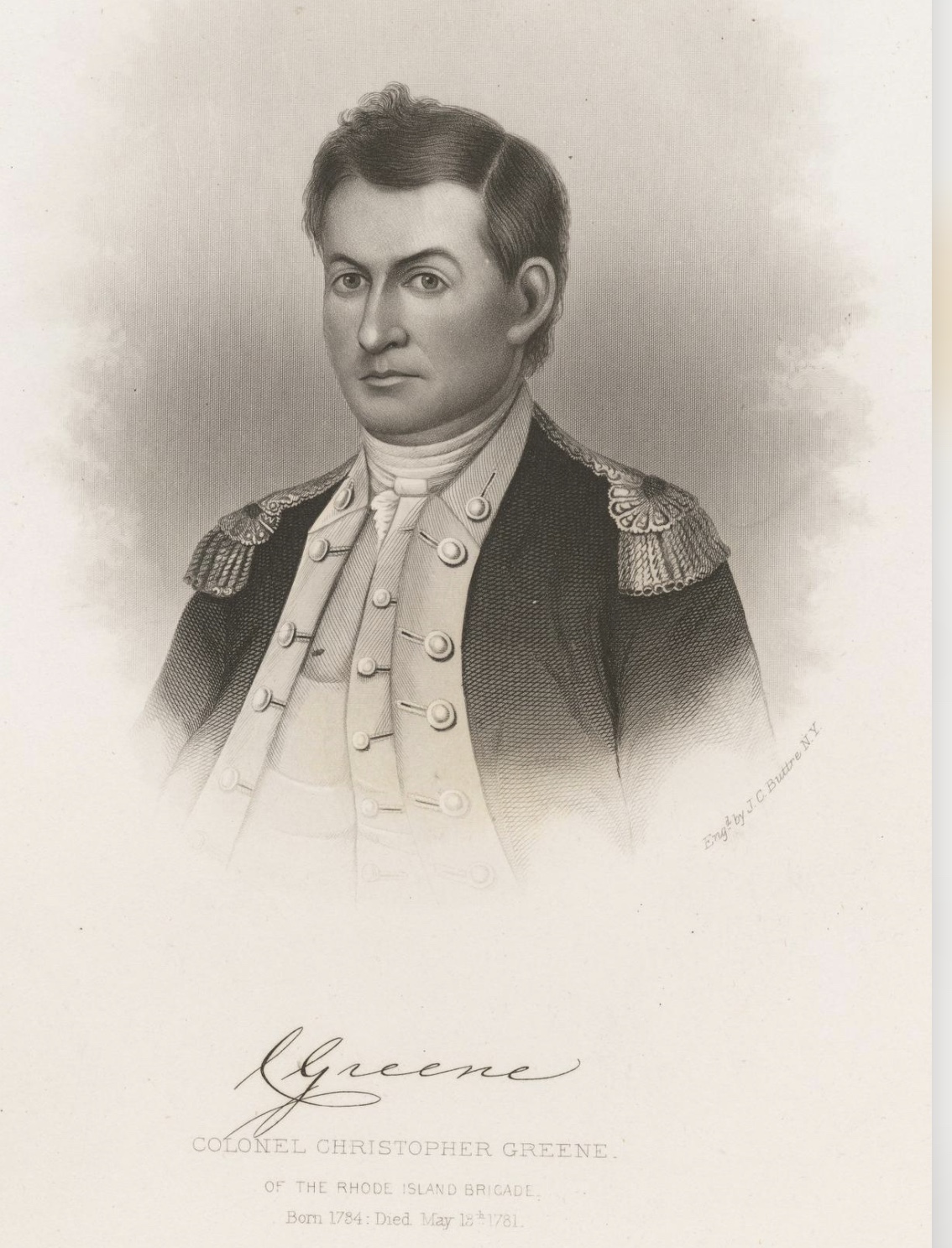
“We put 1500 men under the command of the Viscount de Viomenil who was at Stauder’s house. It was there that our enemies first began to take possession of a few houses along the shore. Mr. De Rochambeau kept the rest of the troops with him for the imminent attack to which he joined the American Rhode Island Regiment commanded by Co. (Christopher) Greene. These troops were divided into two column. Mr. De Rochambeau personally led the left column. The Baron de Viomenil commanded the right. The grenadiers and light infantry battalions formed a separate one.”

In Goddard’s account of the October 2nd mock battle, the American forces, the Rhode Island First Regiment (the Black Regiment), under Col. Christopher Greene, took part in the drill. The French Army did have drills between their own men and some of those may have been in the Third Beach area of Middletown. This drill on the eighth of October was also a drill of combined forces of the Americans and their French allies.

Col. Christopher Greene

“The attack began with several discharges of cannon, well-executed to create a complete effect of the fictitious enemy leaving their boats and forming quickly. At the same time, the column of grenadiers advanced to dislodge the enemy from the houses as they began to establish themselves there. During this musket fire, the Baron de Viomenil turned their right under the protection of a hill which concealed his movement. When he was ready and the attack was fully engaged, Mr. De Rochambeau had the charge sounded. Everything advanced in good order. The enemy disappeared and reassembled on the seashore.”

An Accident Happens: Lauberdiere’s diary:

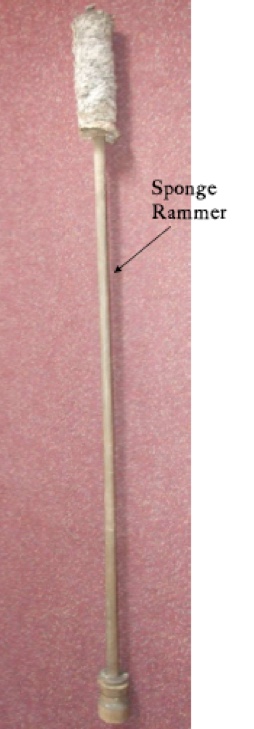
“An accident occurred during this drill. A cannoneer cleaning a piece lost an arm by the sponge. The one who was aiming it had neglected to cover the touchhole with his thumb. An ember remaining from the preceding shot ignited and the charge caught fire.”

During the Revolutionary War a sponge head was used to extinguish embers from the previous firing. The sponge was part of a sponge-rammer tool that pushed the round into the barrel. The sponge head was dipped in water and run down the barrel to quench any embers left over.

Lauberdiere continued:

“Other accidents might have also happened, always caused by the cannon. Many of our navy officers who wanted to witness this drill rented horses. They were usually poor horsemen and wanted to remove all doubt, as three or four were thrown on the ground with each cannon shot.”

It appears there was an audience for the October 8th battle as well as the one described in Goddard’s account of the one on October 2nd.

The diary goes on to describe another drill, this one on the 11th of October:

“Mr. The Count de Rochambeau had the same drill at the point of Stauder’s house on the 11th, just as on the eighth. It was not executed with enough precision or vivacity. It’s on when we are outside the lines and near the one giving orders that we can see the mistakes and know how important it is to have well-informed officers and experienced soldiers. The former understand the orders they receive more easily with experience. In the election, the latter are more prompt, often foresee the objectives and march with greater assurance.”

Lauberdiere’s diary gives an insight into the value of these drills.

“A skirmish is an image of a real battle when it is well conceived and it is also educational. The only real difference, I think, is saving the blood of a large number of brave men. Our general, then, could not make better use of the leisure time which the English gave or to which our small number reduced us, than to accustom his soldiers to the sound of the musket and the cannon to teach them to march without fear especially on the land where they would really fight if the enemy appeared.” (page 46)

Digging in: Information from Robert Selig’s work on the French at Butts Hill

Leave a comment

The Battle of Rhode Island Association has sponsored valuable research on the construction of Butts Hill Fort by Robert Selig and John K. Robertson. I am just now getting around to digesting the reports as I work on a timeline of what happened at the fort during the “Camp Butts Hill” period of 1780 to 1781. This is the first in a series of “Digging In” to the research. Today I am doing a close reading of Robert Selig’s article “Rochambeau’s Engineers at Butts Hill Fort July 1780 to June 1781.” The article appears in the Battle of Rhode Island website – battleofrhodeisland.org.

When the French arrived on Aquidneck Island, they found that work was being done on Butts Hill Fort. Selig writes about a diary entry of Ervoil d’Oyré. Describing the defensive works, he found upon arrival in Newport in July 1780:
“Finally, the works built by the Americans on the north of the island were re-established and repaired to assure communication with the continent.”

Selig writes about the French intentions on Aquidneck Island in their early days on the island.

“Prior to the arrival of Rochambeau’s forces in Rhode Island in mid-July 1780, Butts Hill Fort ‘was the only fort active on the north end of the island.’ As Rochambeau set up defenses against the anticipated and feared British attack, he sought to strengthen Butts Hill Fort to block any access from the north. Earthworks had been set up earlier in the war and repairs and additions were made by Massachusetts State troops, but French engineers almost immediately provided the expertise that the Americans lacked.”

Selig goes on to say that on the 9th of July, 21 British ships were seen near Newport Harbor. .

“The next morning Rochambeau accelerated the construction of defensive works, not only around Newport but at Butts Hill Fort as well. An entry in the journal of Major Marius de Palys’s Journal de Campagne, mentions the redoubts at Howlands Ferry and Butts Hill Fort.

” ‘Eight days had elapsed since the commencement of the work, and no thought had yet been given to fortifying the point of the island which should have 1st thought of. This is the point of Howlands Ferry, and Monsieur de La Fayette decided to occupy it better than it was at the time. There were two bad redoubts, which were connected and formed into a respectable fort, which had not been finished, the fort and another in the shape of a star, which protected the ferry together with a battery on the mainland assured communication with the mainland, which was essential for relief or retreat in case of misfortune.'”

Palys’s Journal continued: “Eight days had elapsed since the commencement of the work.”

That would place the date of the beginning of the work to around 28 or 29 July 1780. Selig tells us that La Fayette spent ten days in Newport from the evening of 24 July to late afternoon 3 August 1780. In a letter to General George Washington, dated “Newport july the 26th at seven o’clock P.M.,” he informed Washington that he “could not help advising him [i.e., Rochambeau] very Strongly and very often to erect works and keep a communication oppenn’d with the Continent By Howland’s Ferry or Bristol Point. That matter will I hope be attended to in the Course of the next day.”

When I started researching Butt Hill Fort, I found several orderly books from Massachusetts militias who were at the fort. I imagined a few French engineers supervising the American workers. Reading through Selig’s translation of a French orderly book gives me a different image. There was a constant French presence at the fort with a five day rotation of men from Soissonnois, Santonge, Royal Deux Ponts, and Bourbonnais. Every five days a new detachment would leave Newport at 7 AM. “This detachment will march with arms and baggage to Butts Hill Fort near Howland’s Ferry to work there as directed to them by the engineer who will be there. They will take with them cooking pots, mess tins, asks, and provisions for five days …The captain who will command the detachment order to work at Butts Hill Fort, a mile from Howland’s Ferry, will keep his soldiers in good order and discipline, he will order each day one corporal and four men as guards, and will not allow more than one cook to be employed per regiment in order to keep as few men as possible from the work.” (Order of 9 December 1780).

The orders of December 28, 1780 provide the duties of the French troops -“for the security of the post, the police of the guard, and the preservation of the fort’s works,” The detachment takes orders from Monseur de Palisse, Major of the Royal Corp of Engineers and from Monsieur Planchard.

The French Orderly book lists orders from December 23, 1780 to June 7, 1781. French forces left Aquidneck Island to travel south in June of 1781. The road to Yorktown began with Aquidneck IsIand. On their way to Bristol Ferry the French army would pass nearby the fort they had been working to build.

A Sham Battle in Portsmouth 1780 – a Note to add to John Robertson’s presentation.

Leave a comment

George Washington’s Thoughts on the Battle of Rhode Island

Leave a comment

What was George Washington’s view of the Battle of Rhode Island?

Washington wrote many letters in the days after the Battle. Letters he wrote to Lafayette and French commander D’Estaing were to smooth over hard feelings about the French withdrawal from Newport. In writing to General John Sullivan, Washington stressed that he wanted a healing of the French/American relationship: “The disagreement between the army under your command and the fleet has given me very singular uneasiness.” 1)

Washington’s letter to brother John Augustine Washington (dated September 23) provides us with a summary written on a personal level to someone not involved in the conflict. I had seen this quotation before, but a director of the Battle of Rhode Island Association brought it to our attention because it is such a thoughtful description.

“The whole may be summed up in a few words, and amounts to this: that an unfortunate storm (so it appeared, and yet ultimately it may have happened for the best,) and some measures taken in consequence of it by the French Admiral, perhaps unavoidably, blasted in one moment the fairest hopes that ever were conceived; and, from a moral certainty of success, rendered it a matter of rejoicing to get our own troops safe off the Island. If the garrison of that place, consisting of nearly six thousand men, had been captured, as there was, in appearance at least, a hundred to one in favor of it, it would have given the finishing blow to British pretensions of sovereignty over this country; ..” 2)

Washington is writing a personal letter to a younger brother. John Augustine Washington is an officer in the Virigina Militia, but his role is more administrative.

Washington writes about:

  1. “An unfortunate storm”: but he suggests it may have happened for the best!!
  2. Measures taken by a French Admiral blasted our “fairest hopes.
  3. American plans “had a moral certainty of success.
  4. Americans were “rejoicing to get our own troops safe off the island.”
  5. Had the 6,000 strong British been captured, “it would have given the finishing blow to British pretentions of sovereighty over this country.”

In short, the American plan was certain to succeed in capturing the British forces and ending British control over the colonies, but a storm led the French fleet to withdraw from Newport and we had to rejoice that we got our troops out of harms way.

References:

  1. Letter September 1, 1778 – Washington to General Sullivan.
  2. Letter September 23, 1778 – Washington to John Augustine Washington.

The Writings of George Washington, collected and edited by Worthington Chauncey Ford (New York and London: G. P. Putnam’s Sons, 1890). Vol. VII (1778-1779).

Washington Portrait: General Washington, Commander of the Continental Army, a 1776 portrait by Charles Willson Peale

Butts Hill Fort 1781 – the Shape of It

Leave a comment

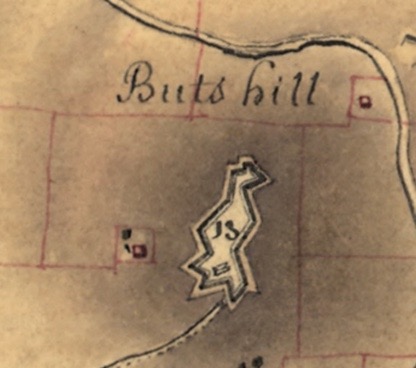
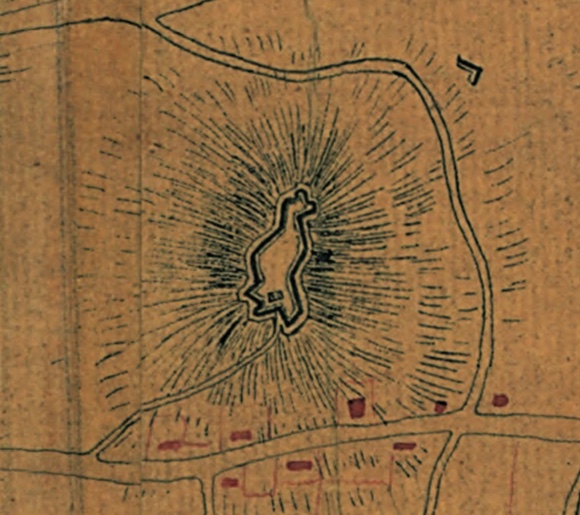
I am continuing to find clues to what Butts Hill Fort looked like in 1781 after the French and Americans had made it into a true fort. In this blog I am gathering images that might help us figure out the shape of the fort.

The first three images are from French made maps. The top two are Rochambeau maps in the Library of Congress. The third map is in the Pierce Collection of the Portsmouth Free Public Library and is also a French map.

What do we learn from the maps?

  1. The entrance was on the Southeast.
  2. There was a road leading from the entrance to East Main Road.
  3. There was a barracks inside the fort.
  4. The last map seems to show some defenses to the northeast – outside of the fort.
  5. The last map shows were Col. Greene’s men were camped while working on the fort with the French.
  6. The triangular defensive (ravelins) positions are most prominent to the south.

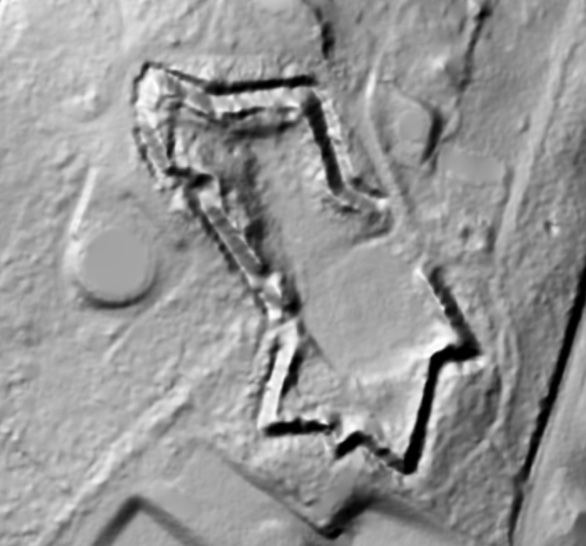
The image below is LIDAR- Light Detection and Ranging. It uses light to measure distances and is also known as laser scanning or 3D scanning. It shows us what is under the vegetation on Butts Hill today. We still have the elementary outlines of the fort under the vegetation today.

What did Butts Hill Fort look like in 1781: Searching for clues

1 Comment

It is hard for us to picture what Butts Hill Fort looked like when it ceased operation in 1781 (some say 1782). The French and Americans took the British fortifications, enclosed them and really make them into a real fort. I am searching for clues among the records of that time, maps, orderly books and those like Benson Lossing who record what they saw at the fort years after the abandonment of the fortification. I am trying to do this in an orderly way, putting together the clues of the primary sources. I have needed an education in military terms, so I have tried to put a definition next to words I had to research.

Today I am working with the Pictorial Field Book of the Revolution, Vol. 1. This was published in 1850 by Benson Lossing.

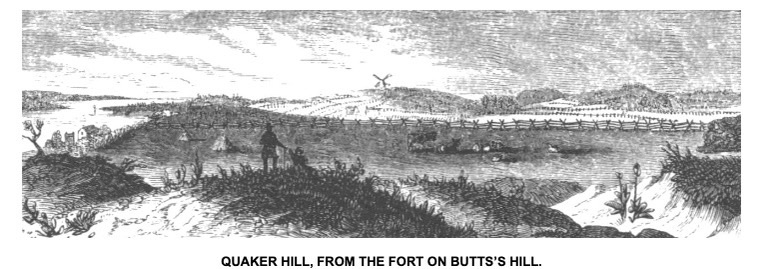
The remains of the old fort on Butts’s Hill, the embankments and fossé, with traces of the hastily-constructed ravelins, are well preserved. Even the ruts made by the carriage-wheels of the cannons, at the embrasures (for the ordnance was composed of field-pieces), were visible. The banks, in some places, are twenty feet high, measuring from the bottom of the fossé. Fortunately for the antiquary, the works were constructed chiefly upon a rocky ledge, and the plow can win no treasure there; the banks were earth, and afford no quarry for wall builders, and so the elements alone have lowered the ramparts and filled the ditches. Southward from this eminence, I had a fine view of Quaker and Turkey Hills – indeed, of the whole battle-ground.

What clues does this source give us?

  • Remains of hastily-constructed ravelins (Ravelins – Ravelin: a triangular fortification in front of bastion. (Bastions are generally curved or angular in shape. This allows the soldiers to keep a watch on the approaching enemy from many directions. as a detached outwork.
  • Ruts from carriage wheels of the cannons
  • Embrasures visible. (Embrasures – An opening for a gun to fire through)
  • Banks 20 feet high from bottom of fosse. (Fosse – ditch or moat)
  • On rocky ledge
  • Banks of earth,
  • Elements had lowered ramparts and filled ditches. (Rampart) main defensive wall of a fortification)
  • View of Quaker Hill and Turkey Hill from the south rampart.

I will work with one source at a time.

Older Entries