Home

Notes: Sarah Osborn: When the Bullets Were Whizzing Around Her

Leave a comment

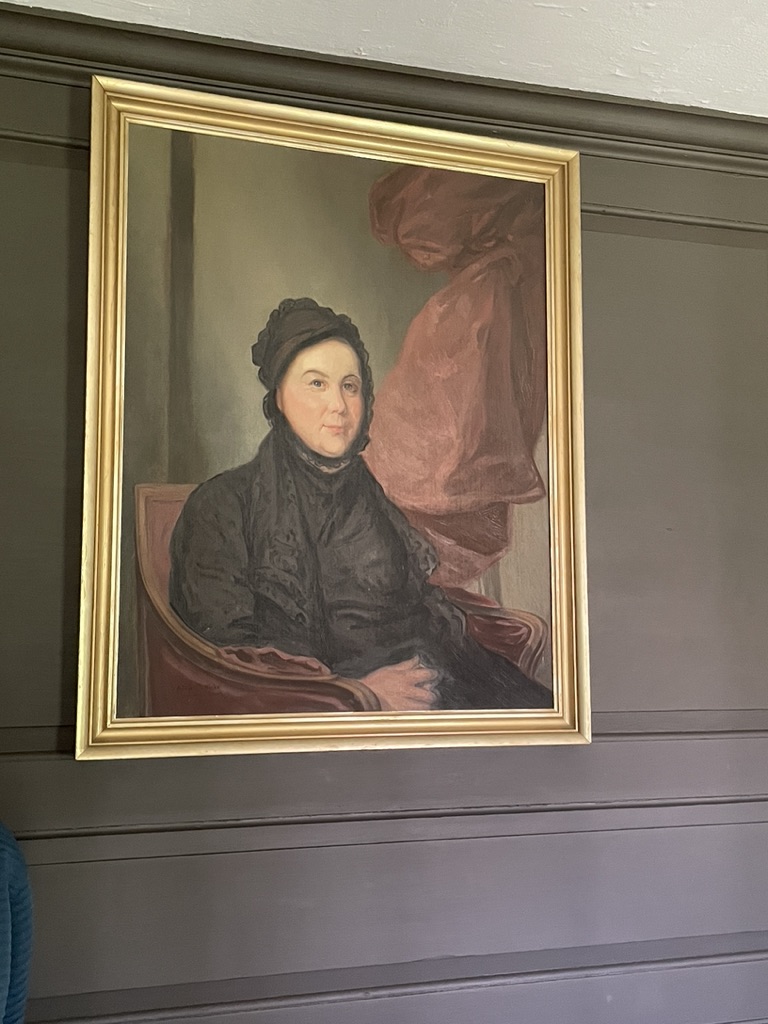
In 1780 Sarah Osborn of Newport dictated a letter to her friend Joseph Fish that gives us a glimpse of life during the British Occupation. In describing how she fared during that turbulent time, Sarah depended on God to get her through.
“The strength and courage I mentioned, which God graciously granted me in times of danger; was not the result of any confident persuasion, that I should not be slain.  – No! When the bullets were whizzing around me, I realized the next might have a commission to reach me; ….I know every shot was directed by unerring wisdom and every heart of the enemy, as much at his control…thus I rested on God.”

Throughout her adult life, Sarah “rested on God.” She was in her 60s and plagued with infirmities when the British invaded Aquidneck Island in 1776. With the Occupation of the British came hardships for the residents of Newport. The British destroyed property, turned homes into barracks, confiscated the crops and livestock of the people, and impoverished the town because of their blockade of ships and the ruin of maritime jobs and commerce. Forty percent of the residents fled, but Sarah and the poor of Newport had nowhere to go.

Yet, it was reported by Sarah’s pastor Samuel Hopkins in his memoirs that: Sarah had a constant supply of the necessaries of life and she received no abuse from the British soldiers as most others said. “ by her and others, that they made less disturbance and noise, than they did elsewhere; and were particularly careful not to do anything on the Sabbath to disturb that good woman, as they called her. And they took care to avoid all profane words when near her.”

What was special about Sarah and why was she known as “that good woman?” Sarah’s maiden name was Haggar. She was born in England but came to America as a child. She married at seventeen to a sailor named Samuel Wheaten who died at sea leaving her as a young widow with a baby to support. Sarah supported herself as a teacher and she opened a day school and then a boarding school. She was influenced by the “Great Awakening” when revival spread through the preaching of George Whitefield and Gilbert Tennent in the 1730s and 1740s. This revival promoted the idea of personal relationships with God. Sarah was always praying for her loved ones and church friends to have that conversion experience to be saved.

Sarah’s life wasn’t an easy one. Sarah married a widower, Henry Osborn, who had three children to add to the household. She was always poor, but she considered her dependence on God as a good reason not to resent her poverty. She constantly wrote about her spiritual journey and was one of the few women who was published at that time. She started a woman’s ministry at the Congregational Church she attended. Sarah never took the role of a pastor, but she was a charismatic speaker who hosted up to 500 people at her meetings. She hosted separate meetings for women, for men, and for freed and enslaved African Americans. Sarah’s view of slavery was influenced by the opinions held at the time. Slavery was accepted by Sarah as the norm and even as biblically permitted. When her son Samuel died, Sarah’s friends gave her an enslaved boy infant to raise. Sarah maintained a good relationship with his mother until she contemplated selling him to pay her debts. Sarah did not sell him in the end. Perhaps the influence of her pastor Samuel Hopkins changed her mind about slavery. Hopkins published her Memoirs and some of her diaries so that we know about Sarah today.

As a British born woman, Sarah regularly prayed for the King, but with the experience of the Stamp Act, Coercive Acts and Boston Massacre, she and her church family rallied behind the Patriot cause. The minister, Samuel Hopkins, hosted close to 80 women spinning at the rectory to facilitate sewing homespun instead of fashionable clothes. Sarah would later call the English “the enemy” in a letter to a friend. With the destruction of their church building, Sarah’s humble quarters served as a center for activity.

Sarah rested in God and she was grateful for the provisions He made for her. Even the British soldiers could sense her goodness.

Sarah Osborn’s World by Catherine Brekus is a great source of information on Sarah.
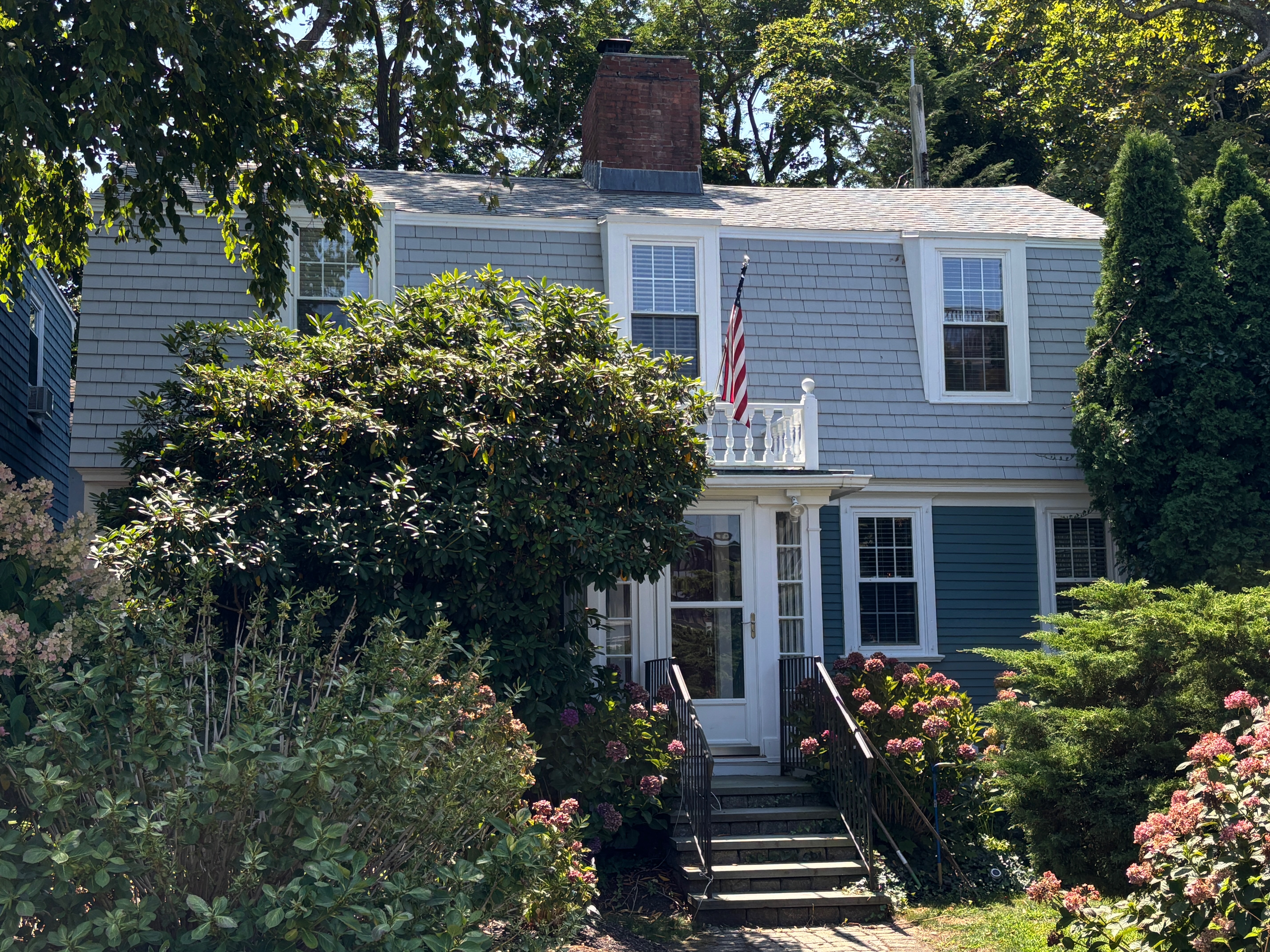
House on Osborn Court associated with Sarah

Notes on Rhode Island Revolutionary Women: Jane Coggeshall – Freedom for Information

Leave a comment

Rowing twelve miles from Newport to Point Judith, Jane Coggeshall, Violet Pease and William Carpenter made their escape from slavery. Their escape was especially dangerous because it was in March of 1777 when Aquidneck Island was occupied by the British and their military forces had tight control of the island. When they landed on the shores of the West Bay, the three were were presented to the General Assembly that was meeting in South Kingstown. They were granted their freedom in exchange for information about the British troops on Aquidneck Island. They were given a pass to go wherever they could find work.

We find out more about Jane because she learned that her previous owners were searching for her to re-enslave her. In the years after her escape, Jane Coggeshall was vigilant about her freedom and she moved from town to town to secure work as a servant. In 1783, she learned that the descendants of her former enslaver, Captain Daniel Coggeshall, were attempting to re-enslave her. Jane believed that they hired kidnappers to take her away by force. She petitioned the Rhode Island General Assembly to clarify her free status and she testified that she would rather “embrace death” than be re-enslaved. Her legal advisors asked that Jane receive the same consideration that Quaco Honeyman (another former enslaved person) received in 1782 for escaping and providing intelligence that led to the capture of British General Prescott.

The General Assembly responded:

“Whereas, Jane Coggeshall, of Providence, a negro woman preferred a petition and represented unto this Assembly, that she was a slave to Captain Daniel Coggeshall, of Newport; that in March, A.D. 1777, the enemy being then in possession of Rhode Island, she, together with others, at every risk, effected their escape to Point Judith; that they were carried before the General Assembly, then sitting in South Kingstown, who did thereupon give them their liberty, together with a pass to go to any part of the country to procure a livelihood; that she hath lived at Woodstock and at Providence ever since; that during the whole time she hath maintained herself decently and with reputation, and can appeal to the families wherein she hath lived with respect to her industry, sobriety of manners, and fidelity.”

In 1785 the General Assembly voted to declare Jane Coggeshall “entirely emancipated and made free.”

More information can be found on the Rhode Island Historical Society website: “Jane Coggeshall’s Self- Emancipation in Revolutionary Rhode Island.”

Revolutionary Era Row Boat (From 1978 Battle of Rhode Island Re-enactment)

Notes: Mary Gould Almy and Mary Wenwood – Spies?

Leave a comment

Christian McBurney’s book Spies in Revolutionary Rhode Island, presents some evidence that women might have played the roles of spies in Revolutionary Rhode Island.

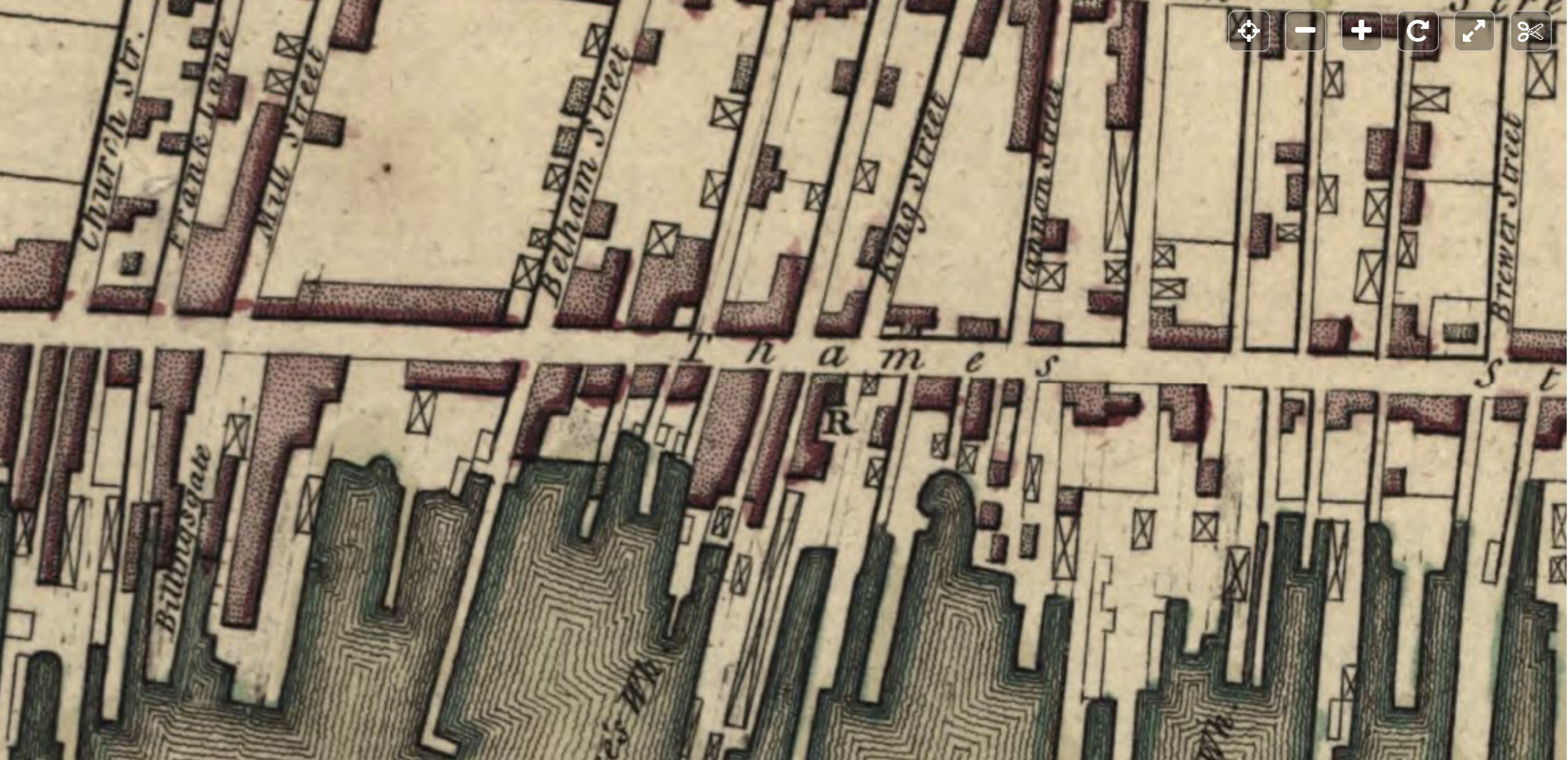
Mary Gould Almy was very open about her Loyalist sympathies and in his book McBurney includes a document apparently written by a French officer on August 23, 1780. In the document the author writes that a group of people meet at a rooming house on Thames Street near a wharf. Mary’s rooming house might meet the description. The officer portrays the keeper of the rooming house being a “widow” (which Mary Almy was not) but if her husband was away she might seem to be alone with her children. In her journal Mary Almy states that she has a son in New York and in this document the officer describes a young man coming regularly from New York and spending a day or two before leaving. The British were in control of New York at that time. When the young man arrives a group of men meet in a guarded room upstairs in the house. These meetings occur regularly.

McBurney includes the story of Mary Wenwood who was secretly sending information to the British about the strength of the American forces and their supplies in Massachusetts in 1775. Mary Wenwood traveled from Cambridge, Massachusetts to Newport and asked her former husband Godfrey Wenwood to pass a letter to British Captain Wallace of the ship Rose. Mary thought her ex-husband was a Loyalist and that she could trust him, but he showed the coded letter to Ezra Stiles and others who allied themselves with the Patriots. Two months later Mary asked her former husband about the letter “to her sister” and why it hadn’t been delivered. He realized that the author of the letter had to be working for the British. The letter was passed on to Henry Ward the Rhode Island Secretary of State and then on to Nathanael Greene and ultimately George Washington. Washington sent for Mary and under duress she told him that Dr. Benjamin Church was the author. Church had fooled everyone. He was a member of the Sons of Liberty in Boston and worked closely with Washington, John and Samuel Adams and John Hancock. Church was arrested and found guilty of treasons. After his release made his way to the Carribean. The story is John Nagy’s book, Dr. Benjamin Church, Spy.

From Blaskowitz Map of Newport – area of Mary’s Rooming House near Pelham Street and Thames.

Notes on Loyalist Mary Gould Almy: Rhode Island Women in the Revolutionary Era

Leave a comment

There were divided loyalties on Aquidneck Island. Many in Newport were Loyalists while those in the countryside favored the Patriot side. Although her husband was fighting for the Americans, Mary Gould Almy was a vocal Loyalist. Ater the war the Mary and her husband Benjamin lived happily as a couple. John Hattendorf’s book on Mary Gould Almy’s Journal 1778 provides a wealth of information on the lady and her background.

Mary was born on December 16, 1735 in Newport, Rhode Island. She was raised as a Quaker by her parents, James Gould and Mary Rathbun Gould, but she was baptized at Trinity Church when she was 18. One of her sisters was married to the Stamp Master during the Stamp Act Riots. She married privateer Captain Benjamin Almy in 1762 and the two had eight children together. Almy was questioned for his loyalty because of his wife’s Loyalist stand, but that concern was dismissed as unfounded. He had been detained at Lancaster Castle in England, but he made it back to Rhode Island in 1778 to volunteer for the Rhode Island militia to support the Continental Army in the Rhode Island Campaign.

Mary Gould Almy portrait by Malbone

Mary was a boarding house keeper at the Jaheel Brenton Townhouse facing Thames Street in Newport. At the time of her diary writing she had six of her eight children with her. She also rented a “safe” place at Benjamin Church’s house south of the city. She would send her mother and children there for security once the French arrived.

As Mary writes her journal with her husband as her intended audience, she lets him know that she will write “with Spirit” because of her dislike for the “Nation that you call your friends.” She foresees that this Campaign will end badly for the Americans. She comments that as the French Navy arrives at Brenton Neck, they wait for the Americans. The British were manning the old batteries and throwing up new ones. The noise made it difficult for her children to sleep. The morning came with a thick fog until they saw that the British had set fire to their own ships. “All the fleet in motion. Everything in Consternation – the inhabitants much distress, the batteries all spirited all warlike Preparations the streets filled with carts and ordinance.”

As the Siege progresses, Mary comments that an order has been given to burn any building within 3 miles of the Town so they will not be used as barracks by an invading army. She sees “a Scene of Wretchedness before this once happy and Flourishing Island.” On August 11 she writes of “a Violent Storm come on before day and continue – thundering, Lightenings most terrible – all the day the wind blew a perfect hurricane..” The storm continues on Tuesday with “much violence.” She writes that the storm was still going. She writes to her husband – “Mr. Almy I am not like the driver I mentioned yesterday who if he could but be quiet cared not who govern. I am for English Government and a English fleet.” She noted the American siege works going up close to the town. “Our people beholding it every morning with wonder and astonishment and really Mr. Almy my Curiosity was so great as to which to behold-the entrenchment that I suppose you was behind.”

Mary describes the retreat of the Americans (Battle of Rhode Island) and that the Hessians had overtaken an American party at Mr. Redwood’s house. “Leaving the roads strewn with dead bodies from East road was a scene of Blood and Slaughter from Cozen Almy’s Down the foot of Quaker Hill…” Cartloads of solders came into town. “Fine youths with their arms taken of in a moment in short its too far beyond my description the horrors of that day will never be quite out of my rememberance – I quited company and hid myself to mourn in silence for the wickedness of my Country (the Americans).

Mary Gould Almy was a Loyalist, but after the war she had some Patriots staying at her boarding house – George Washington and Thomas Jefferson! Thomas Jefferson was a guest at Almy’s in June 1784. Her most famous guest was George Washington, who stayed a night there on August 17, 1790, during his trip to Rhode Island. Almy saved the silk bed covering from the bed where Washington slept.

A Smith College project on Voices of the American Revolution has an interesting point to make. “Mary’s letters demonstrate the unique position of women during the American Revolution. Legally, women were dependents of their husbands. As a result, while Mary held ultra-Loyalist views, she faced no repercussions for her beliefs from Rhode Island Patriots. Her husband’s position in the rebellion secured her safety and status. Additionally, Mary’s letters convey an equal sense of commitment to her political ideals and her husband’s safety—demonstrating how precisely the American Revolution divided colonies, towns, and even married couples.”

Rhode Island Women in the Revolutionary Era: Notes

Leave a comment

I am collecting stories about Rhode Island women in Revolutionary times – Protests, Occupation, Battle, French Era to war’s end. The new RIDE Social Studies standards for grade four requires students to: “Explain the roles Rhode Island women fulfilled during the American Revolution.” So I am collecting stories of Rhode Island women during that time period and reflecting on the roles of women. I will try to write their stories for a fourth grade audience as a resource for teachers.

I am starting with a host of stories I have already researched:

Loyalist and spy Mary Gould Almy

Women who pitched in to run their farms and businesses while their husband fought.

Christian Bannister enduring the Occupation and trying to remain neutral.

Daughters of Liberty who spun their protests before the war

Elizabeth Heffernan whose householdings were destroyed by the British Occupation

Catherine Littlefield Greene who followed husband Nathanael Greene to the camps.

I am encountering a few who are new to me like the Holmes women of Middletown who fought to protect their property and runaway servant to served as a spy. I would appreciate hearing any stories of Rhode Island women that would help us understand all the roles they played in wartime.

Some general thoughts from Gladys Bolhouse’s article on “Women and the Battle for Rhode Island.”

  1. With the Occupation, women on Aquidneck Island were cut off from the rest of the state and even each other on the island.
  2. For safety sake many families had to move away from everything they had here. Those who had no resources to relocate had to to remain under the control of the enemy.

Bolhouse goes on to relate passages from Mary Gould Almy’s diary of the Siege – and I will work through that with the next blog.