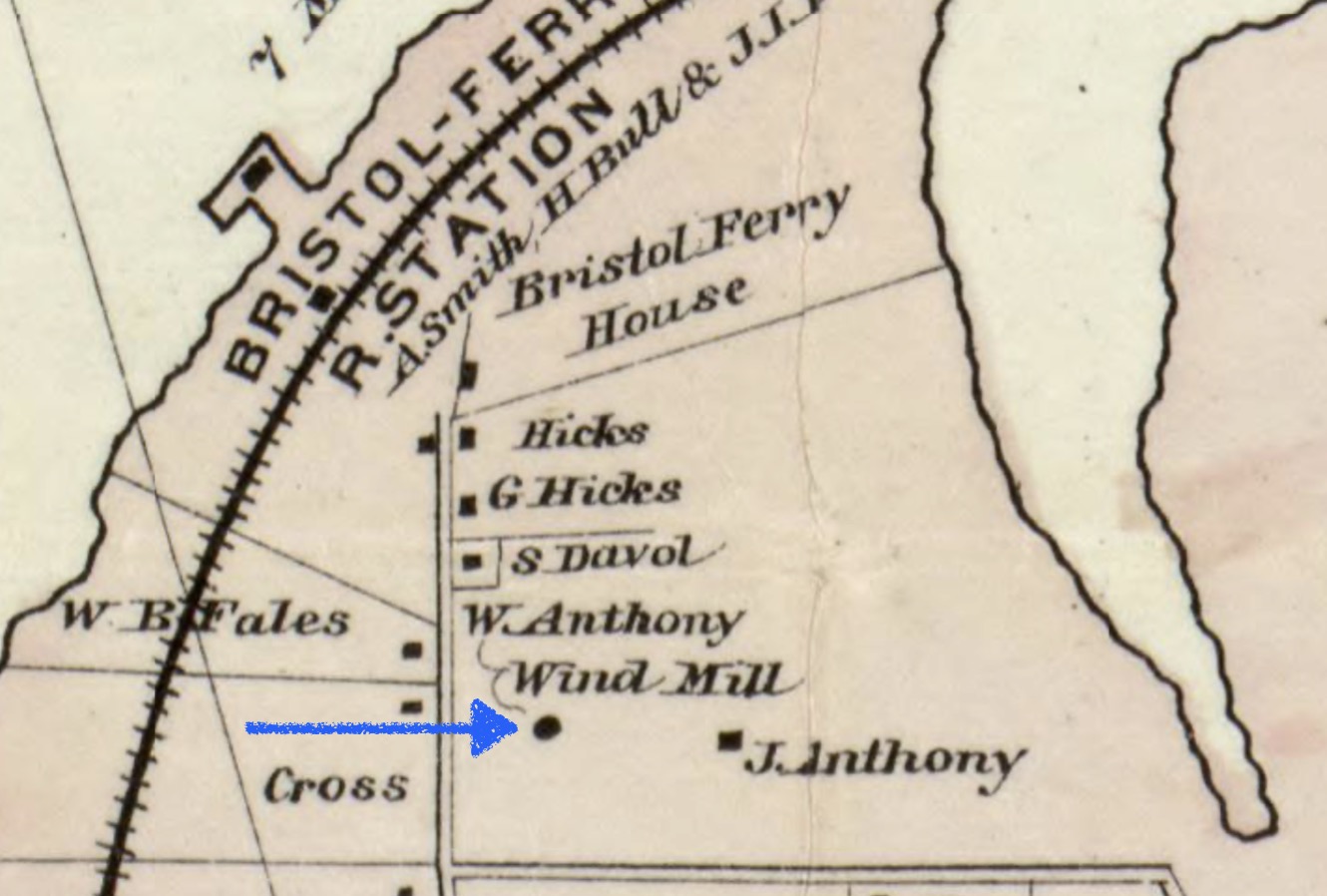
Looking at the Dripps Map created in 1870, mills are noted. Some of them we have seen in the 1850 map. Miller Benjamin Boyd was interviewed in the 1940s and he gives us background on some of the mills. The first mill the Boyd family ran stood by Bristol Ferry. The Great Gale of 1815 destroyed that one, however the 1870 map shows a windmill in that area.
The Boyd family bought the Peterson Mill. It was located by Mill Lane near West Main Road. This mill was built in 1810 to grind grain to feed livestock. Boyd said that in 1901 he converted the Boyd Mill into a eight vaned windmill.
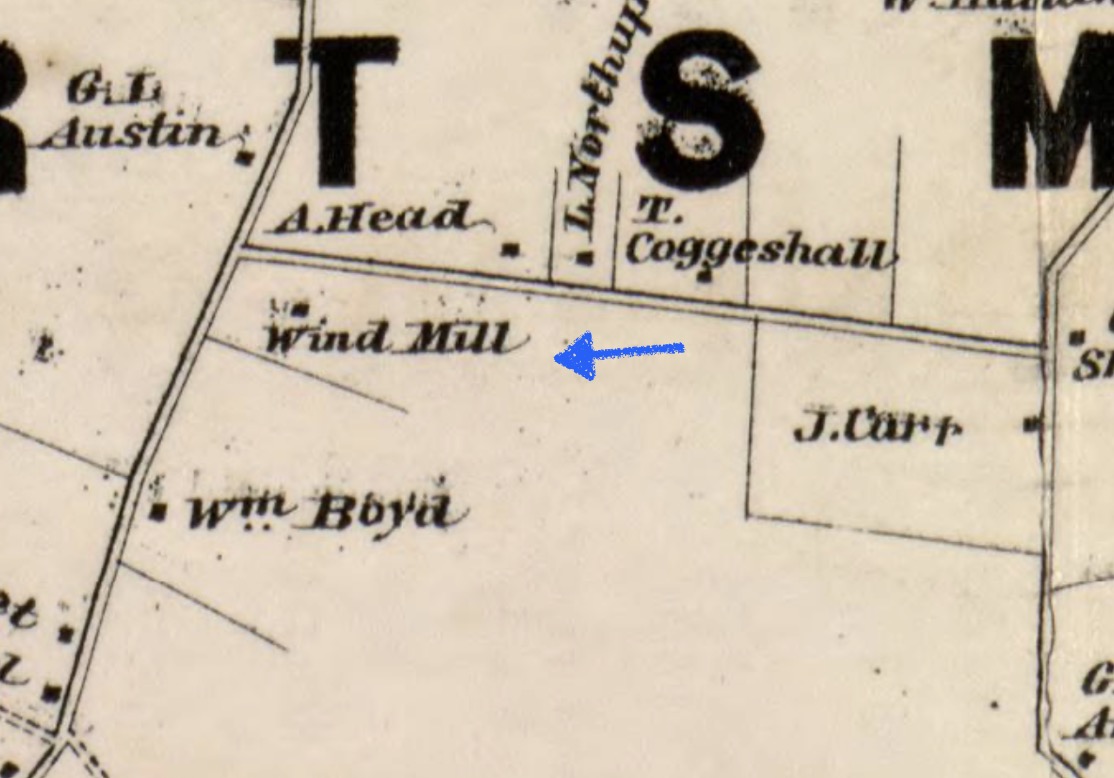
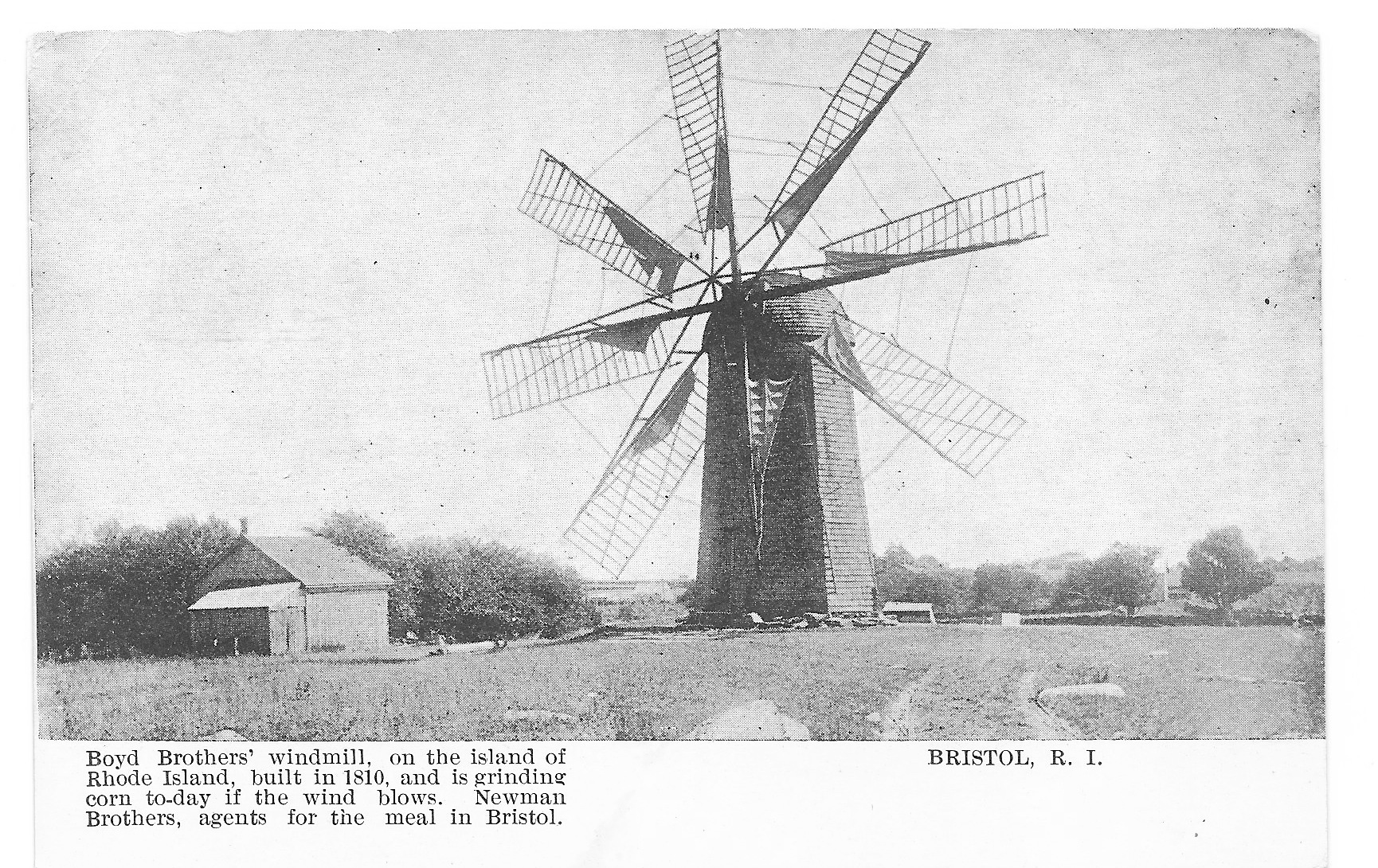
The mill stood nearby West Main Road in Portsmouth by Mill Lane. John Peterson, a retired ship captain, built the mill in 1810. Boyd comments that the millers are very much like “sea captains” in the skills they need to manage the mills in bad weather. The timber came from Wickford across the bay. The article gives many details about the construction of Boyd’s Mill. The main shaft is twenty-two inches in diameter and nineteen feet long and is made of hard Georgia pine. Boyd said that in 1901 he converted the Boyd Mill into a eight vaned windmill. Boyd mentioned that cheap grain and meat from the western US made these old methods of farming unprofitable for Rhode Island farmers so they went more into truck farming.
“But there were many people who appreciated the fact that Rhode Island corn, which is of a different shape and color from any other, possessed merits for making meal for family use superior to any other cornmeal.” Boyd was referring to the famous Rhode Island Johnny Cake meal.Boyd commented that all meal up to 1895 was unsifted so that the cook had to sift it. Boyd invented a “power sifter” run by the mill.
By the end of the 19th century there were 6,000 sheep kept on the island and many hogs. November was slaughter time for the hogs that had been grown and fattened by the wind mill ground grain. As the miller, the Boyds received a portion of the ground grain as payment and they fed their hogs with it. Benjamin Boyd said his father took up to 6,000 pounds of pork to sell in New Bedford. The gristmill grain and hay fed cows, oxen, sheep, pigs and poultry.
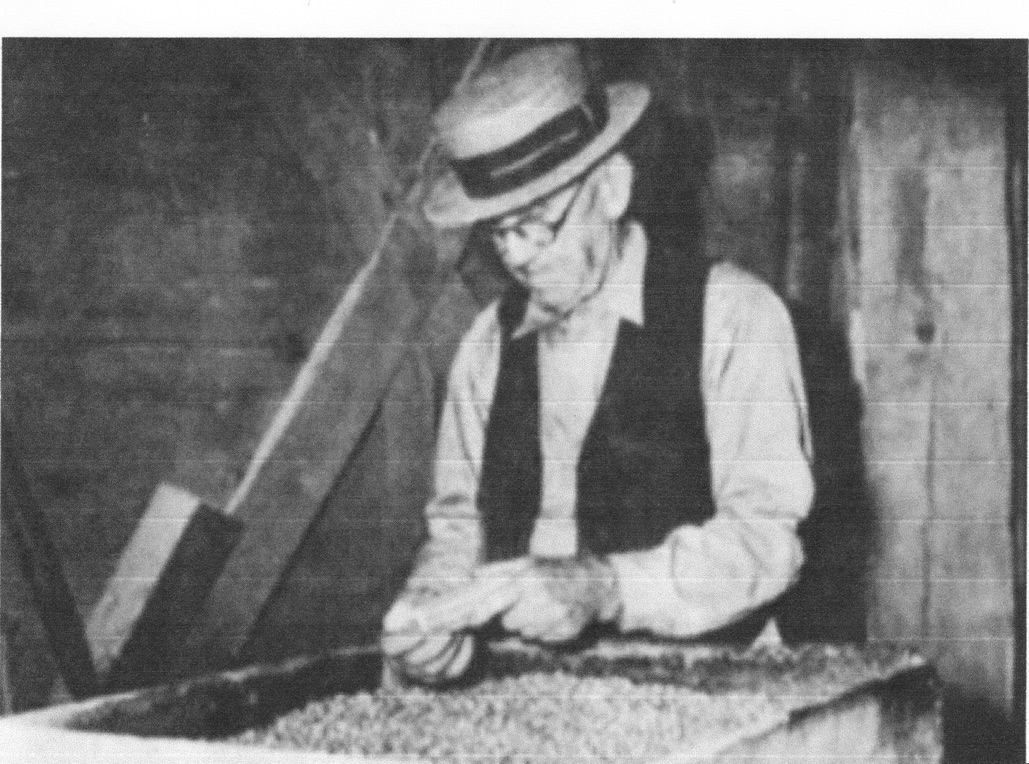
For Boyd, windmills were part of his heritage. He was a descendent of Nicholas Easton who built the first wind grist mill. “I have farmed all my life and have turned the black dirt of Old Mother Earth into wheat, rye, oats and barley to be ground into feed for livestock, and as I have baked many Johnny Cakes. I have literally turned the black dirt of Old Mother Earth into one of the finest food products known to man, the Famous Rhode Island Johnny Cake; ground by the power of the free air, which is the only thing that is free today.”
The Boyd Mill was taken apart, restored and rebuilt at Paradise Park in Middletown.
Benjamin Boyd shared his family’s history with wind mills in a 1942 newspaper article for the Fall River Herald. The article is in a scrapbook at the Portsmouth Historical Society.
Map: Dripps, M, and Adomiran Judson Ward. Map of Newport & vicinity, or Rhode Island. Newport, R.I.: Revised & published by Wm. Dame, Civil Engineer & A.J. Ward, Bookseller, 1870. Map. https://www.loc.gov/item/2013593287/.


Oct 07, 2026 @ 09:16:07
I love this story about the old mills. I really like hearing about the unique quality of Rhode Island grown corn. I have always felt that this is true.