Home

Portsmouth Mills Part II – Early Mills with Edward West

Leave a comment

One of my favorite Portsmouth historians is Edward West. He wrote an article for the Rhode Island Historical Society: From the Lands of Portsmouth: A Glimpse of Its People. Edward West. Rhode Island Historical Society Journal, July 1932. In it he tours around early Portsmouth neighborhoods and relates stories and features of the areas. I am using his work to share the early mills that were in Portsmouth in settlement and colonial times. The whole article is a good read, but I am only pulling out the mentions of mills.

“Going down the west road, known in 1717 as the Kings High Road, we come to another brook. This must have been very much larger in the early days, as it was then known as the Mill River or sometimes as the Two Mill River. On the bank of this river, nearly down to Freeborn’s Creek, stood the mill of James Sands and Samuel Wilbur, the land being granted for it in 1642. William Freeborn purchased it in 1655 and it remained in that family until after 1800. John Tyler also had a mill on this stream.”

“Continuing along this road we come to what is now the property of the U. S. Government. This was part of the 240 acre grant to William Baulston. There is a small stream running through it on which stood the mill, built by George Lawton in 1648. There was also a way left to this stream to give access to a watering place.”

“Next we come to the Wading River on which stood the mill of George Lawton, who was granted 40 acres “when he hath built a sufficient mill for Mr. Baulston.” Most of his land was on the east side of the road, he having only enough for a mill and his house on the west side.”

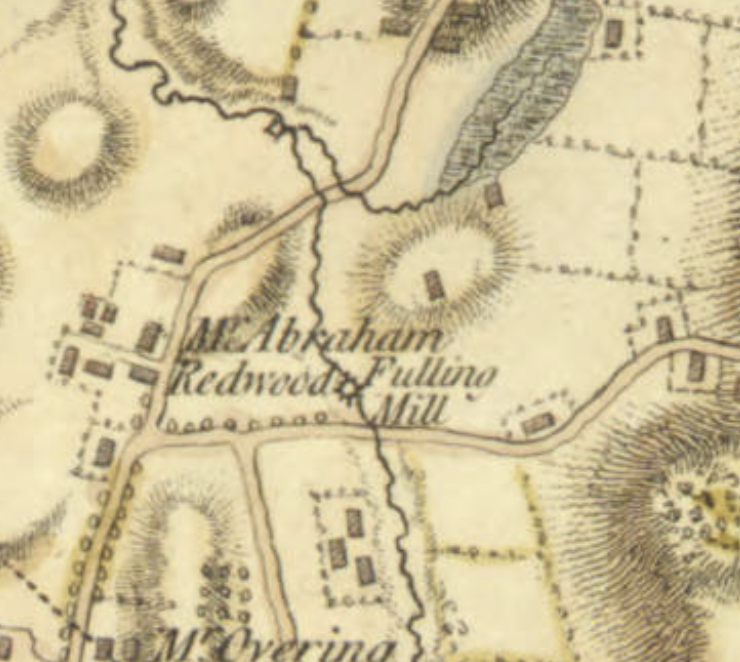
“The Glen. This was granted to William Brenton but was acquired by Giles Slocum, who built a fulling mill on the bank of the stream.”
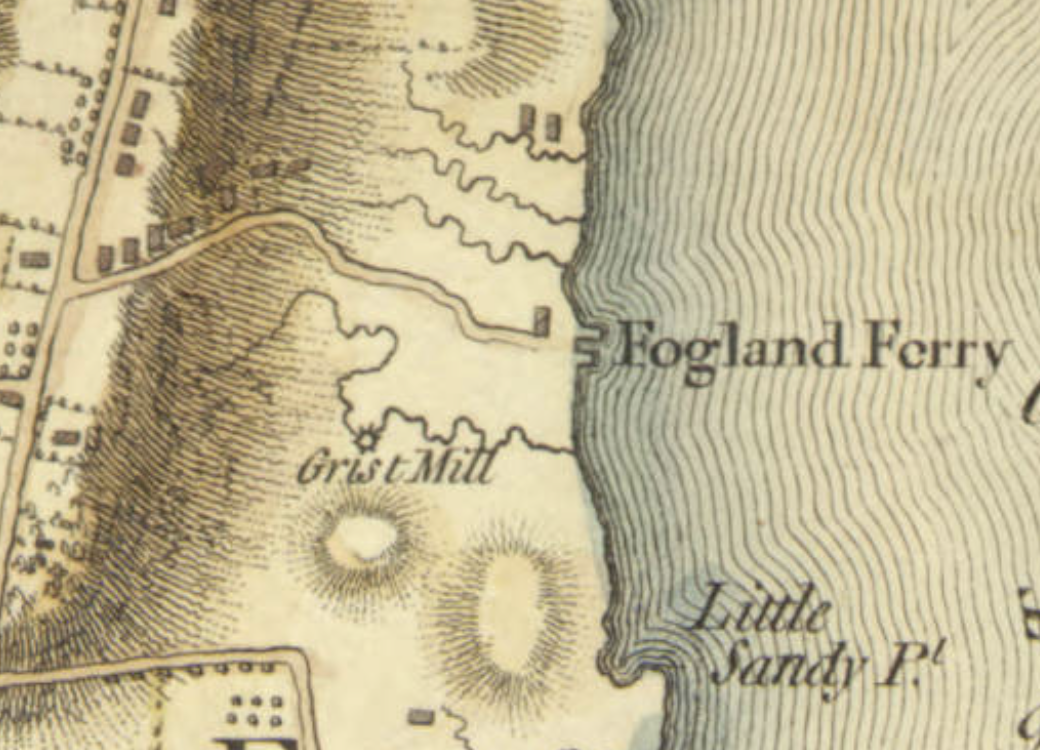
Glen Mill

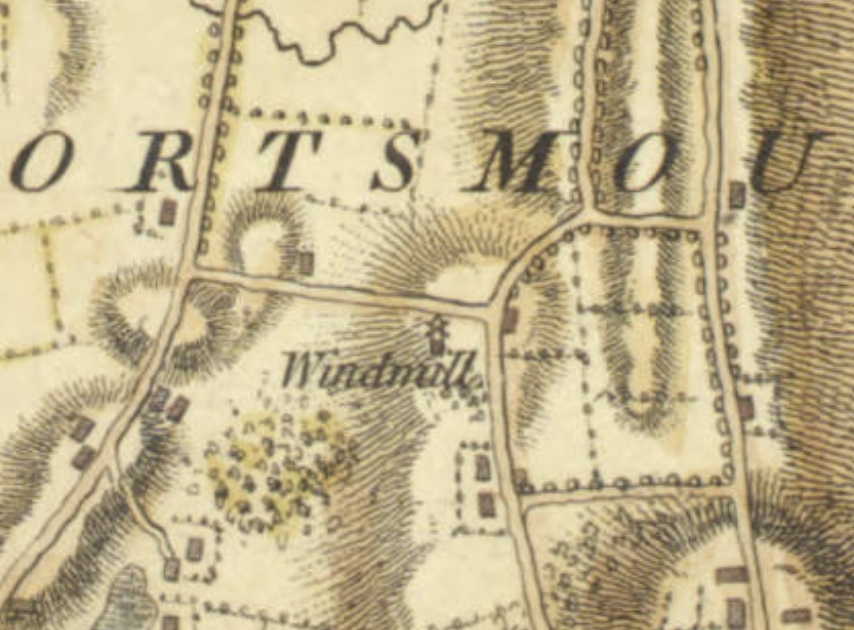
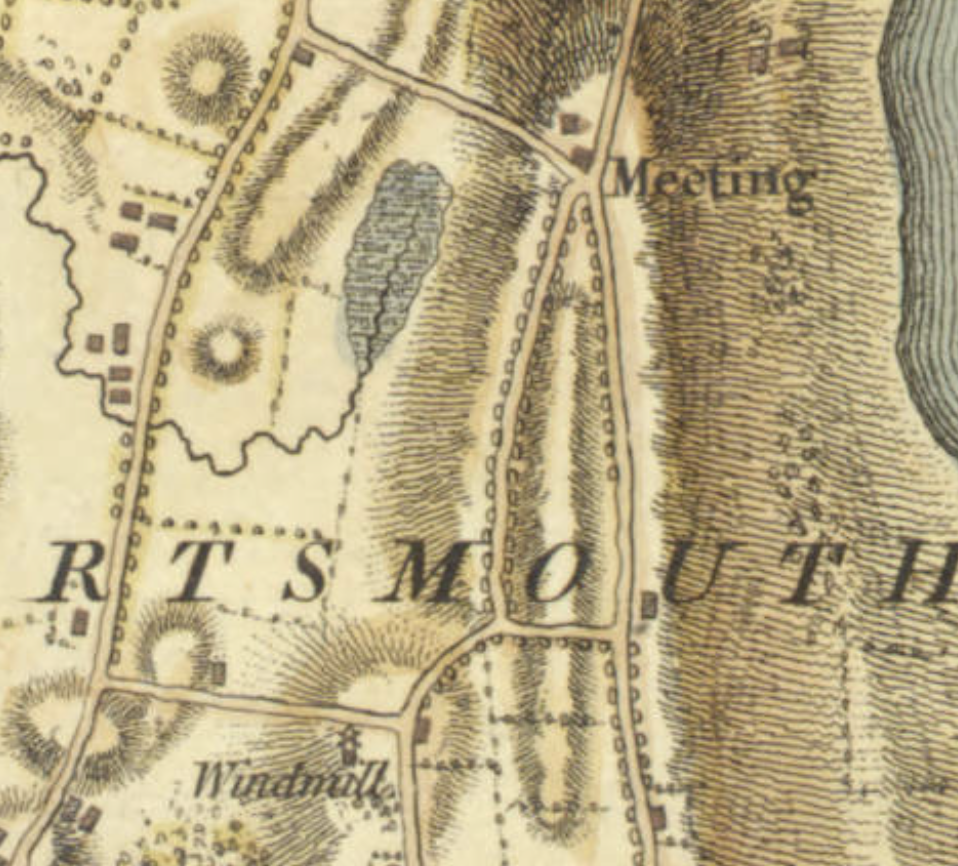
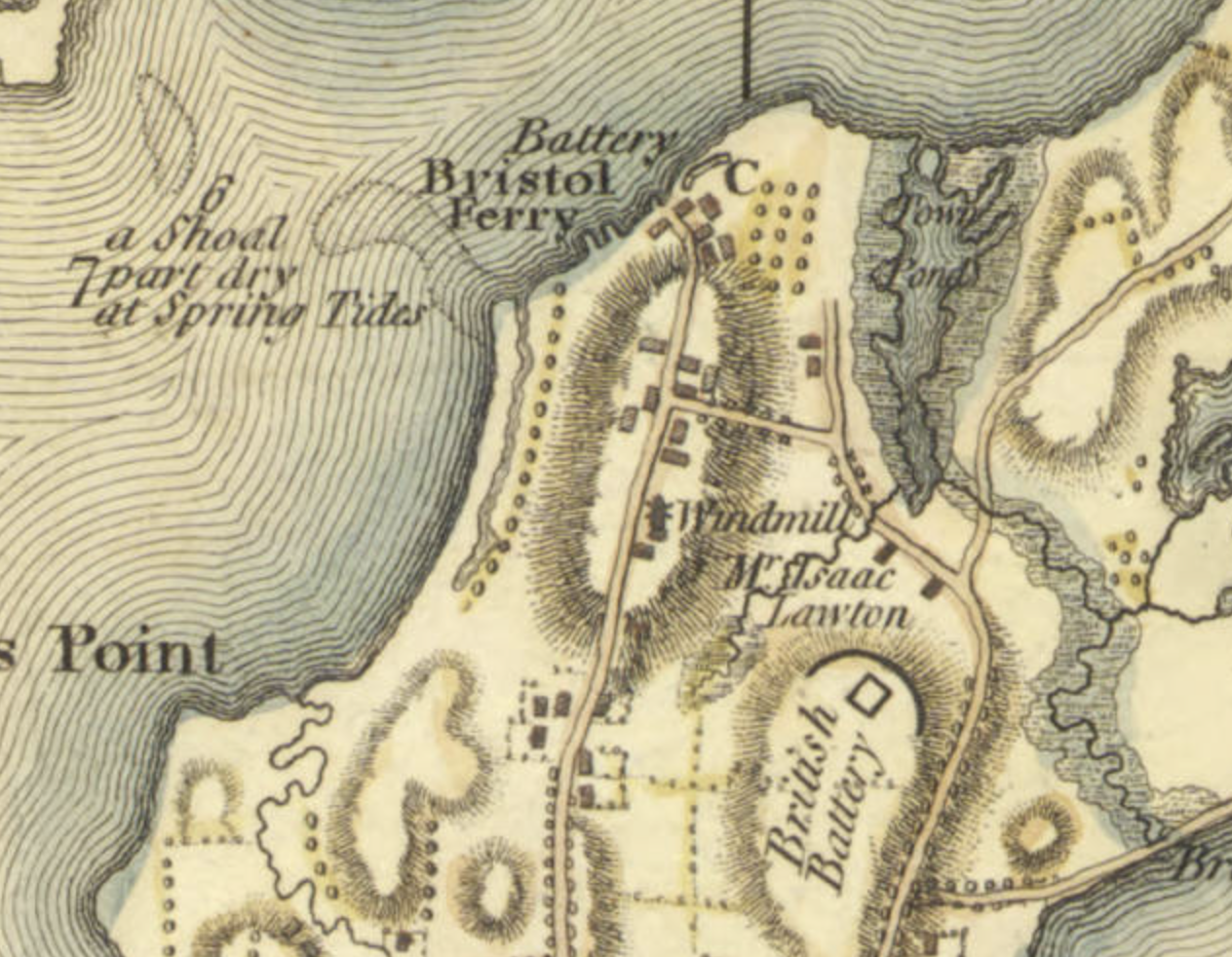
“Turning to the right, we come to Watch Hill. On the corner of Mill Lane, a road cut through in 1713, was a piece of land left to the town in the 1713 grants. On it was a watch house, although at that time it was in a dilapidated condition. Later on this land was used for a wind mill with the understanding that: ” that in time of war the town be not restricted … in building a watch house thereon for the convenience and safety of the said town.”

“Turning up the road on the left we come to Wind Mill Hill, now called Butt’s Hill. In the first records this is called Brigg’s Hill. There was probably a wind mill erected here very early. In July, 1667, the governor gave orders for the erecting of a beacon on Mill Hill.”

Source: https://navigator.rihs.org/rhode-island-a-bibliography-of-its-history/the-lands-of-portsmouth-r-i-and-a-glimpse-of-its-people/

Other Mills on the Blaskowitz map don’t quite match the early mill descriptions. I have put some of my guesses in the captions
Portsmouth’s Mills: Part 1: An Introduction

1 Comment

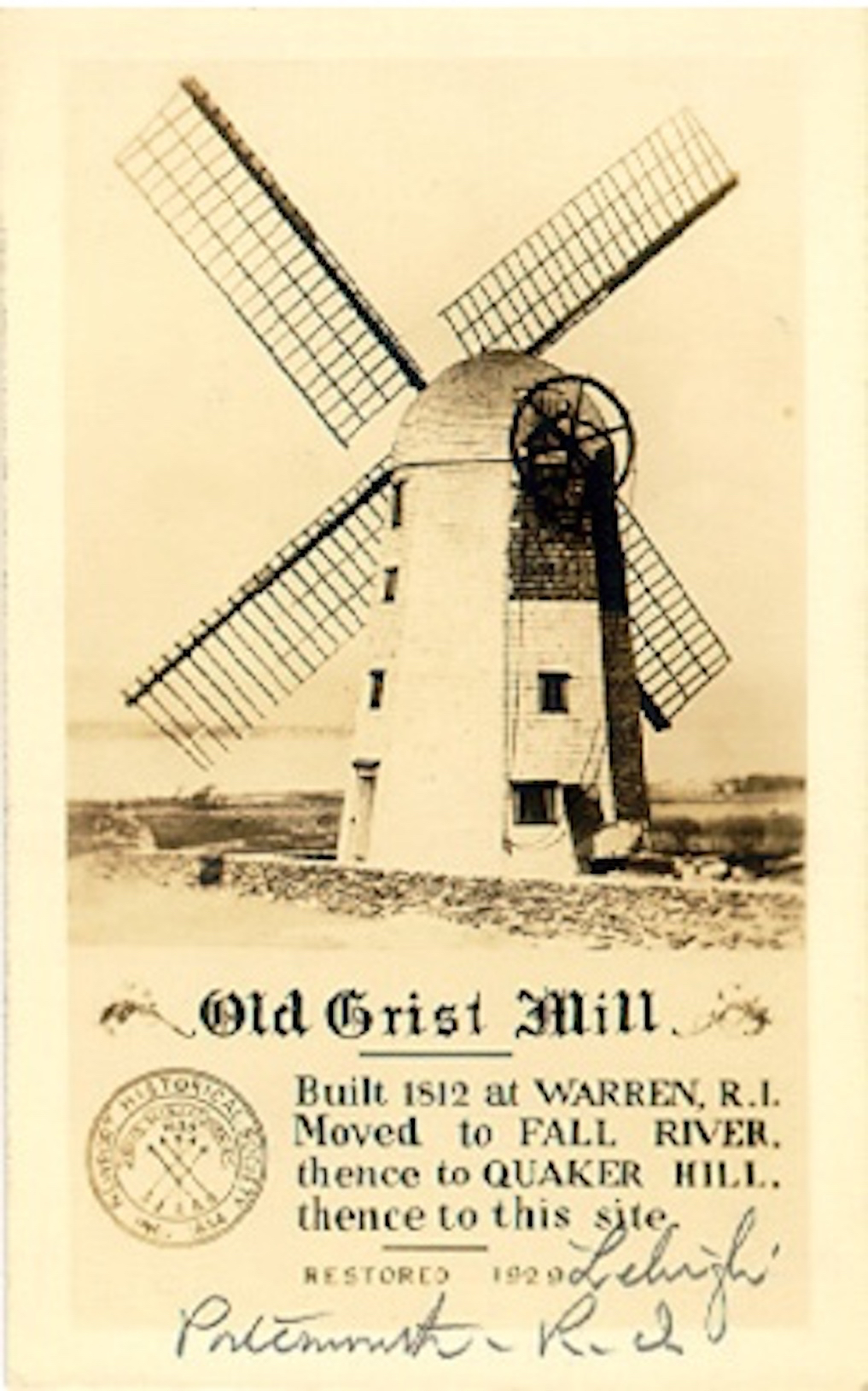
I had a query about the mill on Old Mill Lane and I went to my maps to determine when and where the mill would have been. I remember researching Benjamin Boyd and reading an article about him. He mentioned that when he was growing up there were 10 mills in Portsmouth. At the time of the interview there were only three left – Boyd’s Mill (now at Paradise Park in Middletown), Sherman Mill (now at Prescott Farm) and the Almy or Thurston Mill which was destroyed in a fire. Aquidneck Island had more windmills than most other areas. And so I am going to do a deep dive into the history of Portsmouth mills.

Common Types of Mills:
1. Gristmills grind corn, wheat or other grains into flour using heavy millstones. As a farming community, these mills were essential. Boyd’s Mill and Sherman Mill are examples of gristmills. Sometimes the miller was paid with a portion of what they ground.


2. Sawmills: These were up and running early on to provide lumber for home construction. Some of these early mills were water powered, but later some were turbine powered.


3. Textile Mills: We may not associate mills that make fabric from wool and other fibers with Portsmouth, but there were fabric mills in the Glen.

4. Carding Mills: These mills were common in Portsmouth’s Glen as well. Early on the wood fibers were “combed” by hand tools called cards. Using water power machinery to do that made the process easier.

5. Fulling Mills: Again, this type of mill existed in the Glen. Water was used to shrink wool fabric and tighten the weave.

Revolutionary Rhode Island Women: The Providence Tea Party of March 2, 1775

Leave a comment

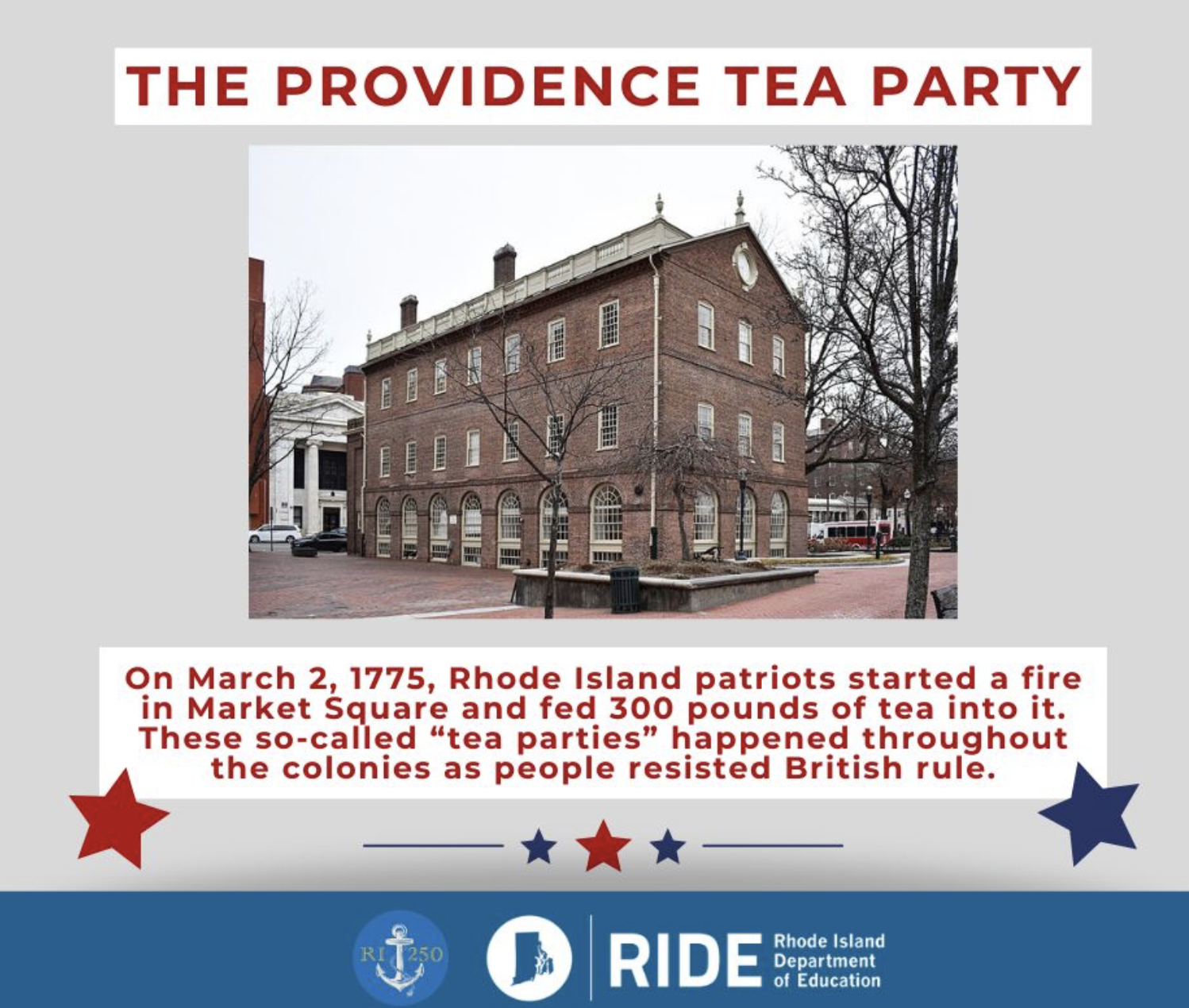
Rhode Island women were not shy about participating in protests against the British Acts that were imposed on the colony. The “Daughters of Liberty” held their spinning bees out in the open. Boston’s famous Tea Party, however, had its participants hiding their identifies with costumes. Providence women (and men) did their protests out in the open. They even announced the coming Tea protest through the Town Cryer.

On Thursday last, about twelve o’Clock at noon, the Town Cryer gave the following notice through the Town:

“At five of the Clock, this Afternoon, a Quantity of India Tea will be burnt in the Market Place. All True Friends of their Country, Lovers of Freedom, and Haters of Shackles and Hand Cuffs, are hereby invited to testify their good Disposition, by bringing in, and casting into the Fire, a needless herb, which for a long time hath been highly detrimental to our Liberty, Interest and Health. “

The crowd did gather at the Providence’s Market Place and a fire of tar was lit. Three hundred pounds of tea were cast into it as well as Lord North’s Speech and other obnoxious documents.

“Many worthy women, from a conviction of the evil tendency of continuing the habit of tea drinking, made freewill offerings of their respective stocks of the hurtful trash.”

While the tea was burning, Sons of Liberty went along the street and painted over the word TEA on shop signs. Bells tolled to celebrate the funeral of Madam Soughong – Tea from China that had found its way to America.

Why was the tea so despised? Parliament had repealed most of the Townshend duties, but they kept the tax on tea to prove that they had authority over the colonies. The British tried to rescue the British East India Company by giving it permission to sell tea directly to the colonies. That lowered the price of tea, but the tax on tea still represented the authority of the British.

Quotes are from the
 Providence Gazette (Providence, RI), March 4, 1775

If You Like My Blogs…

Leave a comment

I have taken years of stories and images from my blog and put them into a book.

https://www.blurb.com/b/12984374-a-portrait-of-portsmouth-rhode-island.

Click on the link to see the preview. It can be ordered directly from Blurb, or you can join a list of orders I will make and that will save on shipping costs for you.