A panel discussion at Salve last night confirmed my interest in preserving historic places as a focal point for discovering our stories as a community. The title of the panel was “The Power of Place: History, Memory and the Work of Democracy”. The discussion centered around the new Newport Center for Black History, but so many of the comments could be applied to our focus on historical places in Portsmouth. I want to share some of these common threads with you and how they might apply to Portsmouth places.
A. Places can bring people together to talk about what it means to be part of our community. Historic sites open up conversation about
- Who we are
- Who we have been
- Who do we want to be
Places are uniquely powerful in shaping our historical understanding.
Our farms and stone walls remind us of our agrarian heritage. Do we want to support our farmers to enable them to continue? Do we want to be a “bedroom community” with farmland turning into housing developments? Do we want to ensure that we have open spaces?
B. On a local level with local places we can have conversations that don’t tend to become conflicts. What was this place? What are the stories attached to it? What are the memories of the community?
The Melville Area was the home of the Mott Farm. Do we have the memories of the immigrants who came to Portsmouth to work and were sheltered at the Mott House? What was the experience of migrants who came here to work? Do we remember how this land was used during the time it was in military hands? How do we want to use town lands?
What about the hidden history? Lovell Hospital was part of Portsmouth’s role in the Civil War. Do we want some sign somewhere that memorializes that role? Do we want to talk about the hardships of prisoners of war or war casualties?
C. Walking through an historic landscape or into an historic place gives us a bodily experience of walking in the steps of those who came before us.
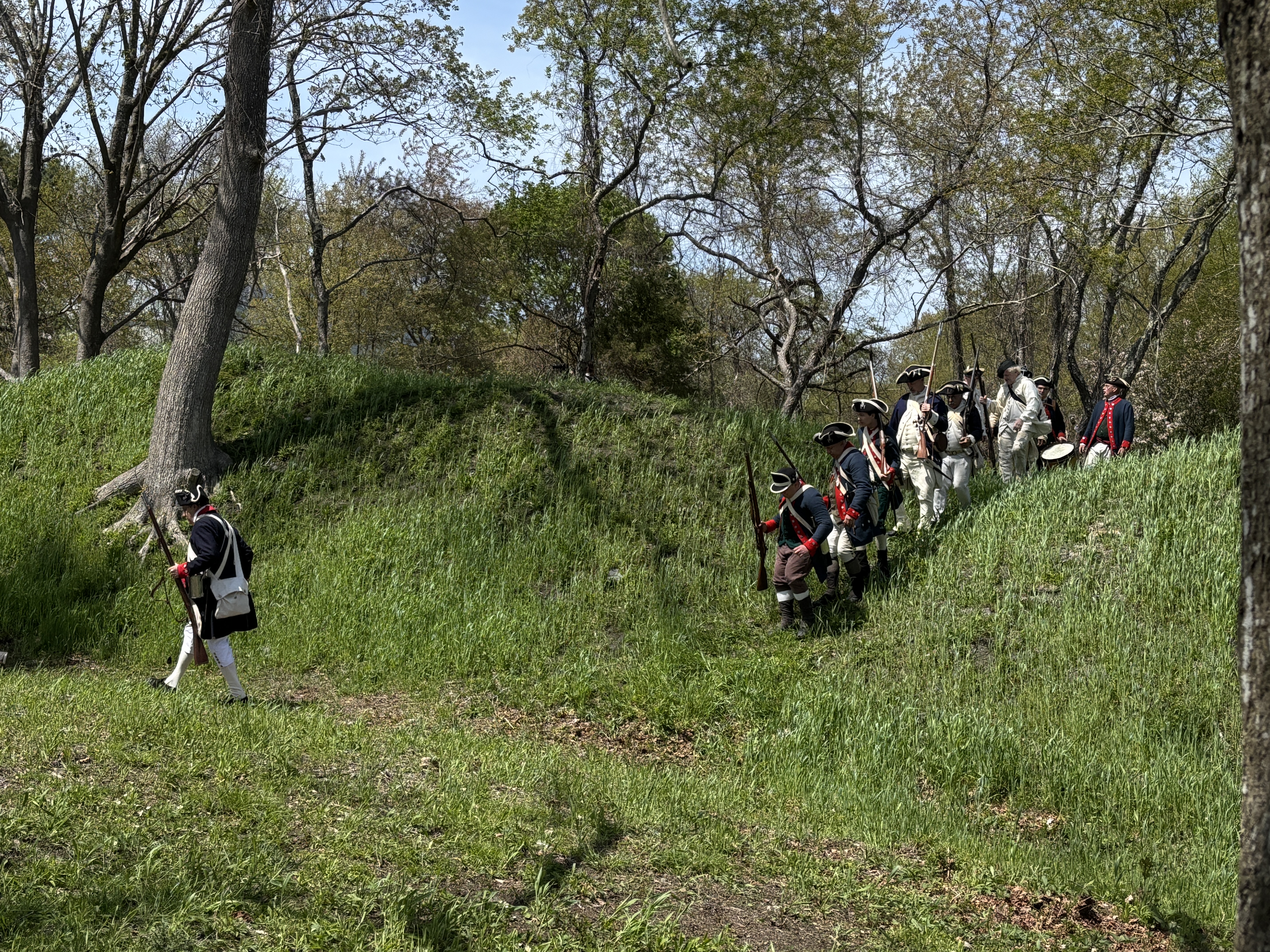
Can we put ourselves in the place of Patriots on Butts Hill frantically trying to get men and equipment out of a dangerous situation so we could “fight another day”?
At Patriot’s Park, can we imagine the brutal skirmish with the 1st Rhode Island Regiment trying to hold off Hessian attacks? What would we sacrifice for our freedom?
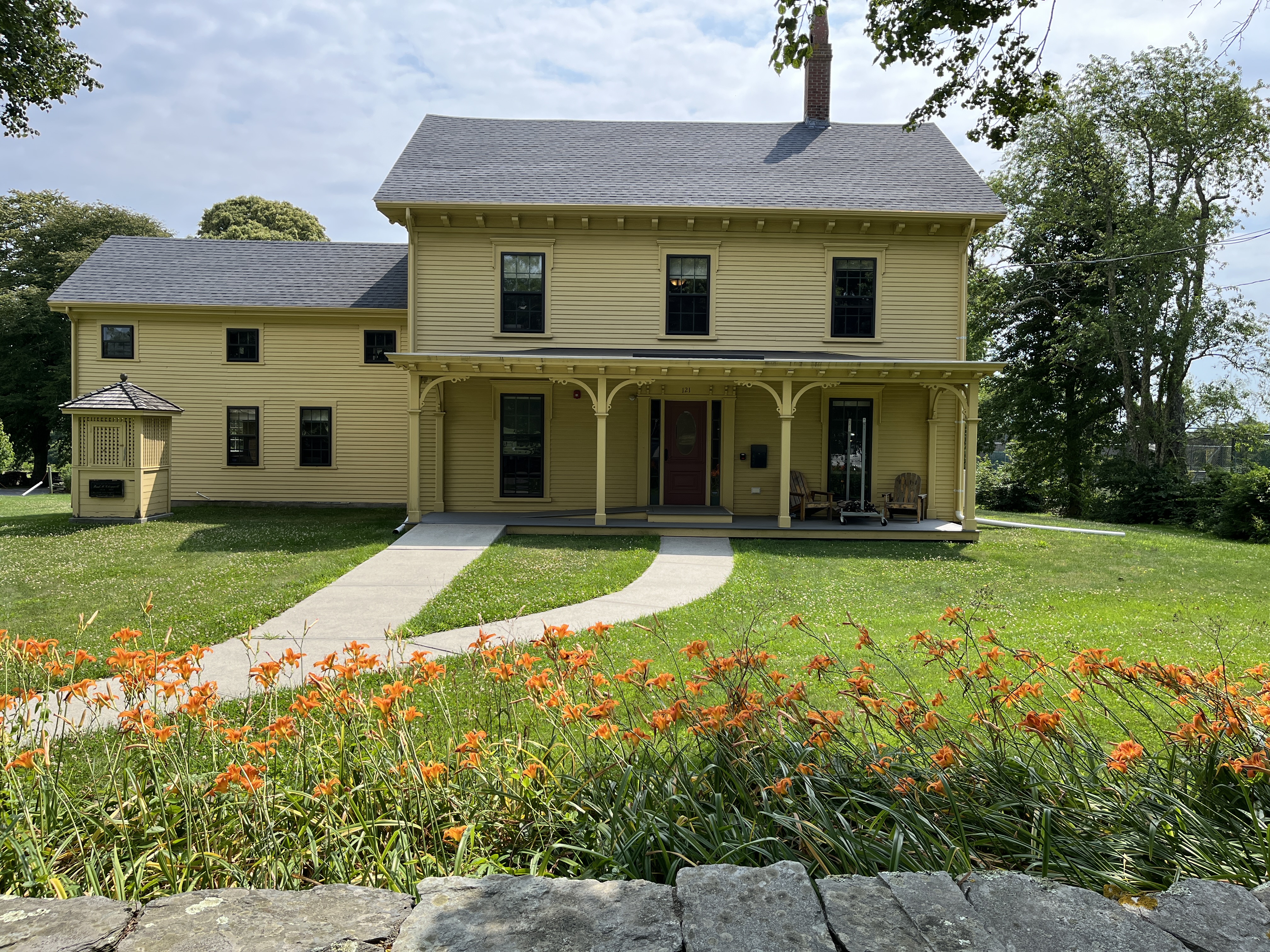
At Leonard Brown House can we place ourselves on the front porch and imagine being in the household of Yankee Farmer Leonard Brown or the Manuel Camara family during Glen Farm Days?
Can we walk around Town Pond and imagine the hardships of the first settlers as they lived like their indigenous neighbors until they could build their houses?
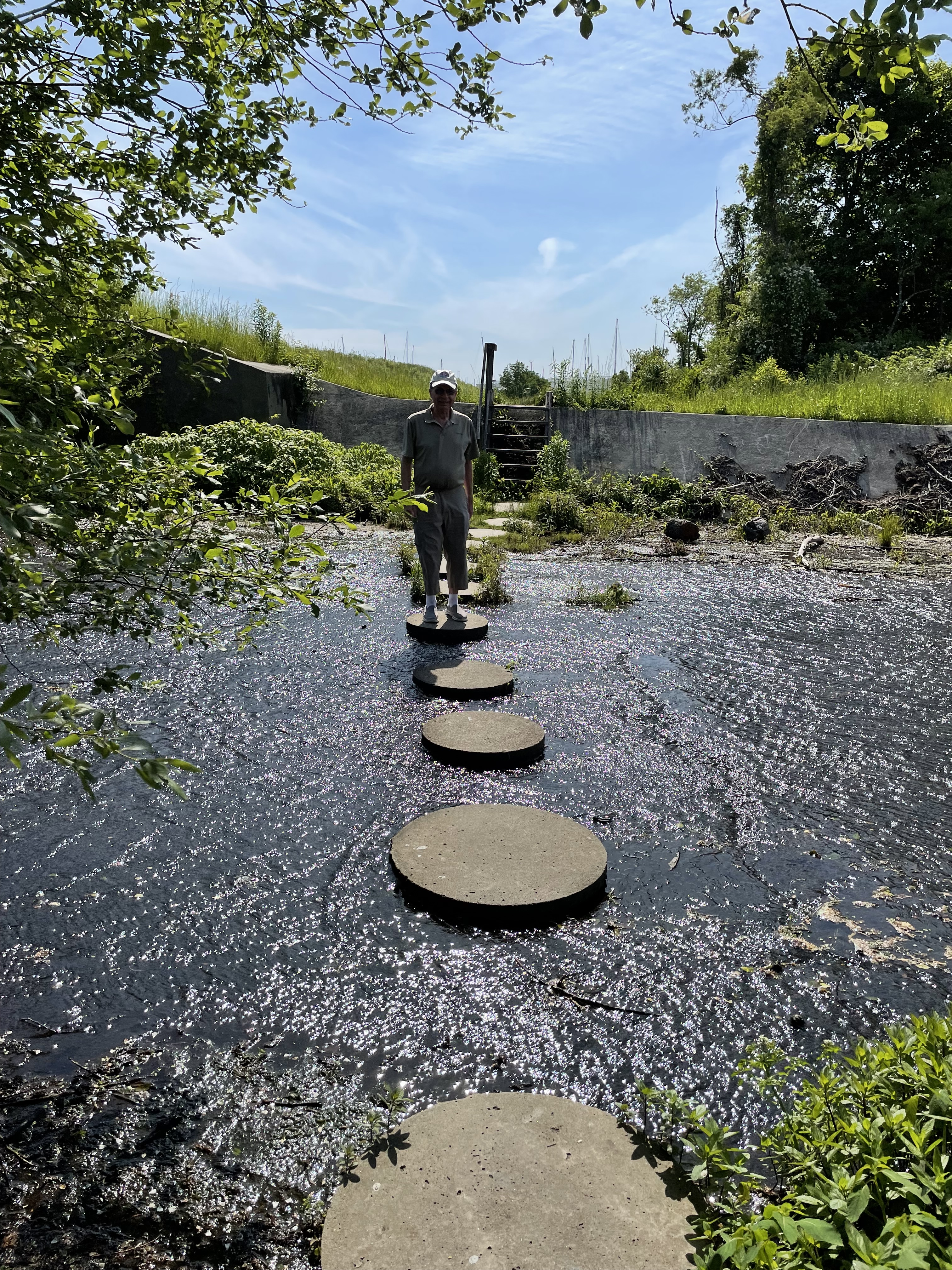
At Founder’s Brook, can we look at the Portsmouth Compact on the puddingstone rock and imagine the choices we might make to worship God in our way? How important is religious toleration to us as a community and what would we be willing to do to come out from a theocracy.
All were not equal in the founding society. Can we grapple with the lives of the indentured servants and indigenous slaves in Colonial Portsmouth society? What are the inequalities in Portsmouth today?