Home

Lost Stories: The Mitchel Family’s Daring Escape from the South

3 Comments


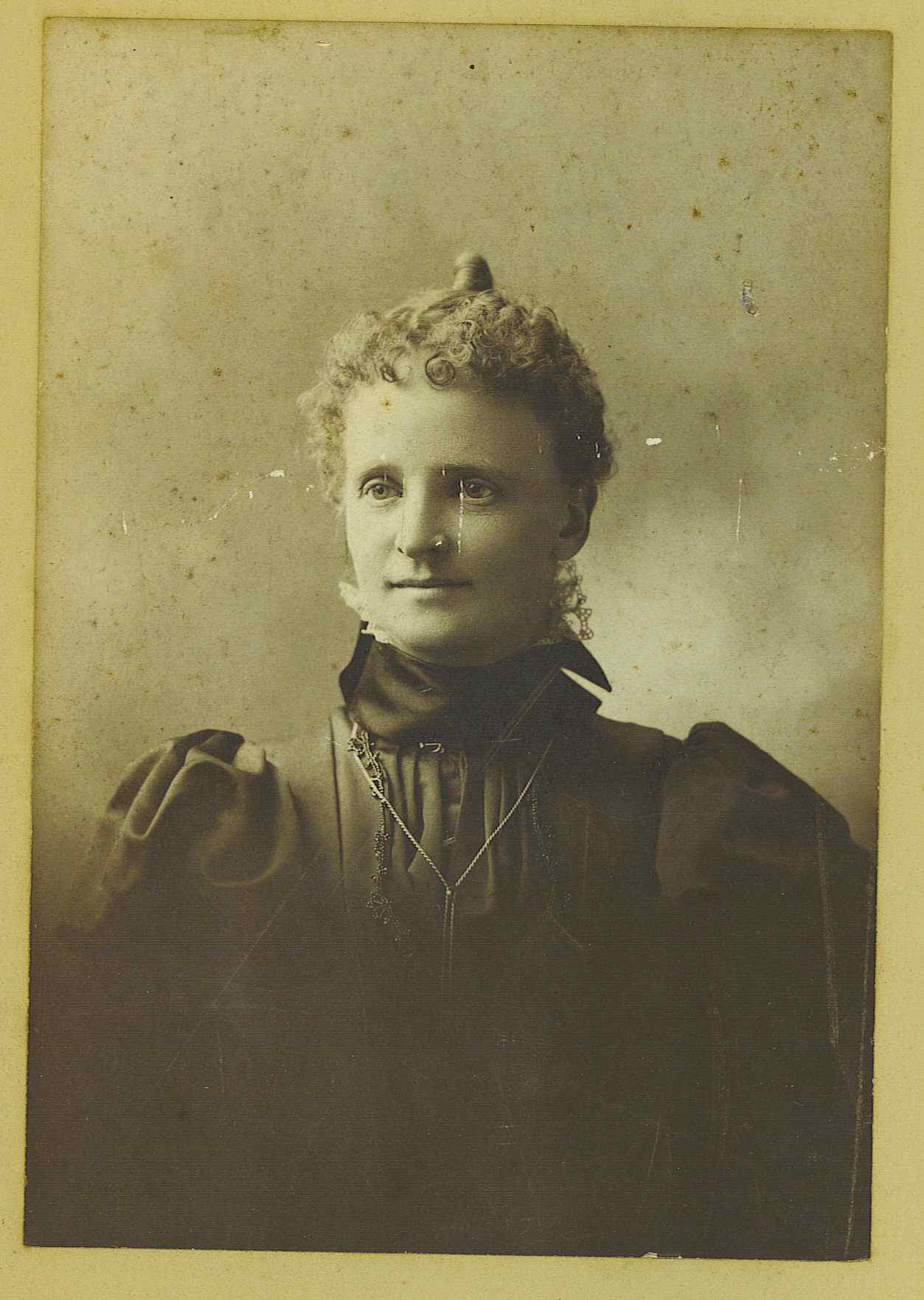
Womens suffrage photo (1)

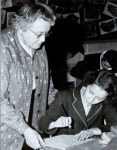
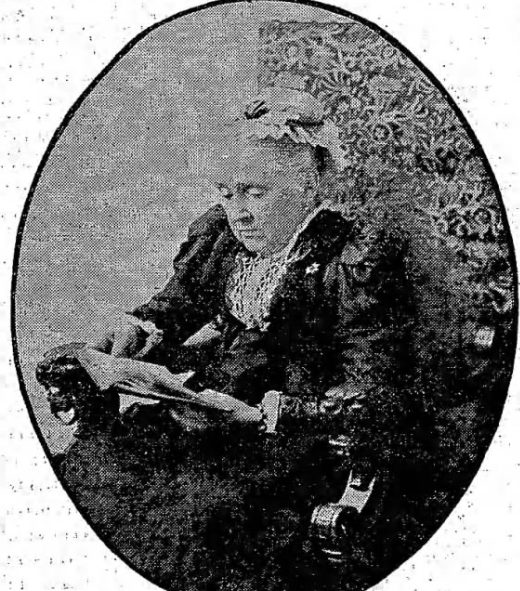
Cora Mitchel as a suffragette

When we think of Portsmouth and the Civil War, we usually focus on Lovell Hospital or the local men that went to war. I’m beginning to discover that a prominent Bristol Ferry family, the Mitchels, had a unique history of escapes from the Confederacy. I had come across a newspaper article about Portsmouth resident Colby Mitchel and his daring escape from being kidnapped from school and impressed into the Confederate Army. ( I wrote an earlier blog about this story.) With further research I came across a first hand account by his sister, Cora Mitchel, of how the rest of the family escaped from Florida and traveled to their summer home in Portsmouth, Rhode Island. Cora related her story in a book in 1916 – Reminiscences of the Civil War. It was published in Providence by Snow and Farnham and it is available digitally online. The information in this blog came from Cora’s book.

Why was the Mitchell family down South when the Civil War began?
The father of the family, Thomas Leeds Mitchel of Groton Connecticut, was a cotton merchant in Apalachicola, Florida. Cotton was shipped down river to be compressed and taken down to the bay where steamers and sailing vessels would carry it to England and New England. There were a number of Northerners in the community as well as families from the South. Mitchel did not believe in slavery. He employed blacks, but he did unwillingly own three. These three had come to him and asked him buy them. Otherwise they would be sold on the open market. Cora remembers them as faithful, valuable servants who were like family members.

Cora’s mother was Sophia Brownell of Providence. The Brownell family was one of the earliest families in Portsmouth. The Mitchels had their summer residence in Portsmouth in the area where the first Brownells held their land. It was not uncommon for Southern planters to spend their summers in the milder climate of Aquidneck Island.

What happened to the family when the Civil War began?
Cora remembers the excitement when war seemed imminent. Her father was convinced that the war could not be long and that peace would be restored. He had large properties in the South as well as his business, so he decided not to go North. Everything he had would be confiscated if he did.

After Ft. Sumter, the town began to prepare for war. Defensive companies formed and drilled. Sandbags armed with canon lined the bay and the town was considered to be in jeopardy. In the Spring of 1861, Cora’s sister, Floride, was to be married. Mother Sophia was allowed through lines and she went north for daughter’s trousseau!

A blockade shut up the port. Business was at a standstill. Cora’s sister and brother-in-law went to Columbus, Georgia. Fifteen year old Cora was sent to stay with her sister and go to school in Columbus.

Young Colby Mitchel sixteen or seventeen years old at the time) was taken from the schoolhouse in Apalachicola by a detachment of soldiers and conscripted into the Southern army. How his father rescues him and brings him North is another interesting story.

The family was beginning to realize the gravity of the whole situation they were in. Neighbors began to resent Colby’s desertion. Mother Sophia was left with four small children and almost no food or money. Son Thomas was around ten, Sophia was about six, Louis was four and Gaston was about three.

Mrs. Mitchel’s Dangerous Journey to get Cora
Mother Sophia did not want to leave Cora behind. Columbus, Georgia was three hundred miles away and Sophia left her younger children with their Aunt Ann, their nurse. She set off on a perilous journey to get her daughter. The Confederates had obstructed the river with fallen trees, debris, etc. Sophia had to get around it. She rowed against the current as far as the obstruction. She was able to get a boat for the rest of the journey, but she was exhausted when she arrived at Columbus.

When they traveled down river to get back to Apalachicola, they needed to get a passport to get through the Confederate lines. At first the soldiers Sophia approached wouldn’t give it to her. Cora tried approaching a young soldier and he helped them even though he had orders not to let them pass through. A boatman who was originally from Italy was waiting for them at the obstruction. They found a route through a bayou to get around the obstruction. They had the necessary passport to get through the guard posts and the Confederates let the women and their boatmen pass. Their little boat was leaking badly as they reached a deserted wharf at Apalachicola.

Times were tough in Apalachicola. The town was built on a sand bar and could not grow food on its own. No food shipments were coming. There were no cattle or poultry. What rice they had had spoiled. Everyone lived on corn meal. The situation was getting worse, but Sophia was waiting until Spring to get the transport ship to go North. It was a dangerous time. The men who had helped their father and Colby escape had been shot by a company of soldiers.

The Journey North
The Captain of a Union ship said he was given orders not to accept refugees, but mother Sophia persisted. They waited for the transport ship on the Somerset – an old ferryboat. The crew was good to the family. The ship’s tailor even made clothes for the boys. The crew missed their own families so they enjoyed the Mitchel children. The Captain even insisted on giving Sophia $500 for trip (their confederate money wouldn’t do them any good getting up north). The family transferred to the transport ship, Honduras. They stopped at Tampa and Cedar Keys before they landed at Key West. Key West was crowded with refugees and blacks that were trying to escape from the South. Yellow fever was spreading throughout the town. Ten days later a steamer came from New Orleans. The Captain told Sophia there was no room, but Sophia pleaded. The Captain reluctantly allowed them to stay in a room that flooded each morning. Seasick and uncomfortable throughout the trip, the family arrived home to Rhode Island. They were reunited with Colby and father Thomas.

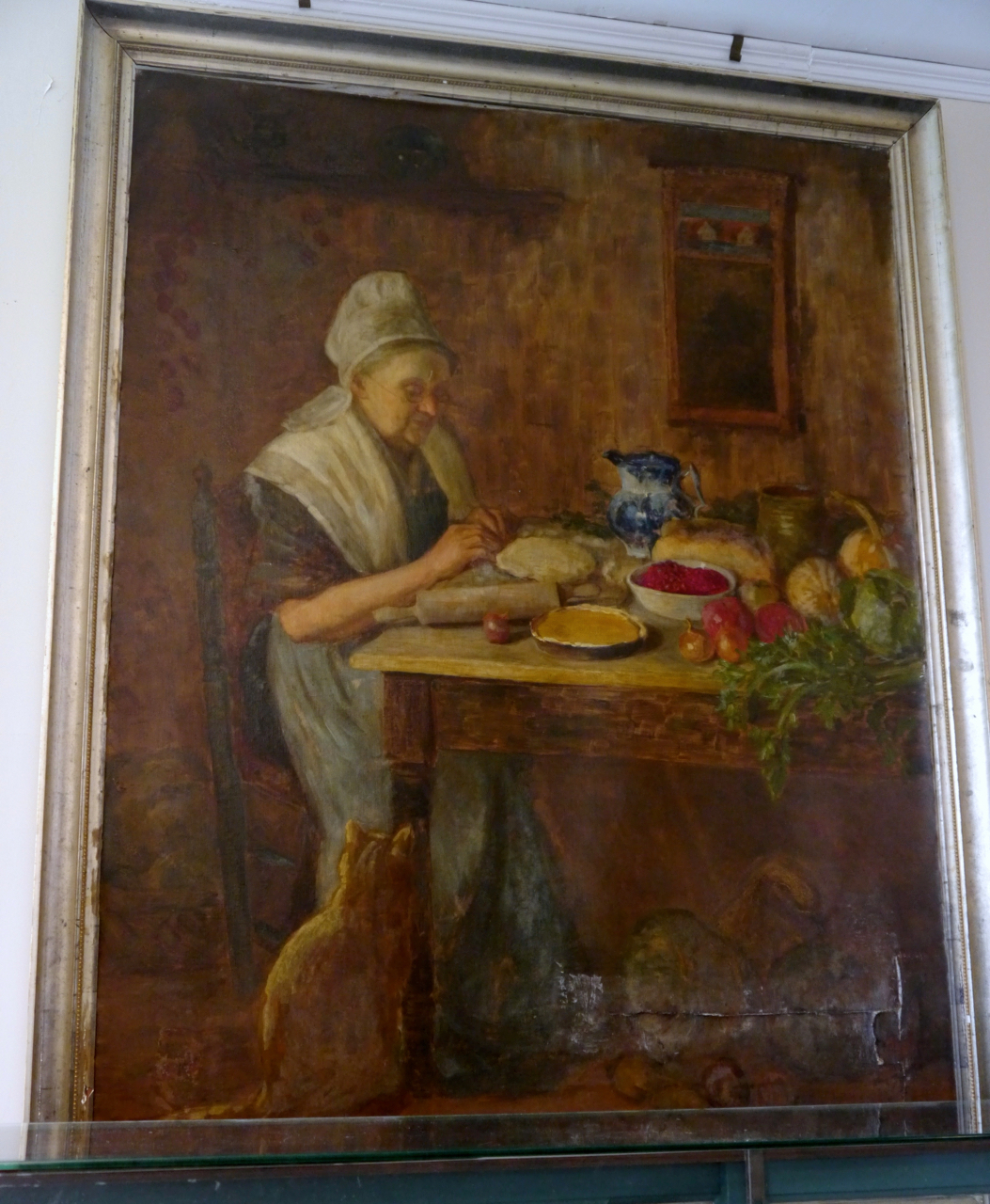
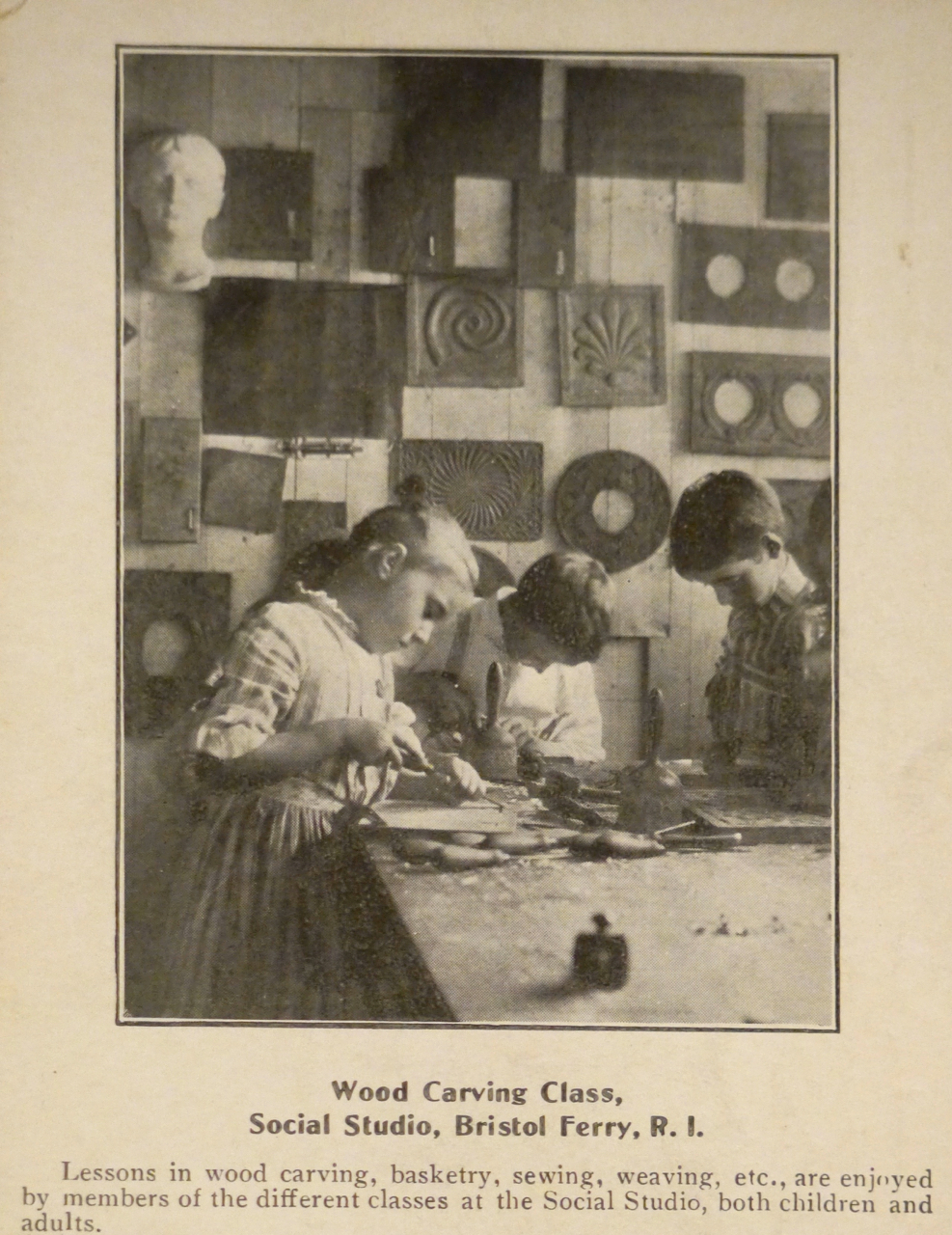
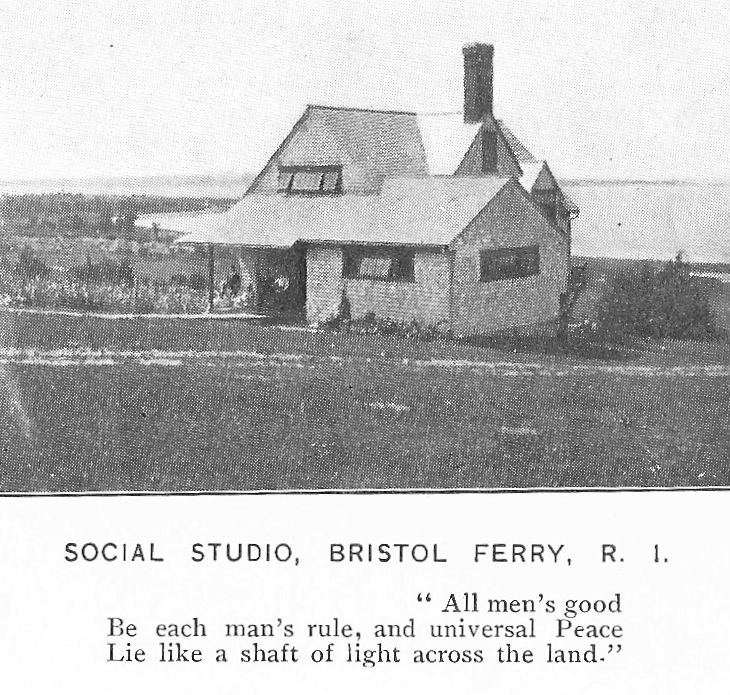
Many of the Mitchel family continued to spend time in the Bristol Ferry neighborhood. On his eighty-ninth birthday, Colby received the Boston Cane as the oldest resident of Portsmouth. Cora Mitchel was one of the founders of the Newport Women’s Suffrage Association and served as President and Vice President of the Association. Sophia was a noted artist and had a studio at Bristol Ferry. Floride made her way to Rhode Island as well. The “Mitchel Sisters” were a force in the Portsmouth community in both the arts and social reforms.

Bristol Ferry Map edit

Note Mitchel family land on 1907 Portsmouth map.


Portsmouth Places: Newtown – The Town Center of Portsmouth?

Leave a comment

Map of Newtown 1870

How do you describe the town center for Portsmouth? You might think of the “Cozy Corners” area where Clements Market, the bank and the library are located. The original village around Founder’s Brook was to be abandoned because the Town Pond was beginning to silt up. Town fathers in 1728 proposed the town village called Newtown.  Streets were officially laid out in 1740 and there were only a few homes built. It was an area east of East Main Road between Church Lane and Child Street.  There was a middle highway through it now known as Water Street.  A number of streets cut through from East Main Road to the water’s edge.  Most of the roads remained abandoned and only Church Lane, Power Street, Child Street and Water street remained active.   Town planners hoped this area would rival Newport.   It was considered a good site with land sloping down from Butts Hill to a good harbor with deeper water than the original settlement. The community only began to grow with the coming of the trolley car and the automobile. Power Street took its name from a power house at the foot of the road that supplied electricity for the electric cars.  Today the area imagined as Newtown is as close to a town center as we have. Portsmouth has always been a town with a variety of villages – Bristol Ferry, Melville, Island Park, the Glen, South Portsmouth, etc.

Portsmouth Places: The Hummocks

1 Comment

The Hummocks

The Hummocks is a community of homes perched on a ridge on the northeastern shore of Portsmouth between the Sakonnet River Bridge and the Escape Bridge toward Island Park.  There was a fish factory at the Hummocks that was being used as a government storehouse in 1919.  The community itself began as a summer get-away for families from Fall River and Taunton.  The New-Haven-Hartford Railroad owned most of the land in the late 1800s  The railroad encouraged the growth of the community because it would generate business for their passenger service.  By 1921 there were seventy summer homes there and more were being planned as the Hummocks Beach area was being opened up.  The Hummocks became a popular spot for social gatherings.  Clubs and organizations would meet at the Hummocks for chowder, clam bakes and to play ball.  By 1923 summer residents received a charter as the Hummock Beach Improvement Company.  There aim was to improve living and social conditions in the Hummocks community.

Newspaper accounts from 1899 tell us that the stone to construct the railroad bridge from Tiverton to Portsmouth was taken from the high bluffs of the Hummocks – just as it had for the first railroad bridge there.

Portsmouth Places: Melville and PT Boats

Leave a comment

The Melville area of Portsmouth is the home of a marina now, but it played a vital role in the war effort during World War II.  In November of 1945 the PT base at Melville was de-commissioned, but by then it had trained approximately 2,500 officers and 20,000 men for duty on Patrol Torpedo boats. The base was known as the Motor Torpedo Boat Squadron Training Center at Melville.   The small but fast PT boats saw duty in the Pacific against the Japanese and were used in the Atlantic and Mediterranean as well.

The training base at Melville was commissioned in the spring of 1942.  Approximately 45 different squadrons of PT boats were trained at Melville which was the only training facility for the PT boats.  Captain William C. Speech was the commanding officer of Melville.  The training period consisted of a three month course with one of those months onboard a PT Boat.

John F. Kennedy was one of those trained at Melville.  On September 27, 1942, Kennedy entered the Motor Torpedo Boat Squadron Training Center.  He was promoted to lieutenant (junior grade) during the training.   He completed his training there on December 2 and he took over command of a torpedo boat in early 1943.  He ended up in the Pacific and the story of the sinking of PT 109 and Kennedy’s rescue of a crew member became famous when Kennedy ran for President.

The PT crews received a number of commendations for heroism and the small but swift PT boat was recognized for its value in the war effort.

Melville has been the site of other Navy operations.  During the Civil War it was the location of Lovell Hospital.  In the 1890s it was known as the Bradford Coaling Station were coal was stored until it was loaded onto ships.  Later on it was converted to a fuel depot.  In its earlier days, the Melville area was known as Portsmouth Grove.  It was the site of a recreational park with games ( ten pin bowling) and rides (like a merry go round). There was a dock for the steam ships to bring customers for a day of fun and recreation.

Today Melville is used as a recreational area.

IMG_3409

Melville Marina


Portsmouth Places: Stone Bridge

Leave a comment

Howland Ferry area

The Stone Bridge began as a toll bridge.

From the earliest days, there was a ferry across the Sakonnet River to Tiverton at Howland’s Ferry or Anthony Ferry. The Rhode Island Bridge Company in 1795 constructed a bridge in the area as a private, tolled bridge. The area around the bridge has treacherous currents and the bridge washed away in 1796. They tried rebuilding in 1798 and it was forced to close until 1808. It was ‘rebuilt after destruction by the Great September Gale of 1815 and received its name as “the Stone Bridge.” After the draw bridge portion was washed away in 1869, it was sold to Tiverton and Portsmouth. The towns turned it over to the state. The structure was rebuilt and reopened in 1871 as a free bridge. In 1957, it was replaced by a new Sakonnet River bridge. Now it serves as a picturesque fishing pier on the Portsmouth side.

Howland Ferry area

This ferry, the West Side, was used in the Howland Ferry area when the Stone Bridge was not operating.

Portsmouth People: Louis Escobar

2 Comments

Escobar’s Highland Farm

Portsmouth dairy farmer Louis Escobar rushed into action when he saw smoke coming from his barn. He and his grandson ran into the old barn to try to rescue some of the young cows close to the door. Then he heard the roof start to crumble. It was too dangerous to stay inside. When the firefighters arrived they could see the flames leaping along the roof. Firefighters from Portsmouth, Middletown, Tiverton and the Navy base endured heat and thick smoke to battle the flames to protect the animals. They cooled the cows by watering them down with their fire hoses. A back hoe pushed in the side of the burning barn so that the livestock would have a path out of danger. The animals were so fearful that at first they wouldn’t move at all. When they began to move, they charged out of the barn. Crowds of neighbors cheered the cows as they escaped the flames. Neighbors also took a big role in rescuing the livestock as the firefighters tried to prevent the fire from spreading to a nearby gasoline tank and the two homes on the farm.

Through the help of brave neighbors and firefighters, the milking cows escaped the fire, but there were injuries. Animals were burned on their backs from embers that fell on them while they were in the burning barn. A veterinarian treated them and late into the night farmers arrived with trailers to move fifty of Escobar’s cows to a farm in Warren where they could be cared for. Five of the cows had lung damage and bad burns. One of the bulls was not expected to recover, but he did. When the community organized an Escobar Farm Fun Day at Glen Park three months later, the recovering animals were there to greet the crowd of almost 3,000 people who came to support the effort to “Bring the Cows Home” to a new barn. The community appreciates all that Louis does, including his annual Fourth of July fireworks display.

Fire investigators say the fire was started accidentally when two boys were playing with fire in the hayloft. Although it began as a foolish mistake, Louis Escobar stressed the positive results. He was thankful that the community had come to support him. He began to build a new and better barn complex.

The barn fire was only one of the challenges that farmer Escobar has faced. Louis was born into a farming family and he has lived on the family farm all his life. Farming is what Louis loves to do, but it has never been easy to keep his Highland Farm in business. Louis inherited the 98 acre dairy farm in 1974. Farmer Escobar had to find ways to compete with the big industrial dairy farms. The large milk companies could offer their products at a lower cost because they produced dairy products in large quantities. Louis helped form “Rhody Fresh” in 2004. Eight Rhode Island dairy farms banded together to produce their dairy products together to compete with the larger farms. When people buy dairy products with the “Rhody Fresh” label, they know they are supporting local Rhode Island farms.

In order to stay in business, Louis has to use his land for a variety of purposes. Escobar’s farm raises Christmas trees, has a pumpkin patch and has a corn maze in September and October that is a popular tourist attraction. When a neighboring farm came up for sale, Louis bought the property so it would still be farmed and he made the farmhouse into a bed and breakfast inn.

Like many of Portsmouth past farmers; the Escobars use the latest methods to insure the quality of their dairy products. The soil is tested regularly to make sure it is rich in nutrients, cows are tested to improve their nutrition, and good grazing land is set aside as open space. Younger cows have outside pens and these cows are used in the 4-H program. Young people can learn responsibility and independence by taking care of an animal.
Louis has continued to have his good times and his tough times. In 2013, when Portsmouth celebrated the 375th Anniversary of its founding, Louis Escobar was chosen as the Grand Marshal of the parade. He was a popular choice because he represents what has traditionally been good about Portsmouth. Farming, however, can be a dangerous job. On a June day in 2015 Louis was driving his tractor a little too fast when he drove into a 10 foot deep pit. Louis’ spine was injured and for a while he was paralyzed. Through hard work in physical therapy and the support of his family and community, Louis has been getting better.

Portsmouth is still proud of its farmers and our farming heritage. Dairy farmer Louis Escobar’s story shows that the hard work, community spirit and the ingenuity of Portsmouth past farmers is still represented in Portsmouth farmers today.

Bob Mello: Providence Journal, July 24, 1998. 2 boys charged in barn fire.
Jim McGaw – Portsmouth Times 6/23/15:  Portsmouth Farmer Louis Escobar still on the mend.
Sean Flynn – Newport Daily News July 23, 2015
Soljane Martinez, Providence Journal Sept 8 1998.  Community effort helps rebuild burned dairy farm.
Liz Foran:  A Fair to Remember July 28, 1998  Providence Journal

Portsmouth Places: Town Pond

1 Comment

From West land-grant map.

The Town Pond is in the news because an Oyster Farm is in consideration for the location.  The pond was an important part of the early days of Portsmouth, but fell on hard times when it was used as a dumping ground.  Restoration projects have help to restore it to some level, but it is hoped that the Oyster Farm proposed might continue to improve the ecosystem.

From Rev. War map

The Town Pond area was important to the early settlers of Portsmouth. They landed near the area in 1638 when they first settled the area. The pond allowed entry to the settlement area from Narragansett Bay and it was close to a brook for drinkable water and a cove for entry to the Sakonnet River.  It was a salt (tidal pond) until 1949. At that time it was filled with dredged material and became a mudflat. With the help of Senator John Chafee, Congress authorized a “Narragansett Bay Ecosystem Restoration Study” that included restoration of the pond. The work of restoring the pond took 3 years (2005 to 2008). You can walk along the pond to the shore. There is a parking lot off of Anthony Road near Boyd’s Lane. You might imagine what the pond looked like in colonial days.

The maps in this blog show the Town Pond as mapped out at different times in Portsmouth’s History – Revolutionary War times, 1848 and as historian Edward West rendered it in the 1930s when he compiled his land grant maps.

From 1848 Hammett map.


Portsmouth Places: Quaker Meeting House

1 Comment

Quaker Meeting House
circa 1700

Today the people of Portsmouth have the opportunity to preserve an important piece of our history.  The Friends community no longer uses their meetinghouse and it is up for sale.  The Portsmouth Historical Society is sponsoring an Open House at the meetinghouse this Saturday at 10:AM.  Come see this Portsmouth treasure.

The Portsmouth Friends Meeting House was built between 1699 and 1702. It was constructed at about the same time as the meeting house in Newport. Both are among the oldest meeting houses in the United States and among the earliest houses of worship in Rhode Island. Rhode Island was one of the few colonies that welcomed Quakers and there were monthly meetings in homes as early as 1660 before the meetinghouse was built. Additions were made to the meeting house through the years. Quakers had a strong influence in the community.

The meetinghouse was occupied by English forces during the course of the American Revolution. Records show that Hessian troops occupied it as well.

After the war the Friends decided that Quakers should not hold public office, so they power they once had in the community was lessened.

In 1784 the meeting house was used as a school. Students boarded with Quaker families near by. When the school was closed in 1788, the remaining funds were used to start what would become the Moses Brown School in Providence.

Portsmouth Places: Patriots Park

Leave a comment

Battle of Rhode Island map at Patriot’s Park

Patriots Park
West Main Road at split with Route 24.

This is a memorial to the 1st Rhode Island Regiment, known as the “Black Regiment” located at the junction northbound of Routes 114 and 24. Flagpole commemorates the site where the Black Regiment courageously fought off a Hessian attack, saving the American line, on August 29,
1778 during the Battle of Rhode Island.

The August 30, 1778 diary entry of Liet. Col. Samuel Ward of the First Rhode Island Regiment provides an eyewitness account.
“The army retreated the evening of the 28th. Early yesterday morning, the enemy moved out after us, expecting that we were leaving the island, and took possession of the Heights in our front. They sent out parties in their front, and we made detachments to drive them back again. After a skirmish of three or four hours, with various success, in which each party gave way three or four times, and were reinforced, we drove them quite back to the ground they first took in the morning, and have continued there ever since. Two ships and a couple of small vessels beat up opposite our lines, and fired several shots, but being pretty briskly fired upon from our heavy pieces, they fell down, and now lay opposite the enemy’s lines. Our loss was not very great, it has not been ascertained yet; and I can hardly make a tolerable conjecture. Several officers fell, and several are badly wounded. I am so happy to have only one captain slightly wounded in the hand. I believe that a couple of the blacks were killed and four our five wounded, but none badly. Previous to this, I should have told you our picquets and light corps engaged their advance , and found them with bravery.” Ward believed that “our loss was not very great,” but later estimates were for 500 American deaths and a thousand for the British and Hessians. Ward believed that the British ships had been deterred by the American cannon fire, but the Captain’s log of the HMS Vigilant suggests that the wind direction and shallow depths of the area prevented the ships from reaching Bristol Ferry.

David Durfee Sherman: Recording Everyday Life in Pre-Civil War Portsmouth

2 Comments

Our Portsmouth history research often focuses on people who accomplished great things or were notorious in some way.  The focus of this blog is on an ordinary person who represents the lives of many of our unheralded Portsmouth citizens.  David Durfee Sherman (Shearman) recorded his daily life in a diary.  Several volumes of his diary are in the collection of the Portsmouth Historical Society.   His writing has been a valuable glimpse into daily life in Portsmouth before the Civil War.  He records people, places and activities in Portsmouth life.  Through the diary entries we learn about the steps in rebuilding the dam at Glen Farm and how the Sherman mill was moved from Fall River and re-assembled in Portsmouth.  (That mill still stands today at Prescott Farm.)  He commented on the weather, religious meetings, barn raising, the amusements at the Portsmouth Grove, and even raiding a local brothel.

About David Durfee Sherman:  He was born in 1830 and died at the age of thirty-seven in 1868.  As a young man he married  Cynthia Dixie and they had seven children.  Only three of them lived to adult life – George, Charles and Clarence.  Like most men in Portsmouth, David spent most of his time farming, but he worked at construction projects as well.  He did his public duty as a town marshal and he served in the Union Army in Company D of the Rhode Island 12th Infantry Regiment.  At age twenty-nine he served as a traveling book salesman.  It is hard to imagine walking from Portsmouth to Somerset or Swansea to peddle his books, but David would do that.

His writing is clear and enjoyable to read.  He comes across as an intelligent and inquisitive person who takes every opportunity to develop his intellect.  He didn’t have much money, so he was very creative in using his own skills to improvise and craft what he needed.

David’s diary entries will be included in some blogs to come and his entries will be a focal point for the 2018 Exhibit at the Portsmouth Historical Society. Marge Webster, a past curator and member of the Curator’s committee, has done extensive work with the diaries and has compiled an index of names and places in them.

Parts of his diary have been digitized and are available online through the Portsmouth History Center Digital Archives:  Click on the link to the right.  Digital Archives


Older Entries Newer Entries