Home

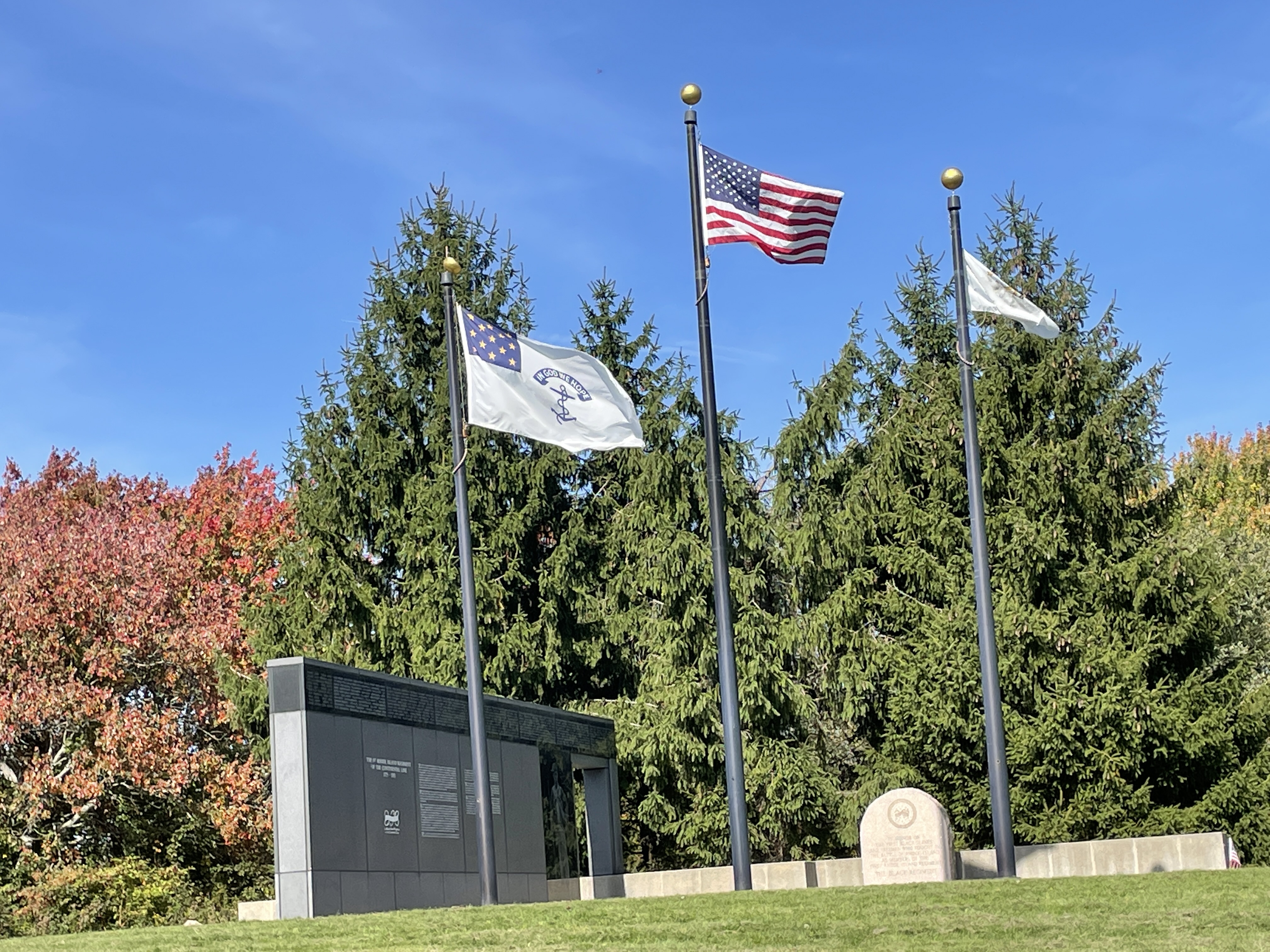
Celebrating the First Rhode Island’s (Black) Regiment): The Story of Patriot’s Park

5 Comments

For over sixty years the Newport Chapter of the National Associate of Colored People (NAACP) has been calling attention to the valor of the soldiers of the First Rhode Island Regiment (called the Black Regiment).  I heard the story of their efforts at last year’s commemoration of the Black Regiment’s efforts in the Battle of Rhode Island.  Mrs. Fern Lima recounted all the milestones in the NAACP’s  efforts to create a memorial to these soldiers and to continue to tell their story.  Mrs. Lema’s presentation is from the notes of her father, Lyle Matthews, a past NAACP president and one of the earlier workers in the effort.  I recently had the opportunity to talk to longtime Newport County NAACP members, Mrs. Lema and Mrs. Victoria Johnson.  I had gathered a timeline from newspaper articles, but they had been participants and could give me their personal perspectives.  

One of the key information sources Mrs. Lema provided was a copy of the program for an earlier monument dedicated in 1976.  In the booklet for the Dedication, May 2, 1976, NAACP President William Trezvant quoted from historian Charles A. Battle’s booklet “Negroes on the Island of Rhode Island”.

“In August 1928 the one-hundred and fiftieth Anniversary of the Battle of Rhode Island was fittingly celebrated by the citizens of Rhode Island.  At that time the suggestion was made that the State of Rhode Island honor in bronze or stone the memory of Colonel Greene’s regiment.”  

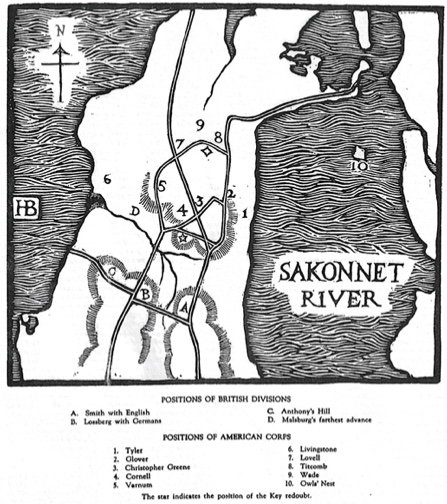
The dedication of the Black Patriot’s Monument in 1976 was just one milestone in a larger effort to bring the story of the Black Regiment to the attention of Rhode Island and the nation.  In an earlier letter (Nov. 12, 1975) Trezvant wrote: “The Goal is to have the Black Regiment take its rightful place in Rhode Island History and in the Nation’s fight for freedom.”   Early steps toward that goal were made by historian Charles Battle and those who researched the role of the First Rhode Island Regiment.  NAACP members Lyle Mathews, John Benson and State Senator Erich O’D. Taylor did the spade work in determining where the redoubt was located that the Black Regiment defended so valiantly.  Mathews was President of the NAACP at the time and Fern, his daughter, remembers field trips out to the Bloody Run Brook area where the men scouted a location that would be an appropriate site for a monument. One of the men, John Howard Benson, was a noted carver and created a woodcut map of the Battle with the redoubt’s position marked with a star.  This beautiful map was included in the program.

Mrs. Lima and Mrs. Johnson helped me with a timeline of the events in the completion of Patriot’s Park.  

In 1967 the NAACP began an annual celebration of the valor of the Black Regiment and to call attention to their role in history.  In July of that year a boulder on the property was dedicated to the Black Regiment.  State Senator Taylor was master of ceremonies and he introduced Oliver Burton who knew Charles Battles and was an early advocate for recognition of the Black Regiment’s role in history.  

In 1969 the remembrance was held in August and a flagpole was added to the site.   Children who had learned about the regiment from Battle’s book attended and Oliver Burton spoke.  Both Mrs. Johnson and Mrs. Lima have their own copies of Battle’s book and having a good history of the story of the First Regiment in the battle was helpful in making the community aware of the special role they played.

In 1972 over 150 gathered at the memorial area on the anniversary of battle. Newspaper accounts state that this was the 9th annual commemoration organized by the NAACP. 

In 1973 a large portion of the battleground was named a national historic site. This portion of the battlefield was called “Patriot’s Park.” At this time the site contained a small monument designating the historical site, a flagpole and simple boulder. Ceremonies celebrating the role of the Black Regiment continued to be held there.

In November of 1975 a fund drive was started to erect a monument to Rhode Island’s black patriots of Bloody Brook in Portsmouth. The Newport NAACP raised funds through the sale of commemorative pins. The plans for the monument were that it would be six feet high by 4 inches wide. The insignia of the 1st Rhode Island Regiment would be carved into the granite. The State Department of Natural Resources would  prepare the landscape.  

May 6, 1976 was the unveiling of a monument at Patriot’s Park. The monument was unveiled by Mrs. Oliver Burton, widow of a man who knew Charles Battle and had dreamed of erecting the memorial Battle had wanted. Plaques were presented to State Senator Erich O.D. Taylor and Dennis J. Murphy of the RI Dept. of Natural Resources for their efforts in the project.

In 1994 funding from the Federal Highway Administration for projects to improve or preserve historic sites associated with the federal highways became available. The Black Patriots Committee of the Newport NAACP and the RI Black Heritage society proposed improving the site.

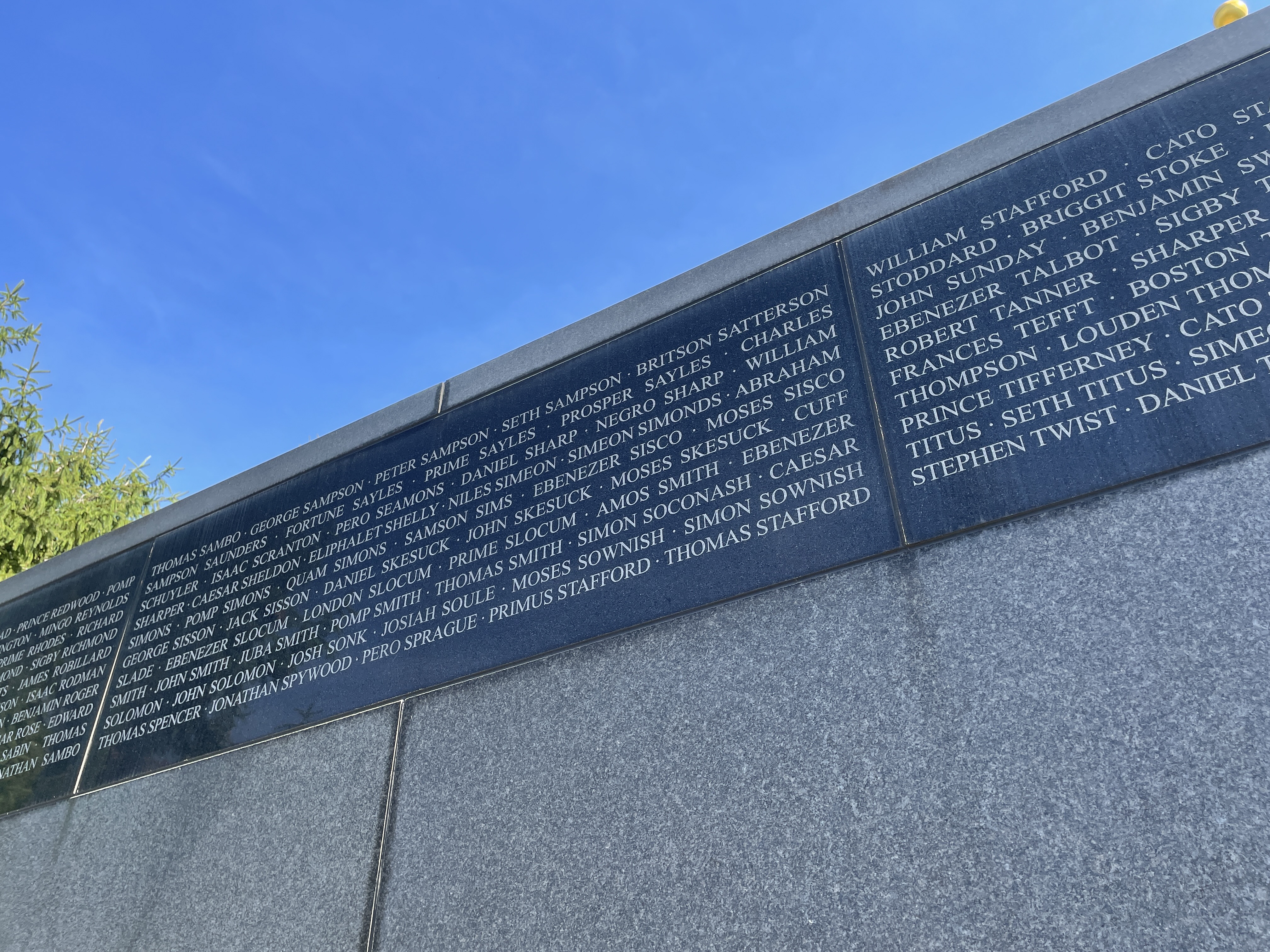
In 1996 the head of the Rhode Island Department of Transportation (RIDOT),  William F. Bundy, selected the Patriot’s Park Landscape Project as the state’s first enhancement project.  Paul Gaines was chosen to coordinate the creation of the memorial and he was working with designer Derek Bradford. Gaines and his committee spent 10 years on the project that created a 36-foot-long, 10-foot-high black granite memorial to the First Rhode Island Regiment. 

By 1999 Bradford submitted plan for the larger monument.  The design was a simple: platform with a wall that has two doorways and names of First Regiment soldiers engraved on the wall. Since no muster rolls were available for those just involved in the Battle of Rhode Island, Bradford agreed to engrave the names of all known members of the regiment. 

Federally funded projects require an Environmental Impact Assessment in which groups with direct interest are given opportunity to comment. RIDOT invited 12 groups – Black organizations, Native tribes, local institutions like Rhode Island Historic Preservation and Heritage to comment on the plans.  The basic list was the known black soldiers, but the list for inclusion was open to the families of indigenous soldiers and many of those names were added at their family’s request.

By February of 2000, two narratives had been written explaining the creation of the regiment. The battle narrative (written by Carl Becker and Louis Wilson) was agreed upon with corrections.  It took 4 years to reach agreement on the following text:3 “And to the soldiers of the Narragansett Indian Nation who fought alongside them.”

In 2006 the Memorial to Black Regiment was dedicated. The story of the valiant efforts of the 1st Rhode Island Regiment (the Black Regiment) is engraved for all to see and the names of these soldiers are remembered. 

The efforts to tell the story of the Black Regiment are not over.  The cause continues because the Memorial is in need of repairs and funds must be raised to do the required work.  

Through the efforts of the NAACP the story of the Black Regiment is being told and there is a dedicated spot on the battlefield to honor their valor at Bloody Run Brook.
The Many Lives of the HMS Flora

Leave a comment

I am working on a tour of sites in Portsmouth that saw action in the Battle of Rhode Island. The top of Quaker Hill is one such site. Some historians even use the term “Battle of Quaker Hill” because of the heavy action at this place. British soldiers converged on this crossroads from East Main, Middle Road and Hedly Street. Americans were holding their line at that position.

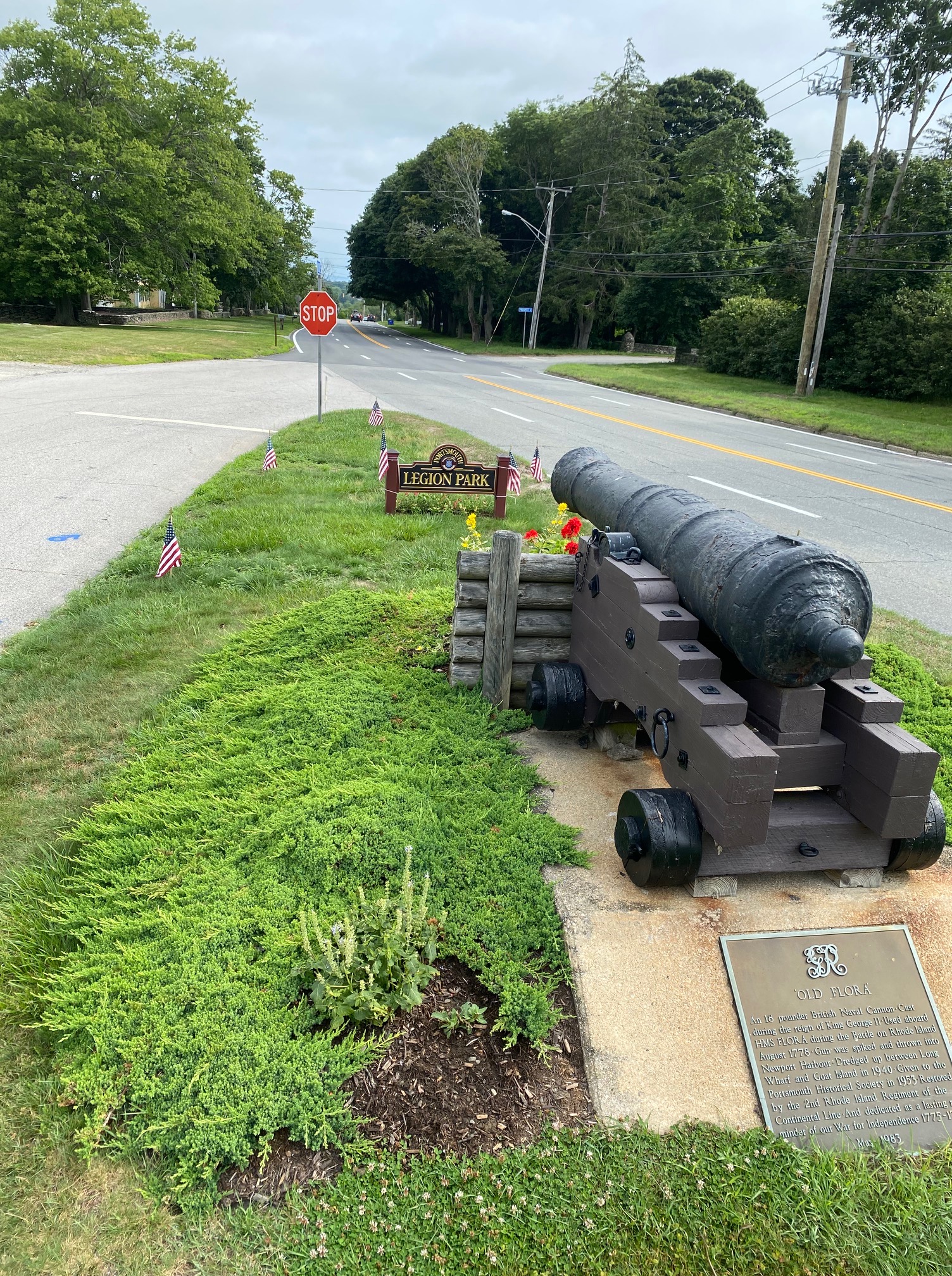
What Revolutionary Era sites can you still see today? The Friends Meeting House is an important landmark that was used by the British and Hessians as a hospital, barracks, and ammunition storehouse. The stonewalls are there to remind us of the American style of warfare in which the Patriots hid behind the walls in what we would call guerilla warfare aimed at harassing and delaying the British. In Legion Park across from the meetinghouse there is a cannon from the British ship Flora.

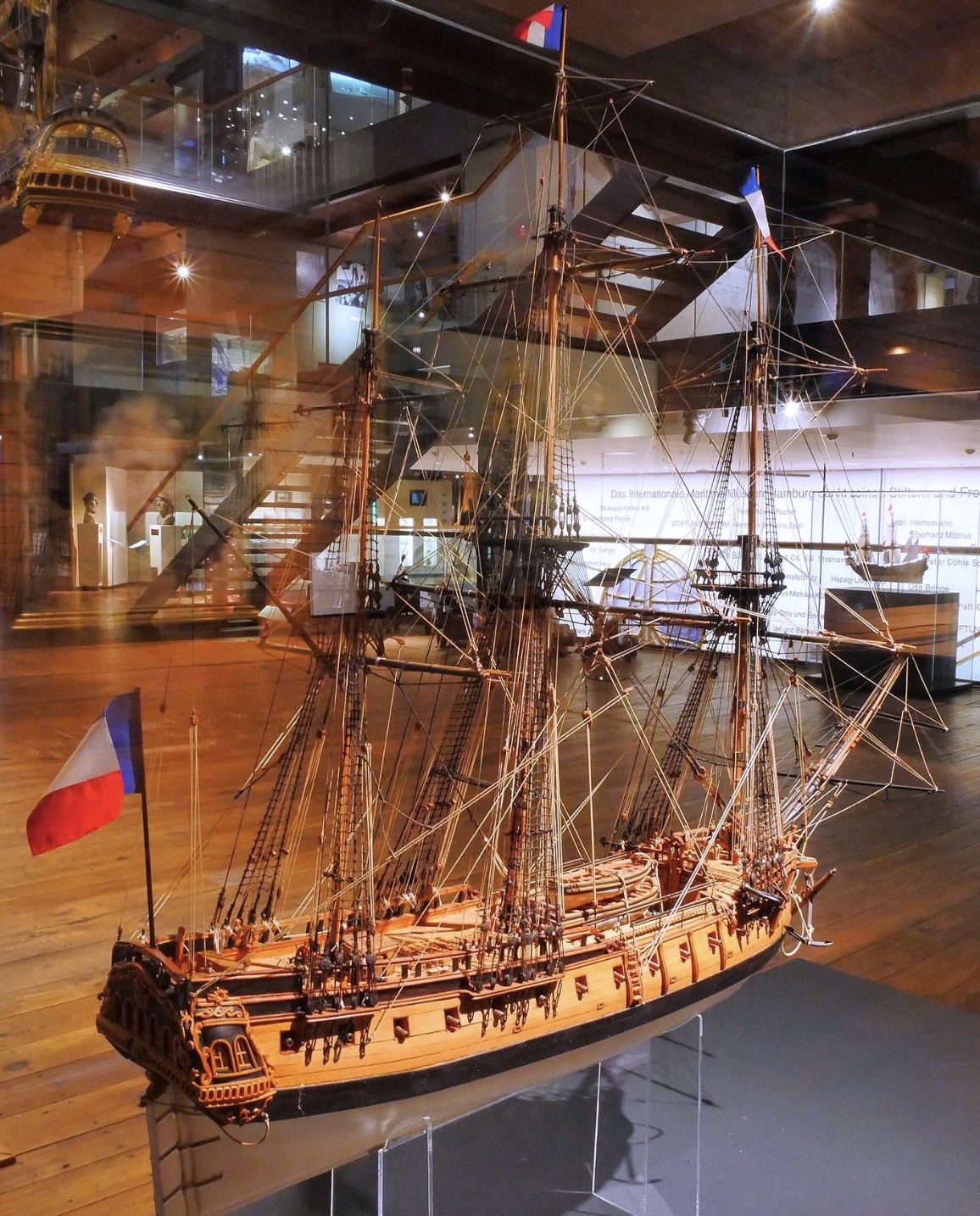
What is the story of the Flora? In researching why we have a ship’s cannon at Quaker Hill, I encountered the tale of a ship of many names and nationalities. According to an article by noted marine archaeologist D.K. Abbass, the Flora was a 698 ton, 32-gun Royal Navy frigate. Its original name was LaVestale and it was built by the French Navy in 1757. Once a ship was captured in those days, it was common practice for the vessel to be used in the navy of its captor. In 1761 the ship was captured by the British and was renamed the Flora. By 1776 the Flora was being used as a troop transport.

When the French fleet arrived in Newport in July of 1778, the British did not want the French to capture their ships. The British scuttled seven of their vessels and 13 of their transports were scuttled in the outer harbor. In Washington’s Wolfpack, the Navy before there was a Navy, author Edgar Maclay wrote that the Flora was heaved over on its side and beached for cleaning. It lay between Goat Island and Long Wharf in Newport until April of 1779 when she was raised again. The British used eight 12 pounders from the Flora on the newly outfitted HMS Pigot. The story of how American Silas Talbot outwitted the British on the Pigot is yet another story to tell. The British sank (and burned) the Flora again when they left Rhode Island in December of 1779. She was passed back and forth. 1784 – named “Reconaissance” (French), 1787 back to “Flora” (French), “Citoyenne Francaise” (a French pirate). By 1798 she was captured by HMS Phaeton and sent to the scrap heap.

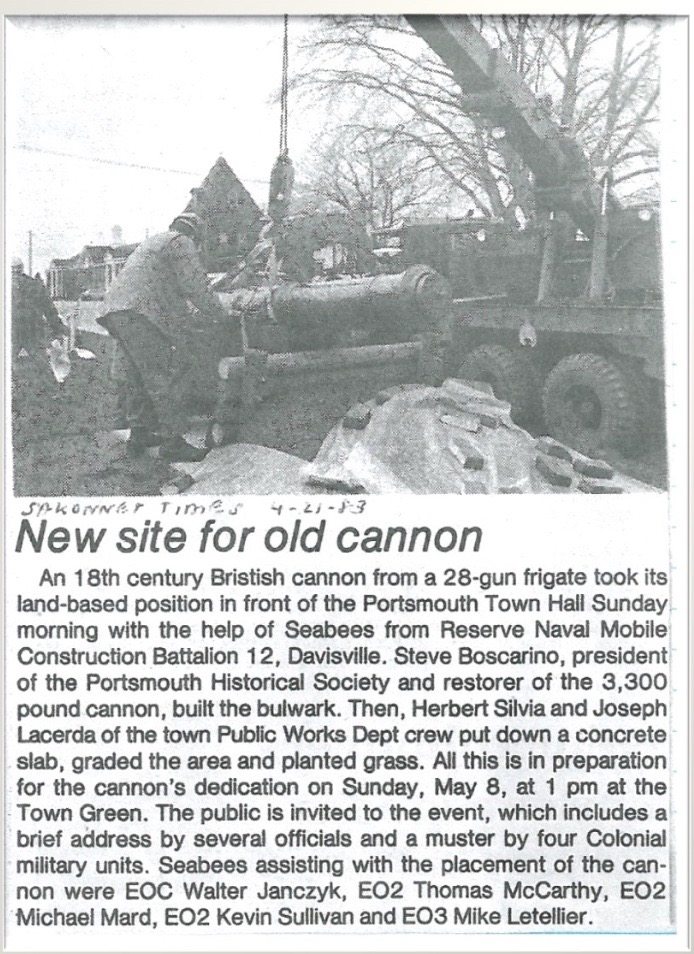
Flora was not down at the bottom of the harbor, but at least one of her cannons was. In 1940 workmen repairing Long Wharf came across the cannon and the cannon is now displayed at Legion Park in Portsmouth.

A note about privateers: they are privately owned armed vessels, commissioned by a state to attack enemy ships, usually merchant ships. The privateers and their crews usually got the ship and a large percentage of the cargo they captured. Without a real Navy, Americans relied upon these privateers in maritime warfare.

On the Road with Lafayette 1778 – Part 5

Leave a comment

In command of the East Bay forces

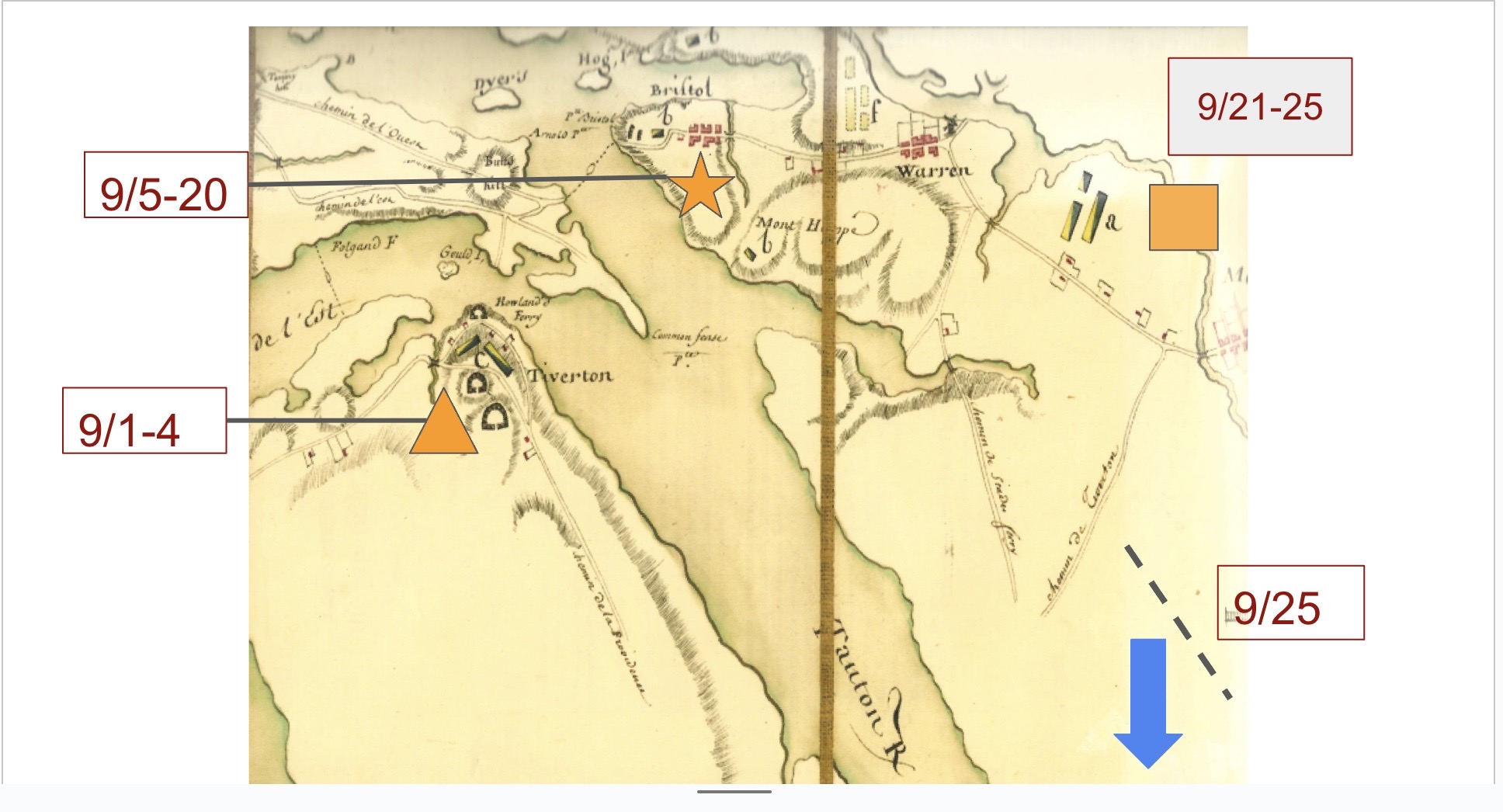
September 1st to 4th. Lafayette is in Tiverton (marked by ORANGE TRIANGLE). He has command of the Eastern Shore of Rhode Island. Lafayette writes a letter from Tiverton on 9/1. 

September 5th to 20th. Lafayette is in Bristol (marked by the ORANGE STAR). His headquarters was the Reynolds House. Lafayette writes a letter from Bristol on September 5. On September 8th he writes ”the Bristol post continues to be the most exposed one, and consequently I shall remain here.” Israel Angell’s diary reports he had dinner with Lafayette in Bristol on September 6 and heard that New Bedford had been attacked by the British. He dined with Lafayette on the 12th as well. On September 8th he writes to Silas Talbot from Bristol suggesting a plot to captures the British vessel Pigot. September 13th he writes to his wife Adrienne from Bristol.

September 21st through 24th. Lafayette camps outside of Warren (ORANGE SQUARE near Warren.) He writes to d’Estaing and George Washington from Warren on September 21. In his letter to Washington he comments that in response to advice from General Sullivan, he “is in a safer place behind Warren.” On September 23rd he writes to the President of Congress from outside Warren. ”The moment I heard of America, I loved her. The moment I knew she was fighting for freedom, I burnt with the desire of bleeding for her..”

September 25th. Lafayette left for Boston and the Rhode Island Campaign is at an end.
(BLUE LINES OFF TO BOSTON).

By October 5 Washington has requested that General Sullivan grant permission for Lafayette’s leave from duty.

Reynolds House, Bristol. Lafayette Headquarters

Resources: 1899, The Diary of Colonel Israel Angell Commanding Offifficer, 2nd Rhode Island Regiment, Continental Army, Edward Field, Israel Angell, Norman Desmarais

On the Road with Lafayette 1778 – Part 4

Leave a comment

Lafayette on a Mission

At the American Headquarters: (RED CIRCLE)

August 22. Lafayette is Major General for the Day. Lafayette and General Sullivan argue over Sullivan’s letter to D’Estaing. Lafayette refuses to agree to the letter because he finds it insulting to the French.

August 23. At counsel of War Lafayette backed an immediate retreat even though he was unhappy with the American position about the French. Lafayette is bitter about the claims the French deserted the Americans.

At Butts Hill (RED DIAMOND).

August 27. American forces decide to move to Butts Hill.

August 27. Lafayette leaves that evening to ride to Boston to talk to d’Estaing. Lafayette crosses Howland Ferry (RED TRIANGLE) to Tiverton.

August 28. Lafayette rode all night. 7 hours and 70 miles. Lafayette arrives in Boston about the same time the French Fleet Arrived. Boston is marked with a BLUE STAR.

August 29. Lafayette, John Hancock and General Heath meet with d’Estaing at Hancock’s home in Boston (BLUE STAR). The French will not return to Rhode Island.

August 30. Lafayette returns at 11 PM to Portsmouth by way of Howland Ferry (RED TRIANGLE>. He has missed the battle but has taken a role in the retreat.

August 31. Lafayette escorts the last pickets are off the Island via Howland Ferry (RED TRIANGLE) after 2 AM.

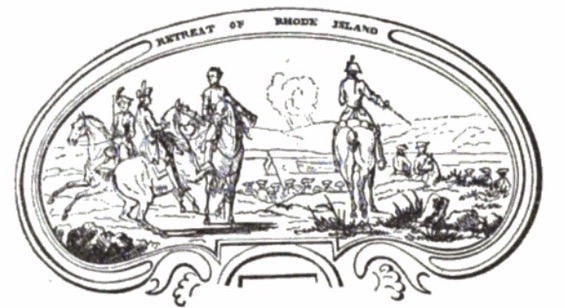
“Retreat of Rhode Island”
One of the medallions on the guard of the sword presented to Lafayette by the Congress. In Recollections of the Private Life of Lafayette by Cloquet.

Resources:

Kitchin, Thomas. “A map of the colony of Rhode Island.” Map. London: Printed for R. Baldwin at the Rose, Pater Noster Row, 1778. Digital Commonwealth, https://ark.digitalcommonwealth.org/ark:/50959/6t053p17c (accessed January 16, 2024).

On the Road with Lafayette in Rhode Island 1778 – Part 2 – A gathering storm

Leave a comment

August 9th, 1778.    

  • Red Triangle: Americans learn the British have left northern Aquidneck Island known as Rhode Island.  Sullivan orders his troops to cross over to Portsmouth at Howland Ferry.   
  • Brown Square: At 4 PM Lafayette goes onboard D’Estaing’s ship Languedoc out to sea by Newport. The ship is out to sea by Newport.   The French decide to do battle with the British fleet that has appeared outside Newport.  They are also unhappy that the Americans have moved onto Aquidneck Island before them.

August 10 – 13th, 1778 

Red Diamond: Butts Hill area

August 10th, Lafayette and the Americans are camped around Butts Hill fortifications in Portsmouth.

August 11th, the Americans are still by Butts Hill with Lafayette as Major General of the Day.  American troops parade at 4 PM.  Lafayette’s  troops paraded on the left and Greene’s troops on the right.  A storm like a hurricane hits the island.

August 12th and 13th,  the Storm is at its most fierce.  Soldiers have no tents or shelter.  Lafayette and Col. Wade inspect the water-logged American camp around Butts Hill. 

British and French ships are returning damaged by the storm.

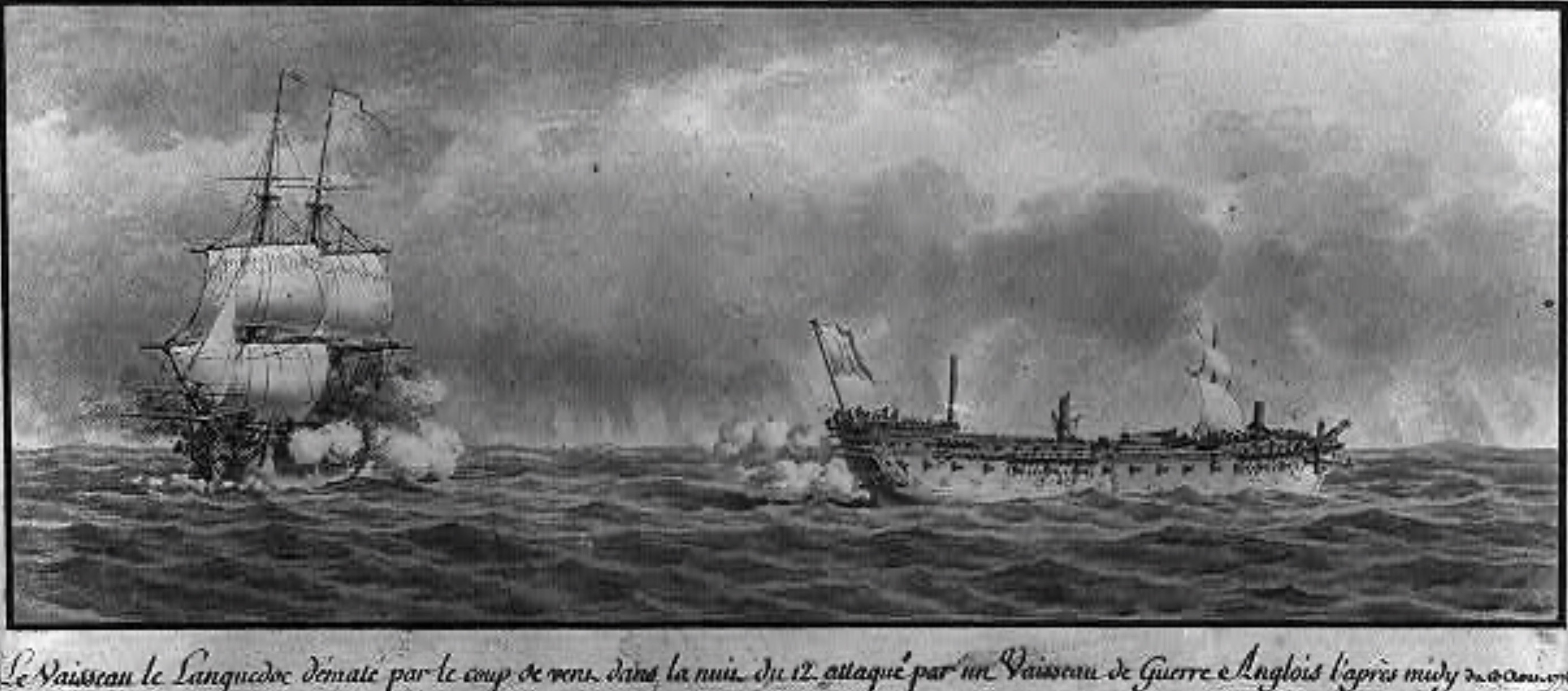
Languedoc returning without masts from Storm and Battle with British fleet.

Ozanne, Pierre, Artist. Le vaisseau le Languedoc dématé par le coup de vent dans le nuit du 12′ attaqué par un vaisseau de guerre Anglois l’après midy du 13 Aoust. [194] Photograph. Retrieved from the Library of Congress, <www.loc.gov/item/2004670063/>.

The Adventures of Silas Talbot

Leave a comment

When Lafayette wrote Silas Talbot about a plan to capture the British vessel Pigot, he alluded to Talbots’s “reputation which you have already acquired by your zeal and skill in the artificial way (as a mechanic in the military).” Talbot was known as an “artificer” – “a soldier-mechanic attached to the artillery and engineer service, whose duty it is to construct and repair military materials.” 1. What was there in Talbot’s military history that had him known as a someone who could devise, construct and repair for a military campaign? Talbot had a record of invention, construction and even “daring do” to get the job done. All his past experiences made him useful to the American cause.


Silas Talbot was intimately involved in the Rhode Island Campaign. As someone with experience as a mariner and builder, Talbot helped to construct the flatboats that would take American forces to Portsmouth on August 9th of 1778. As a soldier, Talbot fought in the rear guard to protect the Patriots as they retreated to Tiverton on August 29th and 30th, 1778. Talbot alternated between roles as sailor and soldier throughout the American RevolutionSilas Talbot’s life was full of adventures. There were “rags to riches” stories and then again there were stories of monetary downfall. He was wounded in naval battles and sustained injuries on the Revolutionary War battlefields but he kept getting back into the action. This article will focus on some of those adventures of a representative figure in Revolutionary Rhode Island
Talbot came from a humble background. He was born to a farming family in Dighton, Massachusetts in 1751. His father died when he was twelve and Silas was indentured to a local stonemason. He learned his skills as a bricklayer, but Dighton was a seaport and Silas signed on as a sailor on sloops transporting cargo from Narragansett Bay to as far as the Carolinas. By 1770 Silas settled in Providence where some of his older siblings had established themselves. Silas’ bricklaying skills were put to work in construction. Talbot wanted property and he put aside enough money to buy a lot of land on Weybosset Street. In 1772 Talbot married well. He continued to purchase land and he also began to purchase slaves. Owning a black servant was a status symbol for Talbot. He moved from being a laborer to owning a construction business.


In the aftermath of the burning of the Gaspee and the Boston Tea Party, Rhode Island merchants were alarmed. Independent militias were forming and Talbot joined and was commissioned as a Lieutenant. He joined others of his company in learning military skills in a Providence warehouse, but he didn’t have any real military experience. On June 28, 1775 Talbot answered the Rhode Island Assembly’s call to send units to Boston. He marched with his men to join the Second Rhode Island Regiment and by July 1, he was commissioned a captain. Talbot and the other 1200 men in the Rhode Island brigade took part in the Siege of Boston watching over the Red Coats but not in direct battle. Talbot’s skills as a bricklayer came in handy as they built barracks on Prospect Hill.

By April of 1776 the Siege was over and Talbot and the Rhode Island men were proud to welcome General Washington as he passed through town. As Washington arrived in New London, Rhode Islander Esek Hopkins presented Washington with a problem. Hopkins was Commander in Chief of the Continental Navy. Hopkins had sought safety in New London harbor after damage to his ships. Hopkins needed a crew to sail the ships home to Providence. Washington offered to loan Hopkins men from the Rhode Island Regiment. “All those acquainted with Sea Service that have a mind to join the Admiral as Volunteer have Liberty.” Silas Talbot took that opportunity to sail home to Providence. This was the first example of how Talbot’s military service frequently switched between the army and the navy. In August of 1776 he joined the Rhode Island troops in New York. In September he took part in an attempt to place a “fireship” (literally a ship set on fire with combustibles ) next to a British ship to catch it on fire. Talbot stayed on the “fireship” as long as he could to get it closer to the British vessel. Unfortunately the fireship did little damage, but Talbot was gravely burned.

While Talbot healed he served as a recruitment officer to enroll more Rhode Island troops to the cause.
Talbot’s adventures continue in the next article.

Definition from Century Dictionary

Biographical information from William Fowler Jr’s Silas Talbot: Captain of Old Ironsides

Seth Anthony Remembers the Battle of Rhode Island

1 Comment

In researching another topic in Revolutionary Rhode Island, I came across a book by Judge Benjamin Cowell. Cowell was born in 1781, so he wasn’t a Revolutionary War Veteran, but he made it his aim in life to help Rhode Island veterans get their pensions. He began recording the stories these old soldiers had to tell to justify their service. Cowell began to gather eyewitness accounts, speeches, letters, rosters and every piece of information he could find on Rhode Island’s role in the War for Independence. In 1850 he gathered all this material into a book: Spirit of ’76 in Rhode Island. I am gradually making my way through this book, but I found a Portsmouth story to share.

Cowell introduces the story this way (he refers to himself as “the writer”: “In the summer of 1849, the writer reconnoitered the battle ground on Rhode Island to ascertain any interesting facts which might be within the recollection of any of the old inhabitants in the neighborhood; and in his researches, he called at the house of Mr. Seth Anthony, an aged “Friend” who now lives on the farm where the battle took place, and always lived in the neighborhood.  From him he gathered no little information, and from questions which the writer put to him he received a few days afterwards the following reply, which deserves a place in these sketches.

Portsmouth, Oct 13, 1849.  To Benjamin Cowell, Providence, Respected Friend, —In answer to thy questions I have to say, that I was about twelve years of age at the time of Sullivan’s expedition against the British, and lived with my father on the west road on the Island, about two and a half miles from Bristol Ferry, lived there all the time the British were in possession of the Island, and I have now, although eighty-two years of age, a distinct recollection of most of the events that took place, at least in our neighborhood.  The battle on the 29th of August, 1778, took place on the farm on which I now live, which is a little to the westward of the house where my father lived; there had been skirmishing all day, but the principal fight was a little northward of “Anthony’s Hill.” (Note that we call it Almy’s Hill.) Before the American troops came on the island, the British had fortified Butt’s Hill, one of their Generals (Smith) quartered at my father’s house, the Hessians quartered in the Friends’ Meeting House on Quaker Hill.  After General Sullivan came on, the enemy retreated towards Newport, and I recollect General Greene took up his quarters at my father’s house. 

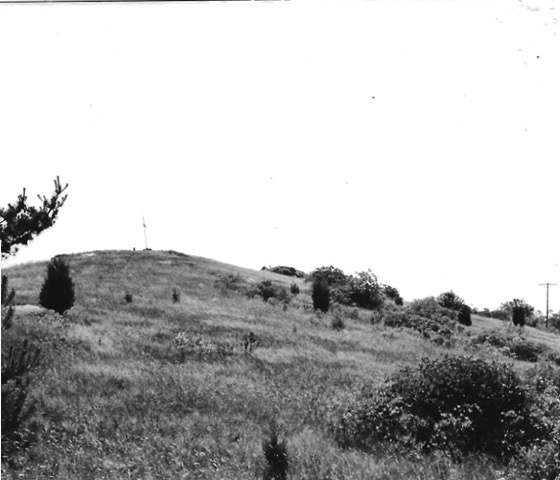
Almy Hill Battle Site – Garman photo

When the enemy came back on the 29th, while Gen. Greene was eating his breakfast, our house-maid said to him, the British would have him; he observed very cooly “he would eat his breakfast first;”  after he had done he went to his troops.  During the day some Hessians entered our house, and plundered every thing they could,— they took my father’s silver knee-buckles; I saw one of them take hold of my father and demand his money and threatened his life, but he did not get it; my father had about two thousand dollars in gold and silver, but he had taken the precaution to bury it under an old stone wall.  The Hessians also searched my mother’s pocket, turned it inside out, but there was no money in it.  My father and mother were “Friends,” and we kept silence as to our political opinions.  I remember Gen. Green once observed that his mother was a Friend, and was opposed to his going into the army, but she said “if he would go, to be faithful.”  There appeared to be fighting all day, sometimes one side would drive the other and then be obliged to retreat.  But as far as I could judge, the main armies did not fight.  It appears to me the events of that day will always be fresh in my recollection.

I also remember the great storm some days before the battle, I never knew so severe a storm before; it lasted several days, and did a vast deal of damage.  The day after the battle the Americans all left the Island.  And I also do distinctly recollect that the day after the fighting the British determined to burn all the houses in our neighborhood, and would have done it if the Americans had not left the Island that night.- We had this information from the British Officers..  (Signed). Seth Anthony

Marking the Battle Site: DAR Monument

2 Comments

The DAR Monument on the grounds of the Portsmouth Historical Society gives us an opportunity to tell the story of the Battle of Rhode Island. Last Thursday night I was serving as a docent at an open house and guests asked me about the monument. A few years ago I would have taken a few moments to mention it marked the site of the first skirmish in the battle, but now I know a little too much about the Battle. The current thinking is that the skirmish on West Main and Union started earlier. Action was going down East and West Roads simultaneously.

Nevertheless, it gave me an opportunity to share the story with people who had frequently passed the monument but had not known about the Battle. Sharing that story is exactly what the Daughters of the American Revolution had in mind when they erected it in 1910 on the 132nd Anniversary of the Battle.

Battle of Rhode Island Memorial at PHS

A newspaper article from that time recorded that ” the exercises took place at 4 o’clock – the 3:20 (trolley) car from Newport taking out a large number. Some came in automobiles, others in carriages and when all had assembled there were fully 100 or more people on the ground.” Reverend Loucks of the Christian Union Church had granted permission for the monument to be placed at the southwest corner of the church yard. The Colonel Barton and the William Ellery Chapters of the DAR intended to place it “in a very conspicuous place it will attract the attention of passersby.” No local fieldstone was suitable, so the monument was constructed from a “magnificent specimen of Westerly granite instead.”

The Hon. William Paine Sheffield (U.S. Congressman from RI 1st district) gave the address. He recounted that at the corner of Union and East Road, the British forces were split (some going down Middle Road and others down East Road). “The patriots under Col. Livingstone. ‘sprung from behind the walls of this field and poured a storm of bullets upon the bewildered enemy, reloaded and repeated the desolating fire before the British could recover from the shock.’ A terrible slaughter ensued.”

Sheffield went into the background of the French Alliance, the Siege of Newport and the necessity of the orderly retreat. Understanding that background is the only way one could understand what had taken place. This was a complex situation. Sheffield quoted Lafayette on his experience of the Rhode Island Campaign:
“Lafayette, on his visit to Rhode Island in 1824 told the late Mr. Zachariah Allen as he rode with him in a carriage across the border from Connecticut ‘In this state I have experienced more sudden and extreme alternations of hopes and disappointments than during all the vicissitudes of the American war.”

What were the “extreme alternations of hopes and disappointments” Lafayette experienced?

  1. Hope: After two years of British Occupation, the French fleet arrived to aid the Americans on August 8th.
  2. Hope: The American army continued to advance toward Newport. Lafayette and General Greene brought the American army from Tiverton to Aquidneck Island. The British retreated from Portsmouth. The hope was that between the American army and the French Navy that Aquidneck Island would be free from British occupation.
  3. Disappointment: August 11-13, 1778 a major storm damaged the French fleet and by August 22 the fleet left for Boston to undergo repairs.
  4. Disappointment: The alliance between the French and Americans deteriorated as Lafayette attempted to be a bridge between the two allies. Lafayette rides to Boston to meet with French Admiral D’Estaing.
  5. Disappointment: American General Sullivan and his officers make the decision to retreat.
  6. Hope: Americans valiantly hold back the British forces as they make a retreat to Tiverton. There are losses, but the Americans save men and equipment to fight another day.
  7. Hope: Lafayette returns in time to bring the last American forces off Aquidneck Island.
  8. Disappointment: Lafayette regrets he missed the fight.

These hopes and disappointments are from my research. These events are mentioned in Sheffield’s address, but the labels of Hopes and Disappointments are mine.

Sheffield ends his address congratulating the chapters of the Daughters of the American Revolution for “marking this scene of patriotic valor..” The monument is unveiled and the inscription is revealed.
“In memory of those patriots who fought here in the first skirmish of the Battle of Rhode Island, August 29, 1778. Erected by the William Ellery and Colonel William Barton Chapter, Daughters of the American Revolution.”

After the unveiling, the Star Spangled Banner was sung and participants gradually made their way home. The newspaper report comments. “There was nothing then to remind one of the strife which had taken place on that spot so long ago, everything seemed so peaceful.”

Resources: Click below to read a transcription of the 1910 newspaper article on the dedication. Transcription by Portsmouth Historical Society.


The Action at “Bloody Brook” (Barker Brook)

Leave a comment

“Bloody Brook” is part of Portsmouth folklore. The story is that the brook ran red because of all the blood spilled there at the Battle of Rhode Island. What exactly happened there? Why is Bloody Brook or Barker Brook important to the battle?

Map with permission of the Benson Family

I came across an older account by Eric O’D Taylor with a map by John Norman Benson that helps me understand this.

“Immediately before the American line and just in front of the advancing German reinforcements was a brook, called even now from the appearance that day gave its muddy waters “Bloody Run Brook.” Where the road crossed, a bridge had been built. On either side of the road a soft marsh extended following both banks. If a battery could be placed so that it commanded the road, and, above all the bridge, all was not lost.

…Greene spotted nearly a quarter of a mile up the road at the base of a hill a slight eminence with a flat top and a clear command of the brook’s valley. Quickly he brought three field pieces to the place and opened on the advancing British ..

To return to Malsburg (a German commander). At nine AM he left his men north of Bloody Run Brook beside and even on the slopes of Barrington Hill. Re-crossing the brook, he came upon Lt. Murarius’ company already demoralized by the fire from the new battery. Reducing them to some sort of order, he continued to the rear and found the ammunition carts which he was seeking. …. If Malsburg was to advance, the troublesome redoubt with its three cannon must be taken or silenced. Eagerly he hurled again the insignificant mound all troops stills out of the brook. It was a distinct mistake. Slight as the elevation of the redoubt looked from the road and Turkey Hill, it loomed like a fortress above the low valley of the marshy brook. Encumbered in the marsh across which they must jump from grass tuft to grass tuft, the Hessians staggered forward. . Now they are on firm ground; the guns as just ahead of them; they slow up a moment to dress ranks for the charge. Does someone move in the bushes to right, to left, of the redoubt? It is too late. The word is given. The charge goes home—and crumples like paper before the sheets of flame which burst from behind the stone wall lining the road, from the windows of a house before now hidden in the trees, from the underbrush and from the super heights of the redoubt itself. As Malsburg withdrew his shattered column, finding refuge behind the wall on the right of the main road, he saw the elated defenders of the little redoubt, break out from their hidden defenses. “They were mostly wild looking persons,” he wrote, in their shirtsleeves. Among them, too, were many negroes.”

From Campaign on Rhode Island by Eric O’D Taylor and illustrated with woodcuts by John Norman Benson. This booklet is in the collection of Town Historian James Garman. There is an abbreviated pamphlet available online: http://www.newportalri.org/

A Hessian View of the Rhode Island Campaign

3 Comments

The diary of Johann Conrad Dohla gives us a unique account of the Rhode Island Campaign. Dohla was one of the Hessian (German) troops whose services were sold to George III to fight against the Rebels in the American Revolution. He arrived in America in 1777 as a private in the Ansbach-Rayreuth group of Hessians. In June of 1777 he arrived in Newport, Rhode Island. In this blog I will include part of his diary entries from August 1778 that help us understand what was happening on Aquidneck Island (Rhode Island) during the Rhode Island Campaign.

August 7, 1778


Our Bayreuth Regiment sent a large command to the region beyond Tonimy Hill. All Turkish and Indian corn and all other grains on Rhode Island were destroyed. All stone walls and fences around the fields were torn down. All trees were chopped down, and many houses torn down and burned down in order to detect sooner the arrival of the enemy crossing over from New England.

August 9, 1778

…. During the night, after tattoo (a military lights out), our regiment had to fall out in the greatest haste and march forward three English miles because the rebels were crossing over to Rhode Island in many boats. We remained under the open sky throughout the night and the next morning returned to our camp. Also during the night a Hessian ensign and three men, and an English lieutenant and two men, went over to the enemy.

August 11, 1778.

We moved our camp about one hour forward and again set up our tents near Tominy Hill. This Tominy Hill, an exceptionally strong hill fortification on a high cliff, is the place to which our troops would fall back in an emergency.


August 17, 1778

At work on the fortifications. We laid out a line and dug the trench. Everywhere batteries and redoubts, as well as connecting trenches, were completed all along our line, and everything soundly reinforced with wood. The fortifications work continued day and night without let up, and we had many hardships. Within or lines ten principal fortified points were played out namely: 1. Stone Battery, 2. The North Trench, 3. Somerset, 4. The Irish Redoubt, 5. Fort Fanning, 6. Fort Clinton, 7. Fort Percy, 8. the Ice Redoubt, 9. Prince Dauneck, and 10, Conanicut. The enemy, in a little less than an hour, set up a big camp opposite, set his posts and sentries very near us, and fortified himself in the region of Boxland Ferry.

August 19, 1778

At noon today the enemy, after completing his battery on this side of the heights, began to fire cannon at our camp and defenses and to throw in bombs. Therefore we had to change our front and camped all together behind the fortifications of Tominy Hill as we camped in front of it previously. eHere we were safe from the balls and bombs. The batteries and fortifications of both sides fired heavily, and that continued unceasingly, only ending during the blackness of night.

August 22, 1778

In the morning I went on work detail at the fortifications. During the night the French ships, which had been before the Newport Harbor, disappeared and no one knew where they had gone.

August 28, 1778

This night a 25 man picket from our regiment, commanded by Lt. Ciracy, was attacked by a strong party of Americans, who had crept up through a field of Indian corn. One of our men was killed in this action, and three men were wounded. The enemy, however, had to pull back and take flight. Also tonight, the Americans withdrew the artillery with which they had been firing at us and their heavy baggage to New England, but continuously harassed our outposts in order to cover their withdrawal.

August 29, 1778

When during the early morning, we began to fire our cannon at the enemy, there was no answer in return. Therefore, two thousand men from the army, including our two regiments, were ordered to search out and pursue the retreating enemy, They marched for about three English miles, where they caught up with the enemy, who opposed us as much as possible and, grouped together in order to frustrate our attack, amounted to about ten thousand men. Finally, when the cannon began firing at them, they took flight. They were pursued, and the firing from both sides lasted throughout the day. In our advance we had to climb over many stone walls, five to six feet high, which served as fences around the fields. The enemy often took post behind these and fired through the openings where stones had been removed. Despite this difficulty, we chased them back into their fortifications, of which one, called “Windmill Hill,” had many heavy cannon. Since a farther advance was not advisable, we stood still until the cannon arrived; from which time, throughout the day, each side fired against the other.

During this heavy fighting our regiment, as we were on the left wing, engaged in combat the entire day. We lost no more than three me….They were killed by a cannonball, and two men were wounded. …

August 31, 1778

In the morning, as it became apparent that the enemy had completely left the island, the vacated defenses were immediately occupied by the English and Hessians, and we began to set up camp near Windmill Hill.

Resources

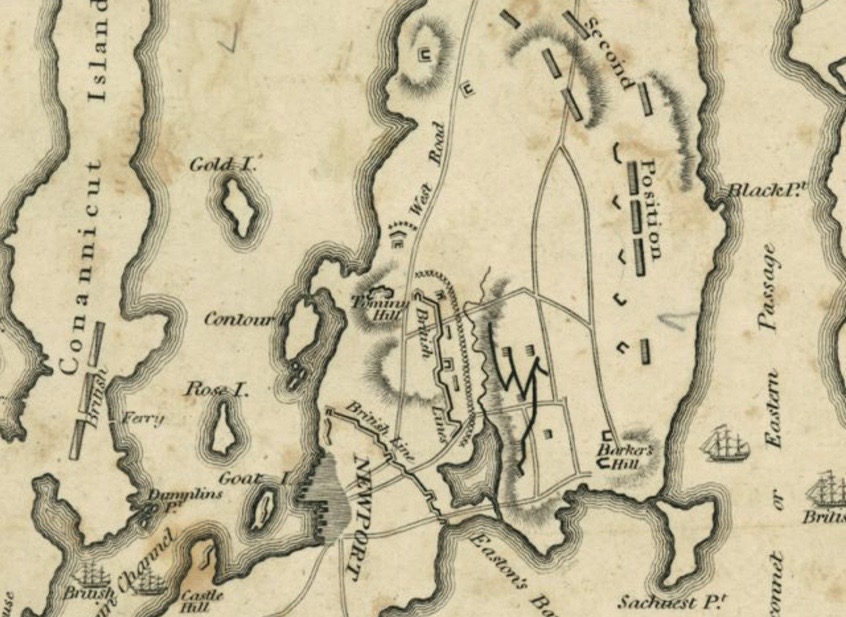
Map: Partie de l’etat de Rhode-Island, et position des armees Americaine …

Dohla, Johann. A Hessian Diary of the American Revolution. Norman, Oklahoma,University of Oklahoma Press. 1990.

Older Entries Newer Entries