Home

The Adventures of Silas Talbot

Leave a comment

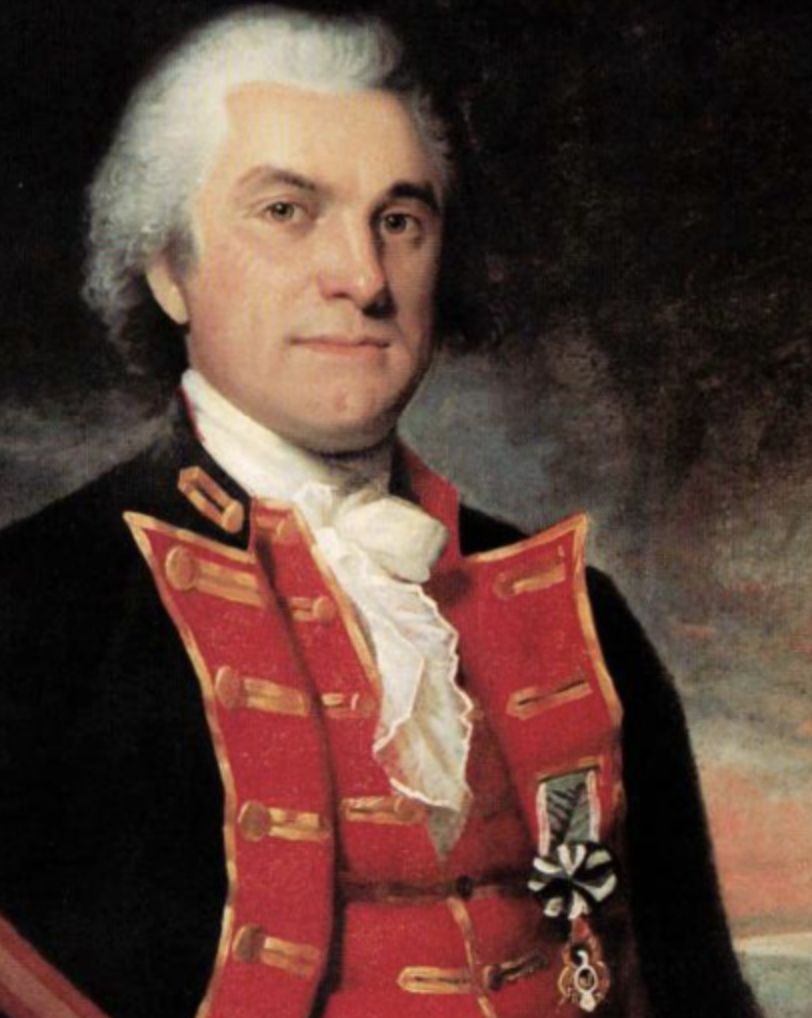
When Lafayette wrote Silas Talbot about a plan to capture the British vessel Pigot, he alluded to Talbots’s “reputation which you have already acquired by your zeal and skill in the artificial way (as a mechanic in the military).” Talbot was known as an “artificer” – “a soldier-mechanic attached to the artillery and engineer service, whose duty it is to construct and repair military materials.” 1. What was there in Talbot’s military history that had him known as a someone who could devise, construct and repair for a military campaign? Talbot had a record of invention, construction and even “daring do” to get the job done. All his past experiences made him useful to the American cause.


Silas Talbot was intimately involved in the Rhode Island Campaign. As someone with experience as a mariner and builder, Talbot helped to construct the flatboats that would take American forces to Portsmouth on August 9th of 1778. As a soldier, Talbot fought in the rear guard to protect the Patriots as they retreated to Tiverton on August 29th and 30th, 1778. Talbot alternated between roles as sailor and soldier throughout the American RevolutionSilas Talbot’s life was full of adventures. There were “rags to riches” stories and then again there were stories of monetary downfall. He was wounded in naval battles and sustained injuries on the Revolutionary War battlefields but he kept getting back into the action. This article will focus on some of those adventures of a representative figure in Revolutionary Rhode Island
Talbot came from a humble background. He was born to a farming family in Dighton, Massachusetts in 1751. His father died when he was twelve and Silas was indentured to a local stonemason. He learned his skills as a bricklayer, but Dighton was a seaport and Silas signed on as a sailor on sloops transporting cargo from Narragansett Bay to as far as the Carolinas. By 1770 Silas settled in Providence where some of his older siblings had established themselves. Silas’ bricklaying skills were put to work in construction. Talbot wanted property and he put aside enough money to buy a lot of land on Weybosset Street. In 1772 Talbot married well. He continued to purchase land and he also began to purchase slaves. Owning a black servant was a status symbol for Talbot. He moved from being a laborer to owning a construction business.


In the aftermath of the burning of the Gaspee and the Boston Tea Party, Rhode Island merchants were alarmed. Independent militias were forming and Talbot joined and was commissioned as a Lieutenant. He joined others of his company in learning military skills in a Providence warehouse, but he didn’t have any real military experience. On June 28, 1775 Talbot answered the Rhode Island Assembly’s call to send units to Boston. He marched with his men to join the Second Rhode Island Regiment and by July 1, he was commissioned a captain. Talbot and the other 1200 men in the Rhode Island brigade took part in the Siege of Boston watching over the Red Coats but not in direct battle. Talbot’s skills as a bricklayer came in handy as they built barracks on Prospect Hill.

By April of 1776 the Siege was over and Talbot and the Rhode Island men were proud to welcome General Washington as he passed through town. As Washington arrived in New London, Rhode Islander Esek Hopkins presented Washington with a problem. Hopkins was Commander in Chief of the Continental Navy. Hopkins had sought safety in New London harbor after damage to his ships. Hopkins needed a crew to sail the ships home to Providence. Washington offered to loan Hopkins men from the Rhode Island Regiment. “All those acquainted with Sea Service that have a mind to join the Admiral as Volunteer have Liberty.” Silas Talbot took that opportunity to sail home to Providence. This was the first example of how Talbot’s military service frequently switched between the army and the navy. In August of 1776 he joined the Rhode Island troops in New York. In September he took part in an attempt to place a “fireship” (literally a ship set on fire with combustibles ) next to a British ship to catch it on fire. Talbot stayed on the “fireship” as long as he could to get it closer to the British vessel. Unfortunately the fireship did little damage, but Talbot was gravely burned.

While Talbot healed he served as a recruitment officer to enroll more Rhode Island troops to the cause.
Talbot’s adventures continue in the next article.

Definition from Century Dictionary

Biographical information from William Fowler Jr’s Silas Talbot: Captain of Old Ironsides
Cook Wilcox: The Glen, Coal Mines and Revolutionary War

Leave a comment

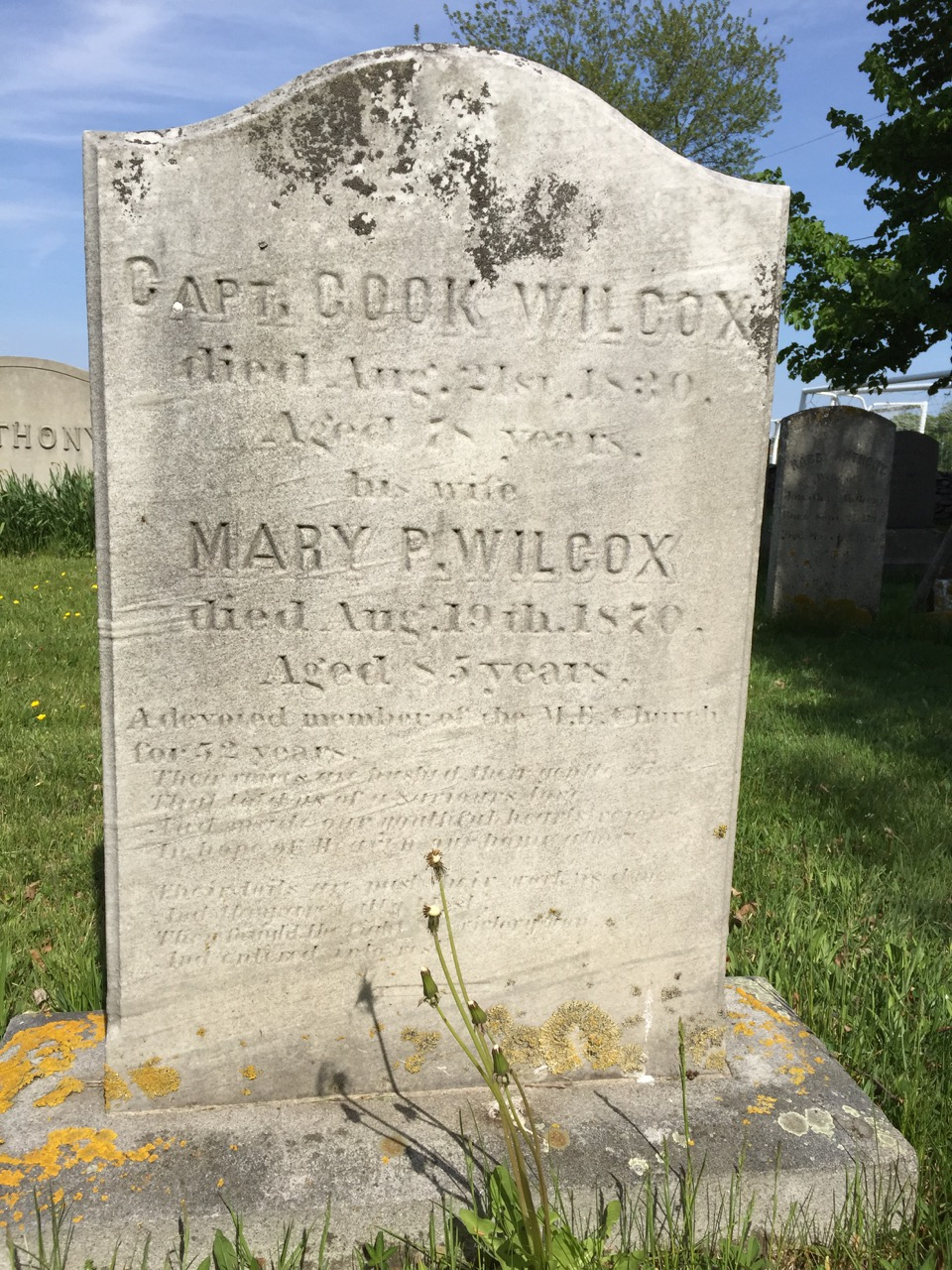
Cook Wilcox (1752-1830) is a name I have come across many times in the 30 years I have been researching Portsmouth history. I first came across his name when I was doing research on the Leonard Brown House. The Seveney Athletic fields are what we see today as we walk down Linden Lane were once the farm of Cook Wilcox, a descendent of Thomas Cook.  The Cook (Cooke) family were among Portsmouth’s earliest families and their land grants ranged from East Main Road to the Sakonnet and from Glen Road to Sandy Point, an area that has been traditionally called “The Glen.” The men of the Cook family migrated to their holdings in Tiverton, so the women of the family brought the Glen area property into their families as they married. Cook Wilcox was named after his mother’s side of the family. When Cook Wilcox died in 1830, the farm was left for his wife Mary (Perry) use until her death. The land was passed down to Cook and Mary’s daughter, Sarah, who married farmer Leonard Brown. The widow Mary must have lived with Sarah and Leonard and by 1850 the Wilcox home was removed from its location on East Main Road. Leonard and Sarah built their home further up what we call Linden Lane.

The next time I came across the name of “Cook Wilcox’ (or Cooke Wilcocks as it is sometimes found), I was working on a project with Revolutionary Era documents for the Portsmouth Historical Society. In 1774 Rhode Islanders were among those objecting to British taxes and they often avoided following British laws. During the summer of 1774 the British blocked Narragansett Bay. Two hundred and fifty British troops attacked Prudence Island and drove off the local soldiers. The Rhode Island General Assembly set amounts for what each community should supply to defend against the British. In the beginning stages of the Revolutionary War, the assembly organized branches of “minutemen” or citizen soldiers for the towns. In August of 1775 the leaders of the Portsmouth defenders were John Earl (captain), James Peckham (lieutenant) and Cook Wilcox (ensign). The Citizen soldiers would be provided by the colony with heavy guns on carriages.  Documents from the collection of the Portsmouth Historical Society show that in 1776 the General Assembly ordered Portsmouth and other towns to raise a fourteen member “artillery company” which will “March out to Action” when needed.

A few years ago I was doing research on the Coal Mines area of Portsmouth for a play I was writing for the Portsmouth Community Theater. I came across the name of Cook Wilcox again. Coal was discovered on his land in 1808. This parcel of land was on the West side of Portsmouth off of Bristol Ferry Road and would have been close to the Wilcox family lands.

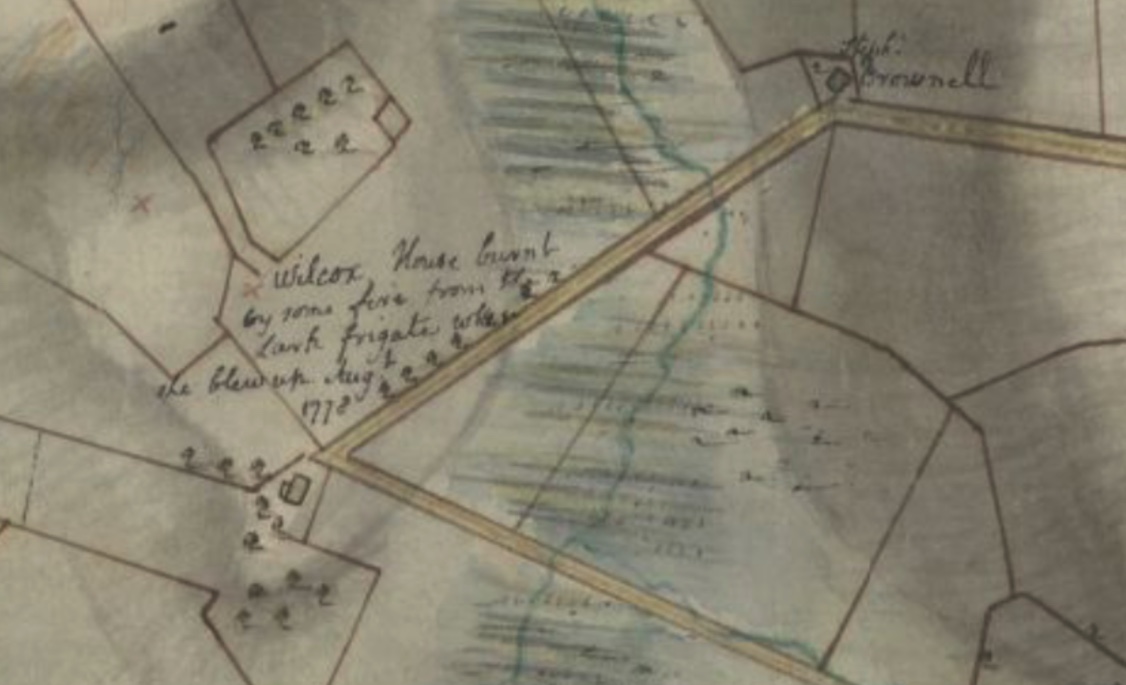
As I recently analyzed the North Portsmouth map from the Huntington Library, (a British map from 1778 describing action in the Battle of Rhode Island), the Wilcox name came up again. The Wilcox “house burnt by some fire from the Lark Frigate when she blew up August 1778.” As the French fleet was arriving in late July of 1778, the British ordered that their ships would be destroyed rather than be taken by the enemy. The frigates Lark, Cerberus, Orpheus and the Juno were no match for the French ships coming in. The Lark’s Captain Smith ran his ship aground and set her on fire. The Lark’s 76 barrels of gunpowder exploded and ignited the Wilcox home (probably belonging to Cook’s father, John Wilcox). Flaming debris landed as far away as three miles.

Cook Wilcox and his family (ancestors and descendants) are part of the fabric of Portsmouth History.

Wilcox grave at Union Cemetery

Letters from Camp Butts Hill: A “Sham Battle”

Leave a comment

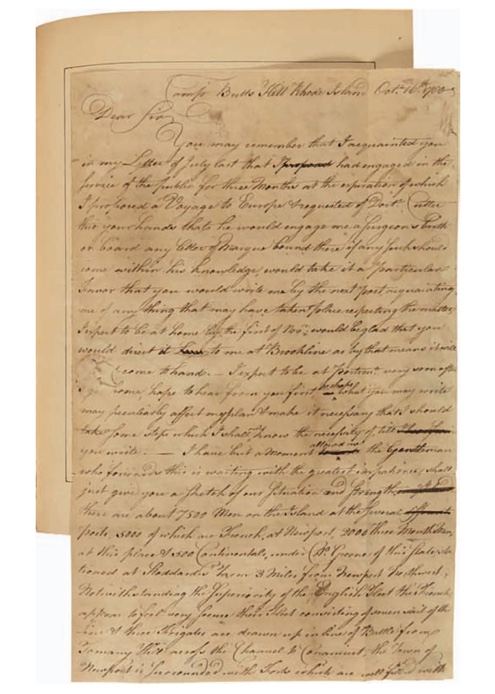
In my last blog entry I relayed some notes from Col. Thayer’s Orderly Books from Camp Butts Hill in 1780. One of the last entries I shared was about a court martial for Thaddeus Fuller who was accused of abuse to Dr. John Goddard. I was able to find a letter Goddard wrote from Camp Butts Hill. This letter reported a “sham battle” training exercise which involved Col. Greene’s Black Regiment. The letter is dated October 16, 1780 and was sent to Dr. Clement Storer. The general aim of the letter was to request a surgeon for a voyage. I found parts of the letter published online, and my interest was peaked by the description of the troops on Aquidneck Island and the description of the training exercise. This letter reminded me that there were German troops fighting with the French forces.

“…there are about 7500 Men on the Island at the Several ports, 5000 of which are French, at Newport, 2000 Three Months Men, at this place and 500 Continentals, under Col. Greene of this state, stationed at Stoddard’s Farm 3 miles from Newport Northwest. Notwithstanding the Superiority of the English Fleet the French appear to feel very secure their Fleet consisting of seven sail of the Line & three Frigates are drawn up in line of Battle from Tomany Hill across the Chanel to Conanicut. The Town of Newport is surrounded with Forts which are well filled with Cannon, on the whole I believe there is no Reason to fear an Attack from the Enemy this season.

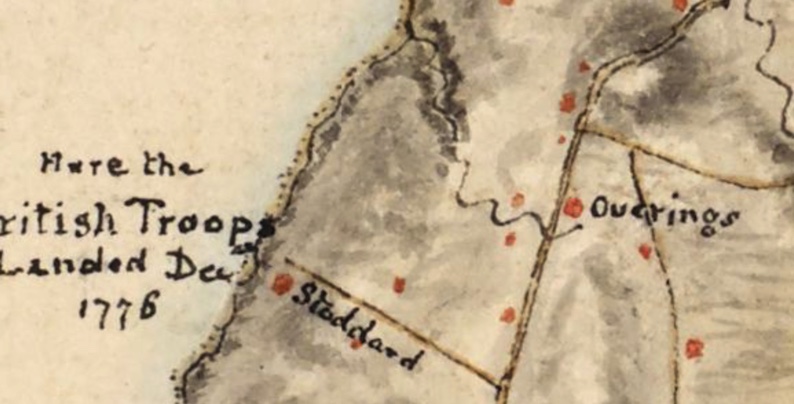
I had like to have forgot to mention a famous Sham Battle on the 2d Inst between a party of the French Troops on one part representing the English & the Continental Regt reinforced by a party of the French and the German Line representing the allied Armies, the particulars I have not time to give you in full shall only mention a few of the principals, Maj. Gen’l Vianumino (Charles Joseph Hyacinthe du Houx de Viomenil) second in Command in the French Army (under Rochambeau) commanded the English who landed at Stoddard’s Farm & marched up & attained Col. Greene’s Reg’t. The line began with skirmishing between the Flank Guards light horse &cc. soon after a heavy cannonade on the part of the British obliged Col. Greene to retreat & form his Reg. behind a Wall where the resistance was obstinate & a constant fire kept uphill. Col. Greene was reinforced with about 2000 French & Germans commanded by his Excellency Count de Rochambeau with 12 pieces of Cannon, a severe conflict ensued in which the British gave way were finally surrounded & all made prisoners, the Action lasted about two hours during which a constant heavy fire was kept up – if I have any just Idea of a real Action this very nearly resembles it.”

I wonder how the “inhabitants” of Portsmouth reacted to such a vivid battle in their midst. Stoddard’s Farm would be just over the Middletown line off of West Main Road and the “battle” seemed to move through the west side of Portsmouth and uphill towards Turkey Hill and Butts Hill.

The letter was included in: Recent Acquisitions in Americana – William Reese Company – https://www.williamreesecompany.com

Life at Camp Butts Hill – September 1780

Leave a comment

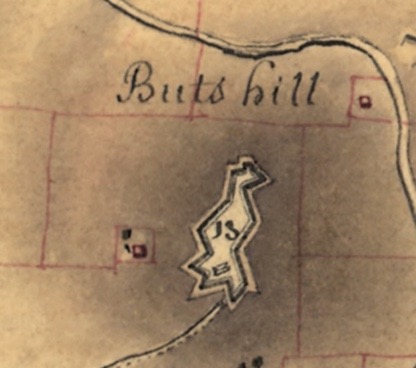
As I was trying to trace the land history of Butts Hill Fort, I found there was little information on what happened to the fort once the French and Americans came to occupy it after the British withdrawal in October of 1779. Quite by chance I came upon two primary sources that give me a glimpse of what life was like in “Camp Butts Hill.” They are hand written “Orderly Books” which were a document of the day-to-day life in the military during the Revolutionary War. They record such things as who was in command on a particular day, the duties of certain units, court-martials and accounts of daily life in camp.

One of these sources is in the collection of the John Hay Library of Brown University. It details a few months around August to October of 1780. We are not sure who was writing that Orderly Book, but within the book is the comment “Samuel Reed: his book”.

The other orderly book is more lengthy. We know the author was Ebenezer Thayer Jr and it covers some of the same time period – August 16 to November 28, 1780. It is available through the Huntington Digital Library. Thayer’s book was easier to transcribe and covered a greater period of time, so it was easier for me to draw material from it. Thayer, a Harvard educated minister, was in charge of a three-month regiment of a Massachusetts militia raised to support the Expédition particulière, the French expeditionary army under the command of Rochambeau. The regiment was placed under the command of William Heath and stationed in Rhode Island at Butts Hill. I will focus this blog on Thayer’s Orderly book.

As background it is good to remember that the French arrived on Aquidneck Island on July 11, 1780. These American troops were to support the French troops. Thayer’s Orderly book has this entry:

September 3, 1780. Col. Thayer’s Regiment is to march next Wednesday 8 o’clock to Butts Hill where they are to be employed on the works until further ordered.

The Orderly book provides some information on how the troops were organized and what life was like in Camp Butts Hill.

  1. The September 9th entry shows they were assigned six men to a tent with a cook for each group of six. Later entries show that the kitchens had to be moved higher to prevent the smoke from filling the tents.
  2. The September 14th entry details that the guard consisted of sixty rank and file soldiers. There were also sentinels around the encampment – 2 in front and one in the rear. This is kept up day and night. This day’s entry also includes concern about the filth around the camp that could be detrimental to the soldiers’ health.
  3. On September 15th the entry talks about concerns that there were not enough axes. One of the “fatigue duties” (labor duties that don’t require arms) was gathering wood. The axes would have been essential to chopping wood.
  4. September 17th’s entry shows concern about the soldiers getting enough time for military exercises and an hour a day was allotted.
  5. September 19th records the regiment dealing with a complaint from an “inhabitant” named Mathew Slocum. Overnight soldiers took a quantity of beets, potatoes and heads of cabbage. The Commanding Officer would investigate and those found guilty would have to “make satisfaction to the owner” and be disciplined per regulations. Later there are complaints about stolen fowl and wood. The officers are clear that the soldiers should be protecting the property of the inhabitants and that punishment will be doled out to those being found guilty. Hunger is a real problem. The officers try to ensure that there are provisions on hand for at least the next day.
  6. September 20th entry mentions that the men who went with the boats to bring Col. Green’s Regiment to Greenwich need to come back with the boats as soon as possible and make a report on any damage done to the boats.
  7. September 24th entry relates a court martial at the camp for Thaddeus Fuller in Captain Bacon’s Company in Col. Thayer’s Regiment. He is accused of “abuse to Dr. John Goddard.” Fuller was found guilty and as punishment he received 15 lashes (stripes) on his naked back. He must make an apology to Dr. Goddard. Henry Hilman was found guilty of being absent without leave and was sentenced to 39 lashes on his bare back.

Some of those fulfilling the role of commanding officer or were mentioned in roles of officers were: Col. Mitchell, Col. Thayer, Col. Glover, Col. Bancroft, Col. Richardson, Col. Hallet, Major Stowe, Captain Wilder, Captain Bacon.

These notes on the Orderly Books will continue in future blogs.

Butts Hill area from French map

Newer Entries